
Robin S Webber
This transcript was generated by AI and may contain errors. It is provided to assist those who may not be able to listen to the message.
In all seriousness, and you know I have a lot of fun sometimes on stage because I can get a little serious when I start speaking because of the joy of God that is in me and in each and every one of us. And the times are very meaningful for us to consider the high calling that our Father above has given each and every one of us through Jesus Christ. So I really look forward to talking to all of you that are here, present in this facility.
And all of those that are watching around Southern California and maybe in parts of the nation. What a unique time that we've had coming together as a community here in Southern California and those that have joined us in Zoomville. And I recognize that in this moment of time that we as members of the body of Christ are in a very special community right now. For the words that we're hearing, we will never quite hear the same way as in this moment.
As you know, Susie and I have been amongst you now these many, many decades, scores of years pastored each and every congregation here in Southern California. You are our family. You are our friends. You are our brothers and sisters in Christ. It's been a unique pleasure for us to be honored to be among you. A lot's going to be happening this next year. And I don't want you to check your pulse, and you're all alive right now, but we don't know what's going to be coming. And so to be able to give this message on the eighth day along with my good friend Darris this morning is a real honor to be able to point you to our Father above and to His Christ and to what has not only been and what is but will yet be.
And that's why God brings us together in these annual festivals to be able to not tell Him our story but to hear His story and to allow His story to become our story. A dear friend, a man that I greatly admired. I wish I had known him better. He was a Texas gentleman. He was a man of few words, but when he spoke, he spoke brilliantly. And you always leaned in when Vern Hargrove spoke. And he said, why did God bring the festivals to us? Why do we come here? Why are we here? And Vern, in his very simplistic Texan philosopher way, he said it was simply this. It's a time to gather the family, to break the bread, and to tell the story.
And that's what we've been doing these last seven days plus one now, that we've gathered together, whether in person or whether on Zoom land, we've broken the bread. And as Jesus himself said, that man shall not live by bread alone, but by every word that proceedeth from the mouth of God. And he himself said, I am the bread. And thus we have been feasting on God the Father's gift to us, His Son, during these seven days plus one.
And to recognize then that we're to tell the story. It's not my story, it's no minister's story, it is the story of God, and I want to share that with you, because of what is going to lie ahead. If you've been listening to me recently, I think, and other ministers as well, we recognize that we are, we are in unique times. Times that perhaps we have not quite experienced.
There's a, there's a feel in the land. There's a twitch in our hearts saying things are not quite how they've been before. And that perhaps we will never go back to the old normal. To recognize something has really occurred within the global community, and even within the American fabric.
And so as we come up to a November and or beyond, everybody is pacing a little bit differently than they did before, and everybody is considering what's coming in a little bit different way than ever before. But I'm not here to talk about American politics or exactly what's happening on this world here and now. I want to point you further and beyond that, and God's story, and your story that is in it, and to recognize that the story that I want to share with you is older than time, but it's not only older than time, it's also beyond time.
And it's also God's story. That's what really makes it special. You know, we can read Mark Twain, or we can read Charles Dickens, or we can read this person or that person, but this is one that is given to us by God. And he wants us to read it fully and understand it fully. And to understand that it's not only his story, but out of his great love, he wants it to be our story.
He sees us in it, even sometimes when we do not ourselves. He never erases us out of that story. And the story that you and I live, whether today, this year, in this decade, in our life, or yet, it is always the story of return.
The Bible has many labels to it. It can be called a book of love. It can be called a book of law. It can be looked upon through the lens of prophecy. But what I gain out of the Scripture, most of all, is that it is the book of return. It is the book of our Father in heaven, as Daris was talking about his dad this morning. It's the God that is always on the porch, and the door is wide open. And no matter what we have done, his love is there. And he says, return to me. Maybe some of you are here today because you have returned to God this year. Or maybe something happened during the feast, and maybe you're ready to get out of here. But you have returned, and you are here today. You are here for a purpose. You are here to hear about the love of God, the plan of God, the purpose of God, and the personage, the gift of God that he has given to us, that door to return to him. And thus, I'd like to share a couple of thoughts with you before I go any further into the story, because I want to give you some landmarks. I want to give you some, what do we call them, some bookmarks so you know where we're going to go when I start telling the story.
Again, I may not be able to share with you again these thoughts. We may never meet again in this lifetime. Or maybe if I come on the Zoom line or the YouTube line or whatever—oh, there's Webern—turn me off. Well, good. Don't walk out right now. Don't walk out, and especially don't walk towards me. That gets me scared, okay? But here we go. I want to give you six key concepts, six key concepts of vision. Remember how Jonathan Garnett gave us the talk about the compass the other day? I want to give you six key concepts real quickly. Jot them down. Go ahead. Number one. Number one, in the beginning God. In the beginning God. That is the greatest bookmark of all. That is the true North compass that will guide us forward. That as we move away from this festival, that every thought, every motive, every word, every deed is anchored in the four great words that begin the revelation of God Almighty. In the beginning, because we must always have the end in mind from the beginning. Number two. Number two. Let us make man in our image. Let us make man in our image. We are truly not related to a monkey's uncle. We are creation. We are God's love gift made in his image. But he's not through. And we'll get to that in a moment. Number three. I shall be your God and you will be my people. I will be your God and you will be my people. We are family. The great call of Scripture, the call to Abram, the call that was given to the Israelites, the call that is mentioned in the book of Hebrews. Number four. I am holy. Therefore you be holy. I am holy. He alone is truly holy. That's just simply what he is. What is God? He's holy. But he wants us to be holy like him.
That is the clarion and the consistent call of Scripture from the book of Leviticus to the book of 1 Peter. Number five. Behold. Behold. That means stop. Look what's in front of you. Behold what manner of love the Father has bestowed upon us.
Just look at it. Just behold. Just take it in. Be humbled and glorify him. Number six. I told you this real quick. I will do it. God says in Isaiah 46, I have declared the end from the beginning and the beginning from the end.
And he says, and I will do all of my pleasure. And at the end of that roll of Scriptures, and he says, and remind them, I will do it. When he inspired Moses, he said, tell your brother, Aaron, this, that when you bless the people, you bless them this way. And he goes down through that category, the normal benediction, the Lord be with you, the Lord keep you, the Lord's countenance be upon you, the Lord smile be upon you in that sense, and give you peace. Is that the end of it? No. And he says, he says at the end, then he says in number six, and remind them, I will bless them.
Now, I'm going to take a pause. We're going to go over here for a moment because this is all going to fit into the story that I'm going to share with you in a moment because we're going to go to the end of the book, Revelation 21 and 22. Why do we call this the eighth day? This will be important for you to understand as we go through Revelation 21, 22. People sometimes say eighth day. I mean, that's it? That's all? That's what we're calling it now? It's always really good to call things what God calls them. And God throughout scripture calls it the eighth day. Sometimes people say, I may have had these conversations sometimes with Phelan, that's it. That's all. You know, at least with the Feast of Tabernacles, we get a tenth. Days of the Love of Bread, we get, you know, some matzos. Well, anyway, we get this, we get with the eighth day. Allow me to share some thoughts with you about, and this will allow you an entrance into what I'm about to discuss with you, the solemnity of what we're going to be talking about. Why is it called the eighth day? You might want to call this eighth day imagery, okay? Eighth day imagery. I want you to understand what's happening before we get into it. Why do we call it the eighth day? The eighth day is directly linked to the holy. It is the holy. It is the realm of that which is sacred, that God has set apart, that God has consecrated, that God has called his, his. I will be your God and you will be my people. Number one, circumcision was on the eighth day, and circumcision, other than the Sabbath day, was in a sense that great sign between God and his people, and that was performed on the eighth day, that there was in a sense a set aside of that which was dedicated, are you with me? Dedicated to God. Number two, the consecration of the first born son and even the animals was on the eighth day. Think of the word first born, first fruits. Number three, the priesthood, and what are, what has been kind of the great theme of this festival, that we are in training to be a kingdom of priests to be teachers, as Mr. Crow brought out the other day. The priesthood and the tabernacle of where the presence of God, that Shekinah presence would be, was consecrated. Are you with me? On the eighth day. Now, last, the original creation was framed in the context of seven days.
Are we all in agreement, or do we have a ninth? No, okay, good, we're all in agreement. The original creation is laid out in Genesis 1 and 2, was in the context of seven days. But let's understand something. Even as that was framed in the context of seven days, we now, on the eighth day, enter a new realm. A realm which has not been, which the rest of the story that I'm going to share with you is about to share with you. So we need to understand that. Because all that we've been talking about, that which is set apart, that which is consecrated, that which is sacred to God, that which God says, I'm your God and you will be my people, now we today enter a time in which we are no longer trapped in time and space, but we are rather anchored into eternity. Anchored, you say, well, it's going to be kind of like this, kind of like, you know, free snow. We're going to always be anchored into God the Father and Jesus Christ, they which are uncreated. We will be granted immortality, and then we will be invited into eternity, of which they exist in. So let's understand that. I want to give you a few pointers just along the way, so we'll kind of see this as we go along. So here's what I'd like to share with you, and then we're going to go to Revelation 21 and 22, and why I want to bring this. I'd like to share a thought. It's by Victor Frankel. Victor Frankel was a concentration camp survivor who wrote a landmark work in 1946 entitled, Man's Search for Meaning, and it shared his deeply embedded firsthand observations on life and on death, molded by his personal experience in the Auschwitz concentration camp during World War II. And he carefully considered, hear me please, he carefully considered why some captives survived while others died. And he pondered why some with good health, with intelligence, and survival skills did not survive while others who lacked these attributes endured and lived. He was basically saying in that brilliant line of his, what's going on? What's the formula here? And he concluded that the single most significant factor for survival was a sense of a future vision, that of a conviction, not just a theory, but of a conviction.
I think if there's this message the other day, you are or you ain't, remember that one? A conviction of those who survived that they had a mission to perform some important work to do.
You and I, by God's grace, have been blessed, as Howard was telling us in his message, that we are being offered an opportunity to be involved in the work of God. His greatest work in us individually is members of the body of Christ right now to prepare ourselves to serve with him not only during the millennium, but in eternity. Now, how important is it what Victor Frankl said in the book of man's search for meaning?
Because there were those that died that should have seemingly humanly lived, but those that seem to be dead ducks on arrival were those because there was something that was inside of them, something that held on to another moment. You know, General Patton himself said that courage is but fear that lasts a moment longer. What was it? What kept them going?
Join me if you would in Proverbs 29. Proverbs 29. Let's take a look here for a second.
And in verse 18, a compass, a wake-up call.
Where there is no revelation, or as it says in the old King James, where there is no vision, the people cast off restraint, or again in the old King James English, sometimes the simplicity of the Elizabethan tongue just nails it. It says simply this, they cast off restraint. I like to go back to what I first heard back in 1963, where there is no vision, the people perish.
I challenge you this afternoon, dear brethren, that you maintain those eyes that God has given us, the eyes on our heart, those forever eyes that we are blessed with through the Spirit of God, to keep your eye on the Kingdom of God, to wherever it takes you, and to recognize that no matter what you are going through, that it will be worth it. Jesus himself said that it will never be easy, but he did say that it would be worth it. And Jesus himself, who bore a crown, had to bear a cross first. And we are his followers. We are following in his footsteps. So let's understand where we're going. And right now, I'm going to go to Revelation 21. You know, you get into, you've done that, got a book, and you go to the very end to see what happens. And then you work your way self, you know, back. Or we're going to go right to the end, because we're just going to go through Revelation 21. I'm going to try to go slow. I want it to sink in. This is not going to be high theology. This is not going to be a lot of theory. Going to be some reading. But here's what I want to share with you. Something that caught me today, this morning, as I was reviewing the special music, and was looking at our lady friends from Sacramento as to what they might be singing. And I'd like you to jot this down. I'm an old school teacher, so I ask you to do a lot of homework in between. I'm sorry. And normally, as you know, I tend to sometimes move around, but I can't, because I want Howard to relax today. I picked that up on the first thing. Here's what I like to just simply write down. Four or five words, and this can change your life. And can it be? And can it be? Now, after that, put a question mark.
Now, after that, put an exclamation point.
That's how it came to me today, and I studied it. And what God has in store for you and for me, through His revelation, where He's opened up our eyes, opened up our hearts, given us a new mind, given us a new spirit. And why? He wants us to be a new kind of human being. He wants us to be a new kind of man. He wants us to be a new kind of woman. He wants us to be a new kind of community, called the body of Christ. And He's invited us to do that now, ahead of time, ahead of those that will be in the millennium, ahead of those that will be raised up in the second resurrection. So we look at this, and can it be? If you only leave those words with a question mark, you've got some challenges ahead of you.
And if you only leave those words with an exclamation point, with a dynamism, and with a feeling that, yeah, I'm on board, Jesus, it's still going to be a rough ride. We're going to have to embrace what's coming our way, not just simply what's happening around us, but are just the chapters of life that meet us. That we're going to have to know that we are not alone.
I would hope that by the end of this message, that you will be so excited, that you will keep that question mark, because there is a wonderment about it. But leave it with an exclamation point, because you know that you have not just written that sentence, but God is not only guiding your hand, but guiding your heart towards this reality. Join me in Revelation 21, then. Let's have a reading of the Word. You know, Darris and I were talking about this the other day, you know, when you just read the Brethren Scripture, they can't argue—they're not going to argue with you. Their argument's going to be with God. It kind of makes it easy for me as a preacher. So these are God's words. In Revelation 21—the book of Revelation, especially Revelation 21 and 22—remember Jesus on the last night of his life? The last night of his life he said, you know, I go to prepare a place for you.
That's it. I go to prepare a place for you. Well, this is the place. And you know, if you made heaven and earth in seven days, can you imagine what he's been doing for the last 2,000?
What he's got in store for us is incredible. Because it says in Hebrews that for the joy that was set before him, he endured the cross. And his joy was to be able to meet you at the door of eternity and say, well done, thou good and thy faithful servant. And by the way, I like to come over and meet my father. He's been waiting for you for a long time. So let's go right into this. And if you're looking for a title of this message, it's simply this—setting our hearts on the new Jerusalem. Setting our hearts on the new Jerusalem. Chapter 21, verse 1, now I saw a new heaven and a new earth for the first heaven and the first earth had passed away and also there was no more sea.
Now, when we look at this, we need to understand something. God, who has made both the heavens and the earth as we understand it, has never separated them in that sense. He looks at them as being one. It's only man that separates earth from heaven. He and the Christ are over all.
And so what we're seeing now is we're seeing in the very beginning, Genesis 1, 1, it says, in the beginning God and God created the heavens and what? And the earth. Jesus himself in that model prayer that he gave us, for thine is the glory and the kingdom forever and ever. You know, it was just a matter that it's all one. It's only man that divides things. And he says, and I saw this new heaven and I saw this new earth and it had passed away. The Greek word there in the new just to let you know is kenos. K-A-I-N-O-S. Kenos. And it's very important to understand what that means. We are not just stepping from one room to another. This is not just simply new and improved. Have you noticed that when you go to the supermarket and you get something that's new and improved? It's in a smaller tube and yet it costs more? Not so here. The word here is kenos. It means that literally it is it's not just altered. It's not just souped up or fixed up. It's of a different quality. It's of a different nature. There is a tremendous contrast. And later on when you see that it says, and the earth has passed away. In the living translation and in the NIV it says, and the earth has disappeared. I want you to understand what God is calling us to. We will be in an entirely new realm and there will be no more sea. And I'm going to come back to that in a moment. That's one of the famous no-mores. And then I, John, saw the holy city, New Jerusalem, coming down out of heaven from God prepared as a bride adorned for her husband. Now I'm going to stretch your mind on this, maybe add something, at least how I'm looking at it. I hope it's correct. If not, write me a letter. But anyway, we often think of this New Jerusalem. We think of this city coming down. And what is happening here, we see the New Jerusalem coming down, and notice what it says here, as out of heaven from God prepared as a bride adorned for husband. It's not just a bunch of celestial buildings coming down. It's the saints. It is those that have been sacred to God. It is those that have been holy as He is holy. This is a, this is a Ramu Ramah. If it's just buildings and it's not living, if there's not beings existing in it, it's just a structure. This is a spiritual consummation of all and all that now God is saying, this is it. The union between that new creation, that new man, that new community known as the Body of Christ has now been fully placed into the eternal realm. And it comes down, and it is landed. And then I saw that, I said that, sorry, adorned as a bride.
That's what we are. We're espoused to Jesus Christ. And again, I heard a loud voice from heaven saying, behold, the tabernacle of God, the schenu, the Greek, the schenu, the tent, the tabernacle of God, the presence of God is with men, and he will dwell with them, and they shall be his people. And God himself will be with them and be their God. I just have a question for you. What does that mean to you? What does that mean to me? This is a return to Eden, where God made this creation, said, I want to walk with you. I want to talk with you. I want to be in your midst. I want you to look into my eyes. I want to look into your eyes. I want union with you. I could have done this with the word all alone. We're just told, no, God does not get bored. He's God, right? You ever thought, does God get? No, he just is. He's life inherent. And yet out of that great love, behold, what manner of love God wanted to share his realm with us. And then notice with this, and God says, and God will wipe away every tear from their eye, and there shall be no more death, nor sorrow, nor crying, and there shall be no more pain, for the former things have passed away. And going back up to verse one, there's going to be no more sea. For some of you that are new to the word, if I can talk to you for a moment, some of you that have been in it for a long time, but allow me to clarify what this is talking about. This is not talking about the Pacific Ocean. This is not talking about the Red Sea. This is not topographical. This is not geographical. It's saying there's going to be no more barriers, no more walls, no more chasms, no more separation.
It's going to be, are you with me? You know, sometimes people like going down should take, you know, what man? We're tight. We're like this. We're seamless. There's going to be no space, first and foremost between God and man. And then when that comes into alignment, then between man and man, I've got a question for you, or maybe just to talk about it for a moment. This has been an extremely painful year for all of us, and I've only been an observer of it. As a pastor over five congregations at the time, still have three, but to recognize the number of people that I've come into contact with that could not visit their loved ones in the most desperate moment of their life. Sometimes men and women that have lived 25, 30, 40, 50 years together could not even be there when their mate needed them the most, to have a touch of the hand, to be able just to beam into one another's eyes even if the person in the bed could not talk. There is one individual that had there is one individual that had to watch, and some that you know, had to watch their mate die through a window on the outside of a convalescent center, watching and watching, on and on and on. Then somebody came up to him and said, well, what are you doing here? As if she was not supposed to be there, says, I'm watching my husband die. You can at least offer me a chair.
And this has been done multiple times over the time, and there is coming a time, and I'm assuring you by the Word of God. There will be no more seas, there will be no more barriers, there will be no more gulf, there will be no separation between being and being, and God bring that day more rapidly. All of these no-mores will no longer be. We'll be able to, in the ancient world of antiquity, navigate for basically coast huggers, because the sea was scary, things happened out there, ships disappeared. So God's going to solve that. There's going to be no more fear. And I want to share something with you. If you do not know that your father is so concerned about you right now, and your elder brother is so concerned about you, notice what it says here, back in verse 4. And God will wipe away every tear.
The intimacy of the connection of these words is breathtaking, heart swelling.
Have you ever, when a loved one, a wife, maybe your husband, maybe a child, and a tear comes down their face, and you go like this?
God's not going to work. And you go like this, and you feel the warmth of that tear.
Put on your, be salty too. But a tear comes down, and it's like, great. This is what our Father in Heaven wants us to think about Him, of how intimate that He will be there for each and every one of us, not only in the future, but for now.
Then He who sat on the throne said, Behold, I make all things new. I make all things new. And He said to me, Write, for these words are true and faithful. And He, notice that He said to me, It is done. I am the Alpha, and I am the Omega, the beginning and the end, and I will give the fountain of the water of life freely to Him who thirst. Speaking of what Daris brought us this morning. I know that in some Bibles, it is read lettered, and these are thought to be the words of Christ. And Christ does, I do believe, repeat it later on, because God the Father and the Word, now Jesus Christ, work together. I think, as this is introduced, because it says that He that sits on the throne, I gain the sense that this is God the Father, because now He has come down to earth. And He says that I am the Alpha and Omega. Sometimes what we've done is we said, well, Alpha and Omega, this is the beginning of the Greek alphabet, this is the end of the alphabet, so He's before time and He's after time. But if I can share, are you with me? If I can share this with, I think what it's really saying is He is the source of all things. All things. From Him all things flow. I think that's a greater sense of what is going on. And He, notice, who overcomes shall inherit all things, and I will be His God, and He shall be my Son. But the cowardly, unbelieving, abominable, murderers, sexually immoral sorcerers, idolaters, and liars, shall have their part in the lake which burns with fire and brimstone, which is the second death. Now you look at some of those, and you see these words about a judgment that is only God's to make. But you see, you know, so often we say, we see these words of abominable and murderers and sexually immoral, and they deserve it. But I think it was Darris this morning again that mentioned, but the cowardly. I'd like to center on that for a moment. But the cowardly, and also we could even look at the disbelieving, the cowardly might have a bigger sense than this. Allow me to share this with you. Those who turn away from me. The cowardly can be those at once the revelation of God has come upon them, and they know that it is a revelation. They know that God has chosen to work with them in this lifetime. And they have come up against the witness of Jesus Christ who says to follow me. And when Jesus Christ makes that statement to us and that invitation, we have a challenge before us. We have a decision to make.
And not doing anything at all is also a decision. So we need to understand, especially as Christians in the 21st century, I do believe we're going to become more and more persecuted.
And so we're going to have to buck up. We're going to have to buckle up. We're going to have to just simply embrace what is coming our way and to know that I can do all things through Jesus Christ in me. It's got to be in our fiber. I got to share a story with you. Where's April? April, give me an arm. There you go. We took April out here the other day to Anzal's across the way, and we were in a restaurant. And there's kind of a high chair, kind of those, you know, four that kind of sit around in a bar. I wasn't taking April to a bar on purpose. Don't go there. So anyway, that, but what happens is about this high. And you know, you all know April by now. April, raise your hand again. April's not a teenager. She's only a recycled one. And I said, April, can I kind of help you up there? And you know what April said? Just in that, she says, I can do all things through Jesus Christ in me. I said, way to go, girl. I thought, and it's not just about a stool in a bar trying to get by. That's April. That's her witness to all of us at age 90. And we're going to have to understand that we can not have them by ourselves. We're nothing.
Nothing. Just like those individuals that were in the concentration camp. The battle, the victory, did not go to the strong, to the ultra wise, but it went to people that had something in them that was able to take them on to another day. And that's where we're going to have to be. Let's keep on going here. I'm turning my page. We're just reading, sharing the story.
Then one of the seven angels who had the seven bowls filled with the seven last plagues came to me and talked with me saying, come, and I will show you the bride, the lamb's wife. Now, it seems as if this was the same angel that issued out the judgments, God's judgments, against the evil and the wicked of the world. But now he's going to share with John God's judgments for the righteous, for those that have surrendered their life, that have followed the example of Jesus Christ. You know, that verse that was mentioned this afternoon, or this morning, 1 Corinthians 15, 23, 24, where it says that Jesus gave up and rendered and offered up, all in all, to his father and says, here it is, it's yours. Is it any wonder that the father loves the son, that the son, that all things are underneath his feet, but he didn't say, mine, no, I'm not. You can have this, but I'm kind of keeping this in my private reserve.
As we have been considering the king of the wonderful world tomorrow, and then who surrenders that wonderful world tomorrow to his father, when the end comes, I just simply have a question for you.
What part of our life, what compartment of our life, what valley that lies within our heart, what beachhead that is within our heart, have we not surrendered up to God yet? What are we holding on to, when we see this segue between time and space and this other realm, that now when all in all is now done, that Jesus says it's not even about me. Father, it is all yours. Isn't that what we said at baptism?
That it was going to be unconditional surrender, that you got me, lock, stock, and barrel? Have with me as you will, and I am yours. As we leave tonight, we have some hard work to do. I'm talking to myself. I hear the echo coming back, and it's the echo in my heart. What have we not yet given to our father above? What are we holding on to? What do we think is in our private reserve, when we've been bought with the precious blood of Jesus Christ and have become a slave of righteousness? So that will show you the bride, and I'll show you the lamb's wife. And he carried me away in the Spirit, and a great on a high mountain, and showed me the great city, the Holy Jerusalem, descending out of heaven from God, and having the glory of God.
The glory of God. And her light was like a most precious stone, like a jasper stone, clear as pretzels, clear as crystal.
Now, seemingly, God Himself is the source of light, and we've heard that already. And again, let's understand. I'm not going to go way down deep and try to figure out eternity for you, because this is just simply a sketch that He gives we that are in time and space, but we'll try to get the high points of this. The glory of God. He is the light. The Word is the light. Jesus Christ, He said, I am the light of the world. And to remember that this is what we're going to be a part of. Remember the first day of creation? And He said, look there, be light.
And the light came out of the darkness.
But I would suggest that this radiance that's coming down from heaven is not just simply, it is, yes, the Father, and yes, it is the Lamb. It is Jesus Christ. But do I dare say that it is also the radiance of the saints, those that are now citizens of the heavenly Jerusalem, those that are registered, registered in heaven, as it says in Hebrews, that there is also a light shining. Join me if you would in Daniel 12, just for a second. Join me if you would in Daniel 12. In Daniel 12, and we're somewhat familiar with a lot of Daniel 12, but let me just show you one verse here. Daniel 12. And would you join me, please, in verse 2.
And many of those who sleep in the dust of the earth shall awake, some to everlasting life, some to shame, and everlasting contempt. And those who are wise shall shine, like the brightness of the firmament. I think as that heavenly Jerusalem, as God gives us this picture of all being one, as heaven and earth are reunited, as the heavenly Jerusalem comes down, that the Father is in place, that the Son, the Lamb is in place, and the citizens of that new Jerusalem are in place. And it is blazing. It is glorious. It is beautiful. Jesus Himself, on that last night of His life, said, Father, I have given them the glory that you have given me. What is a city without people?
Remember when COVID first struck and you go down some of our major downtowns? There were no people?
There were skyscrapers. There were trees. There were no people. You know, I remember years, you know, and I think most of you knew I grew up in Pasadena with the Ambassador College campus. The Ambassador College campus was very beautiful, and you know, nice buildings, both new and old, and there were pretty streams, and there were pretty trees. But, you know, when the students left, when the students left for the summer, it just wasn't the same. It was not alive. When we leave this B site, have you ever done that? We've made the mistake, like we're going to tonight, and they stay the day over? Never fitting. I hope we're going to enjoy it a little bit. But that, you know, I remember Squall Valley when we used to go to Blythe Arena, and we'd have six or eight thousand people, and then when they left, it was like, it's gone. There's something not there.
God wants people. God wants citizens. He wants hearts. He wants you. He wants me. What I want to share with you is this. Eternity is not just a structure, outside of time and space, however that works. We have to ask Albert Einstein.
Eternity is a home. That's what God is calling us to. It's a home. The most precious four-letter word there can be. It's home. And he's our father, and we have a brother, and he says, I will be your God, and you will be my people, and we're going to be one forever, and there'll be no more space, no more, nothing between us. And he said, and there's a great high wall with 12 gates, 12 angels of the gates, and the names are written on them, which are the names of the 12 tribes of the children of Israel.
Now it says there's a great high wall, a great high wall. Just jot down Isaiah 26 and verse 1. Those are not like the walls that Theodosius built around Constantinople. Those are not like the walls that Nebuchadnezzar built around Babylon that were 100 feet high, that you could ride six chariots across that seemed to be impregnable until somebody said, no, we won't go over, we'll go under, and you know the rest of the story how that worked. No, these walls in Isaiah 26, it is the wall of salvation.
God is our Savior. Christ is our Savior. It's not what we're doing, it's what God is doing. And it says here, these walls are there, but they're not walls to hold people in, like an iron curtain. They're walls to say, hey, we're getting near. Hey, that's where God lives. That's where His holy people live. And there's all sorts of gates. There's 12 gates, three on each side directionally. And to recognize here that, you know, back to the gates for a moment, that they're named after the the 12 tribes of Israel.
Now let's notice verse 14. Now the wall of the city has 12 foundations, and of them were the names of the 12 apostles of the Lamb. The names are on the foundation. Why are those names on the foundation? Because just like Paul, they knew that the foundation was none other than Jesus Christ, and that was the sure rock that they built upon.
Now you say, well, why are the 12 tribes mentioned, and why are the 12 apostles mentioned? Because it brings in total the entire revelation of God and Scripture. It brings in the totality of the people of old under the old covenant and the people of the new covenant, the people that God had called to be holy. And so you have this panorama of everything. And that's why, for those of you that are new, in the church of God, we read the Bible from cover to cover.
It's not a story about three gods, four gods. It's a story about God. It is one story. It is an expanded story. It is the story of the exodus that continues to grow and grow and grow until all, as we're going through today, enter that promised land of eternity through that greater Moses, that second Moses, Jesus Christ. And he will deliver us as that good shepherd into the fold of God the Father called eternity. So now we look at this. So we see that the Bible is tight. Augustine of Hippo once said this, that the New Testament is concealed in the Old Testament, and the Old Testament is revealed in the New Testament.
In other words, to use sign language, it's like a glove that just fits perfectly as God reveals it to us. And he who talked with me had a gold reed, verse 15, to measure the city, its gates and walls.
And the city is laid out as a square, its length is as great as its breadth, and he measured the city with the reed 12,000 furlongs, and its length, breadth, and height are equal. And then he measured its walls 144 cubits according to the measure of a man that is of an angel. Now, what is going on here? We're being granted measurements. Now, if you need to understand that cities of old, like Babylon or Nineveh, were actually built in a square shape. They were square, but this is not a square. This is a cube.
It's like a square box, equally matched. And if you took this literally, that would mean that it would be 1500 miles high, 15 miles wide. In other words, that basically tells me, you go, wow, that's incredible. What does that mean? I know many books are written about this, but allow me to share you just two points that come to me.
May I? That's when you're supposed to nod and make sure you're still. Okay, what does that mean? In Solomon's temple, the holy of holies was laid out as a cube. I don't know if you know that or not.
It was a cube. It speaks to that which is simply holy. That which is perfect. That which is of God. The holy of holies is where the throne of God was on the mercy seat of the Ark of the Covenant. You were in the presence of God. You and God were pied at that moment. So let's understand that this cube, and both the Greek community and the Jewish community marveled at what we call the cube as being a statement of perfection.
But now let's take it away just simply from presence. Let's just think of it as a size. If you went 1500 miles, that'd be like from London to New York. And then think about going 1500 miles up, and you just have this kind of square. This is my PowerPoint.
Don't blink or you'll miss it, okay? What this speaks to me about, dear friends, to encourage us is how wonderful and merciful God is. Daris was talking about that this morning about that incredible example on the eighth day. God says in Peter that it is his will that none should perish. Daris mentioned this morning out of the book of Ephesians that it is God's purpose. It is his desire. I'll leave the judgments to him, but I do know what his desire is. It as a father, his desire that every human being that has ever made—here's the word—made in his image should experience eternity forever with him.
So this is talking about the bigness, the largess, the space that is there for all that have ever existed. It's not like, well, I better get mine, well, the getting's good. It's gigantic. There is room for all that accept Jesus Christ as the door to the Father. Now, you know what? We're having so much fun. I may just get through Revelation 21, but I hope I've inspired you enough. You might get to Revelation 22, but I don't want a pressure conversion. I would like to drop down here that you see in verse 19, the foundations of the wall of the city were adorned with all kinds of precious stones.
The first foundation was Jasper II, Sapphire III, Chasidone IV, Emerald, the testarodont, VI Sardius, VII Chrysolite, VIII Barrow, IX Topaz, X Chrysopraz, XI Chasm, and XII Amethyst. If I didn't pronounce those correctly, read it later. Twelve different jewels. Eight of those who are on the breastplate of the high priest, as he would appear before God.
Again, there is a glitter. There is a light of these jewels to just speak of the realm of existence that is invaluable and durable, utterly breathtaking and welcoming.
I will say this to you today as one Christian to another. Bear me out, please.
This word of God, the end of the story, having that vision, reading what we're reading here, is worth giving your life for. And you have. I will move beyond that and simply say this, that it is worth not only giving your life for, but for dying for. And as the Apostle Paul said in 1 Corinthians 15, 31, that I die daily. I give up myself. I give up my ways. I'm tired of using my mind. I'm tired of using my heart. I'm tired of using just simply the spirit of man. When you promised me, you promised me as I went underneath that water and I did covenant with you, that you will give me a new mind. You will give me a new heart. You will give me a new spirit that will drill down below my deeds, below my actions, below my words, below my thoughts, and hit pavement, hit the hard part, my motives, my engine, what really makes me turn. I need to surrender that to you. I need to give that to you today if I've never given it to before, that I am going to go away from this piece of Tabernacles 2020 and this eighth day, a new man, a new woman, a new creation, a new way of being a human being, that I might be a witness of Jesus Christ to this world, that I might be a loved person to my community, the body of Christ. Allow me to be your witness. Allow me to shine like those jaspers. Allow me to shine like this pearl that was at the gate. It's amazing that the gate here in verse 21 is made out of pearls. Is it any wonder why Jesus says back in the Gospels that there is a person that came up something precious and he gave it up and he saw after that, are you with me, that pearl of great Christ?
Read with me. Therefore the twelve gates were twelve pearls.
Twelve pearls. To the heavenly Jerusalem. And I saw no temple in it. Verse 23-22. For the Lord God Almighty and the Lamb are its temple. The temple is about the presence of God. That's where people met God. Guess what? Houston? We have a landing. But not only God and not only Christ, but I hope I helped you see that when that heavenly Jerusalem comes down and exists in his front and center, it is God the Father and it is Christ. And allow me to share a little theological point with you to recognize that they will always be at the center, even though we are the immortal children of God. And we are invited into eternity to recognize that only they, the Father and the Son, God and the Word, alone are uncreated. Alone are uncreated. And they will always be what they are. And yet they're going to be with us, back to the garden, back with God, walking and talking amongst us. Do you realize that... are you with me? Do you realize that one day we are going to see God as he is? And we're going to meet him. We're going to meet him.
We may run into his arms just like Daris ran into his father's arms when he was a boy.
You know, sometimes we get impressed with human beings.
I want to meet them. I just wonder if I bumped into them. Can you imagine?
Can you imagine coming up to God the Father?
Now, there'll be no more tears except tears of joy. I think there'll still be tears of joy.
This morning, and it always happens about the eighth day, Susie knows this and somebody saw me, I just get so excited.
As the culmination of these days come about and I start getting, do I dare say, as a man, a little emotional? It doesn't take much to set me off, just like that music this morning that we had.
You see yourself there. You see yourself walking and talking with God.
You will be there.
Where there is no vision, the people perish.
See it.
Believe it.
Be there. Jesus says, Jesus says, it says, for the joy that was set before him, he endured the cross.
Even as he had nails driven in his hands, even as he sweated like a pig on the altar of Gokatha, even as he was mocked, even as he was perhaps spat upon, belittled by people of God that thought that they were doing God a favor, and because they did, they cut off beauty in the land, the most beautiful life that ever lived for you and for me.
And thus it says, for the joy that was set before him, he fixed his eyes forward.
He did that for you. He did that for me.
And now he awaits up above.
Can you imagine how excited God the Father and Jesus Christ are to come back to this earth?
Are you as excited?
And not only see that heavenly Jerusalem come down, but to know that you have a name up there. There's a door in that home of God that has your name on it. You may not immediately recognize it, because remember what it says in the book? He's going to give us a new name, but you have eternity to find that room, okay?
It's okay. God's got a sense of humor, too.
I'm going to leave Revelation 22 for next year. But what I'd like you to do right now is would you join me, please, in 2 Corinthians 4.
In 2 Corinthians 4, it gives us a wonderful contrast as to how we look at things in time and space, and how we are to have that spirit of eternity allow us to understand what we're going through now. I speak to you because I know all of you. You know me and Susie. You've seen us for since we were kids.
I want you to know from the heart of my heart, love you. You are so special.
And for those that are watching this, you are so special. And for those that we're hearing this, even if I don't know you, God knows you. And Jesus knows you because he knows the name of every person and heart that he died for and now lives for as our Savior and as our Heavenly High Priest. And this is the encouragement of their words to the Apostle Paul. And I speak to each and every one of you collectively, yet individually, each and every one. Allow this to be our mantra as we plant the flag of the kingdom wherever we are this coming year. Therefore, we do not lose heart, even though our outward man is perishing, and yet the inward man is being renewed day by day for our light affliction, which is but for a moment. You say, light, are you kidding me? Are your scales off?
Is working for us a far more exceeding and eternal weight? That word weight is a value. It's what you value. What you value.
Oh, glory. And while we do not look at the things which are seen, but at the things which are not seen, for the things which are seen are temporary, but the things which are not seen.
Are eternal. You and I have been at a pilgrimage festival. I'd like to speak to other pilgrims long ago that set the example. Join me. This will be my last verse, Hebrews 11.
It was very interesting what Daris mentioned the other day, that we may not see this. Reminds me of somebody 45, 50 years ago who said, I may not be here. I may not see this, but I have a dream. But this is not a dream. This is the word of God. Hebrews 11 verse 13. And I speak to this at the end of a pilgrimage festival, of the pilgrims, the saints of God down through the ages. These all died in faith. And not having received the promises, but having seen them afar off, where there is no vision, the people perish. But they did see them afar off.
We're assured of them. And they embraced them. That means they held onto them. They would not let go. And confessed that they were strangers and pilgrims on the earth. For those who say such things declare plainly that they seek a homeland.
They don't want to just be in a timeshare. They want a home. They don't want to be in a building They want to be in a home. They don't want to just be about the rules. They want to be in a relationship. And truly, if they had called to mind that country from which they had come out, they would have had opportunity to return. Nobody was holding them down. They were not chained on the pilgrimage. But they had a vision. More than a dream, they had a vision. But now they desire a better, that is, a heavenly country. Therefore, God is not ashamed to be called their God. For He, notices now, please, He has prepared. Jesus said, I go to prepare a place for you. And it says here, for He has prepared a city for them.
Tullow citizens of the kingdom.
We've come to this festival through prayer, not simply to gain information, not simply to be inspired. Go up and down for a moment. Woo-hoo! One for the kingdom! We've come to be transformed. Let's go forward. Keep the vision. Keep the faith. Stand on the greatest rock, the greatest gift that our Father above has ever given us, which is His dear Son.
You are not alone. And we read to know that we are not alone. Let's go forth in faith. May God bless you. May God keep you always. And look forward to seeing you when we do.
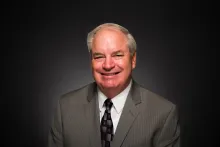
Robin Webber was born in Chicago, Illinois, in 1951, but has lived most of his life in California. He has been a part of the Church of God community since 1963. He attended Ambassador College in Pasadena from 1969-1973. He majored in theology and history.
Mr. Webber's interest remains in the study of history, socio-economics and literature. Over the years, he has offered his services to museums as a docent to share his enthusiasm and passions regarding these areas of expertise.
When time permits, he loves to go mountain biking on nearby ranch land and meet his wife as she hikes toward him.
