

Chuck Smith
This transcript was generated by AI and may contain errors. It is provided to assist those who may not be able to listen to the message.
Thank you to the Garden Grove Choir for that very nice selection. Also, everybody got involved in the second one. That's very nice as well. As a minister, I take very seriously what Jesus Christ told his disciples as churches were going to one day be raised, messages were going to be given, and what he said to his servants about providing his flock with food in due season. I'm going to read from Matthew 24, verses 45 and 46. This is what Jesus Christ said. He said, Who then is a faithful and wise servant, whom his master made ruler over his household, to give them food in due season? Blessed is that servant whom his master, when he comes, will find so doing, taking care, feeding, taking care of his flock, until he returns to this earth. Now, the Feast of Trumpets is less than two weeks away, and the rest of the fall feasts are around the corner. So, we need to prepare for these coming feasts, and I want to share with you some biblical principles that have helped me so much in the Christian life, to stay firm facing trials or adversity. And it's good to remember these principles that I'm going to bring out from the Bible as we approach these fall feasts, when God wants his people to assemble before him. And to me, these principles are the fundamentals of the Christian life. And I'm going to cover seven principles of the fundamentals of the Christian life. And I want to illustrate this using an analogy between the physical and the spiritual athlete. The Apostle Paul brings out several times the comparison that we are running the race toward the kingdom of God, just as athletes run races today to win a prize. We're not running a physical race, we're running a spiritual race toward God's kingdom. I'm going to read from 1 Corinthians 9, verses 24-27, where he told the Corinthian brethren, Do you not know that those who run in a race all run, but one receives the prize? Not everybody that runs is going to receive that prize. Run in such a way that you may obtain it, with effort, with dedication. And everyone who competes for the prize is temperate in all things. Now they do it to obtain a perishable crown, but we for an imperishable crown. Therefore I run thus, not with uncertainty. Thus I fight. As they had the Olympic Games there, they had boxers. He's the spiritual boxer in this case. He says, Thus I fight, not as one who beats the air. But I discipline my body and bring it into subjection, lest when I have preached to others, I myself should become disqualified.
So there's this analogy that with sports you can learn a lot about the spiritual principles of life. Another time the Apostle Paul used the analogy of this spiritual athlete and the physical athlete is found in 2 Timothy 2, verses 2-5. I'll read this, 2 Timothy 2, verses 2-5. Paul says, And the things that you have heard from me among many witnesses, commit these to faithful men who will be able to teach others also.
So Paul's saying, these principles that I've given to you, you, and he's talking here to Timothy, you look at the men, select the men that can faithfully take these spiritual principles. The spiritual fundamentals, the teachings, and be able to teach them correctly. He says, You therefore must endure hardship as a good soldier of Jesus Christ. No one engaged in warfare entangles himself with the affairs of this life, that he may please him who enlisted him as a soldier. And also, if anyone competes in athletics, he is not crowned unless he competes according to the rules.
He has to know the basic rules. And to prepare, he has to learn the fundamentals of the game, to learn the basic procedures, the basic training tools to be able to be a successful athlete. And I have an example that, oh, about 45 years ago, I was a student at Ambassador College in Pasadena, came from Big Sandy. I spent a year in 1971 in Big Sandy and then came over to the Pasadena campus in 1972. At that time, we played basketball, we had a good team. I enjoyed that. But interestingly enough, here in this area of Los Angeles, in particular, the University of California at Los Angeles, known as UCLA, they had the best coach in the nation.
Coach John Wooden. And he was in this streak of winning university championships that has never been equal to this day. And when I came there in 1972, I was able to watch some of those games with John Wooden and UCLA, all the way up to when he retired in 1975. And he did something that is unequal virtually in any sport.
He won seven consecutive championships of basketball, collegiate level, and he won ten in a span of 12 years. Now, just to put this into perspective, there has never been a team that has won three championships in a row. And UCLA won seven in a row and ten in a span of 12 years. And of course, that got my attention. What was it that made him such a successful coach? Because he had all kinds of different players. They weren't always the best in the league, but he knew how to draw the best from all of them and was able to make them into winners.
So, during my college years, I picked up this book. It's by John Wooden, and it's called They Call Me Coach. This was back in 1972 when he wrote it. And I thought, I'm going to put this away because I'm going to need it for a sermon, maybe in the future someday. Well, today is that time. Only 45 years later, but you never know. Sometimes you need to be a pack rat and leave your little books. I mean, this went all the way to Columbia, to Chile, and came back to this area.
And I have it, but it was because of the value that John Wooden, a very deeply committed Christian man, he put into principles what he had found in the Bible in his own life. And so, I'd like to compare a little bit about the fundamentals that John Wooden taught to our Christian fundamentals to be able to make it into the kingdom of God, because there is a definite parallel there. Now, I gave you a handout because in the book it has John Wooden's Pyramid of Success. This is a famous drawing that he did. He showed his men. And it's the different principles that lead to eventual success.
And he defines success as this. Success is peace of mind, which is a direct result of self-satisfaction in knowing you did your best to become the best that you are capable of becoming. And I wanted to keep, you can keep this, and right in the middle, he explains in this book the principles of this pyramid, but right in the middle, where it says skill, it says, a knowledge of and the ability to properly execute the fundamentals. Be prepared. Cover every detail. And so, this is the basics of the fundamentals. We need to cover our fundamentals from time to time to check how we are doing with these.
And I'll tell you a funny story. This is what triggered this whole message. I was listening to an interview by Bill Walton, who was the big UCLA red-headed center, who was part of that championship.
Ronnie was also a successful NBA player, but he said, here with this San Diego surfer boy, kind of hippy type, and he was six feet eleven. He was just a towering man, full of ability. And so, he goes to UCLA, which was the best program at that time, and he mentions this anecdote that when he came, boy, he was in his bicycle, and he just came in, and he knew he was just like the best player in that whole area and nation. And so, he had long hair, had a beard, and he came to Coach Wooden's office, and he said, hi, Coach!
I'm here for starting out the practice. And then Coach Wooden looked at him, and he said, well, you know, we do have certain regulations about how you should look. And he said, well, Coach, I've got the scholarship, you see my record, kind of the best here that's available, and I like my long hair, and I like my beard. And so, John Wooden, who was only like 5'10", looked up and he said, well, John, I mean, well, Bill, I really appreciate you wanting to play for UCLA, and I wish you the best.
And Bill Walton was saying, this man's going to throw out the most talented player because of my beard and my hair. Well, he learned who had the strongest will. And so, what did he do? He took his bicycle and went to the nearest barber shop, and he got his haircut, his beard, and he came and he reported to duty.
And of course, those four years, he became one of the most successful players, won the four championships at that time, but he found out what John Wooden was made of. And John Wooden was based on the fundamentals, and he mentions the different principles here about self-control. Team spirit, poise, all of these principles that you're not going to come and be this hotdogger of a player that's going to hog the ball. No, you're going to work the system if you want to be part of UCLA. And to finish this story, Bill Walton says, when I came to the training class, I was thinking, oh, this is the coach.
He's won several championships at that time with Abdul Jabbar, and he said, oh, let me hear all this great wisdom. They used to call Wooden the Wizard of Westwood, which is that area there in the Hollywood UCLA area. And what did Coach Wooden start? He started saying all of these big jockey-type men strong, and he starts out, he says, I want you to learn how to properly put on your socks.
Today we're going to focus on how to put on your socks. These guys are looking around. They were all high school stars. They've been playing basketball since they were 12 years old. And the coach gently, patiently says, here's the way you do it. You make sure there aren't any bulges.
Make sure that the first sock is fitted properly. You put the second sock, because basketball players use two socks on each foot, and make sure there are no wrinkles or anything else. And so here they are, oh, come on, coach, we want to play. We want to scrimmage. We're talking about it. And that's where John Wooden's fundamentals began, with the details.
Because he knew these men were not going to have blisters when they played an intense game, because it was so easy to get their feet blistered up, and then they were useless for the rest of the game. And he showed them how to tie the shoes, to double tie with a knot, so they wouldn't get loose during the game. And he went and he perfected this system of everything, everybody doing it in harmony, with teamwork, with selflessness. And he won 10 championships in this 12-year span. In no sport has somebody been that successful in a team endeavor.
And so, to me, we have our Christian life, and we have to focus on the details of our Christian fundamentals. We have Christian fundamentals. Some people don't pay attention to some of the details that are so important for us to eventually make it into God's kingdom. And so I want to share with you those seven fundamentals of the Christian life. Now, John Wooden, I wanted to read here, what he talked about in his book, and they call me coach. He said, no system is any good if the players are not grounded in the fundamentals. Team play comes from integrating individuals who have mastered the fundamentals into a smooth working unit. They all learn the basics, they all do it the right way, and now you knit them together as a working team. Confidence comes from being prepared. And then he goes on to say in another paragraph, at the same time, it should be recognized that basketball is not the ultimate. That's not the maximum goal. It is of small importance in comparison to the total life we live. He wasn't one of these worshippers of championships, like that was the maximum. No, he knew it was a means to an end. He was going to make better men from that endeavor. He goes on to say, there is only one kind of life that truly wins, and that is the one that places faith in the hands of the Savior. He goes on later to say, I read from the Bible every day, sometimes more than once. And he got a lot of these fundamentals reading the Bible and seeing these principles about integrity, sincerity, honesty, reliability. He talks about loyalty, cooperation. All of these are biblical principles. You can apply them in physical life as well as the spiritual life. Boy, do we ever need it in our spiritual lives. These principles, industriousness, friendship, loyalty, cooperation, enthusiasm. All of these in this pyramid of success.
So, learning and applying the fundamentals of Christian living is what has helped me so much. Thankfully, I learned these fundamentals in the first couple of years of being in the church. And it's still so fundamental. I go over these fundamental exercises every day. I'm not saying I'm perfect at it, but it's something that has become a habit. Now, Paul was trying to teach some of the fundamentals of the Christian doctrines to the Jewish Christians. And he was having a hard time. Notice in Hebrews chapter 5. Hebrews chapter 5. He was trying to teach them some of the fundamentals, and they weren't paying much attention. And they were getting themselves in all kinds of trouble. Hebrews chapter 5 and verse 12. He tells the Jewish Christians, For though by this time you ought to be teachers, you need someone to teach you again the first principles of the oracles of God. Talking about the Word. You need somebody to teach you about the fundamentals. And you have come to need milk and not solid food. For everyone who partakes only of milk is unskilled in the word of righteousness, for he is a babe. But solid food belongs to those who are of full age or of a mature spiritual age, is what it means. That is, those who by reason of use, application, practice, have their senses, their instincts, spiritual instincts, exercise to discern both good and evil.
There are no shortcuts. Takes effort, takes discipline, takes patience. He goes on to say in chapter 6, verse 1, Therefore, leaving the discussion of the elementary principles of Christ, let us go on to perfection, which again is spiritual maturity, not laying again the foundation of repentance from dead works and of faith toward God, the doctrine of baptisms, of the laying on of hands, of resurrection of the dead, and of eternal judgment. So those are some of the fundamental doctrines that we teach. But there are also the fundamentals about the Christian life. These are the ones that aren't doctrines as such. They're spiritual exercises. Of course, some have to do with doctrine, but I want to share with you those seven fundamental principles of the Christian life. Now, we have 20 fundamental beliefs which cover the basic biblical doctrines.
So we have a booklet on that. They talk about the fundamentals of belief. But I want to talk to you about the fundamentals of the practical life, what we're going to face when we accept this way of life. Jesus Christ talked about these fundamentals in Matthew 5. Let's go there. Matthew 5, verse 17.
People think He did away with the law. He didn't do away with it. Verse 17 of Matthew 5, He says, The term there, pleru, means to fill to the fullest. The same term that was used when the disciples were fishing and the nets were so filled. After Christ said, go and drop your nets, they said, Lord, we've been here all night long. Nothing has happened. It's daytime. Fish don't come to the nets in the daytime. He said, drop them off here. And it said that nets were so full, they started to break up. Well, the term fulfilled, pleru, is used there. Fill to the fullest. Just like those nets were filled to the fullest, He was going to fill God's law to the fullest in the Spirit as well as in the letter. He goes on to say, God's law is going to carry out His plan. And Heavens and the earth have not passed away. God's law is still active. It is still binding. Verse 19, He goes on to say, Talking about God's law.
But whoever does and teaches them, He shall be called great in the kingdom of Heaven. For I say to you that unless your righteousness exceeds the righteousness of the scribes and Pharisees, you will by no means enter the kingdom of Heaven. And then He gives several examples of how to obey God's law in the Spirit and the letter that the Pharisees were not carrying out in the proper way. So I'd like to now share with you what I call the Big Seven. These are the Big Seven fundamental principles of the Christian life. These seven I had to face early in my life. As soon as I came into the church, started learning about it, I had to face these seven challenges. I wasn't doing one of them.
I was a young man, 17 years old. I didn't know about God's laws. I didn't read the Bible. I really didn't pray. I went to church on Sunday. That's about all I did. But now I had to face these seven fundamental principles. Was I going to put them into practice? Was I going to learn them and apply them in my life or not?
These were the first trials I had to face. It meant opposition, ridicule, threats from my own family. I had to sacrifice opportunities. I had to sacrifice the pocketbook.
Also, my home life suffered. I lost friends. And also, the job that I was working on the Sabbath. And so here I call the big seven fundamentals. Now, again, fundamentals aren't what you continue doing. These are the basics. This is what the foundation is laid. The first one has to do with the Sabbath. Because that is part of our teachings. It's a doctrine. But it isn't something that you just intellectually absorb and accept.
Guess what? It means you're going to have to sacrifice on that day. It says to rest. It says for a holy convocation. It says you shall not do your own pleasure on that day. You're not just going to go skiing or going surfing or play golf or go to a movie or something. No, this is a holy time. So I had to face this. This was a challenge. This was a fundamental practice that meant sacrifice on my part. I enjoyed going out as a young man at that time.
Saturday, boy, that was a lot to do. Now, I had to keep it holy. That wasn't easy. Especially when I didn't have anybody in my family that was sympathetic. They were hostile to it. They were all Catholics. My mom was very dedicated. So keeping the Sabbath was a trial, a test. But I chose to follow God. And so I had to put in practice this first of the seven big fundamentals, which meant I couldn't party with my friends on Friday night, and we would travel an hour and a half to go to services every Sabbath.
If you fear God and you fear God's word, it means that you don't want to break God's laws. And that was a test that I was put through. And thankfully, you learned the fundamentals. You learned to sacrifice. You learned to say no to man and yes to God. Yes, sir. This is what you want from me. That's what you're going to get. I'm going to learn, just like with John Wooden, God doesn't equivocate. He doesn't say, well, you can keep a couple of Sabbaths in the month, but you can also do a whole bunch of things.
If you really need to do some shopping or you need to do some nice things and fun things, yeah, you can take a couple of Sabbaths off. No, God isn't that way. It's His way, not my way. And so, okay, I submit it. That's part of submitting to God and surrendering to Him, to His will. The second has to do with His feasts. I had to learn that that was a second fundamental. It wasn't just the Sabbaths. There were feast days during the year that God says they are annual Sabbaths. They are holy days to Him, and I was to keep.
So you can imagine that was even a bigger trial, because it wasn't just the Sabbaths, but all of a sudden, it could be during the week. I was gone. I didn't go to school on that day, and I was headed to services. Well, I thought if I have to follow God, I don't make the rules. God makes the rules. This is His second fundamentals. Just like with John Wooden, you want to play with me? This is the pyramid. This is the system. There's no equivocation.
There's no wiggle room. No compromises. If you really want to become a great athlete, you had to follow John Wooden's instructions. Well, I'm not interested in becoming a great athlete at this level. I'm interested in becoming a good spiritual athlete. In Jesus Christ, there in Hebrews 12, it brings out that He is the captain of our salvation, and He's our herald. He's our coach. He's there for us, guiding us, if we want Him that way.
The third of these fundamentals was tithing. I didn't even know what the word meant. And now, from my earnings, I worked at a hospital where my dad was a doctor right there in Murphy. So I worked after school from 3 to 3 o'clock to 11 o'clock at night. And all of a sudden, from my paycheck, I had 10% that I separated. That's the first tithe, and then I kept the second tithe, and then the third year, I kept an extra tithe to help the poor in the church.
And so, again, I don't make the rules. All of a sudden, I started tithing, and I knew that that wasn't a suggestion. That was part of God's law. He doesn't say, well, tithe when you can. The term is, every tenth part of the salary is God's. Now, you can use it, but you're taking it away from God. We're going to cover this a little more in detail later. The fourth had to do with the food laws. Now, that was a big problem in the house, because my dad liked to eat ham, my mother liked to cook all kinds of shellfish, and all of a sudden, I said, Mom, can't eat these things anymore.
What? Didn't go over very well. But, again, who makes up the rules? And so, you have food laws now. You're not going to eat anything that the Bible brands as unclean. Later, you find out there are reasons for that. All of the animals that swim at the bottom of the oceans, that eat all the garbage and dead fish, and all of that, God says, that's part of my clean-up crew. Don't eat the clean-up crew. Don't eat the oysters. Oysters are my little valves that filter the sea water.
So, everything has an ecological niche. And God says, you leave my animals that I use to get rid of garbage and to get rid of toxins, and one of them is pigs. God created the pigs as a little mobile garbage disposal. They can eat just about anything.
You know that they can actually eat poisonous snakes, and the snakes bite them and put the venom, and these hogs and these pigs, they've got so much fat in them that the venom just gets diffused, distributed. They don't have a problem. They just eat them like spaghetti. And of course, we like pigs' feet at the house until you find out that there's this little valve where all of the pigs' feces goes through not only the elementary canal, but it goes through their feet as well.
And so, it's pretty nasty. Again, the food laws. That was another of the fundamentals. God says, you want to be part of my kingdom? Okay, these are the fundamentals. I'm not going to force you to do them. One day in the kingdom of God, people are going to be forced to do them. We're going to read a couple of scriptures, but now it's voluntary. You want to be a future leader in the kingdom? You've got to learn the fundamentals. John Wooden taught these men, and many of these men became great coaches because they learned and transmitted those same fundamentals to others.
The fifth, regular prayer. Like I mentioned, I didn't pray. And now, I found myself, God says, pray. It should be regular, it should be daily, it should be heartfelt. So I have to learn that fundamental. And then, the sixth has to do with Bible study and meditation, where you study God's Word and you meditate upon it. You don't just read, but then you meditate. How does it apply to me? How can I apply these principles to me? And the seventh has to do with fasting. Boy, I never fasted in my life.
All of a sudden, I found out that was one of the spiritual tools. That's part of God's fundamentals. Don't be afraid of it. It's a great tool. It's so helpful. I couldn't have made it without fasting this far.
And so, all of us have had to get these fundamentals down as a regular pattern of life through all the ups and downs. It's not enough to just say, I accept Christ as my Savior. Christ mentioned in Matthew 7, verse 21.
Matthew 7, verse 21, He says, So you can call Him Lord. You can call Him my Savior. But just because you call Him that doesn't mean you're going to enter the kingdom of heaven. But He who does the will of my Father in heaven, God is the giver of laws.
God's fundamentals are based on His laws. Verse 22, Many will say to me in that day, Lord, Lord, have we not prophesied in Your name, cast out demons in Your name, and done many wonders in Your name? It means they did it, but it wasn't through God. Many times demons disguise themselves as angels of light and help a person do miracles or do all kinds of healings and things like that. Because notice what it says in verse 23, That wasn't the power of God's Spirit that did this. And He said, Depart from me who practice lawlessness. You're not obeying my laws. You don't even keep the fundamentals. And yet you call yourself a minister of Christ. Well, learn the fundamentals from God's Word. That's what Christ expects of His ministers. And so let's go through real quickly these seven fundamentals. The Sabbath in Isaiah 58, verse 13 and 14.
This is what I learned about applying it. This is the way to keep the Sabbath properly. Isaiah 58 and verse 13, it says, I read that. I know. Okay. No more of my own pleasures on that. I've got six days to do these other things, but not on the Sabbath. And call the Sabbath at the light, not something miserable. You really enjoy, just like the first message talked about, how we can do it. You really enjoy, just like the first message talked about, how wonderful it is to be here on the Sabbath in God's feasts. The holy day of the Lord honorable and shall honor Him, not doing your own ways, nor finding your own pleasure, nor speaking your own words. How do you develop that spiritual focus if you're doing all of these other physical things on that day? So you see, God is not depriving us of pleasure. He is funneling and channeling our attention on that day we need to fill and replenish our spiritual batteries. He goes on to say, Yes, that's the right relationship. He loves the person that keeps the Sabbath, because that's the fourth commandment that He established. And I will cause you to ride on the high hills of the earth. I'm going to bless you like you have no idea and feed you with the heritage of Jacob, your father. They're the ones, Abraham, Isaac, and Jacob, they're going to be the ones under Christ that inherit the promises. And we're going to be part of those promises. The mouth of the Lord has spoken. God has sworn this. He has spoken it. He's going to fulfill it. The second of these fundamentals are the feasts. Let's go to Zechariah 14. Zechariah 14.
Toward the end of the Old Testament. Zechariah 14. Notice that when Christ comes back, He's going to impose on this world the keeping of His feasts and in particular the feasts of tabernacles, which is going to be a worldwide gathering. Zechariah 14, verse 9, says, And the Lord shall be king over all the earth. In that day it shall be, the Lord is one and His name one. You're not going to have Allah, you're not going to have Buddha, you're not going to have any competing religions. There's going to be one God and one way of doing things. And what does He establish as one of the primary fundamentals in His kingdom? Notice in verse 16, And it shall come to pass, That everyone who is left of all the nations which came against Jerusalem, that's right prior to Christ's return, shall go up from year to year to worship the king, to worship Jesus Christ, the Lord of hosts, and to keep the feast of tabernacles. And it shall be that whichever of the families of the earth do not come up, okay, they don't want to do it God's way. Bill Walton wanted to do it his own way. Well, he learned. Coach Woodin wasn't going to bend the rules for him. God's not going to bend the rules for anybody in his kingdom. He says, Those that do not come up to Jerusalem to worship the king, the Lord of hosts, on them there shall be no rain. There'll be a drought until the earth turns into as hard as a brick. No food, nothing to drink. We'll see how long they last before they give in to God's will. Going on, it says, verse 18, If the family of Egypt, today the Egyptians mostly are Islamic, and if they will not come up and enter in, they've always had that jealousy with Israel, they shall have no rain. They shall receive the plague with which the Lord strikes the nations in plural. So that indicates other nations. They're not going to come in as well-wishers. And, oh, how wonderful! Let's give up our Christmases and Easter, and let's all go to the feast. No, sir. They want to do their own thing. And so Christ is not going to allow them. He says, the nations who do not come up to keep the Feast of Tabernacles. This shall be the punishment of Egypt, and the punishment of all the nations that do not come up to keep the Feast of Tabernacles. Here the term punishment has to do with sin. Okay, you're going to break that fourth commandment, and you're going to break the feasts? No, sir. You're going to learn the fundamentals. At that time, people are not going to have a choice. We have a choice now. We voluntarily submit and surrender to His will now.
Okay, going on to the third tithes.
Malachi 3, verse 6.
Of course, today, money is one of the great gods of the world. As we know, people will sell their souls to get rich. You look at all the scandals every day in the paper about all of these politicians and businessmen and others that get caught in all these ways of swindling people. Malachi 3, verse 6. God says, For I am the Lord, I do not change. He's saying, I'm merciful. I'm patient. I don't change.
I extend my mercy. He says, Therefore, you are not consumed, O sons of Jacob. Yet from the days of your fathers, you have gone away from my ordinances, and have not kept them. Return to me, and I will return to you, says the Lord of Hosts. But you say, In what way shall we return? What do we turn to? Answer the fundamentals. Verse 8. Will a man rob God? Do you want to be accused of being a thief? Yet you have robbed me, but you say, In what way have we robbed you? In tithes and offerings, answers God. You are cursed with a curse, for you have robbed me, even this whole nation.
Bring all the tithes into the storehouse, that there may be food in my house, and try me now in this, says the Lord of Hosts. If I will not open for you the windows of heaven, and pour out for you such blessing, that there will not be room enough to receive it. So what do we do? We deprive ourselves of the blessings of God, because many times we don't follow through with this fundamental. This touches our pocketbook. Christ said where our treasure is, that's where our heart is going to be as well.
He tests us to see if we're faithful in our tithes and offerings or not. Then comes the food laws. Let's go to Isaiah 66. I'm going to have to cut the message a bit short, but I will be able to cover the seven here. Isaiah 66 and verse 15. It says, For behold, the Lord will come with fire, and with his chariots, like a whirlwind, to render his anger with fury, and his rebuke with flames of fire.
For by fire and by sword, the Lord will judge all flesh, and the slain of the Lord shall be many when Christ returns. And who are they? Those who sanctify themselves and purify themselves to go to the gardens, talking more about idolatry, after an idol in the midst, eating swine's flesh, and the abomination, which has to do with, according to the Hebrew here, shellfish, and the mouse.
Well, we don't eat mice, but a lot of people eat rabbits, which are rodents as well. They shall be consumed together, says the Lord. So when he comes back, one of the fundamentals is going to be about the food laws. God is not going to compromise with this world. He's going to establish and impose that so people will eventually learn the spiritual fundamentals of God's kingdom. He's giving us an opportunity to learn them now voluntarily. You see, you're not being forced into it.
But if you submit now into it, and you learn, and you're blessed, and God is going to use and help and protect you, then you will be ready to teach others. Nobody imposed it on you, so you can teach others and say, I did it voluntarily. Now you can learn to do it, because God is king over the earth. And so, as we prepare, then we have, of course, the regular prayer, Bible study, and meditation, and fasting, which we learn when problems come.
We need to get close to God. Sometimes the fast is necessary. To get rid of our vanity, to get rid of our minds when they veer off into the world, and we're not close enough to God, we need to be physically weak and humbly our human nature to be weaker.
So then, spiritually, we can be stronger. That's what Paul said. When I'm weak, my human nature doesn't have much power, then God's spirit can take over. But if I've got all of this fleshly strength and power, God's spirit is very weak in us.
And so, let's go to the last scripture. I just have time for this, so I'm going to have to cut it back a bit. I have so much to give you, but not able to do it. Remember, have a notebook. Write down the things that I've learned this year spiritually, and at the feasts. How many things are we going to learn then to grow in grace and knowledge? Study the booklet on fundamental beliefs. The 20 of them. Study them.
People go off track when their foundation is not solid, when people sometimes attack the Sabbath, and a person hasn't studied the subject on the Sabbath. He doesn't have good answers. We have to be ready to give an answer to those who question it. And in Matthew 7, verse 23, the importance of the fundamentals of Christian life. Christ said, and I'll start with what I had read before, and then I will declare to them, I never knew you, depart from me, you who practice lawlessness. Therefore, whoever hears these sayings of mine and does them, practices them, I will liken him to a wise man who built his house, I will liken him to a wise man who built his house on the rock.
And the rain descended, the floods came, and the winds blew, just like those hurricanes, and beat on that house, and it did not fall, for it was founded on the rock. It had that strong foundation. But everyone who hears these sayings of mine and does not do them, hasn't learned about the fundamentals, isn't applying them properly, who will be like a foolish man who built his house on the sand. And the rain descended, the floods came, and the winds blew, and beat on that house, and it fell, and great was its fall.
Just didn't have the fundamentals down, just like so many teams. They looked good, but their fundamentals were not solid. And so, brethren, let's prepare for these fall feasts, and keep practicing the seven Biblical fundamentals of the Christian life.
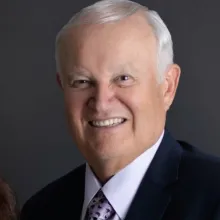
Mr. Seiglie was born in Havana, Cuba, and came to the United States when he was a child. He found out about the Church when he was 17 from a Church member in high school. He went to Ambassador College in Big Sandy, Texas, and in Pasadena, California, graduating with degrees in theology and Spanish. He serves as the pastor of the Garden Grove, CA UCG congregation and serves in the Spanish speaking areas of South America. He also writes for the Beyond Today magazine and currently serves on the UCG Council of Elders. He and his wife, Caty, have four grown daughters, and grandchildren.
