

Mario Seiglie
This transcript was generated by AI and may contain errors. It is provided to assist those who may not be able to listen to the message.
Well, with that, we are going to have the sermon today. And as you know, when we're in the park and we're looking at all of this beautiful creation, we always have a sermon on creation. For us to just look around. Do you think all of this just happened to occur? Do you think human beings created these things? No. No, this is all created by someone far superior than all of us. And, of course, science has advanced greatly in this century. We are understanding many things about nature. But there are seven things, seven mysteries of creation that science has not been able to explain.
And they are not going to be able to explain it because it goes beyond human knowledge. And so I want to share with you the seven great mysteries of creation that with all of the laboratories and all the astronomers and all of the scientists, they have not been able to explain it. Now, I'm not saying that there won't be some more explanations about things, but I'm just saying that these mysteries are of such depth and of such scope that it goes beyond just the physical universe, more than just the laws that we understand.
Let's go to Psalms 111 because this is a psalm that this sermon is dedicated to. Psalms 111, as you know, most of these psalms were composed by David. He was a shepherd. He was out in the fields at night. At that time, they didn't have electric lights and he could look out and see the vastness of all the stars and the beauty around him. And so in Psalm 111, verse 1, is something that I want to do today. He says, praise the Lord. I will praise the Lord with my whole heart in the assembly of the upright and in the congregation.
So we are in the assembly of the upright, of those who are following God, who use both the Old and the New Testament. Both are inspired. Both come from the mind of God. And so David says, I will praise God for all He has done, not only what surrounds us, but also what He does for us.
He says, the works of the Lord are great, studied by all who have pleasure in them. Those who like to observe a little deeper and marvel at everything we see. You know, one famous philosopher once said that the unexamined life is not worth living. If you don't examine things, if you don't ask yourself, why is this? Last year in August, it was fall. Now it's springtime. We have all the leaves out. But during the fall last year, I looked to my left and we believe these are the white birch trees. We're not 100% sure, but they're probably birch trees. And all the leaves had fallen.
And I looked and it was completely white, just like if somebody had whitewashed the whole thing. And I just marveled that in the midst of all of this, God changes all the colors to where you have the white trunks and eventually they're just perfectly white.
Well, do we ask ourselves, how wondrous is this beauty around us? He says His work is honorable and glorious and His righteousness endures forever. God is holy and good. He is incapable of doing evil. He says here, His righteousness endures forever. He's never going to change His nature. He has made His wonderful works to be remembered, to be able to examine them and appreciate them. The Lord is gracious and full of compassion. He cares for every one of us. He suffers when we hurt, when we're ill. God says that even all of our hairs are known and counted by God. Every one of them. He can tell how many we have.
No mother knows that. No matter how much she enjoys looking at the baby and children. He says He has given food to those who fear Him. He will ever be mindful of His covenant. He has declared to His people the power of His works in giving them the heritage of the nations. The works of His hands are verity and justice, which means truthful.
They stand fast forever and ever and are done in truth and uprightness. He has sent redemption to His people. He has commanded His covenant forever. He wants to make a covenant with us. That's the best partnership you can ever have. Do you want a covenant with God? Do you want to walk with Him so that one day He will transform you into a glorious spirit being that will never die, that will enjoy love forever? He wants to have a covenant. He's not forcing it on anyone. But He says, if you want to, I will walk with you. I will be with you.
I will protect you. I will bless you. I will also test you because I want to make something better than you, than something that you are now. I want to make you better.
One of the questions we asked the other week while we were at the house with brethren, how many abilities as a human being can you usually develop in this life? How many abilities would you say? Well, maybe four or five. There are some here that are good musicians.
They work hard at that. Maybe they've mastered playing the guitar.
But do they know how to play the 30 different musical instruments? That's pretty hard.
Pretty hard. Maybe some are very good at math and have worked in engineering.
That's an ability. Well, how about the lady of the house? Well, I appreciate. My wife knows how to cook well.
See, I've got a little curve there. I've got to be careful.
But she developed that ability and of hosting people.
And also, she's a good artist. She does sculpturing, which she also learned. But basically, probably, maybe five or six things because life is short and everybody has to earn a living.
So you really don't learn how to develop all of your passions and abilities.
But for God, he looks at everyone just like an acorn which produces an oak tree.
And God looks at that human being and he says, well, in this life you might develop five or six.
But in that acorn, in that life, there are some 200 abilities and I'm going to develop every one of them.
I'm going to help you. So you see, in the future, we're all going to play the violins.
We're going to play the piano like Beethoven. We're going to compose because we've got spirit bodies and minds and God says, I want you to develop all of these that in this life you don't. So see, our life is so small in comparison to what is going to be developed in the future.
And so David, whom God developed a lot and gave a lot of abilities to, he says here, Psalm 111.
He says in verse 9, he has sent redemption to his people. He has commanded his covenant forever. Holy and awesome is his name. The fear of the Lord, the deep respect for God.
And you know that's something God has to give you? That's not something a person is born with.
I've never seen a little child who is just naturally has that deep respect for God.
I've never seen one that was like eight or nine. And he came in and said, you know, Mr. Sagley, I really want to understand the whole Bible and I want to apply it. I've never seen one.
It comes with time. You have to make that decision if you want to really deeply respect. You see, the fear means that you are fearful of disrespecting him, of doing things that you know God's going to say, oh son, don't do that. Oh, daughter, don't get yourself into that mess.
God wants us to have the best in life. And so he says here that the fear of the Lord is the beginning of wisdom, talking about spiritual wisdom. If you really respect him, he's going to give you wisdom, which means how to live properly, a right understanding of life.
He says, a good understanding have all those who do his commandments, his praise endures forever.
A good understanding.
Everything I understand, everything that my life is, I owe it to obeying the commandments of God.
From there, it stems everything else.
If I love God and I love my fellow man, and I'm following his commands, I'm going to love my daughters. I'm going to love my grandkids. I'm going to love the brethren. I'm going to serve them.
I'm not going to put myself first.
Although we're all fallible, we don't all meet the grade. But following God and his commandments, which are all good, is the best life. And that's what he wants to give us forever. So, that's what I want to do. I want to show you the seven mysteries of creation and how science does not have an answer for these.
They can't adequately explain it. First, the origin of the universe.
The universe did not come from something else. It has not evolved.
It came and was created at a moment in time. And what science has been able to do is to probe back in time all the way to about the first. They can't get past the first second of creation.
They start out in the second and third second.
How many of you have ever heard of the term the Planck Wall?
The Planck Wall? That is the term in physics that goes back. And let me read it to you.
It is the point in history of the universe of the universe, which is here.
I wanted to correct you. It says 10.43 seconds after the Big Bang, after the universe begins. It says, beyond which gravitational physical laws cease to apply. So when you go back in time to the first 10 seconds, the laws of physics do not apply. Only after that time does it apply.
It says, beyond this symbolic wall, notions of time and space lose their significance. When you get back before that 10.43 seconds.
As they say at that point, physics is powerless. It cannot explain it.
And so you can get back to that time, but you can't get further back. Something happened that cannot be explained by science.
Robert Jastrow, who was a former head of one of the branches of Nassau, he says about this plank wall.
He said, now we would like to pursue the inquiry farther back in time, but the barrier to further progress seems insurmountable.
It is not a matter of another year, another decade of work, another measurement, or another theory. At this moment, it seems as though science will never be able to raise a curtain on the mystery of creation. For the scientist who has lived by his faith in the power of reason, the story ends like a bad dream.
He has scaled the mountains of ignorance. He is about to conquer the highest peak. As he pulls himself over the final rock, he is greeted by a band of theologians who have been sitting there for centuries, going back to the Bible. The Bible talks about creation and the beginning.
They try to get there and find that it is not a scientific issue. It is a theological issue. Because that plank wall is something that they know they can't use any instruments of physics to understand it.
Let me go to the second great mystery, the origin of dark matter and energy. It is hard to believe, but actually, this is something that has been understood.
The whole universe that we can see, this Earth, with all the trees and all of the continents and all of the planets and galaxies in the universe, only comprise of 5% of what the universe actually is. 5% can be detected by scientific instruments. 95% cannot be detected, which is why they call it dark matter and energy. So 95% cannot be detected by any instrument of science. Now, they can detect the effect because the galaxies are all kept in order, and the stars and the planets are all kept in order because there's this mysterious power that keeps it in its place. I don't know how many of you have heard of the Large Hadron Collider in England? The Large Hadron Collider. It's over there in the area of Switzerland. And basically, they've been running that collider now for about eight years, hoping to find some idea of dark matter and energy. Everything has failed, and yet it does exist.
Turn with me to Hebrews 1. Here's what the Bible tells us about what upholds the universe. It says in verse 1, God, who has at various times and in various ways spoken time past to the fathers by the prophets, has in these last days spoken to us by his Son, whom he has appointed heir of all things, through whom also he made the world. So he existed before coming down to the earth. And notice, who being the brightness of his glory, talking about the glory of God the Father, that Christ shares that glory, and the express image, which is, it says, the exact image of his person, and upholding all things by the word of his power, when he had by himself purged our sins, sat down.
Did I say Hebrews 1? Yeah. And this is verse 2. Sat down at the right hand of the majesty on high. Verse 3. So, again, it says that God upholds it. There's a spiritual force holding things together. And human beings only see part of this universe. What interacts between molecules, atoms, energy, but something is upholding the things together. So that's the second thing. The third great mystery of creation is the origin of the laws of nature. Where did all these laws come from? That uphold things. The laws are not made of matter.
They control matter. They show how matter interacts. But for instance, the law of gravity is something that keeps all of matter with a certain unity. There's a certain interaction going on, but the laws are not matter. They're separate from it. Just like the laws of mathematics. I mean, we say 2 plus 2 is 4. Now, is that something that we can call it a law that comes from nature? No. It is a mathematical idea that works in nature, but it is separate.
You can't look at a tree and say, oh, there's the mathematical formula. Yeah, it's right here. It's written. No. It's part of the mind creating this image and able to add and subtract. The third mystery, which I mentioned, there are around 200 laws in nature that are all fine-tuned. Just like a Swiss watch, every cog has to be a certain size, a measurement to tell time. As you know, they got very expensive watches, the Rolex watches, the Oyster mechanism, and it took many engineers in Switzerland to develop all of these mechanisms to tell the right time.
But I'll tell you, one of those watches is absolutely unfit to compare with the laws of nature. Just one of these laws that is called the Cosmological Constant, which controls the expansion of the universe, is calibrated to 1 to the 10th power. That's how carefully. There are only 10 to 80 power atoms in the universe. So this is even more calibrated than all the atoms that exist. Hugh Ross, the astronomer in Pasadena, made the following comparison. An analogy that does not even come close in describing the precarious nature, the beautiful balance of this cosmic balance would be to have a billion pencils, all simultaneously positioned upright on their sharpened points in a smooth glass surface with no vertical supports.
Can you put all of these pencils? None of them falls. Perfectly balanced. Not 10, not 20, not a million. It says here, but a hundred, it says a billion pencils, and all of them are perfectly placed. Would you say it takes a great being to do something like that? The fourth mystery of creation is the origin of information. The information, for instance, in the DNA, which is the instruction manual inside the cells that tells the cells how to reproduce, how to grow, how to stay healthy, all of that has to do with the DNA molecule.
That if you stretched it out, it would be about six feet tall. And yet, the tiny cell has all of this wound up. Now, information is not matter or energy. Matter and energy carry information. For instance, if I had a telegraph machine, and I use the Morse code, and I push a couple of times, the signal is sent to another place, and it's either a dot or a dash, which means a quick push or a longer push.
Now, if there is no language, all you get at the end of this, at the other side, is gibberish, a bunch of dots and dashes. But if each dot has a meaning and the dashes, you can make a sentence.
You can send information, but information is not the dots and the dashes. It comes from an intelligent source. So, where does that intelligent source that produces the DNA, where did that come from? That DNA. Matter and energy cannot create information. It can only carry information. And then we come to the origin of intelligent design, the mystery of the origin of intelligent design.
See, our bodies, thankfully, are built with intelligent design, and we have multiple backup systems. If we catch a cold, we have a backup system that goes into effect and starts battling the virus. And if the virus infects us here, we start getting a runny nose, we start getting tearful eyes, the whole system is there as a backup to clean it out.
And eventually, it builds antibodies that if that cold ever comes back, it's got the immunization. It has the remedy already. So, and you have all of these multiple backup systems in our body. Or else we would have died with the first disease, but we don't.
I'm going to use a couple of props here. Talking about backup systems. I have here just a simple goggle. But a scientist one time wanted to see about the backup system of our eyes and vision and how it works. So he used a goggle that had two mirrors so that when he looked, there was a mirror that bounced the light and then another mirror that bounced it out.
And so when he put it on, everything was backwards, right? Everything because the mirror had inverted the vision. So he put it on and he started trying to walk. And everything, you know, people's heads are down, their bodies are up. He's walking. They throw a ball at him and he catches it here, but the ball's running here. But after hours and he kept the goggles on or then he would put on a blindfold so that you could...
the brain never saw anything except everything backwards. Well, after about a day or so, what happened? The brain realized it was looking at things backwards. And so what did it do? It inverted it. So with his goggles, now he could see straight. He could see everything right. Even if the mirrors were showing the opposite, the brain's backup system said something is wrong here. And it had the program to say, well, I know how to fix this. And so it inverted and the man rode a bicycle, a motorcycle, looking and with the inverted vision.
He also flew a plane. No problem. Why? Because we have backup systems. Intelligent design has this. And what thing can evolve with backup systems in its place? Because it doesn't know it needs backup systems. It only takes... like engineers, like in an airplane, you have like three backup systems that if something fails, they have another computer that takes over. And if that fails, they have another one to keep it from crashing.
And so here I have the second exhibit about intelligent design. These are a type of butterflies that are from the morpho variety. And I'm gonna pass it around. And you look at this and just think that the bright blue and red, the red is in the is at the bottom, the blue and red are on the top. These are not pigments. This is not coloring. It's actually prisms that are set up like tiles and the sunlight hits these tiles. And the angle is such that it absorbs all of the color except for the metallic blue or the metallic red.
And so butterflies, what do they know about these things? Here you have to have exactly the right angle. And just like a tiles on the roof, all of these little prisms have the same angle to show the beauty. So you can pass that around.
And this takes us to the sixth mystery of creation. The origin of the beginning of life forms on earth, which is called the Cambrian explosion. I like to collect trilobites. These are some of the earliest creatures ever appearing on earth. Scientists say around 500 million years ago, we don't know for sure, because all of this is relative to what time scale you're talking about.
Because we only have sequence of events. And we're not sure how long, but whatever it is, these creatures are at the bottom of the fossil record. Below them, you've got over a mile of sedimentary rock that has no trace of any type of life like this. There are some bacterias and ancient algae before, but nothing that we would call a creature an animal. These are the first animal types that appear on earth.
And so I'm going to show this around because they start off with compound eyes.
Eyes like the ones of a fly or of a wasp like this. This is a modern wasp. These creatures have sophisticated eyes like these other ones. How did this appear without previous ancestors?
You look at them while I explain a couple of things about the trilobite eye.
You can look at it with the magnifying glass.
Here's a couple of quotes from paleontologists. Those are scientists that study the fossil record by Sinclair, 1985, bait 9. It says, the trilobite eye is the oldest eye of which we have record, and yet it's perfectly formed, and it's one of the most complex types of eyes ever created on earth.
Trilobite scientists now conclude that trilobites, quote, possessed the most sophisticated eye lenses ever produced.
If you look carefully at the eye, you'll see kind of a little strawberry type shape.
Each one of those are tiny lenses, and they range from approximately 700 lenses to 15,000. Each one has the right angle to look at things just like the pixels on a camera.
Well, each lens here is a convex, and it points to a center place where the trilobite brain puts all of these pixels together in an image, and it can see forward, backwards, sideways, and again, it starts out that way.
Not even as a physical camera can do that. It says here, it says, and their vision may actually have, quote, been superior to current living animals.
It says evidence of the effectiveness of this eye design is the fact that it is still widely used in both insects like the wasp and crustaceans today. So the same system, the same design, has lasted all of this time from the beginning to the present time.
It says the lens here at page two at the bottom says the lens used a design that was largely eliminated, that largely eliminated the spherical aberration problem.
The distortion caused by the lens shape. So it's very hard when you have a lens, a flat lens, it's going to distort the image on the sides. Well, here, the trilobite eye has the same shape as the lens shape.
Here, the trilobite eye has the same shape as the scientist Descartes and the scientist Hygens. If you ever studied history during the time of Isaac Newton and then later on, how they shape lenses to use for glasses, for telescopes, all of this, the shape of the trilobite eye is the same design as what these scientists came up with to avoid the distortions of the lenses. It says here at the very end of page two, it says, and a final discovery that the refracting interface between the two lens, because there are two types of lenses in every one of those trilobites, was designed in accordance with optical constructions worked out by famous scientist philosopher Descartes and Hygens, the famous lens crafter in the Dutch from Holland in the mid 17th century. And it says here, the scientist says, it borders on sheer science fiction, this design of the trilobite eye. This particular trilobite comes from the Permian level in the geological column, and it is of the variety called hollow crow, it's a most common trilobite eye type, and also the most complex. It consists of thousands of small hexagonal shaped lenses that function together as a unit. Each lens uses a shelled by convex design consisting of a thin calcite layer covered by a thin protective film, the cornea.
Now, do you think something like this that starts out, God wanted to show the evidence to human beings that there's a designer, that he started everything, and yet man is more unbelieving now than ever before. We have kids coming into universities and about half of them quit believing in God, quit believing in moral principles. It's ironic. With all the knowledge we have, people should be giving glory to God, and instead they're giving glory to themselves and to their society.
And that takes us to the seventh mystery of creation.
Remember, the fifth one is origin of intelligent design, the sixth is the origin of the Cambrian explosion, and the seventh is the origin of consciousness. Consciousness is what we can think inside ourselves. We have a conscious being that gives us understanding, a person that is conscious can reason, can think, but consciousness is something that is not found in any particular organ of the body. Because, for instance, people that have been operated and they've had half of their brain removed, they still retain 100% of their consciousness.
And so, it is related to our body, but it's the person inside the body.
You can't reduce consciousness to atoms or energy. And again, they're at a mystery. They're at befuddled. They don't understand.
What is consciousness? Where does it come from?
Where do we get free will? How do we know how to love?
Things like that, that human beings can say, who am I? They can ask themselves about their own selves. Why am I thinking this? No other creature can do that and self-examine themselves.
That's part of our consciousness.
And so, let's go to Isaiah 11.
Verse 6.
When Christ comes back, these mysteries are finally going to be understood.
It says, the wolf also shall dwell with the lamb, the leopard shall lie down with a young goat, the calf and the young lion, and the fatling together, and a little child shall lead them.
It's going to be a world of peace. Christ is coming to heal this world, to remove the evil nature in man and animals, the wildness of animals.
And it says in verse 9, They shall not hurt nor destroy in all my holy mountain, for the earth shall be full of the knowledge of the Lord, as the waters cover the sea.
So, all of this knowledge, we just have a tiny part of it now.
But this keeps us humble.
Those seven great mysteries, the origin of the universe, the origin of dark matter and energy, of the laws of nature, of information, of intelligent design in nature, the origin of the Cambrian explosion of living things that are complex, that are very carefully orchestrated and designed, and the origin of consciousness.
Those, brethren, are mysteries that only God can one day explain to us. Let's enjoy the beauty around us and praise God in all the congregation.
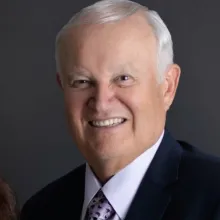
Mr. Seiglie was born in Havana, Cuba, and came to the United States when he was a child. He found out about the Church when he was 17 from a Church member in high school. He went to Ambassador College in Big Sandy, Texas, and in Pasadena, California, graduating with degrees in theology and Spanish. He serves as the pastor of the Garden Grove, CA UCG congregation and serves in the Spanish speaking areas of South America. He also writes for the Beyond Today magazine and currently serves on the UCG Council of Elders. He and his wife, Caty, have four grown daughters, and grandchildren.
