
Steve Shafer
This transcript was generated by AI and may contain errors. It is provided to assist those who may not be able to listen to the message.
I want to begin today a little differently. I want to just give a little background to lead up to something here to introduce my sermon today. Back when I was 14 years old, that was back in 1955, but my great-grandmother, Keke, died. And I'd known her very well. She was a wonderful person. But that was the first funeral I ever attended when I was 14. It was an open casket funeral. And that really hit me as her great-grandson to look on there and see someone who was asleep in that way. And it made me think about, wow, someday you're going to get to the end of your life and you're going to fall asleep. You're going to die. I'd had no religious training really. My mom and dad believed in God, but they didn't send me to any church affiliation.
They weren't affiliated with any church, and I didn't really go to church, so I had no religious background in that sense. But I just thought about that. There's my great-grandmother. I'm never going to be able to talk to her again. I'm never going to sit down and ask her questions, because she was born back in 1855. She died when she was 99. I thought, wow. I thought later, I could ask her all kinds of questions. What was it like back in the late 1800s?
Actually, one time, she did mention this, that when she was in her 20s and first married, they had kind of a farmhouse. Oh, thanks, Ron. I appreciate it. They had a farmhouse, and they actually were attacked by Indians. They weren't attacked by Indians, but Indians were circling their house. My great-grandfather went out there with a rifle, and he shot a rifle up in the air a couple of times over towards their direction, but over their heads.
And then they all scattered. But she actually had an experience with Indians. You can imagine that.
But I thought about that a lot.
It got me to thinking, what is the most important question that anyone could ever find the answer to?
At that point in my life, I thought about that. I thought, well, the most important question that could ever be answered would be, does God exist? Is there a God? Is there some purpose to life? Is there something beyond this life? Or is it like my great-grandmother, you just die, and that's it? And you never wake up again. And that frightened me just to even think about that. Is there a purpose to life?
A little over seven years later, in December 1962, I was up there in my room one night, now 21 years old, and I was dialing. I just turned the radio on before I went to bed and just dialed through the radio. Of course, I came across the world to broadcast. And of all things, Mr. Armstrong, it was Garner Ted, actually, it was Garner Ted Armstrong, who was saying, he broadcast on, does God exist?
And can you prove God exists? And he was advertising the booklets, does God exist? And seven proofs, God exists? So I immediately ordered the booklets, had to wait about three weeks to get them. I got those booklets and I read them, and it struck me like a lightning bolt. After I read those books, I realized there is a God. God does exist. I knew it beyond any shadow of a doubt.
And for the first time in my life, I went upstairs, it was night, I read the booklets. It was a dark, crisp night, January, Seattle. I went outside in the backyard, looked up to the sky, it was the clearest night, and you could see all the stars. And I realized up there somewhere, God exists. There was a purpose to life. The first time in my life, forever, I dropped down on my knees and I prayed. Because I realized there is a God. That had a huge impact on my life. Now, that was over 52 years ago. Now, here I am, nearly at the end of my life. We're getting closer to it. And during those past 50 years, since I discovered that and started to become the naught-long after that, I started attending church. God's Church has gone through many trials. It's gone through many ups and downs. And all of us, as members of God's Church, especially those who have been around for a number of years, most of us have, have gone through many trials. And sometimes you think, well, trials are never going to end. You get through one set of trials and then right around the bend there's something else. My question is, what will it take to see us through to the end? Either to the end of our life, physically, or to when Christ returns? What lessons can we learn to keep us that in the forefront of our minds for the rest of our lives? Make sure lessons we can learn so we never, ever go astray or leave God's Church. That is what I want to focus on today. I want to focus on seven lessons of survival, how to survive anything and everything that might happen that we can think of. Lessons to keep in mind that can help us stay on the course that we're on. So my title is, Seven Lessons of Survival. Seven lessons of survival that can help see us through any and all trials we might have to face in the future years ahead of us, between now and the return of Christ, or to the end of our life, whichever comes first.
This first lesson I think is undoubtedly most important of all these seven lessons to keep in mind. The first lesson is this. Christ is the head of the Church. Very simple. Christ is the head of the Church. Let's begin by asking this. Upon whom is the true Church of God built? I want to let Christ Himself answer that question for us. Let's turn to Matthew 21. Christ Himself will give us the answer to that question. Upon who is the Church of God built? Matthew 21. Let's begin in verse 33, which is the parable of the vine dresser. Christ taught many, many lessons through parables, as we know. Matthew 21, verse 33, He said, Here is another parable. There is a certain landowner who planted a vineyard and set a hedge around it. He dug a wine press in it and built a tower, and he leads it to vine dressers that went into a far country. Now when the vintage time drew near, He sent His servants to the vine dressers that they might receive its fruit. But the vine dressers took His servants and beat one and killed one and stoned another. Again He sent other servants more than the first, and they did likewise. Then, last of all, He sent His Son to them. Surely they'll respect My Son. This here is obviously referring to Jesus Christ, the Son of God. He's telling parables about Himself. Then, last of all, He sent His Son to them, saying, They will respect My Son.
But when the vine dressers saw the Son, they said among themselves, This is the heir. Come, let us kill him and seize an inheritance. So they took Him and cast Him out of the vineyard, and they killed Him. Therefore, when the owner of the vine... When the owner of the vineyard comes, what will He do to those vine dressers? And they said to Him, Well, He will destroy those wicked men miserably, and lease His vineyard to other vine dressers who will render to Him the fruits of their season. How did He respond to that? But He said to them, Have you never read the Scriptures? The stone which the builders rejected, He has become the chief cornerstone. And this was the Lord's doing. And it is marvelous in our eyes. Or, kind of a question, Mark, is it not marvelous in our eyes? I guess we could say. So Christ here is quoting a prophecy concerning Himself as given back in Psalm 118, verses 22-23. My original question was, upon whom is the true Church of God built? Who is the foundation of the true Church of God? Who is the chief cornerstone of that foundation? Christ is the chief cornerstone. Right here, prophecy, He's quoting a prophecy of Himself as this. He became the chief cornerstone. So Christ became the chief cornerstone. The true Church of God is built upon Christ as the chief cornerstone. The Apostle Paul understood that Christ had been given the responsibility to be the head over all things to the Church by His Father. Let's turn to Ephesians chapter 1. Ephesians chapter 1 verse 22. Paul, referring to Christ here, says, God the Father has put all things under Christ, and He put all things under His feet and gave Him, gave Christ, to be head over all things to the Church. Of course, the Church is the spiritual body of Christ. It is His body. Christ built His Church by living in all of its members. He had not given the responsibility to be head over all things to the Church. Christ is the head over all things. Let's just go forward a few chapters to Ephesians 5. Ephesians 5 also verses 22 and 23 in this case. Ephesians 5, 22 says, Wives submit to your own husbands as to the Lord, for the husband is head of the wife, as also Christ is the head of the Church.
And He is the Savior of the body. So here, the first lesson we all need to keep in the forefront of our mind is clearly stated. Christ is the head of the Church. It's His Church. And what else is mentioned here? He says, He is the Savior of the body. And Christ, it says in 1 Timothy 2, 4, desires all men to be saved and come to the knowledge of the truth. That's Christ's goal as the head of the Church, to get all men to come to the knowledge of the truth and to be saved. And Christ is the only one who can save us. No one else can. No man can. Only Christ can. No man can save us. And we can't even save ourselves, can we? We have to ask God to forgive us, and we have to depend on Christ to save us. He's the only one who can save us.
Because He is the Savior of the body, and He is the head of the Church. And Christ is also the head of every man. Let's go to 1 Corinthians 11, verse 3. Christ is our head, every one of us. 1 Corinthians 11, 3. If I want you to know, Paul said, the head of every man is Christ.
He's the head of every one of us. We're all accountable to Him. And the head of Christ is God, God the Father. What does all this mean? It means that Christ knows all of our problems. He knows all of our shortcomings. He knows where we are in our spiritual journey, striving to become like Him, made into God's original likeness. He knows where we are.
And He knows how to help us complete our journey. He knows where we are in our journey towards the Kingdom of God. He knows where we are in that journey. He knows how to help us to complete that journey. And, you know, He looks down. This is His Church, right? It's made up of human beings. We're all striving to perfection, but we're not perfect.
We all make mistakes. We all fall short of the glory of God. And Christ looks down on His Church, and He sees all the problems. It might be there, real or perceived. And He knows how to keep us on the path that we need to be on. Christ, and only Christ, knows how to correct whatever problems might be in His Church. He knows how to correct them. And He knows the real truth. He knows what's going on deep inside of people, not just what you might hear, or what He else.
And sometimes we look at things, and we look at the way the Church decides certain matters or whatever. We may not think that that was the best way to handle that, when the Church handles something when it's in that, we may not feel that should have been handled that way. But if that is the case, and if something is not handled, what we perceive as being correct, if it isn't correct, Christ will correct it in His own time, in His own way.
Because He is ahead of the body, and He knows how to correct it in time. Because Christ is ahead of the Church, which is the first lesson we need to learn and keep in the forefront of our minds for long-term survival. I say that because, you know, we've been around a long time, we've seen a lot of people come and go. But that's the lesson maybe they didn't keep in their mind.
That Christ is ahead of the Church, and He'll correct any problem real or perceived. Here's a second lesson of survival. Never confuse the truth with people problems, with perceived leadership problems, or perceived Church problems. Always keep the truth in a separate category. Many have not done that, and many have left us. They've seen problems. Say, how can this be God's truth? Look at all the problems. And they've left. But, you know, the fact is the truth is never going to change.
That's why you need to keep the truth in a different category. The truth is never going to change. People will change, and leadership has changed. Different people are going to be in different positions at different times. That's going to change. The truth is never going to let you down. Sometimes people can let us down. The truth is always going to be there, but people, human leaders, may not always be there. Those are things that are going to change, but not the truth. Now, our understanding of the truth may change slightly at times.
We may get deeper understanding. But the truth will never change, and Christ will never change. Jesus Christ the same yesterday, today, and forever. He moves 13, verse 8. Christ is never going to change. You can depend on Him at all times. Our second lesson of survival is never confuse the truth with perceived people problems, or perceived leadership problems, or perceived church problems. Let's move on to our third lesson of survival.
This is so important. This is one we all struggle with sometimes, but we have to do it. Make relationships your number one priority. I mean all relationships. Our number one priority must always be the true great Commemorative Law that I covered last time, my sermon. Love the Lord your God with all your heart, with all your soul, and with all your mind, and love your neighbor as yourself. Matthew 22, verses 35 to 40. Love your neighbor as yourself. Make relationships your number one priority. Again, I covered that in death last time, so I don't really need to expound on that again here.
I want to re-emphasize one crucial point that I just barely touched on, I think, last time. When it comes to human relationships, and when it comes to our relationship with one another, even with ones we dearly love at times, I didn't say it, I didn't say it, because I love at times, when someone goes on and goes on and on, I should say, at times there will be unintentional hurts. Even ones we do dearly love will hurt somebody, or whatever, at times. Or someone in the church may do something or say something that hurts you. When that occurs, and however that occurs, we all need forgiveness. If we're the ones that hurt somebody, we need to be forgiven. If somebody hurts us, we need to forgive them. In order to keep relationships intact, we all need to exercise forgiveness at times. So forgiveness is an essential tool for our survival when it comes to relationships. But make relationships your number one priority, and we need to make forgiveness an essential tool to help us to do that. The fourth lesson of survival? Never give up. And never allow yourself to get discouraged, no matter what happens, no matter what you go through. No matter how hard the trials are, no matter what kind of trials happen. Even if you get over the head with a sledgehammer, sometimes you'll feel like in some trials you'll be like that. Never give up. And never allow yourself to get discouraged, no matter what. There are things that can happen that can be very discouraging. But there's always going to be problems and challenges that we have to face. Here's the amazing thing. And this just absolutely dumb-pounds me when I think about it. God knows our every fault and weakness, and He knew that long before He called me. When God called you and He called me, He already knew our faults and weaknesses. We may not have known Him, but He did. But that did not discourage God from calling us. And even after He called us, we've slept and fallen many times and stumbled. But that does not discourage God from continuing to work with us. God will never give up on us, as long as we don't give up on Him. And this was written in Hebrews 4. Hebrews 4 shows that God knows everything about us. There's nothing hidden from God. Sometimes we know things about ourselves, we don't want other people to know, but there's nothing hidden from God. Hebrews 4.13, there is no creature hidden from inside. All things are naked and open to the eyes of Him whom we must give account. He knows everything about us. He knows things we don't even understand about ourselves. And He knows things we wouldn't want other people to know. And yet He still loves us, and He still wants to work with us, and He still wants to forgive us, and He still wants us to be in His kingdom, and He's never going to forsake us, and how long we turn to Him for help. See, God knew every fall in His shortcoming long before He even called us. And yet He called us anyway. I mean, if we were, from a human point of view, if we knew this about this person, well, I wouldn't call that person. Look at the problems He has or She has. Because I'm looking at something different, I'm not looking at that. I'm looking at their heart. I'm looking at their potential.
But all things were naked and open to His eyes. So when God called us, He wasn't looking at our faults, He was looking at our heart and our potential. And the thing is, Christ can make up the difference. He can make up the difference for our faults, shortcomings, and weaknesses. Again, Hebrews 4, verse 13, There is no creature hidden from His sight, but all things are naked and open to the eyes of Him to whom we must give account.
Verse 14, Seeing then that we have a great High Priest who has passed through the heavens, Jesus the Son of God, don't get discouraged. Let us hold fast to our confession, or, as we could say, to our professional calling as a Christian to be a Christian. Follow our Christ. Christ can make up the difference. Never get discouraged. Be too hard on yourself. Just keep striving with the right attitude and heart, and Christ will be there to help us.
Verse 15, For we do not have a High Priest who cannot sympathize with our weaknesses. He understands. But was in all points tempted as we are, yet without sin. So Christ came down and experienced everything we experienced. He was a human. He was born in the flesh, made like us. He knows our struggles that we have. He was in all points tempted as we are, yet without sin. So we can have confidence, not in ourselves, but we can have confidence in Jesus Christ. As the next verse tells us, verse 16, Let us therefore come boldly to the throne of grace, that we may obtain mercy and find grace and mercy in favor, to receive help from God in a time of need.
And He will. We can come boldly before God, so we can say, God, I need help. I need your help. And He will give us that help we need. And remember, you know, what does God want to extend to all of us? He wants to extend mercy to all of us. He wants to forgive us. He wants to help us. And remember, God's mercy never fails. His mercy endures forever. Read Psalm 136. And that being the case, as God's mercy never fails, and that's what He wants to extend to us, mercy and forgiveness, never give up and never allow yourself to get discouraged, no matter how difficult the struggle may become at times.
A fifth lesson of survival is, always remain positive and give thanks always for all things. Always remain positive and give thanks always for all things. There's always going to be things in the church that we may look at that could potentially affect us negatively. And some of those things that happen, we don't understand. We don't have the whole picture. We don't see as God sees. We just see from our limited human perspective. And also, things can happen in the world that we don't really fully understand. People can get discouraged by that, or get negative because they will, look at that, why does God allow that?
Why do you allow that to happen? And you can say, can God really be a God of love and mercy and allow that to happen? You can get negative from the mind that way. Also, both things, both in the church and in the world, are dynamic, aren't they? They're always changing. They never remain the same. They'll always be changing one way or another. And some of those things can affect us negatively in our thinking. And guess who's sitting there waiting to see if he can get in there and find something negative in our thinking to use it to try to get to us?
Satan. Satan leaves anything he can to try to get our mind focused on things that he knows are affecting us negatively. He wants to get our mind into a negative groove if he can. Because he knows that negative thinking can eat away at us if we don't check it. And it can potentially cause us to become bitter, especially things in the church. If we think on it too long or too hard and don't find a way to deal with it, it can actually cause us to be bitter.
And bitterness can destroy us. Satan knows that. And he desperately wants to destroy the apostle Paul, I should say. And Paul knew it. He knew. Paul knew Satan would like to destroy him because he was becoming a very effective tool in God's hand.
So Paul knew that Satan was after him. What did Paul admonish us to do to combat negative thinking? Let's turn to Philippians 4. Philippians 4. This is amazing when you stop and think about it and you understand the circumstances in the background. Ephesians 4, verse 6, this is the first part of that verse for now, he said, Be anxious for nothing.
Be anxious for nothing. Don't worry or fret or have anxiety. Don't worry or really concern yourself about anything. He says. Wow, how do you do that? But do we grasp a tremendous meaning behind these words of the Apostle Paul, as expressed here in Philippians 4, verse 6? Would you or I have been able to say this or write this if we had been in Paul's shoes at the time he wrote this? What was Paul's circumstance? What was the circumstance of the world?
What was the circumstance of Paul? What was the circumstance of the church when Paul wrote this? The church of Philippi and me. See, when did Paul write this? Where was he when he wrote it? When he said, Don't worry about anything. What was the situation with the church in Philippi when he wrote it? Did they have anything to worry about? Was there any cause for anxiety? You know, you bet there was. There was a lot of concern for anxiety when Paul wrote this, both for Paul and for the church of Philippi. See, when did he write this letter?
If you go to scholars and look at it, he wrote around 63 AD. And it was in the Roman Empire. Philippi was a part of the Roman Empire. What was the situation in 63 AD? Where did Paul write this from? He was in prison. He wrote this from a prison cell. He was a prisoner of Rome. What was the situation with the church of Philippi, to whom he wrote this letter?
Well, they've had anything to worry about. They were being highly persecuted by the Roman government. And who was the head of the Roman government that they had to worry about? Nero was the emperor of Rome. Nero was the emperor of Rome from 54 to 68 AD. He became the emperor at age 16. For a few years he had co-regents, but he became the emperor at age 16. Then what happened in the late 50s AD? About 58-59. What happened to Nero? He was pretty good the first few years with co-regents.
Then he came about at age 20-21, and he became taking over control himself. And what happened to his mind? He became very unstable mentally and emotionally, beginning about 58-59 AD. And what kind of power did he have? He had the power of life and death over anyone he thought did not agree with him. He had the power of life and death over anyone he thought might be a threat to him. And he was thinking the Christian Church was becoming a threat. And he was very unstable. He was already putting people to death. Remember, as his own family, he was already putting to death. He was becoming insane.
And he was the emperor of Rome. During the time Paul wrote this letter, as a prisoner of Rome, as a prisoner of Nero, of all things. And you're not going to have any anxiety? So be anxious for nothing? It was a time of great anxiety for everyone in the Roman Empire. Yet Paul, as a prisoner of Rome, as a prisoner of Nero, wrote, be anxious for nothing. So you really get the impact of what Paul says, or you need to understand that background. Okay, let's ask this. What was Paul's solution? What did Paul admonish the Church of Philippi to do to thwart their anxiety?
Philippians 4, verse 6, If we do that, what will the result be? Verse 7, You know, you put it all in the God's hands, and you don't think, I can't do anything about this situation. I'm just going to put it in God's hands, and I'm going to have peace. I'm not going to worry about it, because I know God can take care of it one way or another.
And then it says, in verse 7, The peace of God, which the pastor is all understanding, will guard your hearts and minds through Christ Jesus. God, our hearts and minds against what? Against becoming negative. Against the potential of that leading to bitterness. What else did Paul tell the Church of Philippi to do to combat negative thinking? Verse 8. I don't have the verse memorized, but I have it. The Scripture memorized. I know where it is. Philippians 4.8. And I know generally what it says. It says, Finally, brethren, whatever things are true, this is a way to combat negative thinking. You've got to focus on things that are positive. Even you're under very negative circumstances. Find things positive to focus on, and think about, and meditate on. Whatever things are true, whatever things that are not negative things that are true, but positive things that are true. God's plan, God's purpose, God's sovereignty. Whatever things are noble, whatever things are just, whatever things are pure, whatever things are lovely, whatever things are of a good report, if there's any virtue, if there's anything praiseworthy, set your mind on those things to combat negative thinking. Always remain positive by focusing on things that are positive.
Another way we can do that is given to us by Paul in another area of Ephesians 5. Let's turn to Ephesians 5.
Just back here a few pages.
By the 4 Philippians, the book of Ephesians. Ephesians 5. Let's look at verse 20.
Ephesians 5, verse 20. Give thanks always for all things to God the Father in the name of our Lord Jesus Christ.
Why? Why should we give thanks always for all things?
For two reasons. Maybe more, but two that came to my mind. Number one, we'll guard our heart from Satan's attempted influence.
Satan cannot get to a mind that remains positive.
You are going to only have positive thinking. No matter how negative a circumstance is, Satan can't get to your mind. He has to get you thinking negatively first.
So we give thanks always for all things. It will guard our heart from Satan's attempted influence.
Number two, you've got to realize this truth. All things that happened to us, good and bad, can work together for good to those who love God. Romans 8.28. Let's turn there and read it. Romans 8.28. Paul understood this. He went through a lot of things that were not good. You read his life. He went through a lot of horrible things.
Yet he realized that through all those things that he went through, that God was working with him. There was a plan and purpose for it. Things he could learn to become a better servant of God.
Romans 8.28.
And we know, he said, that all things were together for good. Even very bad things and negative things, like being in prison with the apostle Paul. Because he was able to write those letters in that prison. And how those letters had been received, and how many people have they helped? How many people has God reached through Paul being in prison and writing letters from prison? Millions!
We know that all things work together for good to those who love God, to those who are the call according to his purpose.
So our fifth lesson of survival is always remain positive and give thanks always for all things. Sixth one is this. I'd say this one, of all these lessons, this is probably the hardest, actually, to carry out.
Be willing to suffer wrongfully.
I think of all the skills we need for survival, this is probably the most difficult.
Let's go to 1 Peter 2.
1 Peter 2, verse 17.
Honor all people.
Love the brotherhood.
Fear God. Honor the King. Servants, be submissive to your masters with all fear. But not only to those who are good and gentle, but also be submissive to those that are harsh, that may treat you wrong and cause you to suffer wrongfully. For this is commendable. Because of conscious toward God, one endures grief, suffering wrongfully. It's commendable to God if you can do that. God really, that's a person that's really willing to go through the meal for me, to learn whatever lessons they can learn. Then in verse 20, he says, What credit is it when you are beaten for your faults and you take it patiently?
You know, if you know you've done wrong, you need to be patient. You know, if you know you've done wrong, you need to suffer for it because you've been accosted to this or whatever. Well, then you realize, yeah, I'm going through this because I did this. But when you do good and you suffer for it, and you take it patiently, he says, This is commendable before God. And then he adds this in verse 21 of all things. He says, For to this you were called. In other words, he's saying, we're all called to times to have to go through wrongful suffering.
Because Christ also suffered for us, and he didn't just suffer for us, he suffered wrongfully for us, leaving us an example that you should follow his steps.
Of course, Christ did nothing to deserve suffering.
So I have to say, why then did he suffer wrongfully for us? He says here to leave us an example that you should follow his steps.
So I ask another question.
Why do we need to follow Christ's example by being willing to suffer wrongfully? Why do we need to go through that? He went through it for us. Why do we need to go through it?
Because in our Christian journey, that's going to happen to each and every one of us. There'll be times in our lives when real or perceived, we're going to feel we've been suffering wrongfully.
We didn't deserve just whatever happened to us and whatever you have to go through. We're going to experience that one way or another. And it doesn't matter whether it's real or not, or whether it's our perception of it, the result's the same. We still have to battle.
You know, it made me think of the lyrics of a song.
A song in a New York minute, recorded by Don Henley, who was the lead singer of the Eagles.
I just want to quote one little tiny section of that song in a New York minute. It says, if you find someone to love in this world, you better hang on tooth and nail.
The wolf is always at the door.
In God's Church, if you don't just find someone to love, we should all, as brethren, love one another. We should love all of us, all of God's people, no matter who they are, where they are, how we might differ sometimes in certain things.
We should have Godly love for everyone.
What if we don't?
The wolf is always at the door.
Just sweating to try to devour us, 1 Peter 5, 8.
When we suffer wrongfully, or think we have suffered wrongfully, what should we do?
What did Christ do?
1 Peter 2, 23.
When he was reviled, he didn't revile and return, didn't try to get back.
Didn't get all upset and get bitter.
But when he suffered, and when he suffered wrongfully, he didn't threaten, but instead, he committed himself to him who judges righteously.
He committed himself to God, his Father, who knows all things.
He knows how to rightly judge all things.
In other words, you suffer...put it into God's hands. He understands all things.
And he will take care of it, in his own way, in his own time.
Verse 24, For himself bore our sins in his own body on the tree, that we, having died to sins, might live for righteousness, by whose stripes you were healed.
For you were like sheep going astray, but have now returned to the shepherd and overseer of your souls.
So a sixth lesson of survival is to be willing to suffer wrongfully, as Christ did for all of us.
Now, what might a seventh lesson be?
I think this one is also crucially important to understand, because it can happen to us often.
I think we've all wrestled with this at times. Every human knows.
Seventh lesson of survival is, don't allow doubts to cloud your thinking.
I'm sure there are more lessons than these seven, but these are seven that came to mind, bringing up today.
Don't allow doubts to cloud your thinking.
Now, a positive way of expressing that is, have confidence in God.
If we have confidence in God, that He knows what He's doing, that He's the head of the church, that He's sovereign over all things, then we can erase doubts that might come into our mind.
We can just put them in God's hands and say, God's going to take care of it.
I have my doubts, but God will take care of it.
So have confidence in God, and don't allow doubts to cloud your thinking. There are times when we'll have doubts about something that we really don't fully understand.
But we can know this, God does understand. God knows all things.
And having confidence in that can help us overcome doubts until those things can be made clear.
Who is it that would like to place doubts in our mind? Who's going to work very hard at trying to place doubts in our mind?
What was the very first tactic that Satan used in trying to tempt Christ? Let's go to Matthew 4.
Matthew 4, verse 1.
Then Jesus was led up by the Spirit into the wilderness to be tempted by the devil.
And when he had fasted forty days and forty nights after he was hungry, and when the tempter came to him, he said, If you are the Son of God, command that these stones become bread.
Look at that. Notice that.
The very first word out of Satan's mouth was that little two-letter word, if.
It may be a little word, but it can have gargantuan consequences by placing a doubt in our mind.
That's what Satan was trying to do to Christ, placing a doubt in his mind.
Which then can cause us to lose confidence in God, or in God's Word.
So the first card Satan played in his attempt to tempt Christ was the doubt card.
If you are the Son of God, command that these stones become bread.
How did Christ respond to that?
Verse 4, he answered, It is written, Man shall not live by bread alone, but by every word that proceeds from the mouth of God.
He responded by quoting Scriptures, by quoting the Word of God.
Now, I want to ask a question here that's interesting to think about.
Why didn't Christ instead prove he was the Son of God by command that these stones become bread?
Why didn't he just make the stones into bread? Wouldn't that have proved he was the Son of God?
What would have been wrong with him doing that?
If Christ had done that, he would have been playing into Satan's hand by trying to prove to Satan that he was the Son of God.
And if he tried to prove to Satan that he was the Son of God, it would have been an admission he needed to prove it.
And he didn't need to prove anything! He was the Son of God.
But Satan doesn't give up easily.
Try two more times to play the same card. Verse 5, Then the devil took him up into the Holy City, sent him on a pinnacle of the temple, and said to him, If you are the Son of God, throw yourself down, for it is written, He shall give his angels charge over you, and in their hands they shall bear you up, lest you dash your foot against the door.
Now, Satan is learning from Christ. Christ combats Satan by quoting the Word of God, right?
So Satan says, that's pretty good tactic. I think I'll use that.
I'll put a doubt in his mind, and then I'm going to sanctify by quoting the Word of God.
I'll use Christ tactic.
See, this time he took it a step further. He tried to trap Christ by placing the same doubt game, but at the same time trying to use the Word of God to substantiate that.
There's one big problem. Satan is twisting the meaning by quoting that verse in the Old Testament out of context, which Christ immediately recognized. He's quoted from Psalm 91.
And Psalm 91 is talking about God's protection during a time of trouble.
It's not talking about tempting God to save us if we jump off a high building.
He took it totally out of context.
Thus Christ responds this way, verse 7.
He's written, again, Verse 8.
Again, he's quoting Scripture very clearly.
He said, See, Satan tried to place doubts in Christ's mind to get him to begin to lose confidence in God and to begin to lose confidence in God's Word.
And Christ responded by clearly and correctly quoting the Word of God.
So our seventh lesson of survival is don't allow doubts to cloud your thinking.
Instead, have confidence in God and have confidence in God's Word.
In conclusion, then, let us all make sure that we all survive whatever lies ahead of us by applying these seven laws of survival. Just reiterate them.
One, remember the crisis ahead of the church.
Two, never confuse the truth with people problems or receive leadership or church problems.
Number three, make relationships your number one priority.
Number four, never give up or allow yourself to get discouraged.
Number five, always remain positive and give thanks always for all things.
Number six, be willing to suffer wrongfully at times.
And number seven, don't allow doubts to cloud your thinking.
And have confidence in God and have confidence in God's Word.
And if we apply these seven lessons, we will survive until the end of our life or until Christ returns, whichever comes first.
Because these are seven lessons of survival.
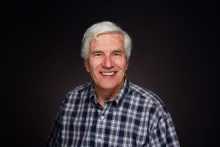
Steve Shafer was born and raised in Seattle. He graduated from Queen Anne High School in 1959 and later graduated from Ambassador College, Big Sandy, Texas in 1967, receiving a degree in Theology. He has been an ordained Elder of the Church of God for 34 years and has pastored congregations in Michigan and Washington State. He and his wife Evelyn have been married for over 48 years and have three children and ten grandchildren.
