
Roy Holladay
This transcript was generated by AI and may contain errors. It is provided to assist those who may not be able to listen to the message.
Did you know, brethren, that according to historians, there have been around 80 civilizations, from the time of written history, 80 civilizations up to today. The first one, as we can tell, was the Sumerian civilization. This was after the Flood. By the way, there are remnants before the Flood of the generations that perished, but the Sumerians were the ones that, after the Flood, lived around Noah and developed this very great civilization. They even had their own particular language that has actually... they can't trace any roots back to another one, which shows that there was this interruption in history. You have the Babylonians, the Assyrians, the Hittites, the Chinese, the Hindu, the Aztecs, the Mayans, the Incas, the Zulus in Africa, the Ethiopians, the Egyptians. None of these ancient civilizations survived. Like human beings, civilizations are born, they grow and develop, they age, and eventually they die out, all end degenerating and collapsing. Why? It's because they are all under the same inexorable principle about human government. Power tends to corrupt, and absolute power corrupts absolutely. That's a principle that has reigned, and we see it today, the corruption of power, what's happening as our civilization has aged. And now with opulence and wealth, there's degeneration that follows. People don't want to hear about God, they don't want to hear about the principles, they want to do their own things. They have the money and the backing now of governments to do it. By the way, that quote that I gave you about power corrupts and absolute power corrupts absolutely was not from a historian. It was actually a British Lord after he heard that in 1870 Pope Pius IX declared that he was infallible and everything involved in doctrines or morals he could not do wrong. In 1870 he established the infallibility of the Pope. And after Lord Acton heard that, because the Pope was an absolute ruler, he doesn't have a Congress that goes through his laws or a judiciary, he is all three branches of government, executive, legislative, and judicial. And with all that power a man corrupted to believe that he a mere human being could declare himself infallible. It's very sad, but it's a fact of history that ultimately man is incapable of governing himself in a right way.
General MacArthur had at the end of World War II when he got before the Congress, he said, man has had his last chance. Either man will change his human nature for good or Armageddon, or the destruction of mankind is at the door. Well, human nature hasn't changed, and we're going back to the same patterns as before. So I'd like to pose a question to you. It's based on what is written in Daniel 7, verse 27. I'll read it to you, Daniel 7, verse 27. Thoughts about when Christ comes back, establishes his kingdom. Notice what it says. Then the kingdom and dominion and the greatness of the kingdoms under the whole heavens, that's the entire earth, shall be given to the people, the saints of the Most High.
Talking about Christ, his kingdom is an everlasting kingdom, and all dominions shall serve and obey him. So it's talking about saints which have to do with people that have God's Spirit, that they will inherit enormous authority and power.
So the question is, how can God give virtually unlimited power to those saints, the future rulers of the millennium, and make sure they don't eventually corrupt themselves as all of man's civilizations have done? How can they prepare for such a rule? What will prevent them from becoming corrupted? Have you ever asked yourself some of these questions? As you see history, you see the same cycle of nation surging, prospering, degenerating, and collapsing.
How can the saints prepare for such a rule in the future? What will prevent them from becoming corrupted? They will have tremendous authority and power. Well, notice that even Christ's disciples were tempted with power. And even that very last evening before Christ died on the Passover, they were jostling for positions. So you see their human nature when Christ told them that they were going to come and become part of that rulership. So let's look real quickly at what happened because this is so typical. Matthew chapter 19 verse 27.
Christ is very close to his death at this time. And he wants to encourage his disciples.
And he says in verse 27, Then Peter answered and said to him, See, we have left all and followed you therefore. What shall we have? What's the reward of following Christ? So Jesus said to them, Assuredly I say to you that in the regeneration, which means the time of spiritual rebirth when people, the saints will be transformed, when the Son of Man sits on the throne of his glory, you who have followed me will also sit on twelve thrones judging the twelve tribes of Israel. And everyone who has left houses or brothers or sisters, a father or mother or wife or children or lands for my sake, shall receive a hundredfold and inherit eternal life.
That has to do with the first message. People sacrificing, giving up things because they have that vision of the coming kingdom when no violence will arise where human beings, their human nature is not going to dominate like it does today. I guess those who went through different types of wars, different types of persecution, I was that way when I was seven years old. I was a young boy in Cuba at the time, and we had the most wonderful time.
We were upper class Cubans and everything looked great. And then Fidel Castro took over and he confiscated everything. Education, government, military, and we started to get persecuted. And so my father sent my mother, sister, and myself to Miami. In time, he stayed behind to fight Fidel Castro. That's another story. But the point is that you know all the dangers of what governments can do and the corruption that can happen. And you go through these things. And so I'm looking forward because I know man is incapable of governing himself properly.
There is no hope in this world's leaders. And they're all converging into this box canyon that they're not going to be able to get out. We're seeing it with our own eyes. Terrible war in Ukraine. And now they want to send jets out there. And everybody is the analyst saying, well, what's going to happen?
What is this going to escalate the war? And then you got China. It's human nature. It's powerful. So now it wants to get a bigger slice of the pie. See, we're repeating the same lessons. And unfortunately, human beings that are not involved in politics, governments, and everything, they pay the highest price because there's nothing you can do about it. You do not have power or authority.
So here the disciples heard, we're going to have these big positions in God's kingdom. What happened? It went to their heads. Notice in Matthew 20, verse 20. Let's see here. Just this next chapter that when Christ sits down with them, oh, it's not there.
Let me get it's a little bit. Oh, yeah, I have it right. I was on chapter 21, verse 20 of chapter 20. It says, then the mother of Zebedee's sons came to him with her sons. Who were they? James and John. John would become one of the three main apostles. He wrote the epistles of John and also gospel of John. And here comes the mother, brings them to Christ and asking something from him.
And he said to her, what do you wish, she said to him, grant that these two sons of mine may sit one on your right hand and the other on the left in your kingdom.
So it wasn't enough. They came to their mother. They said, mom, you know what Christ just said? We're going to govern one of the tribes of Israel in the kingdom of God. The mother said, well, which tribe? And are some going to get closer to Christ than you? I'd better check it out. And then it says, verse 24, and when the ten, these other disciples heard it, they were greatly displeased with the two brothers because they said, they're trying to take the best positions.
See, it wasn't enough to be one of the twelve. No, they wanted to be at the right and left hand side. Typical political jostling going on. So you see, this problem arose, and Christ denounced those lofty titles that they wanted so badly. In Matthew, chapter 23, verse 4, Christ said, talking about the Pharisees, the ones in charge. These were the Sadducees, the Pharisees, the high priests, and the heads of synagogues in Israel. It says, verse 4, for they bind heavy burdens, hard to bear, and lay them on men's shoulders, but they themselves will not move them with one of their fingers.
But all their works they do to be seen by men. They've got position. They want to make sure people support them. And so they cater to influence and cater to people.
They make their phylacteries broad and enlarge the borders of their garments. They love the best places at feasts, the best seats in the synagogue. So you know who was in charge? Because they had a special seat. Have you ever seen some churches that way? They have either the priest or the preacher. He's different. He's not with his people. We always sit with God's people. We're not going to fall into these traps. He says, greetings in the marketplace and to be called by men, Rabbi, which means my great one. Just like, oh, my elevated teacher. But you do not be called Rabbi. For one is your teacher, the Christ, and you are all brethren. So again, he's lowering the standards of people not to have these lofty titles.
Do not call anyone on earth your father. And it's talking about a spiritual sense, because we have that in the religions world, where people, Papa means father in Latin, and also Father John or Father this. So the Bible tells you, don't do it. Man's human nature twists scripture and says, no, that's okay. He says, for one is your father, he who is in heaven. He's our spiritual father. And do not be called teachers. For one is your teacher, the Christ. So don't use, again, titles in this way. But he, and here's the remedy, which I'm going to talk about. Verse 11 and 12 is a remedy. But he who is greatest among you shall be your servant, and whoever exalts himself will be humbled, and he who humbles himself will be exalted. So Christ's system of government is not based on elevating the person and everybody bowing to them. No, they have to be the best servant, the most diligent, the more most sacrificed.
And so, I'm going to give you the seven titles that Jesus Christ gave his different disciples. These titles are based on the names of the biblical servant leadership. This is biblical servant leadership. They're biblical names, and there are seven titles that Christ gives to those that he's going to have, take care of the church, because somebody, of course, has to do it. But to avoid this loftiness, Christ said, don't use these lofty titles. And so Christ uses these seven titles that are of ordinary nature. Many of them are despised by people. And so I'd like to go through the seven different titles.
The first one is, it means slave. And Christ called his disciples slaves. The term in the Greek is doulos. In Matthew 20, we just were there. Notice in verse 25, after he saw the disciples jostling for power, he said verse 25, but Jesus called them to himself and said, you know that the rulers of the Gentiles lorded over them. And those who are great exercise authority over them. Yet it shall not be so among you, but whoever desires to become great among you, let him be your servant. The term doulos. And whoever desires to be first among you, let him be your slave. Just as the son of man did not come to be served, but to serve and to give his life a ransom for many. So Christ has the solution. That is going to be the change of our human nature. But we will take on the nature of Christ. That serving attitude. But he wants us to work it out here in the church. To have that serving attitude in the home, in the church, at work, wherever it is.
The term doulos is one who is under subjection or bondage. So legally, he doesn't have any rights. It is the most common and general term for a servant in the New Testament, normally meaning a slave either symbolically or literally.
And so I have a word picture for each one of these titles, because that sticks into the mind. Yeah, it's this way of doing it. The first one is a sandal.
A sandal. Because remember what Christ did in John 13? John 13 verse 12.
So he washed each one of his disciples' feet. Verse 12, so when he had washed their feet, taken his garments, and sat down again, he said to them, Do you know what I have done to you? You call me teacher and Lord, and you say, Well, for so I am. If I then, your Lord and teacher, have washed your feet, you also ought to wash one another's feet. For I have given you an example that you should do as I have done to you. Most assuredly, I say to you, a servant is not greater than his master in God's kingdom and actually in the church. Every member of the church is as valuable. Some have more responsibilities than others, but we're all members. We don't have any exclusive clubs here. We're all working to enter God's kingdom and not falter, not fall away.
It goes on to say, For I have given you an example that you should do as I have done to you. This is why we do this every year. For the Passover, we separate into groups of men and we have women, and each one has a person that they wash their feet of. And that person washes their feet. And he says here, verse 17, If you know these things, blessed are you if you do them. So it's not talking about it. It's acting on it that makes the difference. One of the commentators in the Bible, Barkley, William Barkley, says this about the roads in Israel. They were un-surfaced and uncleaned. In dry weather, they were inches deep in dust, and in wet weather, they were liquid mud. The shoes ordinary people wore were sandals, just typical open sandals, which were simply soles held onto the foot by a few straps. They gave little protection, against the dust or the mud of the roads. For that reason, there were always great water pots at the door of a house, and a servant, which was the lowliest in the totem pole. Because this was the most humiliating job. Come in and dirty, smelly feet, and you had to go and get your little basin, and then wash their feet. Well, that's what the servants did.
So this describes a man or a woman who is not at his own disposal, but his master's purchased property. He was bought to serve his master's need. Let's talk about Jesus Christ. We're all bought for a price. He paid for all of our sins. That's a very costly sacrifice to be able to have us not die, and then be cast eventually into the second death and die forever. But he wants us to live in his kingdom in the future, as he comes back for those thousand years. And then afterwards, even where all of mankind who never knew the truth would have an opportunity. He was bought to serve his master's needs to be at his beck and call every moment.
The slave's sole business was to do as he was told. That's why we're here today. As our master says, you shall honor the Sabbath day. And he says there's a holy convocation in Leviticus 23. And Jesus Christ kept the Sabbath day, did the holy convocations, and so did his apostles. There's nobody that is considered just and righteous in the Bible whoever broke the Sabbath day. That is part of doing the master's will. So we serve Christ in this way. Let's go to the second one. Diaconos is the second title. Now the first one, that's pretty lowly. Instead of giving him a highfalutin title, he says you're going to be like a slave. The second one, Diaconos, which is a waiter of tables. So whoever wants to serve Christ just thinks symbolically, just like a waiter. He's got a towel there. He serves. He cleans up messes. He does what it takes. He's willing to serve God's people and be there for them. So this term, Diaconos, is where we get the term deacon.
We have numerous deacons and deaconesses. We have women that symbolically, they wear the towel. They're already serving in such a capacity, which is a great privilege.
So this is an assistant who works serving others.
In Philippians chapter 1 verse 1, these are the principles of God's kingdom.
People will have to learn them sooner or later because they don't change. Philippians chapter 1 verse 1, it says here, Paul and Timothy bond servants, the dooless of Jesus Christ. He didn't feel humble by using that term. Slaves of Christ, as some translations have it. To all the saints in Christ Jesus who are in Philippi, with the bishops and deacons. This is part of growing spiritually, developing it. But just remember, you're a deacon, you're just a table waiter. You're not anything important. Get a title and start feeling more important than others. Because if you do, you've lost the entire lesson. Because we are all table waiters.
Notice now the third term, 1 Corinthians 4, 1. This is a very interesting one. I've never forgotten this one. When I saw this scripture, I thought, boy, you talk about the humility and the leadership of the church in that day. 1 Corinthians 4, verse 1.
It says, let a man so consider us as servants of Christ. It has to do with the dulos and also the aquanos is another term and equivalent. And stewards of the mysteries of God. So here, I want to correct the term for servants here is, is, huperetis, which means under rower.
And what picture do we have?
We have a picture of a roar. And some thought, oh, are you going to come here? And this is this reminded some of what happened with the teachers long ago. I remember I got into trouble when I was in, I think it was probably junior high. And I was sent to the disciplinarian there in Miami. It was a tough, tough area. And when I went inside, the fellow had one of these hanging on the wall. I did not want him to take that thing off the wall. Of course, these days, you'd be fired for that. But that's the way they apply. Well, no, this is actually an ore. This is what you use.
And it reminds us that another title, which actually is very humbling, is an underorsement. You remember how the Roman galleons, they had the oars? And if anybody remember Ben Hur, other movies where they're there, working away, that was a hooper at this. That was a person with one of the worst jobs in the world. And yet, Paul uses that here, because it's also a humbling attitude.
It means a subordinate carrying out the master's orders, to the point where even rowing under the boat there. Paul mentions it in Acts 26, verse 16. Acts 26, verse 16.
Paul says here, Christ is speaking to him. And Christ says to Paul, But rise and stand on your feet, for I have appeared to you for this purpose, to make you a minister, ooperetis, and a witness both of the things which you have seen, and of the things which I will yet reveal to you.
And so he says, you're going to be a servant of mine. And just like it's a tough job working this way, you're also a hooper at this. And Paul used it, others used it, because God does not want us to get into involved in these lofty titles and churches, gleaming with gold and silver. If we had our way, we would take all that gold and silver and scrape it off and share it with the poor. They need it more than we do.
And so, just remember, we are under horsemen as well. Let's go to the next. This is the fourth title. This term means shepherd.
Poemon is the Greek word for episkopos. They're both shepherds, one that oversees several flocks, but it's still a very humbling title.
Episkopos, that's where you get the term. Episkopal, church. Epi is over and scopos see. So you're overseeing the shepherds, the sheep, and the different flocks.
Now, in Paul's day, in Christ's day, the shepherds were looked down upon. It was one of the most lowly jobs. They were considered by the Pharisees and the leaders at that time to be unclean people because they had to deal with the blood of animals, sometimes dead sheep, or if they had to kill maybe some type of predator. But they were looked down upon. And who was it that God called to be witnesses of the birth of Christ? The shepherds. Not the kings, not the powerful and rich and high positions. He called the lowest. The shepherd was one of the hardest working persons out there. At night, they had to look after the flock. They're always in danger of having some wild bees come in. Many times, they had to give their own lives for the flock. And so the symbol we have is the shepherd's crook. This is called the staff or the shepherd's crook. This was the main instrument that the shepherds used. When they herded the sheep, the sheep would get into trouble. They would get into thickets with thorns. And without a wool that was so heavy, if you tried to go in there, you would get stuck. So the shepherd always had a way of wrapping that around the neck of the lamb and pulling them out without having to go in. And so this was a way of protecting the flock. In Psalm 23 verse 4, that's the shepherd's... the Lord is my shepherd, is the hymn. Verse 4, it says, Your rod and staff comfort me. The sheep knew. This isn't used to hit them over the head. This is to help them get out of trouble, to gently pull them out of trouble. So that's necessary to do.
Notice in 1 Peter chapter 2, Jesus Christ is called both the shepherd and the episcopos. Notice 1 Peter chapter 2 and verse 25.
It says, For you were like sheep going astray, but have now returned to the shepherd and overseer an overseer, an episcopos, of your souls. Christ is the great shepherd. Those that work under him, we're under shepherds. We don't have lofty titles, and Christ is the one that's in charge of the church. We serve him, but we should never think this is some point of power involved.
This takes us to the fifth title. This is another term, presbuterus, which that's where the Presbyterian Church gets its name. It's not a lofty title. It just means an older man, an older, experienced man who is an elder. He has a function of overseeing, but again, this isn't a title that's special. Just a person that shows spiritual maturity. And so, let's go to 2 Timothy chapter 2. 2 Timothy chapter 2. And verse 15.
It says, Be diligent to present yourself approved to God, a worker who does not need to be ashamed, rightly dividing the word of truth. So it tells us if we're going to be servants of God, we have to be rightly dividing the word of truth.
Now, the apostle Paul had a job besides preaching. His outside job was a tentmaker.
And so, when he uses the term here in verse 15 about rightly dividing the word of truth, it means cutting straight. It means to cut something straight, not crooked properly, where it belongs. Paul, being a tentmaker, had to cut straight the tough goat hair cloth, where the parts of the tent would not fit together.
Cutting straight what God's word means separating the truth from false and crooked lies. So the symbol is scissors. You have to cut straight, just like ladies seamstresses or whatever. If you cut crooked, the garment is not going to be worn properly. And you have to know how to cut straight. For a tent, you have to put all the pieces together. You have to know how to cut straight. Well, it's the same way with the scriptures. You have to know how to separate the truth from the lies and the wrong teachings. And that's one thing that God's church is very zealous about. Notice in 2 Timothy chapter 3 verse 17.
Let's see. Start in verse 16. I mean, sorry, 16. All scripture is given by inspiration of God and is profitable for doctrine. God's word is the fount, the source of all true doctrine.
For reproof, which means refuting, wrong teachings. For correction. Now, the term here, correction, does mean cutting straight and making sure, correcting what could go off.
For instruction in righteousness, that the man of God may be complete, which means spiritually mature, thoroughly equipped for every good work. And so, to become an elder, you need to show spiritual maturity, a good handling of God's word, to separate wrong teachings from the right teachings. The person has to be on top of things. They're reading and understanding God's word better. Because, see, if you're going to be a good seamstress of God's word, it takes experience. It takes knowledge. You have to know what you're doing.
In 1 Timothy 5, 17. Let's see. Sorry, it's 1 Peter 5.
Yeah, 1 Peter 5, 1.
The other scripture I'm not going to use this time because of lack of time. It says, verse 1, Peter talking here, The elders who are among you I exhort. I who am a fellow elder. That's the term here. What he's using, presbyterous.
An elder, an older man in the church.
Notice he doesn't say I'm the pope. I'm in charge of everything. No, I'm a fellow elder. And a witness of the sufferings of Christ and also a partaker of the glory that will be revealed. Shepherd the flock of God, which is among you, serving as overseers, a pixcopos, and not by compulsion, not because, oh, you got this job and you have to do it. No, you know it's an honor. It's undeserved honor, what you do. Not for dishonest gain, but eagerly. Not as being lords over those entrusted to you, but being examples to the flock. That's the hardest thing to do, is to live in such a way that people can use a person's life as an example, a model. And that's what we try to do. So let's go to the sixth title.
This is where the word evangelist comes from. Euangelistes in the Greek. It means a messenger bringing good news. So here you had somebody that was sent to give good news. So again, the messenger is not important. It's the message that he brings. So the messenger always had a message to bring. And evangelist is somebody that brings the good news of God's kingdom. And that's why right here in this seal that we have, it explains what's the mission of the church. Preaching the gospel and preparing a people for that coming kingdom.
Romans, well, I'm going to have to skip that. Let's go to the seventh title. Apostolos. This is the term apostol.
John 13 16 explains what that word means. It means one sent forth by one in authority.
This person receives instructions from someone in authority. It's not a lofty title. And so this person is commissioned to take the instructions from Christ to God's people.
And so you have a pouch. The apostle always carried a pouch with the instructions to carry. And he would have to go on the trips. And you see, this is what was important.
He always had the instructions based on God's word. And so it's not a lofty title, but somebody has to bring the instructions of God to the people. I'd like to finish now. I'd like to read to you something that got my attention years ago, talking about how Christ's disciples acted in such a matter-of-fact way with all the miracles. They saw them walk on water, resurrect Lazarus after Lazarus had died for four days. And yet they write it. They don't say, hallelujah, oh, glory, and oh. No. It was very much matter-of-fact. And in the book Training of the Twelve, A.B. Bruce says, what they wondered at was not so much the miracles of Christ's healings, but of the great depth of divine compassion, which they revealed. The compassion was what was behind the miracles. Throughout the New Testament, miracles are described in a sober, almost matter-of-fact tone. How is this to be explained? It is because the apostles had seen too many miracles by Jesus to continue to be excited about them. Their sense of wonder had rubbed off. But though they ceased to marvel at the power of their Lord, they never ceased to wonder at His loving grace. The love of Christ remained for them throughout their lives like a thing surpassing knowledge. And the longer they lived, the longer they acknowledged the truth of their master's words. Blessed are the eyes which see the things that you see. Luke 10.23. So you see, with example, how could they not feel humble? Were they going to have lofty titles? And as soon as Christ left, they were going to start their own monarchic church with somebody in charge and calling all the shots? No, that's not the true church at all. Let's finish in Philippians chapter 2 verse 3. We'll see the attitude.
In God's kingdom, as it should be, we're working on it now because we still have human nature. We can't get rid of it, but we can suppress it. We can move it to the side. We can grow in God's way. Philippians 2 verse 3, it says, let nothing be done through selfish ambition or conceit, but in lowliness of mind let each esteem others better than himself. Can we grow to do that? That's one of the signs of spiritual growth, that you're thinking about the other person instead of one's interests and needs. He goes on to say, let each of you look out not only for his own interests, but also for the interests of others. Let this mind be in you, which was also in Christ Jesus, who being in the form of God did not consider it robbery to be equal with God. He didn't think that was something that he had to grasp. He let go of it, but made himself of no reputation, taking the form of a bondservant, of a doulas, the lowliest of servants, and coming in the likeness of men. And being found in appearance as a man, he humbled himself and became obedient to the point of death, even the death of the cross. So, brethren, we have the solution. We know how God's kingdom is not going to end, like the civilizations that became corrupted and fell. Because when Christ is in charge, the saints will have been transformed. They will have a new nature. They will not lust. They will not hate. They will not have vanity or pride. They will have Christ's very nature. And God the Father has the same nature. We're going to share it. And that is why, brethren, God's kingdom is not going to end up as man's civilizations today.
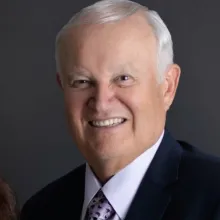
Mr. Seiglie was born in Havana, Cuba, and came to the United States when he was a child. He found out about the Church when he was 17 from a Church member in high school. He went to Ambassador College in Big Sandy, Texas, and in Pasadena, California, graduating with degrees in theology and Spanish. He serves as the pastor of the Garden Grove, CA UCG congregation and serves in the Spanish speaking areas of South America. He also writes for the Beyond Today magazine and currently serves on the UCG Council of Elders. He and his wife, Caty, have four grown daughters, and grandchildren.
