

Greg Thomas
This transcript was generated by AI and may contain errors. It is provided to assist those who may not be able to listen to the message.
It's a topic that regards our observance of whether or not we should observe the monthly New Moons. And there's a lot of opinions on this subject in doing some research. Some Messianic Christians, those are Jews who have accepted Jesus Christ as their Savior. Some groups worship on each monthly New Moon. Some go as far as they don't work on each monthly New Moon. I'm not sure how they're able to keep their jobs. Some have fellowship meals on the monthly New Moons as determined by the Hebrew calendar. Others say that they should be acknowledged as many festivals. But the question is, aside from what people say, is what does the Bible say about this topic? Should we, as New Testament Christians, observe the Biblical New Moons?
Actually, Northern Ohio, which is usually lucky in a lot of ways, also has an old history, particularly in the Church of God movement, on this topic. In the 1960s, there was a radio church of God pastor. The radio church of God was the organizational name that existed before the worldwide Church of God. And he was a pastor in the Cleveland-Aquarnera. His name was Mr. O'Byrne. And way back in the 1960s, which were a few years ago now, he came to the personal determinations that New Moons should be observed religiously and that, I know that was shocking, but I'm just kidding, something fell over there, that the New Moons should be observed religiously and that individuals should not work on the day following the New Moon. He strongly indicated that in some of his sermons, and needless to say, he soon was on an airplane to Pasadena, California, to discuss the issue with Herbert Armstrong and Ted Armstrong and a number of evangelists.
And after hearing him out and opening the Bible and going through various scriptures, he was basically told that if his conscience directed him personally to do that, that there was no problem with that. If you want to observe the New Moons, and you know what, even though you're in our employ, if you don't want to work on the day after the New Moon, we don't have a problem with that. We do have a problem with you teaching it as doctrine and saying that other people have to observe religiously the New Moons. Well, unfortunately, this was unacceptable to Mr. O'Byrne. He left the Radio Church of God to found his own church in Akron, Ohio, and for many, many years he had a Sunday evening radio program that followed the program that we played on an Akron station for many years. Where he is today, I don't know. I Googled his name. If he's alive, he would be in his mid to late 70s. I haven't heard anything about Carl O'Byrne for many, many years. But it's a question that surfaces occasionally throughout the Church of God movement. Again, Protestants wouldn't care about this issue because they don't think that anything in the Old Testament is relevant. They don't observe the Seventh-day Sabbath. They don't keep the Holy Days. So New Moons certainly wouldn't be an issue to them at all. So I thought it would be helpful for us today to see what the Scriptures say about this topic. Let's begin by going to Exodus 12 and beginning in verse 1. If you'll turn there with me. Exodus 12, verse 1.
Now we see here in the book of Exodus that Moses was inspired to write. Now the Lord spoke to Moses and Aaron in the land of Egypt, saying, This month, the month that they were in right then and there, this month shall be the beginning of months. It shall be the first month of the year to you. Excuse me. Verse 3. Speak to the congregation of Israel, saying, On the tenth day of this month every man shall take for himself a lamb according to the house of his father, a lamb for a household, and then dropping down to verse 6, now you shall keep it until the fourteenth day of the same month, then the whole assembly of the congregation of Israel shall kill it at twilight. Of course, speaking about the lamb. So this was different from the Egyptian calendar that they were used to because they had been in captivity. And God was saying that the beginning of the year was to begin in the spring when new green growth appears in nature. The first day of the month was to begin after the appearance of a new moon. Now, what is a new moon? Well, it's the phase of the moon that is a slight sliver. When you look at it, it looks like a little narrow crescent, not to be confused with a full moon. A full moon is when you look up at the moon and it's completely bright. The entire disk is illuminated. That normally occurs about the middle of a month. But a new moon is when you just see a slight crescent appearing, much like a symbol used by the Islamic faith, a just little slight crescent appearing. That is when a new moon begins. Now, again, don't confuse it with a full moon. The moon is said to be waning in its progression when it goes from being a full moon about the middle of the month to slowly becoming a new moon, the beginning of a new month. It's known to be waxing when it proceeds from a new moon, that original sliver, all the way to a full moon. So if you ever heard the phrase, the moon is waxing or the moon is waning, that's certainly what it's talking about. Let's go to chapter 13 now, verse 4. We're going to continue our study here on the new moons, on the calendar that God established. Exodus 13, verse 4, it says, On this day you were going out in the month Abib, and it shall be when the Lord brings you into the land of the Canaanites and the Hittites and the Amorites and the Hivites and the Jebusites, which he swore to your fathers to give you, a land flowing with milk and honey, that you shall keep this service in this month. So what God established was very important, and the name of the first month was to be Abib. Now, this is important for us for a number of reasons.
Number one, this calendar already existed among Semitic peoples. We have written archaeological records of the month of Abib, of it being called Abib, at this time of the year, long before Israel ever left ancient Egypt. So what God is primarily doing is using a calendar that was familiar with Semitic peoples in that part of the world. They're going to have the exact names of the months that that Phoenician calendar used, but what God is going to do is he's going to delineate when his holy days are in that calendar. That's very important for us to understand. According to the Holman Bible dictionary, Abib is a word that means ears of grain. Now, later, when the Jews went into captivity in Babylon and came back, they had pagan Babylonian names for all the months. Have you ever heard of the name Nisan, which is another name for the first month? That's a Babylonian name that they inherited. That's not an original Semitic name. Before we get into the topics of the Hebrew calendar, I think it's important for us to understand the calendar that we live under. Let's discuss the calendar that we live with today so we can contrast it to what God asked ancient Israel to do. In 45 B.C., Julius Caesar, upon the advice of a Greek astronomer, decided to use a solely, a purely solar calendar. A solar calendar is one that recognizes it is based on the fact that once a year, the moon, of course, turns, and there's a complete revolution of the sun around the earth. So the sun moves around the earth, and that is part of the solar calendar. A solar year comprises, and this is important, 365 days, 5 hours, 48 minutes, and 45.5 seconds. You might say, well, why is that important? Well, we'll find out in a minute. This calendar, which obviously became known as the Julian calendar, was used for many, many years, and it fixed the year at 365 days, much like the year that we have today. And it instituted a leap year, so that every four years there would be an additional day. Now, why did it do that? Because the year is actually a little bit longer than 365 and a quarter days. So you take four of those quarter days, and every fourth year you have to insert an extra day for everything to come out all right. Well, that's almost true. There was a problem with it. That was a calendar that was originally established, and by the way, you and I used the same names as a month, which were pagan Roman gods or emperors who thought they were gods, and we used the same names of the week that were established at this time by Julius Caesar. But there was a problem with the Julian calendar. Remember all those fanatical, little extra time, 48 minutes, 45.5 seconds, you might say, well, who cares? What's so important about that? Well, the problem is, is that between 45 B.C. and 1582, which is a little over 1,500 years, all of those cute little minutes and seconds added up, and it added up to the fact that the calendar was falling short by 10 days.
And that was a problem to my favorite pope, who was known as Pope Gregory XIII. He's actually my favorite pope. Now, my second favorite pope was Pope Joan. That's right, you heard that correctly. Pope Joan. I won't say much about her, but she actually existed, and you can Google it and find out she lived around the 11th century. You can find out about her. And it's interesting that I visited the Vatican about five weeks ago, and they showed us all the burial places of these popes, but no one for some unknown reason mentioned where Pope Joan is buried. But anyway, Pope Joan is my second favorite pope. Ah, I digress. Let's get back to my story here. Why is this a problem? Well, it's a problem because in the year 325, the first council of Nicaea, the Catholic Church decided to establish the celebration of Easter by the vernal equinox. The vernal equinox is the time when the sun crosses the celestial equator, and the length of day and the length of night are equal in a year. It's very important. It usually marks the beginning of spring in our part of the world around March 21st. And that is when the Catholic Church established that Easter would be kept, tied into the vernal equinox. The problem is, is now you come to 1582, and Easter is being pushed back earlier in the March, and the pope says, that's unacceptable. If that keeps up, pretty soon it'll be in February. And then eventually it'll be in winter, and we're losing time, and that's not a good thing. So the way he solved the problem is he issued a decree dropping 10 days out of the calendar. So by his decree, the entire calendar of Western Europe dropped 10 days to get it back in synchronization. And that is the calendar that we use today. We use the calendar known as the Gregorian calendar.
There were a few other minor changes made to it at that time to eliminate for a little bit of time that might be lost, but it's the calendar that you and I use today in this world, and it is purely a solar calendar. So that's the calendar that once the Romans instituted. How about the one that God directed?
Now, in contrast, God directed to Israel to adopt a lunar solar calendar that was based on the observation of the moon. This was important to ancient Israel because it regulated virtually everything they did. They could only determine when a holy day was by observing the moon and when the new moon could begin. It helped them to regulate the seasons, when they should plant crops. Various cycles of their religious and their harvest activity was tied into observation of the moon.
Again, this is called a lunar solar calendar because, indeed, it allowed the orbit of the sun to mark the length of a complete year. When the sun went around the earth one complete time, it acknowledged that as a year. But the difference was that at the beginning of the month, each month would be determined by when a new moon would be observed.
According to the Talmud, the priest would watch for this. They would send witnesses out, and they would watch for their determination of when that little sliver would begin a new moon, and they would proclaim it by sending messengers back to Jerusalem and blowing trumpets. The witnesses were appointed to look for the new moon, and if the announcement was made before sunset, then that following daylight portion was the first day of the new month.
If the announcement was made after the sunset, then not the next following day, but the daylight following that day would be proclaimed as the first day of a new month. That is basically the way that they did it. In the time of Jesus, what they did is they had witnesses go out, and they would come back to the Sanhedrin, and I believe there were 71 of them, and they would examine the witness well.
How do you know that it was a full moon that you saw? Have you had an eye exam lately? Have you ever been known to have cataracts? And after they examined whatever they asked the witnesses, then the Sanhedrin in the time of Jesus would proclaim that this is the beginning of a new month, that we, the Sanhedrin, has declared that a new month can begin.
Sounds simple, doesn't it? But my, this system of observation had problems. And here's why. The first problem is that the moon circuit is about 29.12 days. It's not 29 days. It's not 30 days. It's 29.12 days, forcing a vacillation between sometimes being 29 days after the preceding new moon and sometimes being 30 days after the preceding new moon. Another problem is, is that 12 new moons equal 354.14 days, about 11 days short of a solar year. Now, why is that a problem? Because it means in time, much like my favorite Pope, Pope Gregory, determined with his calendar, that in time, if you're using 11 days, losing 11 days a year, the time of the spring holy days will shift to the fall holy days and you won't be keeping the feast in due season as God originally intended.
This wouldn't make sense. It would defeat the purpose of keeping the feast, the rich meaning of the holy days, which are tied into seasons and agricultural harvest. So somehow, when we are not told in the Bible, the priest had to compensate for this. Either, and again, this is conjecture because God doesn't give those kind of details. Either every year they added 11 days onto a calendar, that's the only way to keep it in sync, or every three years you might add a month.
Or what originally occurred after rabbinical times is that they added seven times in a 19-year cycle they would add a month. But you have to do something. Let me emphasize that again, brethren. You must insert extra days into the Hebrew calendar, or it loses time compared to a solar year, and all of the observances of the days shift. And you can't allow that to occur. Again, that would destroy the purpose and the rich meaning of all of the holy days. So somehow, and we're not told how, the priest had to add days to a year and make up for that 11-day shortfall.
Well, eventually, the Jews went to Babylon, they were captured. Israel failed first, then Judah. The Jews were captured, went to Babylon, and they learned there to add an extra month every two or three years. Now, we don't know if that had been done before. That was the method done before they were captured in Babylon, and it's only revealed at that time. But we know from writings that at that time the Jews began to insert an extra month every two or three years. By the time we get to rabbinical times, then they had an intercalary month. That was a month that was inserted an additional month seven times every 19 years to make the Hebrew time in sync with a solar year.
And being creative like they are, the last month, the name of the 12th month was Adar, and the name of this month that was inserted seven times every 19 years was Second Adar.
That was original, wasn't it? But that's as simple as they had in order for it to get done. Now, the usual practice of the Old Testament was to number the months and not give them names. And maybe that was a good thing, because human nature, being as it is, if it starts naming months, it's usually going to do something like name it after a Roman god or a Roman Caesar.
Usually what you find in the Old Testament is that it says the fourth month on the third day this happened, the Old Testament only gives us the actual name of four of the 12 months. There are only names for four of them. So there's a lot that the Old Testament doesn't tell us about this calendar that God asked ancient Israel to use.
After the exile, again, the Jews went into Babylon, they came back. After the exile, the Jews learned something in the exile. What they learned was called science. Before they went into exile, the Jews were a Bronze Age culture, and the law even forbade them to look up into the stars and do astrology. But you know what? God is a mathematician. That's a capital M. God created math. And what they were going to learn when they went into captivity is that you can actually calculate in advance when something's going to occur. That God has so designed the universe in synchronization and in complete to the second when stars are going to align, when the sun is going to do something. We've mentioned the details of how often the sun aligns. Those are mathematical principles. When the Jews went to Babylon, who were a very advanced society, they learned a concept that's known as math. And their world would begin to change because now observation wasn't important.
Through mathematical calculus, you could actually know when the Passover is going to occur 10 years from now, rather than every month, month after month, month after month, sending someone out to look at the moon. And hopefully it wasn't cloudy that night, I might add, to look at the new moon and make a declaration that we're going to begin a new month.
When the Jews came back from Babylonian exile, unfortunately, they brought with them all of the names of the Babylonian calendar with them. And those are the names that are used today on the traditional Hebrew calendar. Now, what's the conclusion of this analysis? I was looking at the calendar we used today and the ones that the Jews used. The conclusion that I want to draw here, brethren, is we have to be very careful when discussing the Hebrew calendar because so little of it, so few of the details about it are revealed in the Bible. It tells us that the year begins in the spring.
That's good to know. It tells us a few of the names of the various months, four, to be exact. It tells us how to determine the Holy Days by counting a numbered month and a specific day. The seventh month, the first day, is the Feast of Trumpets. That's great. But much beyond that, we don't know very much at all.
That's the problem. Everything else that I'm going to mention here in a minute is extra-Biblical. It comes from tradition. It comes from history. It comes from culture. Issues like how to deal with a calendar, a lunar calendar that is 11 days short each year. How to deal with that? The Bible never revealed that that was a problem. The Bible does not tell us how to deal with that issue. What were the names given to the other eight months? We don't know. So it's clear that the Hebrews began the sacred year on the first month, on the day of Abib, in the first month.
And it's also clear to us that they did a little under the little tricky thing that God never asked them to do. They began the civil year on the first day of the seventh month. So in a way, they kind of had two new years. They had a spiritual new year beginning on the first day of the month of Abib.
And then in the seventh month, they began a civil new year. There's an interesting history of how that came to be, but that's not really our subject today. So with this background that we've talked about, the Roman calendar and the problems with it, and the problems where we're at today, and what the Bible reveals to us about the Hebrew calendar, let's now look at some scriptures and focus in on how they observed the new moons and the day after a new moon was declared, and look and see from the Bible if it's something we should be doing today.
Let's go to Numbers 10, beginning in verse 8. This is the next scripture in the Old Testament that refers to the observance of a new month or a new moon. Again, Numbers 10 and verse 8. It says, What does this tell us, brethren? It's clear that trumpets were blown on special occasions in ancient Israel. The beginning of a new month was an important occasion because of the new month. And it was a special occasion because of the new month. And it was a special occasion because of the new month.
And it was a special occasion because of the new month. The new month was an important occasion because it was a demarcation of time. It regulated what they were able to do in a Bronze Age culture in their entire society. It was through this means that they knew when harvest would occur, when it was time to plant crops, when it was time to observe the holy days. It was essential for them to keep God's holy days.
They have activities like the acknowledgement of a new moon every month and the blowing of trumpets. Furthermore, we know from looking at scriptures that many had a family meal on the day following the new moon. That they observed fellowship to market. There are some indications that there was even worship on the day after the new moon. It was so important to the regulation of their time as a time demarcation.
It was a day of rejoicing. And this was to occur as long as there was a physical covenant nation, as long as there were Levitical priests, as long as it was a physical covenant nation, this was something that God asked them to do. Let's go now go to Numbers, chapter 28 and verse 1 and see another important thing that was done on the first day of the month. Numbers, chapter 28, beginning in verse 1, and I'll jump through here because I don't want to go through all the details of these offerings, except to say that beginning in verse 1, God says that I am your God and you should present certain offerings to me every day of the year.
That's how important I am. Then when we go down to verse 9, He says, on the Sabbath day, two days in their first year, etc., etc. So He says, on the Sabbath, there should be different offerings, and I'm going to give you the details of those offerings. Then when you go down to verse 11, it says, at the beginning of months, you shall present a burnt offering to the Lord. Two young bulls, and I could go on and on, but the point is, is that this was a special demarcation of time within the nation, and there were also special offerings that should occur on the day following the observance of a new moon.
And if you look at these offerings, it's also interesting that most of them tied into what are known as fellowship offerings. And a fellowship offering was one in which part of the offering was given to God. The priest got to enjoy some of the offering, and the offeror got to eat some of the offering. So all three were sharing in this together, hence known as a fellowship offering. So why is there so much emphasis on new moon observance in the Old Testament? There were special offerings given at the beginning of months that were not given on any other day.
Now, does this mean that they were holy? Does this mean that they should be religiously observed by New Testament Christians, because these kinds of things occurred? Well, brethren, the simple answer is no. First of all, God was dealing with a Bronze Age culture that had a limited knowledge of math. They couldn't understand the concept of print technology. It was a culture that lacked the visual arts and made it difficult to plan ahead. Chartered calendars that could look and pick out and plot months and years ahead was an unknown concept to the Hebrew society.
Because of this, the Levitical priesthood was given the task of literally observing and announcing when a new moon began. And this was done by looking into the skies because they weren't advanced enough to understand that God is a mathematician. That's capital M. That he created the stars and the alignment of the stars and the cycles of the seasons. And it's all a mathematical formula that can easily be calculated. Being a Bronze Age culture, they had no way of understanding that yet. You know, you and I have an advantage.
We have something known as this. This is a calendar. And because I live at a time that's technologically advanced and understands that God is a mathematician, I can plan ahead. I can count and determine that the next Passover is 107 days from today. I don't need month after month after month for someone to say, today is the beginning of... Whoa, wait, where did that cloud come from? Hold off! I'll let you know tomorrow. We don't need to do that month after month after month. We don't need to send someone out there who has cataracts to say, point me to the moon.
Where? Where? Moon? Why? Because God understands math. He created the understanding of mathematical principles. And you no longer have to do that by observation. You can do it by calculation. Now, within this Bronze Age culture, the common family would not have been able to keep track of time like you and I can with these technologies, with having plotted charts that have been calculated. I can turn through here and I can tell you when most dates are in 2009 because it's been easily calculated. I can tell you when the Feast of Tabernacles begins in 2009 because math makes it calculable rather than by mere observation.
And that's a very important point. But in their culture, it was essential that the beginning of a month received extra special attention, that there were offerings, that trumpets were blown so that it could be clear to everyone. And this made it an important day to Hebrew culture, and I can understand that, and I can appreciate that. Some Jews began to worship on the day after the new moon, and religious services would be held by some people.
Others declared that they didn't want to work the day after a new moon, and they would cease working. But let's look at some other scriptures and begin to continue to put the puzzle pieces together so we can understand where we are today. Leviticus chapter 23, beginning in verse 1. These are scriptures that we've read many, many times. It's important to us, Leviticus 23, because God tells us not opinion, He tells us not cultural habits, He tells us not the views of Rabbi Hillel, He tells us His opinion. And the Lord spoke to Moses, saying, Speak to the children of Israel, and say to them, The feasts of the Lord, these are God's feasts, which you shall proclaim to be holy convocations, these are my feasts, these are the ones that you should focus on, these are the ones you should observe.
The first He mentions, of course, is the weekly Sabbath. Six days shall work be done, but the seventh day is a Sabbath of solemn rest. You shall do no work on it, it is the Sabbath of the Lord in all your dwellings. Verse 4, these are the feasts of the Lord, holy convocations, which you shall proclaim at their appointed time.
It is this chapter that gives us a listening of what God considers to be His feast. You may notice, if you've ever read this chapter, that new moons are not mentioned. New moons are not considered festivals like Sabbaths in holy days, they are not in Leviticus 23. Some have said that they are mini-festivals, and we should observe them as mini-festivals. Well, brethren, the problem with that is the word mini-festival is a man-made term.
I've looked in Leviticus 23, the word mini-festival isn't mentioned. I even checked, I went so far as to look at Leviticus 24, and to phrase, mini-festivals and new moons are nowhere found in the Scriptures. And we need to understand that. Leviticus 23 tells us the days and the celebrations and the times of those days that are important to God.
Now, there is one verse that discusses a holy day that falls on the first day of the month. Leviticus 23, verse 24, says, Speak to the children of Israel, saying, In the seventh day on the first day of the month, you shall have a Sabbath rest, a memorial, a blowing of trumpets, a holy vant convocation, you shall do no costumerry, work on it, and you shall offer an offering made by fire to the Lord. So again, the feast of trumpets occurs on the first day of the seventh month, but this by no means endorses the observance of the day following a new moon as being anything special. In contrast, if the day after the monthly new moons were already being observed as Sabbaths, then this verse would not be necessary because it would have already been happening every month.
The fact that God stops and says, On this first day of a month, you shall do these things as a holy Sabbath shows the uniqueness of it, not something He had intended or commanded all along. Now let's go to 1 Samuel 20 and verse 5 and learn a few other things about the Hebrew culture and custom regarding new moon observance. 1 Samuel 20 and verse 5.
By now David knew that Saul wanted him dead. Their relationship, sadly, had deteriorated. Saul was not pleased with David. He looked upon him as a threat to the throne of Israel. Fortunately, David had a very close friend, Jonathan, who was Saul's son. And here's a discussion between David and Jonathan indeed. Tomorrow is the new moon, and I should not fail to sit with the king to eat. But let me go that I may hide in the field until the third day of the evening.
If your father misses me at all, then say, David earnestly asked permission of me that he might run over to Bethlehem, his city, for there is a yearly sacrifice there for all the family. Now this gives us the first indication, the fact that the king sat at meat, that in Israel the day after the new moon there usually was a nice meal that everybody enjoyed. Again, in a bronze age society, counting everything, particularly how to determine the holy days, was necessary by the observation, physical observation of when a new moon would begin.
Now let's drop down to verse 24. It says, Then David hid in the field, and when the new moon had come, and the king sat down to eat the feast. Now the king sat on his seat, as at other times, on a seat by the wall, and Jonathan arose, and Abner sat by Saul's side, but David's plan was to empty.
Nevertheless, Saul did not say anything that day, for he thought, something has happened to him, he is unclean, surely he is unclean. Verse 27, And it happened the next day, the second day of the month, that David's place was empty. And Saul said to Jonathan, his son, why has the son of Jesse not come to eat, either yesterday or today? So Jonathan answered, Saul, David, earnestly asked permission of me to go to Bethlehem.
So now we see that there was a meal that was enjoyed not one day, but two days. So it's obvious that the king had a special meal to celebrate the beginning of a new month. And it's possible that this was accustomed throughout all Israel, that everyone did this on the day after the new moon. But here's something that you may not have understood, that you may not realize. I want you to notice that there were two days in which meals were eaten. How in the world did this come to be? Well, since the new moon was declared by observation, one could not be sure if it was going to be 29 days after the new moon was observed, or 30 days.
Remember that a new moon circuit is 29.12 days. And you were at the mercy of the poor fella up there who was farsighted, looking into the sky and saying, today is the day or tomorrow, and you were at the mercy of that determination. So what was the Jewish way to solve this problem? How could you be sure that you celebrated the day after the new moon?
Easy! You keep two days every month. You keep the 29th day after the last new moon, and the 30th day, because it's got to fall in one of those two days. And that became part of Hebrew culture in that for two days now.
They would enjoy a good meal. They would celebrate. And by doing that, it didn't matter what Moshe said the new moon was on, because you had covered all your bases. The 29th and the 30th day following the last new moon, you were as good as gold.
Now, should we do those kinds of things today? Well, brethren, we're not to do something simply because ancient Israel did. Ancient Israel did a lot of things that God never commanded. They did a lot of things culturally that would not be acceptable in the 21st century. We do things because God instructs us to do them in His Word.
We don't do things because they were done by Israelites, or they were done by Jews or others, even if it was a form of worship, even if it was religiously inclined. If it's not commanded from God, we're under no obligation to do those kinds of things. Let's now go to the book of Ezekiel beginning in chapter 40. This is a chapter that many people who insist that new moon observance today should be kept by New Testament Christians. This is one of the favorite verses they go to because here in Ezekiel, and if you go to Ezekiel 45, verse 16, what we see here that began in chapter 40 was a vision.
Ezekiel is taken up and he has a vision of what's going on in the world. And he's taken up and he's taken up and he's taken up and he has a vision of what the future tabernacle will be like. Now, we could discuss whether this vision meant a literal temple to be rebuilt in Jerusalem in the future, or whether it's spiritual.
But for the sake of discussion, I'll say, okay, it's a physical temple. For the sake of discussion, great. It's a physical temple yet to be built in Jerusalem.
Upon the return of Jesus Christ. So in the book of Ezekiel, beginning in chapter 40, but we're going to look at chapter 45, he saw the prophet saw a vision of the future temple to be built in Jerusalem. And he talks for chapter after chapter in great detail about that temple and things that will be done. And indeed, future new moons are mentioned. Let's take a look at verse 16, Ezekiel 45 16. All the people of the land, don't want you to forget that phrase, shall give this offering for the prince in Israel. Then it shall be the prince's part to give burnt offerings, grain offerings, and drink offerings at the feast, the new moons, the Sabbaths, and at the appointed seasons to the house of Israel. He shall prepare the sin offering, the grain offering, the burnt offering, and the peace offerings to make atonement for the house of Israel. Now let's go here in chapter 46. Let's turn to verse 1 and see where the new moons, once again, are mentioned. Ezekiel 46 1, Thus says the Lord God, The gateway of the inner court that faces toward the east shall be shut, the six working days, but on the Sabbath it shall be opened, and on the day of the new moon it shall be opened, the prince shall enter by way of the vestibule of the gateway from the outside and stand by the gatepost, the priest shall prepare his burnt offering and peace offerings, he shall worship at the threshold of the gate, there he shall go out, but the gate shall not be shut until evening. Likewise, the people of the land shall worship at the entrance to this gateway before the Lord, on the Sabbaths, and the new moons. Well, some individuals say that since new moons will be observed in future Jerusalem, we should be observing them now. But there's a problem with this kind of a theology. First of all, there are many things mentioned here that are now have now become obsolete. These include animal sacrifice. We don't do animal sacrifice today. The shedding of blood. We don't shed blood on animals today. It had a Levitical priesthood. We don't have a Levitical priesthood. We don't do these things now, so why would we pick and choose and just observe new moons and not do the other things that are mentioned if they're so important today and not do the other things that are mentioned in this vision? We can't pick and choose out of a scripture what is important today and ignore all of the others, because that gets us to the second point. The second point is that what was instructed here was for the people of the land. That was a phrase in both verses.
This is to occur for unconverted, physical Israelites who at that time will have not yet accepted Christ as a complete and total sacrifice. They respect Him as a prince, but they are not yet converted. Brethren, there's a difference between accepting Jesus as a prince and accepting Jesus Christ as your Savior.
The sacrifices and other rituals that they will have to do will be to teach them that sin is expensive and something or somebody must pay the price for sin. Once they acknowledge, like we did, that Jesus Christ is our propitiation, that His shed blood did it once and for all, as mentioned in the book of Hebrews, then this will no longer be needed.
But at this time, for unconverted, physical Israelites, they'll have to receive the same message as the ancient Israelites did, and that is that sin is costly. It costs you your personal wealth, and it also has to be paid for by someone else. And that's a very important principle. Now let's go to Isaiah 66, beginning in verse 22. The prophet Isaiah was inspired to write, again talking about the future, talking about the world tomorrow, Now this translation, verse 23, it can also be translated this way. And here it is from God's word for today.
But again, giving the benefit of the doubt, let's say that it literally meant that in the future, that from Sabbath to Sabbath and new moon to new moon, that all flesh will come and worship before me. Again, I want you to notice the word all flesh, not people that have God's spirit, not the children of God, not people that are spiritually imbued with God in their lives because they've received His spirit, because they've repented of their sins, because they're now considered the children of God. All flesh, that is physical, unconverted people, have to learn about God's ways. And even though at that time there may be new moon celebrations for various reasons, that does not mean that it's something that we should be doing today. This is established and it's restored for an unconverted physical people, not the converted spiritual children of God. Now, let's go to Amos chapter. This is the last scripture in the Old Testament. Amos chapter 8 and verse 2. Let's take a look at that. The prophet Amos is condemning Israel because of their lack of faithfulness, their greediness, their selfishness, for stomping on things that are not important to God. And he says here in chapter 8 verse 2, Amos, what do you see? And so I said, a basket of summer fruit. And the Lord said to me, the end has come upon my people Israel, I will not pass by them anymore, and the songs of the temple shall be wailing in that day, says the Lord God. Many dead bodies everywhere, they shall be thrown out in silence. Hear this, you who swallow up the needy and make the poor of the land fail, saying, when will the new moon be passed that we may sell grain and the Sabbath that we may trade wheat? We'll stop right there because this scripture confirms something we already know. Parts of Jewish culture probably did not work or did not allow business on the day following a new moon. And that's fine. But the problem, brethren, is that's a cultural thing. You can find nowhere in the Bible, nowhere, where God said for his people to cease working on the day following a new moon. You can find that people chose to celebrate, they chose to worship, they chose to gather as families, but you can find no place where God commanded individuals, not the work on the day following a new moon. Remember that we established doctrine by what God instructs, not by what a culture believed, what a culture observed. The Jews did a lot of wonderful things, but the Jews also did a lot of things that were unnecessary and not applicable to us today. Well, now that was the Old Testament. Let's go to the New Testament. What I'd like to do is exhaustively go through all of the New Testament scriptures. Now, this may take some time. Let's see. It's 24 after... What time is sunset tonight? Mr. Weitzel, would you lock the doors? This is going to take a lot of time, but we need to get through this one way or another. We need to muddle through it. So I'd like to go through all the scriptures in the New Testament, every place where Jesus discusses the new moon, every example where it says, Paul observed the new moon, every scripture, every indication that you find the importance of the new moon in the New Testament, we are going to thoroughly examine. And we're not leaving here until we do it. So let's begin by Colossians 2, verse 13. Let's go there to start out with.
Paul makes a comment we're all very familiar with because it also happens to mention the feasts and the sabbaths. Colossians chapter 2 and verse 13, to give you a little background. There were individuals, unfortunately, affecting the church. They were ascetics. They were people that believed that anything material was evil. Pleasure was bad. Eating was bad. Drinking was bad. Women were bad. I mean, I would abandon that faith right there just in the last point. But they believed that everything physical was bad, and that's what they were teaching the church. And Paul is responding to that kind of attitude going throughout.
He says, picking up verse 13, and you, being dead in your trespasses and in the uncircumcision of your flesh, he has made alive together with him, having forgiven all your trespasses, having wiped out the handwriting of requirements that was against us that was contrary to us. He has taken it out of the way, having nailed it to the cross. That is our sin, all of the filth we have in our lives, everything that was contrary to God, all of our trespasses, and he says, forgiven you of all trespasses there in verse 13, was nailed to the cross.
Having disarmed verse 15 principalities and powers, having, in other words, neutered the influence of Satan in the dark world against us, he made a public spectacle of them, triumphing over them in it. Verse 16, so let no one judge you in food or drink or regarding a festival or a new moon or sabbaths, which are a shadow of things to come, but the substance is of Christ.
The translation God's word today says, these are, verse 17, these are a shadow of the things to come, but the body that casts the shadow belongs to Christ. Very important scripture. Now, these obviously were religious observances. I mentioned earlier how it was very typical for Jews to have special occasions on a new moon. And the Bible doesn't prohibit that. The question is, is do New Testament Christians have to do it? That's the question we're asking today. And these were religious observances. Some were commanded to be honored by God, like the Sabbath, like the festivals mentioned in Leviticus 23.
And then others were celebrations that obviously included the new moon observations. What did all of these have in common? What is the point that Paul's getting at? What they all had in common was that joy, festivities, eating, and drinking took place in all of these things. Let's drop down to verse 20 and verse 21, and Paul hits the nail on the head. Therefore, if you died with Christ from the basic principles of the world, why as though living in the world do you subject yourselves to regulations? Here are the regulations that the ascetics were teaching. Do not touch, do not taste, do not handle.
Physical things are bad, they said. Become spiritual like us and deny yourselves, all of these things. So this is what Paul was combating in the Corinthian congregation. Is this a command that we should keep new moons? Absolutely not. It's a statement by Paul that some within the congregation at Colossae were observing new moons.
They were eating, they were drinking. It was a festive atmosphere to them, and Paul didn't have a problem with that. It was Paul's conclusion here in this scripture that we have every right to enjoy ourselves and to enjoy our celebrations. That God, Jesus Christ, gives us the liberty to do those things. Okay, now the next scripture we're going to go to in the New Testament, we're not going to because that's it.
I just covered exhaustively, exhaustively, every scripture in the New Testament that refers to new moon observance. Within the New Testament, in the King James Version, New King James Version, for example, it has only two references, sorry, ten references to the word moon in the entire New Testament, and most are associated with the moon as being a heavenly sign in the Great Tribulation.
This scripture we just read is the only place mentioning the new moon in the entire New Testament. Aside from what we just read, the New Testament is silent on this issue. Why? Well, as I said earlier, math had been discovered. The physical observation of new moon, no matter where you lived in the world, if you lived in England, you didn't have to wait for someone from Jerusalem to carry a torch and say, the new moon happened, the new moon, well, let's see, I left Judea 33 days ago, so it's now, in other words, anywhere over the earth through calculation, no matter where you lived, and that's what God intended all along, you could understand and calculate when the Holy Days are, no matter where you are on earth because of the advancement of human civilization.
The Roman world understood math. They could calculate in advance when a month would begin. Many Jews continued their custom of having a special occasion on the first day of the month, and that's not a problem. However, it was never considered a Holy Day. To finish out the sermon today, what I'd like to do is just take a few moments to review the observation of the new moons in Scriptures and to highlight some important rules for a valid Bible study, because the reason that this becomes a controversy is that some people that are well-meaning violate basic rules of understanding Scripture.
They stumble because they badly fail to realize there are principles of the Bible that we need to understand. Here's the first thing I want to point out. As the children of God in the 21st century, we indeed need to be diligent to do all the things that God says are important to Him. But brethren, here's the rule. There's a big difference between what God wants us to do and the customs and the habits that come from other cultures.
There's a big difference between the two. We are not under any obligation to do things the Jews did, even if they did it as a form of worship, even if they did it in a religious way. If God doesn't say do it, if God doesn't require it of us, then we have no obligation to do it. That's very important for us to understand. We're not under any obligation to do things the Jews did, even if they had the right attitudes. We don't do animal sacrifices today. We don't exclude women from our worship services today. We don't need to practice circumcision.
We don't need to adopt the dress style of the ancient Hebrew culture. We don't need to have excessive sideburns or hair or whatever, because it was part of Jewish culture. Because there's a vast difference between what God commands and what a culture says is acceptable. And that's a basic rule of Bible study, not to merge the two, not to confuse the two. If you think about it, Jesus constantly faced this problem. Turn with me, if you would, to Matthew 15, verse 9. Jesus struggled almost on a daily basis, fighting against a culture that had created layers and layers and layers of doctrines and rules and laws that had never come from God.
And he became very frustrated dealing with this on a daily basis. Matthew 15, verse 7. You're familiar with it in the King James. I'm going to read it from the New Century version. He says, You are hypocrites. Isaiah was right what he said about you. These people show honor to me with words, but their hearts are far from me.
Their worship of me is worthless. The things they teach are nothing but human rules. And human nature has a tendency to do that. Whether it's a human being or an organization, oftentimes in our zeal, we can grab onto things that are part of a culture.
Or because it's said 18 times in the Old Testament that it must be applicable to me. No, brethren, if God says to do it, it's applicable to us. If it's something that grew or become part of a Paul culture or a ritual or their belief system, it's not something that we need to do today. Here's another thing that's important about Bible study. We know, of course, that many rituals and customs that God commanded in the Old Testament became fulfilled and are no longer beneficial because of the sacrifice of God.
Because of the sacrifice of Jesus Christ. Examples include sacrifices and the Levitical priesthood, worshipping in the temple, and many other agricultural laws and social laws that applied only to the Israelites who were living under the Old Covenant. But how do we distinguish? It's an excellent question. How do we distinguish something that's mentioned prominently in the Old Testament if we should continue doing it in the New Testament?
Don't you think that's a real fair question? Well, of course, I think it's an excellent question. And here's how we distinguish it. The answer is what the New Testament teaches and enforces. I'm going to give you some examples. Go to the Ten Commandments. We know the Ten Commandments are taught in the Old Testament. But we also know that Jesus observed them. Hebrews 1.15 says that he was sinless when he died. We know that Jesus taught them. In Matthew 19.17, he told the young man, if you'll enter into life, keep the commandments. We know, Paul said in 1 Corinthians 7.19, that it's keeping the commandments is what matters.
Circumcision, uncircumcision, that means nothing. What matters is keeping the commandments. We know in James 2.8 that James referred to the Ten Commandments as the royal law. So the principle is you see something taught in the Old Testament, and you see it embraced and reinforced by the writers of the New Testament, by the lifestyle examples of the New Testament. How about the Holy Days?
Well, obviously, Jesus observed them. John 7.37 on the seventh day of the Feast of Tabernacle, he gave his famous sermon about living waters. We know that Jesus taught them. In Matthew 26.17, he kept the Passover with the disciples. We know that Paul observed them numerous times in the book of Acts.
I could spend the next hour going through numerous scriptures where Paul kept Pentecost, the fast, which was, of course, the Day of Atonement, the Feast of Tabernacles, as mentioned. Over and over again, Acts 20.16, it talks about Paul observing the day of Pentecost. We could go to 1 Corinthians 5.8 and see where Paul encouraged the Corinthian church to keep the days of unleavened bread.
He said, we should keep the feast as you are unleavened. So once the principle is taught in the Old Testament, it's reinforced by the writers and the New Testament founders who believed it and embraced it and followed it. We could do the same thing with the Sabbath. We could look at the Sabbath in the Old Testament. We could see where Jesus kept it. We could go throughout the book of Acts and see over and over again where Paul would go to the synagogue on the Sabbath and he would teach.
And even history tells us that when the early Christians separated from the synagogues, that they all kept continued to keep the seventh-day Sabbath for hundreds of years until it was changed forcibly upon them by another organization. Now, using this understanding, how about New Moon observance? Well, you see where it was prominent in the Old Testament, it obviously was sacrifices were given. It was a day of celebration, trumpets were blown. But what do you find in the New Testament?
Aside from a scripture in which Paul doesn't say, keep it, he acknowledges that the brethren were observing it as a form of celebration. Aside from that scripture, what do you find? Silence. And why do you find silence? Because it was no longer meant to be observed by the New Testament church. You don't see Paul writing books about it. You don't see Jesus even mentioning it in the entire Gospels. You go through all of them. There's no reference to how important New Moons are.
It is just eerily silent on the subject. Let's go to a scripture, Romans chapter 14 and verse 4. Because we certainly want to do what Paul taught us to do here in Romans chapter 14. I realize that in context, this scripture is talking about fast days, which I might add was another tradition of the Jews, the fast once or twice every week. That was an important part of their culture. But in context, I realize that it's talking about fast days, but it's also applicable to our discussion today. And we want to act like New Testament Christians. And here's what Paul said.
Here's what he taught us. Who are you to judge another servant? To his own master, he stands or falls. He will be made to stand, for God is able to make him stand. One person esteems one day above another. Another esteems every day alike. Let each be fully convinced in his full, on his own mind. Don't try to force your opinions on other people. Don't judge other people as inferior because they don't have the great knowledge that you have about any topic or any subject.
Continuing on verse 6, he who observes the day observes it to the Lord, and he who does not observe today, that day, to the Lord he does not observe it. He who eats eats to the Lord, for he gives God thanks, and he who does not eat to the Lord does not eat and gives God thanks. I mean, you're still thankful for the gift of life. If you have God's Spirit, you're in an attitude of joy and thankfulness and appreciation for God every day of your life, whether you eat or not.
Or whether you fast or not. Verse 7, For none of us lives to himself, and no one dies to himself. For if we live, we live to the Lord, and if we die, we die to the Lord. Therefore, whether we live or die, we are the Lord's. He is our judge, and we shouldn't judge our brothers or our sisters one way or another. For this end Christ died and rose and lived again, and that he might be Lord, both of the dead and the living. But why do you judge your brother, or why do you show contempt for your brother?
For we must all stand before the judgment seat of Christ. For it is written, As I live, says the Lord, every knee shall bow to me, and every tongue shall confess to God. So then each of us shall give account of himself to God. Brethren, what Paul is teaching us is that if someone believes that observation of the day following the new moon is important, and their conscience tells them they need to observe this day, that's wonderful. God bless you. You have every right to do that. But Paul says we cross the line when we imply to others who are not doing what we're doing that somehow they lack something.
Somehow they're inferior. Somehow God is not blessing them, or God is not giving them full knowledge that we have. Paul says when we get to that point, we are crossing the line. And if someone chooses to do that, that's fine. I mean, if we have members of our congregation doing that now, that's wonderful. I have no problem with that. You're welcome to do whatever your conscience tells you to do in this regard. But we must be careful not to dictate to people or dictate to the church things that God doesn't command, because we don't have the right to do that. As a matter of fact, the law says that if you take anything away from the law, you're under a curse.
And the law of Moses said if you add anything to the law, you are also under a curse. So as the church of God, we have to be very careful what we tell people God requires us to do. If you sincerely believe that the day following a new moon should be observed today, you desire to have a special meal for your family, or you decide to cease working, or you take two days off just to be sure, I'd like to know how you do that, because I might join you if I can afford to pay my bills, and take an extra two days off every month.
That's 24 extra days a year. You know, this is, you know what? Let me start over again. This is starting to sound attractive. All kidding aside, if you believe that and if you want to do that, that's wonderful, that's fine. But we have no right to judge between those who believe new moon observance is important and beneficial and those who believe that God doesn't command it today. As we turn to the final Scripture of this sermon, John, Chapter 15, and beginning in Verse 12, I'm going to allow there to be a three or four second gap, and then I'm going to step out on a plank and tell you my opinion regarding this subject.
Okay? This way, the tape can be edited very easily. No, I'm kidding. That's not the reason. My opinion is that many people on this topic make much ado about nothing. I personally don't use the phrase, quote, God's sacred calendar. Why? Because everything God tells us about the calendar in the Old Testament is extremely limited. Everything we know beyond a few things came from tradition, history, and not from God. We know that the year starts in the spring. Okay. We know the names of four of the months. We know that the solar year doesn't equal 12 moon months.
That's basically all we know. Everything else we can talk about the calendar for the rest of the day came from men. Came from Jewish priests, came from Jewish tradition, came from Jewish rituals. Whether you're inserting days in a month to make it synchronize right, or months and years or whatever, all of that comes from what man wrote. None of it comes from what God directed. So I think, and I personally feel a little uneasy about referring to the Hebrew calendar and putting God's name on it as if it's God's sacred calendar, just my opinion.
This becomes an issue that is a stumbling block to many people. A few years ago, we were at the Feast of Tabernacles in Orlando, and it was like the third day of the Feast, and we were talking to one couple, and we said, we'll see you tomorrow. No, we're not going to be back tomorrow. It was the last great day. Really? Wow! But you see, people want to make so much importance. After I just discussed about where most of the calendar days come from, they come from men who tried to synchronize the solar year with the shortness of 12 months. People still want to make it a big religious deal.
People have a need to feel important. It's part of the dark side of human nature. And we have a need to want to know something that no one else knows. We seem to have this need to want to let everyone else know what we don't know, because it makes us feel superior. It makes us feel like we have special knowledge that no one else has.
It makes us feel important. Well, turn with me to John 15, verse 12, and here's what I believe is really important.
Not inserting days in the Hebrew calendar, inserting months to make it work out right. Here's what I believe is really important from Jesus.
The last things on his mind that he says before he goes through a terrible ordeal of being arrested and beaten and crucified and humiliated and mocked, is he talking about new moons? Now, here's what he says, John, chapter 15, verse 12, This is my commandment, that you love one another as I have loved you. Greater love has no man than this, than to lay down one's life for his friends.
You are my friends if you do whatever I command you.
How many times did Jesus command us to worry about new moons in the Gospels? Zero? Zilch? Zippo? Nada? It just doesn't exist.
You are my friends if you do whatever I command you. No longer do I call you my servants, for a servant does not know what his master is doing, but I have called you friends, for all things I have heard from my father I have made known to you.
You did not choose me, but I chose you and appointed you, that you should go and bear fruit, and that your fruit should remain, and that whatever you ask the father in my name he may give you. And finally, verse 17, these things I command you, that you love one another. Brethren, that's what's really important.
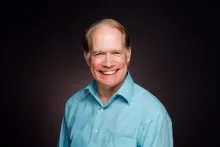
Greg Thomas is the former Pastor of the Cleveland, Ohio congregation. He retired as pastor in January 2025 and still attends there. Ordained in 1981, he has served in the ministry for 44-years. As a certified leadership consultant, Greg is the founder and president of weLEAD, Inc. Chartered in 2001, weLEAD is a 501(3)(c) non-profit organization and a major respected resource for free leadership development information reaching a worldwide audience. Greg also founded Leadership Excellence, Ltd in 2009 offering leadership training and coaching. He has an undergraduate degree from Ambassador College, and a master’s degree in leadership from Bellevue University. Greg has served on various Boards during his career. He is the author of two leadership development books, and is a certified life coach, and business coach.
Greg and his wife, B.J., live in Litchfield, Ohio. They first met in church as teenagers and were married in 1974. They enjoy spending time with family— especially their eight grandchildren.
