

Rodrick Foster
This transcript was generated by AI and may contain errors. It is provided to assist those who may not be able to listen to the message.
Well, thank you, and brethren, welcome to the seventh day of Unleavened Bread 2018. Hard to believe that the feast went by so quickly this year. I've already learned two things this morning. The first thing I learned was where Trump Avenue is. And I didn't know if it was Donald Trump or the last Trump, or if they'll both be synonymous in prophecy. I guess we'll find out in the future. But I found out where Trump Avenue is, and I also found out why Mr. Lee had so many of his dates cut short when he attended college.
So, where is he? Just teasing, just kidding. Well, this is the seventh day of Unleavened Bread, and traditionally we have understood that the people of Israel may have crossed the Red Sea on this very day. So I'd like to start out with taking a look at that scripture and drawing a metaphor from it. We'll turn to Exodus 14 and verse 9 with me. Today I actually have two metaphors. I'd like to talk about this very powerful number of verses here in Exodus 14.
And then, after we look at this as a metaphor, I'd like to talk about a more modern metaphor of a historical event that occurred a little over a hundred years ago, and mesh them together a little bit and see what we can learn about what our next thoughts and steps and actions should be as the Feast of Unleavened Bread come to a conclusion this year. So we're going to pick it up here in Exodus chapter 14, beginning in verse 9.
Of course, Israel was pinned against the Red Sea. So the Egyptians pursued them. Pharaoh had changed his mind after he let them go. And all the horses and chariots of Pharaoh, his horsemen and army, and overtook them, leading by the sea beside Pihahirah, and before Baal, Ziphon.
And when Pharaoh drew near, and the children of Israel lifted their eyes, and behold, the Egyptians marched after them. So they were very afraid. And the children of Israel cried out to the Lord. Then they said to Moses, Because there were no graves in Egypt, have you taken us away to die in the wilderness? Why have you so dealt with us to bring us up out of Egypt?
Is this not the word that we told you in Egypt, saying, Let us alone that we may serve the Egyptians? It would have been better for us to serve the Egyptians than that we should die in this wilderness. So they were afraid. And they were thinking backward. They were thinking of how it was in Egypt. And this is what their perspective was of this situation. And then beginning in verse 13, And Moses said to the people, Do not be afraid, stand still, and see the salvation of the Lord, which he will accomplish for you today.
For the Egyptians, whom you see today, you shall see no more forever. For the Lord will fight for you, and you shall hold your peace. So he's saying, calm down, relax, don't panic, stand still, and watch the great God, in all of his might and glory, and do what he's going to do. But then God has another opinion beginning in verse 15. And the Lord said to Moses, Why do you cry to me? Tell the children of Israel to move forward. So let's not reminisce about the past.
Let's not stand still and expect God to do everything for us. Let's move forward. This is not only a true historical event, it's also a metaphor of our calling. We read about Pharaoh in here, and of course he represents Satan. Satan regrets that he was forced by God to let us go. But when we were called and we responded to that calling, God made us his own. Satan hasn't been happy about that ever since.
As a matter of fact, he is still pursuing us. And here it talks about Egypt, and of course Egypt is representative of sin. Our society today is very corrupt, and it has very many false gods. Now we may not be making gods out of stone and wood, we just have gods in different ways. Materialism is a god for many people. Celebrity is a god, small g. Wealth can be a god.
Titles can be a god. You see, so we have just different types of gods today, but our society is even more corrupt, probably, than ancient Egypt was. Then they face the Red Sea. The Red Sea is an insurmountable obstacle or barrier that we face in life, for which we need God's direct help and his intervention. There are some phrases in here that are very powerful. Moses said, do not be afraid, and whatever we face in life, we shouldn't be afraid, as Paul told Timothy in 2 Timothy chapter 1 and verse 7, God has not given us a spirit of fear, but of power, and of love, and of a sound mind.
Faith is the antidote to fear. And then we see another phrase here. Moses encouraged them to stand still. He knew that God was there to fight our battles for us, and indeed God is there to fight our battles for us. But God added something else to this scenario when God said, go forward. Faith without works is dead. It's useless. God will always do his part, and in response to what God does, we need to do our part. And that means don't long for the past, don't expect God to do everything, but put one foot in front of the other, and then the other foot in front of that foot, and move forward.
Very powerful lesson, very powerful metaphor for us as we conclude the Days of Unleavened Bread. And of course, we know from all that we've experienced from the Passover, throughout this festival, that we are loved, we are called, we are forgiven, and that we have a Savior. Very beautiful Scripture to contemplate again the conclusions of the Days of Unleavened Bread this year. But with this, because we are excited, and we've had a wonderful feast, with this, I think we need a honest caution and a warning, that sometimes we can be so blessed, we can become so complacent, that we set ourselves up for some real problems and issues.
Mr. Stiver talked about the wealth in our country. I can remember when families had a car. Now, a lot of families that I know have two cars. I can remember when people had a phone. Now, every family member has a phone. Their 12-year-olds have phones. I can remember when people had dial-up Internet access. Now, every device in the house has Internet access. I can remember when people had a television, and it was a black and white one, and it got a whole three channels, ABC and BCCBS. Right now, there are hundreds and hundreds of channels to waste our time. So, we, indeed, are just a phenomenally wealthy, dare I say spoiled, people here in the United States, here in America.
So, I'd like to talk about another historical event and use it as a metaphor, because I do want to give all of us a little bit of caution today, a little bit of a warning that we have to be careful that we don't become complacent.
We have to be careful that we just don't take the blessings that we have for granted, because everything we have is a gift from God. The home you have, the car, the family you have, you're a trustee of those things. While you live this life, God is blessing you with the gift of being a trustee of His possessions. And when we're gone, someone else will take those possessions. The house that I live in, that I love, that I built whatever 23, 24 years ago, that's paid off, I'm just a trustee in that property.
Someday, I will be gone and someone else will live there. And that's true of everything that we have in this physical life. So, the metaphor I want to talk about today is, again, far more modern than what we read here in Exodus, chapter 14. It happened a little over 100 years ago. It's a testament to human folly. And it's a warning that internal strength is far more important than outward appearance.
If you looked at the American culture by outward appearance, our economy is growing, people have more things than they ever had in history, a higher percentage of people are educated. If you look in the outside of us as a nation, just by outward appearance, it looks like things are going fine. But inwardly, there's weakness. Inwardly, there is corruption. And I'd like to use this story today, again, as a metaphor for a reminder and as a caution to us that we don't fall prey to the kinds of qualities that this disaster had. After the spring holy days this year, in about a week or so, an infamous anniversary is going to occur.
It happens every April 15th, and usually there's some mention of it on the news. It was one of the worst peacetime maritime disasters in human history. It occurred 106 years ago on April 15th, 1912. Just a few years ago, I think it was maybe 2009, the last survivor of the Titanic died. She was eight weeks old when the Titanic went down and she was saved on one of the lifeboats. So it was a long time ago, but still within our lifetime.
If you go on YouTube, you can actually see videos of survivors in the 70s and 80s and 90s being interviewed individuals who survived the Titanic in movies and music. It's known as the Titanic disaster. Because of this tragedy, the word Titanic has added meaning in our culture today. If you were to use the analogy in business that, yes, they're just arranging deck chairs. Rearranging deck chairs on the Titanic, that means the organization's still going down. All you're doing is superficially you're shuffling things around, but it's not really solving the problems that exist. So it's even become part of our culture, part of our catchphrases.
For this sermon, I would like to rely on the history of this event and some lessons and cautions and warnings that you and I can learn from this once great and mighty ship. I'm going to be reading some information and some statistics, so please bear with me if you're bored. Smile anyway, please.
I just want to make sure I get the statistics straight about this story. The Titanic was built to be a showboat. It was outwardly very, very impressive. It surpassed all of its rivals in its time with luxury and opulence. She had a swimming pool, a gymnasium, Turkish bath, two libraries, squash court, elaborate wood paneling, expensive furniture, restaurants, a veranda, a grand staircase, and it had electric lights everywhere, which was, again, we're only talking about 1912. She had four large, 60-foot-three high funnels.
If you've ever seen a picture, you'll see those four funnels in the picture. The Titanic, which you may not know, is only three were functional. The fourth one was just to make it look more majestic. It had no function at all. It just balanced the design. And the architect, by the way, also went down with the ship and died, along with the ship captain. It was there to impress the eye. That is why that fourth funnel was put on the Titanic.
Let's go to 1 Corinthians chapter 10 and beginning in verse 1. We're going to weave in some comments about ancient Israel as we begin to think about icebergs and the icebergs that you and I will face in life. Because eventually, we will hit at least one iceberg in our lives. I've hit a few myself, and I'm sure there are still some more yet for me to hit. So how can we prepare our lives and make sure that we don't go down like the Titanic did? 1 Corinthians chapter 10 and verse 1. Paul wrote, more of a brethren, I do not want you to be unaware that all our fathers were under the cloud and all passed through the sea and all were baptized into Moses, in the cloud and in the sea, and all ate the same spiritual food and all drank the same spiritual drink, for they drank of that spiritual rock that followed them, and that rock was Christ, the very God who communicated with them, known as the God of the Old Testament, would later on become Jesus Christ himself.
And he was there for them, and he loved them, and he guided for them, and he provided for them. Verse 5. But with most of them God was not well pleased, for their bodies were scattered in the wilderness. Now these things became our examples.
So he's saying, when you read about these, and when you read their weaknesses, when you read about their characteristics, they're there for us to learn from. Our examples, to the extent that we should not lust after evil things, as they also lusted, and do not become idolaters, again in our case our modern society, don't become addicted to things, to materialism, to just acquiring stuff for the sake of acquiring things.
As were some of them, as it is written, the people sat down to eat and drink, and rose up to play. They didn't have healthy things on their minds. They had deviancy on their minds. Verse 8. Nor let us commit sexual immorality, as some of them did, and in one day 23,000 fell. Nor let us tempt God, as some of them also tempted, and were destroyed by serpents. Nor complain, as some of them also complained, they were destroyed by the destroyer.
Now all these things happened to them as examples. For us to learn from, for us to say, aha, I don't want that to happen to me. I don't want to make the same kinds of mistakes that they made. Continuing, they were written for our admonition, upon whom the ends of the ages have come. Therefore, let him who thinks he stands take heed, lest he fall. So we're excited. We're on a high. We've went through the Passover. We've renewed our covenant with our Savior, Jesus Christ. We have removed leaven from our homes.
We've thought about sin. We've thought about, examined our lives. We've looked at ways that we can grow and improve. So it's very easy, coming off of these days, to be excited about our relationship with God. And maybe just allow it to go to our heads and be setting ourselves up for some real trials and real problems. Again, therefore, let him who thinks he stands take heed, lest he fall.
No temptation has overtaken you except such as common demand, but God is faithful who will not allow you to be tempted beyond what you were able, but with the temptation will also make a way of escape that you may be able to bear it. So we all within the human race have the same vices, the same temptations, the same human urges. There's nothing new in that regard. It's dangerous to be so foolish to only look on the outside of things.
And when you look at the Titanic, it was majestic. That's why they named it the Titanic. It was huge, majestic, regal, big. On the outside, it was very, very impressive. Jesus said in Matthew 23 and 27, he said, Woe to you scribes and Pharisees, hypocrites, for you were like whitewashed tombs and indeed appear beautiful outwardly, but inside are full of dead man's bones and all uncleanness. So all of the negative qualities that Paul mentions here about Israel came from the inside. It was generated from their hearts when he talks about their promiscuity.
They're complaining. They're testing God, not being thankful for what they had, but always trying to test God, to push God, and yielding to temptations. These are all things that originate from the inside, and then as a result, they are demonstrated by our actions. They were excited. In chapter 15, they sang a song. They were so excited to finally leave Egypt. And remember, they plundered Egypt before they left. They took gold and silver and beautiful garments, and they plundered the Egyptians. They crossed the Red Sea, and in chapter 15, they're singing a song. They are excited. They're on a high. And brethren, that sometimes is when we risk falling into trouble, falling into danger.
Let's get back to the Titanic here. The Titanic was built by the White Star Line and weighed 46,000 gross tons. It was about 885 feet long, which is quite long, 95 feet wide. The ship had been dubbed unsinkable by many experts because of a unique design it had.
It had 16 watertight compartments or bulkheads. And these bulkheads all extended 10 feet above the waterline, and they called it unsinkable. I'm not sure it's wise to call anything unsinkable, personally. A 1910 advertising brochure claimed that it was, quote, designed to be unsinkable. Let's take a look at Proverbs 16 and verse 5. We have to be careful that we don't think we're bulletproof. If we've been in the church for a long period of time, 30, 40 years, we've seen a lot.
What's that television commercial? We know a thing or two because we've seen a thing or two. Right? We've seen a thing or two in our days, walking this path, living God's way of life. And it's very easy to begin to think, wow, I'm kind of bulletproof. I'm okay. Made it this far. I can just take it easy. I can coast, or I can become complacent. And that's just not a wise thing to do. Proverbs 16 verse 5, Everyone proud in heart is an abomination to the Lord.
Though they join forces, none will go unpunished. In mercy and truth atonement is provided for iniquity, and by the fear of the Lord, one departs from evil. So we don't want to get big-headed. We don't want to become too proud. We don't want to become arrogant. We don't want to believe that whatever we may have achieved in life is because we're so good, we're so brilliant. We don't want to begin to leave God out of the picture, or think the things that we've achieved in life are somehow more our doing than God's doing. Thinking that we are unsinkable or above making a serious mistake, or beyond giving into a temptation, is very unwise.
After the Israelites crossed the Red Sea with a high hand, they were exalted about their deliverance. If you look at the history, it wasn't very long before they began having troubles that tested their faith and their attitudes, and they were found wanting. We don't want that to happen to us. Living a life filled with material blessings, indeed, can make us complacent. We can begin to deceive ourselves that what we have, again, is due to our own achievements, our own accomplishments, and to begin to leave God out of the picture, to pray less, to study less, maybe even not to go to church regularly. Think, oh, it's just so convenient to plug in the internet in and watch a service live on the internet rather than actually going to services, to fellowship and worship with people of like mind.
We can begin to think that way, and that's not good. Obviously, if due to health issues or legitimate reasons we're not able to go to services, God certainly understands. But if we have that capability and we're not doing it, that is not a good thing, and it's only going to lead ultimately to problems and potential disaster.
Let's, again, look at a warning to our spiritual ancestors, ancient Israel, in Deuteronomy 8 and verse 11. This certainly is a command made to ancient Israel. It most certainly pictures what has happened in our American culture today. And if, as God's people, we're not careful, this can also apply to us. Our culture has a huge pull.
It's like a magnet. And it has a pull to make us to conform and become like everyone else. That our values become our culture's values. And that's a pull is very, very strong. If we're not careful. Deuteronomy 8 and verse 11, beware that you do not forget the Lord your God by not keeping his commandments, his judgments, his statutes, which I command you today. And of course, Mr. Lee, you know, very powerfully talked about the spirit of the law. That is more than just words. It's the intent of our heart, whether we're trying to be deceptive or not. Jesus came to magnify and to reinforce the spiritual application of God's law.
Verse 12, lest when you have eaten in our full and have built beautiful houses and dwell in them. And when your herds and when your flocks multiply and your silver and your gold are multiplied and all that you have is multiplied, when your heart is lifted up, when you're on a high, when you're excited, when you're proud of what you've achieved, and you forget the Lord your God who brought you out of the land of Egypt and from the house of bondage, who brought us out of the world and brought us out of this culture so that we would be different, not to reflect the culture, not to be the same as our culture, but to be counter culture because we live God's way of life.
Verse 15, who led you through that great and terrible wilderness in which were fiery serpents and scorpions and a thirsty land where there was no water, who brought water for you out of a flinty rock, who fed you in the wilderness with manna, which your fathers did not know, that he might humble you and that he might test you to do you good in the end. You know God humbles us and he tests us and why does he do it?
Because he wants us to grow through the process to do good in the end. He wants us to come out of that trial, to come out of that test better, stronger, more faithful, more committed to God than we were when we entered that test. So any test, any trial, any problem that we go through isn't because God is out to get us. God loves us. It's because he wants to do you good in the end. God is looking at end results. He's looking at your life as a plan and what he wants to achieve. And to achieve that plan, he has a personal spiritual development program for you.
And for you, it's going to be different than it is for me because God is working with you, with all of us as individuals, to take us to where we need to be.
Verse 17, then you say in your heart, my power and the might of my hand have gained this wealth. You see, there's a complacency that sets in its human, its carnal. When we are blessed so much, when so much is given to us, there's a tendency to begin the coast.
Not to move forward, but to stand still. We will always look back. There will be episodes and things of the past instead of moving forward. Verse 18, and you shall remember the Lord your God, for it is he who gives you power to get wealth that he may establish his covenant which he swore to your fathers at this day.
We say to ourselves, I got a great job! Well, that's wonderful. Who gave you the legs to be able to go to work?
Who gave you the mind and the mental acuity to be able to think and do your job, whatever it may be?
It's God who gives us all of those qualities and capabilities. He deserves the credit, no matter what we may think that we have achieved.
Again, just as many engineers believe the Titanic was unsinkable, it was not.
And we, too, must be cautious not to think that we're unsinkable spiritually speaking.
Looking back on my life, I can recall many very talented individuals in the Church of God with far more natural talents and abilities than I have. Very talented people. Suddenly, it appeared that they came crashing down and disappeared, and no one ever heard of them again.
I didn't really suddenly come crashing down. We have a phrase that we say in the business consulting world, and that phrase is that an organization fails slowly, slowly, slowly fast.
Okay? That's how organizations fail.
Now, oftentimes, it means that the decline was very slow at first, and that it was barely perceptible.
Most people didn't even see it happening. Those who worked there were too close to the tree to see the overall forest.
And decline was happening. There were things that were going on, but they were so slow and barely imperceptible and perceivable that the warning signs were ignored.
But the subtle decline was still going on, and eventually it reaches a tipping point when it's too late.
And, brethren, the same thing happens with people.
The same thing can happen to me. The same thing can happen to you if we think we're unsinkable, if we think we're bulletproof.
In its maiden voyage in 1912, it was from Southampton, England to New York City, on just the fifth day of her maiden journey around 10.40 p.m. that night on April 12th, the mighty ship struck an iceberg about 95 miles south of the Grand Banks of Newfoundland.
In spite of the Titanic being proclaimed unsinkable, the iceberg sufficiently damaged the ship to make it sink in less than three hours.
And that's fast. Later investigations found a number of reasons to explain why the disaster occurred.
There is actually, by the way, a mathematical formula. I don't consider myself a mathematician, but they use a mathematical formula to compare the density of ice and the density of seawater, and it comes out that in most cases 90% of an iceberg is actually below the water's surface.
What you see is truly just the tip of the iceberg. There's danger there. And what you see is just a small percentage of the danger that is lurking there.
Let's go to 1 Peter 5 and 6. If you'll turn there with me, 1 Peter 5 and 6.
Peter also talks about the importance of humility and the importance of realizing that there's something there that we may not realize, because we only see the tip of the iceberg.
1 Peter 5 and 6. Therefore humble yourselves under the mighty hand of God that He may exalt you in due time.
And there will come a time when we will experience the glory during the resurrection, like Mr. Blakey sang about.
There will come a time when we experience that resurrection that we are changed in the twinkling of an eye from mortality to immortality.
And that will be our due time. Verse 7, casting all your care upon Him, for He cares for you. God loves us very much.
Be sober, be vigilant, because your adversary, the devil, walks about as a roaring lion, seeking whom he may devour.
Resist him! Steadfast in the faith!
Knowing that the same sufferings are experienced by your brotherhood in the world, but may the God of all grace who called us to His eternal glory by Christ Jesus, after you have suffered a while.
And why do we suffer a while? Because God is working with us. He has a development plan for us.
And that suffering is to do good in the end, to make us better than we are today.
After you have suffered a while, perfect, establish, strengthen, and settle you to Him, be the glory and the dominion forever and ever. Amen.
So there is a spiritual force, a very devious spiritual force out there.
And thankfully, because of God's mercy and grace and through His Holy Spirit, we are shielded from a lot of that evil.
But we're still carnal. We can still yield to bad thoughts, bad attitudes can overwhelm us.
We still can be very susceptible to this roaring lion who's just looking for an angle, looking for a way, looking for a loophole to get into our lives and destroy us.
There are things going on that we're not even aware of, things going on in our lives that we're not paying attention to, and if we're not careful, it can lead to a personal disaster.
Satan knows our family history going back generations and generations. He knows what's in our DNA. He knows our Achilles heel, even if we don't know it or recognize it.
I was very blessed years ago to be called as a teenager, and I could see that in my family, there was an Achilles heel of alcoholism. My grandfather was an alcoholic, my father was an alcoholic, and my mother had to divorce him when I was a small child.
I had an aunt. One of his sisters died as a young woman of cirrhosis of the liver. So there was a history of alcoholism in my family.
I could see and understand at that time, and it has served me well, that that could be my Achilles heel. Now I drink, but I drink in moderation.
But I, through self-examination, realized that that could bring me down.
And for all of us, it may be something different. But I can tell you that that roaring lion knows exactly what it is in your life. And he'll use it. He'll do everything he can, if we allow him to pull us down.
Now back to the Titanic. Here's what happened to the Titanic after it struck the iceberg. The ship had been steaming too fast in dangerous, icy waters.
Sometimes we're just in life on autopilot. We're just running around without any purpose, without realizing that we're just going too fast.
Maybe we need to slow down and stop, get some prayer in, get some prayer, get some Bible study in, get some meditation in.
Are we just running around? Are we also steaming too fast in dangerous waters in our life?
It says the available ice boats, the available lifeboats provided room for only about half of the passengers and crew, even though the Titanic had more lifeboats than were required by law at the time.
So the law was loose. They didn't have enough lifeboats for even half of the people on the ship. And, if that wasn't bad enough, they only put sometimes three to four people on a lifeboat instead of the twenty that it was designed for.
Organization in getting people on those lifeboats. The ship was designed to stay afloat if four of the sixteen bulkheads were filled with water.
However, after it hit the iceberg, five were filling with water. As the water poured into the front of the ship, it filled up one of the watertight bulkheads.
It pulled the wall of the next bulkhead until it was underwater, and then it filled with water. And then the next bulkhead, which originally had been designed to be ten feet above water, it filled with water.
And that cascading effect continued until the ship was ultimately and completely doomed. The water simply cascaded from one bulkhead to another, and the next until the ship was filled with water.
Eventually, the ship broke apart between the last two funnels and sank under the water.
The Titanic didn't have much support out there. There was a nearby ship named the Californian. It was close to the scene, but it didn't come to the rescue because its radio operator was off duty and asleep.
No one was there to get its messages. Help! We need help! We've hit an iceberg!
Later, when the Titanic shot up red flares into the stress signal, other ships that were nearby thought they were celebratory fireworks.
Oh, it's their maiden voyage! Look at the beautiful fireworks! All right, Titanic, go for it!
So they didn't have much support. The Titanic didn't have enough lifeboats for the total number of passengers, and many of the twenty were only filled with a few people instead of their capacity. Ecclesiastes chapter four and verse nine. They were left alone. They needed help, and they didn't receive any help, but it doesn't have to be that way for us as God's people. Ecclesiastes chapter four and verse nine.
Because one of the reasons it's important for us to fellowship together on the Sabbath, to fellowship together on God's high days, is because God has called us to be his family. A spiritual family who is there for one another. They're to support each other. Ecclesiastes chapter four and verse nine.
Two are better than one because they have a good reward for their labor, for if they fall, one will lift up his companion. The Titanic had no one to help her. No one to lift her out of the water. No one to send extra lifeboats to save the people who are falling into that cold water.
Continuing, but woe to him who's alone when he fails, for he has no one to help him up. Again, if two lie down together, they will keep warm. But how can one be warm alone?
Though one may be overpowered by another, two can withstand him. And even better yet, a three-fold cord is not quickly broken.
So we need support. God has called us, brethren, as God's people to support each other and to be there for one another.
The Titanic, again, was all alone with no real support system. God has given us each other as a support system to look out for each other, to care for each other. And when we see someone struggling, saying, how can I help you? To be there for them. Romans 12 and verse 10.
Let's look into this a little more deeply. Romans 12 and verse 10, Paul's letter to the church at Rome. Paul wrote, Be kindly affectionate to one another, with brotherly love, in honor, giving preference to one another, not lagging in diligence, fervent in spirit, serving the Lord, rejoicing in hope, patient in tribulation, continuing steadfastly in prayer, distributing to the needs of the saints given to him.
To hospitality. Someone else needs something, and I have excess. I have the ability to help them out. It says here that we should distribute to the needs of the saints.
Given the hospitality, someone lost their job. How about a bag of groceries to help them out? Maybe they have a short month, maybe to offer a little cash to help them pay utility bills, or a mortgage payment or something that they may be struggling with. Again, this is what it means to be kindly affectionate to one another with brotherly love. Unlike what the Titanic experienced, it had to face its tragedy alone. We can be encouraged and strengthened by having people around us. When God's children are struggling, stranded, or sinking spiritually, we need to offer our help. We need to become a lifeboat the Father sends to support and encourage someone in their time of need.
Not to sit back and say, oh well, it's too bad, so sad.
You know, on the Titanic, there were three classes of people. If you got a first class ticket, it was pure luxury. You got to enjoy all of those amenities I discussed earlier.
Many wealthy people were in first class. Then there was second class. It's what we might call those who could afford a middle class payment.
Then there was the steerage, the low class. They referred to it as third class. It's the kind of people that the level that my ancestors would have been on if they were traveling to the United States on the Titanic. It was third class.
But you know something? In the Church of God, there's only one class. That class is called and converted. Period.
That's the only class that exists in the Church of God.
Paul wrote in Galatians 3, verse 28, there is neither Jew nor Greek, there is neither slave nor free, there's no poor and rich.
We're all one. We're all first class in God's sight and in God's mind.
He says there is neither male nor female, for you are all one in Christ Jesus.
The Titanic was a huge tragedy that many historians actually believe accelerated the decline of the British Empire because of the loss of many talented British leaders from all walks of life who went down with the ship. There were more than 2,220 persons aboard and about 513 died.
Now, if there's something that's maybe, I can't call it a silver lining, but if there's something that was positive about that shocking loss of life over 1,500 people, is that they were immersed into lethally cold water. It was 28 degrees. I see cold water and death occurred within minutes.
I suffer very long. But it was an incredible tragedy.
The events surrounding the sinking of the Titanic has been the subject of several films and many books.
However, it wasn't until September of 1985 that the actual wreck was found resting on under 12,000 feet of water. A salvage crew was able to bring up to the surface some of the steel from the hull of the ship, and what they discovered regarding the steel was startling.
An analysis revealed that the steel hull of the Titanic had too high of a sulfur content.
A high sulfur content causes steel to become more brittle as it gets colder. And, of course, this ship was in icy cold waters.
In these kinds of waters in the North Atlantic, the Titanic's hull would break rather than bend if it were to hit an object. And that's exactly what happened.
1 Peter chapter 1 and verse 6. 1 Peter chapter 1 and verse 6.
Peter writes in 1 Peter chapter 1 and verse 6, In this you greatly rejoice, though now for a little while, if need be, you have been grieved by various trials.
There go those trials again, there go those tests. For a little while it says, why? To make us better in the end. That's why.
That the genuineness of your faith being much more precious than gold that perishes, though it is tested by fire, may be found to praise, honor, and glory the revelation of Jesus Christ.
When it's talking here about metal being tested by fire, it's talking about the heat of a fire used in a smelting process. When making steel, like in the hull of the Titanic, it was smelted. You might say, what is smelted? Actually, it's a very ancient technique. If you go back to the book of Job, don't turn there, I'll read it.
Job chapter 28 and verse 2.
Job wrote, Now, it's possible the book of Job was even written before Moses wrote the Pentateuch. It may be the oldest scripture in the Old Testament, as far as when it was actually written. And here we already see a process called smelting. Smelting is a process that applies heat in order to melt out a base metal and to separate that base metal from other elements that may be in that raw metal.
In the case of the Titanic, it was not done effectively, and the steel was of inferior quality.
Now, metallurgists debate whether it was inferior steel or if it was the best that was available when the ship was built in 1911 and 1912.
And they're still debating that. But the point is that the steel ended up being of inferior quality, particularly by today's standards.
In the case of our lives, God allows us to experience various trials so that the heat of those hardships, the smelting process of those difficulties, the stress, maybe the frustration, the challenge to our attitude, that the smelting process spiritually strengthens our faith. It purifies us. It separates the quality, the righteousness that God is building in us, and separates some of that carnality, some of that selfishness, that stubbornness, that self-will, that independence to bring out something that is pleasurable and good for us.
Smelting is a very ancient process, as I mentioned. And not only were there problems, of course, with the steel on the hull, it also had inferior rivets that were poorly made, even by the standards of that day. The hull of the ship was held together by three million poorly made rivets. They recovered forty-eight from the ship, and they examined them, and they were found to be made of iron instead of steel.
Uh-oh. And they had high concentrations of slag, and slag has glass in it, and it weakens it, makes sure, because of that glass, that it's not as strong as it needs to be.
Surprisingly, the total area of the holes that were ripped in the ship by an iceberg was only about the size of a refrigerator. That was the impact. That's all that it took.
Yet, whole seams of rivets popped open, and literally unzipped, because they were inferior when it hit that iceberg. One popped, and then pop-pop-pop-pop-pop-pop-pop-pop-pop, a whole seam along the length of the ship, all of those rivets unpopped, a length of three hundred feet. The rivets popped out below the water line.
So you see, this ship, that had an impressive outward appearance, that really looked good in the outside, had some serious internal flaws. They brought it down.
There's a valuable lesson to learn from this example, if we are humble enough to take the time to really know ourselves. In life, there will be trials and temptations, and they're going to test our mental. And again, all of us, if we haven't already, all of us are going to hit at least one iceberg in our spiritual lives.
What kind of metal will we show when that happens? We have internal weaknesses that can potentially bring us down, and the purpose of these days is to remind us of the need to examine ourselves, to look in those areas and discover areas that we need to strengthen.
Maybe we have rivets that we need to replace, spiritually speaking. Maybe our foundation of our whole calling was a little shaky.
Maybe we need to rebuild our faith in Jesus Christ. Maybe we need to apologize to people that we've been angry with for a long time.
Maybe we need to forgive individuals who have hurt us.
Let's go to Galatians 6 and verse 3. Galatians 6 and verse 3. Paul wrote to the brethren in Galatia, For if anyone thinks himself to be something, think we're unsinkable, think we're better than anyone else, think we're superior, more spiritual, smarter, better looking, if anyone thinks of himself to be something when he is nothing, and without Jesus Christ in our lives, we are absolutely nothing.
If anyone thinks of himself to be something when he is nothing, he deceives himself, but let each one examine his own work, and then he will have rejoicing in himself alone, and not in another, but each one shall bear his own load.
So, when we hit that spiritual iceberg, will we be strong enough on the inside to absorb that impact?
Will we have enough faith? Will our relationship with God be close enough that we can endure that trial, that tribulation, whatever it may be?
The mighty Titanic was considered to be unsinkable, and again, even though it looked impressive on the outside, it had internal flaws that led to its destruction.
How about us? Do we have internal flaws that we've been hiding, ignoring?
Living in denial? Then a night came for the Titanic because it didn't take care of its issues. It wasn't strong enough. It wasn't designed to endure what it encountered.
Then came a night when the mere tip of an iceberg was noticed, but it was too late to avoid it.
And even though it was in a geographical area known to have many icebergs, not enough care was given to avoid danger.
Have we examined ourselves in a nowhere the danger lives in our lives? Where that roaring lion can see an opening? Can see something inside of us?
Say, yeah, if I just do that, I'll leave him or her down a path of self-destruction. Is that possible? It most certainly is possible.
Pride and vanity has destroyed many people, including some with incredible gifts and potential in the very Church of God.
Don't let that happen to you. Know who and what you are on the inside.
Know what you're capable of and avoid areas that will take you under. Avoid areas in your life that will sink your goals.
Like the Titanic, the same may be true in our lives. On the outside, we may appear to be fine, even physically healthy, if someone were to look at us.
But on the inside, are we examining ourselves for internal flaws and weaknesses, something that can bring us down?
And then, when we know what they are, taking action to strengthen our character before we hit the iceberg? Because the lesson of the Titanic is that if you haven't done that after you hit the iceberg, it's too late.
Eventually, all of us are going to hit a spiritual iceberg in life. It may be our health.
You could get a doctor's report tomorrow that's devastating news to you. I've had that happen in my life. It could be relationships, someone you love, departs, leaves.
It could be finances. You lose a job. Or something happens and your finances are ruined. It could be a crisis of faith.
Something happens within the church. Or someone offends you and you have a crisis in your faith. It could be getting into a temptation.
It could be many things, but when our metal is tested, will we be spiritually strong? Will our metal be one of quality? Will it be flexible enough to take a hit from life?
Or will we become bitter, fragile?
When our metal is tested, it's going to respond in one of two ways. Either it becomes stronger and more impurities are discovered and removed through that heating process, that smelting process that God allows to happen to us in a spiritual sense.
I already read earlier from 1 Peter chapter 1 and verse 7. He said that the genuineness of your faith be much more precious than gold it perishes, though it be tested by fire.
It may be found to praise, honor, and glory at the revelation of Jesus Christ. So that's the one thing that can happen. And that's the purpose of those tests. By the way, that's the purpose of those trials.
But a second thing can happen to us if we're not prepared and our metal is tested. We will become angry, bitter, and our faith becomes brittle. That has happened to many, many people.
Just like the rivets on the Titanic. One thing happens when you have a root of bitterness, changes your perception, and then everything that happens you interpret in a negative way, and those rivets go pop, pop, pop, pop, pop, pop, until you've made yourself in a rage, and you're angry, and you're discouraged, and you leave, and you depart.
Hebrews 12 and verse 14.
Hebrews 12 and verse 14. Hebrews 12 and verse 14.
The author of the book of Hebrews wrote, Pursue peace with all people in holiness, Without which no one will see the Lord, Looking carefully, lest any one fall short of the grace of God, Lest any root of bitterness, Bringing up, cause trouble, And by this many become defiled. That root of bitterness is just like eleven, and if we don't deal with it, if we don't process it in the right way, it's just going to destroy us. It's going to eat us up on the inside, and ultimately it's going to lead to our spiritual demise. Just a small root of bitterness can grow into resentment, and anger, and frustration, and if we're not careful, we may respond the wrong way to trials and tests, and begin to blame God, or begin to blame other people for what we go through and for the things that we face in life.
Brother, in today's one-loving bread should teach us that our need to put ourselves under the care of Almighty God should be a priority in our life. He is our strength. Trying to do things through our own strength, out of pride, will only fail. Trials will come in life, and they will surely test our mettle.
Are we ready for that?
What we are truly made of will be revealed during one of those times. A genuine faith, a steadfast faith, is what keeps us holding things together when we receive the blows that life gives us, and being flexible to those blows, rather than being brittle and allowing it to break us.
One good thing came out of the Titanic disaster. It changed the way forever that ships are designed, and ever since then, many laws and many things were changed because of that terrible disaster. For example, they instituted an international ice patrol. Now, by law, all ships have to have sufficient lifeboats and training on how to get people the maximum number of people in those lifeboats.
By law, there has to be 24-hour radio communication with backup power. By law, in the maritime world, red flares always mean distress. They don't mean, oh, they're having a good time, they're celebrating.
It's the international signal of distress.
The bulkheads now are higher. Ships all have double hulls, so it instituted a lot of changes from that point on. In a similar way, when we go through a trial and we face our own personal Red Sea, or we hit an iceberg, we should learn from the experience and make changes. Think about it, think it through, analyze it, and strengthen our mettle. Let's not take our calling for granted or become too casual about our need to grow. Because we need not to stand still, not to look backward and long for the past. We need to move forward.
Some individuals and organizations that I personally known didn't make the serious changes they should have when they hit an iceberg. Therefore, they continually back up and hit the same iceberg over and over again. I've known people like that as well. The days of Unleavened Bread are part of the plan of God. He desires that we candidly and honestly look at our lives and make the changes we need to make now. It's more than just the theme of a feast. It's more than something we just should do seven days out of a year. It is important for us to know what we're made of, to know thyself. And if something is weak or lacking, we need to correct it. And if we're willing to do this, we'll be a stronger people, a better people, and we'll be genuine ambassadors for Jesus Christ. One final scripture today. If you'll turn to 1 Corinthians 3 and verse 10, our final scripture.
Paul wrote about the importance of building things with the right material and the right kind of strength. Much of what we've been talking about today.
1 Corinthians chapter 3 and verse 10, according to the grace of God, which was given to me as a wise master builder, I have laid the foundation and another builds in it, but let each one take heed. How he builds on it. Are we using the right kind of building material? Is our metal strong? Are we cutting corners? Are we compromising with things in our lives? Are we living in denial? Are we ignoring problems that are obviously there? But let each one take heed, how he builds it. For no other foundation can anyone lay than that which is laid, which is Jesus Christ. That has to be the foundation. Absolutely. And if our foundation of our faith is not on Jesus Christ as our Savior and what he did for us, we have the wrong foundation.
Verse 12, now if anyone builds on this foundation with gold, silver and precious stones, wood, hay or straw, each one's work will become clear for the day will declare it.
There's going to come a time when we're going to cross that personal Red Sea. We're going to hit that tip of that iceberg and it's going to show what kind of building materials we used because it will be revealed by fire. If our building material is straw, how long does that last under fire? Not very long. It's not very good. How about hay? Not very long. Not very good. Wood? Well, it may take a little longer to start it, but I have a fireplace and even I'm smart enough to know that wood burns into ashes and is totally consumed and destroyed.
Precious stones? That's a little better. It takes a lot of heat to melt a stone. It's something that has rock in it. How about silver or gold? You see, because as Paul says here, it will be revealed by a smelting process, by fire, by a trial, by a challenge.
And then we're going to find out the stuff that we're really made of. And the fire will test each one's work, what sort it is. And if anyone's work which he has built on endures, he will receive a reward. And if anyone's work is burned, he will suffer loss, but he himself will be saved, yet so as through fire. So the good news here is if our building materials aren't of the quality they need to be, God doesn't condemn us. He says we're just going to have to go through the fire personally. But we're not condemned.
Well, today we are celebrating, worshiping our great God, and celebrating on this seventh day of Unleavened Bread. As Paul reminds us here, we are God's building.
He's building something wonderful in you. He's building something great in your life for his kingdom. Let's leave it in his hands. Let's have good hearts, sound minds, and allow the Father to do that smelting process in us to make us into the image of his Son. And on our part, let's make sure that we're examining ourselves more than just seven days, more than just the theme of a festival season, that we've taken the time to truly know thyself, and to know the kind of things that can pull us down, can shipwreck our lives, and to begin making those changes, to become a better people, a more godly people, a more righteous people and faithful to God's way of life. Because that really is the message in the core of the seven days of Unleavened Bread. Have a wonderful meal!
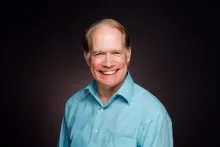
Greg Thomas is the former Pastor of the Cleveland, Ohio congregation. He retired as pastor in January 2025 and still attends there. Ordained in 1981, he has served in the ministry for 44-years. As a certified leadership consultant, Greg is the founder and president of weLEAD, Inc. Chartered in 2001, weLEAD is a 501(3)(c) non-profit organization and a major respected resource for free leadership development information reaching a worldwide audience. Greg also founded Leadership Excellence, Ltd in 2009 offering leadership training and coaching. He has an undergraduate degree from Ambassador College, and a master’s degree in leadership from Bellevue University. Greg has served on various Boards during his career. He is the author of two leadership development books, and is a certified life coach, and business coach.
Greg and his wife, B.J., live in Litchfield, Ohio. They first met in church as teenagers and were married in 1974. They enjoy spending time with family— especially their eight grandchildren.
