

Don Ward
This transcript was generated by AI and may contain errors. It is provided to assist those who may not be able to listen to the message.
The following message is presented by John Elliott, a minister in the United Church of God. God is the Creator. He is the life-giver. He is the sustainer of all things. God is divine. He is Spirit. He is eternal. God is not human.
Let's notice this in Numbers 29 and 13. God is not a man that he should lie, nor a son of man that he should repent. You know, God is in contrast to every human. Here we see that every human, male and female, is a son of man. This term in the Hebrew refers to either sex—a son or the progenitor of another human, the progeny of another human. The term son of man is used 195 times in the Bible, and it's used—the son of man or sons of man—it is used to refer to all humans.
All humans. It's a general term to human beings. An example is in Isaiah 56 and in verse 2. There are many such scriptures we could look at because it's used 195 times. Blessed is the man who does this and the son of man who lays hold of it. So blessed is an individual who does what God says and the progeny of that individual who lays hold of it. When God spoke to Ezekiel, what did God use as Ezekiel's reference? Did he say, hey Ezekiel? Actually, in Ezekiel 2 and verse 1, as the book of Ezekiel gets going right after the vision that he had of the one who became Jesus Christ, Ezekiel 2 and verse 1, God said to me, son of man, stand on your feet and I will speak to you.
It's interesting, in the book of Ezekiel, God refers to Ezekiel as the son of man 90 times. That was God's name for Ezekiel. 90 times, he said. Son of man. What did the angel call Daniel? In Daniel chapter 8 and verse 17, Daniel chapter 8 and verse 17, and he said to me, going forward a little bit, understand son of man that the vision refers to the time of the end.
So here Daniel is called by the term son of man. Sinners, ungodly people, are referred to as the son of man. In Psalm 146 and verse 3, Psalm 146 and verse 3, do not put your trust in princes nor in a son of man in whom there is no help. So those are ungodly people. Don't trust in those human beings in whom there is no help. Now Daniel now writes a shocker. We know that God is not a man. God already told us that.
All human beings are son of man. But now Daniel, who is called the son of man, shocks us. In Daniel chapter 7 and verse 13. Let's turn there. Daniel chapter 7 and verse 13. I was watching in the night visions, and behold one like the son of man, coming with the clouds of heaven.
Hmm. This is unique. You might say, what? How can God, how can the one who is going to be the son of God, how can Messiah, how can the great majestic one that we read of in the vision in Ezekiel chapter 1, traveling with a wheel within a wheel, composure of a throne in all his glory, how can he be like the son of man? Verse 14. Then to him was given dominion and glory and a kingdom that all peoples and languages should serve him. His dominion is an everlasting dominion which shall not pass away.
And his kingdom, he has a kingdom and a dominion over all nations, and he's coming in glory and power, and he's eternal, and he's spirit, son of man. How could God be the son of man? You know, the true God is the antithesis of all things labeled God with a small g. All gods had to be devised. Somebody had to think them up, and then somebody actually had to make them. They had to create them. They had to draw them.
They had to sculpt them into an image. They had to carve them into wood. They had to carry them about. The true God came to Adam and Eve and made them. That's interesting. Instead of us making a God, small g, the true God makes us. Instead of us trying to go and find God on some sort of a mission, God came to us. God presented himself to the Israelites. They didn't have to go find him. And God came as one of us. He came to us, and he came as one of us in the human form. Other gods require people to serve them, but our God came to serve us.
From the very beginning of God's plan of salvation, he was serving us. Other gods at times required human sacrifice. Our God sacrificed himself for us and gave us his only begotten Son, the two beings of the Godhead. Let's examine today the implications of the term, the Son of Man, as it applies to humanity, to you and to me, as well as our Lord and Savior, Jesus Christ. The title of the sermon today is, The Sons of Man.
Let's begin in Matthew 16 and verse 13. Matthew 16 and verse 13. Jesus asks a question. When Jesus came into the region of Caesarea Philippi, he asked his disciples, saying, Who do men say that I, the Son of Man, am?
He calls himself here, the Son of Man. But who do people refer to him as? What does this single word translated, Son of Man, mean? The Son of Man in the New Testament is from a single word called huios.
Thesiers describes Son of Man. It connotes a lesser, inferior, weaker state than, say, parents. So you have father, mother, parents, and then you have Son of Man, or Son of Parents. At one point, that child is smaller. It's weaker. The parents tend to be a little more respected and distinguish as they age, and the children are always catching up, as they were. So that's what Son of Man means in that sense. It is not the man, but rather the immature offspring of a mature human. Now, not necessarily referring that word to Jesus Christ, but that's what the term huios means in the Koine Greek. The disciples called Jesus the Son of God. There are several instances in Scripture where that takes place. Matthew 14, 33, John 20, 31, etc. The Son of God. Son of God is a big, bold term for an individual who is in the human flesh, and Jesus rarely used that term. Rarely. Only twelve times did Jesus refer to himself as the Messiah. The Messiah would be a Hebrew form of Christos, or Christ, which would be the Greek form of Messiah. So only twelve times did Jesus refer to himself as the Christ or the Messiah. Eighty-four times, Jesus calls himself the Son of Man. That was the main term that Jesus used.
The Son of Man. Why did Jesus use that term, the Son of Man, in reference to himself? In the United Church of God's Bible study course, lesson three, it says, Evidently, Jesus chose to use the Son of Man to deliberately emphasize that he identifies with our plight, the sorrows and sufferings of mankind. Isaiah calls him a man of sorrows and acquainted with grief. In Isaiah 53, verse 3. Here are some potential reasons that Jesus may have preferred the title Son of Man. One, it was his desire to be human, like us. He prophesied that. It was prophesied in the Old Testament. In Matthew chapter 1 and verse 23, the prophecy is quoted. Matthew chapter 1 and verse 23. Behold, the virgin shall be with child. He's going to be human in every way. She would be pregnant with child. And she would bear a son. And they shall call his name Emmanuel, which is translated God with us. God with us. And it's also God as us. Because here he was, just as we are. He came into this world just like we come into this world. Born. Born of a mother. Loved by a mother and a father. A child that grew up.
Another reason is because Son of Man is a humble title. There's nothing that would set him up higher. His appearance was not greater than others. His height wasn't greater than others. There's nothing about Jesus Christ in the way that he was designed, the way that he was presented, that was above others. He came riding in on a colt, the foal of a donkey. He came in a humble way. And so the term that he liked to be referred to was that that was humble as well. It's as if this title is, I've become like you, now I'll show you how to become like me. And that really works for us, doesn't it? It really, really does. In Matthew 11 and verse 29, notice how Jesus verbally presents himself to us. Matthew 11, 29, Take my yoke upon you and learn from me. I've become like you. Now learn from me how to become like me. For I am gentle and lowly in heart, and you shall find rest for your lives.
Another possible reason why he preferred this title was it countered the Jews' expectation of a messiah coming in power and glory at that time to overthrow Roman rule and establish them as the great nation among the nations in the first century. In Luke 17 and verse 20, we see the mindset that was going on among people in that day, and the disciples were not exempt from this. Luke 17 and verse 20, Now when Jesus was asked by the Pharisees when the kingdom of God would come, when is this kingdom going to come? So we'll be in charge. And he said, The kingdom of God does not come with observation, nor will they see here or see there, for indeed the kingdom of God is within you. The kingdom of God is within you. One type of the coming of the kingdom of God is mental. It's shed abroad in our hearts. It is through baptism that we succumb to the lordship, the rulership, the laws, the government of God. And that is internal. Repentance is something Jesus said needs to happen before the literal kingdom arrives. Verse 22, Then he said to the disciples, The days will come when you desire to see one of the days of the Son of man, and you will not see it. The days of the Son of man. Jesus Christ wouldn't always be here. His first coming was a very important coming. It had very important reasons that were foundational, pivotal to the kingdom's eventual come so that there would be a bride with Christ, there would be workers, rulers, priests, etc. A fourth reason the Son of man is a good title that Jesus Christ may have preferred it for is that it fits with the second Adam. You have the first man and the second man, the first Adam, the second Adam. In Psalm 8 and 4, David says, What is man? The Hebrew is Enosh. What is man that you are mindful of him? And the Son of man, Hebrew Adam, that you visit him? So you have this term, the Son of man in Hebrew is Adam. The Son of man Adam that you visit him. Verse 5, For you have made him a little lower than the angels, and you have crowned him with glory and honor. He would come as the Son of man as a type of the second Adam, and he would be crowned with glory and honor as he is today. This Son of Adam transitions into Jesus Christ being the second Adam in 1 Corinthians 15 and verse 45. 1 Corinthians 15 and verse 45.
And so it is written, The first man Adam became a living being. The second, the last Adam, became a life-giving spirit. However, the spiritual is not first, but the natural and afterward the spiritual. So he came first in the flesh. He'll come next in the spirit. The first man was of the earth made of dust. The second man is the Lord from heaven.
And what connections did Jesus Christ use the term Son of man? Let's look at some examples here to see the interconnection of that term with some of the things that he said. He used the Son of man term in connection with his sufferings and his death. For instance, I won't turn there, but in Matthew 17 and verse 22 it says, The Son of man is about to be betrayed into the hands of men. Another huge reversal here of the gods of this world, small g, the fake gods. Some of them expected us to sacrifice ourselves to them. But here we see the true God sacrifices his Son, and the true God, being Jesus Christ, sacrificed himself for us. Christ used the term Son of man in connection with his glorified state as well. Matthew 19 and verse 28. Matthew 19 and verse 28. So Jesus said to them, the disciples, Assuredly I say to you that in the regeneration when the Son of man sits on the throne of his glory, you who have followed me will also sit on twelve thrones judging the twelve tribes of Israel. So he uses that in context with his glory. The Son of man is in the capital case, the higher case, capital S, capital M, Son of man, proper title for him. But he continues to refer to himself with that title even in his future glorified state. He used the term Son of man while being Lord. In chapter 2 of Mark, Mark 2 and verse 27, Mark chapter 2 and verse 27. And Jesus said to them, The Sabbath was made for man and not man for the Sabbath. Therefore the Son of man is also Lord of the Sabbath. So Jesus had the titles. He had other titles for sure. And he is the great God, Lord, Master. He is the soon coming King. All things have now been put under his feet. And all nations will kneel and everyone will give an account to him. So when he uses that term, Son of man, it is in direct connection with his greater titles as well. He doesn't consider there to be anything inferior about man or the state of man. You and I are in a limited state, as it were now, but it doesn't mean that we are deficient. Deficient in what we need in this time in our lives. It may be also a term that he used because God became one of us, Son of man. In Isaiah 7 and verse 14, is where the reference was that was quoted in Matthew earlier.
Isaiah 7, 14, Therefore the Lord himself will give you a sign. So the one who would be born is giving us a sign in advance, and that sign is, Behold, a virgin shall conceive and bear a son, and you shall call his name God with us. He grew up with us. He matured with us. He's aged like we do. He suffered and was persecuted like we are. But you know, he also was blessed like we are. He enjoyed food. He enjoyed laughter. He enjoyed friendships, relationships. He enjoyed a relationship with God the Father like you and I do as well. The Son of man shows that he knows what it's like to be you and me. He's been here. He's done that, as they say. In John chapter 1 and verse 14, we see this experience that he had was to sample what we go through and also for us to identify with him. John chapter 1 and verse 14, And the Word became flesh and dwelt among us, and we beheld his glory. He lived among us. He experienced us. We experienced him. He lived among us. We could see and we could touch him. We could listen to him. We could follow him if we wanted. Let's go to Hebrews chapter 2 verse 17. Hebrews chapter 2 and verse 17.
Hebrews 2 and verse 17, Therefore in all things he had to be made like his brethren, that he might be a merciful and faithful high priest. So he's a high priest, but he had to be made like his brethren.
He was very much like you and me when he was here on earth, and he experienced what we do in the flesh. Notice the next verse, verse 18. For in that he himself has suffered being tempted, he is able to aid those who are tempted. So we really see here that this son of man, like you are a son of man, he was a son of man. He came and really lived an identifiable life, but he also lived a life that was an exemplary life that helps us, helps us achieve what he has right now. He is in heaven with God the Father. He is spirit being. He's eternal. He wants us to join him there. From the outset of God's plan of salvation, God would come and be one of us, a son of man.
The son of man that Jesus Christ has called is greater than any human being ever was. And yet there's still a strong connection with us. Let's find this in chapter 2 of Hebrews, in verse 6. Hebrews chapter 2 and verse 6. But one testified in a certain place, saying, What is man that you are mindful of him, or the son of man that you take care of him? Verse 7. You have made him, Jesus Christ, a little lower than the angels. You have crowned him with glory and honor. Set him over the works of your hands. You have put all things in subjection under his feet. Verse 9. But we see Jesus, who is made a little lower than the angels, for the suffering of death, crowned with glory and honor, that he by the grace of God might taste death for everyone. For it is fitting for him, for whom are all things, and by whom are all things, in bringing many sons to glory, to make the captain of their salvation perfect through suffering. Did you catch the term? He is the son of man, and he is bringing many sons of men to glory, to make the captain of their salvation perfect through suffering. Verse 11. For both he who sanctifies, and those who are being sanctified, are all of one, for which reason he is not ashamed to call them brethren. So there's a oneness now. It's not just he's the son of man, capital S, capital M, and we also have a human experience. He now calls us brothers, or family, brethren. We have a relationship here that's very, very close. You might say, brethren, Jesus Christ is the son of man, upper case. You and I are a son of man, lower case. And yet we share that term together. There will always be a difference between us and Jesus Christ and God the Father. They always will have the great respect, but we also are called by names that they are, and ultimately will have their names written on us. Oh, and we share other things as well. In Romans 6, we find that we died with Christ. Let's turn there. Then we entered a new covenant together with a new Passover. Let's go to Romans 6.
Begin in verse 3.
Or do you not know that as many of us as were baptized into Christ Jesus were baptized into his death? We died together.
Therefore, we were buried with him through baptism into death. Buried with him. Something we do together. Something we have in common.
Going on. That just as Christ was raised from the dead by the glory of the Father, even so also we should walk in newness of life, both now spiritually and ultimately as He is in the heavenly life. And in the heavenly realm we shall be as well. For if we have been united together in the likeness of His death, certainly we also shall be in the likeness of His resurrection. Again, both spiritually. Now we should be in His likeness, growing in that likeness. Growing up into Christ in the body. At the same time, literally, in His resurrection, we will have a resurrection. Knowing this, that our old man was crucified with Him, that the body of sin might be done away with, that we should no longer be slaves of sin. For He who has died has been freed from sin. Now if we died with Christ, we believe that we also shall live with Him. Knowing that Christ, having been raised from the dead, dies no more. Death no longer has dominion over Him. For the death He died, He died once for all. But the life He lives, He lives to God. Likewise, you also reckon yourselves to be dead, indeed, to sin. But alive to God, in Jesus Christ our Lord. You see, it's all togetherness there. Likewise, as these things happen to Him, they should happen to us as well. Now Paul is going to transfer both Christ and us into a marriage covenant. See, the Son of Man and the Son of Man, lowercase, are going to enter into a marriage covenant. In the next chapter, in chapter 7, verse 2, it says, For the woman who has a husband is bound by law to her husband as long as he lives. But if the husband dies, if we look at this in relationship to the covenant, God, Jesus Christ, the one who became Jesus Christ, had a covenant with Israel. But now we see that He has died. If the husband dies, the wife is released from the law, the marriage law to her husband. So when Christ died, apparently He was released from the Sinai covenant, marriage to Israel. Let's go to Hebrews 8 now, and verse 8. Hebrews 8, verse 8.
Because finding fault with them, He says, Behold, the days are coming, says the Lord, when I will make a new covenant with the house of Israel and with the house of Judah. See, He referred to this as a marriage covenant, and the husband died. Now He's going to make a new covenant.
Going on in verse 9.
I will put My laws in their mind, write them on their hearts, and I will be their God, and they shall be My people, His people.
So God here is going to establish this covenant with Israel and with Judah. For I will be merciful to their unrighteousness and their sins and their lawless deeds. I will remember no more. In that He says, A new covenant He has made the first obsolete. Now what is becoming obsolete and growing old is ready to vanish away. So we see here a covenant that's terminating and another covenant that is beginning. In chapter 9, verse 15, notice, And for this reason He is the mediator of the new covenant by means of death.
For the redemption of the transgressions under the first covenant, that those who are called may receive the promise of eternal inheritance. So through His death, we now can be redeemed. We can have a relationship with Christ as His bride. In baptismal death, you and I are freed from any previous binding, any previous covenant. But keep in mind here that law that's being spoken of is the Sinai marriage covenant and the new marriage covenant.
Let's notice this in Romans 7 and verse 4. Romans 7 and 4. Therefore, my brethren, you also have become dead to the law. What law? Everybody thinks, oh, that's the law of God. No, that's the law of marriage. You have become dead to the law that bound you in marriage to the Sinai covenant through the body of Christ, that you may be married to another, to Him who was raised from the dead, that we should bear fruit to God.
So now we have not the binding in marriage to a previous covenant, but the binding through marriage to the new covenant. And we are to bear fruit in this covenant. So it's through repentance and baptism, through God's Holy Spirit being in us, that Christ lives in us through that spirit, and God the Father lives in us, that we are in a new marriage covenant together. We are betrothed together now.
Now, let's just pause and sort of reflect here a minute. You have the Son of Man who became man and began to attach Himself to us more and more and more, and now we're in a covenant, and now we are in a marriage covenant, and we are now betrothed to Him in marriage. In Ephesians 5 and verse 25, we see this relationship and how strong it is and how strong it is to be.
Ephesians 5 and verse 25, Husbands, love your wives. Now, in marriage, it's two being one. We are in the body of Christ. We're to be one. We're all to be one, growing up into Christ. Husbands, love your wives, just as Christ loved the church and gave Himself for her, that He might sanctify and cleanse her with the washing of water by the Word, that He might present her to Himself a glorious church, not having spot or wrinkle or any such thing, but that she should be holy and without blemish.
This relationship is getting stronger then and growing stronger, and He's happy that we are a Son of Man, each one of us, and that He is the exalted Son of Man. He gives us gifts, helping gifts. We call them grace. We have these gifts in the body of Christ. We have the mind of Christ. We have the Spirit of Christ. We are the bride of Christ. Let's go to Revelation 19 and verse 7 and see how in this preparatory phase that we're in, this growth is to be complete and grow stronger until it finally comes to fruition in the spirit realm.
Revelation 19 and verse 7, Let us be glad and rejoice, and give Him glory, for the marriage of the Lamb has come, and His wife has made herself ready. See, His wife has made herself ready. And to her it was granted to be arrayed in fine linen, clean and bright, for the fine linen is the righteous acts of the saints. Verse 9, He said to me, Right, blessed are those who are called to the marriage supper of the Lamb. And He said to me, These are the true sayings of God. So Jesus Christ is the Son of Man.
You and I are each a Son of Man. The title of the sermon is, The Sons of Man. The Son of Man, proper, the proper tense, is reserved for Jesus Christ. Again, He serves as our role model. But He is God. He is our Savior. He is our husband. Jesus also, however, has other titles. And we say, Oh, yes, this is where we depart. No, He has other titles that He shares with you and me as well. Let's notice some of those.
Jesus Christ is also the Son of God. You know, it's interesting. He is called the Son of Man. We are called a Son of Man or Son of a. He is called the Son of Man. Jesus Christ is also called the Son of God. But in Galatians 3 and verse 26, notice what we are called. Galatians 3 and verse 26. The title, Son of God, is not reserved only for Jesus Christ. Galatians 3, 26 says, For you are all sons of God through faith in Christ Jesus.
You'll never be the Son of God, but we are all sons of God through faith in Christ Jesus. For as many of you as were baptized into Christ have put on Christ. You know, Jesus was raised from the dead, and then the first day of the week on wave sheaf day, he was presented as that first cutting of the crop, as it were, the first fruit of the harvest of human beings into the family of God. In Revelation chapter 14 and verse 4, guess what?
Guess what we are to be called? These are the ones who were not defiled with false religion, for they are virgins. These are the ones who follow the Lamb wherever He goes. These were redeemed from among men, being first fruits to God and to the Lamb. We also are to be first fruits. It says in 1 Corinthians 15, Christ first, the first fruits. But we come along and we are also to be called first fruits. We know that Jesus Christ has the title High Priest. There is only one High Priest, and that is an exalted position, and He is our High Priest.
But what about us? Let's go to 1 Peter chapter 2 and verse 9. 1 Peter chapter 2 and verse 9. Jesus Christ is humbly sharing with us and wants to include us and involve us in His family closely as brethren, as a wife, a bride. And He says here in 1 Peter chapter 2 and verse 9, But you are a chosen generation, a royal priesthood. Wow! We are priests. Revelation chapter 5 and verse 10, You shall be a kingdom of priests, or kings and priests.
Here in verse 9, A holy nation, His own special people, That you may proclaim the praises of Him, Who called you out of darkness into His marvelous light. So we're seeing here a close relationship that the Son of Man has with a Son of Man, you and me. Now Jesus Christ, of course, is coming back to rule the nations, and He's going to rule them with a rod of iron.
Notice it is coming, and His coming is going to come with greatness and power, and we look forward to that day. But notice how inclusive that day is of you. 1 Thessalonians chapter 3 and verse 13. 1 Thessalonians chapter 3 and verse 13, So that He may establish your hearts, Blameless in holiness before our God and Father, At the coming of our Lord Jesus Christ with all His saints.
Oh, no, He's coming, but yes, the Messiah is coming, the Second Coming of Christ. But the Second Coming of Christ is also your coming, Because our Lord Jesus Christ will come with all of His saints. He's going to share that with us as well. At His coming, He's going to rule the nations with a rod of iron, and He is all-powerful. Messiah also says of us in Revelation chapter 2 and verse 26, in His own words, Revelation chapter 2 and verse 26, And He who overcomes and keeps my works until the end, To Him I will give power over the nations.
And as we come with Christ at His coming, we also will have power over the nations. Verse 27, He shall rule them with a rod of iron, They shall be dashed to pieces like the potter's vessels, As I also have received from my Father. We're going to do that together. One thing that Christ's coming will be like is that He is bright, the brightness of His glory. In Matthew chapter 13 and verse 43, As we think of the brightness of His glory, And sometimes you might look at that throne that is described in Ezekiel chapter 1, Or think about the throne of God where Christ sits at His right hand.
You think about some of those things and the brightness and the power And some of the noises we read of in Revelation and the colors. Matthew 13 verse 43, notice what Jesus said will happen to you and me at that time. Then the righteous will shine forth as the Son in the kingdom of their Father. Once again, the Son of Man, proper tense, And the Son of Man, human lowly tense right now, Will share the brightness of the glory of Jesus Christ and God the Father at His return.
Finally, Jesus Christ will sit on His throne. And a throne is a place where rulership and authority and power come from. It's the seat, as it were, of all power and authority. In Matthew chapter 25 and verse 31, It says, When the Son of Man comes in His glory, And all the holy angels with Him, then He will sit on the throne of His glory.
Yes, that'll be a great day. Jesus will come and sit on the throne of His glory. But then Jesus also said, If you overcome Satan, You will sit with me on my throne as I overcame, And sat with my Father on His throne. So in conclusion, the sons of man, who are also the sons of God, will come to earth together in glory and in power, on Christ's throne, co-ruling, co-judging. And ultimately, we will reside together in New Jerusalem for all eternity. So, brethren, let's be faithful with Jesus Christ as genuine sons of man.
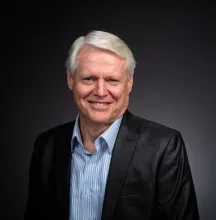
John Elliott serves in the role of President of the United Church of God, an International Association.
