
Mario Seiglie
In this PowerPoint series, a detailed view of prophecy is given providing the establishment of the people in Latin America. Part 1 goes back to the origin of generations after the Great Flood ending with the downfall of the Holy Roman Empire. Download the PowerPoint to view in a separate tab or window.
Before I begin with the message, just also send greetings to Dredna Wozner. I don't think Bill is here. Oh, he is? Okay. Okay. And also Linda Kostchenko, and as well as Greg Hildgen, who probably is watching us online, as well as others. Today we have a topic that I've really never covered throughout all my time in the ministry. But I was in Chile about three weeks ago, and we had classes that were ABC classes. And I thought it would be good for the Latin brethren to know a little bit about Bible prophecy and Spain. And let me turn them on here. Yeah, I'm fine with it, yes. And so I would like to give you, as much as I have not been able, and here you've been listening to me for so many years, but here's a topic that I haven't covered. And I wanted to share it with you, because I don't know if we'll ever have another chance to cover this subject. But it has to do with Spain and Latin America and Bible. Now, I was born in Latin America, and the island of Cuba. And so I came over when I was seven years old. And of course, Latin roots, and also been basically involved in Latin America. My wife, Cady, and I, she's from Chile, and we lived in American countries for 23 years, 21 of which was in Chile. And so I've been able to study this topic, its history, and we never know when some of these things will appear and affect all of us. Now we've been celebrating the 250th anniversary of the United States programs, especially World War II, and just how horrible that whole period of time was. And people, if you would have told people back in 1938 that in 1939, a world, people wouldn't have believed. And it took basically six years to end that war, and anywhere from 50 to 70 million people died. That's not in everything. So just like we ought to be careful and think, oh, things are just going to continue on like all the time. We really should at least prepare for different things. After all, Latin Americans are our neighbors, and along with Spain are one of the great populations in the world with about 500 million people.
In 2 Peter chapter 1, let's go there, 2 Peter chapter 1, it tells us that we all like sermons and everything that has to do with family and just topics of joy. And those are good, but we have always had to the ministry that there should be three main topics we cover. One of them is doctrine, the truths of God. Never let that. The second has to do with Christian living, and the third is prophecy, because over a fourth of the Bible, it is Bible prophecy. You can divide into four parts, and one whole fourth part is prophecy. Notice in 2 Peter chapter 1 verse 17, it says, For he God, the Father, honor, talking about Jesus Christ, and glory, when such a voice came to him from the excellent glory, this is my beloved Son, in whom I am well pleased. He heard this voice which came from heaven when we were with him on the holy mountain. Talking about Peter, John and James were there when Christ transfigured himself with glory. What he's going to look like when he comes back, but much brighter. And so he says, verse 19, And so we have the prophetic word confirmed, men confirmed by God, which you do well to heed as a light that shines in a dark place, until the day dawns and the morning star rises in your hearts. The prophecy of Scripture is of any private interpretation. So we shouldn't just have opinions about things. We should use the Bible to interpret the Bible. The Bible is able to decide. He says, For prophecy never came by the will of man, but holy men of God spoke as they were moved by the Holy Spirit. So God was guiding them. And so of having a prophetic framework revealed through God's Spirit and His Word, we'll have a limit. So yes, these prophecies are in the Bible. At the same time, it doesn't give us all details. It doesn't spell out things, but it gives us an outline where it says here, light in a dark place. Let's talk about the lamps that they used to have. Okay, it's affecting the microphone. All right. Thank you. The analogy that Peter uses here is that you believe me, the towns in Israel back in the first century, you know, they didn't have lights like we have and they couldn't afford. They only used olive oil and they didn't have gasoline and gas to light things up. And so basically, you had your lamps lit inside your house. But when you went outside, you had to take that little lamp with you. And how far does that illuminate? A few yards. The Bible, but we have a limited view. We don't see everything absolutely clear. And so we should be careful because after all, the Bible doesn't spell every detail. But we do have a... In 1 Corinthians 13, in verse 12, let's go there. 1 Corinthians 13, verse 12.
It says, For now we see in a mirror dimly face, Now I know in part, But then I shall be known, Just as I also am known.
And so even the Apostle Paul with all the revelation went part.
Not fully, until Jesus Christ comes back and then everything will be clear.
But in the meantime, prophecy points forward things because we do have quite a bit that the Bible talks about. That's why this is going to be a two-part series. The first part is more about the past, the present prophecy. Then the second part, it's from the basically, I'd say a little bit of the past, but then going forward. Past our days to see what happens by some of the things that you will see here.
So what is presented here is a probable, but not the final word on the topic, for that will only be fully revealed when Christ returns.
So again, we don't have a crystal ball. We have God's Word about this and not be dogmatic and think, oh, we've got all of these things that are dog-made.
So let's look at the historical and prophetic stages of this topic about Spain and Latin America in Bible prophecy. Firstly, the Spanish people come from. They still influence Latin America by race, language, and religion. The great majority of Latin America is Catholic, Pentecostals have made some entrance, some Protestants, some don't believe in anything, but the Catholic Church still dominates that whole area from Tijuana, three hours away, down south, all the way to Tierra del Fuego. Notice in 1 Thessalonians chapter 5 verse 20, because some people say, well, they're going to talk about it. Well, if we're going to be sure, then why did God put prophecy to explain here and to share with us? In 1 Thessalonians 5, 20, it says, do not despise prophecies. Easy reading version. It says, it's clear here, don't treat prophecy like something that is not important, because you can go to one, oh, well, I don't want to hear about prophecy. I just want to hear about Christian living and maybe the truth, but in this way, and things are coming slowly to a head. So you look back and you see how much was being projected forward. That has, I've still got my, in my briefcase, I've got one of these 1972 World Tomorrow magazines that had in the front Union, EU together. And that wasn't the case at that time that it was just a very small thing.
Now it's huge. Because of the power that needs to be produced, Germany's going to be united people didn't believe that and it happened.
And so slowly, the only thing projected like we know the dates of it. There are important dates in the Bible, but we also have to be careful. I mean, we're coming up to 19, I'm sorry, 27.
And that's approximately 2000 years from the time of Christ's beginning of the ministry.
Could have been 28, so there's a little bit of wiggle.
You see? And then the next great date is in 2031. That'll be 2000 years from the time of Pentecost when the church received. Is that going to be important? Well, could be, but it's ahead.
So as we turn to the Bible, you think in Latin America? Well, we have to go back to Genesis chapter 10, where we have the table of nations, where 70 nations are listed in Genesis 10.1. These are the generations of the sons Ham and Japheth, to whom sons were born after the flood.
So this is tuxion, because the previous one was wiped out. So this is kind of like, Noah is kind of like another new Adam that's starting out, repopulating the earth. And he's got three married.
And so there were just eight at that time.
And this table of nations, the accuracy and uniqueness, sounds many experts.
None of the other nations ever had a list like this, which mentioned the main nations that would arise from Noah. As the renowned archaeologist William Hall Bright, you can, he's mentioned as the great archaeology that got started with a whole school, biblical school, he wrote about it.
The 10th chapter of Genesis stands absolutely alone without a remote parallel, even among the Greeks. Many of the names of peoples encountered on the monuments for the first time. The table of nations remains an astonishingly accurate document. And that's still excited a lot, many more modern sources, but they basically agree with William Albright.
So in Genesis 10.1, we're going to focus on, because of Latin America and Spain, in the sons of Japheth, because these are the generations of the sons of Noah, to whom sons were born after the flood. The sons of Japheth, Gomer, Magog, Madai, Javen, Tubal, Meshach, the sons of Javen, Elisha, Tarshish, Kitim, and Doden. It is Tarshish, known as Tartesus, located in Spain by ancient and modern historians. T rn Southwestern Iberia, now called Spain. In the Bible, Tarshish is mentioned where King Solomon And then, a lot of these things. It just became a great trading power here. The Phoenicians were the ones that started trading with them, and then all through the time of... In Spain, the Huelva region, which is that one in the circle that you see, has huge mines town of Tharsis, which is a word deriving from Tarshish, and is renowned in the ancient and modern world for its riddles. So... So that has to do with what we know of Tarshish. And then, Tiras map. It shows basically the wanderings in the next map. Slide. The spread of some of the American in all came mainly from Tiras, a descendant of Japheth. And it's hard to tell, but you see all of these lines going to North America, and some from Europe coming in, and it says Tiras. The descendants came from the east, and some came from the west. But it's very interesting, the more you study the parallels of the... At one time, in that area of Western Europe and the Middle East, where all of these pyramids basically... What you call the ziggurats in Iraq now. And 10,000 miles away, the Indians are building similar blueprints. I mean, almost to a T. They're using the blueprints in South America, in the area of Peru.
It's the same structure, but now made in Latin America. And then you've got in Central America, you've got all of these pyramid buildings as the same way. There's a lot of religion, the worship of the sun. So Craig Cook, in search of the origins of nations, notes. The American Indians, who built the civilizations of the Mississippi and founded the Maya and Aztec empires, descend from it, son of Noah. They, talking about the rest of the Indians, have a range of origins, including Tiras, Canaan, Edom, and Magog.
A book by the Mayans, I have that in my library, repeatedly says their ancestors came, quote, from across the sea, talking about the Atlantic, because it says from the east. From the east would be, of course, across the Atlantic Ocean. That's where their ancestors came from. The next slide. In North America, the descendants of Abraham, who was a Semite, descendant of Shem, would eventually rule the U.S. and Canada. That would be Manasseh and Ephraim. So you see there, in North America, Sam, or Shem. In the southern part, another branch of Japheth, through Tarshish, Spain, would dominate Latin America by the Spanish elation begun in 1492. So eventually the descendants and others as well, their Japheth, they are part of Central America, South America. Notice in the eastern part of South America, you have Urquush, which is the black, because a lot of the Africans came over as slaves, especially of the Portuguese. And then Shem would be also in the southern part, with the English, Italians, and Spanish as well in that area. They all started from after the Tower of Babel. They spread out different parts. Again, these are just general. Let's go to the next slide. Now most of the Spanish conquest was expanded and secured by the Habsburg Empire, Charles V, who was crowned by the Pope in 1530. So from 1492, let's say 40 years later, the conquistadors, Charles V basically, had secured all of this area of the North and South Hemisphere, because the British and the English, they wouldn't start to colonize. This prophetic the fourth head of that fallen woman, the Roman church, riding the beast in Revelation 17. So here's an important connection that you have on the topic of the situation in Spain coming down and conquering the Americas, North, Central, and South America. Spain had a month until the French and the British came over. But what is interesting, as you see the photograph here, or painting by Pope Clement, the seventh in 1530. So the key to understand the woman riding the beast in Revelation 17 is that this seventh head that would have ten different horns. Let's go to the next slide. This was a painting that we saw in January when we had the ABC classes in Mexico City. And we went up to the Chapultepec Castle, a huge park. It's almost like you'd think of Central Park in New York.
In the top area, they have a castle there, but it was built by a tent. So there would be a fierce clash between the Spanish conscience that lasted from 1492 to 1870s, over 350 years. You see here, that's a picture painted by a Mexican painter with his armor and the Indian coming in, and the conquistador is driving a sword through the body of the Indian plunging a dagger into the conquistador's neck, because that's where the body armor doesn't cover.
But it shows this war. And so this painting was in the Chapultepec-Hapsburg Castle in Mexico City. It was Maximilian I, the emperor, V, who built this castle when he became emperor of Mexico from 1864 to 1867, just three short years. And then the Mexican peoples rebelled, and he was shot by a firing squad in 1867, and that was the end of this incursion. But still, that feel affecting and influencing Latin America until today. Now regarding this revival of the beast power, read in Revelation 17.3, quote, talking here, John, so he kept the wilderness, sitting on a scarlet beast, which was full of names of blasphemy, having seven heads and ten horns.
So it feels more about the beast and the woman writing it as you go through the book of Revelation. In Revelation, you need to progress prophetically in time. This beast now represents the seven resurrections of the Holy Roman Empire when a fallen woman, the Roman beast, in later history. So in Revelation 13, it doesn't have a woman writing on it before. And if we go to the next size that it's so small, the writing on it. But you can see where I have outlined it in red, which is talking about, if you look up at the top, it is covering what is, first of all, Revelation 13, where it has this first beast power.
And this is the one that has horns on it. And the horn is the one, there's been four different revivals. These are the main powerful leaders that after Rome collapsed, there have been nine revivals of this. And I wanted to... There are 10 total were eliminated after the collapse of the Roman Empire, which were the German Goths and others who invaded and defeated and took over.
These were three that were just temporary. And then you have seven, which I should have said seven, not 10. Seven revivals with the Emperor, which is here on the right side. Right here, restoration in AD 534. This per at time. I can't read his name right here. Anybody help me here?
I can't remember. The... Justinian, that's the one, was the first one that restored order. Because all the other empires, the Persian, Greek, they all collapsed. But it's a Roman Empire that gets... It was Justinian 554 when he restores the empire and he is crowned by the Pope. So this is the first time we see a leader being crowned in this way. And this is the first of the revivals. And this is the first of the heads of seven heads of the beast in Revelation 17.
Because now it's talking about a woman writing the Bible in Revelation church. It describes the church as a... it can be a virgin or in this case, a fallen woman. She's writing every one of these revivals. The second head would be the one with the emperor, German emperor at the time 800 AD. He was crowned by the Pope. And many of these started a dynasty. So Justinian, he continued on, but there was nothing greater than him with his dynasty. Then you have Charlemagne, which he establishes his dynasty. And then afterwards we have now the Holy Empire with Otto the Great, 962. He's also crowned by the Pope's dynasty.
The fourth one is the one that has to do with Charles V, the Habsburg Empire, that we saw, which he was crowned in 1530 as the emperor. So that's where Spain is at its glory. With this fourth head, and that's what focus on that Spain and Latin America are connected through this fourth revival of the world because it was through Charles V and, of course, his dynasty.
They brought all the Spanish colonial system. They brought the Spanish language. They established the educational system. And quite of that is intact until our days. As we were going to see in part two, out of those 27 leaders that composed the European Union, two of them with that fourth power, that fourth head, one is Spain and the other one is Portugal. And you will see that about four years ago in the magazine, The Economist magazine, it had the 27 of these men, and they all are wearing crowns because they are the ones that call the shots.
And so you have Spain and Portugal also part of this European Union in the future from everything that we understand. So let's go now to the last slide. In this second part, we plan to go from the origins of Spain and the Latin American people to modern times and the prophecies regarding it as best as we can perceive.
This is very important because it can affect our future or that of our children if this Spanish region becomes an ally of the beast power and the father in Revelation 17. We're going to cover a lot more of the details about both the beast power, where it's at now, and also the fallen woman, because that's prophesied that they are dying. They're all going to be active, and it's getting stronger and stronger as you can see even now. Europe and the European Union is distancing itself, the United States.
They don't want to be as united. They want to have their own army. They want to have their own system. And so eventually there's going to be a separation. So Spain lost control of the southern hemisphere. That's when the last of the Spanish colonies fell. I know that well because it was Cuba, the last bastion in Latin America.
And I have a lot of history back in 1898, what happened at that time. But the Spanish left behind the language, the political and social culture, the Catholic religion, and the educational system remained mostly intact. I've had the opportunity to visit just about every Latin American country. And it's the same. It arrives from Spain. It still has that influence.
And guess what? They're much more closer to Europe than they are to the United States. They've always felt the United States has been the one that has gotten all the best of everything. And they're still in a lot of dealing with poverty and political instability. Economic setbacks hurts them as a people.
So these are the links that remain until today. So don't think that these things are separate. These are like threads that are being woven in the fabric of prophecy. Each one of these three. Notice chapter 21. Luke chapter 21. And a lot of people are going to be shocked when these things are. The people are not going to be paying attention. What are they going to be doing? Well, they're just going to be living their lives.
Notice what it says in Luke chapter starting in verse 34. It says, But take heed to yourselves, lest your hearts be weighed down with carousing, drunkenness, and the cares of this life come on you unexpectedly.
See, they don't have that lamp to see into the future. They're just going to be doing what? Weighed down with carousing, drunkenness. Everybody's trying to make another buck, trying to just increase materialism and things. But it says here, And that they come on you unexpectedly. For it will come as a snare on all those who dwell on the face of the whole earth. The snare was a trap that was set for being able to catch the prey, or not birds that are good for eating. And of course, if you try to catch one, or you throw an arrow at one, usually that doesn't work. But what can you do? You get on the ground, and you use a type of rope, and you have a loop around, and then you extend it out, and you hide in a bush, leaves and other things, and then you put food. And that bird will see that food. And although it might be suspicious, all of a sudden the stomach starts growling. Oh, that looks bland! And once they're starting to eat the food, you pull it, and it catches one of their legs, their feet. And then you've got them. It can fly all you want. And so there's a suddenness that's involved here. The bird had no idea that it was going to be trapped in this way. So it says it's going to be like a snare on all those who dwell on the face of the whole earth. Most people are not going to be looking at prophecy, because prophecy prepares and has us watch different events. It says, watch therefore. So it says, and pray always that you may be counted worthy to escape all these things that will come to pass and to stand before the Son of Man. Notice it says here, doesn't mean that just anybody's going to escape.
You have to be worthy of it. You have to be doing your part.
And if not, you're just going to go just like the rest of the people doing towards. Oh, let's go to the Ark. It's a little bit late, isn't it?
So we are preparing for a lot of things that are going to happen.
He says, and to stand before the Son of Man, that seeing Christ come back and being worthy and faithful.
It is.
And so telling us to do.
That's why prophecy is also important as a teaching in our church.
And we'll have to see as time goes along.
How much we have to adjust, but the outline.
So hopefully, and this is the first part and the second part is more interesting still.
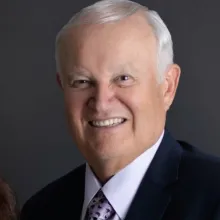
Mr. Seiglie was born in Havana, Cuba, and came to the United States when he was a child. He found out about the Church when he was 17 from a Church member in high school. He went to Ambassador College in Big Sandy, Texas, and in Pasadena, California, graduating with degrees in theology and Spanish. He serves as the pastor of the Garden Grove, CA UCG congregation and serves in the Spanish speaking areas of South America. He also writes for the Beyond Today magazine and currently serves on the UCG Council of Elders. He and his wife, Caty, have four grown daughters, and grandchildren.
