

Mark Welch
This transcript was generated by AI and may contain errors. It is provided to assist those who may not be able to listen to the message.
Very beautifully done. It's one of my favorite hymns about Israel crossing the Red Sea. You can imagine what kind of emotion and ceremony that must have been. Celebration. As I mentioned, my wife, Kadi, and I had the opportunity to be in Mexico City and give a leadership development seminar there for a weekend. And I'd like to share some of that instruction that I gave at that time.
I've used this illustration before, but with different types of messages. Talking about leadership and how to become a leader that can serve both God and man. As a young boy, I was thrilled when I got myself a little toy gyroscope. They weren't very expensive in those days, and I would play with them because it looked like it was such an incredible little toy. It worked like a top, and you would spin it, but the gyroscope had the ability to stay vertical, no matter what angle you would put it in. The faster you can get the gyroscope to go, the more vertical it goes.
I only have a toy one here that I brought as an illustration because I'm not going to pay $50 just for a bigger one. This is the typical one that I had growing up. All you need is a nice string to it. You can see here, you grab it and then you pull the string, and then you can put it this way here. I touched the spinning wheel this time around. I don't have time to spin it, but the point is that once it's spinning quickly like this, I can put it on the top like this, and it will continue to spin.
I can move this around and it will continue vertically. It will not fall off as long as you have the wheel spinning fast enough. By the way, this is the way they use the automatic pilots. Steve Hogan, who flies quite a bit, would know that. These gyroscopes are placed on either wing at a certain place, also on the nose of the plane and on the tail. Of course, they are electronic, so they are connected and they are spinning thousands of revolutions per minute.
As long as these gyroscopes are spinning and moving very quickly, they keep always their verticality. This is the way automatic pilots are simplifying it. Whenever they are in a type of a storm, those gyroscopes are spinning and they always are vertical. They will always bring the plane back to fly evenly across. This is what they use for guiding missiles.
This is what they use on rockets to go to the moon. By the way, this same inertial force is what makes a bicycle, when you get it speeding enough, that it will balance itself. That's why with a bicycle or a motorcycle, you can turn and because of that force, it won't tip over. It's a very handy thing to have. The Earth itself, because it's like a top, like a gyroscope, is spinning. Do you know how fast it spins? A thousand miles per hour. A thousand miles per hour.
It just spins so quickly. That keeps the Earth tilted 23.5 degrees. As long as it's spinning, it produces an electromagnetic force around it that protects us from any type of meteorites. Things that try to all come in, it protects us from the deadly radiation of the sun. When I saw this, and when I came into the church, I thought, God's Spirit is a stabilizing force. It balances a person out much better than a person could ever do on their own. We're actually composed, according to the Bible, in three different parts or three different levels.
And we need a fourth one. Let's go to 1 Thessalonians, chapter 5. 1 Thessalonians, chapter 5. It says in verse 23 of 1 Thessalonians 5, it says, Now may the God of peace himself sanctify you completely, and may your whole spirit, soul, and body be preserved blameless at the coming of our Lord Jesus Christ.
So we are composed of three elements. One's our body. That's the physical flesh. That is called soma in Greek. Then you have spirit, nelma. That is what we have that makes a human being. Think, reason, and then soul is the active living ingredient. In other words, you can have a body, and if you don't have a soul, that's a dead body. The soul is what gives us life. And the spirit gives our brains that spirit in man, that gives us intelligence and all the characteristics that only human beings have.
We're born with three of these elements, body, spirit, and soul. But there's one that is lacking, the fourth. That's the Holy Spirit. That can be added to the person. And that is just like the spiritual gyroscope that God puts in, and it balances our lives. It gives us strength. It gives us power. It gives us love. That doesn't actually reside inherently in us. It has to be placed by God after baptism and the laying on of hands. See, that is a stabilizing spirit. And just like we have three parts to a human being, the Holy Spirit also is composed of three principal parts to it. Let's go to 2 Timothy, 2 Timothy, chapter 1.
2 Timothy, chapter 1.
Notice how the Apostle Paul described the Holy Spirit in Timothy. He says here in verse 6, Therefore I remind you to stir up the gift of God which is in you through the laying on of my hands. So there has to be a laying on of hands to receive God's Holy Spirit. It is actually one of the fundamental doctrines in the Bible. And Paul was saying here that through that laying on of hands, he says, Three different elements here that are combined. Three, you can call them forces that act in a person to bring about the balance that we lack so much. Let's focus on the first of these elements of God's Holy Spirit. It is called power. And by the way, there's another translation here in the contemporary English version.
It says, Use it well. God's Spirit doesn't make cowards of us. The Spirit gives us power, love, and self-control. Those are elements that come through receiving God's Spirit.
And each one needs to be balanced. Just like in a gyroscope, you need all the elements to make it spin, to make it vertical. So these three elements of God's Spirit need to be balanced in us. Power is something that God gives us.
And it's actually like power to be courageous, to be strong for God, to be filled with that enthusiasm for God and His ways. He gives us that, just like it was mentioned, not having a Laodicean Spirit that's lukewarm. He says, I wish you were either hot or cold, but you're lukewarm. You do everything half-heartedly. And God says, I want you to have that power, which Paul is comparing here to a fire.
And as we know, fires can be good or they can be terrible. You need to light a fire to cook something on. You don't want to have a cold meal. It's very good in the kitchen to have a fire, if you have a gas oven, or if not electric, where you're generating heat anyways.
But that's a controlled fire. That's the one that is not doing damage. But look what happened over here on Highway 5. All of that burnt area, when a fire just kept going, it can destroy homes. It can do a lot of damage. Well, God's Spirit is also something that you need to know how to control that power. Not abuse it, nor misuse it, neglect it, because it can't go out. And so it's an element here, which God gives us. The word power in the Greek comes from the word dunamis.
And actually, that's where we get some of the English words. Dynamic. He's a dynamic speaker. Also the term dynamite. Boy, that's powerful. It can open up a mountain. It also is one that generates electricity, a dynamo. Dynamos are used to generate electricity, to keep the lights going.
So it means there's power within that particular item. And God tells us that we need that power to get things done. But, like I said, it can be abused. God has removed His Holy Spirit from people because they misused it or abused it. Let's look at an example in 1 Samuel chapter 15. 1 Samuel chapter 15. God gave Saul the Holy Spirit. Saul had that power.
Notice what it says in 1 Samuel chapter 15 verse 13. Then Samuel went to Saul, and Saul said to him, Blessed are you of the Lord. I have performed the commandment of the Lord. I've followed God's instructions. But Samuel said, What then is this bleating of the sheep in my ears, and the lowing of the oxen which I hear? And Saul said, They have brought them from the Amalekites.
For the people spared the best of the sheep and the oxen to sacrifice to the Lord your God, and the rest we have utterly destroyed. Then Samuel said to Saul, Be quiet, and I will tell you what the Lord said to me last night. And he said to him, Speak on. So Samuel said, When you were little in your own eyes, were you not head of the tribes of Israel? And did not the Lord anoint you king over Israel? Now the Lord sent you on a mission and said, Go and utterly destroy the sinners, the Amalekites, and fight against them until they are consumed.
Amalekites were like the terrorists against Israel. They were treacherous. They would attack them without any type of provocation. And so God finally said, You have to eliminate them because they are not going to change. They are incorrigibly wicked. And this is going to be a cancer among you unless you destroy them. Verse 19, Samuel says, Why then did you not obey the voice of the Lord? Why did you not sweep down on the spoil and do evil in the sight of the Lord?
And Saul said to Samuel, But I have obeyed the voice of the Lord, and gone on the mission on which the Lord sent me, and brought back Agag king of Amalek. I have utterly destroyed the Amalekites. But the people, notice Saul always is blaming others. The others didn't obey. Well, he was the one that was leading them. He did not assume the responsibility. He should have told the people, Let's follow God's instructions. But he let them do what they thought best. And he says, The people took of the plunder, sheep and oxen, the best of the things which should have been utterly destroyed to sacrifice to the Lord your God and Gilgal.
So Samuel said, Has the Lord as great delight and burnt offerings and sacrifice as in obeying the voice of the Lord? Just do things as God says to do them. Don't improvise. Don't change it. Just simply learn to obey God's word. Behold, to obey is better than sacrifice, and to heed than the fat of rams. For rebellion is as the sin of witchcraft, and stubbornness is as iniquity and idolatry. Because you have rejected the word of the Lord, he also has rejected you from being king.
So God removed that spirit, and Saul became again very carnal. He attacked David afterwards and all of this, but he had a chance. But he didn't know how to follow instructions properly. And that's why when we learn about following God, we are obedient. We don't try to change things in the Bible. We try to follow Him as He gives them. That's why we have the Sabbath day, because that's the fourth commandment. He hasn't changed it to a fear for six, or eliminated the four.
He said, this is the Sabbath day. This is Holy day for the Lord your God. And so it's not our choice. It's God's instructions to those who want to hear. We can obey or we can disobey. But guess what? We can't change God's word. We can't change God's commandments to please ourselves.
So we can see power can be used, or it can be abused. When Saul was little in his own eyes, he was humble. He was obedient. But then he rose up. Oh, king now. Oh, yeah, I get to call the shots now. I am the important one. And that's where he made all the mistakes. And God gave him several opportunities. And then he said, this guy is never going to do things properly. He's got a swelled head. He's too big for him, his own britches. And guess what? I can't work with a person like that. How many times have we seen that? God uses a person, raises them up, gives them abilities. And pretty soon, he forgets to just do the simple things before God.
The second of these elements in God's spirit is love, the famous word agape in the Greek, which means outgoing concern for others. But love also needs to be balanced, to be effective. You can apply love in the wrong way. You can love too much and forget about being firm. Notice what it tells us in Proverbs 29.15. Proverbs 29.15. It says, the rod and rebuke, other translations talk about discipline and correction. Give wisdom to a child, but a child left to himself brings shame to his mother. A child who is not corrected, not disciplined, left to do whatever. The mother might say, oh, I just love him so much. I can't correct him. I can't do any discipline. He's just got this strong character, so I just got to yield. Well, he's going to grow up with that same character, and he's going to become a little monster. A little monster becomes big monsters later on. And he says, the mother who loves him so much, she's going to be embarrassed by some things that this child now that's out of control won't listen to anyone. Finally ends up being an embarrassment to others. So here you can see how love can just go to an extreme where you need to have children respect their parents in the home and also respect God's way while they're under your roof. Now, once they get older, then they decide from themselves. But we have a responsibility to have respect and peace in our home. And that's how this second element of love has to be used properly. You have to balance things out. There are times when you have to be kind of with tough love. And you've got to show who is in charge because these little kids, they might be small, but they're not dumb. And they will test your will. They will see if they can control you. And you have to show them that you are the one in charge. You're the one that has been given the instructions before God. Notice in 1 Corinthians 13, it tells us the characteristics of love.
Here we have the right motivation to be humble, to have that outward attitude toward others. It says in verse 1, If we don't have the right motivation, the right attitude, and this is godly love, that flows from God in us. It's a balanced love. Love suffers long and is kind. Love does not envy. Love does not parade itself. It's not puffed up. What happened to Saul? He didn't know how to apply. The spirit, properly, does not behave rudely, does not seek its own, is not provoked, thinks no evil, does not rejoice in iniquity, but rejoices in the truth, bears all things, believes all things, hopes all things, endures all things. Love never fails. So, of course, if you have God's spirit in you, we're going to grow in that type of spirit. We're going to be people that are not just going to go off the handle or get angry for anything. We're going to learn to properly apply love. And it's a wonderful thing, but again, like a fire. It can be used or it can be abused.
And then thirdly, we have what is called self-control or a sound mind. It's a term that has to do with sound judgment to discern properly and to have self-control over the person's emotions. They're able to keep cool under pressure. Notice in the sound mind to balance everything, good judgment and self-control. As I have brought out, notice 1 Corinthians 9, how Paul learned to control his emotions. In verse 24, 1 Corinthians 9, verse 24, he says, Do you not know that those who run in a race all run? But one receives the prize. Run in such a way that you may obtain it. So it takes effort. It takes self-control. It takes discipline. To grow spiritually. It doesn't just do it automatically. He says, and everyone who competes for the prize is temperate in all things. The term temperate or moderate is the key word. Now they do it to obtain a perishable crown, but we for an imperishable crown. Therefore I run thus, not with uncertainty. Thus I fight, not as one who beats the air, but I discipline my body and bring it into subjection. Lest when I have preached to others, I myself should become disqualified. Paul thought he could be disqualified if he was neglectful. If he didn't use that self-control discipline that's so important. Just like that gyroscope, you've got to keep it spinning inside of you. God's Spirit working away to give us balance in both our physical life and our spiritual life. We find that physical balance by taking care of our bodies, being able to have the proper diet. God gives us the proper diet in the Bible. Read Leviticus 11, Deuteronomy 14. Those are two areas where God says these are the foods that are good for you. He created every one of them. He knows every cell that functions. There are animals that are there not to be eaten by human beings. And yet human beings eat them. And then they get sick. And they go to the hospital. They get appendicitis or other things. That can happen to other reasons as well. But there's a lot of people with stomach illness because they're eating the wrong foods. Pork is one of the foods that God says, don't eat it. It's full of fat. It has the fat inside the cells. And it is damaging to our bodies. But we can eat beef. We can eat lamb. We can eat chicken. And there are also animals like the fish that it shows us that have scales and also gills. Those are the fish that swim on the surface. The bottom feeders, those, God says, that's my clean-up crew. That's what I do to clean up the oceans. Because they eat dead fish and all kinds of stuff. And what do people do? They eat all of this. And then they're worried that the oceans are polluted. Well, you just got rid of God's clean-up crews on the land, on the sea, in the air. Because there are all kinds of birds out there that, like vultures and others, God created these animals to keep the environment clean. Oysters. They're God's pumps, filters, to clean the oceans. That's why they have these red tides. People eat all the oysters. There's no more filters. And so you get all of these toxins in the system. So anyways, that's just one of the things. We also need to get exercise regularly, whatever is necessary, whether in the home or outside. But we need to have exercise. We need to get the sleep that is adequate for ourselves. All of these things we need to balance in our life. Because if we're go, go, go, and everything is work, and we don't do exercises, pretty soon your body's going to break down. But just like we have the balance in our physical lives, we also need the balance in our spiritual lives. Notice what it tells us in Philippians chapter 3.
Philippians chapter 3. I've got it here in my notes. Hold on for a moment. I just want to double check. I've got the right scripture. Oh, okay. I found it here. It's actually Philippians 4 verse 5. In the King James version, it says, Let your moderation be known to all men. Other translations can say gentleness or kindness.
But the term is pretty general, and it deals with being moderate. Don't go to the extremes in your life. Don't eat too much. Don't eat too little. Drinking you can do in moderation. You can have a glass of wine. After a hot day, you can have a beer. That doesn't mean six beers. See?
Now you're not moderate. Now you're going to an extreme. This is what happens. And then the body starts getting used to too much alcohol in your system. And then all of a sudden, your liver starts acting up and all kinds of problems.
We're doing it to ourselves. And we see a very sick society out there now. And we have to learn to be moderate in all things. I remember when I came into the church, and it was through a classmate in high school.
He was 18, I was 17. He had been a Southern Baptist there in North Carolina. I never known a known Southern Baptists. And so I went to his house and I started learning about these things. But he was a very strict type of person, just like Baptists. You don't dance, you don't drink, and you look at life like it's all serious and severe.
And he came into the church and he started acting the same way. And guess what? I thought, well, I guess this is what I have to become to follow God. And I became strict, and I became severe and judgmental. And then we both went to Ambassador College, which is the Bible College that we had at that time.
Today it's called ABC, Ambassador Bible College. At that time it was called Ambassador College. And I remember the first week we were there as students, I was invited to the home of a minister after Sabbath services, and we went to his home. And guess what? I saw the nicest people, and he had joy in his face.
And the kids were playing nicely, and his wife was very friendly and joyful, and I'm thinking, they're not being strict, they're not being severe. And then it dawned on me, I had acquired my friend's personality. You don't do that. You keep your own personality, but now let God use every person. He can work with you as you are. And so that night I realized, you know what? I bit off more than I could chew, and I bit off what I shouldn't have bit off, because that didn't come. And from then on, it was what the atmosphere there.
Friendly, you saw joy in their faces, consideration. People could drop a quarter there at the college, and somebody could come back and pick it up. And a week later, nobody took that quarter. Nobody stole. You didn't have to close all your doors. Nobody stole there. Everybody had the balance. When we had dances, we escorted the girls. We learned how to dance, ballroom style, and nice types of dances, and all of that. The girls felt like ladies, and men really cared for them properly. So there was this spirit, everything in the proper degree.
We could drink a good glass of wine and dinner, but nobody was out there with a jug of wine afterwards. That's not what God said. Notice what it tells us in 1 Timothy, chapter 3. That's why, to me, it's such an important subject, because I had to learn to have God's balance in my life. In 1 Timothy, chapter 3, notice the qualifications of a minister. Verse 1 says, This is a faithful saying. If a man desires the position of a bishop or pastor, he desires a good word. God said, more power to you.
If you want to serve in this way, wonderful. But here are the qualifications. A bishop then must be blameless. He has to live a disciplined life. The husband of one wife, not two, three, four. Temperate. Moderate. He keeps everything in balance. Sober-minded. So you know you can trust that person's word.
He's not going to lie to you. He's not going to say, I know that you trusted him, but I was just kidding. No, this person's words you can trust. Of good behavior. Yes, he's not going to make an embarrassment in your home when he comes to you. Hospitable. Yes, the house is open.
You're welcome. You're going to be received with a smile on your face, just like I was that first time with that minister and his wife. Able to teach. A person's constantly educating himself. Always learning more so he can share more with the audience. Not given to wine. You can have wine, but it says not given over. It's not something that's going to control you. You have to control wine. Notice what it says in verse 8 about the deacons. Likewise, deacons must be reverent, not double-tongued. Not given to too much wine.
That's what Paul means here. Everything in moderation. And you see, you need to do that before you can become a minister of God. If you've got a problem with a bottle, you ought to get that solved first before you want to do the rest. Because there are some that were an embarrassment because they didn't hold their liquor properly. And so this is what we see is necessary to have continuing in 1 Timothy 3. It says not violent. Not a minister that's going to scold you down and intimidate somebody. Not greedy for money. He's not off doing moonlighting on the side and placing bets and all kinds of stuff.
But gentle. Not quarrelsome. Not covetous. One who rules his own house well, having his children in submission with all reverends. He's married. He has children. And they give a good example. For if a man does not know how to rule his own house, how will he take care of the church of God? So yes, the example starts in the home because that's the way the person's going to run the church, too. If he can't control his own home, he's not going to control the church either.
Now, Christ was the perfect example of godly balance. He had all three forces in place. Love, power, and self-control. He was in the center. Yet on the extreme right, the Pharisees overdid the law. They just focused and basically obsessed with keeping every little thing while spiritually they had rotten attitudes. And then on the other side, you had the publicans. Those are the type of Laodiceans. They just did the minimum.
They watered down everything. And Christ was always there in the center, not going to the extremes. He could deal with the Pharisees and not become a Pharisee. Or he could deal with the publicans and not become a publican. He always stayed blameless. He stayed in the middle of the road. And we need to learn to have that godly balance in our lives. If we want God to use us, we've got to express those fruits of God's spirit.
Love, joy, peace, gentleness, kindness, temperance, faith, and self-control. We need those fruits of God's spirit in us. So, one thing is listening, the other thing is putting it into practice, as it tells us in 1 John chapter 3. Verse 18, John says, My little children, let us not love in word or in tongue, but in deed and in truth.
We've got to put them into practice. It's not just talking and thinking, yes, I'm going to carry it out and then not doing it. It's not going to be any useful unless we put these things into action. So, here are three action steps we can take. First, recognize our natural lack of inner balance. Without it, we mess up. So, we've got to recognize it comes from God. It doesn't come from anything a person can do in this life.
It has to come from His Spirit. It gives us a balance that we can be with a poor person in a little hut in Mexico and we can make them feel like kings. We can enjoy being with them or we can be there in the house of a senator, a powerful people.
It doesn't bother us. We're going to be nice, but we're not going to let them manipulate us. We're going to be gentle and gentlemanly wherever we find ourselves.
Secondly, second action step, go to God for it who gives abundantly of His Holy Spirit. He says He's going to give it to us, but we must have the need and ask for it if we want it. That Godly balance of His Spirit. And thirdly, once we have it, strive to balance those three forces. Power, love, a sound mind, thinking in a reasonable and a prudent way to make wise decisions. Just like this little gyroscope reminds us to keep that verticality, no matter what circumstances, pointing upward to God and having that Spirit working in us. Notice 2 Timothy 2, verse 15, as we wind down the message. 2 Timothy 2. In verse 15, it says, Be diligent to present yourself approved to God, a worker who does not need to be ashamed, rightly dividing the word of truth. Work at it to be able to use the Bible because you can misuse the Bible, to learn to use it and rightly dividing the word of God as it should be applied. Finally, let's go to Isaiah 25. This is in the future. When God's kingdom comes, Isaiah 25 verse 6. When Christ comes back, is everything going to be strict and severe and judgmental? This is the Spirit that Christ is going to bring to this world. It says in verse 6, So yes, we're going to have drinking, but in moderation. Of fat things full of marrow, in other words, very tender beef and steaks, of well-refined wines on the lease, and he will destroy on this mountain the surface of the covering cast over all people. What Satan has deceived the world, how to lose that balance, he says, and the veil that is spread over all nations. We have a veil that needs to be lifted and to see God's word as it really should be seen. And he goes on to say, He will swallow up death forever, and the Lord God will wipe away tears from all faces. And then God will be with us. And guess what? It's going to be a wonderful celebration, and Christ is going to be there. Perfect in balance in all ways. That's what we're growing up to. That's what we need to develop, especially as the feasts are coming now that portray that coming kingdom of God that we want to be part of. And to keep praying, meditating, studying His word, and gaining, just like this little gyroscope, the perfect balance that comes from the Spirit of God. I'll just tell you that I took a new gyroscope to Mexico City. It worked wonderfully, and I didn't have the heart to not give it to a little kid who took it back home. So I've got this old one that didn't work as good.
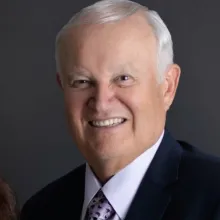
Mr. Seiglie was born in Havana, Cuba, and came to the United States when he was a child. He found out about the Church when he was 17 from a Church member in high school. He went to Ambassador College in Big Sandy, Texas, and in Pasadena, California, graduating with degrees in theology and Spanish. He serves as the pastor of the Garden Grove, CA UCG congregation and serves in the Spanish speaking areas of South America. He also writes for the Beyond Today magazine and currently serves on the UCG Council of Elders. He and his wife, Caty, have four grown daughters, and grandchildren.
