
David Metzel
This transcript was generated by AI and may contain errors. It is provided to assist those who may not be able to listen to the message.
Well, good afternoon, everyone, and welcome to all of you who may be online with us here this afternoon as well. It's great to be here.
Today's one good big follow Mr. Schuette's example. He gave a series of Bible studies a while back. I'm not quite going to follow his example. I'm going to do this, and it's going to be a Bible study, but it's just going to be one-shot Bible study, not a 15-shot Bible study, whatever it was that Mr. Schuette gave. But it will be more in the form of a Bible study. I want to actually today go through an entire book of the Bible. It's a book of the Old Testament. It's a prophetic book that especially applies to all of God's people today. It's one of the shortest books of the Bible. Obviously, it has to be fairly short to go through it in one sermon, but it consists of only two chapters and only a total of 38 verses.
The beginning and the ending of the time period in which it was written is specifically designated. It's very interesting. It's specifically designated the exact time the portion of it was written. It shows that it was written in less than four months. It covers a period of less than four months.
But prophetically, it covers a period of over 2,500 years, leading all the way up to the return of Christ. The year which it was written is also very significant and adds great meaning to the message of this particular prophet.
Do any of you know what it might be? What book it might be?
It is seldom read. In fact, I've never used this. I don't think I've ever even referenced this book in a sermon. I don't know. You very seldom hear it even referenced. Anybody even read a scripture from this particular book? But it's extremely relevant to the times we're now living in as the people of God. The book I'm referring to is the book of Haggai.
It is the first of three post-exilic prophets. He was first of the three post-exilic prophets. That is the prophets who prophesied after the Kingdom of Judah was exiled into Babylon. The others were the two that followed. That was Zechariah and Malachi. Today, I want to go through the book of Haggai to discover some very valuable lessons that can apply to all of us today. My title for my sermon here this afternoon then is Spiritual Lessons from the Book of Haggai. Spiritual Lessons from the Book of Haggai. This verse is important to understand the prophetic background in which Haggai was written. As I mentioned, the beginning and the end of the time period during which it was written is specifically designated, I mean specifically, the month, the day, and the year.
Converting to our current Gregorian calendars, the book of Haggai was written between August 29th, 520 B.C., and December 18th, 520 B.C. Again, covering a period of less than four months.
Why is that important? And what is significant about the year 520 B.C.? That is why we need to understand the prophetic background and the prophetic context of when this book was written. So I want to give a little bit of that to start with. Daniel chapter 2 records Nebuchadnezzar's dream. We're familiar with that, of a great image with the head of gold, with arms of silver, with a belly and thighs of bronze, and with legs of iron and partly iron and partly clay. As we know, that's prophetic of the four great kingdoms from the time of Nebuchadnezzar to the return of Christ. That was symbolic of the Babylonian Empire of Nebuchadnezzar, the Medo-Persian Empire, the Reccom Macedonian Empire that started under Alexander the Great, and then the Roman Empire extending through the 10 resurrections of the Roman Empire leading all the way up to our time today. Let's note now, to start with, here what Jeremiah prophesied. Let's turn to Jeremiah chapter 25. Jeremiah 25 verse 1. The word that came to Jeremiah concerning all the people of Judah in the fourth year of Jeholchim, the son of Josiah, king of Judah, which was the first year of Nebuchadnezzar, king of Babylon. Nebuchadnezzar ascended to the throne of Babylon in September of 605 BC. Jeremiah 25 verse 2. Was Jeremiah the prophet spoke to all the people of Judah and to all the inhabitants of Jerusalem, saying... And I'm going to drop down to verse 11. And this whole land shall be a desolation and an astonishment, and these nations will serve the king of Babylon seventy years. Then it will come to pass, verse 12, when seventy years are completed, that will punish the king of Babylon and that nation, the land of the Chaldeans, for their iniquity, says the Eternal, and I will make a perpetual desolation.
Now we study this and think about it carefully, and you have to do that to give some thought to it, but Jeremiah here is foretelling actually of two distinct time periods, each which would last 70 years. One, first of all, seventy years to accomplish the desolation of Judah, as we just read in verse 9, and what we didn't read in verse 9, we just read in verse 11.
It also states that in verse 9. This whole land shall be a desolation, as it says there in verse 11. So let's talk about seventy years of desolation. And two, seventy years for the duration of the Babylonian Empire, is going to only last for seventy years. The Babylonian Empire began in 609 BC and lasted seventy years until it was conquered by Cyrus in 539 BC.
Babylonians actually, you study history, they actually had three invasions of Jerusalem and Judah. They invaded in 605 BC, they invaded again in 597 BC, and then finally in 586 BC, when they conquered and destroyed the temple and destroyed the city. So Babylonians destroyed Jerusalem then in 586 BC, including the temple of God, including Solomon's temple. And then they took the bulk of the population captive in 586 BC. And that is when the desolation of Judah and Jerusalem occurred.
They desolated it, destroyed the temple, they wiped out the city, became a desolation when it was conquered in 586 BC. So the seventy years of desolation were from 586 BC then to 516 BC, which is when the reconstruction of the temple was finally completed. The reconstruction had begun in 538 BC, so by 520 BC was only four years shy of the seventy years completion since seventy years of desolation four would be brought back and people could come back there and have the workplace of worship.
And it was in 520 BC that Haggai wrote his prophecy. 520 BC. So a prophetic background of Haggai is this. It was written just four years before the seventy years prophecy of desolation was to end and it was written four years before the reconstruction of the temple was to be completed. At the time Haggai wrote, the work of rebuilding the temple had come to a halt, as recorded in Ezra, the book of Ezra. Let's go to the book of Ezra just for a moment.
Ezra chapter 4 shows us how the work on the temple, they were trying to rebuild the temple, been destroyed. They started working on it. They started laying some of the ground work, building the altar in 538, 537. They started working on laying the foundation for rebuilding the temple, and then it came to a halt. Ezra 4 chapter 1. And when the adversaries of Judah and Benjamin heard that the descendants of the captivity were going to rebuild the temple, the temple of the Lord, the God of Israel, they came to Zerubbabel. Zerubbabel is now under the Persian Empire.
He's a governor. He's been, let's be the governor of Judah. They allowed them to have a little bit of freedom. The Persian Empire allowed their captive nation to have some freedoms. They were under, of course, Persian jurisdiction, but they were allowed to govern themselves to a degree. And they allowed them to appoint a governor over themselves, and Zerubbabel was the governor who had been appointed. They came to Zerubbabel on the heads of the father's houses and said to them, let us be with you, for we seek your God. And they were just making a play there.
They came to Zerubbabel because they weren't really wanting to do that. They wanted to halt it. In fact, we dropped down here because, as I say, Zerubbabel was the governor of Judah. They then wrote a letter to King Artaxerxes, who was the king of the Persian Empire at that time, which now ruled over Judea. And the Persian Empire again conquered the Babylonian Empire in 539 BC. So they're now in the jurisdiction of the Persian Empire. And this letter recorded here in Ezra 4, which I'm not going to go through, but they convinced Artaxerxes to force the Jews to halt their work on rebuilding the temple.
Ezra 4, verses 23, look, it'll drop down to verses 23 and 24 of Ezra 4, verse 23. And when a copy of King Artaxerxes' letter was read before these scribes and their companions, they went up and hastened Jerusalem against the Jews and by force of arms made them cease. They made them halt their work on trying to rebuild the temple.
Thus the work of the house of God, the temple, which is at Jerusalem, ceased. And it was discontinued in the second year of the reign of Darius, the king of Persia. Now, according to most historians, the work halted around 535 BC. So by the time Haggai wrote, in 520 BC, it had been halted, that construction had been halted for almost 15, about 15 years.
So the second year of Darius would have been around the first part of 520 BC. 15 years after this construction on the temple had been halted. So it had been laying there, not any building going on for 15 years. Then we come down to 520 BC to the second year of Darius. So what happened next? Ezra 5 verse 1, Then the prophet Haggai and Zechariah prophesied to the Jews who were in Judah, in Jerusalem, in the name of the God of Israel who was over them. So this is when Haggai wrote his prophecy beginning in the second year of King Darius, as we'll read in Haggai 1.1. So that then is a prophetic background in which Haggai was written. So now let's go to the book of Haggai and look at some lessons that we can have for ourselves for today.
Probably Haggai's mission was to call on the Jews, to call on all the people of God, to restore the temple. There they started and had been sitting there. Nothing happened 15 years. And he's trying to stir them up. Listen, you've got to finish this. You need to finish this. Because it was a prophecy. This desolation was only going to last for 70 years and that temple's got to be restored before that desolation can end. So you've got to finish it.
So he called on the people of God to restore the temple and his worship in spite of a lot of opposition that there was evidence to do that. There was a lot of opposition.
So the word Haggai uses referring to the temple literally means house, which is how it's translated in the King James Version in a few places. And the word house indicates a dwelling place for God. I'm trying to tie this in spiritually how it ties to all of us. The word house indicates a dwelling place. Temple or house is a dwelling place for God. Where does God dwell today? He draws in his house or in his temple.
Today we are members of what?
We are members of the household of God, it says. It's recorded in Ephesians 2, verse 19. We are members of the household of God, which is what? Which was a dwelling place for God. Ephesians 2, 22. The household of God is a dwelling place for God. Ephesians 2, verse 22. Or as Paul wrote to the church of Corinth, you not know that you are the temple of God and the Spirit of God dwells in you. 1 Corinthians 3, verse 16. So it's also important to realize that the people of God in Judea and Jerusalem that Hagar was writing to, they were just a remnant. They were a small remnant. There were a number of people who had been there originally. They were rather small remnants, because most of the people who had been taken captive or scattered.
God always has a remnant. As Isaiah wrote, unless the Lord of hosts had left us a very small remnant, we would have become like Sodom and Gomorrah, Isaiah 1, verse 9.
So today we are that very small remnant. There's always a remnant. No matter how many trials there are, whatever Satan does to try to destroy his church and his people, there's always going to be a remnant. So let's go to the book of Haggai. The book of Haggai contains four distinct prophetic messages, and the dates of each prophetic message are precisely given, which is interesting. Precisely given. So we will then go through the book of Haggai in that manner. We'll separate the four parts here as each prophetic message. There's four prophetic messages, so we'll cover them in that order. So first we'll look at the first prophetic message, and Haggai's first prophetic message is recorded in Haggai chapter 1, verses 1 to 15, all of chapter 1.
And the first prophetic message reprove the people for their apathy in allowing the reconstruction of the temple to be halted or to remain uncompleted. Haggai 1, verse 1. Again, notice it gives exact date. In the second year of King Darius, in the sixth month, on the first day of the month, and this would be the sixth month of the Hebrew calendar he's referring to here, in the second year of King Darius, in the sixth month, on the first day of the month, the word of the Lord came to Haggai the prophet, to Zerubbabel, who was the governor of Judah, and to Joshua, who was a high priest. The specific date being, when you convert that to our Gregorian calendar, the exact date being August 29th, 520 BC. Verse 2, saying, thus speaks the Lord of hosts, saying, this people says the time hasn't come. Time hasn't come, the Lord's house should be completed, be built. The people maintained it was not an appropriate time for the reconstruct of the temple to be completed. They'd gotten discouraged in 15 years. They had gotten discouraged and given up in the face of opposition. They've been in opposition for 15 years. They said, that's, forget it, they were discouraged. They're about to give up.
The people maintained it was not an appropriate time for the reconstruction to be completed.
Again, they'd gotten discouraged and given up in the face of opposition, and they wanted to wait until a more ideal time.
Now think about that spiritually, because I've encountered this over my many, many years as a pastor and visiting people. When God calls someone, is it ever an ideal time?
You know, if we waited until circumstances were ideal, we would probably never follow through on the calling that God gives us. You can think about when God called you. Was it an ideal time? Maybe for some it was, but most of us, you can always say, well, why don't we wait until it's a little bit more ideal? Right now, I really want to wait until the football season's over, because I'm going to, I love to go to the games on the Sabbath, whatever it might be. No matter what time God calls you, there'll always be trials and difficulties and adversity you're going to have to face. And I think any of us go back to the time we were called, we realize, yeah, we did have to face trials and adversity, maybe some opposition. Because God wants to see how we're going to respond when times are difficult. He can know how we're going to respond when times are easy. How, but God wants to know, well, what's he going to do or is she going to do when it's difficult? Is that person going to have what it takes to make that decision and stick with it?
Now, another sense of it not being the time that the Lord tells shall be built is the idea that there's not enough time to do it. I'm too busy. I'm too busy right now. I've got too many things going on. I can't respond right now. I've got too many things I need to take care of first.
Verse 3, then the word of the Lord came to, hey, guy of the prophet, saying, it is, is it time for you yourselves to dwell in your panel houses and this temple to lie here in ruins? It has for the last 15 years, just for the foundation, but never getting completed.
You know, what the implication is here that they have time and money to build and adorn their own houses, but not God's house. They had their priorities wrong. As Christ said, seek first the kingdom of God and his righteousness and all these things shall be added to you. Matthew 6 33.
And do we ever say, I don't have enough time, not really, and I'm talking to myself here, because I've said this to myself many times. Do I really have time for prayer today? Do I really have time for Bible study? You know, I've got a disappointment. I've got that appointment. I need to do this. I need to do that. It's not a matter of having enough time. It's a matter of priorities, isn't it? And that's tough. It's tough for all of us. I battle that all the time, even being retired. I still battle it. Hey guy 1 verse 5, Now therefore thus is the Lord of hosts, consider your ways. You have sown much and bring in little. You eat, but do not have enough. You drink, but you are not filled with drink. You clothe yourselves, but no one is warm. And he who earns wages, earns wages to put it into a bag with holes. The point is this. When it comes to how much money we make, it can never be enough. We can always use or need more. As the latter part of verse 6 says, you know, you got to get this money. It's never quite enough. There's always something more we need, more than what we have coming in. It's like it's a bag with holes. There's never quite enough.
And we'll always need more food, drink in new clothes. That's something we always need.
But those things should not prevent us from putting God or God's calling first.
Verse 7, Thus is the Lord of hosts, consider your ways. Go up to the mountains and bring wood and build the temple. You know, put God first. Make a priority on your spiritual calling and being a part of the spiritual temple. Go up to the mountains and bring wood and build the temple, because they were making excuses why they weren't going to finish the temple. And there's an analogy here to all of us being the spiritual temple. Go up to the mountains and bring wood and build the temple and that I may take pleasure in it and be glorified, says the Lord. You look for much, verse 9, but indeed it came to little. And when you brought it home, I blew it away. Why? He says, Lord of hosts, because of my house that is in ruins.
Well, every one of you runs to his own house.
Verse 12, Then's the rubber bell, and Joshua, the high priest, of all the remnant of the people, again, it's emphasized there was a remnant there, the remnant of the people, obeyed the voice of the Lord their God, in the words of Haigai the prophet, as the Lord their God had sent him, and the people feared the presence of the Lord. Then Haigai, the Lord's messenger, spoke the Lord's message to the people, saying, I am with you, says the eternal. So the Lord stirred up the spirit of the rubber bell, the governor of Judah, and the spirit of Joshua, the high priest, and he stirred up the spirit of the remnant of the people. He stirred up the people who had been just very lackadaisical for a long time. They needed to have their spirit stirred up. He stirred up the people, and they came, and they worked on the house of the Lord of the host their God. They began to say, yeah, we do, we need to finish this project. We need to work on the temple and get it finished. And they worked on the house of the Lord their God on the 24th day of the sixth month, in the second year of King Darius, again giving a specific date.
Now, Haggai is one of the few prophets whose words were positively heated.
The leaders and the people of God now determined that they're going to obey God and put Him first in their lives, and they determined to renew their dedication to finish the work of God. In this case, it was building the temple. And God responds by saying, I am with you. Verse 13, I am with you, says the Eternal. Now, think about that. I'm with you. I'm going to be with you. You're making a decision. You're going to turn your life around. You're going to stop being like a days ago. Now, you're going to really get dedicated to doing the work that I gave you to do. He said, I'm going to be with you. Don't worry about how much obstacles you might have. Don't worry about how difficult it might be. Don't worry about what opposition you might have. I am going to be with you. You know, there's no greater blessing. We think of material things we like, but there's really no greater blessing than God being with us. I am with you. I'm going to be supportive of you. I'm going to make sure you're successful. That then brings us to the second prophetic message, which begins in Haggai chapter 2 verse 1 and concludes in verse 9. So the second prophetic message is in Haggai chapter 2 verses 1 through 9. And this second prophetic message predicts that the glory of the new temple is going to be greater than the former temple of King Solomon. So you remember back when you're going to see, basically, some of you remember back at Solomon's temple? What a glorious temple that was. And then they're building a new temple now, but it's nothing like Solomon's. Not even close. It doesn't compare at all. But he says, I'll tell you something. God's encouraging. He says, I'm going to make this temple your building, and it doesn't look like much. I'm going to make it even more glorious than Solomon's temple. And he said that to him so people would not be discouraged by what they were seeing at that particular time. And that's just tremendous meaning for all of God's people today, the situations we're in. But what they saw, this building was being, the temple was being built, they saw was nothing compared to what had been in the past. Because the temple under construction here, time of Haggai, could not be compared to the glory of Solomon's temple. No carefully the date of the second prophecy. This is very interesting. It gives a specific day of this prophecy, a second prophetic message in the first verse of chapter 2. Notice what it is.
In the seventh month, on the 21st day of the month, the word of the Lord came by Haggai the prophet saying, now the name Haggai means festive, festal one or my feast. His name ties in with feast. When was the second prophecy given here? What was the second prophecy given? It says was given on the 21st day of the seventh month. When was that? That was on the seventh and last day of the Feast of Tabernacles. I think that's quite interesting. This message was given on the seventh and last day of the Feast of Tabernacles. What did Haggai say on the seventh and last day of the Feast of Tabernacles? Haggai 2 verses 2 and 3.
Speak not to the rubber bell, the governor of Judah, and to Joshua the high priest, and speak to the remnant of the people, saying, who was left among you who saw the temple in its former glory? How many of you are still living back before the temple was destroyed in 586 BC? How many of you go back that far? How many of you go back like 66 years and still remember Solomon's tip on the glory of that temple? And okay, now look at what you're doing now. You've got a little bit of foundation built. You're starting to build here. How do you see it now?
In comparison with it, is this not in your eyes? Is nothing? Think about what you're doing right now. Think about how this temple is going to come out. Is it going to be nothing compared to Solomon's temple? Let's go to the book of Ezra just real quickly, because when the people here, you will see they had mixed reactions. As we were told in the book of Ezra, they had very mixed reactions. Let's go to the book of Ezra, chapter 3, shows the mixed reactions that people had when they saw the foundation of this temple, and they thought back about those who could think back and remember Solomon's temple and the great glory of that temple. Ezra 3, beginning in verse 10. When the builders laid the foundation of the temple of the Lord, the priests stood in their peril with trumpets. Hey, guys, try to rebuild this temple. That's what we're talking about. The people stood in their peril with trumpets and the Levites, the son with symbols, to praise the Lord according to the ordinance of David, king of Israel. And they sang responsibly, praising and giving thanks to the Lord, for He is good and His mercy endures forever toward Israel. Then all the people shouted with a great shout when they praised the Lord because of the foundation of the house Lord was laid. So someone says, why isn't this great? We're going to rebuild the temple. They've laid the foundation and they were so excited and happy some of them were. But many of the priests and Levites and heads of the father's houses, old men who had seen the first temple, they wept. They said, well, this is nothing compared to that temple. They wept with a loud voice. When the foundation of this temple was laid before their eyes. And yet others shouted for joy. Some wept because they were sad. Is this going to be anything like Solomon's temple? They were really upset and they were discouraged and crying. Yet many shouted for joy. So the people could not discern the noise of the shout of joy from the noise of the weeping of the people who were saying, this isn't going to be anything like Solomon's temple. For the people shouted with a loud shout and the sound was heard far off. Let's go back to the book of Haggai. Again, Haggai 2, verse 3. Then the word of the Lord came, or chapter 2, verse 3. He says, who has left among you who saw this temple and is formed with glory? And how do you see it now? In comparison with it, is this not in your eyes as nothing compared to Solomon's temple? Of course, actually, it's God who's speaking here, as verse 4 tells us. God now then, after this feed, God focuses their attention on comparing the reconstruction of this current temple to that of Solomon's temple. He's trying to focus their attention on that. This is God speaking, verse 3. So it's God speaking. And he says, in comparison with it, is this not in your eyes as nothing? Now, why would God try to focus their attention on that? Why would God want them to probably look and say, well, look at this temple. It's going to be nothing like Solomon's temple. Why did God want them to see that? Because many of them were getting upset by that. They were very discouraged by that.
Well, God knew what many of them were thinking, the ones that seemed Solomon's temple. He knew what they were thinking. And He knew some were very discouraged because of that. Realizing this temple that was going to be reconstructed now was going to be anything like Solomon's temple.
Do any of us ever feel that way? Do any of us ever get discouraged because of our present circumstances? You know, boy, look at where I am now. Boy, I was much better off in the past. Do any of us ever get discouraged because of our present circumstances? You know, there are two ways in which this can apply to us today as God's spiritual temple. Number one, it can apply to the overall church as being the spiritual temple of God and trying to compare to what the overall church was a number of years ago. It's nothing like what it used to be. And it can also apply to each of us individually as being a part of God's spiritual temple.
You know, we can look at the overall church of God and think about the past. Those of us who go back that far, many of us do. When we had huge congregations, we had huge, three, four hundred people, some of them. Flint Church here, we had 300 people in the Flint Church. More than 300. Seattle had two congregations. One had 300, the other one had 300. They had to split it up because there were 600 people in Seattle. They had to split it in two congregations, east and west.
We can think about the past. We had huge congregations in three superb colleges with gorgeous buildings and grounds. There was no place more beautiful than Pasadena with that original college. The building and grounds there, they won awards. Everybody in Pasadena admired Ambassador College in Pasadena. It was one of the most gorgeous areas in the whole city of Pasadena. You can say the same about Big Sandy and Bricket Wood.
We had hundreds of students. Think of that! Hundreds of students graduating every year, being taught God's way to go out and be leaders in God's Church.
We had a large number of prospective members. I remember my very first assignment when I was asked to come in and help was just to call on the prospective members. There were like 10 or 12 every week new prospective members have to call on to try to visit to answer their questions. How many do we have today? Very rare. He might have two or three a year.
At his peak, the World Wide Church of God had an annual income of over $200 million. You think about the 12 million, 15 million today? He's got 200 million.
The Plain Truth magazine had a peak circulation of over 8 million. It was when all languages around the world, Mr. Armstrong used to visit all kinds of heads of states of many nations and knew about us.
We had a membership of over 120,000 members. What's that compared to what we have today?
As I said there, who was left among you who were part of that temple in its former glory? How does this compare to it today? What about each of us individually?
As time goes on, do any of us ever tend to let down spiritually? To where our spiritual condition is not what it used to be when we first came into the church? Remember when you first called how excited you were? How much zeal we had? How many of you were excited about doing the work and being a part of the church? How's that today? Have any of us ever slipped and made some wrong choices along the way and gone back to maybe some of the ways of the world? You got discouraged because of that. Let down? Have any of us ever gotten discouraged over any of those things and thought, well, what's the use? Some people have done that. They've said, what's the use? They've left the church. Some maybe said they did something and they slipped and made a mistake at some point. Got the idea. He said, well, you know, I knew better in the law of that to happen. I don't think God could ever forgive me. I'll never be in the condition I was before when God called me. So why even bother? What is God's response to both the overall church and each of us individually as a spiritual temple? Hegai 2, verse 4. Here's his response. Those of us who might think that way are getting that kind of a mindset. Be now, yet now, be strong, Zerubbabel. Be strong, Joshua. Be strong, all you people of all and. Be strong and get back to work. Why? Because I am with you. If you just go back to trying to be strong again, ask for me, for my strength, ask for me to help you and get back to doing the work you used to do and having the zoo you used to have. I will be with you. I'll help you.
So God is saying here, get back to work. Get back to doing the work you used to do. Don't give up and quit. Be strong. Be strong. Be strong, all you people of all and. And work. He says, be strong three times.
And work. Why? Because I am with you. This is the Lord of hosts. You know, whatever situation might be in, whenever we strive to get closer to God, no matter where we are or what has happened in the past, God is going to be with us to help us. How will God help us both individually and collectively as His overall church? Hey, Guy 2, verse 5. According to the word that I commited with you when you came out of Egypt, so my spirit remains among you, so do not fear. That's when you came out of Egypt. Now, I don't want to imply that spirit because Egypt is symbolic of the world and we came out of our Egypt, we came out of the world and we were baptized. He says, my spirit remains among you and that's when we received our spirit. We came out of the world and we received God's spirit. And God is saying, no matter what happened, no matter what's gone on, no matter if you let down, you still have access to my Holy Spirit. You still have access to my power, so don't be afraid. Do not fear. As Paul said, I can do all things through Christ who strengthens me. Philippians 4, verse 13. Hey, Guy 2, verse 6. For this is the Lord of hosts. Once more it is a little while I will shake heaven and earth, the sea, and dry land.
It's interesting that this is the only verse in the book of Haggai that's quoted in the New Testament. It's quoted by the writer of Hebrews in Hebrews chapter 12, verse 26. In reference to Christ's Second Coming, when we receive a kingdom which cannot be shaken, which it says in Hebrews 12, verse 28.
This is a prophetic message that applies to the time yet ahead of us, as understood by the writers of Hebrews. The writer of Hebrews looked at, hey, Guy, he realized this applied to his time, it applies to our time.
Hey Guy 2, verse 7. And I will shake all nations. So think about this, what is this going to happen? It's happening in the past, but it's going to happen in the future. I will shake all nations, and they shall come to, this has to be the future, they shall come to the desire of all nations, and I will fill this temple. You look at it, it looks like nothing. You're discouraged. This doesn't compare to Psalm and John. I'm going to fill this temple with glory, and it's going to have a greater glory than Solomon's temple. It says the Lord of hosts.
So this, then, is a prophetic message that applies to the time just ahead of us, as understood by the writer of Hebrews. Verse 7, and I will shake all nations, and these will come to the desire of all nations. Who is the desire of all nations? You know, what do all nations desire? All nations desire peace.
And whether they understand it or not, all nations desire a Savior and Deliverer, Deliverer who can bring peace.
Even though they don't know His identity, because that only delivers Jesus Christ. They may not know that, but they all desire peace. They desire someone who could bring peace. So the desire of all nations is going to be fulfilled with the return of Christ, and in the person of Christ. It is Christ who will fill this temple with glory and who shall shake all nations. Verse 8, the silver is mine, the gold is mine, so is the Lord of hosts.
See, all the gold and silk from the world belongs to God.
You know, you think about the former temple of Solomon. It contained a lot of silver, a lot of gold, precious wood and stones. That's what made it so glorious, is there'd never been anything like it. If historians were honest, it would be one of the seven wonders of the world.
So what is God saying here? This temple they were now reconstructing had little or no silver and no gold. Didn't have any of those things that were in Solomon's temple. Didn't have those beautiful wood patterns and all those precious stones. Didn't have any of that. But God is saying here, don't worry about the absence of those things from your present reconstruction. This temple is still going to be more glorious than Solomon's temple.
And today, spying to all of us, we could say, don't worry about your present reconstruction. Don't worry about your present financial condition.
God can provide whatever is needed, both individually and collectively. We don't have to worry about it as a church. Well, we're short. Yeah, we do. We have to have a budget. We have to spend. But you know, God can provide whatever is needed. Same with us individually. God can provide whatever is needed if we are faithful to Him, and dedicate to Him, and obey Him, and trust Him.
Why? Because the silver is mine, the gold is mine. All wealth belongs to God.
In regards of financial circumstances, verse 9 says, The glory of this latter temple shall be greater than the former, says the Lord of hosts.
Why is God's spiritual temple? Why is God's temple today far more glorious than Solomon's temple? And right now, He's saying, you know, all you people are part of God's spiritual temple. The temple you're in now doesn't mean it'll look like much compared to what it used to be, but it's more glorious than what it was. Why?
Because those of us who are part of God's spiritual temple contain God's Holy Spirit.
We have the glory of God's Holy Spirit within us.
Do we reflect that glory in our lives to others? Verse 9, The glory of this latter temple shall be greater than the former, says the Lord of hosts. And in this place I will give peace, says the Lord of hosts. So, hey, guys, second prophetic message ends with God's promise to give peace. You know, for 6,000 years, peace has been elusive.
Not only in the world, but also among the people of God. Hasn't it? When you look at the history of the church.
It will take Christ as the Prince of Peace to finally bring peace.
But what will it take in order to have peace, and what will it take in order to establish peace on earth? That's where you have to look at the Hebrew word for peace. We all know what it is. It's probably the one Hebrew word you know. The Hebrew word for peace is shalom. That's the way they greet each other in Israel. They say shalom. Peace. Yet, Jerusalem is one power on earth that doesn't have peace. But that's how they greet each other in Israel and in Jerusalem. But each letter in ancient Hebrew, in the Hebrew of the Old Testament, was drawn to peace or something. Thus, every Hebrew word had a word-picture meaning. And the word-picture meaning of shalom tells us the only way peace could ever be established. And it tells us what Christ will have to do in order to establish peace. You can give a whole sermon on that. But the word-picture meaning of shalom is destroy or remove the authorities that cause chaos. In other words, the only way to have peace is to remove all those who disrupt peace and refuse to live at peace with others. And of course, the main disruptor of peace is Satan, who's going to have to be removed. You're not going to have peace until Satan's removed.
As everyone else who refuses to follow the will of God by living in peace with a fellow man. So that then ends Haggai's second prophetic message and brings us to the third prophetic message, which is Haggai 2 verses 10 to 19. After encouraging them to get back to work in the second message, now God, through Haggai, promises them a change for the better. If they stay on the course they are on and don't allow others to influence them contrary to ways of God. That third message begins in verse 10 and it gives the exact date again. Haggai 2 verse 10, on the 24th day of this ninth month in the second year of Darius, the real Lord came by Haggai the prophet saying, now this corresponds to December 18th 520 BC under Gregorian calendars, less than four months from when Haggai began his message. So Haggai's entire message covers the span of less than four months. It also happens one month prior to this, one month prior to this date we just read, the prophet Zechariah issued a call to repentance. Let's go to Zechariah, just one page over here, my Bible, one or two pages. Zechariah chapter 1 verse 1, in the eighth month of the second year of Darius, and this whole thing is happening in the second year of Darius, 520 BC, in the eighth month of the second year of Darius the word of the Lord came to Zechariah saying, so Haggai's second prophetic message was on the 21st day of the seventh month. Zechariah begins his message on the eighth month or one month after Haggai's second message. And then Haggai's third and fourth prophetic messages took place on the 24th day of the ninth month. So Zechariah is right squeezed in between Haggai's second message and Haggai's third and fourth messages. And Zechariah, here in the first six verses of Zechariah 1, issues a call to repentance. He's kind of supporting Haggai. The people were beginning to respond to Haggai's first two messages and Zechariah encouraged them to stay on that course. Zechariah 1 verse 2, the Lord has been very angry with your fathers because they let down. They let they drop the ball. Therefore, say to them, this is the Lord of hosts, return to me and I'll return to you. Get back to work. Get back to where you were and I'll be with you. Do not be like your fathers whom the former prophets preached saying, this is the Lord of hosts turned now from evil ways and from evil deeds, but they did not hear. He'd me, says the Lord. And your fathers, where are they? And the prophets, do they live forever? Yet surely my words and my statutes, if I command my servants to promise, did they not overtake your fathers? So they return and said, just as the Lord of hosts determined to do to us according to our ways and according to our deeds, so he has dealt with us. The Living Bible paraphrases verses 5 and 6 this way, just to make it clear. Your fathers and their prophets are now long dead, but remember the lesson they learned that God's Word endured. It's going to come to pass. It caught up with them and punished them. Then at last they repented. We have gotten what we deserve from God, they said. He has done just what he warned us he would.
It's interesting to note that Sechariah's prophetic visions then began on the 24th day of the 11th month. Sechariah 1 verse 7, or about two months after Haegai's last two prophetic messages. Let's go back now to Haegai, just a page or two back, Haegai chapter 2 verse 10.
On the 24th day of the ninth month, the second year of Darius, the word of the Lord came to Haegai the prophet, saying, Thus is the Lord of hosts. Now I ask the priests concerning the law, saying, If one carries holy meat in the fold of his garment, and with the edge he touches bread or stew, wine or oil, or any food, will it become holy? And the priest said, No. Then Haegai said, verse 13, If one is unclean because of a dead body, if one who is unclean because of a dead body touches any of these, will it be unclean? So the priest answered and said, Yes, it shall be unclean. So there are two distinct questions here. One, if one is carrying food or meat that was considered to be holy because it had been sacrificed or dedicated to God, and he then happened to touch some other food, would that then make that other food holy? The answer is no, wouldn't. The other second question, if a man was considered to be unclean because he had come into contact with a corpse, if that man then touched any of those foods, would the food then become unclean? And the answer is, Yes, it would be unclean. So the first question is negative, and the second question is positive. The passages buried on this subject, I'm not going to turn there, but the passages buried on this are Leviticus 22, verses 4 through 6, Numbers 19, verse 11, and Leviticus 6, 18. But what's the lesson he's trying to make here? What's the lesson for all of us? The lesson is this. Moral cleanliness cannot be transmitted to another person, but moral uncleanness can be transmitted. In other words, righteous people cannot transmit their righteousness to others, of them by just by their presence. To put it another way, a wife's righteousness cannot make her husband righteous. We all have to have our own accountability to God.
Every individual has to be responsible for his or her good standing with God. On the other hand, a morally corrupt person can influence others in a negative way.
A little sin in a group, if left unchecked, can spread. Note the example of immorality in the church in Corinth. This Paul reported in 1 Corinthians 5, where he wrote a little 11. 11 is the whole lump. 1 Corinthians 5 verse 6. Or more simply, a healthy father cannot transmit his health to a sick child, but a sick child could transmit his disease to the father. So in this third prophetic message, Haggai is wanting the people not to be influenced by some who are against completing this reconstruction of the temple. He was wanting them not to allow those negative attitudes to spread and to influence them in a wrong way. Verse 14, chapter 2. Then Haggai answered and said, So is this people, and so is this nation before me, says the Lord, and so is every work of their hands. And what they offer there is unclean. The current rebuilding effort had to be accompanied by the right attitude and by ongoing obedience to God. Basically, he was saying, he only takes a few bad apples. If that's spread and allowed to spread, he only takes a few bad apples, and the whole Jewish nation could then be at risk of being corrupted again. And you think about it, is that maybe the case here in the United States? If you get people that have corrupted spiritually and they become too big and it spreads too far, can that then corrupt the nation? Is that happening in the United States and Great Britain? But the same can go for even God's spiritual temple. Now then in verses 15 through 19, God asked them to carefully consider what has happened in the past and to consider how God was trying to bring them to a closer and deeper relationship with him by means of their trials that they were going through. So the next slide, verses 15-19, are somewhat awkwardly worded and a little difficult to explain. Clearly, even United's Bible reading program gives about two or three possibilities of how to apply them and understand them. But three things are clear in these verses, verses 15 through 19. One, the date is clear. The date is the 24th day of the ninth month, verse 18, in the second year of the reign of Darius. And all that's taking place in the second year of the reign of Darius, 520 BC. Number two is clear that they were to consider something. And now carefully consider verse 15 and then twice in verse 18. Consider now, and at the very end consider it. And number three, from this day forward, God was going to bless them, as it says at the end of verse 19. But from this day I will bless you. So what were they to consider? Well, they were to consider what had happened to them. And they were to consider their trials and their difficulties and the loss of their past blessings. And now God was trying to bring them into a deeper and more meaningful relationship. He got to verse 16, since those days when one came to a heap of 20 Ephes, there were but ten. When one came to the wine vat to draw out 50 baths of wine from the press, there were but 20. In other words, to put this simply, their increase was not what it could have been or maybe should have been.
Verse 17, I struck you with blight and mildew and hail and all the labors of your hands, and that you still did not return to me, says the Eternal. Now blight is drought. Mildew could be too much rain and flooding. It could refer to that. And hail can infer all kinds of storms. It can ravage a nation.
You know, this is especially true when it comes to our nation today. To the United States of America and to Great Britain, you can look, okay, how's their weather doing? They have droughts in some places. They have too much rain in others and floods in other places. Do they have sometimes storms that come in and ravage the land? Is God blessing the weather? Does everybody have really blessed weather conditions?
What if God warned Israel, as recorded in Leviticus 26 and Deuteronomy 28? I'm not going to go there, y'all. You should be familiar with those chapters. He warned them we'd be blessed for obedience to God, and then we'd be cursed for disobedience. We'd have those blessings removed if we didn't obey God. That's made very clear in both Leviticus 26 and Deuteronomy 28. But verse 19, here's an interesting verse. Hegai 2, verse 19, is the seed still in the barn? And if you think about it, as most commentators will say, it implies that the seed is not still in the barn. It implies the seed has been planted. But it goes on to say, as yet the vine, the fig tree, the pomegranate, and the olive tree have not yielded fruit. In other words, if the seed is not in the barn because it's been planted, then why don't we have an abundant crop? Why is our crop so small? Why aren't we having an abundant crop? We have the vine, the fig tree, and the... I should say, why have the vine, the fig tree, and the olive tree, and the pomegranate, why have they not yet produced a lot of fruit?
Then it ends on a positive note, verse 19, but from this day I will bless you. In time you will have an abundant crop. God is selling them. You may not see it today, but in time you're going to have an abundant crop. In regards to the past, in regards to your present circumstances, because God has made a promise. He's got a prophecy, and He's made a promise He's going to bless His people, and He's going to keep that promise, and He's going to bless His people regardless of what happens. Because there is a remnant there that is following God, that is dedicated to God. We are part of that remnant, and I will keep my promises, God is saying, to bless you. So in one sense, God has already demonstrated that in the case of the house of Judah. This is just in the resting side. The date of this Third Prophetic Message, the 24th day of the 9th month of the Hebrew calendar, the date also corresponds to December 9th, 1917.
I will keep my promise to bless you, and that was given on, as I said, the 24th day of the 9th month, which corresponds also to December 9th, 1917, toward the end of World War I. What happened on December 9th, 1917? That was a very important date in Jewish history. It was the date that the Turks surrendered Palestine to the British, which in turn subsequently led to the establishment of the State of Israel to create a national homeland and a tremendous blessing for the Jews around the world. And that really began on that day when Palestine was ceded to Britain, who then in turn later equated the Nation of Israel, allowed the Jews to come back to that area and to have a state, have their own state, which they have today, which is a tremendous blessing to Jews around the world. With that, we can now go to Hegai's fourth and final prophetic message, which occurs later on the same day as his third prophetic message. And that's recorded in Hegai 2, verses 20 to 23. And this message is addressed to Sarovabel, the governor of Judah. Hegai 2, verse 20, and again the word of the Lord came to Hegai on the 24th day of the month, same day, saying, speaks to Sarovabel, governor of Judah, saying, I will shake heaven and earth.
Which prophetically will lead to the return of Christ to the coming of the desire of all nations, as we read in verse 7. So again, the time leading up to Christ's return will be a very traumatic time. The nations are going to be shaken. I will shake heaven and earth. And what else will Christ do at His return? This is very encouraging to all of us. Hegai 2, verse 22, I will overthrow the throne of kingdoms. You know, people have a wrong concept of Christ at His return, don't they? They don't really understand what's going to take place. This is what Christ is going to do. I will overthrow the throne of kingdoms. I will destroy the strength of the Gentile kingdoms. I will overthrow the chariots and those who ride in them. The horses and their riders shall come down, everyone by the sword of His brother. So all world rulers and all the governments of this world who refuse to submit to the rule of Christ is going to be overthrown and destroyed, along with their armies and their weapons of warfare.
Many of them will even fight against one another and destroy themselves by the sword of His brother, it says. Verse 23, finally, the last verse, in that day says the Lord of hosts, I will take you, sir of a bell, my servant, and I will make you like a signet ring, for I have chosen you, says the Lord of hosts. A signet ring was a ring worn by kings or others in high authority, which they would stamp on a document or on a letter to verify its authenticity. It was then sent by that individual, and the person received, they had that signet ring stamped on them. They knew this was actually from this person. Zerubbabel means the seed of Babel, signifying he was born in Babylon. And Babylon symbolically represents the world, and we've all been, in essence, spiritually speaking, born in Babylon. We're all products of the world that we live in and we're born in. The likes of Zerubbabel, we have been chosen by God, and we can all function as God's signet, if you will, which is one of the highest compliments God could ever bestow on anyone, because it indicates that God can touch our lives and bless us in a way that can then leave an imprint on others, that can leave a signet on every other life we come into contact with, that they can hopefully see us and say, you know, there's something special about that person.
I'd like to have what they have.
It can be like a signet ring, that we could, in a way, that we can make an impression on others, so they can know the, you know, look at us and say, those are men and women of God. Something special about those people.
They can see that maybe we are the true people of God and that we are God's true representatives. You know, look what they've gone through and look how they've handled it. How were they able to do that? How were they able to remain so positive and so joyous and filled with joy even though they've gone through tremendous trials and losses?
You can see, by looking at our example, that we are people of God. And if we remain faithful to the end, we will be glorified in God's kingdom and we'll serve God, the Father, and Christ as their perfect representatives for all eternity. In conclusion, then, that concludes our prophetic overview of the book of Haggai.
And maybe one of the shortest books of the Bible, but also jam-packed with meaning for all of God's people today. Probably actually two or three Bible studies to go through it to want to cover it in more detail. But the main bottom line I want to leave you with here is never allow anything to discourage you because God says, I have chosen you and I will make you like a signet ring, says the Lord of hosts.
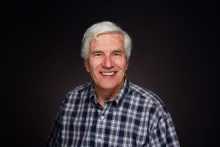
Steve Shafer was born and raised in Seattle. He graduated from Queen Anne High School in 1959 and later graduated from Ambassador College, Big Sandy, Texas in 1967, receiving a degree in Theology. He has been an ordained Elder of the Church of God for 34 years and has pastored congregations in Michigan and Washington State. He and his wife Evelyn have been married for over 48 years and have three children and ten grandchildren.
