


Paul Moody
This transcript was generated by AI and may contain errors. It is provided to assist those who may not be able to listen to the message.
Do any of you know what week this is? You know what week it is, but I mean, do you know what week it is historically speaking? This is a very historic week. What's that again? Hanukkah, right. Let's begin by turning to John 10, verse 22. Because actually Hanukkah is mentioned in the New Testament. A couple of verses here, but it's interesting, since we're in that period of time, I thought maybe we could talk about that feast of the Jews a little bit and some of its meaning, and how some of the meaning of that might even apply to us today.
John 10, verse 22 says, Now it was the feast of dedication in Jerusalem, and it was winter. What feast was that? Why is it mentioned in the New Testament? Did Jews still observe this feast today? It's interesting what's recorded next here in regards to that. Verse 23 says, And Jesus walked in the temple during this feast of dedication. He went to the temple, walked in the temple, and he only walked in the temple, but he walked, it sits here, specifically where he was walking in the temple.
He walked in Psalmless porch. What does that have to do with the feast of dedication, which we know of course today is the Feast of Hanukkah? See, why would Christ walk in the temple at Jerusalem during the Feast of Dedication, or the Feast of Hanukkah?
What went through his mind as he walked in the temple? When he walked through Psalmless porch, what was going through his mind? What might have been on his mind at that particular time as he was walking there in Psalmless porch at the time of this particular Jewish feast? Would he have been thinking of the physical events surrounding why that feast was created by the Jews? Or maybe would he have been thinking of some spiritual things? Christ often thought spiritually, didn't he?
What was going through his mind? Would he have been thinking about the physical temple, which he knew would soon be destroyed? You know, Matthew 24, verse 2. Or would he have been thinking about the spiritual temple? And maybe, as Mr. Cortiz was talking about in his sermon, at the purification of the spiritual temple, which he knew Satan would attempt to destroy, as recorded in Revelation 12.4 and Revelation 12, verse 17.
See, what does the Feast of Dedication have to do with the temple? The Jews around the world still observe this feast today, even though there hasn't been a temple for over 2,000 years. And this feast has everything to do with the temple, but yet the Jews don't have a temple. They haven't had a temple for 2,000 years, but they still observe this Feast of Dedication, or the Feast of Hanukkah, as they call it.
Hanukkah is just a Hebrew word which means dedication. That's just a Hebrew word for dedication. The fact that they still observe today is really quite remarkable when you think about it. And there's a tremendous lesson in that for all of us, which I'll get to at the end of the sermon. This year, in 2010, the Feast of Hanukkah is observed from December 2nd. It started last Thursday, December 2nd. It's deserved eight days through December 9th. It's an eight-day feast. And the Feast of Hanukkah is the Feast of Dedication that's mentioned here in John 10, verse 22.
In fact, I'll just mention here if I can find it. We've got about four or five Thanksgiving Day cards this year, but one of the members in Flint sent me a Happy Hanukkah card. And he wrote in there, he says, I thought it interesting Jesus was mentioned in Psalm's porch during the winter. Hanukkah is mentioned in John 10, verses 22 and 23 as a Feast of Dedication. Many missed that, that Hanukkah is mentioned in the Bible. Interesting little thought he put on his card there. It's always observed by the Jews in the months of Kislev, spelled C-H-I-S-L-E-V, which always occurs during the beginning of the time about the beginning of winter, which corresponds to our month of December.
Falls at different times in the month of December. I think it is significant that it's mentioned here in John, and that Christ walked in the temple at this particular time. Obviously, he must have been reflecting on the history that led up to the observance of this particular festival by the Jews.
Now, since this Feast is still observed by Jews around the world today, and since we are now in a time when they are observing this around the world today, I thought it would be a good time for all of us to also reflect on the meaning and historical significance behind the Feast of Hanukkah. Especially since today, we are the spiritual temple of God, which Satan seeks to destroy today. So today I want to look at the history of the Feast of Hanukkah, and we will then reflect on the spiritual meaning it can have for all of us today as the spiritual temple of God.
My title is Spiritual Lessons from the Feast of Hanukkah, which again, it can be spelled as it is in this card. It can be C-H-A-N-U-K-A-H, or it can be spelled just with an H. First, I want to take a look at Psalmist's porch in the original temple. As you all know, David had it in his heart to build a temple to God, but God said, no, not in your day. After a year gone, your son will build the temple.
So after David died, his son, Solomon, built the original temple of God in Jerusalem. It lasted for about 400 years. It was a magnificent structure. It probably was really one of the wonders of the ancient world, if you really knew about it as it's described in the Bible. But it lasted for about 400 years before being totally destroyed by the Babylonians around 586-587 B.C.
It's interesting. I don't know if this can be verified or not, but according to the Jewish historian Josephus, who lived during the time of Christ, he wrote in his history of the Jews that part of the original temple of Solomon, the part of the original temple that survived, even during the time of Christ, was Solomon's porch. He says that Solomon's porch was part of the original temple that survived and then became a part of Herod's temple.
I don't know whether that's actually the case or not, but the interesting point is the Solomon's porch, what it was in the original temple? In the original temple, Solomon's porch was the porch of judgment. That is where all the kings of Judah would make judgments concerning the people of Judah. Those judgments were made, and those things were made of Solomon's porch. I was here at the temple that those were made in, so it was often called the porch of judgment.
It was a very large hall in the outer court of the temple. It was about 90 feet wide, about 150 feet long. And again, like I said, it's where the kings of Judah would make judgments and mend your justice. We could say the Solomon's porch was where judgment originally began at the temple or house of God. In that regard, it's noteworthy what Peter wrote in regards to the spiritual temple or the spiritual house of God.
Let's turn and read that. 1 Peter 4 verse 16, a verse we're all familiar with. It ties into some of the spiritual aspect of what I'll be bringing today. 1 Peter 4 verse 16, where Peter begins by saying here, If anyone suffers as a Christian, don't be ashamed of that. But let him glorify God in this matter. That's not strange. Why would we glorify God when we suffer as a Christian?
Why would that be a glory to God? Well, because of verse 17. Then Peter goes on to say, For the time has come for a judgment to begin at the house of God. And one way God can judge His people to find out if they're pure, as we heard in the sermon at, if they're being purified or not, is by going through sufferings, trials, difficulties, and how we respond to that, and how we deal with that.
For the time has come for judgment to begin at the house of God, and if He begins with us, what will be the end of those who do not obey the gospel of God? That's interesting. Who don't obey the gospel of God. The gospel of God is not just something to be proclaimed, it is also something to obey. So you must not only proclaim what Christ taught, you must also obey and do what Christ taught as well, even if it means suffering and laying down our lives.
But judgment begins at Psalm's porch in the original temple, the original house of God, and judgment also begins at the house of God in the case of God's spiritual temple as well.
I have to wonder if Christ had any of that on His mind as He walked in Psalm's porch in that house of judgment in the Judgment Hall during the Feast of Dedication, as recorded in John 10. As He complicated not only how Satan had destroyed the original temple, but how Satan seeks to destroy the spiritual temple of God as well. Now, in 586 or 587 B.C., as I said, the physical house of God was destroyed by the Babylonians, which begs this question, why did God allow it to be destroyed?
Why was that? Well, we can read the reason. Let's go back to 2 Chronicles 36, which is a very interesting and significant chapter in the Bible. Now, I'll explain a little bit more of that in a moment. But 2 Chronicles 36, and let's begin in verse 14. It says, more over all the leaders... Again, I'll just mention this in two... As I go through this, I'm not going to comment on it a lot, but you might be put on your spiritual thinking caps and think a little bit of how this might pertain to us spiritually.
It says, More over all the leaders of the priests and the people transgressed more and more, according to all the abominations of the nations, and defiled the house of the Eternal, which she had consecrated in Jerusalem. And the Lord God of their fathers sent warnings to them by His messengers, rising up early and sending them, because He had compassion on His people and on His dwelling place.
But they wouldn't listen. It says, They mocked the messengers of God, they despised His words, scoffed at His prophets, and to the wrath of the Lord arose against His people, until there was no remedy. Very interesting statement. God allowed the physical house of God to be destroyed, because it got to the point, it says here, where there was no remedy. There was no way to reverse course. Verse 19, So then they burned the house of God, broke down the wall of Jerusalem, burned all His palaces with fire, and destroyed all His precious possessions.
So that then is a very brief history of the physical temple and Solomon's porch. It was part of it. Now let's get into the history of Hanukkah. Now the history of Hanukkah really begins, if you want to really go back to where it would begin. It really begins with the proclamation by Cyrus to rebuild the physical temple. And that proclamation by Cyrus to rebuild the physical temple is recorded in the book of Ezra, chapter 1, verses 1 through 4, which is my Bible is right across the page.
I'm not going to read it, but right there, Ezra 1, verses 1 through 4, is a proclamation by Cyrus to rebuild the physical temple after it had been destroyed by the Babylonians. But now here's what's really fascinating about this. Our Bible is not in the originally inspired order. In the originally inspired order of the Old Testament, the last verse of the Old Testament is 2 Chronicles 36, verse 23. That is really the last verse of the Old Testament as it was originally inspired.
Let's read what it says. And remember the context. The physical temple of God has just been destroyed. We just read that. And the proclamation to rebuild the physical temple is given in Ezra 1, verses 1 through 4. And also, remember this, we read verse 23 of 2 Chronicles 36. Remember that Cyrus is a type of Christ. Keep that in mind as we read this verse. 2 Chronicles 36, verse 23. Thus says Cyrus, king of Persia, All the kingdoms of the earth, the Lord God of heaven, has given me.
Well, we know now all the kingdoms of the earth have been given to Jesus Christ, who is the king of kings and Lord of lords. And he's qualified for that position by means of his sacrifice. And he has commanded me to build him a house of Jerusalem, which is in Judah. Spiritually speaking, God's house has been commissioned to be built by Jesus Christ. And that's why he died and was resurrected. And then it ends this way. It ends with a question mark and an approximation.
This is how the Old Testament ends. Who is among you of all his people? May the Lord his God be with him and let him go up. Go up where? To do what? I want you to note something. Note that 2 Chronicles 36 verse 23 repeats almost verbatim, was recorded in Ezra 1 verse 2 and the first half of Ezra 1 verse 3.
You can compare that. It's almost the same thing. But there is one big difference when you analyze it and think about it. Ezra 1 is talking about the physical house of God and rebuilding it. In 2 Chronicles 36 verse 23, I should say, as the last verse in the Old Testament is talking about building the spiritual house of God. And as such, it directly links the ending of the Old Testament as it really was inspired. 2 Chronicles 36, 23, it links the ending of the Old Testament to the beginning of the New Testament.
To Matthew 1, 1, which says, That's how the New Testament begins. And it's the genealogy of Jesus Christ, the descendants of Jesus Christ, who are part of the spiritual house of God, and who are to build the spiritual house of God, under Jesus Christ's direction and leadership. And of course, the son of David, I should say David, Christ being the son of David, was David who had in his heart to build the physical temple of God. Whereas it is in the heart of Jesus Christ to die, so he could then build the spiritual house of God by and through his spiritual descendants, his church.
So, 2 Chronicles 36, verse 23 is directed toward all of us, because Christ has commanded us to build him a spiritual temple, a spiritual house. So you could say, who is among you of all his people, us, who turned to all of us, may the Lord God be with him and let him go up. Why don't he go up to build and maintain the spiritual house of God? That's the commission that's been given to us.
Become a part of God's family, to build everyone in that family up in a positive way, to give them encouragement so we can all grow together, become a part of the family of God. Let's go back to the history of Hanukkah.
The physical temple was rebuilt by around 515 B.C. It was rebuilt and completed about 70 years after Solomon's temple had been destroyed. Then in 168 B.C. And that year, after observing the Feast of Tabernacles, the Jews were setting in for winter. And for basically six long months of getting back to routine living, waiting for the spring pulley day season to come around again, as we all do.
We settled in kind of six months of routine living, waiting for the spring feasts to come around again, pass over it on living bread. But that winter, in 168 B.C., something happened very suddenly that totally turned the lies of the Jewish people upside down. A new king came to power.
In the occupied territory they were living in, at that time Syria was the occupied territory of the Jews, and the new king of Syria came on the same. In 168 B.C., Antiochus IV and Antiochus Epiphanes became the king of Syria. He became the king of the north, if you will.
Now, the Jews had actually been warned in advance about the coming of a future king who would defile and desecrate the physical temple of God. Let's read that. They had this at that time. Let's go to Daniel 11. Daniel 11, verse 31. It says here in Daniel 11.31, a prophecy that pertained to what happened in 168 B.C.
This talks about a king that's going to come on the scene suddenly, and it says, forces shall be mustered by him. He's going to have a lot of forces on his side. And they shall defile the sanctuary fortress, then they shall take away the daily sacrifices, and place there the abomination of desolation. Something that's abomination to God that's going to bring about desolation of Jerusalem in the temple. Now, even though they had been warned in advance, during that winter of 168 B.C. they were caught unawares when it actually happened, because it happened so suddenly. They were caught unawares when this prophecy was actually fulfilled by Antiochus Epiphanes in 168 B.C.
Now, after Antiochus came to power, he made a very faithful decision that was going to change the lives of all Jews at that time in Judea. He was a radically devout Hellenist. In other words, he wanted everybody to be indoctrinated into the culture of the Greeks, the Greek culture and the Greek religion. And that included all the Jews and Judea. So, surely after coming into power, he banned the culture of the Jews and he banned the religion of the Jews. It became outlawed. Anybody who practiced the culture of religion of the Jews would be put to death immediately. Can you imagine how that changed their lives overnight? Changed their routine? Because to disobey his orders meant death.
I was going to just go through the story, but I actually found I did bring this book with me out of the Jerusalem Bible. This particular Bible has the Apocrypha in it, which includes the books of 1 and 2 Maccabees, which are historically accurate books. I want to read just a little bit from chapter 1 of 1 Maccabees, because it talks about what we just read here in verse 31 of Daniel 11. It says, talking about Antiochus Epiphanes, it says, in 168 BC, it says, He came to Jerusalem with an impressive force.
And suddenly he fell on the city, dealing with a terrible blow on the city of Jerusalem. He destroyed many of the people of Israel. He pillaged the city, settled on fire, took women and children captive. It says, then the king issued a proclamation to his whole kingdom that all were to become a single people. They're all going to become Greeks. They're going to have different cultures. And each renounced would have to renounce his particular customs and take on all the Greek customs. Many Israelites chose to accept the religion, sacrificing to idols and profaning the Sabbath.
The king also sent instructions to Jerusalem and the towns of Judah, directing them to adopt customs formed to the country, banning sacrifices and profaning the Sabbaths and feasts, defiling the sanctuary, building altars and shrines for idols, sacrificing pigs, an unclean beast, leaving their sons uncircumcised. If a woman was caught circumcising her son, she was immediately put to death as well as the son. That they should forget the law of God and revoke all observance of it, and anyone not obeying the king's command was to be put to death, forcing Israel into hiding in all their places of refuge.
On the fifteenth day of Kislev, this month that we're now in now, the king erected the abomination of desolation above the altar, and altars were built in the surrounding towns of Judah, an incense offered at the doors of houses in the streets. Books of the law were torn up and burned. Whenever anyone was discovered possessing a copy of the covenant and practicing the law, the king's decree sentenced him to death immediately.
Having might on their side, they took action month after month against any offenders they discovered in the towns of Israel. Women who had their children circumcised were put to death, with their babies hung around their necks, and the members of their household, and those who had performed the circumcision were also executed with them. Yet, there were many in Israel who stood firm and found courage to refuse unclean food. They chose death rather than profaning the Sabbath and the Holy Covenant, and they were executed. It was a dreadful wrath that visited Israel at that time.
They were all so forced to give up all the mistaken ways of Judaism, so quote unquote, upon the foot of death. All the young Jewish men were also commanded to attend schools, where they would be forced to learn Greek and Greek philosophy, read Greek plays and so on, adopt Greek customs and be totally educated and indoctrinated fully into the Greek culture and way of life, which included to worship and appreciate all the Greek gods.
Well, one thing stood in the way of this goal of inculcating all the Jews, I'm making all the Jews Greeks. See, he knew that in order for him to accomplish his goal, one thing he was going to have to do, he was going to have to totally desecrate and destroy the temple, because that was their center of worship. That's what they rallied around. That's where they came together to hold on to their culture and their beliefs and their religion. So one thing that united him together was the temple. So at the very beginning of that winter of 168 BC, in the months of Kislev, the ninth month of the Hebrew calendar, Antiochus set up a statue of Zeus, the chief god of the Greeks, right there at the temple. And he put a stop to the Jews' daily morning and evening sacrifices, and he made them sacrifice pigs and uncleaning animals instead, so totally defiled the temple so they would never be able to use it again.
And he dedicated the altar to Zeus, and he basically set up what the Bible refers to as an abomination of desolation. That act totally desecrated the temple, making it unclean, totally polluting its whole intended purpose. And with that act, Antiochus believed he had defeated the Jews, and he had defeated the god of the Jews. Now Jews would no longer be Jews. Now they would become Greeks, or so Antiochus thought. But he didn't read the next verse in Daniel 11. We just read verse 31, read verse 32. There's another prophecy there. Antiochus didn't read this one. He probably didn't even know about it. Daniel 11.32 then says, "...but those who do wickedly against the covenant, he will corrupt with flattery, but the people who know their God shall be strong and carry out great exploits." Now this verse indicates basically two types of people, those who capitulated, and those who refused to capitulate, who instead remained strong, refused to give in. That was actually a third group as well. "...those who capitulated outwardly, but who inwardly they still tried to be faithful to God, and to God's ways." "...ouwardly they embraced the visible signs of Hellenism by allowing a symbol of the Greek God Zeus outside their homes," as mentioned there in 1 Maccabees that I just read. "...and yet they strove to remain faithful to Judaism in their hearts." And they strove to walk down the middle of the road, kind of. They kind of try to walk down the middle of the road, if you will. What did Christ say in regards to that? Let's just turn to the Scripture here in Luke 16. You can't walk down the middle of the road for long. Luke 16, verse 13, just one Scripture, where Christ said, "...no servant can serve two masters. For either he will hate the one and love the other, or else he will be loyal to the one who despises the other. You cannot serve God and Mammon. You can't serve God in the ways of the world. You can't serve God in a foreign culture.
You cannot serve the true God, along with serving a foreign God at the same time. On that winter of 158 B.C., some Jews outwardly strove to appear to be serving Zeus and Antiochus. But, generally, they were trying to remain faithful to the true God at the same time. Those Jews were kind of on the sidelines. They were kind of just waiting for a strong leader to release them from their bondage to this new pharaoh. They were waiting for the time when a new strong leader would come along and they could rally behind, who would know his God and who would not be afraid to carry out great exploits. His prophesied here in Daniel 11.32. How am I going to remember how that happened? There was a very faithful day that winter in the little town called Modin. Just a short ways northwest of Jerusalem. And such a leader appeared one day in that little town. Serious soldiers came into that town and they told the townspeople to set up a statue of Zeus in the town square. They wanted to rally all those people in that town in there at that town square, so that they would come in there and they would all pledge allegiance to Zeus and to Antiochus and to the Greek way.
But unbeknown by those Syrian soldiers that resided in that town of Modin, a family that was totally dedicated to the true God. They were a Jewish family known as the Hasmoneans, which consisted of a father, mother, and their five sons. And the father was a Levite. Not only Levite, he was a high priest. So the Syrian soldiers gathered all the Jews into the town square. And they asked for a Jew to come forward to publicly demonstrate his loyalty to Zeus and Antiochus Epiphanes. And a Jew came forward to do that. And he prostrated himself before the newly constructed altar to Zeus in the town square. At that precise moment, the father of the Hasmonean family, a man by the name of Matthathias, he came out of the crowd and killed the Jew who had prostrated himself. And he turned to the other Jews standing around the town square, and he said, that all who choose God follow me. It's time to quit riding the fence. He then fled to the mountains with his five sons for the next three years. Matthathias and his five sons fled the Jews in battle against the Syrian army to retake Jerusalem and the temple. So it could be cleansed and rededicated to the true God of Israel. It wasn't long after that that Matthathias actually died in battle. And when he was killed, his oldest son, Judah Maccabee, rose to take his place. And he continued to lead a growing number of Jews in guerrilla warfare against the Syrians for the next three years. And the courage, the conviction, and bravery of this family quickly led many other Jews who had been riding the fence to come out from riding the fence and to run up in the mountains and to join his band of guerillas to fight against the Syrians any way they could. And it caused many Jews to be willing to lay down their lives for God, to reclaim the temple. One of the stories of that family that lived, willing to lay down their lives, recorded in the book of 2 Maccabees. I'm not going to read it. 2 Maccabees, Chapter 7. But it's about a lady by the name of Hannah, who had seven sons. One time, the Syrian soldiers commanded Hannah and her seven sons to eat swine's flesh. What would you do if somebody said, we're having a pig today and you want all you people to show that you're not going to be loyal to your God, you're going to worship our God? So you demonstrate that by eating pork, eating swine's flesh. So what they did, they got the seven sons there and they called the little boy first. He was only a child, a young boy. They called him at first. They said, well, that's easy. He'll capitulate. One by one, from the youngest, who was by the mere child, to the oldest, they came forward and they chose death, rather. They eat swine's flesh. And that mother saw all seven of her sons brutally murdered and put to death before her very eyes. At the last, she also chose death, along with her seven sons.
See, if that choice was ever put to us, would we have the same courage and conviction that they had? What did Christ say to His followers, who might find themselves in that kind of a situation? Let's go to Matthew 16. Matthew 16, verse 24. Then Jesus said to His disciples, If anyone desires to come after Me and follow Me, let him deny himself. Let him take up his cross and follow Me. Let him bear whatever he has to bear, no matter how heavy or how painful it is. Then He goes on, even if it means death, because He says in verse 25, Whoever desires to save his life will lose it. But whoever loses his life for My sake, in the end, is going to find it. For what profit is it to a man if he gains the whole world and loses his own soul? Or what will a man give in exchange for his soul, for his eternal life? For the Son of Man will come in the glory of His Father with His angels, and then He will reward each according to His work, according to the choice that we make at that point. The Maccabees began gathering additional recruits, as their numbers grew, so did their power, but they were still, of course, far outnumbered by the Syrian army. But after about three years of guerrilla warfare, an opportunity came to the Maccabees. Other armies from other nations began moving against Syria from the south. And that diverted a lot of the Syrian army force to other battles in other areas, and they just had a very small contingency of soldiers to guard Jerusalem. So with only just a small contingency there in Jerusalem, all of a sudden the Maccabees messaged all of them, and they could, and they swarmed down on Jerusalem in overwhelming numbers. And they were able to work out a truce agreement with those Syrians, and worked out a deal where they could regain control of Jerusalem in the temple. So by the beginning of the winter of 165 BC, by three years later, Jews once again controlled Jerusalem in the temple. Of course, they took down and destroyed the altar of Zeus and been dedicated to the Greek God. They cleaned out the courtyard and rededicated the temple back to God, which is how Hanukkah got its name, which means dedication. It talks about when this temple was rededicated to God after they were able to take control again in 165 BC. As most of you all know, Hanukkah is also called the Festival of Lights. It served for eight days. Why is it called the Festival of Lights?
Here's why it's called the Festival of Lights and why it's served for eight days. See, legend has it, when they rededicated that temple, they wanted to relight that candelabra that was in the holy place. And they only had just a tiny small cruise of oil. It looked like it would only be about enough to keep that light burning for about one day, and yet they knew it would probably take a week, at least, to remanufacture some new oil they could use to light the light there in the temple. But they only had just a very small cruise of oil there to start with. But the Jews lit it anyway, even though they knew the lamp was to be lit every day once the temple had been rededicated. Legend has it that the lamp burned continually for eight days, even though there was only enough oil there to look like it would only burn enough for one day. This flame didn't go out until the very day the new oil was lit. This flame didn't go out until the very day the new oil was ready. It burned for eight days, and by then the new oil was ready, which is why Hanukkah is an eight-day festival and why it's called the Festival of Lights. So that, then, is the history of Hanukkah. Let me ask this question. Well, something similar to this happened again before Christ returns. Let's go forward here a few chapters. Matthew 24. Matthew 24, verse 3. As Christ said in the Mount of Olives, disciples came to Him and saying, Well, what are these things going to be? And what will be the sign of Your coming and the end of the age? What's going to happen? It's going to be a sign that you're about to return. Verse 14. He said, Well, this gospel of the Kingdom will be preached in all the worlds of witness to all nations, and then the end will come. Verse 15. Therefore, when you see the abomination of desolation spoken by Daniel the prophet, standing in the Holy Place, whoever reads, let him understand. Then those who are in Judah flee to the mountains, just like Mathathias and his five sons did back in 168 B.C. in Days of Antiochus Epiphanes. But this statement by Christ shows that the prophecy of Daniel 11 is dual. And then it will have a latter-day fulfillment in the time leading up to Christ's return. Going on in verse 17, Let him who is on the household not go down to take anything out of his house. And let him who is in the field, don't go back to get any calls. In other words, when this happens, when this latter-day fulfillment comes about, it's going to happen very suddenly, even as it did back then, and it's going to catch a lot of people by surprise, if not everyone by surprise, even as it caught all the Jews by surprise back in 158 B.C. There's going to be no time to repair once it happens. Verse 19, Woe to those who are pregnant and those who are nursing, have nursing babies in those days. Pray that your flight may not be in the winter or on the Sabbath.
This is proof from the mouth of Jesus Christ himself, that God's people living in the latter days leading up to Christ's return are going to be observing the seventh-day Sabbath.
Verse 21, For then there will be great tribulation, which has not been since the beginning of the world until now, till this time, nor shall ever be again. And when it comes to the abomination of desolation standing in the holy place, will the latter-day fulfillment of that be physical, or will it be spiritual, or both? Well, when it's fulfilled, we'll know. But I'm sure there's at least going to be a spiritual component to it.
Why won't God allow this to happen? I'm talking now about the latter-day fulfillment of this. We just read about Matthew 24. Is there just going to be a sign of Christ's return, or could there be another reason? Well, to answer that question, let's go back to Daniel 11. Daniel 11, let's pick it up again in verse 32. It says, Remember, this is dual. We can apply it to our time, too. God shall be strong and carry out great exploits. Continue in verse 33. And those of the people who understand shall instruct many, yet for many days they shall fall by the sword and inflame by captivity and plundering. And when they fall, they shall be aided with a little help, but many should join them by intrigue. Verse 35. And some of those of understanding shall fall. Why? Why are some of God's people going to fall? And why are some of God's people falling today? Some of those of understanding shall fall, and going on to refine them, to purify them, which ties indirectly to the sermon that we heard by Mr. Cortez, and make them white until the time of the end, until Jesus Christ returns. Because it is still for a point in time. The real fulfillment of this is still for the time that we're living in now today, which is the appointed time for Christ to return when you're just ahead of us. So all the events which surround and lead up to the Feast of Hanukkah will have a latter-day fulfillment for the purpose of refining, purifying, and more deeply converting the end-time people of God. Which leads us to one final question. What spiritual lessons can we all learn from the Feast of Hanukkah? Now, there are many lessons we can learn. But I just want to give three main ones. Number one.
Our lives can change very suddenly. Events can quickly happen in the world that can have a dramatic and lasting impact on all of our lives. Even when prophesied in advance, and when we know in advance certain things are going to happen, when they actually happen, they can happen very suddenly, and they can catch all of us by surprise, because it can happen so quickly. We can all be caught off guard. Even when we know they're going to happen. Like someone like our tax epiphany, he's coming on the scene, and all of a sudden taking control. Coming into power. Just so we can name some other events, like the assassination of Archduke Ferdinand and his wife, Sophia, in Sarajevo, on June 28, 1914. An event which led to World War I, and which affected the entire world, and which changed the history of the entire 20th century, happened very suddenly and unexpectedly. Like Germany, Germany's sudden invasion of Poland on September 1, 1939, suddenly the world changed. Like the bombing of Pearl Harbor on December 7, 1941. It changed the world overnight. Like the events of 9-1-1. And going back to the 20th century, like the stock market crash on Tuesday, October 29, 1929, here's the interesting thing about that. Do you know how much the Dow Jones industrial average dropped that day? Not all that much. And having the answer surprise me, it only dropped by 12.8 percent. From 298 to 260, it dropped by 38 points. But that 13 percent drop led to a panic sell-off. And by July of 1932, the Dow Jones industrial average had dropped by 89 percent.
So even any seemingly small, sudden event can lead to a panic, which can dramatically change our lives. What will the next event be? When will it suddenly occur? How far-reaching will the impact of that event be? Well, no one knows. But in the world we live on today, many such events could suddenly occur in the world that we now live in. And this we do know for sure. Such an event is going to occur again. And it will dramatically affect all of our lives, and the lives of the entire world when it does. So be spiritually close to God, and be spiritually prepared at all times, because as what happened in the days of the Pentoxie Epiphanes is going to happen again. Something similar to that is going to happen again. And what it does, all of our lives are going to change very suddenly. Now, let's look at a second lesson. The second lesson we can learn from Hanukkah is this. And I'm going to put it this way, just to kind of make an impact. Never despise the day of small things. That may seem like a funny statement. It's actually kind of a loose paraphrase taken from a prophecy in Zechariah 4 concerning the temple, which can have a spiritual application for all of us, taken from Zechariah 4.10. I simply want to apply it to an event which occurred during the rededication of the temple, as commemorated by the Feast of Hanukkah. And it said, during the eight days, the relit lamp burned in the temple, in the holy place. During that eight days when that lamp continued to burn, actually a miracle occurred. Because there's only enough oil to keep it burning for one day, and yet that little tiny bit of oil kept that light burning for eight days. Now, here's the interesting thing when you think about that. During the course of those eight days, people walk into the holy place and they see all the lamps still burning. People wouldn't have thought, well, there's a miracle taking place. They just said, boy, that's got to be special oils. I didn't think that little oil was going to last that long, but there it is still burning. You walk in there, it's still burning. Wow! So that's not what I thought it would. You wouldn't necessarily associate with a miracle. Say, wow, that's just unusual oils keeping it burning. See, it probably was not perceived to be an ongoing miracle that was taking place. Which raises this question when it comes to small things that take place in our daily lives. Do miracles have to be clearly seen and perceived in order to be miracles? Or do many miracles go on perceived? During the eight days, the lamp continued to burn. Everything was normal. It was only afterward when they looked back and analyzed it, and they resupplied some oil, and they realized that oil they resupplied only burned for one day until they got more oil in there. They realized, man, a miracle took place. There's no way that oil could have kept that lamp burning for eight days. Only when they looked back and analyzed it, that they realized it had been a miracle. Because miracles often go on perceived until analyzed more closely, or until we look back on our lives to see how God has worked things out in our lives. That's true with us, isn't it? A lot of things happen in our lives, and you don't think about it until you look back on your life, and you look, here's where I was 40 years ago when God called me. Here's where I am today. And you look back at all the events that happened in your life, and you realize that God had to be involved. There had to be miracles there to get us from there to where we are now, in many, many small ways.
So a lesson of small things in relation to Hanukkah is this. Just because you don't hourly perceive a miracle doesn't mean a miracle hasn't taken place. Because God performs many miracles each and every day, which go unperceived by the vast majority of mankind. Many small miracles, like that of the small crews of oil that kept the burning for eight days. Never despise the day of small things, because those small things can often be miracles of God. Third and final lesson for today is this. Never lose hope. See, after the temple was cleansed, rededicated to God, repossessed by the Jews, the Jews then created and designed a special eight-day celebration. It's not command in the Bible, but it's something the Jews did. They created the Feast of Hanukkah, or the Feast of Dedication, also referred to as the Festival of Lights. They even designed and created a special nine-branch menorah, or lampstand, if you will. Lampstand that holds nine candles. Why nine candles? Well, the eight candles for the eight days that got a little bit of oil kept the lamp burning. The ninth candle was to symbolize God, their helper, and the one whom actually kept that lamp burning for eight days, who was the real source of light. And every year after that, the Jews continue to observe Hanukkah. As we know, they're still observing it in 30 AD, as indicated in John 10, verse 22, as we just read. Soon after that, and just over 200 years after Hanukkah had been created to be a Jewish celebration, the Temple was once again completely destroyed. And to this very day, nearly 2,000 years later, it has not yet been rebuilt. For the past 2,000 years, there's been no temple in Jerusalem, no lamp to light, no holy place in which to light it. For the past 2,000 years, there's been nothing that can be associated with Hanukkah for the Jews to celebrate. And yet Jews around the world continue to observe Hanukkah each and every year. Now, you would think after what happened in 70 AD, when the Temple was once again destroyed, that the Jews would have abandoned their observance of Hanukkah. There's nothing left to observe. Why would they celebrate it? There's no more temple, no holy place, no menorah in the holy place to light. No light, no miracles, only destruction, devastation, and despair. And yet the Jews never lost hope for the future, and they never lost sight of what God had done for them so many, many years ago. During every feast of Hanukkah, the Jews recite this prayer. In the days of Matthathias, the Asmonian high priest, and the days of his sons, a cruel power arose against Israel, demanding that they abandon your Torah and ignore your laws. But you and your great mercy stood by them in their time of trouble. You fought their battle, took up their cause, became their champion. You delivered the mighty into the hands of the weak, the many into the hands of the few, the impure into the hands of the pure, the wicked into the hands of the righteous, the wrong ones into the hands that observed your Torah. Then your children came back to your temple and cleansed and purified your sanctuary and lit the lights in your sacred courts and established these eight days of redidication as a time of thanksgiving and praise of your holy name.
And they still observe Hanukkah and recite this prayer today because they have never lost hope. They are still thankful to God for taking up their cause and for standing by them in a time of trouble, and they still believe in miracles. So the third lesson is this, never lose hope. Even if it appears, God may have abandoned you. Because God never abandons those who remain faithful and who never lose hope, no matter what happens. In conclusion, let's conclude with one final section of Scripture. Let's turn to Hebrews 11.
Hebrews 11, I'll begin in verse 32. For the writer of Hebrews, probably the Apostle Paul writes, and turn to flight the army of the aliens, even as the Maccabees did the Syrians. Women received their dead, raised to life again. Others were tortured, not accepting deliverance. But on the other hand, there were others who basically sacrificed their lives in order to be faithful to God. They were tortured, not accepting deliverance. They might obtain a better resurrection. Others had trial of mockings and scourgings, yes, of chains and imprisonment. Some were stoned and were sawn in two. They were tempted. They were slain with a sword. They wandered about in sheepskins and goatskins, being destitute, afflicted, and tormented, of whom the world was not worthy. They wandered in deserts and mountains and dens and caves of the earth. And all these, having obtained a good testimony through faith, did not receive the promise. God, having provided something better for us, that they should not be made perfect apart from us. So you never lose hope. And also remember that our lives can change very subtly. And never despise the day of small things, because thousands of small miracles go on and perceive each and every day. So those in are some of the spiritual lessons that we all can learn from the Feast of Hanukkah.
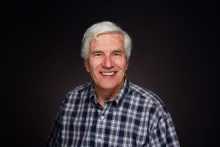
Steve Shafer was born and raised in Seattle. He graduated from Queen Anne High School in 1959 and later graduated from Ambassador College, Big Sandy, Texas in 1967, receiving a degree in Theology. He has been an ordained Elder of the Church of God for 34 years and has pastored congregations in Michigan and Washington State. He and his wife Evelyn have been married for over 48 years and have three children and ten grandchildren.
