Gary Petty
This transcript was generated by AI and may contain errors. It is provided to assist those who may not be able to listen to the message.
I'd like to begin sharing a thought that has been constantly on my mind. I believe God wants you to receive it as well. Let's turn to Ezekiel 22. I'll give you a little background of where we are when we read this chapter, or part of it at least. Ezekiel 22, verse 23. Judah is about to be punished and destroyed in great part by the Babylonians. Many would be taken to that captivity that would last 70 years, just like God had predicted. But at this time, people in Judah did not believe that. They thought they were going to survive. That Ezekiel was just one of those doom and gloom prophets. They had plenty of other prophets that contradicted and basically drowned out the voice of Ezekiel. He starts in verse 23. And the word of the Lord came to me, saying, Son of man, say to her, You are a land that is not cleansed or rained on in the day of the indignation. The conspiracy of her prophets in her midst is like a roaring lion tearing the prey. They have devoured people. They have taken treasure in precious things. They have made many widows in her midst. Her priests have violated my law and profaned my holy things. They have not distinguished between the holy and the unholy, nor have they known made known the difference between the unclean and the clean. And they have hidden their eyes from my Sabbath, so that I am profaned among them. So the Sabbath was being trampled. People were working on the Sabbath. Her princes in her midst are like wolves tearing the prey to shed blood, to destroy people, and to get dishonest gain. Her prophets plastered them with untempered mortar, which means mortar that has not been properly treated. So it stays on the wall for a while, but then it eventually will just flop over and be completely useless. They say they see false visions and divining lies for them saying, thus says the Lord God when the Lord has not spoken. So this happens today as well. You have people saying that. Do they keep God's commandments? No, they're not teaching that.
And you can always read Deuteronomy 13, where it tells you about how to distinguish between a true prophet and a false prophet, because the true one will tell you you have to keep all of God's laws.
The false prophet will not.
The people of the land have used oppressions, committed robbery, and mistreated the poor and needy, and they wrongfully oppressed the stranger. So I sought for a man among them who would make a wall and stand in the gap before me on behalf of the land, that I should not destroy it, but I found no one. He could not find one person to stand in the gap.
Therefore, God says, I have poured out my indignation on them. I have consumed them with the fire of my wrath, and I have compensated or recompense their deeds on their own heads, says the Lord God. And he certainly started that, and he would continue with it. Now, a little more background information. Gil's commentary helps us to understand the background. He says standing in the gap was something that sin had made, at which God was entering as a man of war to destroy the transgressors, one that should present himself to the Lord on behalf of the people, seek mercy for them, interpose between God and them, and act the part of an intercessor to pray for them, as Moses did for the people of Israel, and God would not destroy them.
And about the term found none, there was no reformer of them, no repairer of the breach, no restorer of paths to dwell in, no intercessor for them as Abraham for Sodom, Moses for Israel, or like Aaron that stood between the living and the dead to stay or halt the plague. The Kyle and Delicah commentary says, a description is given of the spread of the deep corruption among all classes of the people, and the impossibility of saving the kingdom is plainly shown. A picture is drawn of the moral corruption of all ranks, prophets, the priests, the princes, and the common people. In Ezekiel 9 verse 3, it says about just a few that were brokenhearted from the immorality that they saw around them.
Ezekiel 9 verse 3, it says, Now the glory of the God of Israel had gone up from the carob, where it had been to the threshold of the temple, and he called to the man clothed with linen, who is an angel, who had the writers in corn at his side. The Lord said to him, Go through the midst of the city, through the midst of Jerusalem, and put a mark on the foreheads of the men who sigh and cry over all the abominations that are done within it.
And so these would be protected, but they could not stay, they could not halt the punishments that would come upon the people of Judah. And so we have men and women in the Bible who have stood in the gap, who have not backed down, who have had the courage through God's guidance to stand up, to be there, to protect God's people. Notice in Ezekiel 13 verse 5, God again chastising Israel with all the teachings that he had had.
He had religious leaders, he had civil leaders, but they had all basically sold themselves. He says in Ezekiel 13 verse 5, he says, You have not gone up into the gaps to build a wall for the house of Israel to stand in battle on the day of the Lord. You have not stepped up. You have not prepared yourself spiritually for that. Going on to Psalms 106, Psalms 106, verse 23, it shows here what Moses did.
Psalms 106, verse 23. It says, Therefore he said that he would destroy them, talking about the Israelites in the wilderness, had not Moses, his chosen one, stood before him in the breach, to turn away his wrath, lest he destroy them. So there are times to step into the gap. It's not comfortable, it's not easy, but God calls us all to step into the gap in our personal lives, for our families, in our professional lives, and also in the church.
Stand up for God's ways, for those principles, and not be swept away with the immorality that we see in this society, with all the false beliefs that are surrounding us. Jeremiah chapter 5.
Jeremiah chapter 5.
verse 1.
It says, Run to and fro through the streets of Jerusalem, see now and know, and seek in her open places. If you can find a man, you know, a person, because it can also be a woman. If there is anyone who executes judgment, who seeks truth, and I will pardon her, though they say, as the Lord lives, surely they swear falsely. God is looking for people that he can rely on to keep his way in the midst of all the weakness and all the immorality, and we see it just rising up before God all the time.
Jeremiah chapter 15 verse 1.
So you see, this is a common theme that is mentioned. We have Abraham stepping up in the gap when God was about to destroy Sodom and Gomorrah, and he still grieved for that name, for those cities. He still asked God for the mercy to spare them some more time, to wait before the punishment would come. He stepped in the gap in Jeremiah 15 verse 1.
It says, Then the Lord said to me, Even if Moses and Samuel stood before me, my mind would not be favorable toward this people. Cast them out of my sight and let them go forth.
Here we have two of the great intercessors in the Bible. Moses and Samuel, prophet Samuel, said he had to intercede for God's people continually for God to have mercy on his people.
We certainly have to intercede, too, for the church, God to have mercy to help us, to strengthen us, strengthen those that need to lead. We need everybody's help to do so, not just a few. In Isaiah 59, we have the same analogy here being brought up. Isaiah 59 verse 15. It says, So truth fails, and he who departs from evil makes himself a prey.
You're persecuted if you depart from evil. Hasn't that happened when we started following God's way of life? We were persecuting when we departed from our evil ways. Then the Lord saw it, and it displeased him that there was no justice. And he saw that there was no man and wondered that there was no intercessor. Therefore, his own arm brought salvation for him, and his righteousness, it sustained him. So, God will step into the gap, but when he does, of course, he's going to mete out punishment. And so, that is what God is calling us to, to stand in the gap.
Now, more than ever, God has prepared us. He is guiding us. He certainly is testing us to be ready to stand in the gap. That is the person that protects his own from impending punishment and disaster. Notice the case of Moses, in particular, standing in the gap. Let's go to Exodus chapter 32. Exodus chapter 32 verse 10. It says, Now therefore, God is saying, after the golden calf incident, Let me alone that my wrath may burn hot against them, and that I may consume them, and I will make of you a great nation. God saw the heart of the Israelites. He said, Moses, this is going to be so tough. These people, after I gave them my commandments, just a little short while, they're dancing and fornicating in front of everybody.
And so, it could have been easy if Moses would have been an ambitious man. He was tired of all problems that he was having, all of the murmurings and difficulties. He could have said, yes, God, bring better people. One that's going to be more submissive, that are more entreatable. Yeah, bring me some people like that. Moses didn't do that. It wasn't about him. He knew where he came from. He came from the ancestors of Abraham, Isaac, and Jacob, and the promises made to them for their faithfulness. And so, Moses, in verse 11, pleaded with the Lord his God and said, Lord, why does your wrath burn hot against your people whom you have brought out of the land of Egypt with great power and with a mighty hand? Why should the Egyptians speak and say, he brought them out to harm them, to kill them in the mountains, and to consume them from the face of the earth?
Turn from your fears, wrath, and relent from this harm to your people. Remember Abraham, Isaac, and Israel, your servants, to whom you swore by your own self and said to them, I will multiply your descendants as the stars of heaven. In all this land that I have spoken of, I will give you descendants, and they shall inherit it forever. So the Lord relented from the harm which he had said he would do to his people. Moses turned and went down from the mountain, and the two tablets of the testimony were in his hand. The tablets were written on both sides, and so he did this. Now, some people think, well, it seems like Moses was better than God. No, that's not true. God, he can read the hearts. How many of those Israelites made it? None of them made it that were over 20 years old. And God could have resurrected them in the second resurrection.
But at the same time, God does not have a closed mind. He was impressed with the humility of Moses.
And he said, okay, Moses, I'll give them some more chances. I'll give them more chances.
And so here's a man that helped get Israel more chances. And so stepping into the gap is a way of extending mercy to intercede for those that are guilty, that have done wrong things, who deserve punishment. And yet you stand in the gap and you want to apply the mercy that you have received and to have it extended to others as well.
There are requirements to be able to stand in the gap. Let me read to you seven of those requirements.
First of all, if you want to be one of those persons that can step in the gap for God, you have to first seek God's will and not your own. If God sees that you're stepping in the gap for your own interests, it's not going to work. You're going to have to do it for God's will.
In Hebrews chapter 13 verse 21, Hebrews chapter 13 verse 21, who brought up our Lord Jesus from the dead, that great shepherd of the sheep. That's why we are just under shepherds through the blood of the everlasting covenant which he shed for us. He shed for us, making you complete in every good work to do his will, working in you what is well pleasing in his sight through Jesus Christ, to whom be glory forever and ever. So we are in the process of seeking and then following God's will. That takes time to understand what God expects to be able to do his will and not our own.
The second point is to prepare to be a good disciple of the Word. To prepare to be a good disciple of the Word. You have to know your Bible. You have to know those biblical principles.
As life goes on, a person should be able to say, I made the following decision based on this biblical principle. That you can go, just like a good lawyer, but not to some law books, but you can go to the Bible and say, I'm doing it because of this principle. Notice in 2 Timothy 2 verse 15, it says, Be diligent to present yourself approved to God, a worker who does not need to be ashamed, rightly dividing the word of truth.
So you know how to apply God's Word correctly. That you are a person that God says, yes, this person is approved. He's passed the tests. The word approved here was used to make sure that a coin was genuine. Remember how in the old west they would bite a gold coin to see if it was truly gold or not? Because gold is a little bit soft and sometimes they would mix it.
With some other alloy. And so when they bit into it, they knew, uh-uh, no, this one doesn't yield.
And so in a sense, God tests us and says, yes, this is a person that rightly divides my word of truth, knows how to apply it, knows how to use it properly.
Okay. The third principle is to preach with your example. Preach with your example.
1 John chapter 3 verse 18. 1 John chapter 3 verse 18. It's just a very simple phrase. Everybody can understand it, but boy, does it pack a wallop.
It says, my little children, let us not love in word or in tongue, but indeed and in truth.
It's easy to walk the walk or talk the talk, but it's not easy to walk the walk. That's where the term, the principle is here in the Bible. Yes, we can talk about love. We can talk about doing things, but where are the deeds? Where are the actions? Where is the following through to the visible results? So you have to preach with your example if you're going to stand in the gap for God. And of course, nobody does it perfectly. God is not calling perfect people or none of us would be here, but he's calling people that are on the path to perfection. They are improving.
And so we have to be improving our example toward others. We can't be going backwards. We can't be backsliding. We have to be making progress. The fourth principle, we have to back God's work here on earth. We have to back God's work here on earth. We have to have our heart in it. We have to really feel that what we're doing here in a church makes a difference and that we should be enthusiastic with what is being done. Notice in Philippians chapter 4 verse 3.
In verse 3, Philippians, now these were people, this was a small church, Philippian church in Philippi, and they had heard the apostle Paul was in prison.
He was chained night and day to a Roman soldier in a dinky smelly dungeon.
That was where the work of God was being done. He needed papyrus. He needed ink.
He needed something to write. Most of Paul's epistles were written inside prisons.
Prisons that today would not be comparable to anything today. They would be condemned.
Yet, some of the most powerful and deepest spiritual writings of all time were done out of a prison.
Instead of him lamenting his state, that every time he'd have to lift his arm, he remembers there was a chain there. That's why he said he was chained. And yet, notice what he says in verse 3, And I urge you also, true companion, help these women, Eodia, which he mentions here, Syntyche, help these women who labored with me in the gospel, with Clement also and the rest of my fellow workers, whose names are in the book of life.
A lot of these people risked their lives for what they did. They provided for Paul, so that these epistles would be in our laps today. What if they would have said, the work of God, how can that be done out of a prison? How could the whole thing is going down the tube very fast? They didn't. They believed in the apostle Paul. They believed in the work that they were to carry out. And we need to do the same thing today. How do you like it if that Eodia and Syntyche were just materialized here? We said, this is the church in Garden Grove, and this is what we are doing. And she would look at us and say, and you have a magazine that goes to the entire world, and did you have internet that basically canvases the whole world? And you have multiplied the message to the whole world? And they're not excited about it? We had one apostle stuck in a prison, and it was our duty to back him and to help him. How things would change, wouldn't it? They would tell us, and that probably scold us, about how complacent we have gotten.
Sometimes we say, well, my tithe. No, I don't know if I should send my tithe. I could do a lot more with my tithe, than send it to do God's work. Now, what would Yodia and Syntyche say about some of these things? Now, we have it pretty easy. They probably were just scraping very little things, just to bring the apostle a couple of parchments, which he could write the greatest letters virtually of all time. You know, God works in humble ways, and he sometimes just lets us do what we want to do, and puts up with us. But there could be so much more done if we had a different mindset.
The fifth point, start with small things. Take up small responsibilities. If you want to stand in the gap, that's not something that just happens overnight. You've been having to stand in the gap for a long time. Yes, I call them my Here I Am Servants. God calls. What do they say? Here I am.
What do you need to be done, Lord? They're not there saying, Oh, Lord, please, I'm too busy.
Why don't you call someone else? Oh, Lord, that's too tough. No, these are the Here I Am Servants. You see them throughout the entire Bible. Abraham, Here I am, Lord. Go to a place you don't know. You're going to have to have faith. He did something that most people in those societies would have been horrified. People didn't move around like they do today. He had to basically leave his whole identity, everything behind. What some of these others that were there. Here I am, Lord. Start with small things, with small responsibilities. Luke 16, verse 10.
Just take a little responsibility in the church, whatever it is. But do it well. Show God that you are worthy of it. You're going to do it with your whole heart. Luke 16, verse 10.
He who is faithful in what is least is faithful also in much. And he who is unjust in what is least is unjust also in much. Talking here basically about competence. You know, if a person is incompetent in small things, he's going to be incompetent in big things. If he's competent in small things, he will be competent in big things. More responsibilities can be given to that person.
But you have to begin small. You have to show God that you're going to be faithful in small things. And again, we have responsibilities to God to keep His commandments, to do things the right way. If we're faithful in those things, you'll start giving more responsibilities. We'll be able to stand in the gap more often. The sixth point, seek mentors. Don't try to do it on your own.
Find out who has stepped in the gap before and learn from them. See how they can help you become someone like that. In 1 Corinthians 11, verse 1, Paul simply said, imitate me just as I also imitate Christ. So who was Paul's mentor? Christ. In the Corinthians, they were supposed to follow Paul as he followed Christ.
Now, there are some qualifications here because he didn't say, follow me, and that's it. No, follow me as you see me following Christ. And as you see me not following Christ is implied. Don't follow me. If you see a bad example from me, don't follow that. In other words, don't be a blind follower. You owe God and you owe the church your faithful loyalty, your faithful dedication, but not your blind loyalty toward the church. It's not just what the church says to do whatever and you just blindly follow. No, you have to look in the Bible.
You have to see if it's according to Scripture. Before you decide to follow the example of the leader that you have before you. And finally, learn to intercede for others and grieve for the world.
Learn to intercede for others and grieve for the world. The world's in bad shape.
And we should sigh. I know there are comfortable things, but you look at the world and you see how much immorality is multiplying. What kind of situation your children are going to be raised in, our grandchildren. Now, I guess I'm going to have to start controlling my grandchild, what he sees at five years old on the internet. That was unheard of before.
Now, I don't want my little grandchild's innocence to be destroyed by the time they're at ten.
That they know everything about a woman by the time they're ten. That's going to destroy their innocence, their purity. They will not look at a woman with clean eyes, and that's very sorrowful.
They're going to lose a lot of their developmental balance and the way they can cherish their wives, as Denny Luker mentioned there. It's not just to love, but to learn to cherish. That's even a higher level. In Luke chapter 21 verse 36, Luke 21 verse 36, Christ said, watch therefore, and pray always that you may be counted worthy to escape all these things that will come to pass and to stand before the Son of Man. So here he talks about two things that we should pray for. We should be watching world events, seeing what things are happening, and be able to be counted worthy to escape all these things. Do we want to be castigated and punished for the rest of the world? Well, I don't think so. I don't think we want that for ourselves, for our families, and also to stand before the Son of Man, to stand longingly, rejoicing, and not being ashamed. Oops, he's come and I'm not ready. Isn't that a horrible thought?
Where are people going to run from Jesus Christ when he comes back?
So no, we're going to stand before the Son of Man, and we can say we stepped into the gap for God, for his church, for our families. So, I have another responsibility now in the church.
I will strive to stand in the gap. I will do my best with God's help.
I did not volunteer for this. I did not seek it. But if it has fallen on me, that's what I am committed to do. We all need to look at our lives and how we can stand in the gap.
Let's go to another scripture in Romans chapter 12.
Romans chapter 12. Because this is in a church of just a few doing much.
Notice in verse 3 of Romans 12, he says, For I say, through the grace given to me, to everyone who is among you, not to think of himself more highly than he ought to think, but to think soberly, as God has dealt to each one, a measure of faith. So, God provides everyone a measure of faith.
For as we have many members in one body, but all the members do not have the same function, so we, being many, are one body in Christ and individually members of one another. We're all connected. We all have a role in the church.
Having then gifts differing according to the grace that is given to us, let us use them.
We have been given gifts, and I believe everyone here that is converted, that has been called to God, is a gift to the church.
God does not add tumors to his body. He adds things that are useful and helpful.
Now, healthy tissue can become tumorous, but that is depending on the person. But God does not add tumors to the body of Christ. Everyone is a gift.
Everyone here can help, can sustain the church, and many of them feel, well, I don't have much to do. But you are a gift. Every person here is a gift to the church. You can serve, you can help, you can pray. Sometimes we have people that come here in wheelchairs. They are a gift to the church. Sometimes they are an example of how to persevere, how hard it is for them to come over here, for them to pray, for God to see how the church treats those that are not as blessed as such. But I see everybody here, and I see that you are a gift in the church, and can help and serve in the proper way.
I'd like to read a section as we conclude. It's always inspired me, and I'm not going to tell you when I received this section, but I've had it for many years. It's called Wanted, A Man Who Will Stand. And it was written by a United States Senator from Kansas, Frank Carlson. And he uses the man in the gap analogy.
He says, the subject of the text, and of all things, this was in the Senate, they actually had a group of Senators that would come for a Senate breakfast group. They meet every Wednesday morning to pray together and ponder the issues of a spiritual heritage, about 20 Senators. Today, they did that, they'd be branded as, oh, this is part of a state and religious subject. Why, this is terrible.
But they could do this. He says, the subject of the text I am using is Wanted, a man, a man who will stand. We have had men in both ancient and modern history who have had the courage to take a stand and stand firm. In Ezekiel 22.30, the Prophet says, and I sought a man among them who would build a wall and stand in the breach before me for the land that I should not destroy it. God is searching for men and women who are unique, thoroughly dedicated and filled to running over with his spirit. I'm editorializing, he's using a couple religious terms that are more evangelical. God and the world need men who will stand in the gap. Modern Americans have accepted and are tolerating conditions never before permitted by any generation of our ancestors.
Never have so many hated on such flimsy cause. Never have so many denounced so many with such little knowledge. Never has the dollar been as important as it is today. Never has wild pleasure or physical abandonment been considered fitting human behavior as it is today. Never have public officials been so brazen and open in seeking the vote of the people through promises of things that are morally and spiritually wrong. Never have ministers of the gospel turned their pulpits and their pastoral duties toward direction of the social order to the near exclusion of the salvation order as abounds in our time. This was written 41 years ago.
Then he says, these three doctrines, universal conformity, universal change, and universal criticism, have left our nation without moorings or anchors. We are being tossed about in the sea of doubt and uncertainty that is about to sink the ship of God before our very eyes.
And again, I put, God today is looking for, and continue on with what he has said, men who are not for sale, men who are honest, sound from center to circumference, true to their heart's core, men who will stand for the right if the heavens totter and the earth reels, men who can tell the truth and look the world right in the eye, men who neither brag nor run, men who never flag nor flinch, men who can have courage without shouting it, men in whom the courage of everlasting life runs still, deep and strong, men who know their message and tell it, men who know their place and fill it, men who know their business and attend to it, men who will not lie, shirk or dodge, men who are not too lazy to work nor too proud to be poor, men who are willing to eat what they have earned and wear what they have paid for, men who are not ashamed to say no with emphasis and who are not ashamed to say, I can't afford it. God is looking for such people. He wants those to unite together around a common faith who can join hands in a common task and who have come to the kingdom for such a time as this.
And those people, brethren, are us.
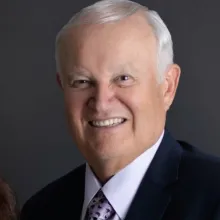
Mr. Seiglie was born in Havana, Cuba, and came to the United States when he was a child. He found out about the Church when he was 17 from a Church member in high school. He went to Ambassador College in Big Sandy, Texas, and in Pasadena, California, graduating with degrees in theology and Spanish. He serves as the pastor of the Garden Grove, CA UCG congregation and serves in the Spanish speaking areas of South America. He also writes for the Beyond Today magazine and currently serves on the UCG Council of Elders. He and his wife, Caty, have four grown daughters, and grandchildren.