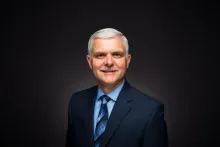



Randy Urwiller
This transcript was generated by AI and may contain errors. It is provided to assist those who may not be able to listen to the message.
God's fall Holy Day season, and frankly, any time, whenever God's Holy Days draw near, it's always an appropriate and wise time, a time that's appropriate and wise for us, I should say, to be evaluating our relationship with God and our progress in becoming more like Jesus Christ. Whenever God's Holy Days come around, and we know they all come around annually every year. And so, at the night towards the upcoming fall Holy Days, in today's message, I'd like to draw our collected memories and understanding about three aspects in our lives with God. We're going to recollect our Father's calling. We're going to recollect our need to persevere in our walk with God. And we're going to remember our goal, our goal of salvation, eternal life in the kingdom of God. And so, the title of the sermon is, Stay the Course to Salvation. Stay the Course to Salvation.
And so, I'd like to begin then with referring back to our very special calling, our calling from our Heavenly Father. God, our Father, has called you, and He's called me and others now, in this age, prior to Christ's return, to be among His first fruits of salvation. In God's Holy Days and festivals, we reveal His plan for humanity. And, of course, we also understand from His plan of salvation, the Holy Days, we understand in due time, God will give every human being, every human being, a full opportunity to know Him and His way, and then to choose whether to submit to Him. He's called some now in this age to make that choice. Among the billions of people now living, I'm not talking about the billions that have lived before us or those that have come later, of the billions of people now living, the Father has called many to salvation, and He's called us. But, of course, out of those many, He's called. Only few have chosen. Only few have welcomed what we call His invitation or calling to salvation. Only a few have committed themselves to Him. Now, these who meet calls are nothing special by and of themselves. In fact, Paul in 1 Corinthians 1, 27 reminds us that God is just called the foolish and the weak things of the world. That's who He works with. And I feel like that's a good category for me, the foolish and weak things of the world. Of ourselves, we are nothing. We who accept God's calling choose to live a life of sincere repentance and humble obedience to God. As we heard in the sermon, to keep God's commandments, to follow His way of life with God's help, we strive hard at that. We willingly place ourselves under His authority. We are baptized, which represents our putting to death our old sinful ways of life and our commitment to a new life, to becoming a new creation through faith, living faith in Jesus Christ, our Savior. And of course, then we receive God's Holy Spirit by the laying on of hands. We are the chosen of God, and we must remain faithful. And as God's plan reminds us, when Christ returns to establish the kingdom on earth, we, along with all of God's elect who have ever lived, will be resurrected as immortal spirit beings. We will receive God's gift of salvation.
Now, having committed ourselves totally to God, we accept the challenges, the cost, as it is, that come along with living God's way. And Jesus Christ forewarned us that there is a cost to this walk in life. Let's look at Matthew chapter 10. Matthew chapter 10.
Jesus forewarned us that in making this choice, it's a good choice, but it will have its own cost, its own burden, you might say, but it's a far lighter burden than the burden we would currently bear without Christ. Matthew 10, verse 35 through 39, Jesus said, For I have come to set a man against his father, a daughter against her mother, a daughter-in-law against her mother-in-law, and a man's enemies will be those of his own household.
Some of us have experienced that to one degree or another. Verse 37, He who loves father or mother more than me is not worthy of me, and he who loves son or daughter more than me is not worthy of me. Nowadays, I hate to say it, but we almost have to put pets in there now. Some people love their pets, their animals. You watch what's on TV. I'm just saying, think about it. People's misplaced priorities. Verse 38, And he who does not take his cross and follow after me is not worthy of me. He who finds his life will lose it, and he who loses his life for my sake will find it.
In this world, putting God first and foremost in our lives and striving to love God and neighbor God's way, it surely brings trials. It brings trials upon us. We live in the world, but we're not of the world, and that causes problems, and we're trying to walk God's way of life. But as we also read, though, in James chapter 1, verse 2 through 4, James 1, verse 2 through 4, being faithful in making God the priority, the priority in our life, that also brings about joy another godly fruits.
James 1, verse 2, James writes, My brethren, count it all joy when you fall into various trials, knowing that the testing of your faith produces patience, but that patience have its perfect work, that you may be perfect and complete, lacking nothing. Now these fruits listed here of God's righteousness, there's other lists, other places, of course, but these fruits of God's righteousness belong to those who remain committed to God and to those who labor to become more like Him. We just don't sit and wait for God's Spirit to suddenly start producing in us.
We have to be putting God's way of life into action, and this also takes patience and perseverance, persistence. In Luke chapter 9, verse 62, Jesus talks about this persistence. He talks about the cost, understanding what's ahead of us. Jesus described our need for persistence and our commitment to God in terms of plowing, many different metaphors He might have used, and He did use. But here, Luke 9.62, Jesus said to him, No one having put his hand to the plow, and looking back, is fit for the kingdom of God.
The plowman, why did the plowman put his hand to the plow? He put his hand to the plow because he had to control it being pulled along by a yoke of oxen, let's say. And he had to focus on what he was doing because when you're plowing, you're preparing the ground for planting the seed. You're doing that so you will have a future harvest. You will have something to eat. You have something that your family and your neighbors can live on. If you're not focused on the plowing, looking behind you as it says here, looking back, you're not going to be doing a very good job of plowing.
And I've probably said this before, but a lot of us don't. I don't know how many people really plow in this congregation anymore, but maybe you rode a till. You rode a till your garden. If you're trying to road a till a garden and you're looking back and doing everything else, you're not focused, you are going to have problems, my friends. You may even run over your toe. So you have to be focused on what you're doing, and not just what you're doing, but the plowman was doing this because of the future he wanted.
He had to work now in order to receive that harvest in the future. It's not going to come up all by itself. I know we have a lot of gardeners here, and you know what I'm saying. And so we must stay focused on the task before us. One had a labor to prepare the ground, so the seeds received that bountiful harvest, and so when we commit to God, we put our hand on the plow.
We commit ourselves to God. We will do his work. We will serve him. We will love our neighbor. We will love God. We will move forward. And so God's annual Holy Days reminds us that God's plan of salvation is analogous to planting and harvesting. We understand that. And as a plowman must labor behind a yoke of oxen and so seeds and hopes of an abundant harvest, so we must labor spiritually day after day and season after season.
And I look at this audience. I see many of you have been working season after season. Some of us are turning white-haired, though we're still plowing. We're still moving forward. We must stay focused always on God and our goal of salvation. We heard reference in the sermon today that Matthew 6, 33, sick first the kingdom of God and his righteousness. Brethren, that was never meant to be a cliche, a motto, something we just put up on poster board during the feast.
That is life-saving instruction from Jesus Christ to us. Seek ye first the kingdom of God and his righteousness. You have to do both. We need to talk about, be reminded of, our need to persevere. We need to persevere. Be persistent. Let's turn to Matthew 11, 28-30. Again, I'm speaking of things we know, but we have to be reminded. We have to focus on these things, especially as the Holy Days draw near any of God's Holy Days.
Matthew 11, 20-30. To walk with God, to walk with God, to persevere with God, Jesus specifically here had an invitation to those with the near to hear.
Jesus invites us to bear his yoke. It's recorded. He said, Come to me, all you who labor and are heavy laden, and I will give you rest. Take my yoke upon you and learn from me, for I am gentle and lowly in heart. And I can hear the song going through my head as I read this, the lyrics. And you will find rest for your souls, for my yoke is easy, and my burden is light. That word easy is the Greek word krestos, c-h-r-e-s-t-o-s, and it means pleasant. It means manageable. It doesn't mean we will never have a burden if we put Christ's yoke on. Oh, it's a burden, but it's a much far better burden than you will ever have carrying anybody else's burden, certainly the burden of sin and other things. So what did Jesus mean then? Take my yoke upon you and learn from you. Let's look at this a little more closely. I think you may know what a yoke is. Okay. A yoke is a wooden bar by which the farmer joined two animals, such as yoke, oxen. Let's put it that way. You put together two oxen with the yoke across their shoulders, typically across their neck on their shoulders. They did that. You know why farmers did that. So instead of one ox by itself pulling, you had two. Two oxen pulling together, sharing the load, sharing the burden, pulling together. It was, and it's still this common practice in parts of the world where they still use oxen, for the farmer to yoke a young ox, new to the yoke, to an older trained ox. If you ever read Laura Ingle Wilder's Little House on the Prairie, that's what Pa did. He took the young ox and yoked it with the older ox, the older trained the younger. And so in time you can understand then that the yoke became a symbol of servitude or subjection to authority, and it also became a symbol of discipleship. It also became a symbol of discipleship. According to the New Testament study Bible, page 227, Judaism had the well-known image of the law as a yoke. The law was a yoke. Taking up one's yoke was used of studying with the rabbi. Taking up one's yoke upon you thus means become my disciple or student and thus emphasizes learn of me. Thus my yoke refers to the yoke Jesus lays on his followers by which he makes them fellow workers with him and therefore with God. In a sense, we are being yoked with Jesus and we're being trained by him as we walk beside him, and he helps us pull the load. We don't have to carry the load by ourselves. Christ is with us in that if we allow him. So when Jesus said, my yoke, my yoke, he was also making a distinction among the various yokes one might bear. Do you know what some of those other yokes can be?
I think you do. You see, every human being is under a yoke. Every human being is under servitude or subjection to authority of some type, whether it's slavery to sin or slavery to Christ. We are under someone's yoke. Some of those yokes are unjust and harsh, such as we see in the world of men under Satan's control. Some yokes are rather just and kind. Human beings are typically under subjection, and as Paul wrote in Colossians 2, 20, to the basic principles of the world, the basic principles of the world, to sin and death. And of course, some of us have to deal with bosses who doesn't have a boss of some sort. Some authority over us is governments, parents, bosses, teachers, and so it goes. Even today, though, Jesus urges those who have an ear to hear to smoke to his yoke, his teachings, his way. Now, it's true within the historical context of Matthew's account, as we read here, as we read here in Matthew 11, in the historical context, when Jesus said, take up my yoke, he was urging his listeners to submit to the yoke of his teachings, his teachings, as opposed to the heavy yoke of the scribes and Pharisees. If you hold your place here, let's turn to Matthew 23, verse 1 through 4. Matthew 23, verse 1 through 4. He had a specific audience, specific context in mind at that time, but it goes beyond just that time. And so in Matthew 23, 1 through 4, here we read how Jesus likened the Pharisees to people who overburdened their animals, people that would overburden their oxen, so to speak. Matthew 23, verse 1.
Then Jesus spoke to the multitudes and to his disciples, saying, The scribes and Pharisees sit in Moses' seat. Therefore, whatever they tell you to observe, that observed and do. They were the ones in authority. You needed to do what they said. But, he said, do not do according to their works, for they say and do not do. For they bind heavy burdens hard to bear and lay them on men's shoulders, but they themselves will not move them with one of their fingers. The New Testament study Bible explains that the Pharisees interpreted God's law, quote, in a very legalistic and demanding way. They kept adding more requirements and loaded these on the people. And then they invented traditions and interpretations for themselves, which allowed them to avoid any real obligation so they could do as they pleased, unquote. Interesting.
They had made a two-tier system of keeping God's law. I don't know if that sounds familiar to anything you've heard. They had made a two-tier system of keeping God's law, one for thee but not for me. That's not God's way. That's never been God's way. Acts 10.34 tells us that God is no, in King James, it's God is no respecter of persons. God's law is the same for everyone.
And so in Matthew 11, 28 through 30, then, Jesus is contrasting his teachings, or my yoke. His yoke is easy, comparatively speaking, and it's pleasant and manageable as compared to the Pharisees teachings, which is a heavy yoke, a great burden to the people. To take on Christ's yoke requires willingly choosing to submit to his authority and teachings. And we do that through repentance from our sin, obedience to God's law, and we do it in faith. We do it with the help of God. And that's how we walk with Christ, being trained by him to become like him. Remember those two oxen and yoked symbolism metaphor? And so we must keep repenting of sin, keep striving to put on Christ's mind, keep practicing love towards God and neighbor, even as Christ magnified the spiritual meaning and intent of God's law, and he lived it. He was a living example, and it's recorded for us in Scripture. Of course, Jesus' use of a yoke to represent one's willing submission to God, that that is was not a new idea. Many references to yoke, to yokes in the book of Jeremiah. For example, let's look at Jeremiah chapter 5 verse 5. Jeremiah 5 verse 5.
Here in Jeremiah verse 5, Jeremiah tells how the leaders of Judah, they knew God's law and way. This is back in the kingdom of Judah prior to its captivity by Babylon. He tells how the leaders of Judah knew God's law and way, but they refused to submit to God's authority. They wouldn't do it. Now they gave it lip service, but they didn't actually do it. They refused. And so we read, I will go to the great men and speak to them, for they have known the way of the Lord, the judgment of their God. But these have all together broken the yoke and burst the bonds. They broke the yoke. The bonds refers to that sometimes a leather strap or rope that connected the yoke to the oxen. It was under the heads, the chins of the oxen. They broke the bonds or the bands. They broke out of their yoke. So like stubborn oxen, they rejected God's authority. Verse 23, let's still in Jeremiah 5, judgment upon them, but this people have has a defiant and rebellious heart. They have revolted and departed. And what was the result of their defiance? Verse 29, still in chapter 5, God says, shall I not punish them for these things, says the Lord, shall I not avenge myself on such a nation as this? And of course Jerusalem was destroyed. The people sent to captivity in Babylon. The temple was burned down. You see, God expected his people to submit to him and to keep his commandments. He still does. That has never changed. Never changed. But he does not just want his people, want his people just to keep his law in a technical or superficial way. In Micah 6, verse 7 through 8, Micah 6, 7 through 8, Micah declared that God wants his people to move beyond a simple letter of a law obedience and onto the living the deeper spiritual meaning of his law. Just as Jesus Christ would teach in time to come, and Christ teaches us still to this day, of course. So Micah 6, 7 through 8, Micah's right after Jonah, if that helps. Micah 6, verse 7, 7, will the Lord be pleased with thousands of rams, ten thousand rivers of oil? Shall I give my firstborn for my transgression, the fruit of my body for the sin of my soul? And in verse 8, here's the answer. He has shown you, O man, what is good, and what does the Lord require of you but to do justly, to love mercy, and to walk humbly with your God? And we have heard that message many, many, many times from Dr. Ward and other men through the decades, justice, mercy, and faith. That's what God wants of us. Keep his law, yes, in the way Christ taught it, lived it, to leave nothing out. And so, with the help of God's Spirit, faith, and will, we can bear Christ's yoke. Jesus said that his yoke is easy or pleasant. It is bird and light. He did not promise we would not bear a burden, but his burden is light compared to what the world offers. And in 1 John 5, verse 3, 1 John 5, 3, we are assured that keeping God's commandments is not a grievous burden. The Apostle John was inspired to write 1 John 5, 3, for this is the love of God, that we keep his commandments. And his commandments are not burdensome. They're not a grievous burden. Do you know when God's commandments are a burden to people? When are God's commandments a burden to us? When we want to stick to our human nature. When we want to do what we want to do. When we want to just give in to our selfish nature, then God's law seems to be a burden. But it's not when we're repentant and we're working with God and submitting to him. So just as an ox can stubbornly resist and break its yoke, so can we resist God's loving authority. We must be guarding ourselves then against our self-centered ways, against our human nature.
And it's not very pleasant to consider, brethren, but it's possible for those who commit to God, including you and me, it's possible for us to drift away from God. It's even possible for us to fall away from God entirely and lose salvation.
We find several warnings in Scripture about this very thing. Hebrews chapter 2, these three happen to be in the same book in Hebrews. Let's look at Hebrews 2, verse 1 through 3. Hebrews 2, 1 through 3.
Here we read Hebrews 2, verse 1, Therefore we must give the more earnest heed to the things we have heard. We hear every sap of things I'm talking about today. We must give more earnest heed to the things we have heard, lest we drift away. For if the words spoken through angels prove steadfast, and every transgression and disobedience received a just reward, then how shall we escape if we neglect so great a salvation, which at the first began to be spoken by the Lord and was confirmed to us by those who heard him? What does it mean to you to drift away? Have you ever driven down the interstate? You ever watch a trucker in front of you or a car ahead of you? They start to drift. You know what I'm saying? They're going down. All of a sudden, they start going close to the edge, and then what happens? Yeah, they hit the bumpity bump things.
Well, to show my ignorance, I call them bumpity bumps, but that's not what they're called. They're called rumble strips. Rumble strips can go across the highway, like they're in Hawkins right now. They work on the road, but rumble strips can also be rumble lines. They go along the edge of the highway, the interstate in many places. They're called rumble strips. Let's see. Some people, I looked it up. Some people call them alert lines, because they wake you up. Some call them drift lines. My favorites, they're called woo-woo bars.
A woo-woo bar? Why? I don't know. I guess because it sounds like woo-woo-woo-woo-woo-woo as you hit them. Some call them judder bars. J-u-d-d-e-r. Judder bars. God gives us judder bars. Did you know that? God gives us rumble strips.
He does it through conscience. He helps us to get those twinges of guilt when we know we're doing something we should not be doing. Maybe it's doing something our parents told us not to do, something we heard in a sermon. We're not supposed to be doing this, and then we catch ourselves doing it. We give into a temptation that guilt's there. That's a rumble strip. We don't want to rumble with God.
And what happens if we ignore those twinges of guilt? Well, then God may step up discipline. Maybe we're punished. Maybe we start suffering. Not all suffering is because of God's discipline. We understand that from the book of Job, from his example. But, brethren, neither is your suffering because you're so righteous, or I'm so righteous. When we're suffering, things aren't going well, and it's becoming more consistent. Maybe we're in Job's situation, or maybe there's something we're sinning, and we need to evaluate ourselves. We need to pause and really pray about it, and fast, and try to understand what's going on. Maybe we're drifting away in a way that God's trying to keep us from actually committing. How can we drift away from God? It's pretty easy. Romans 8-7 tells us that the carnal mind is enmity against God. That means we are naturally hostile to God. We don't like God's way, not of ourselves. God helps us to learn to like it. He gives us his Holy Spirit, and we start, the more we live God's way, the more we tend to like it and want to keep growing in it. That is what God gives us, his Spirit. Part of the reason we have his Spirit in us, that helper. So our human nature is hostile to God. It can cause us to drift. How about society? Does society have any impact on us? Pay attention to what's going on in our schools right now with our children. Some are sending our kids to schools. That's on our minds. As parents, grandparents, and others, we need to have a heightened awareness of what's going on and help our children to have that heightened awareness, too, to make sure that we all stay, our families stay close to God. We don't drift away. And of course, Satan's trying to sway all of us away from God, always. He doesn't stop. He's that prowling lion trying to get the little zebra, us. We wander away, drift away from the herd. He's waiting to pounce and destroy us. So unless we stay focused on God, and you've heard many instructions about this, as I have heard it, we've got to stay focused on God through prayer, through studying, through pondering His Word, through fasting, through godly fellowship, iron sharpening iron. Yes, it's good to have food together. Yes, it's good to talk together. But we need to be striving to go beyond the chit-chat. But you know what? It does take chit-chat to build a rapport. It's hard to get down to the nimidi spiritual conversations we want if we don't first take time to spend time with one another, to get to know one another, to learn what our hobbies are. But as we become closer to each other that way, we have that rapport, then we can delve more deeply. We might even be able then to talk about problems together, possible solutions according to God's word and way. And so we also need to be yielding to God's Holy Spirit to stay close to God. When we do these things, it'll be harder for us to drift away from His teachings. It'll be harder for us to break that yoke. It'll certainly be harder for us to neglect our commitment to God and unto salvation because it is possible. Look at Hebrews 6, verse 4 through 6.
For it is impossible for those who are once enlightened and have tasted the heavenly gift and have become partakers of the Holy Spirit and have tasted the good word of God and the powers of the age to come if they fall away. It's possible, the if there. It suggests there's some choice in here. If they fall away, the Greek word for that phrase is parapetto, and it means to deviate, to turn aside. There is a choice in this. It doesn't necessarily happen by accident unless you just become so neglectful and uncaring, but even that would be hard to argue. That's purely accidental. So it's if they fall away to renew them again, to repent, and since they crucify again for themselves, the Son of God, and put Him to an open shame. It's also look Hebrews 10, 26, 27. Hebrews 10, 26, 27. You see, ultimately, unless one sincerely repents from sin, sincerely repents from deviating from God, from drifting from God, he or she will receive God's judgment in the lake of fire. Verse 26, Hebrews 10, 26. For if we sin willfully, willfully means knowingly, stubbornly, purposely, what am I saying? You know what you're doing. You're making a conscientious choice. You're aware of what you're doing. There comes that point. For if we sin willfully, after we have received the knowledge of the truth, there no longer remains to sacrifice for sins, but a certain fearful expectation of judgment and fiery indignation which will devour the adversaries. Clearly, the idea of once saved, always saved is not biblical. It is not biblical. You can reject God's grace. You can reject his salvation. And so again, we must guard against our human nature and the allure of society and the cunning lies of Satan. However, we can be comforted knowing that Jesus Christ's perfect sacrifice can cover any sin. Christ's sacrifice can even cover the sin of departing from him. So if one wants God's forgiveness, if you want God's forgiveness, and genuinely repent, God can and will forgive. The sin that God cannot forgive is the one we do not repent of, the one we refuse to repent of, the one we willfully hold on to and will not give up.
And that gets back to that if we sin willfully, stubbornly, purposely. There's a choice. Somewhere there's a choice that we're refusing to repent. But if we sincerely repent, and sincerely want God's forgiveness, then we repent. Get right with God, and he can and will forgive us, regardless of one's sins. God moved John to write that promise found in 1 John 1, 1 John 1.
And again, these are things good for us to recall and to remember whenever God's holy days, holy seasons come every year. 1 John 1.9. If we confess our sins, he is faithful and just to forgive us our sins and to cleanse us from all unrighteousness. We have to go to God through faith in Jesus Christ for repentance of our sins, forgiveness of our sins. And so again, yes, life is filled with trouble and sorrow. For whom is it well? For nobody, really. But it's so much better for us when we're with God, when we're letting ourselves, allowing ourselves to bear Christ's yoke. Every human being has problems, burdens, troubles, but how much better life is when we submit to that easy or easier, light, pleasant yoke of God's loving authority and law. And under God's yoke, we can bear up with our life's burdens, everyday life and existence, with that living hope, that wonderful future before us, for those we love, not just for ourselves, but that future for ourselves, for the ones we love, and for every human being. And when and where will that be? The kingdom of God. In the kingdom of God. We must stay focused on our goal, the God's kingdom. That is the reality before us. When we get angry and irritated by what's going on around us, and well we should if we are following God, we're wanting God's kingdom to come, we should be irritated and angry about what we see going on in the world around us. But we have to remain focused on the reality of that coming kingdom. In Mark 1, verse 14 through 15, Mark 1, 14, 15 tells us from the very start of Jesus' ministry, the kingdom of God was the heart of the gospel he proclaimed. It's part of what we rehearse every year.
Mark 1, 14, after John was put in prison, Jesus came to Galilee preaching the gospel of the kingdom of God and saying, the time is fulfilled. The kingdom of God is at hand. Repent and believe in the gospel. Repentance and belief. You've got to believe God, do what he says. It's not enough to simply say, oh, I believe Jesus saved me. Well, that's true, but you've got to show it in how you live by repenting of sin and submitting to the commandments of God following Christ's instruction and way of life. Acts 1, 3. Acts 1, 3 tells us, Acts 1, verse 3 tells us that between his resurrection until the moment he ascended into the clouds, Jesus Christ continued speaking about the kingdom.
It was all about the kingdom. Acts 1, 3, referring to the disciples, to whom he also presented himself alive after his suffering by many infallible proofs, being seen by them as disciples during 40 days, and speaking of the things pertaining to the kingdom of God. That was his focus. Revelation 11, 15. Revelation 11, 15. When Jesus Christ returns to earth, when Jesus Christ returns to earth, what will be declared in heaven?
Any guesses? I'm teasing. The kingdom of God. Revelation 11, 15. Some translation says, the kingdoms of this world others say kingdom. New King James says kingdoms. Revelation 11, 15. Then the seventh angel sounded, and there were loud voices in heaven, saying, the kingdoms of this world have become the kingdoms of our Lord and of his Christ, and he shall reign forever and ever. What's my point? The kingdom of God has always been the focus of God and Christ. So must it be ours. Seek ye first the kingdom of God and his righteousness. It is not a cliche. It is not a cliche. Why persevere in faith and obedience under Christ's yoke?
Well, so that we would be among God's first fruits of salvation. That's what our calling is for. That's what we're invited to be a part of. So that then we will be resurrected at Christ's return as immortal spirit beings. Let's read Paul's words, reassuring words, in 1 Thessalonians chapter 4. 1 Thessalonians 4 and 14 through 17. He gives a longer discourse in 1 Corinthians 15, but let's read here. 1 Thessalonians 4, 14 through 17. Paul writes, For if we believe that Jesus died and rose again, even so God will bring with him those who sleep in Jesus, sleep being a type of a symbol of death. For this we say to you by the word of the Lord, that we who are alive and remain until the coming of the Lord will by no means precede those who are asleep. For the Lord himself will descend from heaven with a shout, with the voice of an archangel, with the trumpet of God. And the dead in Christ will rise first, and then we who are alive and remain shall be caught up together with them in the clouds to meet the Lord in the air. And thus, we shall always be with the Lord. And so, of course, now we're just mortal fleshly beings. Pinch yourself to stay awake and to prove that you are fleshly. We're just fleshly, mortal beings right now. But then, if we remained under Christ's yoke, ever faithful, ever committed, never giving up, no matter what, of God's grace, we will be changed. We will be resurrected to mortality and meet Jesus in the air. And why else must we gladly persevere under Christ's yoke and to the end? Why else? If that's born enough. It's so that we might also reign under Christ with Christ as kings and priests in the kingdom of God. That's God's promise and our hope and goal. Revelation 1 verse 6. Revelation 1 verse 6. We're going to hear a whole lot more about these in the weeks ahead. In many ways, I'm looking at this as kind of waving the green flag. It's time to start turning our minds towards the coming fall holy days. Revelation 1, 6. And he, Jesus Christ, has made us kings and priests to his God and Father, to him be glory and dominion forever and ever. Amen. Likewise, Revelation 5 verse 10. Revelation 5 verse 10. Though God's elect, his firstfruits will meet Christ in the air, they will not reign in the air. We're not going to heaven. That's not where we're going to be when Christ returns. We'll meet him in the air, as we read in 1 Thessalonians 4, 17. But we're going to be always with the Lord. Where is he going to be? That's right. On earth. Scripture is clear. Revelation 5, 10. And have made us kings and priests to our God, and we shall reign on the earth. Finally, Revelation 20 verse 6.
Blessed and holy is he who has part in the first resurrection. Over such the second death is no power, but they shall be priests of God and of Christ, and shall reign with him a thousand years.
When we remain faithful in our calling, our commitment to God, stay in submission to God in his authority and way, God will reward us abundantly. Those seeds of good works, faithfulness to God, all that work we put in in this lifetime, and being faithful to the end, we're going to receive a harvest. We're going to receive wonderful, beautiful things because of God's grace. And the only reason we're doing this is because God called us. God started this with us. We had nothing to do with the start of this. It was all God. When I was first learning about God's way of life many years ago, all I thought about was the thousand years, the kingdom, the kingdom, the kingdom. Is that all there is? We know. Everything, whatever. My brain can't comprehend that, but let's look. After the thousand years, God's kingdom on earth is done. As is earth, physical earth and all, there's more. Revelation 21, verse 1 through 7. These are some of my most... I turn here a lot when I need to refocus and I need encouragement, and I'm sure many of us do. Revelation 21, verse 1. Now John says, Now I saw a new heaven and a new earth, and his vision, for the first heaven and the first earth had passed away. Also there was no more sea. Then I, John, saw the holy city, New Jerusalem, coming down out of heaven from God, prepared as a bride adorned for her husband. And I heard a loud voice from heaven, saying, Behold, the tabernacle of God is with men, and he will dwell with them, and they shall be his people. God himself will be with them and be their God. And God will wipe away every tear from their eyes. There shall be no more death, nor sorrow, nor crying, nor crying. There shall be no more pain. For the former things have passed away. And then he who sat on the throne said, Behold, I make all things new, all things new. And he said to me, Write, for these words are true and faithful.
And he said to me, It is done. I am the Alpha and the Omega, the beginning and the end. I will give the fountain of the water of life freely to him who thirst. Brethren, are we thirsty? Yes. Verse 7, He who overcomes shall inherit all things, and I will be his God, and he shall be my Son.
And so we're to inherit all things. Now, what does that mean, all things?
Sometimes we say the universe, everything that God has created, everything that's out there, things that our minds can't grasp. But don't neglect what he also says, and I will be his God, and he shall be my Son. We shall be God's children and his divine family, sons and daughters, God's divine and eternal family. And so God has called you and me now to be firstfruits of his kingdom.
You ever wonder why? Why you? Why me? Why us broken down, messed up, sinful people, all our aches and pains and woes and things that we worry about and wonder about. All our foibles and weaknesses. Why has God called you and me now to be firstfruits of his kingdom? Because God is love. It takes a lifetime. I perhaps understand what that means, and I'm sure there'll be more to learn after that, too. We can do nothing during God's grace, nothing during his precious calling, his understanding. He gives us repentance, he gives us forgiveness, he gives us Holy Spirit. Of course, we have our part to play in all this. We have to keep yielding and submitting to his authority and he gives us salvation. All is God's precious gift through Jesus Christ's death for our sins. However, as we've already read, we can disqualify ourselves from receiving salvation if, if it's a choice, if we don't keep ourselves yoked to Christ, always learning from him. Never allow ourselves to come to the point where we think we've heard it all. Don't even let that thought be in your mind. Don't even let it come off your lips. Oh, I've heard that. I've heard all this before. In my opinion, that's a dangerous position to put yourselves in. Be very careful of thinking you know it all. And so we have to keep learning from him, continue repenting from sins, seeking forgiveness, striving to be like Christ, and how hard it is, I know, to give up old habits and routines as are most sins. How difficult to be rid of selfishness and pride. We ache to be rid of it. And guilt and suffering, shame, hopelessness, fear of death and dying, how burdensome that all is. That is a burden. But how much better to repent of sin and submit to God's loving authority and mercy through Jesus Christ, receive our Father's total forgiveness? How much lighter the burden of love, justice, mercy, faith, along with that hope of salvation?
Just think about it someday and let it overwhelm you. Let you have joy from God in knowing these things. We must not doubt, brethren, that we can stay the course. We don't have to cross those rumble strips and go into the ditch and neglect our salvation. God will do all he can, but we do have to do our part. We must not doubt that we can stay the course to salvation. Philippians 1.6. Let's look. Very encouraging. Very encouraging. Very encouraging. Let's never forget what God inspired Paul to tell you and me and everyone whom God has called and who choose to commit to him. Never forget what God inspired Paul to tell you and me. Philippians 1.6. Paul wrote, Being confident of this very thing, that he who has begun a good work in you will complete it until the day of Jesus Christ.
The Father himself began this good work in you and me, the good work unto our salvation, and he will complete that work in us and in all his saints if we allow him to, if we keep choosing to reject him in nature and to yield ourselves to God's nature. We have our part and God will do his.
And so God's holy days are soon upon us. It didn't seem like we just did this not long ago. The feast, fall feast days. It's wonderful they're here coming up again. As we prepare physically and spiritually for those days, then let's be most grateful to our loving God for our calling, for helping us to persevere in his way, and certainly for his promise and our hope and our goal of the kingdom of God. Yet, at the same time, let us keep evaluating ourselves. Let us keep judging ourselves. We must not allow ourselves to drift from God and his law, nor need to collect our salvation. We must stay the course to salvation. And let me read one last verse for you. I'll conclude with these words from 2 Peter chapter 1 verse 10 through 11. 2 Peter 1 verse 10 through 11. Therefore, brethren, be even more diligent to make your call and election sure. For if you do these things, you will never stumble, never stumble. For so an entrance will be supplied to you abundantly into the everlasting kingdom of our Lord and Savior, Jesus Christ. Let us stay the course to salvation.
