
Greg Thomas
This transcript was generated by AI and may contain errors. It is provided to assist those who may not be able to listen to the message.
Well, thank you again, Art, and once again, happy Sabbath, brethren. We had a wonderful Thanksgiving. Joe and Sue Horton were kind enough to invite us over their home on Thanksgiving Day, and we were able to celebrate the holiday with them and other family members and enjoyed it very, very much. And I hope you had a great Thanksgiving as well. I'd like to begin the sermon today with a question, and here is the question. What is one of the things that pleases God more than sacrifices?
Well, for those of you who are biblical scholars, you may have thought, hmm, a comment that Samuel made to Saul in 1 Samuel 15, where he said, obedience is better than sacrifice. Remember when he said that? And that's true. Obedience is better than sacrifice. But there's something else, another thing that is better than sacrifice. Let's allow David to tell us what it is in Psalm 69 and verse 29, if you'll turn there with me. We'll see that David not only said these things, but he made sure that these things were part of the temple worship. Psalm 69 verse 29. This obviously is a period of time in which he had gone through a trial.
He had been discouraged. He was poor in spirit. He was obviously struggling with something, and this was his perspective, the right kind of perspective, when we're going through a trial, when we're going through a problem. He says, continuing or picking it up, I am poor and sorrowful. Let your salvation, O God, set me up on high. So he said, I might be feeling low. I might be going through some difficulties right now.
But, God, you set me up on high. You helped me to lift up those spirits, helped me to be more positive and more enthusiastic. Verse 30. I will praise the name of God with a song, and will magnify him with thanksgiving, with an attitude of being thankful for all the things that we have in life. Verse 31. And also will please the Lord better than an ox or bull, which has horns and hooves.
So he said to go to God and to magnify God with thanksgiving is better than a sacrifice. Verse 32. The humble shall see this and be glad, and you who seek God, your hearts shall live. For the Lord hears the poor and does not despise his prisoners.
That's better translated, that verse from the New Century version. It says, the Lord listens to those in need and does not look down on captives. When we are captives, the sin, or when we are oppressed in life, when we're going through trials and difficulties, God doesn't forsake us. God still looks down on us with love and compassion.
And continuing here in verse 34, let the heaven and earth praise him, the seas and everything that moves in them. So David tells us that having an attitude of thanksgiving towards God pleases him better than animal sacrifices. The importance of thankfulness is repeated throughout the book of Psalms. And of all the times to live in human history, why is being thankful so important?
It's so important because of the culture that we live in today. Paul had said, we're familiar with the Scripture in 2 Timothy chapter 3, he said that one of the qualities of those in the latter days would be unthankful. He has a whole list of selfish qualities that people would have because the love of many would wax cold. And one of those was they would become unthankful.
And what happens with our human nature is if we're not thankful, then that unthankfulness eventually becomes an attitude of entitlement. And that's not a good thing because an attitude of entitlement does not appreciate the gifts, the wonderful blessings, and the enormous love that God gives to his people. Let's take a look while we're already in a book of Psalms, Psalms chapter 30, beginning in verse 1.
Psalm chapter 30 and verse 1. He says, because he was a man who went through a lot of trials in his lifetime, he says, I will extol you, O Lord, for you have lifted me up. One of the reasons that David could be lifted up when he went through a trial, when he experienced things, problems that were either self-induced or problems that just came upon him because of circumstances, because he was a thankful individual.
And if you look at the book of Psalms, you see the word thankful, thank you, thankful, God of thankfulness. You see the phrase of thanking God over and over again in the book of Psalms. That was one of his positive qualities. He said, for you have lifted me up and have not let my foes rejoice over me. O Lord, my God, I cried out to you and you healed me. So God is our healer.
O Lord, you brought my soul up from the grave. You have kept me alive that I should not go down to the pit. So he implies he was very sick. He implies he was a death's door. Sing praise to the Lord, you saints of his, and give thanks at the remembrance of his holy name. He says, every time you think of God, every time the thought about God entered your mind, our natural reaction should be thank you, God. As a matter of fact, our instinctive reaction through God's Holy Spirit should be one of thankfulness for all the things that we've been given each and every day of our life.
He says, and give thanks at the remembrance of his holy name. For his anger is but for a moment his favor is for life. So even when we're corrected, and certainly when we go through physical human trials, when you look from the perspective of eternity, you will see that anger or trial or punishment is but for a moment in human eternity.
But his favor, the grace, the love, the blessings of God go on forever. They go on for a lifetime that exceeds our physical lifetime, even to the lives that we will be given as a gift of God. He says, weeping may endure for a night, but joy comes in the morning. Now, in my prosperity, I said, I shall never be moved. He says, now that I've got some good things and I'm stable again and I'm back on track, I'm not going to let go of this thought.
I'm not going to let go of this understanding that I need to give thanks at the remembrance of God's holy name. David understood discouragement and trials, and some of us are going through trials. He also understood that all of those things in his life were for a purpose. He learned to give thanks every time he thought of God. He knew that even when he received a spiritual spanking, and sometimes we will do things in our Christian walk, and God will give us a spiritual spanking because he loves us, but even when he does that, it's for a moment in time to be followed by God's favor and to be followed by joy.
Let's recall the original words in a hymn that we sing here in our congregation. If you turn to Psalm 136 verse 1, if you'll turn there, we have a hymn. There's no need to open the hymnal. We're very familiar with it. It's called, His Mercy Never Fails. Remember that one? That's on page 79. His Mercy Never Fails. And here are the words that inspired that hymn that we sing. Psalm 136 verse 1.
David writes, O give thanks to the Lord, for He is good. His mercy endures forever. O give thanks to the God of gods, for His mercy endures forever. He says, O give thanks to the Lord of lords, for His mercy endures forever, to Him who alone does great wonders, for His mercy endures forever. Again, I want you to notice the attitude of thankfulness that David had towards God and towards all the things that God had given him.
This is something that you and I should also be demonstrating continually. And in our secular world, I think it's good that we set aside at least one day in our secular culture to remember, a day called Thanksgiving, to remember that we have a lot of things to be thankful for, especially those of us who live in the Western world. Let's turn with me, if you would, to see something that David did before he died. 1 Corinthians chapter 23 and 25. 1 Corinthians 23 and 25.
How important was being thankful to David? Well, he said to himself that I'm going to make sure that long after I'm dead and gone, that every day God is given thanks in His temple. David made plans for this to be done, for the future temple that his son Solomon would build. Here it is, 1 Chronicles chapter 23 and 20, picking it up, verse 25. For David said, The Lord God of Israel has given rest to his people, that they may dwell in Jerusalem forever. And also to the Levites, that they should no longer carry the tabernacle or any of the articles for its service, because no longer would they be carrying it around in a tent, as they had done for many years, setting up in a tent.
Now they would have a temple, a permanent structure. It's kind of how we felt almost two years ago when we got at least a building. And we're no longer the Gypsy Church of God. Every week bringing in sound gear, every week bringing in stuff, taking it down, this is taking it home, taking it someplace, that we had a home of our own. We could just leave our sound system up, leave our hymnals, leave our chairs.
It is a wonderful thing when you have that blessing. David felt that way about all the work that the Levites had done. Verse 27, for by the last words of David, the Levites were numbered from twenty years old and above, because their duty was to help the sons of Aaron in the service of the house of the Lord, in the courts of the chambers, in the purifying of all holy things, and the work of the service of the house of God, both with the showbread and the fine flour for the grain offering, and with unleavened cakes, and what is baked in the pan with what is mixed and with all kinds of measures and sizes.
Alright, here's the key, verse 30. Here's what they were to do, to stand every morning to thank and praise the Lord likewise at evening. So David, almost on his dying breath as an old man, as he's planning what the temple that he's not allowed to build because he was so bloody, but as he's planning the organization of this future temple, he instructed that there would be Levites who would stand every morning and praise the Lord and likewise at every evening to begin a day and to end a day.
That's a pretty good principle, I think, in our prayers. It's a pretty good principle that you and I should live by. The first thing is that we wake up and we come to consciousness. It's a good thing. One of the first things we do is say, Thank you, Father, for the gift of another day of life. Thank you very much. And at the end of the day, before we wind up our day to say, Thank you, Father, for being with me this day.
Thank you for your glory. Thank you for all the wonderful blessings that you shower upon me. According to Holman's Bible dictionary, here's what it says about thanksgiving from a theological perspective of the Bible. It says, quote, Gratitude is directed towards God generally in response to God's concrete acts in history. Thanksgiving was central to Old Testament worship. Sacrifice and offerings were not to be made grudgingly, but with thanksgiving.
The psalmist valued a song of thanksgiving more than sacrifice. And we read about that in the 69th chapter of the book of Psalms. Continuing, it says here, David employed Levites to invoke to thank and praise the Lord. And it says, Pilgrimage to the temple and temple worship were characterized by thanksgiving. Thanksgiving was expressed for personal and national deliverance for God's faithfulness to the covenant and for forgiveness. All creation joins in offering thanks to God.
Continuing the last paragraph here, it says, Thanksgiving is a natural element of Christian worship. And it is to characterize all of Christian life. Each Christian expressed thanks for Christ's healing ministry, for Christ's deliverance of the believer from sin, and for God's indescribable gift of grace in Christ. So, then being said, how thankful are you for all the things that you have been given in life?
Do you spend time thinking about how thankful you are? Or do we live a life of it's all about me, give me more, give me more, give me more? A couple of quotes I found regarding thanksgiving. The first was by one of my favorite comedians as a child, Phyllis Diller, the late Phyllis Diller. Here's what she said. She said, My cooking is so bad my kids thought thanksgiving was to commemorate Pearl Harbor. Okay. Here's something a little more profound than that. It's by Charles Haddon Spurgeon. Here's what he said. He said, You say, if I had a little more, I would be very satisfied.
You make a mistake. If you were not content with what you have, you would not be satisfied if it were doubled. So if you're not satisfied with what you have, you would not be content. We're going to try to adjust this microphone.
Something keeps popping here. I'm not sure why. Farther up, you think? Okay. I'm being instructed to put it farther up. We'll see if this works any better. So let's talk about being thankful. First, as an American, as a Westerner, I'd like to give you some things to think about.
This is from UNICEF. Over 3 billion people, more than half the world's population in the year 2010, live on less than $2.50 a day. One billion people live on less than $1 a day. One billion people. More than 80% of the population on Earth lives on less than $10 a day. Now, to put that in perspective, the average American spends about $7 a day on entertainment alone. And we spend more than twice of that on transportation. Just in our cars, insurance, gasoline, everything it takes to go to work, shop, do all the things that we do. Here was a fact that kind of stunned me.
You know, we have debates in our country about income equality. That is nothing compared to what you find statistically in our world. And if you want to know one major reason why the kingdom of God needs to be restored on Earth, I'd like you to think about this. That is the world's billionaires, which are around 500 people on the entire planet.
The world's billionaires account for 7% of the world's gross domestic product. The low-income countries, which equal about 2.5 billion people, account for 3.3%. Of the world's gross domestic product. In other words, about 500 people on Earth, a total of 500 people, have twice the amount of wealth as 2.5 billion people. Now that's income inequality. That's something that the kingdom of God will change and will restore the balance.
Unfortunately, many of those billionaires were former dictators of nations who looted their nations while they were the so-called leaders of their nations and our billionaires to this day long after they're out of power.
According to the UN, the world income gap is growing. In the 1960s, the 20% of the world's people in the richest countries had 30 times the income of the poorest 20%. By 1997, that figure had risen to 74 times as much. So from 20% more to 74 times as much, and it continues to increase. We're pretty blessed people, aren't we? Did you enjoy your Thanksgiving dinner? I hope you did. I know I enjoyed mine. But it's sobered by the fact that every year 15 million children die of hunger. Every 2.43 seconds, someone dies from starvation in the world.
If this sermon lasts one hour, 1,480 children will die during the one hour that it takes me to give this sermon, die of starvation, lack of food. Are we feeling blessed yet? In the United States, life expectancy, the average life expectancy, is 78.2 years. Men only live 75.6 years. And women have now reached the 80-year mark. The average life expectancy of a woman in the United States is 80.8 years. How about some other areas of the world? We'll start with South Africa, which is 178th on the list.
The average life expectancy in South Africa is 49.3 years old. Let's go to the other end of Africa, Liberia, which was founded by freed slaves from the United States. They went to Liberia and founded a nation. The average life expectancy is 45.7 years old.
Are we blessed? Afghanistan. We have a war in Afghanistan, and these figures aren't the result of people being killed. It's the result of poor health care and too many women living in rural areas and dying in childbirth. That's affecting this figure. But the average life expectancy in Afghanistan is 43.8 years old. Zambia, where we have some congregations, we have brethren in Zambia, is 42.4. And in the nation of Mozambique, the average life expectancy is 39.2 years old.
Do you think we're blessed? My. Are we blessed? As you can see by these statistics, those of us in the Western world are very blessed. And we all have so much to be thankful for. Unfortunately, as humans, if we are not thankful and if we don't remind ourselves constantly of being thankful, we tend to take things for granted.
And instead of being thankful, we become entitled until that which we should have been thankful for is taken away from us. I had friends who were not thankful for their wives until the day their wives left. I have friends who were not thankful for their jobs until the day they got fired. Some people are not thankful for the scruffy old shoes that they have. And they're embarrassed by their shoes until they no longer have a foot that they can put in a shoe.
You see, because of human nature, we tend to just take things for granted. And ultimately, that makes us entitled, or at least we think that we are entitled. I'd like to take a look at an example from the prophet Jonah. If you'll turn to Jonah 2. An example from the prophet Jonah. God called Jonah to fulfill a specific task. I think you're familiar with it. It was the preacher warning message to the city of Nineveh.
Jonah didn't want to do it because he knew prophetically that Assyria would be the land that would come and crush his beloved Israel. So he didn't want them to repent and he didn't want to do his job. So he decided to run in the opposite direction. He got on a ship and he sailed towards Tarshish, which we think by modern terms was most likely Spain, what we call Spain today. And while he was in the sea, of course, God caused a great catastrophe in the sea and storms came and the ship was rocking back and forth.
And they're all about ready to die. And Jonah reveals the fact that it's all happening because of him. And so ultimately they try to row harder. The storms get worse and worse. The whole ship is about to be broken apart in the storm and they throw Jonah overboard.
And Jonah has a prayer about his experience. And what happens to Jonah? Well, Jonah actually should have drowned. On God's mercy, he is actually saved by being swallowed by a very large fish. But he's thrown into this raging sea and he's drowning and he was, we'll see his analogies as we go down and how he describes, he literally goes down into the water deeper and deeper and deeper and he can't even see light anymore. And he sees that underneath the oceans, they're like mountains under the oceans as well. And he finally hits bottom.
Even seaweed is being wrapped around his head. And this experience gave him plenty of time to think and pray. Think about it. He didn't have a flashlight with him. Might have been rather smelly inside of that gut of a fish. So he had lots of time to think about who and what he was. And here's his prayer.
Jonah 2 will begin in verse 1. Then Jonah prayed to the Lord his God from the fish's belly. And he said, I cried out to the Lord because of my affliction and he answered me out of the belly of Sheol I cried and you heard my voice for you cast me into the deep, into the heart of the seas and the flood surrounded me. All your billows and your waves passed over me. Then I said, I've been cast out of your sight, yet I will look again toward your holy temple.
The water surrounded me even to my soul. The deep closed around me. Weeds were wrapped around my head. Verse 6. I went down to the moorings of the mountains, the earth with its bars closed behind me forever. He thought he was dead. Natural reaction considering what he was experiencing. You have brought up my life from the pit, O Lord my God, when my soul fainted within me, when I was just about to blackout, when it was curtain's time, when I was about ready to check out.
I remembered the Lord and my prayer went up to you into your holy temple. Those who regard worthless idols forsake their own mercy. When you worship idols, idols can't give you mercy because they don't really exist. False gods don't really exist. They cannot extend mercy to you when you're going through an affliction.
But the true God can. This is what Jonah experienced. Verse 9. But I will sacrifice to you with the voice of thanksgiving. Now you might say to yourself, what does he have to be thankful for in that dark, smelly environment of a fish's gut? What he has to be thankful for is he deserved to die. And God actually saved him by providing this large fish to swallow him. He says, I will pay what I have vowed. Now the inference, obviously, here is that while he's sitting in that loving environment that he probably promised God, I'll write, I'll do what you said.
All right? I may be thick-headed, but I get it. I'll bet you want me to go to Nineveh and preach, don't you? And he made a vow. He said, if I get out of this alive, I'll do what you asked me to do, God. Okay, I get it. Salvation is of the Lord. Verse 10. So the Lord spoke to the fish and it vomited Jonah on the dry land. He was thankful for his life being spared by God. He would have been familiar with a type of offering given in the Old Testament.
We won't go into great detail. It's actually in Leviticus 7, and what it was, it was called a thanksgiving offering. And the purpose of it was to demonstrate one's thankfulness because it was considered so important to God. Thankfulness and being thankful was so important that a special offering was instituted in the Old Covenant to do that. Let's take a look at some New Testament scriptures. Matthew 15, verse 36. And see where our Savior Jesus Christ regularly thanked God, usually when he prepared to eat.
Matthew 15, verse 36. We'll just take a look at a couple of examples from the book of Matthew. Matthew 15, verse 36. It says, And he took the seven loaves and the fish, and he gave thanks, broke them and gave them to his disciples, and the disciples gave to the multitude. You'll find in the New Testament in the Gospels, Jesus regularly gave thanks before he ate.
He thanked his father for food. Something as simple that we take for granted here in our Western world, something as simple as food he gave thanks. Matthew 26, verse 27. What does he do as he institutes the new symbols of the Passover, the New Covenant Passover? What does he say, or what is recorded that he said? Matthew chapter 26, verse 27. Matthew chapter 26, verse 27.
It says, He took the cup and gave thanks. You see, Jesus Christ was very thankful to his father for all the many blessings that he had, including just a simple meal, and in this case, some symbols that would be very profound and would be repeated for thousands of years by his disciples. So that was the example of Jesus Christ. He was thankful. How about Paul? Well, all of Paul's letters, every one of the letters of Paul, with the exception of Galatians, begin with a thanksgiving.
Paul just did it naturally. He was a very thankful person, and the reason the exception is the book of Galatians is that Paul was quite peeved when he wrote the book of Galatians. If you read Galatians, you will see the unvarnished Paul, strong, saying some things that could be considered by some as offensive. He just wrote the book of Galatians. He was fed up, and he was angry when he wrote the book of Galatians. But every other book that he wrote, he always began with thanksgiving. Let's take a look at just one example.
1 Thessalonians, Chapter 1, beginning in Verse 1. And this is typical of what most of the writings of Paul are like as you read the first couple of chapters. 1 Thessalonians, Chapter 1, and Verse 1. 2 Thessalonians, Chapter 2, and verse 1.
It says, Paul, Silvanus, and Timothy, to the church of the Thessalonians in God the Father and the Lord Jesus Christ, 1 Grace to you and peace from God our Father and the Lord Jesus Christ, we give thanks to God for you all, 2 making mention of you in our prayers, remembering without ceasing your work of faith, labor of love, and patience, 3 in the hope of our Lord Jesus Christ, in the sight of God our God and Father, knowing, beloved brethren, that you're election by God.
4 So Paul prayed for the brethren. He was thankful for them. How about us? Are we praying for each other? Are we thankful for each other as a spiritual family? 5 I'm thankful, very much so, to all of you, and especially to those of you who serve the congregation in different ways to help us remain healthy and stable.
6 To give you an idea, there are some who come here early, and they're greeters, and their job is to come and just welcome people as they come through the door to fellowship for a while before Sabbath services start. 7 I'm thankful that we have people who are greeters and want to do that. We have sermonette speakers. These are individuals who take time out during the week to prepare to give us quality sermonettes like the one that we heard today. 8 It takes a lot of work to have good information in a sermonette, something that is helpful and biblically oriented.
It takes a lot of time to do that. 9 I'm thankful that God has blessed the Cleveland congregation in that way. 10 We have song leaders, and being a song leader as they have all discovered is not as easy as it looks. 10 Sitting from a chair, saying, oh, that's easy, you just get up there and wave your arms. 11 It's a lot more difficult than getting up there and waving your arms. There are a lot of things to remember.
There's a lot of order required of being a song leader. 12 I'm very thankful for those who volunteer and take their time to be song leaders. 13 We have a couple of pianists who serve the congregation, and that adds so much to our ability to worship God. I'm very thankful for them. 14 I'm thankful for those who bring flowers in. We occasionally have different flowers in front of the podium on many weeks. 15 There are people who make that sacrifice and make something up special, bring something from home, and I'm very appreciative of that because it adds a lot to our Sabbath service.
16 We have those who are ushers, and what they do is help us to find seats. They help us if we're struggling with something. They may come and suggest that we move something over or that we make seats for other people.
17 They're here to serve us in that way as ushers. 18 We have a sound crew, and we have learned in our congregation that it just about takes divine intervention every Sabbath for our sound to work. 19 We have learned the principle of living faith on our sound system, but there are, I think, four individuals who rotate and serve in our sound system, on the sound board and other things, to help us to be able to record our services and have services every week.
20 There are people here who are called the last man out, and sometimes they want to go home. They're tired. They had a long Sabbath service. They fellowshiped, but their rule is that Sabbath, they have to be the last person out of the building. 21 They have a checklist. They have to make sure the thermostat's off. Sign up. Run is in. All kinds of little things they have in a checklist.
Sometimes they'd rather go home. 22 They're patiently standing here as we fellowship some more. They're just patiently waiting for us to get out so they can go home. 23 So, bless you, those who are on that duty last man out there, those who do weekly maintenance. 24 And three out of four weeks, people come in here, usually on a Thursday or Friday, and they straighten the chairs and they vacuum the floor. 25 And they might pick up papers and even vacuum the seats in the restrooms. We have free internet access provided by the people we leased this building from because they were so impressed that we cleaned their bathrooms.
26 And because of that, we're saving $40-50 a month on wireless internet because of the Christian example that we set for them. 27 And we have people who come in here and do that every week. And we just come in and we just expect it to be clean, expect it to be nice, and it usually is. 28 But somebody has to do that. And I certainly thank you for that. 29 We have a number of people that rotate and bring in coffees and snacks for us to eat, and that enhances services a lot. 30 And we thank you for bringing in the snacks.
Most people bring in snacks voluntarily. They take it out of their own food budget. They just show up. They bring snacks in. And that is deeply appreciated. 31 We have Teen Bible Studies, and thank Mr. Graham for conducting the Teen Bible Studies.
We have youth education classes. We have a number of people who have been teaching our youth during the YEP children's classes, educate them about the Word of God. A special thanks to all of them as well. 32 And we occasionally have Women's Club, and different women have been volunteering the lead or guide of club meetings, and I thank you for that. 33 The point is that we all need to be thankful for those who participate in God's way of life, who will become our spiritual brothers and sisters.
34 Though we may not have the same personality as everyone else, though we may not always see eye to eye in every little thing as everyone else, we should be deeply appreciative that God has given us His Church and given us each other as a gift. 35 While you're in 1 Thessalonians, let's go to chapter 5 and verse 14. 1 Thessalonians 5 and 14.
36 As I mentioned earlier, Paul was very good at being thankful, like David. 37 Having an attitude of thankfulness was one of his strengths. You don't find that attitude is deeply embedded in the writings of John or Peter or others, Jude or others, but you certainly find it over and over again in Paul's writings. Here's what he says in chapter 5, beginning in verse 14. He says, Let's continue verse 15.
Are we thankful for everything? The clothes that we have? The church that we have been called into? The food that we eat? The utilities that are available for us at home? Our family? All the material blessings that have just been showered upon us? Are we thankful for everything? Paul states that part of the will of God is that we give thanks in everything. That's what he says here. Are we fulfilling the will of God? If you want to know what the will of God is, one of the things that is definitely the will of God is verse 18. And everything gives thanks for this is the will of God in Jesus Christ for you. If you want to fulfill God's will, if you want to fulfill it, let's be thankful in everything. Let's take a look at the book of Ephesians, chapter 5 and verse 17. Paul is basically going to say the same thing only in different words. He's going to say again that the will of God is to be thankful.
Ephesians, chapter 5 and verse 17.
Paul says, Therefore do not be unwise, but understand what the will of the Lord is. And do not be drunk with wine, which is dissipation, but instead of being filled with a spirit, you know, wine, be filled with the spirit, capital S. Speaking to one another in Psalms and hymns and spiritual songs and singing and making melody in your heart to the Lord. You know, when you're thankful, when you're truly appreciative for the things that you have, it's easy to have a song in your heart. When you're truly and deeply are so thankful for everything you have, it is easy. We go on through the day whistling or having a song in your heart. Verse 20, giving thanks always for all things to God the Father in the name of our Lord Jesus Christ, submitting to one another in the fear of God. So once again, a little different words, but once again, Paul tells us that if you want to know what God's will is, if you say to yourself, what could I do more to conform to God's will? It's really easy. Step one is be thankful in all things, including the trials that we go through, because they really do make us stronger. They make us a better people. They teach us patience. They teach us a deeper level of faith to rely on God as we learn to wait. Let's go to Philippians chapter 4. Philippians chapter 4, another writing by Paul to the church Philippi. Philippians chapter 4, and we'll begin in verse 4.
Philippians chapter 4 and verse 4 says, Rejoice in the Lord always again, I say rejoice. I want you to notice he says, Rejoice in the Lord always, even when I'm going through a trial, even when I'm scared, even when I'm uncomfortable with this. Absolutely. That's what he says. Rejoice in the Lord always. Again, I say rejoice. Verse 5, Let your gentleness be known to all men. The Lord is at hand. Be anxious for nothing. Just relax. Have faith. Leave difficult things in God's hands. Be anxious for nothing, but in everything by prayer and supplication with thanksgiving, let your request be made known to God. And the God of peace, and the peace of God which surpasses all understanding, will guard your hearts and minds through Christ Jesus. So again, Paul emphasizes the importance that our prayers should be seasoned with an attitude of thanksgiving and appreciation for all that we've been given both physically and spiritually. So what are some of the things we have to be thankful for? Well, we can be thankful for physical life because that's a gift. At one time we did not exist. There was no existence for us. And then we became aware of our own and were granted by the process of God human minds that have the ability to think and reason and enjoy the pleasures of life. Physical life is a gift. We should be very thankful for the gift that God gave us. Unfortunately, millions of fetuses are aborted every year. They'll never have that gift. They don't have that gift like you do. It's a gift, something we should be thankful for. Most of us relatively in our congregation have good health. We've been blessed, even though many of us have have health, have chronic diseases, including yours truly. Relatively, we're a healthy congregation. We have some seniors in their 80s and 90s who can't walk well anymore and can't hear well anymore, but primarily as a congregation. There aren't too many of us that are on oxygen tanks or confined to wheelchairs all day, except for the agent and the elderly. We pretty well are a very blessed congregation, a very blessed people. How about our calling? Are we thankful for the fact that of all the billions of people on earth, that God opened your mind to His truth and to His way of life? You may not know this, but God was preparing you for years in advance through the things that you would experience to prepare you for the day when that light would begin to go on. And you would say, ah, that makes sense. Ah, what I've been doing doesn't conform to the Bible. Ah, this is truth. And when I look into the Scriptures, it's there. I should be doing this. That's a gift. That's something we should be thankful for. We are what God calls first fruits. It's that small first harvest that God has had throughout the ages. And we have the joy of participating in that and ultimately the gift of eternal life. You know, most people in this world, they don't know why they were really born. There are many religions. Some look up to the stars at night and say, is there really anything behind all this existence? Is there really any meaning to the life that I have? Is there really any purpose for me being in this world? But you and I, through the Word of God, have been blessed by God's grace to know the reason that we were born and the fact that God is working in each and every one of us so that we can serve Him for all eternity as members of His family.
How about your family? We have physical families and maybe not every relative we have is someone that we deeply respect. But aside from that, we all have physical family members that we can be very thankful for because they add richness to our life and they make up what we call family and all the good things that come with family. The sharing, the fellowship, the encouraging of one another when times are tough. Family is important. Our physical families, we should be thankful for them. Of course, we've been given a spiritual family when we came into God's church.
So not only do we have a physical family, we now have spiritual brothers and sisters that we can fellowship with, that we can share our lives with. Are we thankful for that? I hope that we are. As Americans, we live in a unique nation. First of all, we have basic freedoms that many other countries don't have.
We have the basic freedom to come here in this building on Saturdays and worship. And we don't have to worry about armed guards breaking through the door and hauling us out as what happened with people in China, if they were trying to worship contrary to what the government desires. We have basic freedoms in this country that also include the ability to worship as we desire. We live in a nation in which one can produce wealth by getting a good education and working hard. In this country, someone can go from nothing and become very successful, materially speaking. That's available in the United States. We relatively live in a nation of safety.
Yes, we have criminals and we have problems with crime in the streets, but for the most part, we live in an attitude and environment of safety. We have a safety social net. If someone becomes diseased and can't work any longer, if someone needs help with food, if someone needs help with virtually anything, we have a social safety net to help people who are struggling and who are dealing with issues in life.
We should be thankful for that because we may need that safety net someday. We have shelter. On a very cold night like we had last night and we had little snowflakes drifting around our house, we had shelter at my family. We weren't living in a tent. We had a nice home to live in. We have good food to eat. We have relatively clean water to drink. When it gets too cold, we can do something that up until 100 years ago, the greatest kings and queens in Europe could not do.
We can walk up to a little box on our wall and we can change it and tell it to heat the room to 68 degrees. You know what? Magically, warm air starts coming out of these holes all over the walls in the house and we're warm. We smile and we think, what's the big deal about that? Well, the Crown Princess of Europe 100 years ago did not enjoy those kinds of luxuries. I've been to Britain and I toured castles. In a castle, virtually every room had its own fireplace.
Why? Because when you got six feet away from the fireplace, you were freezing to death because they didn't have central heat. They also didn't have clean water in many cases. But we have those luxuries. We've been blessed with heat and if it gets a little too hot, many of us can turn something on, all called air conditioning. Or we can at least go to the mall if we need to cool off. I mean, we have it good. Those who live in this lifetime in human history, we should be thankful.
We have clothes and we have unbelievable material blessings. And our culture people who have hobbies, they can enjoy their hobbies because they have a little disposable income to have some hobbies. We have technologies that are unbelievable. Forty years ago, if you wanted to find out some complex issue about something, you virtually had to go to a university and get a PhD to understand the complexities of virtually any topic. Now you can get on a search engine. You can go to the greatest universities on Earth and find out the most complex subjects. You can learn a language. You can learn virtually anything because of the modern technologies that we have. Are we thankful for that? We have phones.
We have cars. Many of us have our own personal toys, whatever. That may be. And as someone told me once, the only difference between a little boy with his toy and a man with his toy is the cost. Obviously, the man's toy cost a whole lot more. But we are a very blessed people, and we need to be thankful in all things.
Please, let's not become like the rest of the world. Let's not develop an attitude of entitlement. Let's just not take everything that we have for granted, because God can so easily allow it all to be taken away from us. We need to pray with an attitude of thanksgiving. We need to come to Sabbath services, and we need to have an attitude of thankfulness for each other, and for the material possessions God has given us in his congregation, and for his calling, and for all the good and wonderful things that we've been given. One final scripture, Colossians chapter 3 and verse 15. Colossians chapter 3 and verse 15. Here's yet another example of Paul emphasizing the importance of you and I to be thankful for the things that we have. Colossians chapter 3 and verse 15.
Are we thankful? Are we really and truly thankful for the things that we have? Verse 16. Verse 16. Verse 17.
All right? So he sets us up for a statement.
So in our secular society, in our nation, we set aside one whole day a year to give thanks to God for the bounteous blessings that he gave to the United States, and other nations have different days, and they have their own version of thanksgiving. But unlike the typical American who now looks upon thanksgiving as just an opportunity to gorge out on Turkey and to slowly fall asleep with the drone of the Detroit Lions on TV, them choking in another football game, let us, as God's people, as God's children, be thankful each and every day of the year for everything that he has given us, because we truly are a blessed people. If you had the good fortune of being born in the United States, you won the lottery. If you had the good fortune of immigrating to the United States, let me assure you that you have won the lottery. It is a blessing to be in this nation, to be in a nation of such great wealth and opportunity. But even more important than that, most of you won the lottery twice. It's rare that people win the lottery even once in their lifetime, and all of you won the lottery twice, because not only did you end up in a great nation such as the United States, but God opened your mind to his way of life, and he gave you his Holy Spirit, and he called you to be his disciple. What a great opportunity! What a great blessing to have won the lottery twice in life. Have a wonderful Sabbath day, and let us always remember to be thankful in all things.
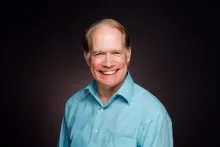
Greg Thomas is the former Pastor of the Cleveland, Ohio congregation. He retired as pastor in January 2025 and still attends there. Ordained in 1981, he has served in the ministry for 44-years. As a certified leadership consultant, Greg is the founder and president of weLEAD, Inc. Chartered in 2001, weLEAD is a 501(3)(c) non-profit organization and a major respected resource for free leadership development information reaching a worldwide audience. Greg also founded Leadership Excellence, Ltd in 2009 offering leadership training and coaching. He has an undergraduate degree from Ambassador College, and a master’s degree in leadership from Bellevue University. Greg has served on various Boards during his career. He is the author of two leadership development books, and is a certified life coach, and business coach.
Greg and his wife, B.J., live in Litchfield, Ohio. They first met in church as teenagers and were married in 1974. They enjoy spending time with family— especially their eight grandchildren.

