

Paul Moody
This transcript was generated by AI and may contain errors. It is provided to assist those who may not be able to listen to the message.
As we get older, as most of us are, as I know I am, we face various age-related issues and problems. As we know, our physical bodies weren't meant to last forever. In Psalm 90, which is a prayer of Moses, the man of God, Moses lived at the age of 120, and yet God inspired him to say this as recorded in Psalm 90, verse 10. I'm just going to quote a verse here from that particular psalm, Psalm 90, verse 10, where Moses wrote, The days of our lives are seventy years, and if by reason of strength they are eighty years, yet their boats is only labor and sorrow, for it is soon cut off and we fly away.
Life seems to be very short, especially as you get on up in your years, as the years seem to go faster rather than longer, and all of a sudden you realize, wow, I'm in my seventies. And you realize you're kind of getting towards the end of this physical life. You don't think that way too much when you're 40s or early 50s, but you do as you start getting up in your 70s and past that time. Now, many today are blessed to live into their 80s, and some are even blessed to live into their 90s, and still have relatively good health at that time.
My great-grandmother, Keek, lived to be 99, and she was active, right up until the last few months of her life. And my mother actually lived to be 99 also. She died just short of her 100th birthday, was pretty active right up until the last few months of her life, pretty much. And two of my grandmothers lived well into their 90s, besides that.
But, you know, others died much earlier, including some faithful members of God's church. I've known some faithful members of God's church who died relatively young. And some of those looked to God for healing. But many do not be, and they're not healed, they die.
Including some young people who look to God for healing, not necessarily they don't die, but they have things, situations, or problems that need healing, and that's really greatly, in a very adverse way, affecting their life. And yet, they're not healed. And we're all praying and asking God for healing, but healing doesn't seem to come. The subject of God's promise of healing is a difficult subject to broach and speak about, but it's one that many of God's people do wonder about and think about from time to time.
So the question then comes, is God's promise of healing, is that promise still valid for God's people today? Can we still claim that promise in the light of so many of God's people seemingly not being healed? Dones, if not hundreds, of prayer requests go out each and every week, as we know. Many, even locally, here. Asking God to heal someone and intervene in their life. Why do we see more miraculous healings today? Like experiencing the New Testament Church, you read the New Testament Church there in Acts, you saw some miraculous healings, one after the other, many of them.
Why don't we experience that today? Is it a lack of faith on our part? Is it because we are not maybe obeying God to the depth of the way we should? Is there something lacking there? Should we feel guilty when we are not healed or someone we love is not healed? Does that make us feel guilty? What might they do wrong? How come God didn't answer that prayer? Today, I want to examine the subject of God's healing and ask why doesn't God intervene to heal more people today? Especially in the situation we see God's people, who have many, facing such difficult problems in their life.
And can we still claim God's promise of healing? Can we still have faith in God's promise of healing? I'll give my title in a few moments, but first I want to look at God's promise of healing in His Word. So let's go back first to Exodus 15. Of course, this is after God was glubbing... As God was glubbing in Israel, he was just glubbing them out of Egypt through the Red Sea. They were on their way to Mount Sinai here in Exodus 15.
Let's pick it up in verse 22. So Moses brought Israel from the Red Sea, then they went out into the wilderness of Shur, and they went three days in the wilderness, and they found no water. They got a desperate situation here. A lot of people here, maybe one or two million people, there's no water. And when they came to Marah, they found some water there, but they couldn't drink the waters of Marah, for the waters were bitter. Therefore, the name of it was called Marah, which means bitter.
And the people, of course, complained against Moses, saying, what should we drink? What are we going to drink? We're all going to die of thirst. If we don't have water, we're going to die. So Moses cried out to the Eternal, and the Eternal showed him a tree, and when he cast it into the waters, the waters were healed. They were made sweet. He moved the bitterness. And there he made a statue. God made a statue, an ordinance for them, for the people of Israel.
And there he tested them, and he said, verse 26, If you diligently heed the voice of the Eternal, your God, and do what is right in his sight, and give ear to his commandments, and keep all his statutes, I will put none of the diseases upon you which are brought upon the Egyptians, for I am the Eternal who heals you.
It says right there, so I'm the Eternal who heals you. I'm the God who heals you. Let's go forward just a few chapters to chapter 23 of Exodus.
Exodus 23. Let's begin in verse 24.
Where God then tells them, You should not bow down to their gods, nor serve them, nor do according to their works, but you shall utterly overthrow them, and completely break down their sacred pillars. So you shall serve the Lord your God, and he will bless your bread and your water, bless your food, so it gives you nutrition. And I will take sickness away from the midst of you. No one shall suffer a miscarriage, or be barren in your land, and I'll fulfill the number of your days you will live out the fullness of your life without having to worry about dying prematurely from some disease or sickness. And yet we know today some members of God's Church, Duke, on a rare occasion have a miscarriage, or some of these things come upon them. Let's go to Psalm 103 that was Shani led in one of the Psalms that we have in our hymnal that he led in the opening services. Let's go to Psalm 103. It's the first three verses. Again, bless the Lord, eternal, on my soul, and all that is with him, he bless his holy name. Bless the eternal on my soul, and forget not all of his benefits, who forgives all your iniquities, who heals all your diseases.
So the question then comes up, why doesn't God heal all of our diseases and all the afflictions that come upon us that so many suffer from today? Why do we see that healing? Now, first of all, I want to say I don't know the answer to that question. If I want to look at this subject from a little broader perspective so we can get a little better understanding, I want to look at some questions from the Jeremiah. Let's look at a statement and questions from the Book of Jeremiah. Let's go to Jeremiah chapter 8. Some interesting statements and questions posed in the Book of Jeremiah. Jeremiah chapter 8 and beginning in verse 20.
Jeremiah chapter 8 verse 20 says, the harvest has passed, the summer has ended, and we're still not saved.
For the hurt of the daughter of my people, I am hurt, Jeremiah says. I see all the problems my people have, what they're going through, and I'm mourning. The astonishment has taken hold of me. Verse 22, is there no balm in Gilead? Is there no physician there? Why then is there no recovery for the health of the daughter of my people? My actual title now, I'll give you my titles from verse 22. My title is, Is there no balm in Gilead? That's my title, my sermon. Is there no balm in Gilead? Now, to give a background, Gilead was a territory east of the Jordan River that had been allotted to Gadd, Ruben, and the half tribe of Manasseh when they were given distribution of the land. As such, Gilead is used symbolically to represent Israel. It couldn't also be applied to the spiritual people of God today, to the spiritual Israel as well, to God's church and God's people today. The balm, as mentioned here, a healing ointment, was thought to have been made in Gilead from the sap of evergreen trees, and then it was exported from Gilead to the other places where the house of Israel dwelt, to the other tribes. It was exported there for medicinal purposes. Here's how the Living Bible paraphrases Jeremiah 8 verses 20 to 22. The harvest is finished, the summer is over, and we are not saved. I weep for the hurt of my people. I stand amazed, silent, done with grief. Is there no medicine in Gilead? Why doesn't God do something? Why doesn't He help? Now, I realize the context in which this is given primarily applies to the physical descendants of Israel who had forsaken God in God's ways when Jeremiah wrote this.
But it does now seem that the harvest is almost past, nearly past, it's nearly finished, the summer is ended, and Christ is still not returned yet to save us. That is, we're not yet in the literal kingdom of God. We're still living in the flesh with various ailments and difficulties and diseases and sicknesses and sometimes serious health problems that affect many of us as we get older, even though we've been in God's Church for many years, living by faith and looking to God and obeying God and following God.
But some of those things can lead to premature death, and we all weep for the hurt of our people, for the hurt of God's people. And we look at circumstances we can also stand amazed, silent, with no apparent answers. And we at times are dumb with grief. We don't know what to say. We can't express words. Sometimes it's something, well, some people go through. How do you help them? How do you encourage them? What can you say? Not knowing what to say or how to respond, failing for words sometimes. Is there no balm and gilead? Is there no healing for God's people today? Why doesn't God do something? Why doesn't he intervene more often? He hears our prayers. We know he does. Why does he intervene more often to help us? You know, those are difficult questions with no easy answers. But to get a broader perspective, let's ask some questions that do have clear-cut answers. That'll give us a little broader perspective on this very important subject. So let's now ask some questions that have clear-cut answers. First question, in what biblical time are we now living in? What does the Bible call the time we are now living in? Let's go to Daniel chapter 10. I was going to spend quite a bit of time in Daniel today in the sermon, other places as well. But Daniel 10 verse 1, in the third year of Cyrus, king of Persia, a message was revealed to Daniel whose name was called Belteshazzar. The message was true, but the appointed time was long. It came to a long period of time and on to the long, far distant future. The boy time was long, and he understood the message, and he understood... he had an understanding of the vision. Verse 4, now on the 24th day of the first month as I was by the side of the river, that is the Tigris, Daniel says, I lifted my eyes and looked and behold a certain man clothed in linen whose waist was girded with gold of Uphaz. From verse 13 we learned that this was the archangel Michael. Let's go down to verse 11.
And he said to me, O Daniel, man greatly beloved, understand the words that I speak to you and stand upright, for I've now been sent to you. But Daniel says while he was speaking this word to me I stood trembling. It's an awesome being that Daniel was speaking to. It appeared to Daniel as great archangel Michael. Verse 14, he said, I have come to make you understand what will happen to your people in the latter days, for the vision refers to many days yet to come. So this prophetic vision that the archangel Michael gave to Daniel would pertain to many days yet to come. It will pertain to what would happen to God's people in the latter days, it says. In this vision, what are the latter days called? Let's go forward just a little bit past chapter 11 to Daniel 12 verse 1. We'll get back to Daniel 11 a little bit later. Daniel 12 verse 1, at that time Michael shall stand up, that great prince who stands watch over the sons of your people. Let's talk about the latter days now. And there should be a time of trouble such as never was since it was a nation. Very difficult times facing God's people or anybody living at that time. Such as never was since it was a nation, even to that time, and at that time your people shall be delivered. Everyone who is found written in the book. Of course, that would be the book of life. Dropping down to verse 9, or excuse me, dropping down to verse 4. But you, Daniel, shut up the words and seal the book until the time of the end. Many shall run to and fro, and knowledge shall increase. Well, there's never been a time when people more so run to and fro, and the knowledge has increased today. There's nothing close to it. Verse 9 of Daniel 12, and he said, Go your way, Daniel, for the words are closed up and sealed till the time of the end.
The point I want to make is the Bible calls the latter days the time of the end. He calls it the time of the end. We are now living in what the Bible calls the time of the end. That's the point I want to make. Now, let's ask this question. The end of what? The end of six thousand years of man's rule, under the sway and influence of Satan.
The end of six thousand years of mankind rebelling against God and against the laws of God. The end of six thousand years of mankind rejecting the tree of life and instead deciding for himself how to live his life apart from God by going his own way.
So, what biblical times are we now living in? We're living in what the Bible calls the latter days or the time of the end. The time of the end. Let's reach to our next question. It also has a clear-cut answer. As a result of that, I'm living six thousand years, being at the time of the end of six thousand years of mankind rebelling against God and rejecting God's laws and being under the sway and influence of Satan. As a result of that, what does the Bible call the world we now live in? Let's go to Galatians chapter 1.
Galatians chapter 1, verse 1. We'll be verses 1 through 4, or into verse 4. Galatians 1 verse 1 says, Paul an apostle, not from men nor through men, but through Jesus Christ and God the Father who raised him from the dead. And to all of brethren who are with me through the churches of Galatia, grace to you and peace from God the Father and from our Lord Jesus Christ, who gave himself for our sins, that he might deliver us from this present evil age. Or as the old King James has it, this present evil world. The Bible calls the world we now live in this present evil world or this present evil age. And we can't live in a world, an evil world, without suffering some of the consequences of living in that evil world or evil age. You're going to suffer some of the consequences of being living at that time. Let's go to another question. What does the Bible say in regards to God's people at the time of the end? For the answer to that, let's go back again to the book of Daniel.
And we're going to look at Daniel 11 a little bit. Now we realize that Daniel 11 is a long, long prophecy. It had a prior fulfillment. Had a prior fulfillment between the time of the Old Testament and the New Testament. Very long fulfillment, very detailed prophecy, had detailed fulfillment. But as we read this, remember that nearly all prophecy is dual. That it has more than one fulfillment. Even though these things have been fulfilled, many of them in the past, they still apply to our time today in a dual sense. And that's where I'm going to look at it, from how it might apply to us today, not how it was fulfilled maybe in the past. Let's go to Daniel 11 once again. Daniel 11 verse 27. It's talking here about the king of the north, the king of the south. But I want to pick up a principle that's here that applies to us today. 11-27, both these kings' hearts shall be bent on evil, and they shall speak lies at the same table. They're going to get together and try to make a treaty or something, but you know that they're lying, just like people do today. They can sign a treaty, they don't mean to keep it. They've been on evil. These hearts shall be bent on evil, and they shall speak lies at the same table, but it shall not prosper, for the end will still be at the appointed time. How would that apply to us today? In other words, what it's saying here is that man's evil scheming will not in any way whatsoever, for God's plan and purpose, or prevent God from carrying out His plan according to His own will and His own appointed time. That's what this is saying. What may ever mean, they can scheme all they want. They can plot evil all they want. It's not going to thwart God's plan and purpose or the appointed time He has to intervene. Let's go on in verse 28, verse 11. Returning to His land with great riches, His heart shall be moved against the Holy Covenant. The Holy Covenant God made with His people. So He shall do damage and return to His own land. At the appointed time He shall return and go toward the South, but it shall not be like the former or the latter, for ships from Cyprus shall come against Him. Therefore He shall be greed, return, and rage against the Holy Covenant and do damage. So He shall return and shall regard for those who forsake the Holy Covenant.
At the time of the end, in other words, men's evil hearts will be bent on evil to try to influence God's people. We applied this to ourselves today, as it was applied back then, only applied to us. There will be some whose hearts will be bent on evil to try to influence God's people, to forsake the Holy Covenant that we made with God, to try to influence, to get discouraged, to give up. To go back to the ways of the world and give up the commitment we have with God, the covenant we made of baptism. Going on in verse 32, and those who do wiggly against the covenant, He shall corrupt with flatteries, but the people who know their God, as we do, shall be strong and carry out great exploits. And some of you do carry out great exploits. You're just helping encouraging someone sometimes. That could be an exploit that takes a lot of note with God. He notices that. You encourage somebody who really need encouragement. You have to carry out great exploits. And those are the people who understand shall instruct many. And yet for many days it shall fall by the sword and flame, by captivity and plundering. So what did God prophesy what happened to many of His people at the time of the end? To people who know their God and who remain strong. He said, for many days they shall fall by sword, by flame, by captivity and by plundering. Now, what were those things to be symbolic of? Well, by sword could be symbolic of personal attacks against us. I know probably many of you have experienced, which could include verbal attacks, because our mouths can be swords. Our words can cut deep into somebody else and hurt them.
Can cut deep into our motion, do a great deal of harm. Flame could be symbolic of severe trials and tests, as I know almost all of God's people go through from time to time. Captivity could include being taken captive by false teaching, which has happened to some of God's people. Plundering could be symbolic of having the truth plundered and taken away from us, as some have tried to do. But here it says that many of God's people will fall by those various means, and many have. So at the time of the end, God prophesied that His people would face many, many trials and many tests and many difficulties and many problems.
Trials and tests and problems would cause maybe some to stumble and fall temporarily. Again, going back to Daniel 12, verse 1, at that time, Michael shall stand up, the great princess stands watch over the sons of your people, and there's going to be a time of trouble, such as never was since there was a nation, even to that time. And at that time, your people shall be delivered, everyone who was found written in the book. So the question then comes, however, delivered how? How will they be delivered? Delivered by being healed, or by being resurrected back to life after dying. Verse 2, and many of those who fall, excuse me, and many of those who sleep in the dust of the earth, they die and as they sleep, shall awake. Some to everlasting life, some to shame and everlasting contempt. But those who are wise shall shine like the brightness of the expanse, as it should be, shall shine like the brightness of expanse, and those who turn many to righteousness will shine like the stars forever and ever. So what is it that is most important for the people of God living at the time of the end?
What's most important to be physically healed, or to have your name written in the book, written in the book of eternal life? Isn't that far more important? So you can then be awakened to everlasting life, as it says here. So how are God's people prophesied to be delivered here? By being resurrected to eternal life after they die, and receiving eternal glory.
It says that during these very trying times, says that some would fall, because they'd have to go through a time of trouble such as there never was before, which then leads to this question. What will happen to some of God's people when they fall at the time of the end? Daniel 11 verse 34, when they fall, they should be aided with a little help, but many should join them by intrigue. So they should be helped with a little help, not a lot of help, but a little help. Maybe others will give them just enough encouragement and keep in contact with them and encourage them just enough so maybe they'll hang on and maybe they'll rethink, they'll come back. They get a little help, just enough comfort and encouragement to keep them from giving up and help them to kind of maybe stay the course and keep moving forward. And then, as it also says here, many shall join them by intrigue, or as my margin has it, by slipperiness and flattery. However, some will only be with God's people by pretense. They will only appear to be with them outwardly, outward appearance. Some will not really be a part of God's true people inwardly. I am through the process of inward conversion, having Christ living His life in them.
What will God then do to find out who are His true, genuine people? What will God do to find out who the true, genuine people of God really are? Daniel 11, verse 35. Some of those of understanding shall fall, at least temporarily, maybe. Why? What's the purpose? To refine them, purify them, and make them white until the time of the end, because it is still for the appointed time. That was a saying here. At the time of the end, the people of God are going to go through a frightening process. They're going to be refined. They will be purged and refined and made white by and through very, very difficult and fiery trials. So God can come to know who His true, genuine people really are. And so, so who others who may only be with Him by pretense can also have the opportunity then to be made wide or be made into genuinely converted Christians at some point. Now, Christ also addressed the answer to this question of what God will do. He addressed it in a couple other places. I'm not going to go there. I'm just going to mention them. He addressed it in Matthew 13 regarding the parable of separating the wheat from the tares at the end of the age, as it says there in that parable. He also addressed it in Matthew 25 in the parable regarding separating the sheep from the goats when the Son of Man comes, as it says in that parable. So let's address the same thing. God is going to be a separation. It will be a refining process, a testing process to find out who got two people really are. But then through that refining process, those who are not genuine will have the opportunity to become genuine. So what then is God now doing? Well, He is purging and refining His people. This is the archangel Michael revealed to Daniel. Again, Daniel 12. Let's read verses 9 and 10. Daniel 12, 9. He said, Go your way, Daniel, for the words are closed up and sealed till the time of the end. Verse 10, Many shall be purified. So what's going to happen to God's people the time of the end? It tells us right here. Many shall be purified, made white, and refined. But those who determine it, they're going to continue to go contrary to God. The wicked shall do wickedly, and none of the wicked shall be so understand. But the wise, those who try to allow God to refine them and to purify them, they're going to come to understand.
Now, this is not a time, a time that we're not living in. It's not a time for miraculous healings of our physical ailments. Not that God cannot do that. And at times, I know I've seen where I think we probably that's happened a time or two, or three or four, maybe many times. I've also known situations where people have had something happen to them where it seemed like they healed a lot faster than they would have normally. That God intervened to speed up that healing. I've seen that. So at times, God will do that. And sometimes, maybe even miraculous healings that we may have known of in the past. Although not necessarily as displayed in the early New Testament Church. Because this is not a time for miraculous healing for God's people. It's a time for purging, refining, and being made white by striving to become why Jesus Christ. It's more time of being tested. Let's go to 1 Peter chapter 4. 1 Peter chapter 4. We'll begin in verse 12 verses 12 through 16, 1 Peter 4. 1 Peter 4, verse 12, Peter writes, Beloved, do not think it strange concerning the fiery trial which is to try you. Is there some strange thing that happened to you? God is trying to find out, okay, what are you made of?
But rejoice the extent that you partake of Christ's sufferings, that when His glory is revealed, you may also be glad with exceedingly joy, because you're going to have opportunity to share in that glory forever. So if you are approached for the name of Christ, consider yourself blessed.
If you're approached for the name of Christ, blessed are you, for the Spirit and glory of God rest upon you. On their part He is blaspheme, but on your part He is glorified. But let none of you suffer as a murderer, a thief, or an evil doer, or as a busy body in other people's matters. Yet if anyone suffers as a Christian, as a true follower of Jesus Christ, do not be ashamed, regardless of what happens to you. But whatever happens to you, let's just glorify God in that matter. So don't be ashamed to be made to feel guilty if you have many difficult trials, or if God doesn't intervene to heal you or someone you love. And if you continue to suffer as a Christian, say, do not be ashamed. Gorefly God in that matter. Why? Verse 17. This is why. For the time has come, this is for judgment to begin at the house of God. See, the time at the end for the people of God, for the household of God, it's a time of judgment, not a time for physical healing. So what is God now doing? He is judging us, for the time has come for judgment to begin at the house of God. In other words, what God is doing, He's evaluating our lives. It's not a negative judgment, He's evaluating our lives.
And my law is being written in their hearts, as Tim was talking about. What does that really mean? To understand how much God loves us. What does that mean? It's penetrating to our hearts. And how do we handle and respond to trials and difficulties and adversities? How we respond to that? How we handle that? How does that affect our attitude? How does that affect our service towards others? God is evaluating us. That's what it means when judgment to begin at the house of God. He's evaluating how we're handling these things. How are we taking this? How are we responding? How are we continuing to stay the course? How are we continuing to remain strong? Continuing to have absolute faith in God?
See, the process of being evaluated in Judges at the time of the Jumbot we're going through is a very valuable process, far more valuable than being physically healed. You stop and think about it. What if we are physically healed? We're close to death and God physically intervenes and miraculously heals us. We're still in the flesh. We still have to live in Satan's world. We still have to go through all the different things we have to go through. We're still going to die at the end of this road because our physical bodies were not made to last forever. We'll still have to go through all the problems we have to go through in trials that living in Satan's world would bring upon us, even if we were healed. So physical healing would be temporary at best. Well, in being evaluated and judged by God as we're being done now and refined in a way that God is refining us, that's going to lead to eternal life. It will never again be subject to sickness, health problems, or death ever again. I'm going to ask another question. Would healing be a sign for believers or for unbelievers? See, are miracles and signs for believers or are they for unbelievers? Let's go to 1 Corinthians 14. It brings out this principle in a little different way. But 1 Corinthians 14, verse 22 is talking about tongues. It's talking about speaking and hearing in foreign languages they had to do at that time because people have many different languages and God had to miraculously enable the prophets to speak in a way that they would hear in their own language.
And that was a miracle. It was a sign. Verse 22, therefore tongues are for a sign. In other words, being able to speak and hear in a foreign language that you didn't know is a sign. Not to those who believe, he said, but to unbelievers. So the miracle and sign of speaking and hearing in other languages, as was done on the day of Pentecost in Acts 2, was a sign of the power of God's Holy Spirit. In Acts 2, it was manifested in a miraculous way to show unbelievers where the power of God now resided. That it now resided with the followers of Christ and with Christ's apostles. Now, hearing is also a sign of the power of God. But it would be more for those who don't believe than for those who do believe. That's why God miraculously healed so many during Christ's ministry at the beginning years of the early New Testament church. It was a sign that Jesus was the Messiah. He was the promised Messiah. That he was the Son of God, as he proclaimed. It was a sign to those who didn't believe that. And show here's where God's power is. It's not with Jesus Christ, with Jesus Christ's followers. It was a sign for those who didn't believe that he was the Messiah. You know, those who believe in the power of God and have faith in that shouldn't need a sign. We should be there whether we ever get any signs or not. We have God's Spirit. We have Christ living in us. Let's go to John chapter 20. John chapter 20, beginning in verse 24. This is now Thomas, called the twin, one of the twelve, was not with him when Jesus came. This is not after Jesus had been resurrected for 40 days after his resurrection. He appeared to his disciples, and it was one of those times when he appeared after his resurrection. But Thomas wasn't with them when Jesus came into the upper room where they were. The other disciples therefore said to him, said to Thomas, we have seen the Lord. But Thomas said to them, unless I see in his hands the print of the nails, and put my finger into the print of the nails, and put my hand into his side, I'm not going to believe. And after eight days, the disciples were again inside the upper room there, and Thomas was with them at that time. And Jesus came, the door was being shut, and he stood in the midst of them, and he said, peace to you. Then he said to Thomas, knowing how much Thomas doubted, wanted to sign, he said, reach your finger here and look at my hands, and reach your hand here and put it into my side. Do not be unbelieving, but believing. And Thomas answered and said to him, my Lord and my God, now I believe. But Jesus said to him, Thomas, because you see me, you have believed. Blessed are those who have not seen and yet have believed.
See, would healing be a sign for unbelievers or for believers? It would primarily be a sign for unbelievers. Again, believers shouldn't need a sign or miracles. What then leads to this question, what then do believers need? What do believers need? If they don't need a miraculous sign, believers need faith. And faith is a gift from God, a gift from God's Holy Spirit. It's not based on signs or miracles that can be seen. Faith has to do with things we hope for in the future. It's based on the sure hope of that future, regardless of whether we see anything or not.
Let's ask this question, won't God keep this promise to heal us? Let's go to Hebrews 11. Again, it talks about faith, as we just talked about here a moment ago, but we'll go keep this promise to heal us. Let's go to Hebrews 11 verse 1. It says, faith is a substance of things hoped for. It's the evidence of things not seen.
Without faith, verse 6, it is impossible to please Him. For He who comes to God must believe that He is. Even though you've never seen God, you must believe that He is and that He is a rewarder of those who diligently seek Him, even though we can't see Him physically.
Now, some saw the reward for their faith, some did not.
What about Abraham? He's often called the father of the faithful. He lived by faith. Did Abraham and Abraham's descendants receive their inheritance that they were promised? Let's just start in verse 8 of Hebrews 11. By faith Abraham obeyed when he was called to go out to the place which he would receive as an inheritance, and he went out not knowing where he was going. Didn't have any idea what God had in mind. God said to go and he went. By faith he dwelt in the land of promises in the foreign country, drawing in tents with Isaac and Jacob, the heirs with him of the same promise. Did Abraham, Isaac, and Jacob see the ultimate fulfillment of what they hoped for? Or did they have to wait? He was 11, verse 10. He waited, said, for Abraham waited for the city which has foundations, who built her and make her his God. That's talking about the new Jerusalem of the Kingdom of God. He was waiting for that fulfillment of that promise to be in God's Kingdom. He had to wait for the fulfillment of what he hoped for. Did many of these believers who lived by faith die? Not having received the promises that God gave them? Verse 13, these all died in faith. Not having received the promises, but having seen them afar off, they were sure to them. They had faith that, no, those promises are real. They're going to be fulfilled. They're going to be a part of my life in the future. And they embraced him and confessed, I'm just a stranger in the pilgrim on this. There's a temporary situation.
Now, some received the reward for their faith then, right then. And some even received great signs and miracles, like the woman mentioned in verse 35. Some women received their dead, raised to life again. While they saw a miracle of healing like they'd never seen, there they had a son or a daughter or a loved one who died, and they were magically raised back to physical life. What a fantastic miracle. But healing is according to God's will. It's not under our power and our control, because of how much faith we have. It's according to the will of God, and only accomplished by the power of God. Only the power of God can heal someone miraculously. At times it was God's will to miraculously heal someone or to perform a miracle to deliver them. But others had to go on living by faith without being healed or delivered, as it says right here. It says, others were tortured, not accepting deliverance. Even though they knew God was real, they knew God's power was there, they knew God could deliver them, but for some reason he didn't. So they didn't accept deliverance in order to get out from being tortured. He said, I'm going to put my life in God's hands if whether he intervenes or not doesn't matter. Just like She had to drive me sick and send Ben Nikos, it doesn't matter what came what you do to us. We're remaining faithful to God. Throw us in the furnace. If he heals us fine, if he doesn't, that's fine. That's in God's power, not ours. But we're not going to worship you. Others were tortured, not accepting deliverance that they might obtain a better resurrection. They had that goal of being in the resurrection with Jesus Christ to eternal life. Didn't matter what they had to go through in this life. That goal was worth going through anything. Others had trials of mockings and scourges and of chains and imprisonment. Some were stoned and sawn in two. Some were tempted and were slain by the sword. Some wanted about in sheepskins and goatskins being tested, destitute, afflicted, and tormented. These are all the people of faith who are strong and courageous, who believed God and believed in God. But He didn't deliver them. He let them go through this. Of whom the world was not worthy. They wandered in deserts and mountains and dens in case of the earth. And all these have obtained a good testimony through their faith. They did not receive the promise at that time.
Not in their physical lifetime, but they will. When? At the time of the better resurrection, as it mentioned there in verse 35. At the resurrection of eternal life, at Christ's return. See, God will keep His promise to heal us, but when that will take place, now we're at Christ's return, is according to God's will and according to God's overall plan and purpose. Not according to what we would necessarily like to desire and want. One final question. What has God given each and every one of us now that should be sufficient for us? What did God tell the apostle Paul after God told Paul that he wasn't going to intervene on Paul's behalf, even though Paul had been beseechined him several times.
After he told Paul he wasn't going to remove his thorn from the flesh. Let's go to 2 Corinthians 12. 2 Corinthians 12. We begin in verse 7.
2 Corinthians 12 verse 7. Now I pray to God that you do no evil, not that we should appear approved, but that you should do what is honorable, though we may seem... Is that the right verse? 2 Corinthians 12, 7. That's what I have on my notes. For we could do nothing against the truth but for the truth. Oh yes, verse 9. For we are glad when we are weak and you are strong. And this also we pray that you may be made to complete.
What am I? I'm in 2 Corinthians. Is the first Corinthians, is that where I should be?
Oh, I'm reading. I'm in the wrong... I see what I'm doing. I'm over in verse 13. I'm reading on the wrong side of the page. Sorry about that. 2 Corinthians 12 verse 7. Unless I should be exalted above measure by the abundance of revelation that thorn in the flesh was given to me, a messenger of Satan to buffet me, lest I be exalted above measure. Concerning this thing, I pleaded with the Lord three times that it might depart from me. And He said to me, My grace is sufficient for you, for my strength is made perfect in weakness. Therefore, most of that, I would rather boast in my infirmities that the power of Christ may rest in me. And therefore, I take pleasure in infirmities and reproaches and needs and persecutions and distresses for Christ's sake. For when I am weak, then I am strong. Why are we stronger spiritually when we are weaker physically? Because the weaker we are physically, the more we have to go to God, and the more we have to rely on the power of God. The less power we have, the more we must rely on the power of God and go to God for help. It also humbles us, all of which makes us stronger spiritually, and that's what God is trying to do. He's trying to make us stronger spiritually. But what did God give Paul? He didn't remove the thorn in the flesh in this case, but God did give him something far more valuable than physical intervention or physical healing. We just read it in verse 9. He says, My grace is sufficient for you. We've asked, what is sufficient for us? He told Paul, He says, My grace is sufficient for you. In other words, what he's saying here, and just to rephrase it a little bit, he says, Paul, don't worry about your thorn in the flesh.
That's actually going to make you stronger. It's going to make you stronger spiritually. It's going to force you to look to me more, and depend on me more for your strength, and less on yourself. Don't worry about being healed of this particular problem, or having it removed and be delivered from it. You have My grace. You have My great favor. You have great favor from God. You have the blood of Jesus Christ to cover your sins. You have God's forgiveness to the sacrifice of My Son, Jesus Christ. You have to give to the Holy Spirit.
You have the gift of eternal life dwelling in you.
I can say, even those of you who are not yet baptized, you still have the gift of sanctification. You're still sanctified. You're still set apart to have the same calling and opportunity that others have at this time that have been baptized. We all have the same sure hope and assurance of God's future promises, which cannot and will not fail. See, that is what God has given to each and every one of us now that should be sufficient for us.
In conclusion, then, I'm going to look at one more passage, but in conclusion, I want to go back to my original question, which is also the title of my sermon, Is There No Balm in Gilead? Is there no healing for God's people today? My answer is, yes, there is. There is healing for God's people today. There is a balm in Gilead. Let's go to 1 Peter chapter 2.
1 Peter chapter 2.
We begin in verse 19. So this is commendable that because of a conscience toward God, one endures grief, suffering, and wrongfully, and many of you have. For what credit is it when you are beaten for your faults and you take it patiently, but when you do good and you're striving courageously to follow God and you're doing good and you're trying to help others, yet somehow somebody takes the wrong and you suffer for it, or you're not healed of what you want to be healed of yourself and you're in pain and suffering, if you take it patiently, this is commendable for God. God's looking down. He's evaluating, how is this person handling this? Wow! Look at how this person is handling that. For to this you were called because Christ also suffered for us, leaving us an example that you should follow in His steps just a little bit. Go through just a little bit of what He went through so you could come and kind of have the same cause of Christ in you that He had, who committed no sin, nor was his heat found in his mouth, who when he was reviled did not revile in return. When he suffered, he did not threaten, but he committed himself to him who judges righteously, who himself bore our sins in his own body on the tree, that we, having died to sins, might live for righteousness. By whose stripes? Notice the latter part of verse 24. By whose stripes you were healed? We're healed. Past tense. Not we'll be healed, but we're healed. See, we've all received the greatest healing of all, spiritual healing. Spiritual healing and reconciliation to God through the forgiveness of our sins. Verse 25. For you were, before you were healed. You were like sheep going astray, but now you've returned to the shepherd and overseer of your souls, of your very lies and your whole being. Because of spiritual healing and forgiveness, Christ is now our shepherd guiding our lives, as long as we do so. He's guiding every aspect of our lives. He's going to guide the outcome of our lives as we continue to look to him. Christ is now the overseer of a very being, of our souls. He is the overseer and protector of everything our life now entails, including the eternal future he has in store for us. See, he is the overseer of the future healing and restoration we'll all receive in the kingdom of God.
See, if in this life, in this particular life, we'll now live in physically, we are all subject to death at any given time. We can all claim spiritual healing through the suffering and stripes and death of Jesus Christ, because we've all like sheep, gone astray, but now we have returned to the shepherd and overseer of our souls. We've been spiritually healed. We have everything we need. We have Christ's sacrifice. We have Christ's blood covering our sins. We have his forgiveness. We have the assurance of eternal life in God's kingdom, as long as we hang in there and remain faithful and continue to look to God, which assures us if we continue to have that faith and live by that faith, it ensures us that we'll all be healed and have our lives restored in God's future kingdom. So remember, now is a time for judgment to begin at the house of God. God is evaluating us now. So live by faith, and we will receive the gift of healing because there is a balm in Gilead for the true people of God.
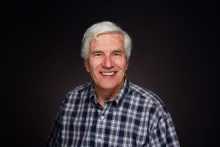
Steve Shafer was born and raised in Seattle. He graduated from Queen Anne High School in 1959 and later graduated from Ambassador College, Big Sandy, Texas in 1967, receiving a degree in Theology. He has been an ordained Elder of the Church of God for 34 years and has pastored congregations in Michigan and Washington State. He and his wife Evelyn have been married for over 48 years and have three children and ten grandchildren.
