There Is a Time to Forget
Given on
Given in
Downloads
Downloads
To download a file, right-click (or long press) a link above and choose Save As.
We all have failures in the past that, if dwelt upon, would cripple us in the present and future. Paul boldly stated that he “forgot those things which were behind.” There was much for Paul to leave behind. As a persecutor of Christians he was responsible for their torture, economic ruin, imprisonment, and murder. This sermon discusses what Paul meant by “forget” and how we are to move forward. Today’s load is too heavy to carry without trying to carry yesterday’s load too. Yesterday’s grace was sufficient for yesterday’s challenges. We need fresh grace today to meet current needs.
Transcript
This transcript was generated by AI and may contain errors. It is provided to assist those who may not be able to listen to the message.
You know, brethren, we're living in an age where everyone is looking over their shoulder. Everyone is looking over there in their rearview mirror. They're trying to explain or excuse their behavior in the past. Now, there's a certain need for us to do some of that, but we don't want to get to the place where we're so stuck in the past, we can't live in the present or move properly forward into the future. As we heard in today's message, the sermonette, we are fortunate as a group of people in that we have the sacrifice of Jesus Christ. Passover is coming, I think, it's April 2nd this year, which is a Thursday evening. I'll be over in Ann Arbor.
I think Mr. McGuire will be here with you this year. But we are fortunate that we have the sacrifice of Jesus Christ. That sacrifice allows us to have our past healed, forgiven, so we can properly live in the present and move into the future with a new life. Now, while the world emphasizes looking backward, Christ wants us to look forward.
And in that regard, I was studying something that I began to ponder, what exactly does the Apostle Paul mean here? Let's turn to Philippians 3, because this is the crux. This is the scripture that is going to be the heart and core of my sermon today. Philippians 3, verses 13 and 14. Philippians 3, verses 13 and 14. Verse 13, And I do not count myself to have apprehended, but one thing I do, forgetting those things which are behind. We're going to pause there for a moment.
Paul makes an interesting statement about forgetting those things which are behind. Now, let's understand who Paul is. Let's remember that back before he was converted, when he was known as Saul of Tarsus, he tortured people. He led people into economic ruin. They were trying to get away so they wouldn't be tortured, so they left house, home, everything they owned. That brought economic ruin to them. He murdered people and all sorts of things.
So Paul had plenty of things in his past that were awful, very awful. So here Paul is saying that he forgot those things. Now, is he talking about memory? No, Paul's not talking about memory. I'm sure Paul remembered those things very clearly. So why then does Paul write, forgetting those things which are behind? What does he mean by that? How does one forget the past?
You know, even when we get older, I find myself having more and more senior moments. But, you know, as much as I would like to think I can forget some of the things in the past, I can't. I can forget all sorts of things that seem to be important at the moment, but aren't as important. But I can remember in great detail a lot of the errors I've made, people I've heard, things of that nature.
So the bottom line is, when Paul is saying forgetting those things which are behind, he's not talking about a function of memory. He's talking about how you and I are going to proceed with our lives. Paul is sharing biblical wisdom here. What he's basically saying is, don't get stuck in the past. Don't let the past hobble the present or the future. Life is too precious to get stuck in the past. But let's continue reading here.
I didn't read the full section. Let's start again in verse 13. Brethren, I do not count myself to apprehended, but one thing I do, forgetting those things which are behind. And in this sermon, we're going to talk about how we do that. Forgetting those things which are behind and reaching forward to those things which are ahead. I press toward the goal. So I want you to notice something else in this biblical wisdom we have here.
Wisdom that comes from God, inspired of God. We are to forget those things which are behind. Again, it's not a function of memory. It's a function of how we're going to view our past. And it says we have to reach forward and press toward the goal. And so what we're seeing here, and another way this section could be interpreted, is we are straining. We are stretching. We are reaching forward. We are pressing. So what this implies is this forgetting process is not easy.
This forgetting process will require great effort. It will require repeated great efforts. It will require persistence in those repeated great efforts. And it will require wisdom and possibly counseling from others in those persistent, repeated, great efforts. But, brethren, you are so blessed in the fact that you have got God's Holy Spirit. You've got a portion of the heart and mind of God in you. And God has given you the spirit of wisdom and love and not of fear. Not where we keep on looking back over our shoulder and allowing the past to plague us in the present and in the future.
We've got God's Spirit that gives us the strength, gives us the power to move on. He gave Paul the power to move on, so he knew what he was speaking about. So, brethren, here is the point of my sermon today.
If you're taking notes, you want to write something across the top of your paper, it would be this. There is a time to forget. There is a time to forget.
Solomon wrote something very interesting. Let's turn to Ecclesiastes 3. Of course, you know Solomon wrote this, given tremendous wisdom by the great God, one of the wisest people who's ever lived because of God's Holy Spirit. Notice what Solomon says. Ecclesiastes 3, verse 1, to everything there is a season and a time for every purpose under heaven. We drop down to verse 6, a time to gain and a time to lose, a time to keep and a time to throw away. Brethren, there is a time for everything, and there's a time to forget. There's a time to let loose. There's a time to throw away. There's a time to move forward. That's what Paul said in the New Testament, and that's what Solomon said here in the Old Testament.
The Bible, from one Testament to another, is very clear on this matter.
Now, what I'd like to do at this point is give you an overview of the sermon today.
I'm going to give you the Reader's Digest version. Now, I hope as I do that, that after I'm done with the Reader's Digest version, you don't fall asleep.
Because what we want to do after the Reader's Digest version is to go into each of these sections more in depth. And where I got this, as I was thinking about this, and I was doing research, I saw a section in the Analytical Bible Expositor. And they had a great section talking about when Paul was talking about forgetting those things and moving forward.
Basically, what they're saying is forgetting says not to look back in an unproductive way, in an unproductive way. Too many of us, and I've been guilty, I'm sure you've been guilty, I don't think anybody gets a free pass on this one, I think too many of us in the past have looked back at our past in an unproductive way that doesn't allow us to live properly now in the present or move forward into the future. Now, this kind of forgetting that Paul talked about does not exclude remembering our past blessings. God wants us to remember our past blessings.
So we can be even more grateful toward God. This kind of forgetting we're going to talk about today doesn't mean forgetting past failures. We want to appreciate, we want to learn from the past. We don't want to forget all of that. On the other hand, the kind of forgetting we want to do is a productive forgetting. And in this Analytical Bible Expositor section, they give four points. I'm going to give four points as a brief overview right now, and then we're going to go through each one of these as we go through the sermon today. Here's the kind of forgetting that we want.
First, we want forgetting that keeps us from despair. We want forgetting that keeps us from despair. We want to forget so we don't look at past failures in such a way that we are so depressed we want to give up and not move anywhere, where we stay in our bedroom the whole time. Life can't go forward. So we want to have the kind of forgetting that allows for us not to be in despair. Secondly, and this moves off of the... plays off of the first. Secondly, we want a type of forgetting that helps us keep moving forward, regardless as to what we've done. Paul did awful things. Saul Tarsus did horrible things to people and to their families. So this kind of forgetting stops the regrets, stops the guilt, which causes us to lose energy in the present and makes it difficult for us to keep on going. Brethren, the load you have today is too heavy for you to keep and keep what loads you've had in the past. We can't take the past load and then take today's load and think everything's going to be okay. God gave us the grace for the past and the giants and the challenges of the past. But that grace is in the past. We want fresh grace. We've got new giants we've got to handle. We've got new loads to take care of. And we want fresh grace to take care and handle all those. Thirdly, we want to forget so we don't rest on past success. It's not all about the evil and the wrong things. We can have had a lot of success in our life and we can have it. I've arrived.
You know, I've done all these wonderful things and, you know, I get up in the morning and God just butters my bread. Well, you know, forgetting says that we're not going to be so delighted in ourselves and what we've accomplished that we don't think we need improvement for today.
God is always wanting His people to move forward and to grow in grace and knowledge, not to sit on our laurels. So we want to forget about the past, even though it was good.
We want more of God's grace to allow us to give and serve and help and be the people God has called us to be. And fourthly, the grace, the forgetting we're thinking about keeps us from defeat.
You can't look over your back and make good progress going forward. Years ago, many years ago, there was a gentleman, a black baseball player, his name was Satchel Paige. Satchel Paige, for those of us who knew baseball and knew him, he was an amazing individual. You know, he played in the old Negro Leagues, what they called the Negro Leagues back in the day. And then when the color barrier was broken, Satch was brought up to the major league. He was brought up to the major leagues. Nobody knew how old he was. But they thought that Satchel Paige could well have been in his 50s or 60s, and he was playing major league, you know, he was a pitcher. He was able to throw a major league fastball. He was getting people all right and left. He was ancient. But one of the things Satchel Paige said, he says, you don't ever look over your shoulder because somebody might be gaining on you. You know, that's some wisdom from old Satchel.
A remarkable individual. So, Brendan, we want to look at this term as Paul meant it today. We want to move forward. We want to forget those things which are behind so that we can move forward with the grace that God gives us and be the people God has called us to be. So that's an overview. Let's now get back into the specifics. First, I said, forgetting keeps us from despair. Forgetting helps us to not look back at past failures in such a way that we can't live. We can't move. We always are thinking, is God mad at me? Is God angry with me? Is God ever going to forgive me? Well, most of us in this room are our parents. When your children make mistakes, they do things that hurt you. Are you going to go to your grave holding it against them? Of course not. You love your children. If they come to you and they say, you know, Dad, Mom, I'm sorry, I just I don't know what God, into me, but I know I hurt you. I'm so sorry. I'll try never to do that again.
Doesn't your heart melt? Don't you just want to grab them and hug them and say, you know, I've been hurt before, kid. You know, I'll be hurt in the future, but I'm so happy that you've apologized. You've come to your senses. I'm most happy, not for my sake. I'm most happy for your sake. I'm most happy because you're moving forward. Revelation talks about Satan being the accuser of the brethren. And, you know, brethren, Satan doesn't need our help, does he?
Does Satan need our help? Do we need to keep on thinking about all of our past misdeeds and mistakes and where we've hurt this one or that one or done some awful thing? Do we have to keep on reminding ourselves that Satan is the accuser of the brethren? He doesn't need help. He doesn't need help at all. Satan would like to just whisper in your ear, you know, God really, he'll never forgive you. God really doesn't love you. The sacrifice of Jesus Christ is for all those good people. It wasn't for you. He would love to say, of course, all that's a lie, all that's false. 1 John chapter 1. 1 John chapter 1. Verse 9. 1 John 1. 9. If we confess our sins, he is faithful and just to forgive us our sins and to cleanse us from all unrighteousness. So we've got to confess. We've got to go to God in repentance and say we acknowledge our sin. We know what we did. We can tell you, you know, very colorfully, very accurately what we did. We see what we did was wrong and we ask for your forgiveness because we're going to try to keep on repenting and never do that again, Father. And when we come to that point, God, it says, is just. He is faithful. God is faithful. So many times we think about how faithful we need to be. God is faithful. If we keep on going through life thinking that our sins aren't forgiven or that God doesn't forgive or God doesn't love us, then we're accusing God of being unfaithful. We're accusing God of being unjust. We don't want to do that. We don't want to be in that sort of a situation. God is faithful. God is just. He says, if you repent, if you're sorry, you're going to be forgiven because you have accepted the shed blood of Jesus Christ.
Psalm 51.
We're going to talk about people who've got something they can look over their shoulders about and lament.
You've got David. We're going to talk about David a couple of times here today.
Of course, after his sin was Bathsheba. We're going to talk more about the sin later on in the sermon. But after his sin was Bathsheba, where he basically had the husband murdered so he can have an illicit affair with the wife. They had a child through this. More than one, obviously. But we'll talk about the first baby here in a little bit. But notice David, Psalm 51, verse 1 and 2. Have mercy upon me, O God, according to your loving kindness. And God is faithful of that loving kindness. According to the multitude of your tender mercies, blot out my transgressions. You know, brother, when I read through those, I don't think I'm the only one in this room that, as I've been on my knees praying to God for my sins to be forgiven, but I don't also ask about the multitude of his tender mercies. We certainly want those applied to us, do we not? Yes, we do.
Wash me thoroughly from my iniquity. Thoroughly. Cleanse me from my sin. We're not talking about a partial wash job. You know, I should probably wash my car more often than I do.
But it just got so crusty and so filthy with all the winter muck on it here about two or three weeks ago, I said, I got to take it into the car wash. And it was a decent enough day, so I took it through the car wash and I got out. And the first look, I thought, boy, that looks so much better. And it did look so much better. But upon closer inspection, I saw where big streaks of dirt were left because the equipment didn't get off my car thoroughly clean. And sometimes you can think that about us that, you know, well, God, I kind of look good. I kind of got everything forgiven, but there are these things in my life that there's still some dirt there. No. Wash me thoroughly from my iniquity.
God doesn't do a half-hearted job. When God washes us, we're washed thoroughly. We don't have to keep dragging the past behind us. Verse 7, same chapter, Purge me with hyssop and I shall be clean. Wash me and I shall be whiter than snow.
Whiter than snow. I think we can appreciate whiter than snow. We've seen enough of that stuff recently. Verse 9, Hide your face from my sins, blout out all my iniquities.
Create me a clean heart, O God, and renew a steadfast spirit within me. And brethren, this is what we want. We want a renewed, steadfast spirit.
We don't want to have a ball and chain around both ankles, crawling around as if God doesn't love us, as if God doesn't forgive us. You know, we got all this weight from the past that we just are loading ourselves down with. And then we that's the past weight, and then we've got the current weight that comes on us. We don't need that. God doesn't want us to have it. God wants us to free us. Once we've repented, you know, the only purpose for guilt is to have us come to a state of repentance. Then we come to a state of repentance, jettison the guilt. Hebrews 9.
You know, it was brought up in the sermon that, you know, we've got Passover coming, and at that long a time we read this scripture every year of Passover. Hebrews 9 and verse 14.
Hebrews 9.14. How much more shall the blood of Christ, who through the eternal Spirit, offered himself without spot to God, cleanse your conscience? Cleanse your conscience.
We're washed. We're made white like snow. So we need to forget in terms of not allowing what we've done in the past to hobble us in the present or the future. Cleanse your conscience. Why?
So you can serve the living God. So we can move forward in life.
So point number one is we forget to keep us from despair. Secondly, of the four, we want to forget to help us keep going.
Now, as I said earlier today in a sermon, brethren, the load of today is too heavy.
It's too heavy to carry without trying to carry yesterday's load as well.
You know, we can really hobble ourselves by doing that. Now, let's turn to 2 Samuel and see a little bit more about David's sin. 2 Samuel chapter 12.
Very instructive section of scripture here. We've not gone through this. I don't think in a while.
2 Samuel chapter 12.
Nathan the prophet comes to David and discusses David's sin. David begins to see what he's done.
I'm sure he knew earlier what he had done, but it really comes hard to his mind to appreciate all that he's done. Verse 15, The Nathan departed to his house, and the Lord struck the child that Uriah's wife bore to David, and it became ill. So sin has its consequences. David kills off Uriah, has a relationship with Bathsheba. A child is born as a result of that illicit affair. The child becomes ill.
Now, unless anybody wants to blame God for being a bad guy that God is going to pick on a little baby, God has the ability to raise that child from the dead. But God needed to teach some very important lessons to David, Bathsheba, and the rest of the people of those days, but also to us, as we read through the pages of Scripture. Verse 16, David therefore pleaded with God for the child, and David fasted and went in and lay all night on the ground. So the elders of his house arose and went to him to raise him up from the ground, but he would not, nor did he eat food with them.
So David appreciates that God is merciful, God is compassionate, and as long as that child has life, there's hope. David understood that.
David understands that God was going to listen to this prayer because he was repentant.
We keep on moving on in the story here, verse 18. Then on the seventh day, came to pass, the child died, and the servants of David were afraid to tell him the child was dead.
For they said, indeed, while the child was alive, we spoke to him, he would not heed our voice. How can we tell him that the child is dead? He may do some harm.
They thought, you know, this guy is in such a mental condition, if we tell him the child is dying, he might hurt himself, he might commit suicide. And so they were really concerned about how they were going to approach David. Verse 19, when David saw his servants were whispering, David perceived the child was dead. Therefore, David said to the servants, is the child dead? And they said, he is dead. Verse 20. So David arose from the ground, washed and annoyed himself, changed his clothes, went into the house of the Lord and worshiped. Then he went to his own house, and when he requested, they set food before him, and he ate.
Now, brethren, take a look at the beauty of what we see here in verse 20.
When God's will was shown, and it wasn't what David wanted, but when God's will was shown, David had peace, David had composure. He realized God was working things out the way God wanted to work things out. Brethren, we have to be appreciative of that. We can fast and we can pray, and we can want certain things to happen the way we want, but God is always in control. And so when David found out that his child was dead, what did he do? He washed and annoyed himself, he changed his clothes, and then what? He sat down and had a big meal. No.
Before he ate. And brethren, when you take a look at the story flow, it looks like David went seven days and seven nights without eating.
It wasn't just one day that he didn't eat. It looks like he went the whole seven days and seven nights without eating. And before he ate anything, what did he do? He washed, he annoyed himself, changed his clothes. He was getting himself ready to do what? And then he went into the house of the Lord and he worshipped. He went into the house, so his relationship meant more to him than eating. His relationship with God meant more to him than eating.
That after he worshipped, after he found himself ready to kind of go to services like you and I do, you know, we get ourselves ready, we wash ourselves, we put on the best clothes we have, we come to services, we worship God. Verse 21, then a servant said to him, What is this thing you've done? You fastened and you wept for the child while he was alive, but when a child died you rose and ate food. And he said, While a child was alive, I fastened and wept. For I said, Who can tell whether God the Lord will be gracious to me that the child may live?
But now that he's dead, why should I fast? I can't bring him back. God's will has been shown.
And we need to not look over our shoulders anymore. We dare not say, Okay, God, where were you?
I fasted, I prayed, my child died, where were you?
You know, when I was putting this together, this was a number of weeks ago, we were just at that point hearing about the little Palacios baby. It lived only a very short time. You know, Melody, who used to attend here, Melody Ellis, her little baby died. I can remember when my little grandchild, the only one I've had to this point, the little striker, he only lived six hours.
You know, those things are really crushing. They really hurt. They hurt the couple. They hurt the whole family. But God's will will be done. And those little babies will be resurrected.
But we can't say, Well, God, where were you? Because, you know, brethren, we are living at the end of the age. And as we've talked about a few few Sabbaths back when I said, How do you and I prepare for the end of the age? We've got to get ready for some and we've got to steal ourselves for some really hard times. And the only insurance we have is our relationship with God, the Father, and Jesus Christ. It's not so much money in a bank. Banks can fail. It's not how much food we've got stored up downstairs in the basement. Because if our neighbors think, Well, we're still a little too plump. They're gonna, they're gonna, you know, knock us out there, break down the doors, they'll go get our food. Our salvation physically is in God. Our salvation spiritually is in God. And the sooner we come to appreciate that, the better. Now, does that mean that, you know, we, like I said in that sermon, you know, we're just going to wait for the place of safety? Well, the Bible talks about a martyrdom at the end of the age. Somebody is not going to go to a place of safety. Does God say he's going to protect his church? Sure, he does. But that doesn't mean every last person in a church.
God the Father and Jesus Christ didn't protect all the apostles. They, with the exception of John, they all died horrendous deaths. You look at the people there in Hebrews chapter 11, you got the one individual was sawn in two. We believe that was Isaiah who was stuffed into a log and they chopped a log in half. So I'm not trying to, you know, be down here, brethren, but there is a time for us to do everything. There's a time for us to forget the past and to move forward solidly with God.
We want fresh grace to do that. Fresh grace. Let's move on. Point three.
Forgetting keeps us from resting on past success.
Forgetting says not to be so delighted and focused on your past achievements that you rest on your laurels you start coasting because when we do that, brethren, what we're doing is we're Laodiceans. We don't want to be Laodiceans.
Now, again, I may mention earlier, forgetting that Paul talked about doesn't tell us that we should forget all the great things God has done for us. Doesn't say we should forget past failures.
It just means we don't allow ourselves to get stuck in the past in an unproductive way.
In an unproductive way. Let's Psalm 103 for a moment. Psalm 103.
We do want to thank God for past blessings and so forth. Psalm 103 verse 1.
Bless the Lord, O my soul, and all that is within me. Bless his holy name. Bless the Lord, O my soul, and forget not all his benefits. There's a time and a place for remembering these kinds of things, and that time and place is at all times and places. Who forgives all our iniquities, who heals all our diseases. Yes, we want to remember all of that. Now, we may have had some really bad health issues and things we would like to forget, but we're probably not going to forget that. But we remember the God who healed us. The God who brought us forward. The God who got us to this place we're at right now. Who redeems our life from destruction, who crowns you with loving kindness and tender mercies. Who satisfies your mouth with good things, so that your youth is renewed like the eagles. Yes, we want to remember all those things. But let's look at an individual who had some tremendous success. But he didn't heed this point. He got stuck in the past a little bit. 1 Kings chapter 18. We're going to take a look at a part of the life of Elijah. 1 Kings chapter 18. Now here's a man that prayed that it wouldn't rain for months on end. It didn't rain. Then he prayed that it would rain. And it did rain. Here's a man that was told to go to a widow lady. And that widow would support him with food and drink. And the widow lady he went to was about to prepare her last meal and die. She and her son. And yet God said, I want you to go to that woman. Of course, you know the story how every time she went to where the food was, the jar there, there was more food. And more food. The thing just wouldn't stop producing food. So God has his way. So we have here, giving you a little bit of background. Elijah has a showdown with 850 false prophets and prophetesses. 850 to 1. Now they had all the false gods in the world on their side. Elijah only had the true god on his side. So 850 to 1. When you are the one with a god on your side, you are in the majority. So after, you know, the whole story was that they had this altar, these two altars. They put wood on the altar and so forth. And then they took water, water jug after water jug after water jug. There was water every place to soak these things down. And then, of course, the story is that God was able to go through all that and destroy or lick up all the water and the altar there. 1 Kings 18, verse 36. It came to pass at the time of the offering of the evening sacrifice that a lie to the prophet came near and said, Lord God of Abraham, Isaac, and Israel, let it be known this day that you are the God in Israel and I am your servant, and that I have done these things at your hand. Hear me, O Lord, hear me, that this people may know that you are the Lord God, that you have turned their hearts back to you again. So he's asking a great thing here. He says, I'm not wanting to be notarized, you know, fame for myself. I want people to come to see that you are the great God. Verse 38. Then the fire of the Lord fell and consumed the burnt sacrifice, the wood and the stones and the dust, and licked up the water that was in the trench. So everything is consumed here. Now when all the people saw it, they fell on their faces and they said, the Lord, He is God, the Lord, He is God.
So we've got a tremendous success story here, verse 40. And Elijah said to them, Seize the prophets of Baal. Do not let one of them escape, so they seized them. And Elijah brought them down to the brook of Kishon and executed them there. Tremendous success here! 850 to 1. He prevailed with God's help. But now we turn to chapter 19. Chapter 19. Now here's a man that had plenty of things from yesterday that he can be happy about, but yesterday was yesterday.
Today has today's woes. Today has today's challenges. Today we need today's grace. Right? Well, Elijah wasn't getting that point. Chapter 19, verse 1. And Ahab told Jezebel, his wife, all that Elijah had done, how he had executed all the prophets with the sword. Now Jezebel had used those 850 prophets and prophetesses. She had made Baal the state worship in Israel. She was the queen, and she probably loved a lot of these people, probably knew a lot of these priests and priestesses. They probably were in the palace all the time.
They were not just priests and priests. They were probably good friends of hers. And Elijah had them put to the sword. Verse 2. Then Jezebel sent a messenger to Elijah, saying, So let the gods do to me, and more so, if it did not make your life as the life of one of them by tomorrow about this time. So Jezebel says, you get about 24 hours, fella.
24 hours from now, you're dead. You're gone. Verse 3. And when he saw that, he rose and ran for his life, went to Beersheba, which belongs to Judah, and left his servant there. So here we've got a man who, you know, he should have written... there's certain things we do want to remember about the past. And he wasn't remembering those. He was allowing himself to forget the greatness of God, and all that God can do. Yesterday's victories were sufficient for yesterday. We can't live with today's temptations on yesterday's obedience or yesterday's grace. We want today's grace. We want today's grace to help us live obediently and faithfully with God today.
Each moment, brethren, in our life is a choice. Are we going to let the past ruin us? Or are we going to let the past educate us and move forward? I'm not saying that we don't hurt because of the past. We do. But we can't allow it to just halt, you know, new growth. There are new giants to face today, therefore we must be spiritually nimble. Ephesians chapter 3. Ephesians chapter 3. Ephesians chapter 3 verses 20 and 21. Now to Him who is able to do exceedingly abundantly above all we ask or think, according to the power that works in us, according to God's Holy Spirit, He is able to do exceedingly abundantly above all we ask or think.
And brethren, we can ask and think a lot of stuff, right? And it says, our God is a God who is an enabler. He will enable us to rise above the past. Verse 21, to Him be glory in the church, by Christ to all generations forever and ever. Amen. So look to the present, look to the future, look to the grace God will give us today and tomorrow to handle the things we need to have handled.
Lastly, number four. We want to forget so that we don't get defeated. Charles Braceland Flood wrote a book called Lee the Last Years. In that book, he recounts the time after the Civil War when Robert E. Lee, and of course Robert E. Lee, if you study American history at all, especially during the Civil War years and after, Robert E. Lee was perhaps the most beloved general in our history. He was a very great man. Robert E.
Lee visited a woman who showed him the remains of a grand old tree in front of her home. She was in the South. There she cried bitterly that the tree had been struck by repeated Union artillery fire. The tree basically had been destroyed. It was a great old tree. And she loved that great old tree, but basically had been destroyed. So when Lee came to her house, she went to Lee, hoping that he would sympathize with her plight.
Lee looked at the tree, and of course Lee understood what it was like to have something ruined. I don't know how many... I don't know if I've said this in the past or not here. I've given a sermon over in Windsor and over in Ann Arbor. But you know Arlington National Cemetery? Do you know what that is? Arlington National Cemetery? That's Robert E. Lee's home. The Union, to kind of rub it into his face, what he had done, so he wouldn't be able to live in his home anymore.
They took Arlington, which was his home, and made it into a national graveyard. It's like somebody knocking down your house and making your house a great cemetery. That's what we did to Robert E. Lee. The Union did. So he knew a little bit about how people can be to one another. So when this woman was saying, look at the tree, look at this beautiful old tree, this grand old tree, look at what those blankety-blank Yankees did.
Lee paused and he said, cut it down, my dear madam, and forget it. Cut it down and forget it. He didn't want her to get bitter, because bitterness is a poison, and we've got to get that out of our system.
As I was going through, brethren, and putting my thoughts together and doing research for the sermon today, one writer said this, and I think it's an interesting way of looking at this. He said, what we need as Christians is holy amnesia. Holy amnesia about our victories and our defeats.
I've been talking about we need today's grace. Let's take a look at Jeremiah, what he wrote in the book of Lamentations. Now, how many times do we turn to Lamentations? That's just not one of the books we turn to very often. Lamentations chapter 3, starting here in verse 22, in a book chronicling lamenting, where we can look over our shoulders, where we can be looking and stuck in the rearview mirror.
What does the prophet Jeremiah say here? Lamentations chapter 3, verse 22. Though through the Lord's mercies we are not consumed, because his compassion fails not. They are new every morning. Every morning we get a fresh batch of grace in our relationship with the great God. They are new every morning. Great is your faithfulness. The Lord is my portion, says my soul. Therefore, I hope in him. So, as we read earlier, our God is a faithful God. God is our portion. He is our inheritance. He is our hope. Verse 25, the Lord is good to those who wait for him, to the soul who seeks him.
It is good that one should hope and wait quietly for the salvation of the Lord. So, God's graces, the Lord's mercies and graces are new every morning. We want that new grace, fresh grace, to help us with the fresh challenges we see every day.
Matthew 6 Matthew 6 And verse 11 Matthew 6, 11 Give us this day our daily bread. Our daily bread. Remember the true story of Israel in the wilderness and how they got the manna? They had to have bread every day. They couldn't store it up with the exception of Fridays. They couldn't store it up on a daily basis. It's like grace. You don't store grace up. It's something that flows to us. Just as you get fresh bread every day, fresh manna every day, give us today our daily bread. We want God's grace the same way. Give us today our daily grace. Give us today our daily grace. Just like the manna was good for one day and one day only, God's grace is a living and a flowing thing. If we need more for today's challenges that are harder than yesterday's, God is willing to supply that. What does it say back in the Old Testament about manna? Everyone to their need. Some got more, some got less. You've got a need. You've got a spiritual need. I've got a spiritual need. Your need might be lesser than mine or might be greater than mine. And God knows what your needs and my needs are. And He's able to allow His grace to flow to you and give you what you need. Your daily bread. Your daily grace. 2 Corinthians 4 Last scripture for today. 2 Corinthians 4 And verse 16 2 Corinthians 4.16 2 Corinthians 4.16 Therefore we do not lose heart. We don't keep on looking over our shoulder at what was done in the past and allow us to get the, you know, in despair, depressed, defeated. Therefore we do not lose heart, even though our outward man is perishing, even though the physical is hard on us. Yet the inward man is renewed day by day. Day by day. Fresh grace. New grace. If needed stronger grace. More of God's grace to handle the need. Just like people needed some cases more manna than in other times. Brethren, everybody's got failures in their past. I do, you do. If you and I dwell on the past, we can get stuck there. If we get stuck in the past, we're not going to properly handle the present or the future. That's why Paul said we must forget those things in the past and move forward, press toward the high calling that we have.
So one last time is a matter of just review. My point today is there is a time to forget. A time to forget. I gave you four points today. A time to forget. First, forgetting keeps us, the right kind of forgetting keeps us from despair. Secondly, the right kind of forgetting helps us to keep going. Thirdly, the right kind of forgetting keeps us from resting on past success. Fourthly, the right kind of forgetting keeps us from defeat. Brethren, we're starting a brand new year. I know we're into the first week of February, but basically we've got a brand new year ahead of us. Let's look forward to doing the work of God that He has called us to do. Let's not be stuck in the past. Let's live in the present and work toward the future.
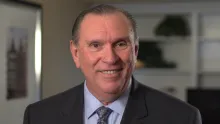
Randy D’Alessandro served as pastor for the United Church of God congregations in Chicago, Illinois, and Beloit, Wisconsin, from 2016-2021. Randy previously served in Raleigh, North Carolina (1984-1989); Cookeville, Tennessee (1989-1993); Parkersburg, West Virginia (1993-1997); Ann Arbor and Detroit, Michigan (1997-2016).
Randy first heard of the church when he was 15 years old and wanted to attend services immediately but was not allowed to by his parents. He quit the high school football and basketball teams in order to properly keep the Sabbath. From the time that Randy first learned of the Holy Days, he kept them at home until he was accepted to Ambassador College in Pasadena, California in 1970.
Randy and his wife, Mary, graduated from Ambassador College with BA degrees in Theology. Randy was ordained an elder in September 1979.
playlist