

Don Ward
This transcript was generated by AI and may contain errors. It is provided to assist those who may not be able to listen to the message.
Sermon today, the title is, Though the Outward Man Parishes, Trust in God Who Raises the Dead. And what we're going to see here this afternoon is that the outward man must perish before we are resurrected into the kingdom of God. And as we know in baptism, when we went under the watery grave of baptism, that symbolized putting death to the flesh, to the outward man, to the desires of the flesh, the lust of the flesh, the lust of the eyes, and the pride of life. So as we sit here this afternoon and reflect on the events of recent times in the world and in our own lives, it would be foolish for us to deny that we're living in a world of uncertainty and not knowing where the next trial will come from. And even though we see all the trials and troubles on the world scene, on the national scene, on the local level, yet probably each one of us in our own personal lives are experiencing trials perhaps greater than we have faced in a long time. These are indeed the times that try man's innermost being. Yet in days to come, we will reflect back on these days and say these were the good old days in comparison to what people will be facing in the future. As we look at the world today, we see a world in which the peoples of the world are torn apart by various religious, philosophical, political ideologies of every sort you can possibly name. People who are ready to kill for motives that range from the thrill and excitement of killing to killing for what they believe to be a just cause. We know that Satan is the archdeceiver and the root cause of the world's problems. Those problems center on greed, jealousy, and the lust for power. Satan works through human beings who are willing to sacrifice eternal life for the lust of the flesh, the lust of the eyes, and the pride of life. Just a cursory look at world events graphically shows us that the peoples of the world are in desperate need of God's intervention and deliverance. Sadly, most of them don't even recognize how much they need God's deliverance. They are looking to material things. They're looking to things of science to man's inventions, to man's efforts for deliverance. When all is said and done, it will be God who will be our deliverer if we have any deliverance at all. So now is not the time to bury our heads in the sand. In our own lives, we're being tried and tested in many different ways. At times, we don't even realize that what we just said or did was a trial.
God is indeed sifting out the hearts of men before his judgment seat. I want us to look now at 1 Peter chapter 4 and verse 17. For the time has come that judgment must begin at the house of God, and if it first began at us, what shall the end be of them that obey not the gospel of God? And if the righteous scarcely be saved, where shall the ungodly and the sinner appear?
Wherefore, let them that suffer according to the will of God commit the keeping of their souls to him in well-doing as unto a faithful creator. We are to commit our very innermost being to serving God and to living up to our calling that God of his own will begat he us with the word of truth that we should be a kind of firstfruits unto God and to Christ. And he's getting to know us at the very depth of our being, and in turn we need to know ourselves and examine where we stand before the living God. As you know, Passover is only a few weeks ago and we a few weeks in the future, and we really need to be examining ourselves leading up to that time. Before we enter into the kingdom of God, God will know and know that he knows that we place no greater affection for anything or anybody—notice that no greater affection for anything or anybody than we do for him. So how could God try us to the point that we might have to give up our own flesh and blood to be in his kingdom?
Part of the answer is he created us in his own image. He gave us life and breath. And he has given us an opportunity to be one of the first fruits of his spiritual creation. And that is, as we've already noted, a sacred privilege ordained by God. God has a hand in what is happening in our lives. If we don't believe that, then we are in sad trouble. I want us to look now back at 1 Peter chapter 1 and verse 1. 1 Peter chapter 1 and verse 1. Peter, an apostle of Jesus Christ to the strangers scattered throughout Pontus, Galatia, Cappadocia, Asia, and Bithynia.
Of course, these are places where the Gentiles are living, and probably some of the captives from Israel's captivity migrated into these areas as well. Elect according to the foreknowledge of God the Father through sanctification of the Spirit. So this says that we were elected by the foreknowledge of God through sanctification of the Spirit unto obedience and sprinkling of the blood of Jesus Christ, Grace to you and peace be multiplied. This is such a sacred and wonderful calling. Blessed be the God and Father of our Lord Jesus Christ, which according to his abundant mercy hath begotten us again unto a living hope by the resurrection of Jesus Christ from the dead. See, in John 16, verses 6, 7, and 8 there, where it talks about Jesus told the disciples, If I go not away, the comforter will not come to you. And we are justified by the death of his Son, but we are saved through his life, that God the Father and Jesus Christ, they live in us. And they have called us to verse 4, to an inheritance incorruptible, undefiled, and that faith not away reserved in heaven for you. It's reserved in heaven for you, but Jesus Christ will come and his reward is with him, and we shall reign on the earth. Verse 5, who are kept by the power of God through faith unto salvation, ready to be revealed in the last time. So once again, our title, though the outward man perishes, trust in God who raises the dead.
Because God has called us into his marvelous light, he's given us of his Spirit. We have been bought and paid for by the sacrifice of Christ, so we're not our own. God owns each one of us. Christ owns each one of us. And apart from his love and grace, grace being his divine favor, we would not even exist. And we want to notice this from Scripture in Isaiah 45 and verse 5. How foolish it is for anyone to say that God does not exist. In fact, in Psalm 14 verse 1, it says, The fool has said in his heart, There is no God. But now we want to look at Isaiah 45, what God declares of himself with regard to what he has called us to and how we should view him. In Isaiah 45 and verse 5, I am the Eternal, there is none else. There is no God beside me. I girded you, though you have not known me, that they may know from the rising of the sun and from the west that there is none beside me. I am the Eternal, there is none else. I form the light, create darkness. I make peace and create evil. In that word, there, create evil, it has to do with, I bring about calamity, upset, to try the hearts of men. It doesn't mean that God is the author and creates evil deliberately. The King James translation is not a good one there, that God brings on calamity, upset, to try the hearts of men. I, the Eternal, do all these things. Drop down the heavens from above and let these skies pour down righteousness. Let the earth open and let them bring forth salvation and let righteousness bring up together. I, the Lord, have created it. And now our key verse for this, to realize that apart from God we would not even exist. Woe unto them that strives with his Maker. Let the pauch herds strive with the pauch herds of the earth. A pauch herd is the after effect of shattered pottery, where you have the little flakes or crumbles from pottery. And let the pauch herd strive with the pauch herd. And shall the clays say to him that formed or fashioned it, What make you or your work? He has no hands. In other words, we didn't fashion ourselves. God fashioned us. He created us. And just as pottery cannot say that it was created without the work of human hands being on it, we would not exist unless God had brought us into existence. Woe unto him that says unto his Father, What begat you or to the woman, Why have you brought forth? Why have you given me birth? So we see that from this point on, that it is through the grace of God that we even exist.
And God has promised us that he would raise up Jesus Christ, which he did.
And he has paid the price for us. The greatest gift is life. The greatest gift is life and the opportunity to become members of the spiritual family of God. We have to first of all exist physically, obviously, to ever exist spiritually, to live forever as glorious, radiant spirit beings in the kingdom of God. So the great gift of physical life and the great gift and promise of eternal life in the kingdom of God. And what is the greatest enemy of life? The greatest enemy of life is sin. Why? Because of Romans 6.23. The wages of sin is death. And Romans 3.23 says, We have all sinned and come short of the glory of God's. Therefore, the death penalty is on the heads of every person who has ever existed, except for those who have repented, exercised faith in the sacrifice of Christ, who had been baptized and received the laying on of hands, and now have the living God and Christ living in them. As it says in John 14 verse 23, we will both make our abode in Him. So God gave the greatest gift He could give, that is, His only begotten Son, so that the penalty for sin might be paid. And Christ and His love for each one of us gave all that He could give. He couldn't give more than His life. So let's look at that in John 15 verse 12, what Christ speaking, what He admonishes us to do in view of what He has done for us in John 15 verse 12. John 15 verse 12.
This is my commandment that you love one another as I have loved you. How much did Christ love us? Well, the next verse or two will tell us how much He loved us. Love one another as I have loved you.
Greater love hath no man than this that a man lay down his life for his friends. You are my friends. If you do whatsoever, I command you. So God gave us the greatest gift He could give, that is, He gave His very life essence to die on the stake. Henceforth, I call you not in as servants, for the servant knows not what his Lord does, but I have called you friends. For all things that I have heard of my Father, I have made known unto you. And so we are to love one another as Christ has loved us, and He gave us, He gave His very life, that we might be reconciled to the Father, so that we would be no more an enemy of God, and that we would be then ready with a slate wipe clean to receive the Spirit of God. One of the greatest things that Satan has going for him right now is to deceive humans into an attitude of, I don't care. Life has been made to appear cheap with all the video games and the various movies, videos that come forth in which people are killed, just as a matter of course, who can kill the most wins the game, as it were. And people are killing one another, and people are taking their own lives, especially with the COVID lockdown. There's a tremendous increase in suicide, and people become disoriented and don't care. And when you come to the point that you don't care, there is little hope. If we don't care, then our lives and the lives of others don't mean much. And so Christ has given us the commandment to love one another, as He has loved us. Satan the devil knows his fate, and even the demons know their fate. Note what the demons said to Christ. In Matthew chapter 8, Matthew chapter 8 and verse 28, what the demons said to Christ, Matthew chapter 8 and verse 28.
And when he was come to the other side into the country of the Gergesenes, there meant him to possess with devils coming out of the tombs, exceeding fear so that no man might pass by that way. And behold, they cried out, saying, what have we to do with you, Jesus, you son of God? Even the devils recognized that he was the son of God, and God was in Jesus Christ time after time told the Jews that His Father sent Him that He was the Son of God, which they made fun of, and accused Him of even being illegitimate from birth, and so on.
So even the demons recognized that Jesus was the Son of God. Are you come here to torment us before the time they know that the time is coming, in which they shall be rendered of non-effect.
Young minds are so vulnerable and subject to manipulation that they can easily be manipulated.
A young child has a most difficult time in separating the world of fantasy and make believe from reality. So they are fed fantasy of a magical world of witches and supernatural phenomena, along with violent and bloody video games, and the minds and nervous systems are pounded with negative music. As we know, music has an uncontrollable effect on the human psyche and nervous system. And some say, oh, music is just subjective, and you like this and I like that, and I like hard rock, and I like that kind of rock, or whatever it might be, and it's just subjective.
Notice what the Bible says in 1 Samuel chapter 16 with regard to the effect that that music can have on a person. There's an example here of David and Saul, that when the evil spirit came upon Saul, Saul called for David. We'll read into that in 1 Samuel 16 and verse 14. 1 Samuel 16 verse 14. But the Spirit of the Lord departed from Saul, and an evil spirit from the Lord troubled him. So after Saul had rebelled and not killed all of the people that he was told to kill, he spared the best of the animals for, say, all the people wanted to sacrifice them. Also, he spared the king. So the Spirit of God departed from him after Samuel had confronted him, and an evil spirit from the eternal troubled him. So God allowed an evil spirit to come upon him, and Saul's servants said unto him, Behold now an evil spirit from God troubles you. Let our Lord now command your servants, which are before you, to seek out a man who is cunning player on a harp, and it shall come to pass when the evil spirit from God is upon you, that he shall play with his hand, and you shall be well. So even the people of that day knew that the right kind of music would have a positive effect. And Saul said unto his servants, Provide me now a man that can play well and bring him to me. Then answered one of the servants and said, Behold, I have seen a son of Jesse, the Bethlehemite, and he is cunning and playing, and a mighty valiant man, and a man of war, and prudent in manners, and a calmly person, and the Lord is with him. Wherefore Saul sent messengers unto Jesse, and said, Send me David your son, which is with the sheep. And Jesse took a donkey laden with bread, and a bottle of wine, and a kid, and sent him by David his son unto Saul. And David came to Saul, and stood before him, and he loved him greatly, and he became his armor bearer. And Saul sent to Jesse, saying, Let David I pray you stand before me, for he has found favor in my sight. And it came to pass, when the evil spirit from God was upon Saul, that David took a heart, and played with his hand. So Saul was refreshed, and was well, and the evil spirit departed from him. Where's the right kind of music has a positive effect on the human nervous system. And some of you might, you begin to hear a certain song, and before you know it, you're tapping your toe as the music plays along. And it's almost uncontrollable that that rhythmic pattern of the human body comes upon you.
The Apostle Paul shows us clearly in his second epistle to the Corinthians, that we must be willing to forsake all, and that the outward man must perish before we can enter into the kingdom of God. So we want to go to the resurrection chapter now in 1 Corinthians 15, 1 Corinthians 15 and verse 50. The resurrection chapter of words shows us that flesh and blood cannot inherit the kingdom of God. In other words, the outward man must perish. We must trust in God who raises the dead.
Of course, Jesus Christ trusted in God. Do you remember the story of Abraham and Isaac? That Abraham immediately went about to sacrifice his son, and just before he did, God stayed his hand. And it says in the book of Hebrews that Abraham was willing to do it because he'd already received Isaac in a figure in resurrection from the dead, knowing that if God allowed him to sacrifice Isaac, that he would resurrect him, that he would raise him up. And Jesus Christ, before he died—and we'll probably mention this again in the sermon— that before he died, he lifted up his eyes and says, Father, into your hands, come in, I you, my spirit. And he gave up the spirit. He gave up his life essence, and he died. So in 1 Corinthians 15 and verse 50, 1 Corinthians 15 and verse 50.
Now this I say, brethren, that flesh and blood cannot inherit the kingdom of God. Neither does corruption inherit incorruption. Behold, I show you a mystery. We shall not all sleep, but we shall be changed.
Now I want to re-emphasize now verse 50 once again. Now this I say, brethren, that flesh and blood cannot inherit the kingdom of God. Neither does corruption inherit incorruption. So this outward man must perish. Behold, I show you a mystery. We shall not all sleep, but we shall all be changed.
Who is going to change us? We'll see that very clearly from Romans 8-11 a little later on. In a moment, in the twinkling of an eye at the last trump, for the trumpet shall sound, and the dead shall be raised incorruptible, and we shall be changed. For this corruptible must put on incorruption, and this mortal must put on immortality. We do not have immortality inherently dwelling within us. Remember, before Adam and Eve was cast out of the garden, it was said that we're going to guard the way of the tree of life, lest he put forth his hand and partake of that tree and live forever, showing that in order to live forever, one had to partake of the tree of life, which represents the Spirit of God. This mortal must put on immortality. So when this corruptible shall put on incorruption, and this mortal shall put on immortality, then shall be brought to pass a saying that is written, Death is swallowed up in victory. O death, where is your sting? O yes, death does sting. Death is an enemy. O grave, where is your victory?
The sting of death is sin, and the strength of sin is the law. But thanks be to God, who gives us the victory through our Lord Jesus Christ. So we shall be raised from the dead, incorruptible, immortal beings. So this physical life must cease before we inherit the kingdom of God. The outward man must perish before we enter the kingdom of God. The possible Paul makes this clear in 2 Corinthians. 2 Corinthians is a book to some degree that seems to be neglected. We've seldom read only a couple of verses from 2 Corinthians, it seems, but it is a book that we really need to understand. The commentaries on 2 Corinthians miss the principal thrust of what Paul is addressing in his second epistle to the Corinthians. He does address various issues along the way, but there is a central thread that is running through this epistle. That is, the outward man must perish before we enter the kingdom of God. Some of the issues he addresses are, of course, related to his first epistle to the Corinthians, in which in chapter 5 of 1 Corinthians he tells him to put away the incestuous fornicator. And then in 2 Corinthians he's telling them to receive him and to forgive him. So Paul defends himself. The Corinthians really gave Paul a hard time on several fronts. The issue of whether or not he was an apostle, the issue of whether or not he would visit them, the issue of his talking big but not taking action, they would say, the issue of restoring the incestuous fornicator. But the central thrust centers on the outward man. This physical body, this physical tabernacle, must perish before we enter into the kingdom of God, and we must trust God who raises the dead. So in this life we must come to understand that no matter what happens, we understand what the purpose of human existence really is. And going hand in glove with this understanding is the understanding that we will suffer and experience trials and tribulations, and we learn how to comfort others who are going through trials and tribulations. We learn this by the comfort we've experienced from God ourselves when going through trials. And some people, when they're going through trials, as we shall see, they get their eyes off of God and onto themselves.
And some people refuse the comfort of God and keep on going over their mistakes and trying to pay for their own perceived shortcomings. There's no amount of penance we can do. There's no matter of self-deprecation that we can do. There's no matter of anything that we can do, short of repentance and faith in the sacrifice of Christ for our sins to be remitted and for the comfort of God to really come into our being. So that not only do we have the peace with God, but we have the peace of God which surpasses all understanding. The grief over loss and shortcomings is helpful up to a certain point, but only the understanding and comfort that comes from God can truly give us peace. So no matter how much we do penance, no matter how much we wallow in self-pity or what any other thing you want to name, Paul introduces in this epistle what we need to understand that the source of comfort and mercy is that which comes from God. How to comfort and forgive through experiencing God's comfort in our trials so we can help others who are going through the same trials and troubles. So we last read from 1 Corinthians 15. Now we want to read from 2 Corinthians chapter 1 verse 1. Paul, an apostle of Jesus Christ by the will of God. See, God with four knowledge elected us. We read that from 1 Peter 1 verse 2. By the will of God and Timothy our brother, unto the church of God which is at Corinth, with all the saints which are in all of Achaia. Grace be to you and peace from God our Father and from the Lord Jesus Christ. Blessed be God even the Father of our Lord Jesus Christ, the Father of mercies and the God of all comfort. The Father of mercies the God of all comfort. If we're lacking in comfort, where do we look? Who comforts us in all our tribulation, that we may be able to comfort them which are in any trouble. By the comfort we're with, we ourselves are comforted of God. For as the sufferings of Christ abound in us, so our consolation also abounds by Christ. So as we heard in the opening prayer, to keep our minds the bright the the gold the bright picture burning brightly in our minds of the resurrection from the dead, that our consolation abounds by Christ. Verse 6, and whether we be afflicted, it is for our consolation and salvation which is effectual in the enduring of the same sufferings which we also suffer, or whether we be comforted, it is for your consolation and salvation.
So we see here that God is the Father of mercies and the God of all comfort. It is when we get our minds and hearts off of God that we tend to feel sorry for ourselves or try to do penance or try several different strategies that are not in keeping with what God wants us to do. Psalm 77, which I've referred to very often over the years in sermons, in Psalm 77 we see this person praying to God, and sometimes we pray to God, pour out our being, and yet we don't accept what God has to offer his comfort, his mercy, which he is ready to extend to us at any time. So in Psalm 77, we begin in verse 1. I cried unto God with my voice, even unto God with my voice, and he gave ear unto me. So we begin to cry out to God, and he hears, In the day of my trouble I sought the Lord, my sore ran in the night, the position of prayer. In the Old Testament, people lifted up their hands and arms to God, and it's not easy to remain in that posture of prayer, we might say, My sore ran in the night, and sees not my soul, my inner being, refuse to be comforted. See, there's great simplicity in God in Christ. The just shall live by faith. But if we try to work everything out our way, we will probably fail. I remembered God and was troubled. I complained, and my spirit was overwhelmed. Now, in another place, this same Hebrew word is translated, complained, here, is translated communed. I communed, and really, it was I communed with my own spirit, as we shall see. In other words, as we shall see, he went over his own problems over and over again, and the focus was on what was happening to him. I communed, and my spirit was overwhelmed. In other words, my problems were so great that I was overwhelmed by them. You beheld mine eyes waking. I am so troubled, I cannot speak. I've considered the days of old, the years of ancient times. I called a remembrance my song in the night. I communed that same word that's translated complained. Verse 3 here is translated, I communed. In other words, I'm talking with myself. I'm going over my problems. I communed with my own heart, and my spirit made diligent search. Oh, what is wrong? What did I do? What can I correct? Will the Lord cast off forever, and will he be unfavorable no more? Is his mercy clean gone forever? Does his promise fail forevermore? So the four great enemies of faith begin to flood in. Anxious care, fear, doubt, human reasoning. Have God forgotten to be gracious? hath he in anger shed up his tender mercies? Selah. And of course, there's a lot of commentary on what Selah really means.
Generally speaking, when you see Selah, it means the question or the problem that was described is going to be answered. And here the answer is to this person's dilemma. Selah. And I said, this is my infirmity. In other words, this is my problem. In other words, my problem is my problem, that I'm continually going over my own problems, my focus is on myself. But I will remember the years of the right hand of the Most High, for I will remember the works of the Eternal. Surely I will remember your works of old.
I will meditate also of your work and talk of your doings. Your way, O God, is in the sanctuary. Now, the sanctuary is the place where God placed his presence. Of course, today we are the temple of the living God, and God has placed his presence in each one of us, who is so great as God, who is so great a God as our God.
And so when he got his mind, his focus, back on God, then his problems began to dissipate and disappear. You are the God that does wondrous. You have declared your strength among the people. You have with your core, you have with your arm redeemed your people, the sons of Jacob and Joseph. So here we see that when you get your focus back on God, the problems tend to disappear, tend to to dissipate when that happens.
Paul then summarizes the central purpose of his message in these verses, which may be a bit obscure. So we go back now to 2 Corinthians, 2 Corinthians chapter 1, and we want to start where we left off in verse 7. 2 Corinthians chapter 1 and verse 7. And our hope of you is steadfast, knowing that as we are partakers of the sufferings, so shall we be of the consolation. Of course, the sufferings have to do with the things that come upon the flesh, which we saw in verse 6, the enduring of the same sufferings.
And the consolation, of course, is salvation in the kingdom of God. And our hope is of you as steadfast, knowing that as we are partakers of the suffering, so shall we also be of the consolation, that is, of resurrection and being in the kingdom of God.
For we would not, brethren, have you ignorant of the trouble which came to us in Asia, that we were pressed out of measure. It's amazing how much Paul suffered doing the work of God. You might think, well, since he's doing the work of God, he wouldn't suffer so much. He wouldn't be tried so much. None of us have really suffered, like Paul suffered doing the work of God, the Apostle to the Gentiles. And yet, it also says in Acts that he was to testify before kings, and he wound up, as you know, in Rome, and testified there that we were pressed out of measure above strength, so much that we despaired even of life.
Come to the point, it doesn't say it here, but you know what Elijah did when he found out that Jezebel wanted to kill him. He ran for his life instead of realizing that God would spare him. I don't know if Paul ever came to that point, but he says, we despaired of life, but we had the sentence of death in ourselves that we should not trust in ourselves, but in God, which raises the dead. So once again, the title of the sermon is that the outward man perishes, but to trust in God who raises the dead.
No matter the trials, the troubles, the tribulation. Verse 10, who deliver us from so great a death and does deliver. There is, of course, the ultimate deliverance in the kingdom of God, but there is deliverance even now, in whom we trust that he will yet deliver us. You also helping together by prayer for us, that for the gift bestowed upon us by the means of many persons, think many. Thanks may be given by many on our behalf.
So as we mentioned in the announcements with regard to praying for one another, of course, time after Paul, time after time, Paul talks about praying for him that the gospel not be hindered, that it go forth. And then the apostle Paul tells them that we have received the earnest, the down payment on eternal life, and we should focus on that.
Verse 17, when I therefore was thus minded, did I use lightness or the things that I purpose? Do I purpose according to the flesh, that with me there should be yea, yea, and nay, nay? But as God is true, or our word toward you was not yea and nay. In other words, Paul is saying, I was never wishy washy with you. I was always above board with you, and so was God, that he is always above board. He doesn't play games. Verse 19, For the Son of God, Jesus Christ, who was preached among you by us, even by me, and so Banas and Timothy, was not yea and nay, but in him was yes.
For all the promises of God in him are yes, so God who is promised who cannot lie, Titus 1.2, and in him, Amen, of the glory of God by us, now he which establishes us with you in Christ, and has anointed us in God, who has also sealed us and given the earnest of the Spirit in our hearts. We have been given the down payment, the earnest of eternal life. More will I call God for a record upon my soul, that to spare you I came not to you I came not as yet under Corinth. Of course, they were accusing him he wouldn't come. He said that he would, but he didn't. Of course, he's saying that I have taken my time on this so that things would settle down and I would spare you. Not for that we have dominion over your faith, but are helpers of your joy for by faith you stand. So it is through faith that we stand and the just shall live by faith. Then in chapter 2, Paul tells him that he didn't want to come to them in heaviness. He wanted them to get the message and repent, so his coming to them might be joyful. So they were dragging their feet with regard to accepting back the incestuous fornicator who had repented, who had exercised godly sorrow, and not just human sorrow. So chapter 2, let's read the first few verses there in chapter 2, but I determined this with myself that I would not come into you in heaviness. So as I said, he wanted them to get the message to repent. For I made you sorry, who is he that makes me glad, but the same which is made sorry by me? You see, he took the church to task in 1 Corinthians 5 because they were tolerating the incestuous fornicator among them, and he told them to put him away so that his spirit might be saved in the day of judgment. And I wrote this same unto you, lest when I come I should have sorrow from them of whom I ought to rejoice. Because in chapter 4, he says, though you may have 10,000 instructors in Christ, you have but one father. And Paul says, I fathered you in the gospel. I was the one who brought you the gospel message to begin with, and yet you want to accuse me of different things, of whom I ought to rejoice, having a confidence in you all that my joy is the joy of you all. For out of much affliction and anguish of heart, I wrote unto you with many tears, not that you should be grieved, but that you might know the love which I have more abundantly unto you. For if they have caused grief, he has not grieved me, but in part that I may not overcharge you all. Sufficient to such a man is this punishment, which was inflicted of many, so that contrary wise you ought rather to forgive him, and comfort him lest perhaps such a one should be swallowed up over much sorrow. Wherefore, I beseech you that you would confirm your love toward him. For to this end also did I write that I might know the proof of you, whether you be obedient in all things. So this was a test for the Corinthians to receive this one back, and they were taking Paul to test, saying, you won't come visit us, but he says that the reason I didn't come is what I've just read here. He tells them that he and his associates in chapter 3 are ministers of the new covenant.
Now let's read the first few verses here in chapter 3. Do we begin to commend ourselves, or need we as some others, epistles of commendation to you, or letters of commendation from you? You are our epistle, written in our hearts, known and read of all men. In other words, I have brought you the gospel. If you are living by the words of the gospel, then you are an epistle. For as much as you are manifestly declared to be the epistle of Christ, ministered by us, written not with ink, but with the Spirit of the living God, not in tables of stone, but in fleshly tables of the heart. And so under the new covenant, the law of God is written on our inward parts, and we are to reflect Christ in us the hope of glory. And such trust have we through Christ to Godward. Not that we are sufficient of ourselves to think anything as of ourselves, but our sufficiency is of God, who also has made us able ministers of the new covenant, diathricated, not of the letter, but of Spirit, for the letter killed. But the Spirit gives life. The letter kills in the sense that if you sin, the death penalty is on your head. They only could bring the sacrifice in the blood of bulls and goats, which would cover sin and keep them ceremonially clean. But the only way that they could have life was through repentance and exercise faith in the sacrifice of Christ. And He exhorts them to reflect the glory of the new covenant.
Fourth, administration of condemnation be glory, that is, the death penalty. There were ten things in the old covenant that are listed that you could receive the death penalty for. However, if you repent under the terms of the new covenant, then you are forgiven and the slate is wiped clean. Much more does the administration of righteousness exceed in glory that of the old covenant. For even that which was made glorious had no glory in disrespect by reason of the glory that excels. In other words, comparing the old covenant with the new covenant, the old covenant does not measure up at all. For if that which is done away was glorious, much more that which remains as glorious. Seeing that we have such hope, we use plainness of speech and not as Moses, which put a veil over his face, that the children of Israel could not steadfastly look to the end of that which is abolished. So you know Moses went up on the mount and when he came down, his face glowed so much because he was in the presence of God. But their minds were blinded for until the day the same veil is on their face, untaken away in the reading of the old testament or the old covenant, which evil is done away in Christ. But even unto this day when Moses is read, the veil is upon their heart. Nevertheless, when it shall turn to the Lord, the veil shall be taken away. Now the Lord is that Spirit, and with the Spirit of the Lord is, there is liberty. Now, verse 18, the capstone verse, but we all with open face beholding as in a glass the glory of the Lord. In other words, we see in our minds eye we have the Spirit of God, the law of God written on our inward parts. We are changed in the same image from glory to glory, even as by the Spirit of the Lord. In other words, just as you would look into a mirror and see your reflection, because you now have the Spirit of God dwelling in you, you would reflect that same Spirit to the world.
Therefore, verse 1 of 4, therefore, seeing we have this ministry, as we have received mercy, we faint not, but have renounced the hidden things of dishonesty, not walking in craftiness or handling the word of God deceitfully, but by manifestation of the truth, commending ourselves to every man's conscience in the sight of God. But if our gospel be hid, it is to him that are being lost, in whom the God of this world has blinded the minds of them which believe not, lest the light of the glorious gospel of Christ, who is the image of God, should shine unto them. We preach not ourselves, but Christ Jesus the Lord, and ourselves, servants, for Jesus' sake. Then we want to come to verse 16, which is also part of the title of the sermon, for which cause we faint not, but though our outward man perishes, yet the inward man is renewed day by day. The outward man perishes.
Paul lists all the things that they were being persecuted about in the trials that they were happening to them in succeeding verses down to verse 16. You look at verse 9, persecuted but not forsaken, cast down but not destroyed, always bearing about in the body the dying of the Lord Jesus, that the life also of Jesus might be manifest in our body. For we which live are always delivered unto death for Jesus to say, that the life also of Jesus might be made manifest in our mortal flesh. So we are to reflect that glory of God. The inward man has to be renewed daily in order to reflect the glory of God, and at the same time the outward man may perish, but the inward man is renewed day by day. The principle way that the inward man is renewed day by day is through asking God for his Spirit, for asking God for the gifts of the Spirit, for reading and studying the Word of God and meditating on it, and through prayer to God. Verse 17, for our light affliction, which is but a moment when considered in the light of eternity, even if we live to be a hundred, waits for us a far more exceeding and eternal weight of glory, while we look not at the things which are seen, but at the things which are not seen, and that is that bright picture of eternal life burning brightly in our hearts and minds. But at the things which are not seen, for the things which are seen are temporal, but the things which are not seen are eternal. So the focus is to be on spiritual things.
So the outward man is to perish. Unfortunately, Satan is seized upon the analogy that Paul uses in chapter 5 to further deceive people into believing in the dual nature of man. What do I mean by the dual nature of man? It's what the Gnostics taught. It's what virtually every false religion on the face of the earth teaches. That is, that man is dual in nature, that he has a physical body and an immortal soul, and upon death the soul flies away to heaven, and they sing the old Protestant hymn, Some glad morning when his life is o'er I'll fly away. No, we're not going to fly away. We will be in the grave until the seventh trumpet calls. So Paul was not remotely saying that upon death you'll fly away, as we shall see now. Once again, I remind us that the Gnostics claim dualism, and dualism is a pagan concept. It started in the Garden of Eden.
God did not create a physical body and then place an immortal soul in that body, and then challenge humans to save our souls. Such an action would be cruel to Christ and to humans. How so? That is, Jesus would have to die to save a soul that is already saved. It's immortal.
And time after time, the Scriptures tells us that Jesus was sent to give us eternal life. But false religion teaches that the great question is whether you will spend eternity in heaven or hell, in YHN of fire, not hell to grave. Satan's big lie in the Garden of Eden, what was it? You shall not surely die. It is the hallmark of virtually every false religious belief. Whereas God says, apart from the Holy Spirit, as symbolized by the Tree of Life, you're going to die. Man is mortal, subject to sin and death, as we've already quoted in Romans 3.23, all of sin and come short of the glory of God. Romans 6.23, the wages of sin is death, but the gift of God is eternal life through Jesus Christ our Lord. Satan and false religion is used the analogy of the house, tabernacle, body, and absent from the body and present with the Lord that we'll see here in chapter 5. It has confused a lot of people with it, and oftentimes in funerals they will quote, especially 2 Corinthians 5.8, when rightly dividing the word of truth, you must consider every Scripture you can to completely understand what is being conveyed. So what do we know from the Scriptures concerning being present with the Lord? Okay, let's use the example of the death of Jesus. His so-called soul or life essence, I prefer life essence, did not remain in a state of consciousness in the grave. Jesus was not conscious in the grave, as it says in the Bible in the Old Testament that the dead know not anything. So once again, Jesus did not remain in a state of consciousness in the grave, time after time in the Scripture. We're told that the Father raised him from the dead. Jesus's consciousness was not in heaven watching his body in the grave, and he was not in heaven watching his Father raise his body from the dead. Jesus had no consciousness in the grave, but his Spirit was in the hands of his Father. Remember what we've quoted already? That just before Jesus died, he cried out, Father, into your hands, commend I you, my Spirit. The Father resurrected him from the dead through the Spirit that Jesus commended to the Father before he died on the stake. And how shall we prove that? Go to Romans chapter 8 and verse 11. It is very clear, and by the same process that Jesus went through of begettle, death, burial, resurrection, we go through the same process, and we become sons of the living God. We are in the begettle stage now. We received the earnest on eternal life, the down payment. Now look at Romans 8 and 11. This is so important. This should be a memory scripture for everybody.
But if the Spirit of him that raised up Jesus from the dead dwell in you, he that raised up Christ from the dead, time after time in the New Testament, it says that the Father raised Christ from the dead. He had no consciousness in the grave. When he died on the stake, his Spirit did not fly away to heaven. He had no consciousness in the grave.
He that raised up Christ from the dead shall also quicken make alive your mortal bodies by his spirit that dwells in you. The wages of sin is death, and Jesus died in our place so that the penalty could be removed from our head and so that we could receive the earnest of the Spirit. If humans are already possessed eternal life, it would be farcical for Jesus to die to save humans who are already immortal. We know from other scriptures when the resurrection takes place, we know when it is. When does the resurrection take place? It says at the last Trump. We read 1 Corinthians 15 verses 50 on through chapter 57 or 8. Let us notice now 1 Thessalonians chapter 4. For this we say Dr. Ward, you just hit the mute button.
1 Thessalonians 4 verse 15. For this we say unto you by the word of the Lord, that we which are alive and remain in the coming of the Lord, shall not precede them which are asleep. For the Lord himself shall descend from heaven with a shout with the voice of the archangel with the trump of God, and the dead in Christ shall rise first. Then we which are alive and remain shall be caught up together with them in the clouds to meet the Lord in the air, and so shall we ever be with the Lord. Wherefore comfort one another with these words. It is with the trump of God. Now look at Revelation 10 verse 7. Revelation 10 verse 7. We get the time frame of when this occurs. Revelation 10 verse 7. But in the days of the voice of the seventh angel, when he shall begin to sound, the mystery of God should be finished as he is declared by his servants the prophets. And that mystery of God is Christ in you, the hope of glory, that upon reception of the Holy Spirit we can be changed, can be made immortal through the resurrection from the dead. Now we look at chapter 11 verse 15. Revelation 11 verse 15.
And the seventh angel sounded, and there were great voices in heaven, saying, The kingdoms of this world have become the kingdom of our Lord and Christ, and he shall reign forever and ever. So the Bible in so many places tells us that the resurrection takes place when the seventh angel begins to sound. Now we want to go back to 2 Corinthians chapter 5. 2 Corinthians chapter 5. Where we know that our earthly tabernacle, if it were dissolved, we have a building of God not made with hands eternal in the heavens. It is in the heavens, but it comes down out of heaven to us. For in this, once again having trouble seeing, for this we groan earnestly, desiring to be clothed upon with our house, which is from heaven. We need to turn on that light. So we see here that it is from heaven. Paul says that we yearn to be clothed with a dwelling that is from heaven. Not that you are going to heaven, but we re-clothe with a light that is from heaven. In John 14, Jesus says that he's going away to prepare a place for us.
John 14 verse 1, Let not your heart be troubled, you believe in God, believe also in me. In my Father's house are many mansions. If it were not so, I would have told you, I would go to prepare a place for you, and if I go and prepare a place for you, I will come again and receive you unto myself, that where I am there you may be also. And where I go you know not, but you know the way. So where is Jesus Christ's feet going to stand in that day? Zachariah 14.1 says, in that day his feet shall stand on the Mount of Olives. So we're going to be clothed with that dwelling that is from heaven, not that we are going to heaven. In 2 Corinthians, back there again, in chapter 5 and verse 4, where we know that we are in this tabernacle, do groan, being burdened not for that we would be unclothed, but clothed upon that mortality might be swallowed up of life. How is the mortality swallowed up by life? Well, we read it from 1 Corinthians 15 verses 50 through 54 that this mortal must put on immortality. We are to be clothed. Now he that hath wrought us, verse 5, for the self-them is God, who also has given us the earnest of the Spirit, as we read from chapter 1. Therefore, we are always confident knowing that while we are at home in the body, we are absent from the Lord. Obviously, as long as we are alive, we are not with God, or we are not with Christ in the literal sense. But if we die in the faith, we are as good as in His presence when we are resurrected. For we walk by faith, not by sight. Jesus Christ gave Himself to God, saying, I commend you, my Spirit unto you, knowing that God would raise Him from the dead. Just as Abraham, when he was asked to sacrifice Isaac, had already received him in a figure being raised from the dead. And we know that God stayed His hand, and He didn't have to sacrifice Isaac. But notice, we walk by faith, not by sight. We know, verse 8, we are confident, I say, and willing rather to be absent from the body and to be present with the Lord. We are ready to die if we need to, but it is better for them at the present time for Paul to be with them and to lead them and to guide them. But Paul says, you know, I'm confident if I have to die that my next waking moment I will be with the Lord in resurrection. So absent from the body with the Lord does not mean that the incident that a person dies, the soul is immediately in the presence of God. Just as it wasn't with Christ, as we read from the scripture about that. Paul tells us that we're going to receive the crown of righteousness when Christ appears again. We will be be given the crown of life when Christ appears again. Look at James 1 verse 2. So even though the outward man may perish and we may die, our next waking moment will be to receive that crown of life.
So in James chapter 1, in verse 2, my brethren counted all joy when you fall into different trials. Knowing this, that the trying of your faith works patience, but let patience have her perfect work that you may behold, entire wanting nothing. And in the words you realize that your next waking moment, even if you die, will be the resurrection. Verse 12, blessed is a man that endures trials for when he is tried, he shall receive the crown of life, which the Lord has promised to them that love him. When does that occur when Christ comes again when he appears? So as we have noted, humans do not possess an immortal soul, and I would caution us to be careful that we don't make the spirit and man concept into an immortal soul. Moreover, the scriptures make it clear that we must put on immortality. False religion would have us believe that the resurrection of the dead is merely the resurrection of the body. But we have already seen from Scripture how illogical such a notion is. Paul tells us that in view of all this, that we need to be doing the work of God.
So hopefully we see that the outward man may perish, but at the same time we are to do the will and the work of God. And at this time we are to notice how Paul closes 2 Corinthians. And we'll go to chapter 15 now of how he closes. And of course, this is especially noteworthy as we enter the Passover season shortly in 2 Corinthians chapter 13.
Verse 5, examine yourselves whether you be in the faith. Prove your own selves. Know you not that your own selves how that Christ is in you except you be reprobate. But I trust that you shall know that we are not reprobates. Now pray to God that you do no evil. Not that we should appear approved, but that we should do that which is honest. Though we be as reprobates, we can do nothing against the truth but for the truth. For we are glad when we are weak and you are strong. This also we wish even your perfection. Therefore I write these things being absent lest I being present should use sharpness according to power, which the Lord hath given me to edification and not to destruction. Finally, brethren, farewell. Be perfect. Be of good comfort. Be of one mind. Live in peace. And the God of love and peace shall be with you. Greet one another with a holy kiss. All the saints salute you. The grace of the Lord Jesus Christ and the love of God and the communion of the Holy Spirit be with you all. See, we have the communion of the Holy Spirit 24-7. So brethren, the outward man may perish, but we trust in the God who raises us from the dead.
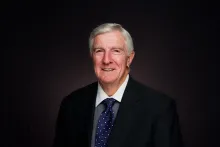
Before his retirement in 2021, Dr. Donald Ward pastored churches in Texas and Louisiana, and taught at Ambassador Bible College in Cincinnati, Ohio. He has also served as chairman of the Council of Elders of the United Church of God. He holds a BS degree; a BA in theology; a MS degree; a doctor’s degree in education from East Texas State University; and has completed 18 hours of graduate theology from SMU.
