


Don Ward
This transcript was generated by AI and may contain errors. It is provided to assist those who may not be able to listen to the message.
It's amazing to hear some of these songs, some of the hymns that we sing. Of course, I know the people intimately that wrote a lot of these, like the one he just sang here, Terry Miller. He was a young ambassador and wrote a lot of the songs that the young ambassadors sang through the years. And then some of the hymns that we sing. You think about where some of these people are today, and it's very sad. And thinking through the week on, and of course I didn't know what special music would be, of the various people in the past, the present, people who grew up in the church, or people who were associated, affiliated with the church for years and years and years. And then you look at them today and where are they? They have gone their own way.
Through the years, there are things that various people are noted for. As I see former students, people that I've associated with through the years, there are certain themes that I've had in my speaking, and they say, well, you know, I still remember the three C's. We're going to be talking about the three C's today. Or I still remember about the four enemies of faith. Or I still remember that paper you had us write on the 10 great questions of life. Or I still remember the thread of the Bible.
And it goes on and on with various things that people can, as they say, hang their hat on and know that they know and help to form anchors for the soul and a firm foundation for the times in which we live. If we have tried to get people to understand through the years, we are not playing church. This is not a social club.
Sometimes, I think, maybe we have made the church into like a social club, that we have our little cliques and we have our little areas in which we feel comfortable. And church comes down to, well, we go there on the Sabbath and we hear a sermon. And then that's church. Well, church is a word that we use. And I guess in the generic sense, Paul in Ephesians 4 says it is our vocation.
It is our being. It is what we are about. And it encompasses every area, every facet of life. So this afternoon, let's talk about the three C's. So I'll have a lot of things to say that I will take all kind of side trips with regard to it.
And the three C's I want to talk about are conviction, commitment, and courage. Conviction, commitment, and courage. So we ask ourselves, what are our hopes? What are our dreams? What are our goals for the future? We should be familiar, of course, with Matthew 6.33, that our first priority and our quest is for the Kingdom of God.
That's what it's all about. That's why we were created. That's why God shared His, or willing to share, His very being with us so that we can be in His family, so that we can be in His Kingdom.
These words come off our lips so easily. But do we really understand them? Are these words really internalized into the depth of our being? Every person's life should be directed by a clear vision of what they hope to achieve in life, starting at a very young age. Last week, we talked about godly relationships and how from a youth, from cradle to the grave, developing that relationship with God and with Christ, each member of the body of Christ and with our fellow man. Children begin very early in life to voice what they want to be when they grow up.
And you hear them say, and of course it may change from day to day and week to week, I want to be a fireman, I want to be a farmer, a doctor, a lawyer, a teacher, a musician, an athlete, or whatever they might say. And to a large degree, what they want to be is shaped by the culture that they grow up in. We all learned method more than we do content. You know, we can preach and preach, and if the world should have been saved by preaching, it'd have been saved a long time ago.
But unfortunately, the preaching, to a large degree, in the church, out of the church, has fallen on deaf ears so much. Sometimes I wonder, is it worth it? And then you hear people say, well, I remember back when, and because of this, I was able to hang my hat on it, and it brought me through some of the darkest days of my life. So it is worth it. You know, Paul says in 1 Corinthians 1, that by the foolishness of preaching, it pleases God to save some. Paul also pleaded in Hebrews 3 that we would not harden our hearts. That he who hath an ear, let him hear.
And today, if you would hear his voice, harden not your heart. Children mimic what they see their parents, their peers, and members of their community do. And it used to be more with children, but now everybody, young and old, is like in lockstep with that which is politically correct, fitting into the whatever culture it is and whatever the mode of the day is to be accepted.
Just before adolescence, children begin to see the world in a larger context.
So often we see children up to the age of 10 or 11 or 12, they seem to be just model children. And then around adolescence, something happens, and it's almost like we don't even know who this person is.
They begin to think and dream and hope. And hopefully there will be someone there, a parent, a teacher, a friend, a coach, a minister, that will encourage them and help them develop strategies for fulfilling their goals, their hopes, their dreams, and they can set their sails in the right direction. No matter how talented a person is, they will never begin to realize their potential until they begin to see their life requires an abundance of self-discipline and self-direction. See, more and more you hear today that, well, I'm living with my grandparents, and grandparents now are taking on the responsibility of raising the children. The parents of the children are out trying to make a living, they say, but going from pillar to post, have not been taught self-discipline, have not been taught self-direction.
So no matter how talented a person is, you'll never realize your potential until you have an abundance of self-discipline and self-direction. In other words, you must be convicted, first see, you must be convicted from within of what you want to achieve and how you're going to conduct your life. You have to begin to know what you stand for. I don't care how old you are, how young or how old. What do you stand for? In other words, you've got to be convicted and this has to go hand in glove with your hopes, your goals, your dreams for the future. You have to have certain standards that you're going to be faithful to. From the time a child is conceived, he or she begins to absorb the emotional, intellectual, physical and spiritual environment that they're living in. A great deal of earning even takes place in the womb. Parents who create a positive emotional, intellectual, physical and spiritual environment are helping the child to develop self-discipline and a knowing within that can result in deep convictions, self-discipline, self-direction. In today's world, there are many distractions.
These distractions keep you in a state of perpetual childhood and adolescence.
The peoples of the western world are conditioned to believe that youth and beauty are the be-all to end all. Like yesterday, for a few minutes, I saw Dolly Parton on television. Well, Dolly looked like she had been stung by a hundred bumblebees on the lips and in the cheeks. Her face was as bloated as a balloon that they may float at the fair. Botox, enhancement of lips and the face, plastic surgery, facelifts, nose jobs, breast enhancement, and the list goes on and on. The rage of the day. Young and beautiful. Check out at the grocery store. All the magazines are lined up. How to be young, how to be beautiful, how to lose 30 pounds in a month, how to remain in a perpetual state of adolescence, how to be sexy. Oh, yes, how to be sexy. You know, it doesn't take a lot of skill to do that.
I mean, from the Garden of Eden to the present time, the best-obeyed commandment is be fruitful and multiply. People know how to do that. Even pre-teens are being subjected to body-altering procedures in the name of self-image and looking good today. The excuse is they want to avoid being picked on by their peers. We don't want to be destroyed on Facebook or Myspace or any of those social networks, so we got to look good. We got to dress right. We got to look good. We cannot have any flaws in the way we look. Yeah, it's all right. It's something else morally, but you got to look good. There's no question that we now have a tyranny of the peers by old and young. If you are not politically correct, in today's world, you might as well not run for any office. You will not be elected. If you are, it will be some kind of miracle almost for that to happen.
We're dutifully marching like little automatons to our own demise and destruction. At the same time, the irony of all of this is the peoples of the Western world think that they are the freest that they've ever been, whereas they are the most enslaved that they've ever been. They're conditioned and managed by the media, by the politicians, by the educators, by the God of this world. So when are we going to wake up? What are you going to wake up? When are our children going to wake up? Can we wake them up? I hope we can. The advertising world, along with the world of entertainment, would have you believe that the good life resides in satiating all your senses. Now, don't wait. You don't have to pay the price you are entitled to. Fun, excitement, frivolity. After all, look at all the celebs. Look what they're doing.
When advertising, the slogan, of course, advocates grabbing all the gusto that you can now. So one of the greatest obstacles that you'll have to overcome is the ever-present temptation to just have a good time and go with the flow and let others do the thinking for you. It is not easy standing up against the tide, especially in today's world. It's prophesied in Isaiah. It's prophesied in Timothy. Despisers are those that are good. Those who would stand for the right make themselves a prey. And all the media jumps on them. You just look at the unmerciful, and not that I'm one of her big fans, but the unmerciful treating in a way of Sarah Palin. Because she has stood for some things with regard to family and certain values that the liberal politicians of the day hate. So many of our people wind up in devastating circumstances because they went with the flow. They may have had good intentions. You know what they say about good intentions. The road to Gehenna is paved with good intentions. But in a moment of carelessness, you can abandon your convictions. You can go along for the ride, and your life will forever change. It'll never be the same. As I stated earlier, you have to be convicted from within. So what is the word conviction all about? You don't learn anything. Learn about conviction. Conviction is a deep belief that goes to the very core of your being. The very core, the very center. It has to do with what you're doing. Is it right? Is it wrong? It goes to the depth of, are you willing to die for it? Are you so convicted of it that you would give your life for it? Conviction is somewhat analogous to your conscience. The knowing within. It has to do with discerning right from wrong. It goes further in the process than just conscience in one way. It has a sense of urgency and desire to actually see your convictions move to action.
One of the most frustrating things, and one of the reasons why, of course, that we have become so apathetic both in the church and in the world, is because a lot of these convictions that we have, we have not been able to bring them to to fruition, and you find someone always there blocking it. But even though someone may be there blocking it, don't ever give up. Be true to your convictions. Saying that it goes like this, a man's home is his heart, and there he must abide. And be true to thine own self. If you're not true to your own convictions, you're just an empty shell.
Let's notice Luke 14, verse 25. Luke 14. Christ taught the kind of conviction that I'm talking about. We read these verses in baptismal counseling. We call it counting the cost.
I could call it being convicted to the point that you are ready to die for it. That's what Christ said here. In Luke 14, verse 25.
There went great multitudes with him, and he turned and said unto them, If any man come to me, and hate not his father and mother and wife and children and brethren and sisters, yea, and his own life also, he cannot be my disciple. In other words, if he places any greater affection for anything than he does for God, Christ, and the truth, he can't be my disciple. That's how deep the conviction goes. If any man come to me, and he's not willing to give all, he cannot be my disciple. That even includes his life, and whosoever does not bear his cross and come after me, cannot be my disciple. These are the words of Jesus Christ. It is not a social club. It has to do with who you are and what you are and what you stand for, what you believe, and not only what you believe, what you are willing to put into action. Action, apart from conviction, is of no lasting consequence. Oh, I went and did such and such. And it was just sort of a happenstance, perchance thing. I did it, and many times we take action in that way, and sometimes it's necessary. But I'm talking about the things that life really turn on. In other words, if you're doing whatever you're doing because it is what you believe, and your actions are in harmony with what you are convicted of, then your actions can be of lasting consequence. No one can take it from you. And as my old high school superintendent told us, the only lasting good you'll ever get out of life is what you do for somebody else. That's the only lasting good. And in so doing, if you turn back to Matthew 16, please, Matthew 16, in so doing, you will lay out for yourselves treasure in heaven. I said 16, I think it's 16. In Matthew 16 and verse 19.
Matthew 16.
Let's try Matthew 6. Somebody put a 1 there. In Matthew 6 and verse 19. Matthew 6 and verse 19. I could say, for where your treasure is, there will be your convictions, because convictions are of the heart.
We could say that which is in your heart is your conviction, and to a large degree, your conscience contents your sense of right and wrong. There are different ways in which we become convicted of certain things. We become convicted of certain physical realities through experience. We learn that fire burns. We learn that the stove is hot. We learn that if we jump off a table or fall out of a chair, it's going to hurt. Our parents begin to teach us that we should apply ourselves in school so we would be better prepared for life. Our parents, hopefully, begin to teach us the values of honesty, of responsibility, of hard work, and doing unto others as you would have them do unto you.
We become convicted of these values, and we begin to direct our lives accordingly. The two great underlying mottos of Ambassador College, which were, by default, also mottos of the Church of God, dating back into the 1930s, but coming to the fore, really, in the late 1940s and onward, one, recapture true values. Recapture true values. And like unto it, the Word of God is the foundation of knowledge. How do you know true values? Through the Word of God. Those things were engraved in the auditorium that was built on the campus in Pasadena. Those words were engraved on a rock that was outside the Redwood Building, down at the library in Big Sandy. Those words are now that rock was in Big Sandy, down at the library. Big Sandy campus has now been moved to ABC, and it's right outside the administration building at ABC. The Word of God is the foundation of knowledge. Recapture true values.
Yet, to some degree, we have let true values and truth fall into the street, just as Isaiah prophesied. Let's go to Isaiah 59. Isaiah 59 and verse 11. In Isaiah 59 and verse 11.
As Isaiah 59, you read Isaiah 59, the whole chapter. We're just going to read a few verses here. To read this whole chapter, and it's like reading today's newspaper. It is a vivid description of today's society and the way things are. Were the prophets up to date? Oh yes, prophets were up to date. Isaiah 59 verse 11. We roar all like bears and mourn sore like doves. We look for judgment, but there is none for salvation, deliverance, but it is far off from us. For our transgressions are multiplied before you, and our sins testify against us. For our transgressions are with us. And as for our iniquities, we know them.
But we act like, especially as a nation, we don't know.
And good is made right, and right is made wrong, and all of that, like you read about in Isaiah 5. In transgressions and lying against the Eternal, departing away from our God, speaking oppression and revoked, conceiving and uttering from the heart words of falsehood. And judgment has turned away backward, and justice stands so far off. For truth is fallen in the street, and equity cannot enter. Yea, truth fails, and he that apart from evil makes himself a prey. I quoted that earlier. Or as Paul writes in 2 Timothy chapter 3, despisers of those that are good, those who are convicted, who stand for that which is right. Brethren, it is time for young and old in the Church of God to stand for that which is right. To understand what this life is all about. To understand what the world is about. To understand that God created us for a purpose. To understand that there is a God. And without Him, we would not exist. And the Lord saw it, and it displeased Him, and there was no judgment. And He saw that there was no man, and wondered that there was no intercessor. Therefore His arm brought salvation unto Him, and His righteousness it sustained Him. Then it goes on to talk about what God does. You know, to some degree in the Church, our focus has become judging the actions of others, criticizing and critiquing the world while being obsessed with exposing the speck in our brother's eye. We're blinded by the beam in our own eyes. Now you are to judge righteous judgment. And some get confused on whether or not you are to judge at all.
But Matthew 7, when it talks about judging not to be not judged, it says get the beam out of your own eye before you try to take care of the speck that's in your neighbor's eye. We have people who are in effect denying God, leaving the fellowship of the Church over what they've heard somebody say about other people.
What if I treated you like dirt today? The worst you could possibly be treated. Is that going to because I claim to be a minister of the living God, and I do that, is that going to separate you from the love of God?
Are we so convicted? No matter what men do, we're not going to lose sight of the Kingdom of God. We're not going to let any man, regardless of how he might employ his various strategies, not going to let any man take our crown.
You know, as long as this spirit, and there are so many different spirits, and once you get it hooked into some of these spirits that are pervading the Western world at the present time, it's almost impossible to lose your stuff from them. They grab a hold of your mind. You know, the Apostle John writes in 1 John to try the spirits to see whether or not they are of God. Because there are many wrong spirits, wrong attitudes, wrong motives, and we can go on with the wrong that are extant today. And as long as this critical judging spirit permeates our people, we have little hope of fulfilling the commission that Christ has given the Church due.
True spiritual conviction is a product of the Spirit and Word of God. We'll say that a few times because I'm sure you didn't write it down. Look to John 16, verse 7. In John 16, verse 7.
In John 16, verse 7, let's repeat. True spiritual conviction is a product of the Spirit and the Word of God. True spiritual conviction is a product of the Spirit and the Word of God. True spiritual conviction is a product of the Spirit and the Word of God. What role does man play in it? Man is commissioned. The Church is commissioned to preach the Word of God. Go, you therefore, into all the world. Disciples all nations. Teach them to observe all things whatsoever I've commanded you. And lo, I'm with you, even into the end of the world. That's what Christ said. Where does it begin? It begins with the Holy Spirit and the Word of God convicting you. In John 16, verse 7. Nevertheless, I tell you the truth. It is expedient for you that I go away. For if I go not away, the Comforter will not come unto you. And John 14, 26 tells us that the Comforter is the Holy Spirit. If I go not away, the Comforter, the Holy Spirit, will not come unto you. But if I depart, I will send him unto you. And when he is come, the Comforter is masculine in the Greek. So the referent pronoun would be he. Doesn't make it a person. And when he is come, he will reprove. Now that word reprove is our key word in this. That Greek word, people say, well, why do you talk about Greek words? Because the words convey the meaning. And if you don't have the right meaning or definition, you'll be lost. That Greek word is elencho.
That word means convict. When he is come, he will convict the world of sin and of righteousness and of judgment. What does convict mean? Convict means to lay a knowing within your being, your mind, your heart, that X, Y, or Z is true. It is true. And I know it's true. And I'm convicted of it.
For some of you who did not grow up in the church, you might remember that first love. When the light came on in your being and you were convicted, man, this is the truth. I know it's the truth. How do I know? Because I see it right here in the Bible. And God then, through His Holy Spirit, opened your mind. Notice verse 13. How be it when, in this case, should be it. Spirit of truth is talnumu, which is neuter, and the Greek should be it. How be it when it, the Spirit of truth, is come. It will guide you into all truth. For it shall not speak of itself, but whatsoever it shall hear, that shall it speak, and it will show you things to come. The Spirit of truth. What is it? What is it here? Here's the truth. What is the truth? Thy word is truth, John 1717. Thy word is truth.
See, one of the reasons Christ commissioned the disciples and raised up the church was so the peoples of the world could hear the truth and become convicted.
Now, notice Romans chapter 10. Romans chapter 10. Romans chapter 10 and verse 14.
Romans 10, 14. How then shall it call on Him whom they have not believed? Are there people being convicted in Tibet today or out of Mongolia? With the Dalai Lama holds forth?
Are there people being convicted in Bangkok? I dare say not many. I've been there. I've seen the Buddhist monks walking the streets in little orange gowns, begging of alms.
You have to have the truth preached. Paul makes this very clear. What must go along with it? The Spirit of God. The Spirit of truth. How then shall it call on Him of whom they have not believed? And how shall they believe on Him of whom they have not heard? And how shall they hear without a preacher? So why is it part of the mission of the Church of God? You know, we have an emblem. I don't know if it's on here. It says, preparing a people and preaching the Word.
Bepraring a people in the public proclamation of the truth. True spiritual conviction places a weight on your mind that these things are true. And I need to do something about it. There are a lot of people who sit in services.
And the Holy Spirit and the Word of God reaches out. And they know it's true. There are a lot of people who have left the Church of God. And they know that if there is truth among the religions of the world today, what they were taught was the truth. And yet somehow they are able to go their way, turn a blind eye, and it's like, oh yeah, I still believe in God. I still believe in God while the devils believe and tremble.
Notice verse 15. How shall they preach, except they be sent? As it is written, how beautiful are the feet of them which preach the gospel of peace and bring glad tidings of good things. But they have not all obeyed the gospel, for Isaiah said, Lord, who hath believed our report. So then faith comes by hearing and hearing by the Word of God. You want to have spiritual faith? You want to be convicted? It is the Spirit of God and the Word of God. You begin to realize that God has your best interests at heart. He wants to see you in His kingdom. And that apart from God and Christ, you are going to die. Not just the physical death, but you're going to die in the second death. So this conviction should begin to burn within your being to the point that you're willing to forsake all to follow Christ like we read from Matthew 14. I mean from Luke 14. We talk about burning CDs. You know, you burn a CD and you have like a perfect replica of the Master copy.
And so we want burned on our brain and in our hearts, as you heard in the sermon. The very words of God and the very essence of who He is and what He stands for. You begin to realize God has your best interests at heart. He wants to see you in His kingdom. And that apart from God, you're going to die.
We see in our day and age men and women who have been convicted by other means.
You know, we keep hearing our politicians say that the war on terrorism and the war that we're waging, you know, it's not a religious war. It's not a spiritual war. It's a physical war among some misguided Islamic fundamentalists. Is that really the case?
We have Shiite Muslims, whatever you want to call them, who are convicted of the jihad, the holy war. They're convicted to the point that they're willing to blow themselves up, kill innocent men, women, and children in the name of their God. That's how deep their conviction goes. It's a false conviction. It is of the devil.
And yet, what can we give? How deeply are we convicted? Men have been convicted of certain physical truths to the point that they gave their lives. Back in the times of what we call the Renaissance, when man was beginning to free himself from the slavery that the Catholic Church had imposed for centuries, what was called the Dark Ages, they began to develop, invent telescopes, peer up into the heavens, began to be more familiar with certain mathematical and physical laws. Men like Galileo, Copernicus, Giordano, Bruno, they peered up into the heavens and began to understand that the center of the universe is not the earth as taught by the Catholic Church. St. Thomas, so-called St. Thomas Aquinas, in essence, merged Aristotelian philosophy, Aristotle, of course, was a Greek philosopher, with Catholicism, and it became the official dogma of the Catholic Church. And among those teachings was that the earth was the center of the universe. And here came along these men, and they began to see, very clearly, it's not. That the earth revolves around the sun, and the moon revolves around the earth.
And because of that, they were called before the officials, called on to recant, or face being burned to death, at the stake. Now, it is said that Galileo recanted just before, I guess, they lit the match, but yet whispered under his breath the truth. And he was not killed, apparently. But others did die because of what they were convicted of.
Others were burned at the stake, tormented in some other way, because of their belief. The great men and women of the Bible, the men and women of faith who were chronicled in Hebrews 11, remained true to their spiritual convictions. Let's notice that in Hebrews 11.
In Hebrews 11, verse 32, let's read. Hebrews 11.32. And what shall I say more, for the time would fail me to tell of Gideon, Moroc, and of Samson, Jepetha of David, also Samuel and the prophets, who through faith subdued kingdoms, wrought righteousness, obtained promises, stopped the mouth of lions, quenched the violets of fire, escaped the edge of the sword, out of weakness were made strong, wax valiant. In fight turned to flight the armies of the aliens. Women received their dead, raised to life again. Others were tortured, not accepting deliverance that they might obtain a better resurrection. Others had trial of cruel mockings and scourgings, yame over of bonds and imprisonment. They were stoned, they were saunasundra, were tempted, were slain with a sword. They wandered about in sheepskins and goatskins, being destitute, afflicted, tormented, of whom the world was not worthy. They wandered in deserts and in mountains, and in dens and in caves of the earth. These all, having obtained a good report through faith, received not the promise. God, having provided some better thing for us, that they without us should not be made perfect. Those great men and women of faith are chronicled in the Bible. Perhaps the most quoted statement that came out of the American Revolution was Patrick Henry's famous, I know not what course others may take, but as for me, give me liberty or give me death. So we ask ourselves, have we been convicted by the Word and the Spirit of God to the point that we are convicted and committed, that we would be willing to die for the truth? This type of conviction and commitment requires your active participation. We heard that term, also in the sermonette today. In other words, you have to open the pages of the Bible and begin to read and study the Word of God and pray to God for understanding. It is so sad to see young people, and for that matter, old people, older people, harden their hearts so the Word and Spirit of God will not convict them. Oh yes, it's possible to resist. It's possible to resist. Many young people make up their minds before they go to services. They're not going to be moved by anything that is said or done in services today. They've already made up their minds. They've insulated themselves against the truth. Remember the parable of the sower. The seed of the Word will not take root on stony ground. The seed of the Word won't take root on hardened heart.
And even if it take root, it can be choked out by the love of this world. The present-day trim is for society to teach men to act according to the expectations of others, not from transcendental convictions. A popular psychologist named David Reisman wrote a book a few years ago called The Lonely Crowd. He described this phenomenon of being other-directed very well. He wrote, quote, Before World War I, the American was typically inter-directed. He took his behavioral and action cues from within himself, rather than from routine and confining custom. The pre-World War I society developed in its typical number, in its typical member, an internalized set of goals which emphasized self-reliance, conquest over new and challenging vicissitudes. The aim was mastery by the individual of the total environment. The basis of this mastery involved mastery of the self. The ruling ambition was to become the captain of my ship, the master of my soul. As a result, the individual acquired an inner gyroscope that gave him stability through bad times and grave inconsistencies. But today, the emphasis is on image, political correctness, and going along with the crowd. Will these people be able to stand when the going gets tough? So young and old, all of us ask ourselves, what are we going to do? Are we going to give way to what will my friends think? I want to be where my friends are. I want to be where they play basketball. I want to be there. Brother, we better want to be where God is and where Christ is working. And hopefully, He's working in our lives. We need leaders who have an inner core, leaders who are not just empty shells, who no matter where they go. So Romney, so-called leading candidate for Republican nomination for president in 2012, he goes to Iowa yesterday, and Iowa is a big corn state. So, Mitt tells them that he is all for continuing the ethanol subsidies, where you haul loads, tons of corn to the ethanol plant, and you grind it up, and through a chemical process, you come out with fuel that can be used in automobiles, whereas much of the world goes hungry every day. Reisman writes, the president of American characters, other directed. He seeks not to be independent, but to fit in. He lives as though he were directed by a radar set, set fastened to his head continuously, telling him what other people expect of him.
Our youth think they have chosen the music that they're listening to today. They think you can't study, you can't eat, you can't sleep, you can't go to the beach, you can't do anything unless you're plugged into some kind of electronic media. You even see these pro basketball players going to the dressing room, and they have their earpiece in, and they're, you know, they're juking and jiving. And it just seems to me that their nerves would be so beaten up that they couldn't think straight. But the whole world is plugged in, tuned in. They are either texting or they are talking on the phone.
We think that we are free today, but we are being misled.
We are being other-directed, and others are making the decision for us. And here's what's happening. We're confusing freedom to respond with true freedom. Oh yes, you're free to respond. But freedom of response is not necessarily true freedom. True freedom stems from one's ability and willingness to direct his or her life based on internalized transcendental values. In other words, values that are greater than yourself. If you are truly free, you will have an inner center of motivation within yourself. In other words, your actions are based on deeply held convictions and commitment upholding your convictions. And now we introduce this other word, commitment. Reisman goes on to point out that the other-directed people in our time are characterized by attitudes of pacifism and apathy. Others make the decision for you. I just said, and do what they tell me to do. Oh, I think I'm making the decision, but really they are. And we're too blind to see it.
They like the will to stand alone and go against the tide of public opinion. They may be ambitious, power-hungry, status-seeking, but they're not capable of taking themselves in hand and marking out their own course. And that is where so many are right now. If you're ambitious, you want to do something with your life, you want to really get there, you want to realize your hopes, dreams, and goals, you have to rule over yourself, you have to rule over your spirit. But you are not born just to fall in line and conform just like everybody else. You should be convicted by the Word of God. You should conform to the example of Jesus Christ, who loved not his life unto death. This kind of commitment requires, and this kind of conviction, that you hide the Word of God in your heart.
So we now come to this word, commitment. After you are convicted of the great spiritual truths of the ages, God expects you to be committed to them. The word commitment really means, literally, to place in sacred trust. To give and charge, to trust, to pledge, to bind. After you've been convicted, He's incumbent upon you to totally give yourself to upholding the trust that is being given you. See, by His own will, He'd beget He us with the Word of Truth. No man can come to Me except the Father draw Him. God placed a sacred trust in you to bring you to the knowledge of the truth. And He convicted you of it. And He says, now I'm going to trust you with the pearl of great price.
So after being convicted, it is incumbent that we totally give ourselves to upholding the trust that has been given us. A committed person is willing to forsake all in order to live by His convictions. God's trust is a sacred trust and a charge that should be taken into life's battles. Let's go to Luke 2 and notice the example of Jesus Christ. This example of Jesus Christ, He was 12 years old. Twelve years old.
You know the story of how they went to Jerusalem for the feast on the way home. They missed Him. Went back looking for Him. He was conversing with the learned ones. And we note this in Luke 2 and verse 49. Luke 2 verse 49. Therefore also said, and He said, in Luke 2 verse 49, and He said unto them, How is it that you sought Me? Didn't you know that I must be about My Father's business? Don't you know I have to be about My Father's business? He was 12 years old. Later in His ministry, Christ states, John 4.34, Jesus said unto them, My meat is to do the will of Him that sent Me and finished the work. This requires courage. So we have the third C. We have conviction. The conviction is the main part up front of laying it on your mind and heart. The commitment means that it's been placed in sacred trust with you, and you're committed to following through on it. But then we come to this thing of courage. Courage to do, courage for the right action, is a product of conviction and commitment. Let me say that again. Courage is a product of conviction and commitment. Why were these men in the Middle Ages willing to give their lives? Because they were so convicted and so committed to what they believed, they were willing to die for it. And it was a physical thing. Why were the men and women of the American Revolution willing to do that? Because they were so convicted and committed to it, they were willing to die for it.
And what about us?
Are we so convicted and committed to that which God has entrusted to us to pearl a great price, his precious truth, that we're willing to die for it? See, it is to become a living sacrifice on a daily basis. Some are playing the game of, if things get so bad, you know, if prophecy begins to be really fulfilled, well, what do you mean prophecy begins to be really fulfilled? Then maybe I'll come back in church.
I hope some way, somehow, that we can get the message out, that we can wake up people, so many who have gone their own way, and not to mention those that have not come this way yet at all. To the degree that you're convicted and committed, you will act courageously.
Some of the examples of those who acted courageously because they were so convicted and committed. The Bible is filled with examples of heroism and being a hero. Men and women who stood in the gap. Men and women who were convicted, committed, and courageous. David confronted Goliath, a lad of some 17, 18 years old, confronting this seven foot or more giant. The three Hebrew children, Shadrach, Meshach, and Abednego, would not bow down and worship the image that Nebuchadnezzar had made. They were thrust into the fiery furnace. God delivered them. Daniel continued to pray to the God of heaven three times a day, as he always did, in the face of the decree in which you should only pray to the gods of the Medes and Persians. He was cast in the lion's den. God delivered him. Esther was called on to appear before the king. And if you were not accepted when you appeared before the king, you could be killed. She acted courageously and appeared. Christ, in his ministry and his passion on the stake, loved not his life and to the death. There are so many examples in the Bible. Brethren, I hope that you and I, when all of this is written up, and it will be, it will be. You remember the words in Malachi, those who feared his name and thought upon his name, spoke often to one another, and a book of remembrance was made.
Now, in Revelation 21, we see this warning about those who will not act on their convictions and their commitment. I say over and over again, courage is a product of conviction and commitment. Once again, rehearsing, how are you convicted? You are convicted through the Spirit of God and the Word of God. If you stop reading and feeding on the Word of God, conviction will wane. If you begin to be slack in your commitment of this, I hold in my hand, it's a pearl of great price, I'm going to hold on to it, I committed to it, and it's been placed in sacred trust with me. If you let that wane, you will not act courageously. There's a grave warning here. The opposite of being courageous is to be fearful, to draw back. In Revelation 21, verse 8, But the fearful and unbelieving, and the abominable, and murderers, and whoremongers, and sorcerers, and idolaters, and all liars shall have their part in the lake which burns with fire and brimstone, which is the second death. So, brethren, what about you and I? Will we stand in the gap? Will we seek the truth and provide heroic leadership in the critical, crucial times that are before us? Will we be like the men and women of old who stood against the maddening crowd? Men and women who loved God, truth and freedom more than they loved their own lives? Fulfilling the three C's, conviction, commitment, courage. And if you live by the three C's, conviction, commitment, and courage, and it's based on the Word of God, then that introduces another C of conversion. Conversion of process, and through conviction, commitment, and courage being converted. And then we could introduce another C of character. That's what we really are. So, brethren, we have looked here today at three of the most important C's. Conviction, commitment, and courage. I hope that we will remember these. We'll be able to explain them. They are in a sequence. Conviction comes first. Commitment second. Courage is a product of putting those into action.
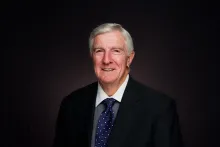
Before his retirement in 2021, Dr. Donald Ward pastored churches in Texas and Louisiana, and taught at Ambassador Bible College in Cincinnati, Ohio. He has also served as chairman of the Council of Elders of the United Church of God. He holds a BS degree; a BA in theology; a MS degree; a doctor’s degree in education from East Texas State University; and has completed 18 hours of graduate theology from SMU.
