

Roy Holladay
This transcript was generated by AI and may contain errors. It is provided to assist those who may not be able to listen to the message.
I recently spoke on the subject of tithing. In going through that sermon, I demonstrated that tithing is the system that God has always used to support His work on earth. As the Bible very clearly brings out, the tithe belongs to God. It's His, and it's up to God to give it to whoever He believes it should be given to. So God has normally given it to the priesthood that He was working through at that time. What has changed over the years is not tithing but the priesthood because God has not always worked through the same priesthood. If you remember back when Abraham paid tithes, he paid it to Melchizedek. Later on, when God chose Israel, God chose the tribe of Levi. The Levites were the priests, and God gave it to the Levitical priesthood. Then, in the New Testament time, you find that Jesus Christ is our high priest. Hebrews 7 says He is a high priest after the order of Melchizedek.
So therefore, the tithes are given to the New Testament church and ministry. As we demonstrated in that sermon, tithing is consistently taught in the Old Testament. It's also taught in the New Testament. Tithing has not been replaced by what some people would call voluntary giving.
Over the years in the church, I've seen various ones who have said, well, there's no need of tithing anymore. All God requires of a Christian in the New Testament, or under the New Covenant, is that we give. I don't know how many of you were around in 1974 when the associated churches started. I've seen a number of groups over the years who have left, gone out and started their own group. One of the first things they do is do away with tithing.
Not real smart, but they say, well, we're going to do away with tithing, and we're going to depend because God's people will give more. After three or four months, they stand up, or somebody stands up in services and says, oops, we made a mistake. We think you should have been tithed. I remember with the associated church, it split them down the middle because there were those who would not go along with that, and there were others who would.
Has God just set up a voluntary type of system today? As we discovered last week, God doesn't need our money. God's not a pulper. He's not poor. It's not a matter that He has to have our money. God could create tons of gold and silver right now. He could fill this room with gold. He could create diamonds, emeralds, rubies, precious stones, and fill the whole valley here with those type of precious stones. What God is interested in is our character, and He's more interested in our attitude and our approach. This is what He's looking at.
Are we willing to put Him first and obey Him? This is where the test always comes from.
We know in Matthew 6.33 the Bible says, Seek you first the kingdom of God in His righteousness.
So God is more concerned about our seeking Him first, seeking His kingdom and His righteousness.
Tithing and giving offerings are a part of the worship of God and show us how to worship God. The same reason exists for multiple tithes today as existed in the Old Testament.
In the Old Testament times, they had three tithes, as we will see. There is still the same reason for those tithes today. The reasons have not gone away. It is a method that God is used to support His work throughout all ages. We found last week, or the last time I spoke, that the first tithe is given, number one, to help proclaim the gospel to the world.
Secondarily, for support of the ministry, so that you can have a ministry, for the care of the local congregations, because it does cost money to rent a hall and take care of all of the needs of a local congregation. But there still is a need to finance our ways to God's holy days, to the Feast of Tabernacles, as an example. There are expenses connected with that. And if you have to go to a place like Panama City, Jekyll Island, Daytona Beach, overseas, how do you pay for that? Also, you find there is a need to help the poor and the needy. And as the Old Testament says, the poor you will always have with you. And so the Bible very clearly brings out that these are needs that need to be met and need to be taken care of. Now God, in His wisdom, His understanding, provided a tithe to cover each one of these needs. And the last time we only had time enough to discuss first tithe.
So, today I'd like to look at the other two categories and go through those in the Scriptures.
Number one, festival tithes. Number two, taking care of the needy. What does God say about both of these categories? Well, we find a very interesting Scripture back in Deuteronomy 12. So, if you'll turn to Deuteronomy 12, verse 17, I want you to notice here that we hear Deuteronomy 12 beginning to read in verse 17. God says, you may not eat within your gates the tithe of your grain or your new wine or your oil or the first born of your herd or of your flock or of any of your offerings which you vow of your free will offerings or of your heave offerings of your hands. Now, within your gates means within your home for them. Anciently, Israel, like a lot of countries, most of the cities had walls around them. They had gates to eat within your gate men locally. As we find that, verse 18, you must eat them. Notice you can't eat them at home, but you must eat them before the Lord your God in the place which the Lord your God chooses. Now, where did God choose in ancient Israel to place His name? Well, it was Jerusalem. So they were to come up to Jerusalem where God chooses you, your sons, your daughters, your male servant, your female servants, and the Levite who is within your gates. And you shall rejoice before the Lord your God in all which you put your hands. So here is a tithe that you are to eat.
Now, as we clearly went through this the last time I spoke, the first tithe you cannot eat.
It's given to the priesthood, or in that case, the Levites, to do the work that they had to do at that time concerning the temple. And let's notice in Numbers 18, you can hold your place here. Numbers 18 and verse 21, what is said here in the Old Testament concerning the first tithe, says, Behold, I have given the children of Levi all the tithes in Israel for an inheritance in return for the work that they perform, the work of the tabernacle of meeting. Of course, the temple had not been built yet, so they had a tenth, the tabernacle of meeting. Verse 24, For the tithes of the children of Israel, which they offer up as a heave offering of the Lord, I have given to the Levites as an inheritance. Therefore I have said to them, Among the children of Israel they shall have no inheritance. Now, remember when God brought the Israelites into the Promised Land, He did not give the Levites an inheritance of land or property. They did not have fifty hundred acres, they did not have farms in order to earn an income. Their income came specifically from the tithes and offerings that were given. So the first tithe was not something that the average Levite could eat. It had to be given to the priests. The average Israelite could not eat it. It had to be given to the Levites or the priests. Now let's come back here to Deuteronomy 12 again. You'll notice again, here's a tithe that the people eat. So this is obviously talking about a different tithe. It has a different function to it. It says, You may not eat it within your gates, but then it says, You must eat them before the Lord. So here was a command, You must eat this before God in the place that He chooses. Now one interesting thing you'll notice here, it talks about the firstborn of your herd. You might remember I mentioned how they would count the tithes for the herd in the Old Testament.
If man was a farmer, he had a small herd, maybe he had ten calves that year, he'd put them in a corral, he'd run them down a chute, and the tenth one to come out would be marked.
That was the tithe. He couldn't choose whether it was the runt, the best one, he just had to depend upon when it came down the chute. Now this is the firstborn. According to Jewish tradition, the firstborn was second tithe. Whenever a sheep, goat, cow, whatever had a firstborn, that firstborn was second tithe. Apparently the male went to the priests, the females went to the individuals. So they used that then for second tithe, and they would bring it up, as it says here, to the feast. Now in Deuteronomy 14 and verse 22, Deuteronomy chapter 14 and verse 22, we read about this festival tithe again, or second tithe. It says, "'You shall truly tithe all the increase of your grain that the field produces year by year.'" So notice what you tithe on. You tithe on the increase. The word increase in the Hebrew means gain, what you gain during that year. This refers to the increase in net worth resulting from the productive effort of a person during a year. In the case of a wage earner, and that's most of us, do we have anybody here who earns his wage as a farmer? I don't think so. Most of us work, we get a wage. In the case of a wage earner or a salaried individual, increase is the amount of annual wage or salary after taxes.
You can deduct your taxes, and then you pay on the net amount. Now, when it comes to a farmer, back at this time agriculturally, they would deduct all of their expenses to produce the crop. Now, today that would be equipment, fertilizer, seed, gasoline, everything that you would need to produce the crop. You would deduct those expenses, and then any profit that you made or increase over that, you would tithe on. Now, going on here in verse 23, God says, you shall eat before the Lord your God in the place where he chooses to make his name abide, the tithe of your grain, your name of your land, your name of your tide, the tithe of your grain, your new wine, your oil, the firstborn of your herd, of your flock, that you may learn to fear the Lord your God always.
Now, if the journey is too long for you, let's say you lived over in Asia Minor somewhere, and you wanted to travel back to Jerusalem. Well, it says here you could take the tithe here, it says, so that you're not able to carry the tithe. Obviously, if you're a farmer, you've got a bushel of apples, a bushel of corn, you've got a cow or two you're taking with you, and you've got all of this, you're trying to carry it up to the feast.
You wouldn't be able to. So he goes on to say, if the place where the Lord your God chooses to put his name is too far from you, when the Lord your God blessed you, then you shall exchange it for money. Now, most of us have money to start with, but here they could exchange it for money, take the money in your hand, go to the place which the Lord your God chooses, and you shall spend that money for whatever your heart desires, for oxen, sheep, wine, similar drink, for whatever your heart desires, you shall eat there before the Lord your God, and you shall rejoice you in your household.
So again, you see that this money was to be used to pay for their expenses associated with keeping the festivals. In chapter 16, chapter 16 here, of the book of Deuteronomy, in verse 13, God says, you shall observe the feast of tabernacles, seven days, when you have gathered from your threshing floor and from your winepress, and you shall rejoice in your feast, you and your son, your daughter, your male servant, and it goes on to list the Levites, strangers, fatherless widows.
Seven days, you shall keep the sacred feast to the Lord in the place where God has chosen. And then, verse 16, three times a year, all of your males shall appear before God in the feast of unleavened bread, feast of weeks, feast of tabernacles, and they shall not appear before the Lord empty-handed. So, the festival, our second tithe, was to pay for expenses associated with observing the feast, or the festivals.
Now, if God commands us to travel and stay away from our home for extended periods of time to worship Him, He certainly would have a method for financing it. And it is the festival tithe where you take ten percent of what you earn of your increase, you set it aside, you keep it for yourself to pay for your festival expenses. Now, in the New Testament, we find that Jesus Christ regularly traveled to attend the feast.
So did the Apostle Paul and others in the New Testament. In Luke 2 and verse 41, let's notice here very quickly Luke chapter 2 and verse 41, we have the example of Jesus Christ when He was a youth. It says, His parents went to Jerusalem every year at the feast of the Passover.
They sought to Passover the days of unleavened bread. They went up as they were commanded. And when He was twelve years old, they went up to Jerusalem according to the custom of the feast. And when they had finished the days, they returned the boy Jesus lingered behind in Jerusalem. So here we find Christ at a very early age keeping the Passover, the days of unleavened bread, in Jerusalem.
In John chapter 2 and verse 23, there were four times in Jesus Christ's ministry that the Passover is mentioned, that Christ and His disciples observed. Here is one of them, John chapter 2 verse 23, when He was in Jerusalem at the Passover during the feast, many believed in His name when they saw the signs that He did. But Jesus did not commit Himself to them because He knew all men. So here we find Christ again going up to Jerusalem to keep the Passover.
Now in John chapter 7, beginning in verse 1, John 7 verse 1, we find Christ observed the day of the Feast of Tabernacles. At this point in time, this is the last Feast of Tabernacles that Christ kept before He was crucified the next spring. It says, After these things, Jesus walked in Galilee, for He did not want to walk in Judea because the Jews sought to kill Him. So the Jews were out to kill Christ, so He stayed away, He stayed in Galilee.
Now the Jews' Feast of Tabernacles was at hand, and His brothers therefore said to Him, Depart from here, go into Judea, says that your disciples also may see the works that you are doing. For no one does anything in secret while he himself seeks to be known openly. If you do these things, show yourself to the world.
For even His brothers did not believe in Him. So they're sort of making fun of Him, ridiculing Christ here. Jesus said, Look, my time has not yet come, but your time is already, always ready. The world cannot hate you, but it hates me, Christ said, because I testify a bit that its works are evil. And you go up to the Feast, I am not yet going up to the Feast. He didn't say, I won't, I'm not yet going up, for my time is not yet fully come. So when He had said these things to them, He remained in Galilee. But when His brothers had gone up, He also went up to the Feast, but not openly, but as it were in secret. So Christ didn't take the main road up to Jerusalem. He went through some of the back roads, went up secretly, and if you read through chapters 8 and 9 here, you find that He gets up, He preaches, He teaches to them during the Feast of Tabernacles. So we have the example of Jesus Christ observing these festivals. Now we find that the Apostle Paul, the Apostle to the Gentiles, traveled back to Jerusalem to observe these days when He could. He wasn't always able to, and so when He wasn't, He kept them locally. But when He was able, He would travel. Now you might ask yourself the question, how did He finance His way back? It cost a lot of money to come from Corinth over to Jerusalem, catch a boat, and you'll get a caravan and go, let's notice Acts 18 and verse 18. Acts 18, 18. We have the example of the Apostle Paul. It says, So Paul still remained a good while. Then he took leave of the brethren and sailed for Syria. Priscilla and Aquila were with him, and he had his hair cut off in Sensoria, for he had taken a vow. And he came to Ephesus and left them there, but he himself entered the synagogue and reasoned with the Jews. When they asked him to stay a longer time with them, he did not consent, but he took leave of them, saying, I must by all means keep this coming feast in Jerusalem, but I will return again to you, God willing, and he sailed from Ephesus. So here you find he goes up to Jerusalem. And that's why verse 22 says, When he had landed at Sensoria and gone up, the expression gone up almost always refers to going up to Jerusalem. Jerusalem was on a hill, and when you'd go up to Jerusalem, you'd go up. And when you would come down from Jerusalem, guess what? You'd come down.
So it says, he greeted the church, and then he went down to Antioch. So he went up, he went down. And obviously a reference to him going to Jerusalem. And he said, If by all means I might keep this feast. Now in chapter 20, verse 16, for Paul had to say, I must have decided to sail past Ephesus so that he would not have to spend time in Asia, for he was hurrying to be in Jerusalem, if possible, on the day of Pentecost. So here we have the day of Pentecost. We have the Feast of Tabernacles. And you can read in chapter 27, where he kept the Day of Atonement. And so you find that the Apostle Paul set the example here. Now in 1 Corinthians 16 and verse 8, we have an example where Paul was not able to make it back to Jerusalem, and he still kept the feast. 1 Corinthians 16, verse 8, he says, I will tarry at Ephesus until Pentecost. So he stayed in Ephesus until Pentecost. Now with the examples in the New Testament that we have, where these Holy Days were observed in Gentile areas, we realize that for us to keep the Holy Days, we don't all en masse have to go over to Jerusalem to keep them. We can observe them wherever the church places its name, in other words, wherever there are feast sites selected, chosen, then we keep them there. We keep the majority of them locally, but the Feast of Tabernacles, as we know, are kept in a regional area. So since the New Testament Church continued to observe these days, which for many meant that they had extensive travel expenses, there's no indication in the Scriptures that anything changed. There was never any doctrinal discussion that you can find in the New Testament about changing the law of tithing to a voluntary system instead of just tithing. If you remember in Acts 15, when circumcision was changed, and that's a physical thing, circumcision was changed, here was a big conference held. After a decision was made, letters were sent out, representatives from Jerusalem went out all over the world conveying the decision that was made. What if the Holy Days had been done away? What if the Sabbath had done away?
Do you think that there would not have been another conference held? Do you not think that letters would have been written? Do you not think that representatives from Jerusalem would have gone out to convey the news to everybody? Because we're not just talking about a physical circumcision, we're talking about God's Holy Days, His Sabbath. Nothing, not a peep in the New Testament about that, or about any change in tithing, except to which priesthood should be paid. So you find that there's no doctrinal discussion of this in the New Testament.
Okay, now that brings us to what we would call the third tithe, the tithe for the needy and for the poor. There's an additional biblical instructions regarding tithing for the poor.
Let's back up again to Deuteronomy 14, Deuteronomy 14, chapter 28. Verse 28 here, we read that at the end of every third year, you shall bring out the tithe of your produce of that year and store it up within your gates. Now, let's notice the difference in this tithe.
First tithe is given to the Levites. Second tithe you cannot eat the tithe of the Lord.
Now, let's look at the difference between the tithes of the Lord and the tithing of the wheat in your gates. We specifically read that. You had to go to the place that God chooses. Here is a tithe. Every third year you shall bring out the tithe of your produce of that year and store it up within your gates. And the Levites, because he has no portion nor inheritance with you, and the stranger and the fatherless and the widows who are within your gates, may come and eat and be satisfied. And the Lord your God may bless you in all your works of your hands, which you do. So this was an additional tithe that was only saved every third year, and it was distributed at that time to the needy, the orphans, the widows, the poor Levites. So this was kept in the local area and distributed in the local area to take care of the needs of people at that time.
Now notice in chapter 26, verse 12, of the book of Deuteronomy, the emphasis that is placed on this and what it's called. Verse 12, Deuteronomy 26, When you have finished laying aside all the tithe of your increase, so again we find the word increase, end the third year, the year of tithing. So that year is called the year of tithing.
And you've given it to the Levite and the stranger and the fatherless and the widows, so that they may eat within your gates and be filled. Then you shall say before the Lord your God, so you can come to God and you can offer this prayer. I have removed the holy tithe from my house, also have given them to the Levite, the stranger, the followerless, the widow, according to your commandments, which you have commanded me.
I have not transgressed your commandments, nor have I forsaken them. I have not eaten of it. In other words, I have used it for my own personal use. When in mourning, nor have I removed any of it for an unclean use, nor given any of it for the dead. There is a funeral, I have more expenses, so I'm going to take some of this and use it.
I have obeyed the voice of the Lord my God, according to all that you have commanded me. Look down from your holy habitation from heaven and bless your people Israel and the land which you have given us. Just as you swore to our fathers, the land flowing with milk and honey. And so you find you could ask for this blessing.
Now, remember, Israel was God's nation, and what God was working with here was a national blessing for those people. When the nation as a whole obeyed God, then God would bless the whole nation. When they did not obey God, then the nation came under a curse. The difference today is that you and I live in various nations, and God calls us.
He's not blessing the whole nation just because you may save all three of your tithes. You find that God may bless you, but He's not blessing the whole nation like He did back at this time. You find that Jesus Christ and the apostles taught the Christians in the New Testament that they had an obligation to take care of the needy and the poor. In Galatians 2.10, Galatians 2.10, we read this, they desire only that we should remember the poor, the very thing which I also was eager to do.
So Paul showed that he was willing to help take care of the poor. This isn't talking about third time, but it's showing that the poor still need to be taken care of. In Matthew 25, beginning in verse 34, you might remember the prophecy where Christ talked about how when I was hungry, you fed me, when I was thirsty, you gave me drink, when I was in prison, you visited me, and the people said, well, when did we see you in prison or hungry, and so on. And he said, when you do it to the least of these, my brethren, you do it to me.
So an obligation to help the needy. Now, I think it's important for us to realize that in ancient Israel, there was a seven-year cycle in place. Let's turn back to Leviticus chapter 25. Leviticus 25, beginning in verse 1, what is commonly referred to as the sabbatical year. Every seventh year, the land was to lie idle. And just as you and I, every seventh day on the Sabbath, have a day of rest where we can be rejuvenated, get a little extra sleep, more time for prayer and Bible study, come together, fellowship with one another.
So you find that every seventh year, God said, let the land lie idle. And in verse 1, the Lord spoke to Moses on Mount Sinai, saying, Speak to the children of Israel and say to them, When you come into the land which I give you, then the land shall keep a Sabbath to the Lord. Six years you shall sow your fields, six years you shall prune your vineyards and gather its fruits. But in the seventh year there shall be a Sabbath of solemn rest. For the land, a Sabbath to the Lord, you shall neither sow your field nor prune your vineyards.
What grows of its own accord of the harvest you shall not reap nor gather the grapes of your unintended vines, for it is a year of rest. And the Sabbath produce of the land shall be food for you, for your male and female servants, and for your livestock, as we see in verse 7.
Now verse 18, God says, So you shall observe my statutes, keep my judgments, and perform them, and you will dwell in the land in safety. Then the land will yield its fruit, and you will eat your full and dwell in safety. And if you say, What shall we eat in the seventh year since we shall not sow nor gather of our produce? So what are we going to eat?
Then I will command my blessing on you in the sixth year, and it will bring forth produce enough for three years. So what you have in the sixth year, God promised to give a superabundance so that they would have more than enough to eat on the end of that year through the seventh year and the beginning of the eighth year until a new crop came in. So God said that He would take care of them. Now what you find is the land needs to rest just like our human bodies do. And one of the reasons why we begin to have problems in agriculture is because we overwork the land, we abuse the land, we force the land. In our society today, people will, if they can get two or three crops in one year off of a piece of property, they will force it. And after a while, you find if you don't allow the land to rest, you begin to take all the nutrients out of the soil. You begin to abuse the soil. And after decades of doing this, you have a situation where the soil loses its nutritional value. Now, the soil needs to rest. And by so doing, it can be replenished. And this is what God intended. Many times today, you have what's called hard pan. I remember growing up, I grew up on a farm. We, not too many miles from here, we had a field where we grew corn.
Right in the middle of it, it was hard pan. My dad would go out with a tractor, and sometimes even with a heavy tractor and plow, you couldn't cut it. You'd have to go through, and he'd go over that area several times, take a hairl, you know, go through disc. You know, you'd go back and forth, back and forth to try to break that up so you could plant something and nothing would ever grow in there. Well, that's what happens to the soil. So God says, the soil needs to rest, and in so doing, it becomes more productive. Now, the reason why I mention this is, this leads to a conclusion. And the conclusion is that every third year, tithe, was the third year of a seven-year cycle. Now, what I mean by that, the third and sixth year of the seven-year cycle was the third tithe year. It was not the third year, sixth year, ninth year, twelfth year, fifteenth, eighteenth, twenty-first. Guess what happens if you follow that reasoning? When you come to the twenty-first year, you've got a problem. It is a sabbatical year. You don't grow any crops. And if it's also supposed to be the third tithe year, where you take what you produce and give it to the poor, now you've got a contradiction. You can't do it during that year because you haven't grown a crop. So you have nothing to give. So every twenty-first year, that would be a problem. So, very clearly, the third tithe was saved during the third and sixth year of a seven-year cycle. And then you would start all over again. And that's the reason why the Church has always followed that. Now, the problem today in modern times that we live in is how do you apply these principles and these laws? Let's take the sabbatical year. You find that today, most farmers would say, there's no way that I can keep the sabbatical year because I've got, number one, a huge land payment. I've got to pay the bank back.
Now am I going to make my payment? I've got my taxes to pay. And so I can't do this.
Well, the Church over the years has ruled that the principle still applies. You need to let the land lie idle. But we have said that you can do it through rotation. You don't have to let the whole land lie idle. You could do one-seventh of it every year. So you put this part over here, let it lie idle. You continue to farm the other. You see, we have to try to apply these principles today in the society that we live in. Now, in modern times, some national governments, and I would say all national governments, have instituted mandatory taxes. What are the two surest things in life? You know, it's death and taxes.
And I'm not sure about death, but you can always count on taxes. And they will tax you when you die, as we know. That you find that they have mandatory taxes for social welfare and care of the poor, leading to a dilemma. And the dilemma is this. Do we, who want to be obedient to God, to His laws, to His commandments, pay a third tithe and do it twice? When I say twice, wants to the government and wants to the church. Are we obligated to pay a special tithe in addition to taxes that are used for welfare to care for the maintenance of the poor?
I want you to notice a statement, and again, this statement you can find on the member website under the study papers. But this is a statement that was approved by the Council of Elders back in September 1996. Let me read from this, because it clearly explains what our present position is, and how we administer third tithe today. It says, the Bible teaches that Christianity involves care and concern for those less fortunate. James 1, verse 27. The Old Testament gives instructions regulating contributions that are commonly called the third tithe for those in the community who are typically in need of financial assistance. Many nations in our modern world have various social programs, the effect and intent of which is to fulfill the biblical purpose of third tithe.
Now, remember this. Israel was a nation. Their national laws, governing them, are found in Exodus, Leviticus, Numbers, and Deuteronomy. God was their king. He was their ruler. He set the Levites and priesthood up to regulate the religious worship of God. They were also the judges, and they also were the teachers of the people. And so, when God said for them to tithe, they didn't have taxes to pay. They didn't have property to buy as far as the land that they own.
You basically find that all they had to do was to tithe. And so, consequently, as long as they obeyed God, God blessed them. But we live under a totally different system today, as we shall see.
In 1982, Mr. Herbert Armstrong was presented with the facts regarding this form of taxation in Britain and Scandinavia and the impact it had on individual wages in the nations.
Mr. Armstrong recognized that the modern states in Europe had to a large extent assumed the church's responsibility in caring for the needy. Therefore, Mr. Armstrong made an administrative decision that members in Britain and Scandinavia did not need to pay what, in effect, would have been an additional third tithe to the church. As Mr. Armstrong put it, the state, to a large extent, takes care of the widowed, the elderly, the unemployed, the orphans, and the destitute.
We, however, pay for this through contributions deducted by the government at the source.
That means they take it out of your paycheck before you ever see it.
He also reminded the church that despite what national governments may do to help the disadvantaged, there will still be needs within the church that national social programs do not address. Therefore, we should from time to time make offerings to the church assistant fund. Later, because the same principle applied, the same administrative decision was made for other countries in Europe and eventually for all nations in which the church had congregations except the United States. So, by 1986, every country in the world was following this principle, but the U.S. Mr. Armstrong did not address the issue of Third Tide for the members in the United States. Nevertheless, we carefully examine the United States, the social system, welfare programs funded by taxation in the United States. We can readily see the principle regarding the administration of Third Tide that applied internationally applies to the United States as well. At no time did Mr.
Armstrong deny the biblical teaching of Third Tide, and Third Tide is a living principle, nor the church's responsibility to take care of a needy. On the contrary, he stressed the need for members to continue to support the church's assistance fund. However, he did recognize that the amount members had paid in Third Tide and more was, in fact, taken from them to fund these national social programs. Therefore, he ruled that members did not need to pay what, in effect, was an additional Third Tide to the church when governments were taxing them and using the tax for the same intent and purpose as the biblical Third Tide. So when you look at Third Tide, which would be 10% every third and sixth year out of a seven-year cycle, that amounts to about 3% a year.
You know, just looking at, maybe a little more than that, 33%, somewhere in that area.
What you find is certainly much more than that is taken out of our wages to fund these type of social programs. Again, we're under different governments today. So what was the conclusion that the council came up with? Therefore, the Council of Elders has resolved that where governments provide programs, the intent and purpose of which is to provide for the needs of those that the biblical Third Tide was designed to assist, that where such programs are funded by an annual rate of taxation greater than the biblical Third Tide, members are not obligated to pay what amounts to an additional Third Tide to the church. Council of Elders further resolves that since there will always be members of the church who will need help and will not be adequately provided for by national governments, social programs, and since a clear example in Scripture is that the church takes care of the needy, then those members of the church who are able are encouraged to contribute to the church's assistance fund so that the biblical injunction to care for the needy within the church can be fulfilled. Now, we still have members who pay Third Tide every third and sixth year of a seven-year cycle, and that's fine. You know, if they're they want to and are able to do that, nobody says you shouldn't. We're all responsible to contribute to the church assistance program. Because of the heavy tax burden, the question has also come up concerning do you tithe on the net or on the gross? We addressed this topic also back in May, 1996. Notice the statement that was written. As a result of the question about the administration of tithing, the Council of Elders has approved the following statement. The statement deals with the administrative area of tithing on net income. Do you tithe on gross? Gross is what you make before your taxes are taken out. Net is what you make after taxes are taken out.
Tithing on net income. The Church of God needed to make a decision from time to time regarding the administration of tithing. There are many factors that demand such decisions be made.
Our modern world creates situations and circumstances which require that we address how to administer the doctrine of tithing.
1982, Mr. Herbert Armstrong came to the conclusion that since members in various European nations or countries had no control over the deduction of taxes from their income and derived only minimal economic benefits from payments of such taxes, the taxes withheld should not be considered increased for the purpose of tithing. Mr. Armstrong subsequently applied the principle to other nations. There are some nations in Europe where anywhere between 40 and 60 percent of their income is taxed, and they have to live on the rest. Now, it's getting close to that here in this country, as we'll see. Our modern system of economics is quite different from the biblical time. Think of it from this way. When Israel went into the Promised Land, God gave them land, and they were given property according to the size of the tribes and according to the size of the family. Now, I don't know how much they inherited, but I'll just throw out a figure.
This is just my figure. If you were a small family, maybe you got 50 acres. If you were a large family, maybe you got 100 acres. So, you had that. You could grow your crops on it. You'd have your cattle, your chicken, your fruit trees, your garden, and so you would be able to eat off of the land, raise a crop, sell it, and have additional funds. So, there were no payments for property.
Now, if you bought a house in the city, you had to pay for it. But as far as the land was concerned, no land payments. So, that's a distinct advantage. If you're a farmer today and you want to go out here and buy a farm 500 acres to farm it, how much are you going to pay per acre? $1,000, $2,000.
You may owe a million dollars. You got to pay that. There was no property tax on the land.
How many of you pay property tax on your houses that you own? We all do, don't we? I remember back in 1963, our regional director lived in New Jersey, and in 1963, think back how many years that was, he had to pay $1,000 a month property tax to live in New Jersey. What would that be today?
I'll guarantee you it's more than $1,000, but that's what he was paying at that time.
All they had to do was give their tithes, save their second tithe every third year.
They would bring a third tithe up or set it aside within the city to be able to take care of the needy. So they didn't have all of the expenses like we do today. So it's a completely different system. Furthermore, our system of taxation going on with the letter here has a greater impact on wages and salaries than in previous ages. If we take into account the various forms of taxation, such as income tax, the average person paying 20-30 percent, income tax, sales tax, 9.23, I think, where we live in Cleveland, value-added tax. Well, they're talking about adding that. That's true in many European countries, value-added tax, property tax, social security tax. Any kind of tax they can think of, they add to you. The burden is often oppressive, and it certainly is. I remember back in 1963, I was a senior at Ambassador College, Norman I were seniors that year, and I got to sit in on a ministerial conference, the first ministerial conference I sat in on. There was a question asked about a man in Australia.
He paid 90 percent of his income to the government. He made $100,000. He took $90,000. He had 10,000 left. It was his third tithe year. The question was, what did he pay third tithe on?
If he paid on the gross, 10,000, 10,000, 10,000. He didn't have 30,000. He only had 10.
The decision was made he would pay on the net, because the government had taken away the rest. I mean, that's what we're talking about. Look at all of the high taxes just for a loaf of bread. You take a farmer who grows the wheat, he's got a land tax he's paying. He's bought a tractor, and he's still paying on it. He's paying taxes on that. He buys gas. He pays taxes on that. He buys his fertilizer. He pays taxes on that. He has gasoline. He pays taxes on that. He's got to pay somebody a wage to farm. He pays their taxes. Then it's harvested and it goes off.
And at every step of the process, there's a tax that's put on it. The trucks are taxed for the gas that they have and over-the-road taxes. It just goes on and on. If you wonder, there's anything but taxes and a loaf of bread, or anything that is produced in this country.
That's the rate of high taxation that we're faced with. It says the church recognizes the nature of such taxations. Therefore, the Council of Elders has adopted the following proposal.
While the church acknowledges the validity of God's law of tithing, it also recognizes the excessive level of taxation and their impact on individual incomes. The church believes that the appropriate definition of increase is net income after income tax. Therefore, the church teaches that the tithe may be calculated on net income after income tax has been deducted.
Of course, members are free to pay taxes on gross. If a person wants to, they certainly can.
Before income taxes are deducted, and if they so choose, they're free to make contributions above.
The gross if they want to. Nobody's going to tell you not to. That's between you and God.
Now, let's look at the administration of third tithe today. There have been some who become upset over how third tithe is administered. Third tithe is administered. We encourage everyone to send their third tithe into the home office. It's collected there, and then if there's a need in a local area, then those needs are covered by that third tithe. Now, the principle in the Old Testament was that it was kept within your gates. Let's go back to 2 Corinthians chapter 8.
In 2 Corinthians chapter 8 and 9, we have two chapters that deal with giving offerings.
This is not talking about tithing. It's not talking about first tithe, second tithe, or third tithe.
It's talking about offering. But the principle expounded here is a principle that we have taken because it's a biblical principle. Paul expounded, and we have applied it to how to administer third tithe. Now, let me show you what I mean. When United first started, we looked around and we said, you know what? We have a lot of small churches, and we have larger churches.
The Chattanooga Church averages 90 to 100 plus, generally in attendance. Rome averages 25. We've got a lot of churches that have 25-30 members. We have churches that have as many as 600 members.
So, if you collected all the third tithe and you kept it locally, a church with 600 members has what?
We've got a big bank account sitting there, probably a few hundred thousand dollars, the third tithe. And what if they don't have very many widows? Well, it's sitting there.
You've got a smaller church that might have an older congregation, but you're three widows who need help. And yet, they don't have any money.
So, what we said in order to be equitable so that the needs of everyone are met, that we pool our resources and then we use the funds where they're needed. And those who have more can help those who have less. And when those who have less have more, they can help others.
And so, it works that way. Well, notice this same principle is brought out here in 2 Corinthians chapter 8. We'll begin to read in verse 5.
He's talking here about the collection of the offering for the poor saints in Jerusalem.
And you'll notice here, he says, not only as we had hoped, but they first gave themselves to the Lord and then to us by the will of God. So, God is interesting in us giving ourselves totally to Him.
And then we can serve. Now, notice in verse 12, for if there is first a willing mind and it is accepted according to what one has, not according to what one does not. So, if you don't have it, you can't give it. You give what you have. That's the principle. For I do not mean that others should be eased and you burden, but by an equality that now at this time your abundance, so they had an abundance, may supply their lack. In Jerusalem, they were going through a famine and they had a lack.
And that their abundance may also supply your lack, that there may be equality. As it is written, he who gathered much had nothing left over and you who gathered little had no lack.
The word equity here means even-handedness, fairness, impartiality. Let me read from the CEV translation. Beginning in verse 13, I'm not trying to make it easier for others by making life harder for you or taking your money and giving it to others, but it is only fair for you to share with them when you have so much that they may and they have so little. Later, when they have more than enough and you are in need, they can share with you. Then everybody will have a fair share.
So, you see, he is expounding a principle. Those who have it can give it to those who don't, and when those who don't now have it, they can give it to others. Actually, when the Constitution of the United Church of God was drawn up, this was placed in it. The equitable distribution of funds so that all of the needs of churches could be met. We realize that some of the smaller churches might not even be able to pay for their hall rentals and the upkeep of a local church area.
So those church areas who had money would be able to help those who need it. The ESV translation says, verse 13, I do not mean that others should be eased new burden, but that as a matter of fairness, your abundance at the present time may supply their needs so that their abundance may supply your need, that there may be fairness. So it's talking about equity, about fairness, and looking after everyone. So this is certainly a biblical principle that was applied in the New Testament, and we have taken that principle to use it for the administration of the tithes within the church. Now there are some who claim, well, you know, the Bible does not teach three tithes.
Their claim is that the third tithe, in the third and sixth year, wasn't actually a third or an additional tithe, but was only taking the first tithe and administrating it different, you know, giving it to the needy. Now there are a number of writers who lived back at this time, who lived during, you know, what we would call the time of the New Testament, as well as the Old Testament, who actually have written and given credence to exactly what I've said here. Many of you are familiar with Josephus, a Jewish historian. Josephus lived in the first century. He was there when Jerusalem was destroyed. In his Antiquity of the Jews, book 4, chapter 8, section 8, notice what he says about second tithe.
Let us, or excuse me, let there be taken out of your fruits a tenth, besides that which you have allotted to give to the priests and the Levites. This you may indeed sell in the country, but it is to be used in those feasts. So here's another tithe that is to be used in those feasts, and sacrifices that are to be celebrated in the holy city. For it is fit that you should enjoy those fruits of the earth which God gives you for a possession. And then concerning third tithe, again, Antiquities of the Jews, book 4, chapter 8, section 22, Josephus says, besides these two tithes, first tithe, festival tithe, beside these two tithes, which I've already said, you are to pay every year. So notice those were to be saved every year. The one for the Levites, the other for the festivals, you are to bring every third year, a third to be distributed to those that want, to women also who are widows, to children who are orphans. So Josephus very clearly states that there was a festival tithe, there was a third tithe. Now in the apocryphal book of Tobit, Tobit is not a book of the Bible, but it's an apocryphal book, it was written somewhere around 200 BC. In Tobit 1, verses 6 through 8, notice what he says, I for my part would often make the pilgrimage alone to Jerusalem for the festivals, as prescribed for all Israel by perpetual decree, bringing with me the firstfruits of the field and of the firstlings of the flock. Together with a tenth of my income and the first shearings of the sheep, I would hasten to Jerusalem and present them to the priests, errands, sons at the altar.
To the Levites who were doing service in Jerusalem, I would give the tithe of the grain, the wine, the olive oil, pomegranates, figs, and other fruits. And except for the sabbatical year, I used to give a second tithe of money, which each year I would go and disperse in Jerusalem.
The third tithe I gave to orphans and widows and to converts who were living with the Israelites.
Every third year I would bring them this offering, and we ate it, according to the law of Moses, he said. We also have the testimony of Jerome, who, like Josephus and Tobit, lived in Palestine.
Jerome said he says one tithe was given to the Levites, out of which they gave a tenth to the priests. Remember, the Levites were given a tenth of all Israel. They then took a tenth and gave it to the priest. A second tithe was applied to festival purposes, and a third tithe was given to the poor. I've got several other quotes here, but I'll just mention the idea of what I stated, that the third tithe was only the first tithe redistributed in the third and sixth year, comes from Momenides. Momenides is a 12th century Jewish scholar who is quite revered by the Jewish community because of his wisdom, and this is what he taught. Now, the only problem with that is that there were an equal number of learned rabbis who said, you're all wet, and that's not right.
We do it this way. So even though he said it, basically after a while, that's what the Jewish community began to follow and said was practiced. But that's not what was practiced originally, as we can see. It's certainly taught very clearly in the Bible, as well as being affirmed by historical sources. So brethren, in conclusion, what we find is this. God doesn't need our money to do his work. He said he could raise up stones to do his work. You know, sometimes he may look at it as a bunch of rock heads, but he said he could raise up stones, he could do his work. If he wanted money, he can go out here and create tons of it. Tithing is a commandment of God because it's a test for us. We're not lining God's pockets. It's a test of our heart. It's a test of our obedience. It's a test to see will we obey God? Will we put him first? It shows our willingness to seek first the kingdom of God and his righteousness. It demonstrates our willingness to obey God not to steal. Remember Malachi 3 says not tithing is stealing from God. So the Bible clearly teaches three tithes. Each has a different function, and the only question is how do you apply those principles in our modern society? That's what the church has had to judge. We say that the Bible still teaches the three tithes. It's just a matter of how to apply it in our day.
So tithing is still enforced today, brethren, and God is looking at us. He's looking at our hearts.
He's looking at our approach to see if we are willing to follow him. So tithing is a principle that is more for us and to test us than it is for God.
So tithing is a principle that is more for God than it is for God.
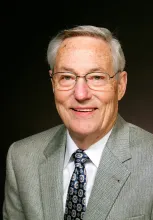
At the time of his retirement in 2016, Roy Holladay was serving the Operation Manager for Ministerial and Member Services of the United Church of God. Mr. and Mrs. Holladay have served in Pittsburgh, Akron, Toledo, Wheeling, Charleston, Uniontown, San Antonio, Austin, Corpus Christi, Uvalde, the Rio Grand Valley, Richmond, Norfolk, Arlington, Hinsdale, Chicago North, St. Petersburg, New Port Richey, Fort Myers, Miami, West Palm Beach, Big Sandy, Texarkana, Chattanooga and Rome congregations.
Roy Holladay was instrumental in the founding of the United Church of God, serving on the transitional board and later on the Council of Elders for nine years (acting as chairman for four-plus years). Mr. Holladay was the United Church of God president for three years (May 2002-July 2005). Over the years he was an instructor at Ambassador Bible College and was a festival coordinator for nine years.
