

Greg Thomas
This transcript was generated by AI and may contain errors. It is provided to assist those who may not be able to listen to the message.
Well, this is a Sabbath between the days of unleavened bread this year, and we're taught in God's Word that the Spring Holy Days, of course, remind us of our need to get sin out of our lives, pictured by leaven.
The same way we got leaven out of our homes is the kind of dedication and commitment we need to have to get leaven out of our lives. We also know that our lifelong commitment to become more like Jesus Christ is ongoing, that is something we need to do each and every day. With this in mind, today I'd like to discuss two ways that I personally believe can be very helpful in getting us to grow and get to another level of spiritual maturity. These two ways are additional tools that we can use to benefit our personal growth.
Along with repentance and prayer and fasting and meditation, the tools that I'm going to discuss today are very powerful. If you haven't used them before, or if they strike you as really different or even odd, I only ask that you hear me out and that you listen to the entire sermon before you pass judgment. I can only tell you that the two tools that I'm going to discuss today, that they're biblical, and I can tell you that they've made a difference in my life.
So I simply offer them as additional tools to enhance your personal spiritual growth. We're getting feedback in this microphone. Great. But before we look at the tools, let's remind ourselves about how the human mind is wired. Why is it so difficult to change? When we see something in ourselves that we want to change, why is it so difficult?
Well, let's explore the uniqueness of the human mind. Our attitudes are driven by our thoughts. In fact, the definition of attitude is a habit of thought, and our thinking habits are determined by our past conditioning, the way we were brought up in our families, even the church conditioning that we have, and by our emotions. And if they're left underdeveloped or uncontrolled, our attitudes will be driven by fear.
Fear is the natural, normal, self-preserving human response to something that's new or something that we think is undesirable. The emotion of fear is intended to act as a protective defense mechanism. Let me give you an example. If you're working in the garden and you see a little black and red thing slithering through the grass, it is healthy.
It is normal and natural to back off and let the little red and black thing slither through the grass and not try to play with it. If you're working in the garage and you see a spider that has an hourglass figure on it, it is healthy. It is normal and natural not to play here kitty, kitty, kitty with a black widow spider. If you're out in the yard and you see an animal come up and it's frosting at the mouth, it's pretty wise, it may be rabid, it's pretty wise not to go and get yourself in trouble.
So the emotion of fear is intended to act as a protective defense mechanism. However, here's one of the problems. If we're not careful, we will condition ourselves to respond to most or all circumstances in life from the emotion of fear. And that leads to negative and unproductive attitudes. All of this is also true with the personal changes we need to make. We don't like to admit it, but all change is scary. Even when we admit to ourselves that I need to change, I need to overcome this habit, I need to overcome this sin, I need to overcome this fault, overcoming it as new territory, it's unchartered areas and it's scary to us.
And even something that we should change is very difficult for us to change. And I'd just like to give you the biological reason why that's true. All new information and new habits that we desire to build in our lives are stored in short-term memory, in a part of our brain, also known as primary memory. It holds information for about 18 seconds. I'll give you an example this morning.
I'm getting out of the shower. I open the door to the shower and my lovely wife, who isn't here today, that's why I can talk about her, she comes bounding up to the bedroom, she opens the door, she looks at me and she says, Now why did I come up here? That's short-term memory. And the thing is, as we get older, our short-term memory is what normally is affected most. And many of us can't remember what we had for breakfast this morning, but we can give you the word for word, a conversation we had in 1964.
Why one is short-term memory, the other is long-term memory. So again, all new information and new habits we desire to build are stored in short-term memory, and it holds that information for about 18 seconds. Now on the other hand, our behavior and our established habits and patterns are in long-term memory that's stored in a different part of the brain.
But here's the problem. The brain, your brain and my brain, is so wired. It is so wired that short-term memory actually rejects anything that's new or fearful and blocks it from being stored in long-term memory. So how do we overcome this? How do we get beyond this principle? Well, the answer is spaced, repetitious learning. The short-term memory becomes less fearful of new information and change as it becomes more familiar with it.
In other words, as new knowledge is repeated over again in spaced, repetitious learning, the short-term memory eventually accepts the new information, and then it's passed on to our long-term memory and it's there.
It settles in. And here's the key. Research shows that short-term memory will accept new information and pass it the long-term memory after a minimum of six exposures. Now, for some of us, it may be more. But a minimum of six exposures short-term memory has to be exposed to a new idea or a concept or a new self-discipline before that's going to be passed over into long-term memory and even have a chance to affect our behavior.
This is, by the way, why we come to church every Sabbath. Isn't that spaced, repetitious learning? That's why we study our Bibles every day. That's spaced, repetitious learning. That's why God instituted that the Holy Day should be kept every year, that the cycle is repeated. That's spaced, repetitious learning. Well, the two tools I want to discuss today also to be effective require spaced, repetitious learning to be effective. And again, if what I say to you today seems to you to be rather bizarre, if it isn't something that you do now or something that you have considered, all I ask is that you have an open mind and you hear me out.
I simply offer them as potential tools to help you in your growth to overcome the habits or the sins that maybe you've been struggling with for many years. The first tool I want to discuss is positive Christian affirmation. Positive Christian affirmation. Christian affirmation is an important biblical principle that we often don't discuss enough.
And it's in contrast to two ditches that many of God's people fall into. Here's ditch number one that many of God's people fall into. Ditch number one is self-pride and vanity that makes one think that they're superior. This includes craving titles, prominence, wanting to be boss or controlling over others, having an attitude that God called me because I'm better than most people.
I knew a deacon once who had a pastor tell him that you've never met a man with more of God's Holy Spirit than me.
Okay, now that man suffered this first ditch deeply. And what happens is without control, a person who has that mindset eventually declares that they're one of the two witnesses, or they're a prophet, or they have a special office.
That's one ditch. And sadly, I've known a number of individuals who fall into that ditch. The second ditch that many sincere people fall into is an attitude that I am worthless and lower than a cow pie.
I have no talents. I have nothing to offer to others. I don't even know why God called me because I'm such a loser.
This mindset is usually accompanied by ongoing fear and guilt and a feeling of being inadequate, of being worthless. A feeling that God is not pleased with me.
Let's go to 2 Timothy chapter 1 and verse 6. And before we lay the groundwork here for Christian affirmation, let's see what Timothy told us.
2 Timothy, that Paul told us as he was writing to Timothy. 2 Timothy chapter 1 and verse 6.
This is one of the keys to lay the foundation for Christian affirmation. 2 Timothy chapter 1 and verse 6. He says, Paul says, Therefore I remind you to stir up the gift of God which is in you through the laying out of my hands, for God has not given us the spirit of fear.
Where did we ever think that fear motivates people, the growth? Where did we ever get that concept? God has not given us a spirit of fear, but of power and of love and of a sound mind.
What Paul is saying here is that God hasn't given us a spirit that is fearful or a spirit that feels weak. He says it's powerful.
He says that spirit gives us a sense of power that comes from God, not guilt, not worthlessness, not weakness.
He says it comes out of love and a sound mind. It's not paranoid about salvation. It's not questioning its salvation every day.
Continue. Am I saved? Am I somehow good enough? Of course we're not good enough. We can never be good enough. Only Christ makes us good enough.
But this is an important scripture because somewhere between the two ditches, the two extremes that I talked about, one in pride and vanity and someone who thinks they're superior to others, and then the other ditch of someone who thinks that they're worthless and that God can't use them, and somewhere in there is the balance of Christian affirmation, and that's the first tool that I would like to discuss.
Turn with me to John 14, verse 23. I should be bringing that bottle of wine up here, except a sermon would be a lot longer. John 14, 23. This is scripture we, by the way, we traditionally read on the Passover. It's part of the UCG Passover service.
John 14, 23. Jesus answered and said to him, If anyone loves me, he will keep my word and my father will love him, and we will come to him and make our home with him. Isn't that encouraging?
Christ says that God the Father and Jesus Christ will come and make their home inside of us.
Verse 24. He who does not love me does not keep my words, and the word which you hear is not mine, but the Father's who sent me.
These things I have spoken to you while being present with you, but the helper, the Holy Spirit, whom the Father will send in my name, he will teach you all things and bring to your remembrance all things that I said to you.
Peace I leave with you. My peace I give to you. Not as the world gives it do I give it to you.
Let not your heart be troubled. Neither let it be afraid.
Excuse me.
What is Jesus saying here? Jesus tells his disciples that when we love him, we become a disciple, and both Jesus Christ and God the Father come and make their home inside of us.
This is done by the power of the Holy Spirit. We were handpicked by God.
This doesn't make us superior, but it makes us very special in his eyes.
Now, does Jesus say that from this point on you should feel guilty?
You should be anxious about whether you're even saved?
That you should live in constant fear? That you should allow yourself to be manipulated by fear?
What does he say in verse 27? Let not your heart be troubled. Don't be anxious about your calling. Don't be fearful about what God has called you to do.
Neither let it be afraid.
John, chapter 15. Let's go one more chapter. John, chapter 15 and verse 13.
Continuing his discussion, after the Passover that night, Greater love has no one than this, than to lay down one's life for his friends.
You are my friends. This is what Jesus is saying to his disciples of all time.
You are my friends if you do whatever I command you.
No longer do I call you servants, for a servant does not know what his master is doing, but I have called you friends. For all things that I have heard from my Father, I have made known to you.
You did not choose me, but I chose you and appointed you, that you should go and bear fruit, and that your fruit should remain. That whatever you ask the Father in my name, he may give you.
These things I command you, that you love one another.
So again, in a very encouraging way, Jesus says, you are my friends, and your task is to go out and develop fruit. To grow and become more like the Master himself each day, each and every day of your life.
To take your life to higher levels of righteousness, to greater levels of conforming ourselves to Jesus Christ.
Let's now go to the book of Philippians, chapter 4 and verse 19, and we'll see an example of a Christian affirmation.
Now, who was this individual who wrote this? Well, let's ponder his background a little bit.
He was a very zealous rabbi before he was called.
He condoned the death of Stephen, the deacon, the martyred death of Stephen, and he was personally responsible for being so zealous that he went into cities and had Christians arrested and broke up families and caused some to be killed.
His name was Saul. He became converted and became known as Paul.
Anybody here ever have Christians arrested? Anyone here ever break up families by having Christian mothers and fathers arrested and separated?
Anyone here ever responsible for the death of a Christian? Paul was.
And here's what he says in Philippians, chapter 4 and verse 9. The things which you learned and received and heard and saw in me, these do, and the God of peace be with you. So he says, the good example, the good things that I do, Paul says, follow that example. Verse 10.
Now how does that strike you? Does that strike you as that statement is bold?
Does that statement strike you as maybe someone has a little too much confidence in himself?
I want you to notice this example of Christian affirmation.
He says, through Christ, not through anything of my own, not of my own talents, but through Christ, he says, I can achieve anything.
It's positive. It gives credit to God. It's a can-do approach to his life and to his Christian calling.
Brethren, repentance is a very important biblical quality, and I'm sure that we repented numerous times to prepare for the Passover this year, and that's great. But repentance is a conversation about the past. You see, when you repent, that's something that you just did. That's a conversation about the past. What positive statements are we making to move forward, to go to another level? If all we're ever doing is repenting, what positive affirmation are we making, giving the credit to God, to move forward in life? Let's go to 2 Peter, chapter 1 and verse 4. We'll be looking at some scriptures of some positive affirmations made by the disciples. Most of them were made by Jesus Christ, but many of us would feel uncomfortable comparing ourselves to a positive affirmation that Christ makes about himself. So that's the only reason I'm not going to those scriptures. We would say, well, that's Christ. That doesn't apply to me. I can't be that bold. That was Jesus that said that. And I can understand and I appreciate it. So that's why these examples that we're looking at are the examples given by the disciples. 2 Peter, chapter 1 and verse 4. Simon Peter, a bondservant and apostle of Jesus Christ to those who have obtained like precious faith with us by the righteousness of our God and Savior Jesus Christ. So how do we obtain this precious faith? Not by anything that we can do, but as he says, the righteousness of our God and Jesus Christ. Grace and peace be multiplied to you in the knowledge of God and of Jesus our Lord as His divine power has given to us all things that pertain to life and godliness. He says all things God has given, not some things, not a few things, not one thing, all things He's given to us. That through these you may be partakers of the divine nature having escaped the corruption that is in the world through lust.
So Peter was writing these hopeful words to a congregation that's very much like ours. They were given to a people who were not perfect. And you know what? We're not perfect. They were given to a people who were struggling to overcome their sins, just like we're struggling to overcome our sins. Yet Peter states that God has given us all things that pertain to life and godliness. Brethren, that is a positive affirmation. Let me read this in another translation. I'm going to read it in the translation God's Word for today. Again, 2 Peter, verses 1 through 4.
Verse 4. Through His glory and integrity, He has given us His promises that are of the highest value. Through these promises, you will share in the divine nature because you have escaped the corruption that sinful desires cause in the world. Again, that's very encouraging from Peter. Let's take a look at a couple examples from John. 1 John chapter 3 and verse 1. 1 John chapter 3 and verse 1. The Apostle John wrote, Behold what manner of love the Father has bestowed on us that we should be called the children of God. Therefore, the world does not know us because it did not know Him. Beloved, now we are the children of God. Not someday, not tomorrow, not a hundred years from now, not when you've been shut off this flesh and you're totally immortal. He says, Now you have been called the children and you are the children of God. And it has not yet been revealed what we shall be, but we know that when He is revealed, we shall be like Him, for we shall see Him as He is. And everyone who has this hope in Him purifies Himself just as He is pure. So John states here that the Father has so much love that He now, right now, calls us the children of God, calls us His children.
And brethren, I want you to take a look at verse 3. Why do we purify ourselves? Why should we grow and change or spiritually mature? Do we do it out of fear? Do we do it out of horror? Do we do it out of anxiety that we're somehow not good enough?
He says, and everyone who has this hope in Him, hope is positive, hope is encouraging. He says, anyone that has this hope that someday they'll be like Jesus when He returns. Anyone who has this hope purifies Himself just as Christ is pure. You see, it's that encouragement that prods us to get to the next level. Fear doesn't prod us to do anything except give us guilt. And what does guilt do? Guilt becomes a mental roadblock that holds us back. And all we do is we just keep hitting our head against the wall. You try to grow and change, and you make a few little baby steps, and then you fall backward. You feel more guilty. You try to grow and change, you hit your head against the wall, and it becomes a vicious cycle, all fed by the feeling of guilt and worthlessness. And brethren, that is not what God intended. Of ourselves, we are nothing. We are only cowpies. That's why Adam was called Red Mud. That was his name. But when God gives you His Spirit, that's the game changer.
That changes everything, including how God looks at us, how God views us, and how we should view ourselves. 1 John 5, verse 3.
1 John 5, verse 3. For this is the love of God that we keep His commandments, and His commandments are not burdensome. For whatever is born of God overcomes the world, and this is the victory that has overcome the world. He doesn't say, this will be someday the victory that has overcome the world. He doesn't say, this may be the victory that overcomes the world. Present tense. He says, this is the victory that has overcome the world, our faith. Positive Christian affirmation. God loves me. God has given His Spirit to me. As Paul said it so eloquently, I can do anything with Christ in me. I can achieve anything. I can overcome any problem that I have. I can make great changes in my life because of Christ and the fact that He put His home inside of me. I believe this is a very important concept. Let's go to Romans 8, verse 36.
Paul writes, He says, we are more than conquerors. We are not cowpies. We are not losers. We are more than conquerors. Nothing shall be able to separate us from the love of God, which is in Christ Jesus, our Lord. I want you to notice what all these Christian affirmations all have in common. What they all have in common is the theme that God loves us now and that He lives inside of us. We're certainly nothing of ourselves, but with God in us we can do all things. We're made righteous by Jesus Christ. We're now considered the children of God. That's our title. We're victorious conquerors over the world. These Christian affirmations should be a part of our prayers and be a part of our meditations. I'll give you some examples. Let's say that we're trying to overcome a sin or a habit, and we start out by repenting. That's a great thing to do. But then after we repent, we need to say something like, I know that with God's Holy Spirit within me, I can overcome anything. Now that's in contrast to negative reinforcement, where after repentance we say, God, I just can't seem to overcome this and do anything right. See, one is positive affirmation. The other is negative reinforcement. It's all an approach. It's all in the attitude. It's all in the perspective. How about discouragement when we're discouraged? Well, the positive affirmation, we should say, I am a child of God, and He loves me so much that Jesus Christ died for me and called me into His truth. You see, it's not pity. It's not putting ourselves down. It's not focusing on weakness. It's focusing on what Christ can do inside of us. These statements are in contrast to saying to God, God, I failed again and again, or Father, I don't know why you called me because I have so many problems. Again, those kind of statements, after we repent and we clear this late, those kind of statements that we fuel are just negative reinforcement for our faults, and then we wonder why we can't seem to overcome them. And then we wonder why year after year after year we may struggle with the same faults. It's because we've been providing ourselves negative reinforcement and not giving God the credit He deserves because He made His home in us. Now that we've seen some positive Christian affirmations, what can we learn about our attitude towards prayer? Let's go to Hebrews 4 and verse 14. Hebrews 4 and verse 14. I believe this is also part of the UCG Passover service, one of the optional scriptures that can be used in the Passover service. Hebrews 4 and verse 14.
Paul wrote, Seeing then that we have a great High Priest who has passed through the heavens, Jesus the Son of God, let us hold fast to our confession. For we do not have a High Priest who cannot sympathize with our weaknesses, but was in all points tempted as we were, yet without sin. Let us therefore come boldly to the throne of grace, that we may obtain mercy and find grace to help us in time of need. What Paul is telling us is that Jesus Christ is our Savior, and He knows, He knows what we struggle through. He knows what it's like to face temptation. He knows what it's like to be physical, and then you're sick, and you're not able to distract, you're distracted, you're not able to focus on the things you want to because you're ill. He knows the weaknesses. He can sympathize with us, because He wants to walk the earth as a human being, and He never committed sin, but being physical itself was something that He learned so that He could have empathy and compassion with all the things that we face in this life.
So let us go to the throne of grace in faith and boldly believe the things that Jesus Christ told us. When we need a prayer answered, when we pray, go boldly to the throne of grace, and let's act like the fact that He has put His home in us. Let's boldly go to the throne of grace and act like we are His friends, because that's what He told us.
Let's boldly go to the throne of grace and act like we are called the children of God, because that's what He called us. If we continually go to the throne of grace and act like a whipped puppy, then our prayers may not be answered. Paul says to boldly come boldly to the throne of grace, that you may obtain mercy and find grace to help in time of need. So let's claim those promises that are so many of them given to us in the Scripture.
So many things that Jesus promised us. Let's go to the throne of grace and claim those promises. Hebrews 9 and verse 11. Hebrews 9 and verse 11. Just back a few chapters. Paul wrote, But Christ came as the high priest of good things to come, with the greater and more perfect tabernacle, not made with hands, that is not of this creation, not with the blood of goats and calves, but with His own blood, He entered the most holy place once for all, having obtained eternal redemption.
For if the blood of bulls and goats and the ashes of a heifer, sprinkling the unclean, sanctifies for the purifying of the flesh, if all of that had a purpose and worked to a limited degree in the old covenant, how much more shall the blood of Christ, who through the eternal Spirit offered Himself without spot to God, cleanse your conscience from dead works to serve the living God? Brethren, are we still living in guilt? Are we still living in shame? When the truth is, is that the shed blood of Christ should have cleansed our conscience, cleansed totally and completely, without a feeling of somehow we're not loved by God or we're inferior or we're worthless?
Can we understand that when God makes us home in us, that it is offensive to God to put ourselves down and to have negative reinforcement after all He has done for us? Jesus Christ gave His life and shed His blood for us, came inside of us through His Holy Spirit, and instead of being positive, instead of being encouraged, instead of having a can-do attitude in spirit, we just tear ourselves down. That's not productive. That's not what God intended. Verse 14, How much more shall the blood of Christ, who through the eternal Spirit offered Himself without spot to God, cleanse your conscience from dead works to serve the living God?
And for this reason He is the mediator of the new covenant by means of death, and the redemption of the transgressions under the first covenant, that those who are called may receive the promise of eternal inheritance. That's a promise, eternal life, inheritance in the family of God. So Paul tells us that thanks to the shed blood of Christ, our consciences have every right to be clean. No one has a right to make us feel guilty or shamed. No one. If God doesn't look at us that way, what human being has the right to make us feel that way?
We should not be living in fear or guilt if we've accepted Christ as the ultimate Passover who gave His life for us. And it's only when we let go of guilt and let go of the past are we then free to serve God in the way that He wants us to serve Him. So all I'm asking to think about is the potential tool of positive Christian affirmation in your prayers.
That after you've repented, to realize, to think about these scriptures that we've read, that Jesus Christ and God the Father made their home in us, that we are considered the friends of Jesus Christ, that we are now the children of God.
And after that we've repented to use positive Christian affirmations that, yes, I can overcome anything. With Jesus Christ in me, I can conquer the world. I can be a victor. I can do most anything. With God, all things are possible. That's positive Christian affirmation. And not to continue to use negative reinforcement and then wonder why we just can't seem to have a breakthrough and overcome things we may have been struggling with for years. Well, that was the first tool. The second area I would like to discuss today is vision. It's so important that our meditation includes visioning. Now, meditation is different than daydreaming. Daydreaming is allowing our mind to wander aimlessly from one thought to another and it usually wanders in the areas of harm. For example, when we're daydreaming, we may have a scenario like this. Hey, she's pretty. Hey, John has a new car. I wish I had a new car. She's pretty. Look at the new suit Dave has. I wonder if it's available in his size.
She's pretty. I wonder who I can find to buy me lunch today. She's pretty. So when we daydream, our mind just aimlessly wanders from one thought to another and usually either turns negative or starts focusing on things that we shouldn't focus on.
Meditation, on the other hand, is focused, disciplined thinking. It's when we take time out in a quiet room, no sounds or out and walking in the woods or on the beach or whatever, and we ponder and we meditate and we think about positive, wonderful things. And it should include the fact that our meditation should be visionary. Before I explain what I mean when I say visionary, let's take a look at a couple of scriptures to understand why meditation is so important.
Psalm 119, verse 15. Psalm 119, verse 15. David wrote, I will meditate on your precepts and contemplate your ways. I will delight myself in your statutes. I will not forget your word. Notice how the psalmist doesn't say that he meditates to discover just how much of a cow pie he really is. He says, I delight myself in your statutes. Delight is joy. It's happiness. It's positive. It's can-do, not can't-do. It's things are unlimited, not that I live in a world of limitations. It's a very positive approach. Go back a number of chapters.
Psalm 145, verse 1. Psalm 145, verse 1. He says, I will extol you, my God, O King, and I will bless your name forever and ever. Every day I will bless you. You still hear some pages turning, I'm sorry. Give everyone a chance to catch up.
This is Psalm 145. And I will pick it up in verse 2. Every day I will bless you and I will praise your name forever and ever. Great is the Lord and greatly to be praised, and His greatness is unsearchable. One generation shall praise your works to another and shall declare your mighty acts. I will meditate on the glorious splendor of your majesty and on your wondrous works. Again, positive. Notice the meditation is the glorious splendor of God's majesty. It is focused, disciplined thinking, not dwelling on the bad, but dwelling on positive things.
Meditation is not simply reading, but it is reflecting and pondering on the goodness and the greatness of God and our own lives. How we can be better. How we can become more like Jesus Christ. We know, of course, that Proverbs 29, verse 18 says, Where there is no vision, the people perish. Do we use vision in our meditations? Ever thought about how much of Scripture is about vision? You know what prophecy is? Prophecy is about a vision of a preferred future.
Granted, there are some prophecies that talk about some horrible events that are yet to face the world. But the ones that we're most familiar with, that we long for and desire, are the beautiful prophecies of the world tomorrow, when a lion will dwell with a lamb, and a little child will put his hand on a snake's den, and the snake won't come out and bite it.
That's vision. That's visionary. That's what prophecy is. It's about a desired future. It's about a better future. Much of Scripture is about vision. Do we use vision in our meditations to strengthen our commitment and our faith? Do we envision the peacefulness of the world tomorrow? Do we picture ourselves as the children of God? Do we realize that the Holy Days are visionary?
Think about what the Holy Days represent. Trumpets the return of Jesus Christ. That's a preferred future. That's visionary. You can almost picture the feet of Jesus Christ coming down an amount of olives. Atonement, putting away Satan, binding him for all eternity. The Feast of Tabernacles, the kingdom of God established on earth. So much of the Bible is about vision. It's about visionary, being visionary. And here's why in our own meditations I suggest, just a suggestion, that as a tool we understand the power behind being visionary. And I'm going to give you a secular example to help you understand why it's so important. There were some studies in the 1960s that scientifically substantiated the power of vision, of being a visionary.
One study was conducted by a group of behavioral scientists and a group of junior high school boys and girls. And here was the study. The goal of the study was that they should shoot a basketball through a hoop for a set number of free throws from the foul line of a basketball court. Alright, that's pretty simple. So they randomly got two different groups. They gave them an initial test without any previous practice just to establish a baseline.
Each group was given one week to practice. They divided up into two groups. But one group physically practiced with the ball by actually shooting it. They practiced by getting on the foul line, taking a physical ball, throwing the physical ball through the physical hoop. That was group number one. Now the second group mentally practiced. They weren't allowed to hold a ball in their hands.
They were told to mentally practice just visualizing that they were standing at the foul line and shooting the ball successfully through the hoop. Just stand here and they taught them how to do it. Stand here, close your eyes, and imagine swoosh. Doesn't even hit the rim. Swoosh. So what do you think happened in this study? Well, after a week of practice, the true groups were pitted against each other at the foul line with an actual basketball. The results were that the group that mentally practiced not only had the highest percentage of improvement, but beat the group that practiced with the ball.
Now, the research was conducted in schools across the United States over and over again to establish the validity in the findings and the results remained consistent. Those who mentally practiced outperformed those who only physically practiced. The study reveals a couple of things. First, that the human mind was created by God with an incredible ability to make us better if we only tap into it. If we only realize that when the Scripture says we were created in the image of God, and that is this brain that we have, that it means what it says.
It's true what they say about mind over matter. This behavior is now used by world-class athletes and musicians, and it's been used since the 1960s.
Tiger Woods, before he gets a shot off, he envisions that ball dropping six inches from the cup.
Kids who go to the Olympics are coached by their coaches and the American team to envision the perfect performance. Envision these turns on the ice and this beautiful ending. And when they get out there and they do it, it's easy because they've already done it in their minds. They've already done it before. They've practiced before. The second thing that you can learn from this study is that positive reinforcement combined with the right attitude is unbeatable.
Now, if this is true in people in the world, how much more can we learn from this study when one has the Holy Spirit? Let's see how we can use vision to help us grow spiritually. I just want to give you an example here, something you think about. Let's say that we have a stubborn habit or a problem that we're trying to overcome. Let's say, for example, the problem is patience. How could we use vision in a meditation to strengthen us? Well, before we do that, we have to go through a number of stages. First of all, we have to make a personal Bible study on the subject and convince ourselves of the need to develop patience. I can assure you that if you haven't convinced yourself of the need for change, you will not change.
Step one is to study the Word of God and convince yourself that you need to change. Sure enough, you'll find that patience is one of the fruits of the Holy Spirit, Galatians 5, 22, and some translations called longsuffering. Then we might pray about the subject. We might ask for God's help. We might use a positive Christian affirmation like, with God's help, I can overcome a lack of patience. We might fast about the problem. We might ask a loved one to help us by pointing out when we demonstrate it so they can say, there you go again in a loving and tactful way and point it out. And next, we would meditate and envision how we can maturely handle a stressful situation. For example, you might envision you're in a store and you're looking for a cashier. A cashier doesn't show up. You finally go to check out. The cashier is extremely rude. You might envision that you're driving and some fine individual cuts you off while you're driving.
And then you envision this. We picture ourselves wonderfully handling this situation perfectly. Unlike what we normally do, we don't get angry. We don't say anything inappropriate. We calmly smile and we demonstrate patience. We reinforce what we picture with an affirmation with God's help, I can overcome a lack of patience. Another example of using vision to grow spiritually might be right after an event where we made a serious mistake.
Maybe we said something that we shouldn't have said. And as soon as the words come out of our mouth, oh, oh, we've done something that we shouldn't have done. In meditation, after repentance, in meditation, we envision the same situation all over again, but this time we handle it perfectly. This time we envision all the events that led up to us saying or doing what we shouldn't have said or done. And in our minds we envision us, because Christ is in me, all things are possible, and we do it perfectly. We handle the situation.
We have rehearsed for the next time when that occurs. We won't be caught off guard. We won't be rattled, because we use God's Spirit to envision us being able to overcome any weakness or any fault that we may have had. Another example might be to encourage ourselves. I've noticed over the years that God's people oftentimes get very despondent and become discouraged over situations, and I understand that.
I struggle with that myself. And oftentimes our mate or our friends don't perceive that we're down and that we need some encouragement. Sometimes they just don't pick up on the fact that we need to be encouraged. Well, quiet meditation and envisioning a better future can encourage us. You can use it as a tool to encourage yourself. You can use a vision of a better future. As I mentioned a little earlier, the Holy Days are a vision that God gives us annually.
The vision of a better future to inspire us and to motivate us. For example, the trumpets, as I said, pictures the return of Christ, Atonement when Satan will be spiritually imprisoned, The Feast of Tabernacles when the Kingdom of God will be established on the earth. So we can, in our meditations, we can encourage ourselves by thinking of the fact that God loves us, By thinking of the fact that how far we've come, that we're not there yet, we're certainly not perfect, But look how far we've come. Look at the growth that we've made over the years. And by thinking and envisioning a desired future, it can encourage us when we're down.
I think that can be very helpful. Let's go to a few final scriptures as we conclude the sermon today, Hebrews chapter 8. I'm sorry, chapter 11 and verse 8. Hebrews chapter 11 and verse 8. Hebrews chapter 8. Paul wrote, By faith Abraham obeyed when he was called to go out to the place which he would receive as an inheritance, and he went out not knowing where he was going. He did it by faith. Verse 9, By faith he dwelt in the land of promise in a foreign country, dwelling in tents with Isaac and Jacob, the heirs with him of the same promise.
For he waited for the city which has foundations whose builder and maker is God. By faith Sarah herself also received strength to conceive seed, and she bore a child when she was past the age because she judged him faithful who had promised.
Therefore from one man and him as good as dead were born as many as the stars in the sky and multitude innumerable as the sand which is on the seashore. These all died in faith, not having received the promises, and here's the vision part, brethren, but having seen them afar off were assured of them.
That's what we do when we envision things in meditation. We see things that are far off, but we're encouraged because we're assured of them. Think of the vision that Abraham had to say. God says, someday your descendants are going to be as many as the stars in heaven. That took vision for him to look up there and to look into the future and imagine that he has millions and millions of descendants who would spread all over the world. And God would say, your descendants are going to be like the sand on the seashore.
That's vision. That was to encourage him, a desired future, a better future, that he was to be part of. I'm going to read verse 13 in the translation God's word for today. It says, All these people died having faith. They didn't receive the things that God had promised them, but they saw these things coming in the distant future and rejoiced. They acknowledged that they were living as strangers with no permanent home on earth. If you'll turn to Hebrews 11, just going back up to verse 1, which will be our final scripture, I'd like to make a few comments.
In conclusion, there's a biblical concept that sums up the two tools that I suggest for personal growth today. The first tool I discussed was positive Christian affirmation. This is when we acknowledge our shortcomings, but know that with God's Holy Spirit we can overcome anything. And we believe it, and we respond that way, and we proclaim it in our prayers, and we tell God that we believe it.
We can add those to our thoughts and our prayers, those positive Christian affirmations. The second area we discuss today is vision. God has given us a powerful mind to envision events for personal growth and encouragement. The vision that is part of meditation that can keep us positive, keep us focused on good things, on wholesome things. The biblical concept that these two tools are centered on is what's called faith.
Have you considered that? Hebrews 11 and verse 1. I'm going to again read from God's word for today. Faith assures us of things we expect and convinces us of the evidence of things we cannot see. That's what faith is. And yes, when we say that I believe that in Jesus Christ I can overcome this weakness, maybe we haven't overcome that weakness yet.
But what are we demonstrating? We're demonstrating faith. When we meditate and we envision overcoming something, when we envision the world tomorrow and living in a better time and a better place and we encourage ourselves, what are we demonstrating when we do that? We're demonstrating faith. It's just that simple. So rather than in conclusion today, I have given two possible tools for you to ponder and consider that are biblical, that come from the Word of God, and I encourage you to look upon them as possibilities to help you in your life get to the next level.
They're just simply offered as tools for something for you to think about. And I hope that they'll give you some direction, give you something to think about, and maybe help you as it's done for me to make a positive change in your life. Have a great Sabbath day!
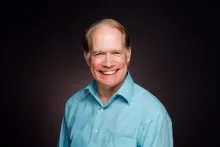
Greg Thomas is the former Pastor of the Cleveland, Ohio congregation. He retired as pastor in January 2025 and still attends there. Ordained in 1981, he has served in the ministry for 44-years. As a certified leadership consultant, Greg is the founder and president of weLEAD, Inc. Chartered in 2001, weLEAD is a 501(3)(c) non-profit organization and a major respected resource for free leadership development information reaching a worldwide audience. Greg also founded Leadership Excellence, Ltd in 2009 offering leadership training and coaching. He has an undergraduate degree from Ambassador College, and a master’s degree in leadership from Bellevue University. Greg has served on various Boards during his career. He is the author of two leadership development books, and is a certified life coach, and business coach.
Greg and his wife, B.J., live in Litchfield, Ohio. They first met in church as teenagers and were married in 1974. They enjoy spending time with family— especially their eight grandchildren.
