
Frank Dunkle
This transcript was generated by AI and may contain errors. It is provided to assist those who may not be able to listen to the message.
It's been said that if you want to see where you're going, look where you have been.
He who ignores the lessons of the past is bound to repeat them in the future.
I think those are true in the sense that you can get a certain foresight by looking backward. You can get an indication of where you're headed if you look at the history that is behind you. I think you and I can have a general idea of what next year's cars are going to look like just by looking at the progression of the designs of cars up until the present.
If you ride through country roads in the back of a pickup, or the back of a station wagon, or the back of a cart, looking backward, you get a sense of what you're going to be seeing next. You get a sense, even though you're not seeing forward and you can't see forward, you get an idea of the environment that you're going to be passing through next.
By studying political, economic, and social history and the events that have led us up to where we are today, the experts strategize the future of human civilization based on the experiences of the past up until now and based on the trends that humanity is experiencing at the current time. And they could not be more wrong. They couldn't be more wrong.
The Feast of Trumpets pictures a transitional point in the human experience. It's like a fulcrum point. It's like the middle of a teeter-totter. If we look at the seven annual festivals, we see three festivals at the beginning of the year and three festivals at the end of the year, and the Feast of Trumpets is the fulcrum. There's something very unique about the Feast of Trumpets, something very special, much more special, by the way, than the Feast of Tabernacles. What the Feast of Trumpets portrays is something that no human being has any preparation for.
No human being is created or made in a way in which they can imagine what's going to happen in the events that the Feast of Trumpets pictures. And the Feast of Trumpets is much, much more than that. Today, I'd like to examine the little festival of trumpets. It's the one that often gets raced by on our rush to get to the Feast of Tabernacles. But I'd like to examine this little festival that will rock the world, that will change all dimensions of our world as we know it. It's going to change it into something that is unimaginable by the human mind. The title of the sermon today is Trumpets, Unfathomable Change. We're going to take a journey through the Scriptures today on an exploration into uncharted territory, into places where no humans have ever gone before. And what lies beyond is a mystery that nobody can accurately fathom, not even you.
Today, church members are abuzz about Feast of Tabernacles. Where are you going? We're excited, maybe planning what we're going to see, what we're going to do. We're focused, we're prepared, we're packing, we're excited. Let me ask you a question. What feast of all the seven feasts is your favorite? Feast of Tabernacles. I've asked that question many times. Feast of Tabernacles.
The Feast of Tabernacles is not about you. The Feast of Tabernacles really has nothing to do with you. The Feast of Tabernacles is some other person's time. It pictures the time of a future generation, people who do not know God today coming to know God, and it's a beautiful, wonderful time for them. But your time is pictured by the spring feasts. Your time is pictured by Passover and coming to have the gift of repentance and knowing God, of the sacrifice of Christ stitching you together because you were a sheep that had gone astray and God brought you back by the blood of Jesus Christ and gave you repentance, followed by the Feast of Unleavened Bread, which is all about change, overcoming, growing, repenting, rejecting of the old self, the old way, accepting God and trying to live like His children, walking as it were out of our humanism and into a spiritual walk as the children of God. And then the celebration of the harvest of the firstfruits, that small group who God has been calling through the ages. And what an exciting time that is.
However, is it exciting enough? We still are pretty excited about the Feast of Tabernacles. And those days of Unleavened Bread, that flat bread, that's not very exciting, we might think. The Feast of Pentecost, that's not so big with it. The Feast of Tabernacles, that's pretty exciting.
Well, for those who are excited about repenting, for those who are excited about daily overcoming and becoming more like Christ, I have three scriptures that will rock your world, literally. I'd like to share them with you now. The first one is Revelation 11, in verse 15. Revelation 11, in verse 15.
Then the seventh angel sounded, that's the last prophetic trumpet.
And there were loud voices in heaven, very loud, saying, the kingdoms of this world have become the kingdoms of our Lord and of His Christ, and He shall reign forever and ever. A shocking new state of world affairs begins.
At that very moment, we pick up the story in Matthew 24, in verse 31. Matthew 24, in verse 31. And He will send His angels with a great sound of a trumpet, the seventh trumpet, and they will gather together His elect from the four winds, in other words, from all four directions that the wind blows, from one end of heaven to the other, the heaven where the birds fly, the air we breathe. The angels are going to gather the elect of God together. And the third scripture is 1 Thessalonians chapter 4, verses 16 and 17. 1 Thessalonians chapter 4, beginning in verse 16. For the Lord Himself will descend from heaven with a shout, and with the voice of an archangel, and with the trumpet of God. All of these take place at the very same time. And the dead in Christ will rise first. Then we who are alive and remain shall be caught up together with them in the clouds, to meet the Lord in the air. And thus we shall always be with the Lord. Now, how does that compare to our equation of excitement with the Feast of Tabernacles? How does that equate to having tame animals and still being human? Or having rain in due season and still being human? Which is the greater of the two? If we go to Leviticus chapter 23 and verse 24, we find there's something really, really different about this pivotal, pivotal feast, the Feast of Trumpets, the Feast of Unfathomable Change. Leviticus chapter 23 and verse 24 says, speak to the children of Israel, saying, in the seventh month, on the first day of the month, you shall have a Sabbath rest. It's similar to the other holy days in that sense, holy convocation. But it says a memorial blowing of trumpets. That's what's unique about the Festival of Trumpets. It's a blowing of trumpets. That's a curious event, blowing trumpets. But it turns out that trumpet blasts historically have always announced either a gathering or a warning of impending danger and war. And so these trumpet blasts, each one, announce impending danger and catastrophe. This feast, this pivotal feast, is very unique from all the other festivals.
The end-time catastrophes represented by the blowing of the seven trumpets are all about the day of the Lord and the catastrophic events at the end of this present evil age. They symbolize the progression of the day of the Lord as it moves forward, and they warn of the impending dangers, disasters, invasions, death, destruction, and eventual transfer of everything that humanity has come to know over the last 6,000 years. Now, during the last 6,000 years, humanity has come to expect things to continue basically the way they've always been. Throughout human history, things have always been about the saint. Kill the prophets, persecute the saints, so on and so forth. People are self-centered, self-minded. Everybody has always pursued gold, it says, and status and ego and vanity and selfishness. But this is a description of an age ruled by Satan the devil. It's reflected in the creation. It's reflected in the humanity that has existed on this planet. Now, we can all be very inspired by the creation. My wife and I recently drove through a few national parks, and they are beautiful, they're stunning. And I like to go out in the desert, and there's unique animals and unique plants. It's nice to go into the woods. We had a church camp out and see the various flora and fauna that exist in some of these environments. It's great to dive in the ocean and go scuba diving and get down with the beautiful fish and the coral and other things that are there. I love the study of birds and to see them up close and to feed them and know their names and check them off and buy books. But in all of these things, including the humans which are at the pinnacle of creation, there's something wrong. There's something wrong. None of them reflect the character of God. As we say here in the desert, everything out there is going to sting you, it's going to poke you, it's going to hurt you, and no matter what environment you get into, whether it's under the ocean, on the earth, or in the air, it's pretty much eat or be eaten. That's sort of the law, the rule. And when it comes to human beings, the survival of the fittest is the game or the war at hand. And when you go into the national parks, what you're really seeing is decay and erosion. And yes, it is spectacular, but the canyons and the valleys that were carved by water, or carved by glaciers, or ruined by this or that force, yes, they're powerful and they're exotic, but at the same time, that does not reflect God and His nature. As we see the end of Revelation 17, that particular chapter closing, we see a glimpse at the way things have always been. It's kind of the same old, same old. Revelation 17, in the last verse, which is verse 18, concludes with an interesting statement. You can apply this to any period of time since Nimrod. It says, and the woman, which you saw, is that great city which reigns over the kings of the earth. So going back to the first settled civilizations that mankind can go back to in Ur, southern Mesopotamia, you find that the woman, this great city, has reigned over the kings of the earth. Whether it's Babylon of old, or the empire of Babylon, or the succession of Medo-Persia, Greece, Rome, the resurrections of Rome, or the final resurrection, the woman has been reigning over the kings of the earth. That mentality is what humanity is used to. Feast of Trumpets describes a time that is the pivotal point, the fulcrum between two ages, an event that terminates the age of Satan and everything associated with the age of Satan, including the very environments, the creation, the mentality, the governments, the social, the economic. Everything terminates at that point.
In chapter 18 verse 1, the very next verse, we begin to see this change. It says, after these things, after this woman, after this status quo of humanity, I saw another angel coming down from heaven having great authority, and the earth was illuminated with his glory. And he cried mightily with a loud voice, saying, Babylon the Great is fallen. Now this isn't just another little kingdom or an empire that's collapsed. No, Babylon and all that is with it that reaches out to all kingdoms of the earth is fallen, and then it says is fallen. In other words, it's done. Jesus Christ isn't coming back to put new wine and old wineskins. He's not coming back to fix things. He's not coming back to solve the world's problems. The old way is done. In the next depiction here, it talks about Babylon has become a dwelling place of demons, a prison for every foul spirit, a cage for every unclean and hated bird. This is in reference, the commentary say, to an old collapsed environment that's left to the animals to just go in and and pick over. The caged bird, the type of unclean things, the foul spirit, the demons. Expositors' Bible commentary says, historically, Babylon the Great, the mother of all earthly prostitutes, cities fell, and now John hears the same fate announced for this mother of all spiritual prostitutes. Demons, the Hebrew word, is associated elsewhere with idolatry. The haunt is a watchtower. The evil spirits watching over fallen Babylon like night birds or harpies. A harpy is the largest of the eagle family. A harpy eagle in South America weighs 20 pounds, has a nine and a half foot wingspan. The claw of a harpy is twice the size of a golden eagle's claw, the talon. It's huge! This is a big bird. It's talking about birds at night that would land in an old fallen tower or some high place and then scout out just to go down and devour. In other words, nothing's happening there. There are broken towers that rise from the ashes of the city. That system, that way of life is done.
As it says in verse 3, for all the nations have drunk of the wine of the wrath of her fornication. The kings of the earth have committed fornication with her. The merchants of the earth have become rich through the abundance of her luxury. It's all intertwined. It's all wrapped up into a political, economic, social system that crashes and is done. It's done. Verse 24, and in her was found the blood of the prophets and the saints and of all who were slain in the earth. There's something fundamentally evil and wrong and always has been with that Babylonish mentality. But the status quo of human experience is expected to continue and humanity expects it to go forward. And yet, the term the day of the Lord indicates something entirely different. I talked earlier about where you have been gives you an indication of where you're going.
That's what the earth, that's what the people of society, that's what politics, that's what you and I, even in God's Church, tend to think of. Even when we think of the millennial period, we tend to think of what we have now continuing on pretty well. Just a change of leadership, a change of government, maybe a little change in the animal's nature there. Throw in some plants and some more rain. We're good to go.
We'll just keep on going there. Let me give you an example of what the Feast of Trumpets and the events surrounding it will do to our common concept of life on this earth. Just a little personal example. Once when I was at college in England, one of my jobs was to take satellite images from the satellites in space and print out copies of the weather for England and Europe, and then do a weather forecast using the information available, and then distribute those printed copies and photos from space to the leading newspapers in London, in Scotland, Yachting and Boating Weekly, and also a weekly newspaper in Italy.
And it was important for the college to have that recognition, and so these things had to get out, even during the Feast of Tabernacles. Now, one year, the Feast of Tabernacles was held at Minehead on the southwest coast, and during the Feast it became my lot to drive back to the college, take those photos, make those weather charts and observations and forecasts, and drive them then into London and get them to all the places they needed to go.
It just so happened on the day in which it had to happen, the satellites were coming over early, so I had to drive at night, and it had to happen on a certain day because of the scheduling of the newspapers, so I had no choices when I had to drive, and it happened to be one of those London fogs. The fog was fairly thick along the coast at the feast site, but it got worse the closer I got to London. So I set out in the car, and things deteriorated more and more, but I didn't feel I had an option just to pull up in the fog and sort of sit it out.
Had to get there, had to get the photos out, had to get the forecasts out. Mission needed to be accomplished, but as I went along in the dark, the fog got worse and worse and worse, and finally I was finding all you could see were the dots on the road, and finally it became only the dot in front of the headlight. It was all that could be seen, but plot on I did hour after hour through the night. One dot, there's another dot, oops, over there, you had to turn a little bit, oops, over there, winding your way through the English countryside, following dots on the road.
The fog was so thick that when it came to a roundabout where intersections of highways or roads would take place, even though there were lights parched around, you couldn't read the sign, so you didn't know where to go. All you were in this world of fog, so I'd have to get out of the car in the roundabout and go find the sign and try to figure out which road, and then imagine in my mind, driving around about where that road might take off, and then head off down that road.
Dot, dot, dot. Well, sometime during the night, car lights pulled in behind mine really close. It turned out to be the vice president of Caterpillar Tractors Limited. He had been hanging out waiting for some lights to come by because he too needed to get to London, and he said, I saw these lights go by and I just jumped behind him and I just followed red lights real close. Wherever they went, I went. But at some point, knowing what was ahead, understanding that if I follow the dots, sooner or later, I'm going to reach my destination.
I knew that I was in a highway. I'm looking forward. Dot, dot, dot. Smash, crash, boom! The little radio boom box I had, I remember seeing it floating in the air as it came forward and then went backward. And violent shaking and jumping of the car as I slammed on the brakes and stopped. I couldn't imagine the transition from dot, dot, dot to whatever this thing was, seeing a sign briefly.
Got out of the car and found I was in a park. Went back and looked at the dots and the dots went right up to a new curb, a sidewalk, and a park with a park bench and new bushes and trees planted in a park. The oddest thing you've ever seen. Dot, dot, park. And here's my car in a park. And underneath the car is this giant sign with a left arrow that got flipped, crushed, and smashed into the curb before the car flew over it.
I'm scratching my head when the VP walked up and said, wow, I was just following the lights and all of a sudden they were dancing and I had to choose, right or left? And I just pulled a hard left and fortunately the new road went that way. Big construction zone. You know, that is what looking back, expecting, knowing what's ahead of you is going to be like for humanity.
Suddenly what you're used to as a road is suddenly another environment totally where kids would play and people would picnic and your car sitting in the middle of it. And so the day of the Lord begins with a complete change in anything that's ever been known to mankind. In Luke chapter 17 and verse 26 we read of this very event from a different perspective. Luke 17 verses 26 through 30.
And as it was in the days of Noah, so it will also be in the days of the Son of Man. They ate, they drank, they married wives, they were given in marriage. Society had always continued this particular way. They could see it would continue that way indefinitely. Until the day Noah entered the Ark. And of all things a flood came and surrounded him. Whoever heard of a flood flooded the whole world. This is crazy. This is chaos. This is unbelievable. This isn't just heavy rain. This is something that had never happened before. A massive flood that just raised up Tyler than the mountains. Likewise, it was also in the days of Lot in verse 28. They ate, they drank, they bought, they sold, they planted, they built. They were in Sodom and Gomorrah. Life had been going on for a long time. You could see the future. And of all things, but on the day that Lot went out of Sodom, it rained fire. Rained fire? It rains water. What's the fire that's coming down? Why is it raining fire and brimstone and hot coals and flames? That's the most unusual change that a human could imagine. It doesn't make any sense. And even so, it will be in the day when the Son of Man is revealed. Yes, this is a pivotal feast, the fourth of seven. It pictures the return of Jesus Christ to the earth, but it pictures a total transformation of something that mankind has never experienced or never thought of before. It's especially associated with Trumpet's warning of this event or these events. The return of Jesus Christ in the festival season is the midway event in God's seven-step master plan of salvation. And it points us to this day of the Lord, a different individual, a different leader, different ruler, different government, a different world, and the terrifying events that will occur just before his return. Now, neither you nor I can even begin to grasp what that will be like. I know we think we can because we're in the church and we read certain prophecies, but most of those prophecies were given to men and written by men who are trying to describe in a vague sense of their visions some of the overview of the events at the end time, not the detail. When you and I hear these events, they leave us without a sense of place. They leave us with a little bit of fear, a little bit of worry. And where do I fit in that? And, oh, I hope I'm in a place of safety because I just don't see a place in there for me. I don't see a place in the Feast of Trumpets for me. I see that Jesus Christ is returning and that's good, but, oh, I kind of like the Feast of Tabernacles and the Solace and the tame animals. We don't see a sense of place for ourselves in the Day of the Lord or in what the climax of the events of Trumpets is all about. But I'd like to dig a little deeper with you and try to see into the fog of the future through the Scriptures here just for a moment and see if we can't find a definite and secure sense of place for you and me and the other firstfruits right in the heart of all of these events. If you turn with me to Revelation 19, verses 11 through 16, we dig just a little deeper. Notice just a little bit more of the context. We're going to see something here that is profound.
Revelation 19 and verse 11 says, Now I saw heaven opened, and behold, a white horse. We're back at the same event. All of these Scriptures are talking about the exact same thing, the same time, the return of Jesus Christ. Each one gives us a little bit different perspective on that momentary event. So heaven is open, and behold, a white horse. Ah, another white horse. Not one of the four horsemen of the apocalypse, not the fake Messiah, not the false prophet on the white horse who came to conquer. But here we see, he who sat on him was called Faithful and True. This is the real Messiah. And in righteousness he judges and makes war. Verse 12, His eyes were like a flame of fire, and on his head were many crowns. He had a name written that no one knew except himself, and therein lies the clue. You like clues and mysteries, don't you? You see the movie, perhaps, National Treasure? And remember all the twists and the turns and the mysteries and the keys and the sorting out. In order to get to the end and have the treasure and have the power, it was quite an escapade. Or maybe one of the movies where, oh, Indiana Jones in one of his temples, and you have to touch a certain thing or push a certain thing or put your hand there or know what to do here or there, have the right map. Well, there's the key right there. He had a name written that no one knew except himself. Now, it's an interesting thing that Satan has made counterfeits to almost everything that's holy, everything that's good. Satan creates false anti-types of truth. You know, for instance, for the Sabbath, there's an anti-type of Sunday. For the holy days, there are holidays. For a spiritual calling where eyes are open to see things that are mysteries to the rest of the world, there is a corresponding mystery religion. Where you have spiritual laws, you have traditions, where you have atonement by the blood of Christ, you have penance whereby you can pay for your own mistakes. Where you have the kingdom of God, you go to heaven. Return of Jesus Christ and his government, you have a false messiah and a false beast power government that shows up. So there are many of these things. And here we stumble upon just another anti-type.
Expositor's commentary mentions here that in antiquity, knowing the name of a god was associated with having access to the power of that god. If you knew the name of a god, you would have access to the power of that god. When a god's special name became known to people, the god's power was shared with those to whom the disclosure was made. Now, that's the false anti-type because, in fact, there are no other gods. They're just things that people invented and they carved and made up. There's only one true god, but that is a truism. That if you know the secret name of a god and you share in that name, you will receive the power and you will receive the associated power and majesty of that being. And that's true.
Let's look. I'd like you to notice also that this myth, it's kind of an old superstitious idea that's come down through time, is still retained today. There are people who believe, much like you and I, that also believe that they know the special name of God and they say that name. They also will receive some special involvement with God. Let's notice two scriptures concerning Jesus Christ's secret name. You'll want to pay attention to this, by the way. Revelation chapter 3 and verse 12. Revelation chapter 3 and verse 12.
It begins with, He who overcomes.
He who overcomes means those who really focus on the first three festivals in the festival season. Those who are about repentance and overcoming. Those who overcome. Notice the last statement in the verse. I will write on Him my new name. My secret name that nobody knows.
Revelation 2 verse 26. Revelation 2 verse 26. Again, who is this being spoken to? Who has the special in? Those who are focused and appreciate and are living what the first three festivals of the festival season are all about. Repenting, overcoming, becoming like God. And He who overcomes and keeps my works until the end. No matter what. He's living godly, she's living godly in any circumstance, any situation. Doesn't matter what comes. That's who they are. This individual, I will give power over the nations, as it says at the end of the verse, as also I have received from my father.
That secret name is written on the saints, and the power that Christ receives from His Father is shared with those who are the overcomers. What kind of power? Verse 27. He shall rule them with a rod of iron. They shall be dashed to pieces like the potter's vessels, as I also have received from my Father. That's what's going to be shared. Now let's go back to Revelation 19 and continue on, where we see He had a name written that no one knew.
In verse 13, He was clothed with a robe dipped in blood, and His name is called the Word of God, the Logos of God. And the armies, the Greek word for armies refers to troops. The troops in heaven, where as heaven the saints meet Christ in the clouds, where the birds fly. The troops of God in heaven, clothed in fine linen, which elsewhere says is the righteousness of the saints, the perfected bride, white and clean, as the bride has been perfected. Follow Him on white horses. Do you see what happens, brethren? We get the name written on us, we get the power shared, and we also ride in on white horses with Him at this very same moment that we've been reading about from all these different angles. Out of His mouth goes a sharp sword that with it He should strike the nations. And He Himself will rule them with a rod of iron, sharing that duty, as we just read in Revelation 2. Verse 16, and He has on His robe and on His thigh a name written, King of kings and Lord of lords. Now let me ask the question, what is your sense of place now in the end time event? What's your sense of place? Is it not sharing, participating with Jesus Christ in some of the big events? You and I need to act. You and I need to be diligent in being godly, so that we will qualify, not earn, but we will qualify for the gift of salvation.
There are two key issues regarding those true saints who will participate, and this is really the crux of what I want to get across to all of us today. Two key issues. You can't just say, well, I've read all about this and I'm all inspired, you know, bring it on Christ, I'm ready to be there. That's something I've always wanted for myself. That's a good, ambitious goal for me, and I'm really looking forward to that. No, it's not about that. The two key issues regarding the true saints that will participate, one, as we've read so many times already, is He who overcomes.
That's the lesson of our feasts. I call them our feasts. Our feasts, those spring feasts, because they're the ones that refer to the first fruits, the first harvest, the small harvest, of those who will assist and reign with Jesus Christ. Those who overcome are learning the lesson and living the life that we act out and learn about in the spring Holy Days. There are feasts, and we ignore them to our own peril.
If we skip forward and say, oh, I just want to go hang out in the Feast of Tabernacles. I just want to go have a lot of fun. See, I just want to be focused on tame animals, something very physical, like good food and a nice earthly environment. Not realizing that those who reign with Christ will be members of the God family and members of the God family create. And if Jesus Christ is going to recreate this Earth's environment, who's He going to use to help do that?
I think it'd be a lot more fun to recreate the Earth's environment into a godly environment with godly nature and godly attributes of everything here than to merely walk around it as a human being. Not that we would have that option anyway, because we will be judged before then. So let's continue. Revelation 21 and verse 7, He who overcomes shall inherit all things, and I will be his God, and he shall be my Son.
That Scripture resounds with me very strongly. I love that passage because it puts it all in one succinct statement. The entire purpose of your human life and my human life is all about overcoming, winning, championing over human nature, Satan's nature, fighting it on all courses, winning the battle, receiving the crown. He who overcomes shall inherit all things. All things means everything.
You inherit all there is, physical, spiritual, co-heirs with Christ, we're told, in the Bible. The second point, the second key issue is the Feast of Trumpets and the Feast of Trumpets and the resurrection is not about you, and it's not about me. It's about the God family growing, and it's about helping others reach it. That's what it's about. If we want to help and love God and help and love our fellow man, then there's a place because we will be overcoming our self-centeredness. But it's not about us. It's not about me pursuing eternal life for me. If we have any personal ambition whatsoever, then God can't use us. We're just nosing in to get something for ourselves.
We're just trying to be chief, sit by Christ, you know, on the right or the left and get something for me. There's no room for that in the kingdom. The law says we're to love God, not ourself. We're to love our fellow man as much as we love ourselves. Let's see one more prophecy of the time that the Feast of Trumpets foretells, and that regards Jesus Christ returning in glory. That's the part I'm focusing on today. Matthew chapter 25 and verse 31, we see once again this very moment in time where Jesus Christ appears.
He comes in the clouds, the blowing of the seventh trumpet. Matthew 25 verse 31, When the Son of Man comes in his glory, and all the holy angels with him, and the holy saints riding white horses with his name written on them, sharing the power, then he will sit on the throne of his glory, and all the nations will be gathered before him. But maybe this is just a split second before that. When the saints must give account, when those who are resurrected have to be qualified, as it were, before they can ride on those white horses.
It says, All the nations will be gathered before him, and he will separate them one from another, as a shepherd divides his sheep from the goats. I believe that the next part here isn't referring only to the time when Christ returns, but the time of judgment whenever it comes to a human being, be it at the first resurrection or the second resurrection, as we'll see in just a moment.
All of us are going to go through, all humans eventually will have to go through this process of either meeting the criteria for being in the family of God or missing out.
And in verse 32, he says, He will separate them one from another, as shepherd divides his sheep from the goats, and he will set the sheep on his right hand, but the goats on his left hand. Then the king will say to those on his right hand, Come, you blessed of my father, and I will inherit the kingdom prepared for you from the foundation of the world. Four, because here's the criteria that you met. You qualified by meeting these criteria. I was hungry and you gave me food. I was thirsty and you gave me drink. I was a stranger and you took me in. Now again, those are things that you can't just know by looking. You can look around the room here today and say, Hmm, who's hungry? Well, you wouldn't know, would you? You could guess. I'll bet he's hungry, because he's a guy and they're always hungry. He might have just porked out at lunch. He's probably going to sleep. He's so full. The guy next to him may have fasted for three days and is planning to break his fast at sunset tonight. You just wouldn't know. He might be asleep too, just from lack of energy. So we wouldn't know unless we cared enough to get to know people and know their situations. Who's thirsty here today? Besides me. You wouldn't know. You could guess once again, but you would have to get to know an individual who's a stranger. If you just come, Oh, I'm going to look good today. I'm walking around. I hope everybody thinks I'm looking good today. You wouldn't know who the visitors are, the travelers, the strangers, those who have needs or whether they have needs. Sick and you visited me. Again, you wouldn't see them, wouldn't think about them. In prison, well, they're locked away somewhere out of sight, out of mind. They don't come to mind easily. In verse 37, then the righteous will answer him, saying something very unique. Lord, when did we see you hungry and feed you? Or thirsty and give you a drink? When do we see you as a stranger and take you in? Or naked and clothed you? Or when do we see you sick and are in prison and come to you? And the king will answer and say to them, Assuredly I say to you, inasmuch as you did it to one of the least of these my brethren, you did it unto me. Now my take on this is this is not a checklist. You don't make a list. Oh, let's see, we better visit, take food, get some water, you know, check, check, check, check, check, check, okay, I'm good to go for the resurrection. It's not a checklist. It's a mentality because they ask the question, well, when was that? It's their mentality. It's just what we do. If you have the love of God, it is what you do. And Christ said, Oh, well, you visited this person, that person, you say, well, what? So, I mean, I was just living life. Yeah, but you see, that's my spirit in you. And you were serving and helping and caring about others, not yourself, not making excuses. You were just serving and helping. And I can use that in the kingdom. Then he'll say to those in his, on his left hand, verse 41, depart from me, you cursed into everlasting fire prepared for the devil and his angels. Whoa, whoa, whoa, whoa, wait a minute here. These are also church members. These are also people who were going about life in a religious way. And they say, whoa, whoa, wait a minute. I'm going into everlasting file prepared for the devil and his angels. How did I get from the church? So with Satan and the devil and the demons, how did that happen?
Well, he explains this here. You didn't do these things. You didn't visit me, but you said, but, but, but, but, but I have an excuse. I have a reason. I have many reasons. In fact, that's what people will say to him because he tells us that in another place. Let's go there. Matthew 7 and verse 22 kind of picks it up from that point. Matthew chapter 7 and verse 22.
Here we are at the same point in time again. Feast of trumpets portrays the return of Christ. Christ is now judging them and they say to him, many will say to me in that day, Lord, Lord, I'm with you. I'm religious. You're the Lord. You know, and I have some excuses as to why this didn't happen because first of all, excuse number one.
Have we not prophesied in your name? The word prophesied can mean teach. Haven't we taught? Haven't we preached the gospel in your name? I preached the gospel. I didn't have time to run around and visit people and help them and be giving. I was important. I had to preach a gospel. I had to work hard and sin in tithes or I had to write papers or do something. I had to study my Bible real hard. I told people at work and I wanted to preach and I wanted to do all these things and I did, in fact. I was all about doing the work. Well, that's an interesting concept.
You could say, I cried aloud and spared not and I told other people their sins, just like it says there. Ezekiel 33, I gave that warning message. Check that off. I cast out demons in your name. You can't put me with Satan and the demons. You can't do that. I don't fit over here in the lake of fire because I was casting them out. Remember? I was going around talking about the devil. I was talking about sin. I was telling him to, you know, get out of here. Get out of our life. You can't equate me with that group. You can't toss me in there with them. I don't fit. I fit with you, Lord, Lord.
I've done many wonders in your name. I had insight, wonderful knowledge. I had wonderful, prophetic understanding. I had powers. Just like in 1 Corinthians 13, I spoke with a tongue of angels. I prophesied and all the prophecies came true. You know, I was a great individual for you, Lord. I know I didn't have love, but I had all these other things.
Verse 23, And then I will declare to them, I never knew you. I never knew you. You were of a different mind. You used the words. You used the language. You talked the talk, but I don't know you. I've never associated with you, you who work lawlessness. The Greek word there is enomia, means a violation of law, of God's law of love, loving and serving others. And there is no replacement for that. There's no excuse for that. God cannot use you or me in His kingdom unless we are repenting of our selfishness, repenting of our pride, overcoming that and becoming a humble servant, leaders like His Son Jesus Christ is. That's the only individuals that are useful to Him in His kingdom. And so that's why we are judged on that. We have to be living these two principles. We have to do them every day. They have to be part of our life. And if they are part of our life, then we will be part of the events of the Feast of Trumpets. In conclusion, there is a change coming, which is going to blindside humanity. It's a total change. Everything will change. They expect things to muddle on like they always have. And somehow you get the right people in there or the right circumstance. You do the right thing. And somehow we're going to muddle on through this and go on along. And then boom! It's a new day and the heavens roll open. It's the day of a new God. It's the day of a new creation, a new divinity, a new kingdom, new environments in the world, new animals, new insects, new weather patterns, new topographical structure for the earth, new landscapes, a new nature in man, new results. Daniel 7, verses 13 and 14, we read of this day, this day of the Lord.
Once again, another glimpse, another view, another slice of the very same period of time. Daniel 7, verse 13, and I was watching in the night visions, and behold, one like the Son of Man, coming with the clouds of heaven. He came and met the saints in the clouds, but he was coming with the clouds or the angels, the angelic hosts, and ultimately the hosts of the new firstfruits. He came to the ancient of days, and then to him was given dominion and glory and a kingdom that all peoples, nations, and languages should serve him. A whole new world. We can't even visualize it. The Bible tells us that these thoughts have never even entered into the heart of the mind of man. We think that we can see them clearly somehow, but we can't. We get a glimpse, Paul tells us. We get a glimpse because we have God's Spirit, and he showed us a basic understanding. But even so, the reality is going to be exciting and somewhat numbing. The Bible study course teaches about God's Holy Days, and this statement is in the course. It says, the Feast of Trumpets represents that pivotal time in God's plan when he will bring this present evil age to an end. Boom. Done. And he will establish his rule and government over eternity. Does that excite you? Feast of Trumpets is pretty exciting, isn't it? Do you want to help out? Do you want to help out now in little ways, but meaningful ways? Do you want to be part of it then? If so, I'd like to conclude with two scriptures for you and me. These are things that I need to consider and you need to consider. The first one is 1 Corinthians chapter 15 and verse 51. 1 Corinthians 15 verse 51. Behold, I tell you a mystery. We shall not all sleep, but we shall all be changed. In a moment, in the twinkling of an eye at the last trumpet. And there it is, that trumpet sounds. Christ returns and we come back to that point again. And we will be changed. For the trumpet will sound and the dead will be raised incorruptible and we shall be changed. The second scripture is Revelation chapter 20 and verse 6. The Greek word for blessed can be translated into, oh how supremely blessed and holy is he who has a part in the first resurrection. Can we see it now? A little bit clearer. Can we see this first resurrection at the return of Christ and how supremely blessed those individuals will be above all other humans who will ever be brought into the family of God. Having Christ's name written on you, coming on a white horse, sharing the power, sharing his inheritance and serving, helping more individuals come into the God family is a wonderful opportunity. Over such the second death has no power, but they shall be priests of God and of Christ and shall reign with him a thousand years. Trumpets are coming. They are going to declare changes in the universe, not just on earth, but even in the spiritual structure and dimension and thought of much of the universe, because it's all going to be God's realm then. If you're dedicated to your calling, which is pictured by Passover, Unleavened Bread, and the Feast of the First Fruits, you will be part of the universal change that will rock this earth.
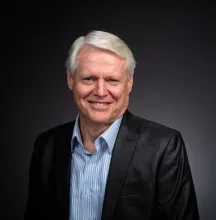
John Elliott serves in the role of President of the United Church of God, an International Association.
