
Don Ward
This transcript was generated by AI and may contain errors. It is provided to assist those who may not be able to listen to the message.
The title of the sermon today is The Truck of the Tree.
So I'll hold up this book and I'll say this is how I start the fundamentals of theology class back in college. What is the theme of this book that we hold so near and dear? We call it the Book of Life. The book of this book, the Bible, the theme of the Bible can be expressed in the following ways, the kingdom of God, the family of God. God is bringing sons and daughters to glory in his family. We often hear the term the trunk of the tree. What is meant by the trunk of the tree? The trunk of the tree has to do with those precious truths that are necessary and essential for salvation. Two years ago at a regional family weekend, a 1992 graduate of ambassador called me aside right out there in the lobby and he said, I have something I want to give to you. And he pulled out this weathered and yellow 20-year-old index card. He said, you gave me this 20 year, you gave me these truths 20 years ago.
He said you gave us a speech of exhortation on what to hold on to just before we graduated. And I wrote the key points down on this card. He went on to say that several times through the years he had pulled out this card and it provided him with the anchors and the guidelines to continue to fight the good fight of faiths. He said, I've made copies of this. I want to give one to you. He then said, I am passing this on to my children. Essentially, it was a summary of the great questions of life, but in different words. He had internalized 2 Timothy chapter 2 and verse 2, if you want to turn there, in 2 Timothy chapter 2 verse 2. We'll read one as well. 2 Timothy 2.1, You therefore, my son, be strong in the grace. Grace means divine favor, carous. Be strong in the divine favor that is in Christ Jesus, and the things that you have heard of me among many witnesses, the same commit you to faithful men who shall be able to teach others also. The truths are more precious than silver and gold, the pearl of great price. As Peter told the beggar at the gate beautiful of the temple, as he and James and John were about to enter in to give witness that day shortly after Christ's ascension, silver and gold I have none, but such as I have I give to you. In the name of Jesus Christ of Nazareth, take up your bed and walk, and so he did. He didn't say take up your bed here, he just said rise up and walk. He didn't have a bed with him.
The trunk of the tree in the individual sense centers on knowing that God exists and understanding the answers to the great questions of life. You cannot really understand the keys of the kingdom until you have an understanding of the great questions of life. You may not formalize them, systematize them in the way that we might do in a class or even in a sermon, but you know what they are. You know what it's about. So let's quickly review the great questions of life. One of the greatest questions of all time is does God exist? And we know from Hebrews 12 and verse 6 where it says if anyone would come to me, he must first of all believe that God exists. And he must believe that God is a rewarder of those who diligently seek him. Obviously, you're not going anywhere spiritually until you know and know that you know that God exists. Back decades ago, we spent a lot of time with proofs of God existence and combating evolution, and we got away from that in the late 60s and early 70s. We spent quite a bit of time with that.
So does God exist? You have to know that. What is God? God is spirit, John 4.24 says. Clearly, God is spirit, and those who worship him must worship him in spirit and in truth.
Next, what is God? Well, that's the one I just said. What is God? He is spirit. What is God's purpose? God's purpose is to bring sons and daughters to glory in his family. And that's why you're sitting here today, because God is called you. Now, the corollary to that, and corollary basically means going hand in glove with that, is what is man? Man is made from the dust of the ground, says clearly, and the Lord God formed man out of the dust of the ground and breathed into his nostrils the breath of life, and man became a living nayfish, a living air-breathing creature. Now, that word nayfish is the use of animal life and human life. We are, we don't have a soul, we are a soul. So that's what man is, made from the dust of the ground, and he is subject to sin and death. God gave him free choice, and he chose the wrong way, but promised a redeemer. So, who is man? Well, man is made in the image of God with faculties that are akin to God. He can think, he can reason, he can choose, and of course the ability to choose, and God knew he was going to choose the wrong way before he ever did. But what is man's purpose? Man's purpose is to become a member of the family of God, a glorious radiant spirit being upon resurrection. So he placed in the garden a tree called the Tree of Life, and he placed another tree called the Knowledge of Good and Evil. If you partake of that tree, the knowledge of good and evil, and decide that you will become the prerogative of good and evil for yourself, you're going to die.
So just a brief, I mean you can preach several sermons on each one of those. Seven questions. Does God exist? What is God?
What is his purpose?
And what is man who is man, and what is man's purpose? In addition to those, there are at least five understandings that Herbert Armstrong explained and formalized in the Church of God during his ministry. And to a large degree, that forms the trunk of the tree and the core of many of our teachings today. And they are drawn from, or you could say vice versa, that the seven great questions are drawn from that. These truths are, one, the nature of God and Christ. That there are two, supreme beings, individual, specific. There is not a trinity. The purpose of human existence. When I read the booklet, The Purpose of Human Existence, in the early 1960s, it changed my life completely.
And then, number three, the spiritual law of God is eternal and must be obeyed in order to enter into life. And now we talk about, and the religious world talks about, eternal life is a gift. And eternal life is a gift, but there are conditions. When the rich young ruler came to Jesus, he said, or he asked Jesus, what must I do to enter into life? Jesus said, if you would enter into life, keep the commandments.
And so throughout the teachings of the Bible, to enter into life, you have to keep the commandments. As you heard in the sermon, in addition to the spiritual law being eternal and must be obeyed in order to enter into life. Number four, a grand overview and understanding of God's awesome plan of salvation as revealed by the weekly Sabbath and the annual Holy Days.
And number five, that we are born in the family of God at the resurrection, and that we go from humankind to the Godkind. I think this is among Satan's, probably number one or two of the things that he hates most. So that we go from the humankind to the Godkind, meaning that we are, upon resurrection, we will be on the same plane of existence as God and Christ. So we go now to Acts 13. In Acts, there are two great sermons. One Acts 2, where Peter preaches about the Holy Spirit coming on the day of Pentecost. This one is by Paul in Acts 13.
In Acts 13, and beginning in verse 29, and when they had fulfilled all that was written of him, breaking in on the thought, they took him down from the tree and laid him in a sepulchre, but God raised him from the dead. Now, that statement is repeated over and over in the New Testament, that God raised Christ from the dead. And he was seen many days of them which came up with him from Galilee to Jerusalem, who are his witnesses unto the people. And we declare unto you glad tidings, glad tidings, the good news, the gospel, how that the promise which was made unto the fathers, God has fulfilled the same unto us, their children, in that he raised up Jesus again as it is also written in the second Psalm.
In Psalm 2 and verse 7, it says, and this day have I begotten you. This day have I begotten you begotten in the Hebrew as your lad, corresponding to Godow in the New Testament. And when used to the mother, it means to give birth. When he used to the father, it means to engender or to beget, as is written in the second Psalm. So in the second Psalm, in the Old Testament, we see that God begat Jesus Christ. In this case, the application is bringing him to birth.
He raised him from the dead, which was the spiritual birth. So here's what it says in Psalm 2.7, you are my son. This day have I brought you to birth, paraphrasing. And as concerning that he raised him up from the dead, now no more to return to corruption. He said on this wise, I will give you the sure mercies of David. Wherefore, he said also in another Psalm, you shall not suffer your holy one to see corruption.
Now we look at Revelation chapter 2, chapter 1 and verse 5, Revelation chapter 1 and verse 5, and we will see that Jesus Christ is the firstborn, therefore equating resurrection with birth.
Revelation 1.5, and from Jesus, who is the faithful witness and the firstborn prototarchos of the dead and the prince of the kings of the earth unto him that loved us and washed us from our sins and his own blood. Jesus, who is the firstborn from the dead. Now quickly to Romans, I'm turning there with you to Romans chapter 1. In Romans chapter 1, verse 3, concerning his son, Jesus Christ, our Lord, which was made of the seed of David according to the flesh. In the genealogy of Jesus, of course, David is in the genealogy, and he is called the son of David, and declared to be the son of God with power according to the spirit of the holiness, how by the resurrection from the dead, which is equated with birth in Revelation 1.5.
By whom we have received grace and apostleship for obedience to the faith among all nations for his name. So when you come to understand these great truths, especially coming to understand God's great purpose in creating us and to understand why you were born, and that you will be born in the family of God at the resurrection, just as Christ was, and as a glorious radiant spirit being ruling and reigning with God and Christ and the saints in the kingdom of God, then you shall have begun to grasp the trunk of the tree.
We must focus on the trunk of the tree. Hold fast and never let these precious truths slip. We must not lose sight of our reason for being, what the French call our res-en-de-tra, our very reason for being created. As noted, we were created to go from the humankind to the God-kind. Jesus Christ, the first born among many brethren, forward there a few pages to 1 Corinthians 15 and verse 19, what we call the resurrection chapter, 1 Corinthians 15 and verse 19.
If in this life only we have hope in Christ, we are of all men most miserable. There were some in Corinth that were even teaching and were attending church that there was no resurrection from the dead. But now is Christ risen from the dead? He's become the first born. He's also become the first fruits of them that slept that are dead. For since by man came death, by man came also the resurrection of the dead, for as an atom all die, even in Christ, shall all be made alive. But every man in his own order, Christ the first fruits afterward, they their Christ at his coming. Jesus Christ is the first born among many brethren, as we've already noted, and Romans 8, 17 states, has turned there back to Romans 8 and verse 17. We tend to read over this first part of this verse and emphasize maybe more than the last part, but the first part is very sobering to contemplate, and if children then heirs, heirs of God. The child inherits something that the father is. If children then heirs, heirs of God. So we're going to inherit eternal life and join heirs with Christ. Christ has already received an inheritance, eternal life in the kingdom of God. He gave up his glory, but not his godship, if I want to use that term, and was made flesh and dwelt among us. And he died for our sins, but now he's seated at the right hand of the father, making an intercession for us. And Christ has been placed over all things. If so be that we suffer with him, that we may also be glorified together. Heirs of God join heirs with Christ. Of all the understandings that Satan hates, is probably his main one. He knows that he is shut out.
And he's going to try to do everything he can do to subvert this great truth. We can develop all kinds of wonderful programs, render sincere service with all our heart, but if we lose sight of the trunk of the tree, it is all in vain. We often quote from 1 Corinthians 13, so we go a few pages forward to 1 Corinthians 13 and read those first three verses, which really summarizes to a large degree what we are to be becoming. Though I speak with the tongues of men and of angels have not charity, I become a sounding brass or a tinkling cymbal. You can be the most eloquent speaker, give the most powerful sermons that some may call powerful, but if you're not becoming as God is, it's all in vain. Though I speak with the tongues of men and of angels have not charity. See, God is love. He is charity. He is agape. And if I'm not becoming as He is, it's in vain. And though I have the gift of prophecy, understand all mysteries and all knowledge, and though I have all faith so that I could remove mountains and not becoming as God is, have charity, I am nothing. And though I bestow all my goods to feed the poor, oh yes, we like to talk about benevolence, giving to the poor, and so we should, but that will not save anyone. We'll see that also again. And though I give my body to be burned and not becoming as God is, it profits me nothing. So we often quote the succeeding verses, but we miss the central point. The central point is made in the first three verses that we are to become as God is. Christ warns us not to confuse works with conversion. This world has a lot of good works. Let's go down to Matthew 7, verse 21. Matthew 7, verse 21. Not everyone that says unto me, Lord, Lord, shall enter into the kingdom of heaven, but he that does the will of my Father, which is in heaven. Many will say to me in that day, Lord, Lord, have we not prophesied in your name and in your name have cast out devils in your name, have done many wonderful works. So you can't confuse wonderful works and great works, and we should do good works, but it will not save. It's not a substitute for obeying God.
Many will say unto me, Lord, Lord, have we not prophesied in your name and in your name cast out devils in your name, done many wonderful works. And then will I confess unto them, I never knew you, depart from me, you that work iniquity, lawlessness. And just as you heard, once again, in the sermonette, the love of God is to keep his commandments.
So we must labor in the Word and come to a deeper and more complete understanding of who and what we profess to be. We can do all kinds of wonderful things, but if we don't teach, preach, and preserve the truth and our very reason for being, it will be in vain.
We must labor in the Word. Even the Apostle Paul, who was personally taught by Jesus Christ, stated that we see darkly through a glass. I mean, many people have likened the Bible to a gold mine. You can dig in it for the rest of your life, and you'll never exhaust the golden nuggets of truth that are contained therein. We must believe, preach, teach the trunk of the tree, and cling to it for dear life. Even forest fires, hurricanes, and tornadoes do not destroy the trunk of the tree. If you ever tried to dig up a stump, you might know what I'm talking about. I have tried to dig up stumps with bulldozers. I finally succeeded, but it wasn't easy. The Apostle Paul gives a sobering warning to us in 2 Timothy 4 in verse 1. So let's go there to 2 Timothy chapter 4 in verse 1.
Finally, brethren—no, that's three.
No wonder I'm reading from Thessalonians. In 2 Timothy chapter 4 in verse 1, Now the Spirit speaks expressly that in the latter time some shall depart from the faith, giving heed to seducing spirits and doctrines of devils. Oh, to hear some new thing, as we might mention later. Speaking lies in hypocrisy, having their conscience seared with a hot iron. See, the ones the conscience has seared, there's really no way back.
Forbidding to marry, and commanding to abstain from meats.
Of course, you hear more and more about not getting married, same-sex marriage, that kind of thing, veggie burgers, and all the rest. Forbidding to marry, and commanding to abstain from meat, which God has created, to receive with thanksgiving of them, which believe and know the truth.
We are to preach the Word of God. The two great convicting agents are the Spirit of God and the Word of God. Now, let's look at John chapter 16. And here, we're in the area that we read on Passover. Jesus is speaking to the disciples, and he tells them that he's going away, and they are sad, but he says, if I go not away, the Holy Spirit is not going to come unto you.
On Pentecost, we talked about works of the Holy Spirit. In John 16, verse 7, Nevertheless, I tell you the truth, it is expedient for you that I go away. If I go not away, the comforter, the one alongside the paracleteus, as it says in John 14, 26, is the Holy Spirit. If I go not away, the Holy Spirit will not come unto you, but if I depart, I will send it unto you. And when it is come, it will reprove. Elencho means convict the world, lay a weight upon them mine. You have sinned, and the death penalties on your head convict the world of sin and of righteousness and of judgment. So the Holy Spirit is one of the convicting agents, as you see clearly here. Then we go to Romans chapter 10, the Holy Spirit working in concert with the Word of God in Romans chapter 10, verse 14. What shall we say then is their unrighteousness. I'm reading 9. In Romans chapter 10, verse 14, How then shall they call on him in whom they have not believed, and how shall they believe in him of whom they have not heard? So you have to hear the gospel preached, and that's one of the reasons why God raised up the church. That's why one of the reasons why God commissioned the church. Go ye therefore in all the world, disciple all nations, teach them to observe all things whatsoever I have commanded you. Lo, I'm with you even to the end of the age.
How then shall they call on him in whom they have not heard, how shall they call on him in whom they have not heard, and how shall they hear without a preacher, and how shall they preach except they be sent, as it is written, how beautiful are the feet of them that bring glad tidings of good things. But they have not all obeyed the gospel, for Isaiah said, Lord, who has believed our report. There are very key verses, verse 17. Faith comes by hearing and hearing by the word of God. So the two convicting agents are the Spirit of God and the word of God. The words that we speak in sermons, they are not our words. Even Jesus said he spoke the words of the Father. You read Revelation 1 and verse 1. You'll see that the revelation came from the Father. The Father gave it to Jesus, who gave it to the angel, who gave it to John. The chain of revelation. The Apostle Paul commended the Thessalonians for understanding that what Paul preached was from God. And we live in an age in which everything is subject to assessment, which we'll mention in just a moment. Let's go now to 1 Corinthians 2.13, and Paul gives his commendation to the Thessalonians because they recognized that what Paul was bringing them was not Paul's words, it was the word of God.
Now, we can't... you know, it says in Isaiah 66 that God will look to this man, the one who trembles at my word. If we don't tremble and are sobered by the word of God, are sobered by the word of God, what will sober us or cause us concern?
Verse Thessalonians 2.14, For you, brethren, became followers of the churches of God, which in Judea are now in Christ Jesus, for you also have suffered like things of your own countrymen, even as they have done of the Jews. Now, verse 13, For this cause also think we God without ceasing, because when you received the word of God, which you heard of us, you received it not as the word of men, but as it is in truth the word of God, which effectively works also in you that believe. There was great power in the word of God.
You know the scripture that I emphasize over and over the John 663, the words I speak, their spirit and their life. We have been commissioned and appointed to speak the word of God. Do you believe that you have the authority to critique the word of God, whether you have been ordained or not?
We're all God's messengers. We're all called to convey the word of God. Let me say that again. We're all God's messengers. We're all called to convey the word of God through what we say and what we do. We need to be ever aware of the responsibility we have to personally understand and impress the message on everyone that hears that it is of God and from God. As God's messengers, we are to be the light of the world. Jesus said, you are the light of the world. As the city set on the hill, no man lights the candle and puts it under a bushel, but he lets it let his light shine so that all may see. So as God's messengers, we are the light of the world. We are called to speak those same words. We sing the hymn, I sing the mighty power of God. We are to preach the mighty words and works of God and not our own. Social media is more and more captivating the time and minds of our people. And people tweet or post almost everything under the sun. Sermons are treated by someone like a movie critic treats a new movie. The tweet goes forth and the critique is posted. And as soon as the words are uttered, everyone wants to be a critic. Virtually every business, including doctors—in fact, I just got a text today. How did your doctor visit go? How were we? Virtually every business, including doctors, invites your opinion and everything from soup to hay, as they say. Let's go to Psalm 1. Blessed is a man that walks not in the counsel of the ungodly nor stands in the way of sinners, nor sits in the seat of the scornful. The seat of the scornful are those who are the great critiquers, but his delight is in the law of the Lord, and in his law doth he meditate day and night. He should be like a tree planted by the rivers of water. We're using the truck analogy that brings forth its fruit in its season. His leaf also shall not wither, and whatsoever he does shall prosper. Note what the apostle Paul writes concerning the fact that we are to convey the words of God, not our own ideas. Yes, Galatians 1 and verse 11. Remember, Paul was taught by Jesus Christ for three years. Galatians 1 and verse 11.
Galatians 1 verse 11, But I certify you, brethren, that the gospel which was preached of me is not after man. So time after time, Paul and other writers made it clear that what they were saying, what they were preaching, was not of man, but indeed it was from God. It's very sobering to contemplate whether we're speaking or listening to the word of God. Sometimes it seems that we're saying we know it all. We're just treading water waiting for Christ to return. Some have itching ears to hear something new, and if they hear something they consider to be new, then social media heats up. It is posted and sent around the world. We can ask ourselves, do I have itching ears? Can I be turned to fables? It takes discipline, devotion, determination, meditation to labor in the word of God. Let me say that again. It takes discipline, devotion, determination, and meditation to labor in the word. You must develop a love affair with the truth. We have noted several times that those who do not love the truth will be sent strong delusion. By whom? By God. 2 Thessalonians chapter 2 verses 10, 11, and 12.
David states in Psalm 119 verse 97, we sang it after the sermonette. O how love I your law! It is my meditation all the day. Now let's notice the words of the Apostle Paul again in 2 Timothy chapter 4.
Paul writes this present epistle to the young man, Timothy.
Who was an elder. Some say he was an evangelist. I don't know about that.
2 Timothy 4 verse 1, I charge you therefore before God and the Lord Jesus Christ, who shall judge the quick and the dead at his appearing and his kingdom. Preach the word. Be instant, in season, out of season. Reprove. That word reprove is the one we read, Elancho, back in John 16 verse 7. Convict. Convict, rebuke, exhort with all long-suffering and doctrine. For the time will come when they will not endure sound doctrine, but after their own lust shall they heaped to themselves teachers having itching ears. And they shall turn away their ears from the truth and shall be turned undefables. As an outcome for hearing a sermon, do you have a clearer and deeper understanding of the plan and purpose of God? A deeper understanding of what it means to be convicted and committed to God's truth with the courage to put it to practice in your life? As ministers, we need to learn to preach in the Word and not just from the Word. And there's a difference. In other words, the content should be inextricably linked to the Word of God. Now, I'm not saying there's not a time for homiletic type sermons. We call homiletic sermons Christian living sermons.
We tell a story, then turn to scriptures that support the thesis of the story or homily. Here is the formal definition of a homily. Quote, a religious discourse that is intended primarily for spiritual edification rather than doctrinal instruction. Of course, there's a time and place, as I've said, for that. But some brethren might sit in church and never hear verses read expounded from certain books of the Bible for 50 years. Have you heard verses read publicly from the book of Obadiah lately? You haven't heard it from me. I haven't read it. Now, back when we were teaching the minor prophets or studying the minor prophets in our monthly Bible studies, we covered the book of Obadiah. And, of course, there are other books that are very rarely or ever turned to. And that means, of course, that you cannot master what God wants you to master just depending on what you hear in sermons or even Bible studies. You have to dig for yourself. Everybody has to, if they're going to master the Word of God, if they're really going to labor in the Word of God.
Can you verbalize an overview of the Bible? I call it a thread of the Bible. Start with the great messengers of the Bible through time.
Start with the great events, what you might call benchmarks in the thread of the Bible. I used to do this in fundamentals of theology. We would have about 80 benchmarks and seldom did a student miss it. They knew there was going to be on the test. And so, once you begin it, in the beginning, God created the heavens and the earth. You have Satan's rebellion, you have recreation, and it just sort of naturally flows. You go all the way through the Scriptures. You need to build a framework for the parts of the big picture. In other words, visualize the hole, what the Germans call the Gestalt, the whole picture, and then put the border together. It's like a crossword puzzle, but like a jigsaw puzzle. Put the border together, and then fit the pieces inside the border. Another way to study the Bible is to identify and pursue the great themes of the Bible. Thompson's chain reference Bible presents a more systematic way to study the Bible that way, in which he chain references the great themes of the Bible.
The Bible must be viewed as a beautiful tapestry that is woven together by the Master Weaver.
You can see what was written in the Old Testament, confirmed in the New Testament. Are you tossed to and fro by every wind of doctrine? You don't have to be. The great measuring stick is the Word of God.
Isaiah writes in Isaiah 820, to the law and to the testimony, if they speak not according to this word, it is because there is no light in them. That's straight out of the Bible. So you look into the scriptures and say, well, what does it say here? We recently had a sermonette, Jim Stewart, last Sabbath, on the Berean attitude to prove all things, whether or not it is true. So Isaiah 820, then couple it with 1 John 2, 4. That I often refer to.
If any man says he knows God and keeps not his commandments, he's a liar, and the truth is not any. See, those are two great measuring sticks. To determine if what is being spoken is true. The subverting of the great truth of the nature of God through the Trinity heresy, the subverting of why you were born and what you will become in the resurrection, along with claiming that under the terms of the New Covenant, God's immutable spiritual laws no longer relevant, resulted in these great heresies splitting and shattering the church into scores of splinters. I suspect that these great heresies, coupled with the age-old heresy addressed by Jude, will be some of the greatest challenges the church will be facing in the years that lie ahead. In 1988, it's only 32 years ago, I gave a Friday night Bible study in the auditorium in Pasadena, titled The Final Battleground. The Final Battleground will cover the truths —or I should word it a different way— the Final Battleground will be over the truths that are essential to the trunk of the tree.
Or, short in a way, just say, the Final Battleground will be over the truth. The current trend in virtually every Western institution is the notion that everyone is entitled to receive everything that everyone else has.
We're quick to quote that all men are created equal.
We are all created equal in the sense of, God is going to give every person an opportunity to be in the kingdom of God. But we're not all equal in gifts, talents, abilities, height, weight, looks, whatever you want to name.
But God expects us to make the most of whatever we have. The parable of the talents in Matthew 25 covers that. But the current trend in virtually every Western institution is the notion that everyone is entitled to receive everything that everyone else has. And one of the things that they've pretty much been successful at is to do away with any penalty for violating the immutable law of God. Oh, you fornicate out of wedlock, you get pregnant. Oh, we'll put you on welfare. Oh, you want to go to college? You want to finish high school? We will provide daycare for you. Oh, you need some extra money, y'all. We can do that, too. So give everyone a free ride for everything guaranteed annual income, free just about everything you can name. We will all become consumers, no producers.
As the old Tom T. Hall song goes, who's going to slop them hogs?
Who's going to feed? Who's going to do this? Who's going to do that? This attitude of entitlement spilled over into the church during the days of Jude. First century. Let's go to Jude just before Revelation there. Jude with one chapter, and let's go to verse one. Jude, the servant of Jesus Christ and brother of James, and James says he is the brother of the Lord, brother of James, to them that are sanctified by God, set apart by God the Father, and preserved in Christ and called. Mercy unto you and peace and love be multiplied. Beloved, when I gave all diligence right unto you of the common salvation, it was needful for me to write unto you and exhort you that you should earnestly contend for the faith which was once delivered unto the saints. And that's what we're doing here today, the trunk of the tree. Focus on it. Never let it slip. Hold on to it.
Where there are certain men crept in unawares who were before of old, ordained to this condemnation, ungodly men, turning the grace of our God into lasciviousness. Grace, terrace, it means divine favor. There is unmerited grace. Unmerited grace is the fact that God created us in the first place. We have nothing to do with it. That God ordained He and the Word, the great plan of salvation, we had nothing to do with it. He made it available to us. We didn't make it available to us. God made it available through Christ and through men and women through the centuries that have been faithful to the calling. So there's unmerited grace. And then there is merited grace in that we're to grow in the grace and knowledge of our Lord and Savior Jesus Christ. That's what Peter writes in 2 Peter chapter 3, I think it's verse 18. But grow in the grace and knowledge of our Lord and Savior Jesus Christ. See, grace is God's divine favor. See, merited grace is if you do things the way that God says to do things, He will help you. He will intervene. He will help you along the way. He will favor you, and He will help you fight your battles. And so there are many things that are, I guess you would call it, adjuncts to the Ten Commandments. Vengeance is mine, I will repay, says the Lord. There are all kinds of things that the Scriptures point out that God will help us do if we do things according to the way He commands, and thereby we grow in the grace of God. There are certain men crept in unawares, ordained of old for this condemnation, ungodly men, turning the grace divine favor of our God into lasciviousness. And that has to do with sensual, unbridled kind of behavior. Lasciviousness and licentiousness go hand in hand. Licentiousness means license to do whatever you please. Only believe in the Lord, and He did everything else. So if you still believe, even though you become a narrative well, that's okay, under lasciviousness and denying the only Lord God and our Lord Jesus Christ. I will there put you into remembrance, though you once knew this, how that the Lord, having saved the people out of the land of Egypt, afterward destroyed them that believed not. A lot of people were destroyed on the way to the promised land. Various rebellions that came and went, the golden calf incident, and the angels which kept not their first estate, but left their own habitation. He hath reserved in everlasting chains, under darkness, under the judgment of the great day. They were cast down to tartar root in a condition of restraint.
So, turning the grace of God into lascentious and lascivious behavior, in view of the time and society we live in, we need to heed God's admonition that Jude gives here under the inspiration of the Holy Spirit. Now we look at verse 17. We read the first six verses. But, beloved, remember you the words which were spoken before of the apostles of our Lord Jesus Christ. How that they told you that there should be mockers in the last time, who should walk after their own ungodly lust, these be they who separate themselves, sensual, having not the Spirit.
But you, beloved, building up yourselves on your most holy faith, praying in the Holy Spirit, keep yourselves in the love of God. One of the ways you keep yourself in the love of God, for this is the love of God, that we keep His commandments, looking for the mercy of our Lord Jesus Christ unto eternal life, and if some have compassion, making a difference, and others save with fear, pulling them out of the fire. Yes, you are your brother's keeper from Genesis to Revelation. Hating even the garment spotted by the flesh, which of course would be sin. Now unto him that is able to keep you from falling, and to preserve you faultless before the presence of his glory with exceeding joy. Just think about standing there as a glorious, radiant Spirit being in the presence of God and Christ. To the only wise God, our Savior be glory and majesty, dominion and power, both now and forever. So I hope all of us not only cling to the trunk of the tree, but we are willing to give our lives for the trunk of the tree. And we close with this scripture, Revelation 12, 11. And they overcame him by the blood of the Lamb, by the word of their testimony, and they loved not their lives unto the death. So brethren, let us cling to the trunk of the tree.
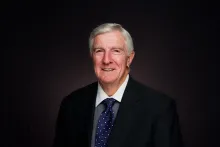
Before his retirement in 2021, Dr. Donald Ward pastored churches in Texas and Louisiana, and taught at Ambassador Bible College in Cincinnati, Ohio. He has also served as chairman of the Council of Elders of the United Church of God. He holds a BS degree; a BA in theology; a MS degree; a doctor’s degree in education from East Texas State University; and has completed 18 hours of graduate theology from SMU.
