

Jorge de Campos
This transcript was generated by AI and may contain errors. It is provided to assist those who may not be able to listen to the message.
God created man, physically speaking, as an amazingly perfect human being, an amazingly perfect body. The capability is that there are the best that you could do as a human being. Unless we mess it up, sometimes we do, and we break a lot of God's laws, we get into health issues, because we are other people, or things we eat, and we have to be careful with that.
But God put Adam and Eve in a beautiful garden, the Garden of Eden, and gave them instructions of how to live. So they had instructions to live in a way that would be right, and being able to distinguish what would be wrong. All that they needed to do was to trust God that God was telling them the right set of instructions. But one thing God did, and God always does that to all of us, He gives us, and He gave Adam and Eve, free will to choose to obey or trust Him or not.
So Adam and Eve could trust to do what God said, which was represented by the Tree of Life, and living that way, which is also represented by the fruit of the Tree of Life that they were to eat. Obviously it was a tree, but there is a spiritual implication that is the fruit of our lives, of how we live. But God also gave them the freedom of choice to decide for themselves which way is right and which way is wrong. God gave Adam and Eve the capability to develop and make their own choices, develop their own wisdom, develop their own things, and have their own, let's call it, reasoning to determine what is right and wrong.
And that was symbolized by the Tree of the Knowledge of Good and Evil, and its fruit. And regrettably, Adam and Eve chose not to trust God to live His way, but to trust their own human reasoning. Now, there's nothing wrong with human reasoning, provided it's not apart from God. So man, Adam and Eve, and we as mankind, in many ways, we choose of our own free will to do our own things.
And often, the impact, the result of that, causes suffering and pain. You see, brethren, you and I read in Proverbs 14 verse 12, Proverbs 14 verse 12, there is a way that seems right to a man. So you and I may think, well, this is actually the right thing to do. And sometimes we don't know, sometimes we ask for guidance. But sometimes a choice is very difficult. But there's a way that seems to us the right thing to do, but the end is the way of death.
The end result is suffering and pain and ultimately death. You see, brethren, Adam and Eve, representing mankind, said effectively to God, we don't trust you. We don't trust that when you tell us what's right and wrong, we would rather do our own research and determine what is right and wrong. In other words, they rejected God's help, which comes to us through His Spirit. But God allowed it because God will always give us freedom of choice. God will never force us to do what's right.
As we read, it says in the Autonomy, I said before you, life and death. Choose life that it may be well with you. God gives us the choice. Because God has a plan. And the plan that God has for you and I is that we are to be His sons and daughters in His kingdom.
And He does not want sons and daughters that are just robots or pre-programmed things. He wants us to be beings that have the will and the capability to choose, but will always choose after the training program that God has set for us. That will always choose the right of our own free will. Now obviously that required for us to have that capability to have free will. But that is always, let's call it, a risk that mankind will sooner or later do something wrong. You know you have children, you know that sooner or later they're going to do something wrong.
As much as you teach them the right way, there's always one day that they will do something wrong. Because that's part of learning. The problem is if you and I do something wrong against God's law, that's sin. And the wages of sin is death. Romans 6, 23. So God gives us free moral agency. God gives us freedom of choice because He wants you and I to be like Him, to have the character to make the right choices.
But there will always be the probability, and the fact is there is the situation, that we all sooner or later will sin and therefore will die. And therefore, once we die, His plan for us to be His children, in a sense, would be ended. So He had to create a way to rescue us from death, to redeem us, to buy us back. And that we know that it's through Christ and the Passover, our Passover Lamb, Christ died for us. And so God has a great plan that He will bring us to that ultimate goal that you and I will be His children, provided, provided, you and I don't turn our backs on Him.
Because He will do everything for you and I, for our children. You'll do everything. In fact, He's done it. He gave His own life, the life of His Son, and His Son gave His own life for us. What a great gift could that be? And so He's got this plan. But this is not an endless piece of string. He's got a timeline in His plan. And to the best of our understanding, His timeline appears to be like a 7,000-year plan.
It's like seven days of the week, but seven days of a thousand years each. Because to God a day is like a thousand years and a thousand years like a day. So He's got this plan, which is one week, and the first six days we work, and the seventh day is the Sabbath of rest.
In a millennial week of 7,000 years, 6,000 years we work without really fully understanding what we're doing it. But in the last seventh day, the seventh millennial, which is the millennium to come, He will then intervene and show us. And you and I may ask, but why this? Why this? Well, again, I'll take the example of our children.
We quite often tell them, don't do this. Don't do this. And sometimes you only learn when you burn your fingers or knock your head on a wall and you say, well, Mommy and Daddy were right. We sometimes have to burn ourselves. And that is, regrettably, the most effective teacher.
And God is allowing us to learn through the lessons of history that He has a better way. And therefore, when He will resurrect mankind at that time that He will give for them to be taught the right way, which is called the second resurrection, people will then say, this is a far better way, a far better way. And therefore, they will not want to go back.
But to get to that, God has to prepare a team of leaders that will work with Him to train those human beings in the second resurrection, which will be billions and billions of people that will resurrect. And that team of people that will help Him is you and I that is calling today. You and I are being prepared. That's why, besides preaching the Gospel, we have to prepare a people. You and I are being prepared for that task. Think about in a human analogy.
If you want to have good, qualified teachers at a school, you need to have those future teachers to be adequately trained and prepared to be good teachers. So they have to go through a training school or program. Likewise, you and I are going today through a training program. And you and I, as we go through this training program, one of the key things we have to learn is that we're going to trust God.
And in fact, the rest of humanity, when they'll resurrect, they'll then learn one lesson. We can trust God. Trust is a word that you and I can easily relate to. You and I can comprehend and understand what is trust. And trust is the basis of any sound, effective, good relationship. There needs to be trust between husband and wife. There needs to be trust between an employer and his company that they're going to do the best for each other. There has to be a mutual trust.
Trust of what you and I see is just trust. But trust of what you don't see is faith. And so another word for faith could be stated as trust. But it is bigger than trust because it's you and I don't see God. We just have to trust Him. In other words, we have to have faith in Him. And God is faithful, which means He doesn't lie. He is trustworthy. He is absolutely trustworthy. And so what happened to Adam and Eve, they didn't trust God. When God told him, this is the way, walk you in it.
I said, no, no. I want to do my own human research, scientific experiment, and I'll try this fruit here because maybe this will give me a better way. And after all, there was somebody there telling him, you and I know Satan threw the serpent, saying, don't believe God.
Oh, didn't he tell you that, that you will die? No, you won't die. In other words, don't believe God. He was destroying that trust in God. He was breaking that trust that Adam and Eve had until that moment.
You see, so what we have is mankind, you and I, generally speaking, through our different actions of breaking God's laws, have demonstrated that we have not fully trusted God. And so this life is a life of many tests and difficulties and challenges where we are going through these tests and challenges. And one of the things we learned from these tests and challenges, they could be health issues.
We've got to learn to trust God, to have faith in God. So faith is absolutely key for a sound relationship between you and I and God, between us and God. Because God wants to trust you. That's why He's giving you and I free moral agency. Because when you and I are spirit beings beyond the millennium, in the new heavens and new earth, He does not want to sit over your shoulder and monitor what you're going to do or not going to do.
Because He's going to absolutely trust you and I, and He's going to give you immense power and glory. But before He does that, you and I have to be proven to be trustworthy. And likewise, if we are being trained today to teach mankind during the millennium, and those that are resurrected after that, after the thousand years, if we are going to help Him, we have to be trustworthy servants that are going to teach the way. Because it says, this is the way you walk in it. And you and I could be the ones that will be telling some of our children's children's children's children, this is the way walk you in it.
But before we give them that responsibility, you and I have to be proven trustworthy. You see, God wants a lot of people to be in that team, in that, let's call it, management team or educational team that is going to train mankind. He wants a certain number of people. Maybe that number is specified as 144,000. Maybe it's not.
Maybe I'm wrong. But the point is, He wants a certain number of people. But for Him to have those number of people that are going to be select or chosen as the creme de la creme, as the faithful ones, the ones that are called, chosen and faithful, He's going to call a lot more.
And then He's going to be selecting and selecting and selecting and thinning out the group of called ones that He actually ends with the real ones that are absolutely faithful to the end. There's a very interesting parable in Matthew 22, which is the parable of the wedding. Matthew 22, starting at the beginning of Matthew 22. So if you turn to it, please. And so there's a wedding, and He is inviting a number of guests to that wedding. This is an analogy of the true wedding between us as the bride and Christ. And He is calling different people.
And He sends out servants and tells, come! So what do we do? We preach the gospel. We send out booklets. We send out magazines. We send out things. And some fall on good ground, some fall on stony ground. But anyway, some kind of say, well, I'm being called. But then, oh no, I have something else to do. I'm too busy. I've got to look after something else. And so you read in this parable that some refuse to respond to that calling. What do we call RSVP?
Right? They refuse. They don't do the RSVP. They don't not just do the RSVP, but love the way that reflects that calling. To the point that some would even think that I'll be there, as it says, in an unclean garment. Because at the end, you'll not be there. But many are called. Many are invited, as we read in verse 14, but few are chosen. Many means many. Few means few. You know, it's like 99.9 versus 0.1. That's the sort of ratio. Many are called. Few are chosen. It's like, think of it, if you are selecting the team to represent United States, as we saw in the youth camp, for instance, in the Olympics, or you have a lot of good athletes out there, but you are only going to select the cram, the la cram.
The team. The A-team. The few that are really faithful and sticking to that training program. And so that is sobering. That is very sobering. Because those people will then be the ones that God will work through. That will be the selected team. Let's call it the educating team, the governing team that He will work through at the beginning of the world tomorrow, in a millennium and beyond. And that team will then be the first that will receive eternal life.
And those is what the Bible calls the first resurrection. And they will be the first that will enter the true promised land. You see, because the Israelites were given a promise to go to the promised land, but you know of the ones that left Egypt, of the ones that were over 20 years old, only two entered the promised land. Right? Joshua and Caleb. Only two entered the promised land. Do you realize that none of those priests that were over 20 years old entered the promised land?
Do you realize that Aaron, which was over 20 years old, did not enter the promised land? Do you realize that even Moses did not enter the promised land? Wow! But those two had a different spirit. And there's many lessons with it. I'm not saying that Moses will not be in the eternal promised land. I'm not saying that.
But in that analogy, it brings us a very powerful lesson. You see, the promises were made, as you know, of eternal life, were made first to Abraham and to his seed. You read that in Galatians chapter 3 verse 16. Galatians chapter 3 verse 16. Now to Abraham and to his seed were the promises made. And you see at the end of the verse, it says, And to your seed, who is Christ? The promises were made to Abraham, and he is the descendant, which was Christ.
The promises. Yes, there are two sides of this promise. There's a physical side and there's a spiritual side. Yes, promises were made to physical Israel. That they as a nation would be the people, the physical people, through whom God would work to educate the other physical nations. They had a job to do.
And Israel has failed. Israel will have that opportunity again to teach other nations in the world tomorrow, but in this world they have failed. And then there's a spiritual side of it, which is not just a physical people, but it's a spiritual people. That he will work through to teach the rest of spiritual to be mankind the way, and that spiritual people is the Church of God. And so God delivered these promises. Promises, which are a binding. And for him, delivered these promises through what we call a contract. Let's say, like, you buy a house. I pay so much in my mortgage every month. I put in a deposit. I do this. And in the meantime, yeah, it's the house. But in the meantime, it kind of belongs to the bank until you fully paid it. But anyway, but it is a contract. God has made contracts with us. That contract in the Bible is called the covenant. And so he made a physical contract with physical Israel, and he's making a spiritual contract, which is the new covenant with spiritual Israel. And so he has this plan, and he has the contract. Now, why does he do a contract? Is he adding extra laws? No. Because his eternal law is always the same. Love God and love fellow men. The law doesn't change. But what the contract says or the covenant says is, if you do that, I will bless you. So the covenant is there for God to bless us even more than just because we are buying the law. To give us additional blessings. And that's what is revealed through his plan. So, God gave Israel a responsibility to be leaders as a physical nation, to be an example to the other nations. It's like the United States of America. God has blessed a nation, and not just the United States, many other English-speaking countries. God has blessed us to be an example of how to live to the world. And do you know what example we've been? A bad example. And so, regrettably, for every cause there's an effect, there's going to be a punishment, because we do not fulfill our responsibility. But the big lesson why the Israelites succeed is because they do not trust God and do not accept God's help. And God's helper is God's Holy Spirit. And you see, we've tried to do it by ourselves. Oh, I know the way, I'll do it by myself. Oh, I'm going to be a nice person, I'm going to be a kind person, and I'm not criticizing people for being nice or being kind, because we'll be rewarded according to our deeds. Good for you, but it's not enough. You see, it's not enough, because in all our goodness, or what we may think, that we are really doing great, then we need to read Isaiah 64 verse 6. Let's turn there. Isaiah 64 verse 6.
Isaiah 64 verse 6 is actually talking about how good we are, our righteousness, how great, at the top of a person I am. I'm kind, I'm gentle, I'm loving. But we are all like an unclean thing, and all our righteousness are like filthy rags. We miss a long way from being what we should be. You see, we are a long way from exemplifying the love of God, the real, outgoing concern and care of God. We are a long way from that.
And how can you and I receive more of the love of God? Well, the answer is in Romans 5 verse 5. Let's turn there. Romans 5 verse 5. How can we have more of God's love? How do we receive God's love? Romans 5 verse 5 says, Now hope does not disappoint because the love of God has been poured out in our hearts by the Holy Spirit who was given to us. How can we have God's love but only through God's Holy Spirit poured on us?
That's God's power, God's mind, God's essence. Let's put it in modern language. It's God's DNA in us. He pours that God attributes in us. And God's DNA is outgoing concern, His love. Now, you know the story of the Israelites.
You know, they received the Ten Commandments, and they were up on a mountain. And you read that in the Autonomy 5, and it says, Yeah, we will do it! We will do it! And then God says, Oh, I wish there was such a heart in them that they always do what they say, for their good. You read that in the Autonomy 5 verse 29. You see, the intent is good, but the action is not quite there. You see, we all can be very kind, very nice, very good, very loving, very giving, very syrupy. And again, I'm not saying that you should not be kind and good and loving and giving.
Well done if you're doing it. Please continue doing it. But what I'm saying is we need to realize that it must not be from our own pure efforts. It must come from God as well. And that's what you and I read in Galatians chapter 5 verse 22. Galatians chapter 5 verse 22. And in Galatians chapter 5 we read of the fruit of God's Holy Spirit. Have you noticed the word fruit is in singular?
Oh, quite often we read that and we say, oh, the fruit's plural of God's Holy Spirit. But it is a singular word. How can it be singular when it talks about love, joy, peace, long suffering, kindness, goodness, faithfulness, gentleness, amikness, and self-control? How can it be just one? Well, let me give you a simple example. If I had an orange, yeah. How would you describe the orange? Well, maybe you describe it something yellowish. So if it's something yellowish, is it always an orange? No, it could be a peach. It could be a lemon.
Well, it's the texture. Oh, well, kind of texture. So it's the color and the texture. But the texture now could be an orange or a grapefruit or, you know, you've got to look at the characteristics of that fruit to know it really is an orange. Not just one. There are characteristics outside, characteristics in the middle, characteristics of when you eat it and what it tastes like. And there are also characteristics of what the seed looks like. Likewise, the fruit of God's Holy Spirit has various characteristics.
For instance, love, joy and peace, which I would say is like the ones outside, the ones you see. But then you have others like long suffering, which is patient, kindness and goodness, which is like the ones that you eat and you taste and you interact with. That gives you the taste.
You interact with people, with goodness, with kindness. And then there are the other ones, which is like the center part of it, the inner character of it, which is things like faithfulness. He's a faithful person. He's a meek person or gentle, or he's one of self-control. You see, obviously I'm just using that as an analogy, but you can see all these attributes need to be there for it to be the fruit of God's Holy Spirit.
You see, so you and I need, yes, to try and to be kind and good, because those are part of characteristics, but we need God's help through it. You and I, to really be sincerely and genuinely bearing these attributes, we need God's helper. We need God's helper. And there's a particular pertinent as we approach towards Pentecost, because we need God's Holy Spirit.
We need God's Holy Spirit. We need to look at the fruits of people. You see, people can appear from outside very sweet, but it could be a wolf in sheep's clothing. It could be just a veneer. Matthew 7, verse 15-20. Matthew 7, verse 15-20. It's talking about, beware of those people that claimed a minister's or prophet's or pastor's, but they wolves in sheep's clothing. You will know them by their fruits. We got to look at the actions and the outcome.
And even then, even then, then you read from verse 21 to verse 23, you've got some people that says, but I have, I have done miracles. I have spoken in your name. I have cast out demons. Yes, there are some fruits there. But they don't do what their Father in heaven tells them to do, as we read in verse 21. They say, Lord, Lord, Jesus, Jesus, but they don't live the truth. And then Christ says in verse 23, I never knew you, depart from me, you who practice lawlessness.
In other words, you who break God's law. You who are not doing the will of the Father in heaven. So, is it just appearances? No. We have to live the way. And so what do we have? We get back to the point right at the beginning, that to have a relationship with God, we've got to trust God. Then we need to have God's Holy Spirit, which is love.
We've got to put that in practice. And you know that that trust without love or faith without deeds is dead. You read that in James chapter 2. And God gives his Holy Spirit to those that are obeying. Acts 5 verse 32. So, we know we need God's Holy Spirit. And we know that God's laws are not burdensome. 1 John 5 verse 3. So, okay.
So we are called. We are trying to have faith in God. We're trying to ask God for his Spirit. And we're trying that. But the final thing is that we've got to hold on till the end. We've got to persevere till the end. In Revelation, it talks about those who are with Christ are called, chosen, and faithful till the end. Now, what is it that holds you and I till the end? What is it that is going to help you and I to stick to it?
A very key scripture is in 1 John chapter 3 verse 1 through 3. So let's look at 1 John chapter 3 verse 1 through 3.
Behold, what manner of love the Father bestowed on us that we should be called the children of God? You see, God wants you and I to be his children in his kingdom. That is the ultimate goal. And then let's jump to verse 2. Beloved, now we are the children of God. Yes, God sees us as his children, but we're not yet there. We're not quite yet there. We're not yet spirit beings. Are we? No. You know what he says? And it has not been revealed what we shall be. You see, we don't see yet what will be. We'll be spirit beings. But we know that when Christ comes, when he's revealed, we shall be like Christ, like him, and we shall see him as he is. The point I'm emphasizing here is we need to visualize this goal very clearly in our minds. And the word for it is we need to have hope. Hope. We've got to look at that, at that vision, to be there. We've got to look at that. That is like an anchor. Hope is like an anchor. You know, you think about when there's a ship and it's kind of bad weather, and the storms and the winders are pulling it in different directions, and you want to put an anchor down so that it doesn't go and get thrown onto the rocks. The anchor holds it through thick and thin, through the bad weather. It stays fixed. Hope is an anchor. When we go through trials and difficulties, we need to have hope. Hope. That's going to hold you an eye until the end. And put it another way, because reading Eliyahu in verse 3 says, And everyone who has this hope in him purifies himself, just as he's pure. If you and I have this hope, we hold on. We hold on. Look at Romans chapter 8. Romans chapter 8. In Romans chapter 8, it's a beautiful section of Scripture, and then it says in verse 16 that verse 16 says, God's holy spirit bears witness with our human spirit, the spirit of man in man, that we are the children of God. But we're not yet what will be revealed to be. But because we are children, verse 17, we are heirs and heirs of God. Heirs of God. And joint heirs of Christ. If the biggest, quote, smallest word in English, if, very powerful word, if we suffer with him, then we may also be glorified together. And it says, verse 18, because what do we go through? These sufferings, these precious, these difficulties, cannot be compared with the glory that will be revealed in us. There is hope. The problem we have is we don't keep this hope in mind all the time. And if I'm going to summarize, therefore, what I said today, is we need to have faith. Trust God. Faith. We need to have God's love and practice it. And we need to have that hope to hold us, hold us, anchored till the end. And therefore, these three are their faith, love, and hope. And the greatest one is love, because it binds them all. But you and I need all three.
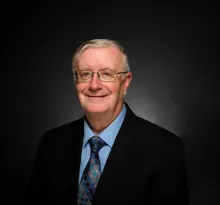
Jorge and his wife Kathy serve the Dallas (TX) and Lawton (OK) congregations. Jorge was born in Portuguese East Africa, now Mozambique, and also lived and served the Church in South Africa. He is also responsible for God’s Work in the Portuguese language, and has been visiting Portugal, Brazil and Angola at least once a year. Kathy was born in Pennsylvania and also served for a number of years in South Africa. They are the proud parents of five children, with 12 grandchildren and live in Allen, north of Dallas (TX).
