

Mario Seiglie
This transcript was generated by AI and may contain errors. It is provided to assist those who may not be able to listen to the message.
Brendan, I think all of us, as we watched the news last evening and saw it was taking place over in Paris, France, we felt a lot of different emotions. I know that I felt great sadness. I felt a great deal of anger. I felt a lot of different things. One of the things that was going through my mind as I was watching the news, the story unfolding, from the first time I was watching the news, they were talking about a few people being hurt to the place where we understand now what exactly took place with all the death and destruction and so forth. In my mind, we were just thinking that, boy, we desperately need the Kingdom of God. We need for this insanity to stop. We live in a world where people don't know how to use power properly, and yet we look forward to the time where God will use power properly. There are times where I was watching the news, I was thinking, boy, I wish I could just do something. Then, of course, I thought, well, I am doing something, and you are doing something. We're doing something, brethren, that's going to make this world come to a screeching halt, and the return of Jesus Christ is going to take place. What we saw taking place in France yesterday is going to be no more. I firmly believe in my heart and mind that prior to the return of Christ, you and I, the Church of God, churches of God, I don't care what the organizational name is, God's people around the world, we have to get our act together. And the sooner we get our act together, individually, as congregations, as organizations, as fellowships, as soon as we can get our act together, I think Christ can return. I think he can hasten the prophecies, things can take place, but we need to make sure that we are doing our part. Now, maybe it's just the way I look at the world, but when I look at the world and I see what I saw on TV last night, when I take a look at what I see on TV almost every night, not only in France, but around the world, young little children starving to death in different parts of the world, warfare in different parts of the world, calamities in different parts of the world, what's happening in our nation, what may be happening in your family, things that are tragic, we want all this to end. And I remember this story, I'm not going to go over there, but I remember the story of Achan in the Old Testament, where one individual sin kept the whole nation behind a black ball. Now, I don't want that to be said of me. I'm sure you don't want it to be said of you that Christ had to delay his coming because Randy Delosandro didn't have his act together. He was dragging his feet. There were things he knew he needed to change, and he didn't change them. Or you can put your name in the blank. Now, the positive thing, brethren, and I want to hopefully emphasize the positive today, is our God is a strong God. One of his names is El. E-L. It means God the strong. It's used by itself over 250 times to indicate the great power of God. There are other places where the name El is used with another name of God. For example, El Shaddai. El Shaddai means God Almighty, or the God the strong, who nourishes, blesses, and satisfies.
Now, there are many ways that our God has demonstrated his great power. He's demonstrated his power through his creative genius. And again, as I was thinking about what I've been through in the recent past, and the way God has designed the human body, and how beautiful a mechanism it is, how much punishment it can take, and yet still do the job that it does. God's creative genius, the power of his creative genius, his design, his creation, is being able to sustain what he creates. We see God's power when he released Israel from Egypt with the Ten Plagues. We saw God's power when he allowed the Israelites to cross the Red Sea, and he opened the Red Sea. God was so powerful when he gave his law on Mount Sinai that the people begged Moses. Please, let you talk with that God, with all the lightnings and thunderings and the earth shaking. We are scared to death. I didn't hear her last night, but Geraldo Rivera, TV personality and so forth, his daughter was in that French stadium. She was there with the President of France and all the thousands of people who were watching the soccer game when all this broke loose last evening. She was able to safely make it to her apartment. Mary heard this earlier today on the news when she was watching the news, getting ready for her services. How they put her on the phone, and she was describing what it was like as a bystander to hear all the things and see all the things that she saw. You can tell a young woman who was 21 years of age just how shaken up she was. People can be terrified. People certainly were terrified when God gave his law. They saw a minor demonstration of his power. Let's turn over to 2 Timothy, Chapter 3. I covered this with you last week, but I want to go there again.
Some things I think we just can't get firmly in our mind enough. 2 Timothy, Chapter 3.
One of the great powers that you and I have that we can rely upon is the power of God's Word, the power of the Scriptures, the power of the Holy Bible. 2 Timothy, Chapter 3, verse 15. 2 Timothy 3, verse 15. And that from childhood you've known the holy Scriptures, which are able to make you wise for salvation through faith, which is in Christ Jesus. Notice it says, these Scriptures are holy. The word there means sacred. It means consecrated to God or unique to God. The book you've got on your lap is something that's very unique. And for that reason, the counseling that flows from the Bible is unique. It's not run of the mill. It's not like any other form of counseling. It's sacred counseling. It follows a sacred process of change.
Now, in addition there, in that same verse, verse 15, that from childhood you've known the holy Scriptures, which are able to make you wise for salvation. Notice, which are able. God's word is a positive power. It is an enabling power. So many times we think of enabling as a negative thing. But God's word enables us in a proper way, in a positive way. It makes us wise for salvation. As I mentioned last week, if all we had were the Old Testament Scriptures, we could find salvation. David did. Moses did. The prophets did. Abraham, Isaac, and Jacob did.
Now, let's add to this idea about the great power of God's word. Something we see over in Deuteronomy chapter 31.
We're almost done with the book of Deuteronomy. I think I've got one more sermon to give on this, probably the last week of the week, maybe the first week of December.
Then we'll start going verse by verse through the book of Daniel. But here in Deuteronomy chapter 31, let's start reading here in verse 9. So Moses wrote this law and delivered it to the priests, the sons of Levi, who bore the ark of the covenant of the Lord, and to all the elders of Israel.
Moses commanded them, saying, At the end of every seven years, at the appointed time, in the year of release, at the feast of tabernacles. I want us to notice the context here. Something's very important going to happen every seven years at the feast. When all Israel, verse 11, comes to appear before the Lord your God in a place which he chooses, you shall read this law before all Israel in their hearing. Now, that's not to say that the law of God wasn't read the other years, but a special emphasis was placed on reading the law of God on that seventh year.
Gather the people together, men and women, and little ones. Little ones. It was very important for the children to have an understanding of what was needed to be done. And the stranger was within your gates, that they may hear, that they may learn to fear the Lord your God carefully, to observe all the words of this law.
And verse 13, And that their children, who have not known it, may hear and learn to fear the Lord your God, as long as you live in a land which you cross over Jordan to possess. So what you see here is a combination of a couple of ideas. Add the Feast of Tabernacles, which represents the kingdom of God, which represents God ruling in great power and majesty. That God's law was read. It's very important for people to understand that. And, of course, there was a special emphasis on the children. You know, brethren, here in this congregation, we've got just a few little ones.
One of the concerns that I have as a pastor, you know, recently we lost two pastors here in the Midwest. Bob Fay and Mr. Rowan Spees. Wonderful fellows. I was looking at a picture of the two of them just the other day. They used to be together in the Chicago church, and then one Mr.
Fay remained as the pastor of the Chicago church. Mr. Rowan Spees became the pastor of Beloit in Wisconsin-Dells. Now they're gone. And one of the things that, you know, once a month the pastors get together for a lunch, and I know that Mr. Rhodes, who used to teach at ABC, said that one of his concerns, when we see the 20-year-olds and 30-year-olds coming to ABC, is how little understanding our young people have. of the doctrines of the church. Now these are men who've taught for years and years and years, and so many of them say the same thing.
You know, they're great kids. They're wonderful, wonderful people, and they're very good socially. They can cross different organizational lines. They get together, they talk, and they yak, and they do their thing, and they're friends. But one day, we're going to have to turn this church, if, you know, Christ hasn't come back in the next few years, we're going to turn this church over to them. I'm really concerned about that. So it's good that we teach our young people, and they have a solid understanding of the truth of God.
Because at some point, you know, I won't be here. At some point, those of you who are my age, you won't be here. And we want this church to go on. Now, we may mention that in Deuteronomy, there's two basic purposes for the book. One was to show God's people how to live victorious lives. That's one of the reasons why the law was to be stressed and read in the book of Deuteronomy. The Ten Commandments are found there in the book of Deuteronomy. You can't live a victorious life without understanding the law of God. And secondly, Deuteronomy was written to stir God's people to rededicate their lives to God, to renew their commitment to God.
So what does all this have to do with the sermon I want to give you today? Well, again, last night as I was watching what was taking place in France, and as I was thinking about this through the course of, frankly, weeks prior to putting this sermon together. I put this sermon together several months ago, actually.
It was just reinforced in my mind last night as I was watching the news. The point, if you want to take notes and you want to write something across the top of your paper. And it is this. The truth of God has the power to transform our lives. The truth of God has the power to transform our lives. And brethren, if our lives aren't being transformed, those of us God has called, then Christ is going to have to delay His coming because He wants the bride to be prepared. Now, I'm sure there will come a point where Christ will say, hey, look, I gave Him plenty of time. If, you know, they don't want to get on the ball, if they don't want to do what's required, I'm going to come anyway. But you and I want to be brides who are prepared for the return of Jesus Christ. So today, I want to take a look at, since I'm talking about young people, I want to take a look at somebody who is very young.
He was only eight years old, one of the kings of Judah. He was only eight years old when he came to the throne. But he had a life-altering experience when he was 16 years of age. And here you're going to see about a 16-year-old young man. Now, he was the king, so he was in a position to do a lot of good or a lot of evil. But as a 16-year-old, he rocked the nation of Judah.
And there's a couple of spiritual points I want to make about his life as we go through it. Let me give you a little bit of background to King Josiah. That's the individual we're going to study, King Josiah.
When we take a look at his life, what are we looking at? Historically, Judah is very close to blinking out as a nation. They're very close to going into national captivity. They're on their last legs. Brethren, we are on our last legs as a nation. I don't know exactly when it started. The Bible talks about prophetically we're going to lose the pride of our power. Not that our power is lost. We're the most powerful nation on the earth. But perhaps starting in Korea, Vietnam, we are afraid to use that power. Perhaps this was most demonstrated just a couple of weeks or maybe a month or so ago, where a Russian general talked to our people and said, We're going to fly some raids, some missions over Syria, and we don't want the United States in the air. The Russian general is dictating to us. What did we do? We took steps back. The Russians flew missions into Syria. What did the Russians strike? The Russians struck our allies. People of the United States put in place. The Russians bombed the daylights out of our allies. What did we do? Like we always do these last few years. We did nothing. We did nothing. We are at the place where this nation is soon to be an asterisk in history books. Same thing was true during Josiah's day. The kingdom was hastening to its close. The people of Judah, despite all of God's merciful dealings with them, things were getting worse and worse. How about this country? Is morality getting better and better in our country? As I said a while back, when we have got... I don't vote by watch politics. What it seems like the two people we have to choose from is Donald Trump and Hillary Clinton. Is that what we want? Is that what we become as a nation? Donald Trump, he's got no specific answers for anything. All he does is make fun of people, belittle people, insult people. On the other side you've got Mrs. Clinton. You wonder, does the woman know what the truth is? She tells her daughter, yes Benghazi was a terrorist attack. She tells the public, well, it was a video. Now they knew it wasn't a video 24 hours after the attack, but this is what she's saying. And so many other things I've lost track. Is that what we want? A Donald Trump or a Hillary Clinton? Is that what people who vote are going to vote for? This nation is truly in deep, deep trouble. So in the midst of all this decay, you've got a young man who God is going to tap on his shoulder and use very powerfully. I've got just two points here for you regarding his life, Josiah's life. Two spiritual lessons to be learned. Number one, negative circumstances in our life don't have to determine our achievement. Negative circumstances in our life don't have to determine our, in our case, spiritual achievement.
Today in society, we're told that we are the products of our environment, and there's truth in that. But, you know, brethren, you and I don't have to be shackled to our past. We don't have to be shackled to our environment. The world Josiah was born into was much like ours. It was a troubled world. A world of confusion, a world of murder, a world of warfare. People hated God, or at best they ignored God altogether.
We talk about environment. We talk about family. Let's take a look at, just briefly here, King Josiah's family. People say, well, because my father did this, or my mother did that, I was disadvantaged. Let's take a look at King Josiah. Let's take a look at his grandfather. His grandfather's name was Manasseh. Manasseh. Manasseh reigned longer than any other king. He reigned 55 years. That's a long time. But he was also one of the most wicked kings that Judah ever had. He was committed to idolatry. King Hezekiah was one of the four great reformer kings. He and Asa and Jehoshaphat and Josiah, the four kings, were reformer kings. But after King Hezekiah had made all these lovely restorations, getting the people back to God, Manasseh came behind him after him and restored everything that was wrong. He erected altars to Baal. He erected altars to the image Astra in the temple of God. He worshipped the sun, the moon, the stars. He recognized Molech. And he even took his own son and burned him into fire as a sacrifice to Molech.
He approved of divination. And anybody who stood up to call him on his evil actions were killed. Let's turn over to 2 Kings 21. 2 Kings 21.
And verse 9. 2 Kings 21.
Notice what it says here. It says, Manasseh seduced them to do more evil than the nations whom the Lord had destroyed before the children of Israel. Now, when God told Israel they were going to go in and possess the Holy Land, they were told that the people were so wicked God wanted them annihilated. And yet here you've got a king of Judah who was worse than the peoples they went in to dispossess. That was Josiah's grandfather. That was part of his environment. Then there came his father. Josiah's father's name was Ammon. Ammon. He was only king two years. He was so wicked his own servants murdered him. They were hoping to get a much better king in office. But then those who murdered the king, they themselves were murdered.
Josiah was eight years old when his dad was murdered. So here you've got grandfather who was horribly wicked. The father, very wicked, murdered. And then you've got an eight-year-old little boy who now is the king of Judah. That's background. That's environment. But he wasn't shackled to that. He wasn't imprisoned by his environment. Let's take a look now. Let's turn to 2 Chronicles chapter 34.
2 Chronicles chapter 34.
And verse 1. Josiah was eight years old when he became king, and he reigned thirty-one years in Jerusalem. Now, a part of the story I'm not going to tell today is Josiah made a very bad set of decisions toward the end of his life. He wasn't even forty when he died. That's another story for another time. He was not a perfect man by any stretch of the imagination. Neither was David or any other Bible heroes we talk about. Abraham or any of the other. Moses or anybody else. Josiah had his feet of clay in some areas. But in some areas he was very, very strong. Verse 2. And he did what was right and the sight of the Lord, and walked in the ways of his father David. He did not turn aside to the right hand or to the left. So that's verse 2. He's a young man. He's just eight years old here. Now notice in verse 3. For in the eighth year of his reign. He started when he was eight. He's in his eighth year. That means he's sixteen right now. When he's sixteen years old, while he's still young, he began to seek the Lord God of his father David. And in the twentieth year he began to purge Judah and Jerusalem of the high places, the wooden images, the carved images, and the molded images. So here you've got a kid. He's sixteen years of age. He's rocking the nation. He's getting rid of all the idols.
Brethren, what are our American idols? What do you and I have that are idols that need to be thrown out? What things do we place in front of God? What things can't we do in service to God because something else is getting in our way? I'm betting everybody in this room has got something along those lines. We have our American idols. Here, Josiah was getting rid of the idols in his day. He began when he was sixteen years old. We drop down to verse eight. In the eighteenth year of his reign, he's twenty-six years of age now, in the eighteenth year of his reign, when he had purged the land in the temple, he sent Shaphan, son of all these other people, and to, verse eight, to repair the house of the Lord his God. Now, that's a very important thing, and we're going to get back to that in a little bit. But I want to stop here and just reflect a little bit. Here's a young man, horrible environment, horrible family life, dad murdered, despite all the moral decay, not only in his own family, but in the society around him, the nation around him, his own personal circumstances, he rose above that. He rose above that. We don't know who, perhaps he had a mother that's not mentioned here, he had somebody in his life that was giving him some help along spiritual lines. Perhaps a mother, perhaps somebody, some other family member, was telling him some of the things he needed to know.
He grasped on to the truth. Just as God's Spirit has worked with your mind, and you're here in this room, you're not going to show up tomorrow over in the main sanctuary for services at Birmingham Unitarian Church. You are here in the United Church of God, in all that we represent, because God's Holy Spirit has worked with your mind, performed miracles with your mind, and brought you here. Just as God's Spirit was working with his young mind to bring him to a certain place in life. But, Brennan, again, I need to ask myself, I had several moments when I was told, well, you know, Delisandre, you're going to have to have open-heart surgery. I said, now, what exactly? I've heard that. What does that mean exactly? And then you go into the WebMD and you say, well, here's what they're going to do. They're going to open your chest. They're going to stop your heart. They're going to put you on a breathing machine. They're going to put you on a machine that pumps your blood for you. And the result of all, you know, you watch the TV ads and they talk about, well, if you take this pill, your right arm's going to fall off, and all those sorts of things. Can you imagine that all the medications I was on to prepare my heart for that? And then the machine, which could leave you brain damaged, it can stop, make your organs fail, and this and that and the other. Going from one prescription medication before the operation to nine after. One teaching my heart how to properly beat again, because it was stopped. The poor little guy, he just, you know, well, you had me stopped there for several hours. Now I've got to learn how to do this again. How do I do this? So, you know, it was clear to me. I had some come to God moments as to where I stood and what I was doing in my life. And I asked you to have the same kind of moment in your life. How are you dealing with the negative circumstances you find yourself in? Your environment, your family issues, your worker employment issues, your health issues, your relationship issues. What are we doing with all those negatives in life?
With God's power, with God's help, Josiah was able to rise above that.
Sometimes we think we're in a no-win situation. Well, with God, there's always a win situation available. That doesn't mean that we're not going to have trials or tests. That doesn't mean we won't even die early. We can die early. But we die in the faith. We die close to God.
Let's take a look at Romans chapter 5 for a moment. Romans chapter 5.
Romans chapter 5 verse 1.
Therefore, having been justified by faith, in other words, our sins have been forgiven by Christ's sacrifice. We've been put into a right relationship with God. We have been justified. Our past, that bad environment, the environment's not gone. But God is dealing with it in a way that can be dealt with. Our sins have been forgiven. We have peace with God through our Lord Jesus Christ. As I've said to you on a number of occasions, Christ told His disciples, My peace I will give to you. And when Christ said that, He was hours away from being tortured and murdered. So when Christ was talking about peace, He was saying, I'm going to take all your trials and sprinkle dust all over you, and everything's going to be great. Everything's going to be sunshine, lollipops, rainbows. No, because He realized He was about to go for the worst time any human being had ever gone through. And yet, He was talking about peace, because peace is a relationship with God. It's not the absence of difficulty. Verse 2, Romans 5, 2, Through Him also we have access by faith into this grace in which we stand. Into the grace in which we stand. God has been so merciful, so good to us. He's given us so many spiritual tools. Two of the greatest ones are His Holy Spirit, His mind, His heart, and His word. And we combine the two of those, and we have powerful spiritual tools at our disposal. So the first lesson that I see as I look at the life of King Josiah is that negative circumstances in our life need not determine where we end up, how we end up, our spiritual achievement. The second thing I find as I look, and I'm sure there are more lessons, but you just make this fairly simple. The second lesson I see as I look at King Josiah is, strike while the iron is hot. Carpe diem. Seize the day. Seize the moment. So here God is doing some powerful things in His life. Let's go back to 2 Chronicles 34.
2 Chronicles 34. We read there in verse 8 how that when He was 26 years of age, He sent people to go and repair the temple. The temple had fallen to disrepair. He wanted the house of God to be restored to something where it should be. We drop down into 2 Chronicles 34.
Now when they brought out the money that was brought into the house of the Lord, He found the book of the law of the Lord given by Moses. They found the book of the law. Now we don't know if this is the first five books of the Old Testament.
We don't know if this was just the book of Deuteronomy. All we know is it did contain the law of God. And brethren, at this point in the history of Judah, God's law had not been properly taught for decades. Decades. Some commentators say as much as 50 years had come and gone. So finding the book of the law was a tremendous event. Verse 15, then Hilkiah answered and said to Shaphan, described, I have found the book of the law in the house of the Lord.
And Hilkiah gave the book to Shaphan, and Shaphan carried the book to the king, bringing the king word, saying, all that was committed to your servants they are doing. They have gathered the money that was found in the house of the Lord. They have delivered it into the hand of the overseers and the workmen.
I mean, the money is there, the work is progressing, things are getting done. And Shaphan, the scribe, told the king, saying, Hilkiah, the priest, has given me a book. And he read it before the king. That's what happened when the king heard the words of the law, that he tore his clothes. He didn't say, let's form a half a dozen different committees and study it before we take any action.
No. He said, what he did was he obviously realized these were the very words of God. And he acted on the very words of God. As soon as he heard them, carpe diem, he sees the day, sees the moment. Verse 20, then the king commanded Hilkiah. Verse 21, he said, Go and inquire of the Lord for me, and for those who are left in Israel and in Judah, concerning the words of the book that is found. For great is the wrath of the Lord that has poured out on us, because our fathers have not kept the word of the Lord, to do according to all that is written in this book.
So he said, you know, our fathers have not done the things they should have been doing. So here you've got a young man who immediately responds. He immediately responds. He immediately begins to repent. And again, brethren, we ask, I ask you, you ask yourselves, I ask myself, does this picture my frame of mind as I read God's Word? You know, I look out at the audience here, and so many of you I knew from back in the old worldwide Church of God days, the old Detroit East days, some of you I've known since the mid-1970s.
And I remember what it was like back in the day going to the Detroit East Church. I remember sitting in sermons where, and before Church and after Church, people would get together, and they'd talk about, you know, I hope we have something corrective today. I hope that we've got something to bite our teeth into and really learn and grow. And now today, it just seems almost like the opposite thing has happened. You give people some correction, and they may not be there anymore. They may go to another church fellowship. They may say, oh, that pastor is Simon LeGree, you know?
And yet the Bible talks about how we should embrace correction, especially when God does it in the quietness of our home, as you and I are studying our Bibles by ourselves, and God opens our mind to see certain things. It's not that the pastor is stepping on your toes or one of the members stepping on your toes. God is saying, hey, look, here's something that needs to be changed in your life.
I remember how we used to embrace that and run with that. But today, not like it used to be. And of course, when you take a look at the end-time Church of God, you see the Laodicean Church, people who thought that they have it made. That's the Laodicean attitude, where, well, yeah, I see that in the Bible, but that's for the other guy. That's the guy who sits in front of me in church.
That's for him. For the other fellow's wife, yeah, she really is a gossip. She really needs to... We want to pin things on everybody else but ourselves. Chapter 34, verse 29. This is 2 Chronicles 34, verse 29. Now, that would take some time, even if it was just the book of Deuteronomy. But he took the time to read the whole thing. Verse 31.
Verse 32.
You're going to eat the right things without the wrong things? Take a stand. He didn't want people on the fence. He didn't want wishy-washy folks. He made them take a stand.
So here we see the first order of business is for us to start obeying and following God. Carpe diem. Seize the day, seize the moment. Chapter 35 of 2 Chronicles, verse 1.
The King was so sold on what needed to be done. He said, I've got cattle. I've got flocks. I will give those of you who are here of my flocks so you can sacrifice, so we can get right with God. I mean, the guy was really going strong here. I don't know how charismatic Josiah was. He seemed to be a rather charismatic individual. I mean, he got things going. And people followed what he was doing. Verse 17, same chapter. And the children of Israel who were present kept the Passover at that time, the Feast of Unleavened Bread, for seven days. There have been no Passover kept in Israel like that since the days of Samuel the prophet. Many, many years. And none of the kings of Israel had kept such a Passover as Josiah kept, with the priests and the Levites, and all Judah and Israel who were present, and the inhabitants of Jerusalem. Verse 19, in the eighteenth year of the reign of Josiah, the Passover was kept. So again, here's a man who rose above his family tradition. He rose above the wicked society of his day. He was determined to draw close to God. Brethren, what stands in our way? What stands in our way? What is your environment? Do we want to blame our environment for not following God? Do we want to blame what's happening in society? Do we want to blame peer pressure? Do we want to blame our friends or relatives who expect us to be doing certain things? Josiah made a difference. He struck while the iron was hot. But the first thing he had to do is accept his personal responsibilities. And that's all a part of striking while the iron is hot. Accepting our personal responsibilities. As I begin to wind down the sermon today, let's think about that for a moment. Accepting our personal responsibility. Remember Harry Truman? Well, I said remember. I wasn't alive back then. How do I remember Harry Truman? I remember Harry Truman reading history books. I don't remember Harry Truman because I was alive back then. But Harry Truman said, the buck stops here. Now, how many people in the political world today, Democrat or Republican, do you hear the buck stops with them? It's all the spin zone now. It's all finger pointing. And, well, they did this, another person did that, and that party does this, and so on and so forth. Today, as a nation, we don't want to accept personal responsibility. But spiritually, we better do that. Spiritually, God calls upon us to accept our personal responsibility for how we live our lives spiritually. Let's take a look at some actions that Josiah did here. I'm going to letter these. Letter A, Josiah realized he was sleeping spiritually, and he had to wake up. He had to wake up. Now, he was just a young man when God called him to wake up. You know, you and I are a lot older than eight years old or sixteen years old. Let's take a look at Romans 13, verse 11. Romans 13, verse 11.
And do this, going to the time that now is the high time to awake out of sleep. For now, our salvation is nearer than when we first believed. Brethren, isn't that true? Aren't we closer to the end of the age than when we first came into the church? Aren't we closer to the return of Christ than when we first started believing the truth of God? You have a voice within you. You've got a conscience. We've all got a conscience. And we need to listen as God educates our conscience.
We need to listen to that conscience. And if you have that voice telling you, you know, I really shouldn't be watching this TV show. I really shouldn't be going to the movies to see this. I really shouldn't read this kind of a book. I really shouldn't be talking about this person the way I am. We need to listen to that. We need to make sure that we are in tune with God.
Of course, we want to make sure that conscience is educated according to God's word. You know, Hitler had a conscience, too. Stalin had a conscience. We don't want that. Those are the conscience like that. We want a conscience that's been educated by the Word of God, by the truth of God. The second thing that we want to do to accept our personal responsibility is acknowledge our sin. Go to God and acknowledge where we're wrong. Personal responsibility. We go before God and say, you know, here is where I need to really make some significant changes. That's letter B. Psalm 38, verse 18.
Psalm 38, verse 18. David says here, For I will declare my iniquity, I will be an anguish over my sin. I will be an anguish over my sin. Do you feel that's...you know, I ask myself the question. You need to ask yourself the question. Is that where we're at? If somebody shows us something where we need to change, or are we resentful that they would dare come to us and say something about us, about me?
You're talking about me! Are we resentful when somebody comes... Now, they may not come to us in the best way. They may come to us in a very negative way. But it's still incumbent upon us, as Christians, to listen. There were people that came and they were cursing David. But David said, you know, let him be. His mighty men said, let us take the head off of that guy. Let us take the head off of that guy. What did David say? He says, no, God may have brought him to tell me these things.
That's the attitude we want to have. Letter C. Repentance needs to be sought. Repentance needs to be sought. We need to wake up. We need to acknowledge our sin. And we need to seek to repent. 2 Corinthians 7, verses 10 and 11. 2 Corinthians 7, verses 10 and 11. For godly sorrow produces repentance leading to salvation. No, that's what we want, right? We want godly sorrow leading to salvation. Not to be regretted, but the sorrow of the world produces death. So we've got to ask ourselves, what kind of sorrow do we have? And in verse 11, it gives us a way to determine what kind of sorrow we have.
Verse 11, for observe this very thing that you sorrowed in a godly manner. And then it lists how we sorrow in a godly manner. It lists seven different fruits, diligence, declaring of ourselves, indignation, fear, fear of God, vehement desire, zeal, vindication. And then at the end of verse 11 says, And all he says is, you have proved yourselves, be clear in this matter. And what matter?
And knowing what real repentance, really real godly sorrow is. So the third thing we need to do to seize the moment is repent. And then a fourth thing we need, and probably a lot more than this, but a fourth thing we need to look into our lives and destroy our American idols. Look into our lives and destroy our American idols. Things that stand, whatever stands between us and God, is an idol. It could be something that we think is good.
It could be a husband. It could be a wife. It could be a child. It could be this or that or the other. It could be something that the oven by itself, there's nothing wrong with it. But when we put it in place of God, or as a block to God, it gets in the way of worshiping God properly, then it's an idol. I've said this on a number of occasions, but over the years, as I've traveled through different states, as I've worked in different states, I've met a lot of people. A lot of people. I've sat in people's homes in Michigan here, in North Carolina, in Virginia, in Tennessee, in Kentucky, in West Virginia.
In all those places, I've sat in people's homes, and they knew the truth. They knew about the Sabbath. They knew about the Holy Days. They knew about what they should eat and not eat. But they wouldn't come to church. Why? Well, if I come to church, I'll lose my husband, or I'll lose my wife. Or if I do this, I'll lose my kids. Or if I keep the Sabbath, I'll lose my job.
Or if I lose my job, then I won't have a standard of living that my family expects from me. All of those things are idols. All of those things are idols. 1 John 5, verse 21. Apostle John writes, Little children, keep yourself from idols. Keep yourself from idols. Today in America, some of our idols, some of our bigger idols, are materialism.
Materialism. I've got to have more. Moral will make me happy. Moral will make me feel a little more important. Moral, more things will make me feel secure. I've got to have a certain size bank account. I've got to do certain things. Individualism is another type of American idol. One of the singers I enjoy listening to most is Sammy Davis Jr. Great set of pipes. Great voice. He had a song that epitomizes individualism. I've got to be me. I actually got that song in my car. It's a beautifully sung.
But in terms of, you know, that is the way Americans feel. I've got to be me. I can't be God. I don't want to be like Jesus. I've got to be me. I don't need anyone anymore. I can do it myself. Or mine, mine, mine. And of course, there's another American idol that too many of us have fallen victim to. And that is the idol of being too busy. Too busy.
I'm so busy I can put an appointment for God in my calendar book. I can put an appointment for my dentist in my calendar book. But I don't pray to God. I don't put God in my calendar book. I don't study. There's no date with God for me to study, to read my Bible, to do what I need to do. And, you know, brethren, that can be just as true for us in the ministry as it is for you. You've got to go out there and work in the world. You've got to take care of your property and all the things you've got to do.
You can be really busy. But the same thing can be true for us. I can be out there doing all sorts of things and neglect my spiritual disciplines. I'm no different in that sense than any of you. All of us can be so, quote-unquote, busy doing things, like the little hamster on the treadmill there, that we don't do the important things. So, brethren, today we want to take a look at the life of King Josiah. His life portrays the fact that the truth of God can transform us.
It transformed him. And if you and I can be transformed as individuals, if the Detroit church can be transformed as a congregation, if the people of God worldwide could be transformed as a people, then we could be praying much more effectively, Your kingdom come. And the things that we saw in France last night don't have to take place anymore.
Now, you and I know prophecy well enough to realize that before Christ returns, this world is going to go through very, very difficult times. What we saw last night in Paris is nothing compared to what the world's going to go through before the return of Jesus Christ. We understand that. But we also want to, we want the pain to stop as soon as possible.
Back in August, my cardiologist said, Randy, let's do a hard cath on you, a hard catharization. We're going to put you on a table. We're going to put some instruments and things inside you. We're going to take a look at your heart and see what needs to be done. And you'll be awake through the whole procedure. None of the places he's going internally has any feeling. You're not going to feel anything. And sure enough, it was really an interesting experience there in this all-white hospital operating room. And about from here to this wall, there was a big screen TV about the size of that piano. And all I see is my heart. And he's about a half hour into it. And he says, I'm seeing these black things. And I'm thinking, you know, that doesn't look too good. And after about 40 minutes, he says, Randy, he said, I think we need to have a surgeon take a look at this. And I said, well, what do you see? I said, can you do the stents? Because if they were able to put stents in me, I would have been back to work in four days. He said, well, if we've got to put stents in you, we're going to need to do it under two different times and five stents altogether. And I'm laying on the table. He's talking to me. And he said, I could tell you something. In two years, you're going to be back here. We'll be putting more stents inside of you. He said, now, the surgeon may have another way to do this. So I said, fine. So two days later, I met with the cardiologist, the surgeon, parts of both staffs, Mary and I all in this one room, all having this big cod vap. And the surgeon put it simply, that I can understand it. He said, Randy, your heart's like a series of roads. And right now, there are five places that need work on the roads in your heart. Five different places. He said, now, that needs to be done right now. He said, down the road, there are several other places where work's going to be needed. He said, now, if I do a quadruple bypass, I can clear out the whole thing, get it all done at one time. It's going to take you about three months through cover. He said, but, you know, I can get it all one shot. And that's why I asked, well, what's the mortality rate? He said, about the same. Well, do you have the stents or do you have the open heart? It's about the same mortality rate. He said, with the stents, you'll be back to work in four days. He said, about the open heart, that's going to take a lot longer, but we'll get everything. And so I decided, let's take the hard way, but let's get it all done. Let's get it all done. Brethren, you and I, we can take an easy way. Maybe it might work. Chances are it's not going to work, but we need to get the job done. We need to get the repair work done in our lives spiritually. We all have bad hearts spiritually. We all have need spiritually. Let's go to God and ask Him to use the power He has in conjunction with our efforts to transform our lives.
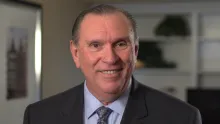
Randy D’Alessandro served as pastor for the United Church of God congregations in Chicago, Illinois, and Beloit, Wisconsin, from 2016-2021. Randy previously served in Raleigh, North Carolina (1984-1989); Cookeville, Tennessee (1989-1993); Parkersburg, West Virginia (1993-1997); Ann Arbor and Detroit, Michigan (1997-2016).
Randy first heard of the church when he was 15 years old and wanted to attend services immediately but was not allowed to by his parents. He quit the high school football and basketball teams in order to properly keep the Sabbath. From the time that Randy first learned of the Holy Days, he kept them at home until he was accepted to Ambassador College in Pasadena, California in 1970.
Randy and his wife, Mary, graduated from Ambassador College with BA degrees in Theology. Randy was ordained an elder in September 1979.
