

John Elliott
This transcript was generated by AI and may contain errors. It is provided to assist those who may not be able to listen to the message.
Now, today, is the Church's opportunity to qualify to be the Bride of Christ and to reign with Him for a thousand years in the Millennium. This is our time. We need to be living our lives filled with focus and action, knowing what we're doing every day in order to hear those words of Jesus Christ, where He says, Come in, you blessed of my Father, inherit the kingdom prepared for you from the foundation of the world. Those are the words we want to hear. Now, it should not be any mystery as to how that welcome will take place or to whom that welcome will take place. The question is, what do we need to be focused on each day of our life? What do we need to be doing each day so that those words will be said to us automatically, so that we can have the confidence of the Apostle Paul who said, I am confident. I know that there's a crown of salvation laid up for me. How can we have that particular confidence? What exactly are we to be doing daily?
Now, in the United Church of God, that question might be difficult to answer because we have big Bibles, right? And we're encouraged to study this Bible, and there's a lot of different messages in this Bible. We also have written publications that come in the mail, and we're encouraged to read those. We have a million or so pages of content on the UCG website with study papers and all types of things.
We have ABC courses. We have Bible study courses. We have sermons on the Sabbath. We have Bible studies that you can dig into. We're encouraged to do daily Bible studies. And so, what are the necessary essentials? Do we just sort of shotgun it each day and say, well, I'll just sort of—a little of that, a little of this, I hope I'm getting it, you know, I hope I'm doing what I should, I don't know, I have a life beside that, you know what I'm saying?
Am I hitting the right stuff? So I wonder when Christ returns if I will hear those words. Or maybe I'll hear the words when I bang on the door and say, Lord, Lord, I did a whole bunch of stuff. Let me in. And he says, I don't know you. So are we doing the right stuff? You ever have that question? That's a good question to ask. I ask that question regularly throughout my life. And in order to have the confidence the Apostle Paul had, we need to know from the Scripture that we're doing the right stuff at the right time.
In this message today, we're going to see God's formula, God's own formula for having confidence in you and me being told, Welcome. What's your name? Welcome. Come on in to the kingdom of God prepared for you from the foundation of the world. So let's see exactly what we are to be doing daily. Let's boil it down. The title of the sermon today is The Two Essentials for Your Salvation. In all that I just mentioned a while ago, all those things that we have available, there are two essentials for your salvation. We need to understand those two essentials. We need to be doing those two essentials.
And then we'll see how all the rest fits in. If you boil down all the passages in this Bible, every one of them, from beginning to end, all the sermons you've ever heard, really, all the papers, all the articles, all the internet pages, all the television programs, you boil it all down, comes down to two essential daily responsibilities. Now, not everybody knows this. Not everybody boils it down to this. Not everybody recognizes these two. So they might be doing something else or a version of these two.
And they could actually literally end up with Jesus Christ saying, I never knew you, you who practiced lawlessness. Nobody was specific there about something. Let's boil these things down. We're going to boil them down and you're going to say, now, John, Elliot, how can you take all this stuff and come down? I know you like to simplify things, but how do you get down to two things? And can we trust you in this? Well, we're going to go over these two things, over and over and over, from Scripture, from God, from Jesus Christ, from the apostles, from the beginning of the Bible, to the end of the Bible, to where, believe me, by the end of this message, you will see the two essentials of your salvation highlighted with spotlights.
Okay? So let's do that. Let's start with Ecclesiastes 12 and verse 13. And let's hear the conclusion of the message today. We'll go right to the end. No surprises. Not going to build up to a big finish. We'll go right to the very end. Ecclesiastes 12 and verse 13. Here's what it says. Let us hear the conclusion of the whole matter. Oh, that's handy.
Let us hear the conclusion of the whole matter. Fear God and keep his commandments. For this is man's all. Now, what if Solomon got it wrong? Maybe Solomon, in all his wisdom and inspiration, maybe he didn't quite have it right, but at least this is the conclusion of everything he had ever learned in his time. Can we trust him? Well, first, let's break this down. When it says, here's the conclusion of the whole matter, the first thing we read is fear God.
Fear God. Now, the word fear is interesting, and we'll get into that a little bit later, but it can mean two things. But it can't mean it. It does mean two things. Fear in the Hebrew, fear in the Greek. Look it up. Look it up Old Testament. Look it up New Testament. Try your Hebrew, try your Greek.
Here's what it means. It means two things. One, it means be afraid. Be afraid of God. But it also means something else. It means revere. Revere. Revere God. So that presents us with an interesting choice. If you're of a type that is going to not be what God wants, need to fear him, right?
Because he comes to those who are against him like a refiner's fire, a fuller soap. The day of the Lord is coming. We have the vengeance of the Lord. If you want to be on that side of it, fear. But for those who are his children, for those who are in his family, for those who he gave his son, for those who love him, those who revere him, he says, come on in, jump on my lap, call me Daddy, call me Abba, Father. You're welcome to the throne anytime. So that presents us with our own choice, doesn't it?
What kind of life am I going to live? Am I going to live a life where I need to fear God and be afraid of what's coming? Or can I be like the Apostle Paul and say, oh, more than anything, I want to be with God.
I want this tent to be put off. I just long to be with God. I can't wait for that trumpet to sound and we'll rise and we'll be with Christ forever. So you see, right there we have a choice in how we're going to live our life daily.
And the second is, keep his commandments. You remember Jesus said, some will say to me, Lord, Lord, we've done all this stuff. And he said, I didn't know you because you practice lawlessness. Lawlessness just means you did what I told you not to. Lawlessness. You broke my laws. So for you and me in God's church, who are in a new covenant with him, or some of you who are young coming up, you love this way of life. This is your way of life. And you're in that relationship with God at some point.
We have an awesome opportunity daily to revere God and to obey Him, to keep His commandments. And this is the conclusion of the whole matter. For this is man's all.
Now, these two daily priorities were reinforced by Jesus Christ.
He says in Matthew 6, in verse 33, fairly familiar statement, he said, seek first the kingdom. It's translated, but as I've mentioned before, if you look it up in Thayer's, it's not to be confused with an actual kingdom in this case, but rather the authority to rule over a kingdom. So seek first His rule. He's our King. He's our Lord, our authority. He's our Master in the New Covenant. So seek first to be under that rulership, right, and to obey God. Seek first His rulership and His righteousness, which is His commandments. So right there, He tells you the first, the priority that you and I have, the primary function in life, is revere God and keep His commandments. This is pretty good.
You know, Jesus Christ in Matthew chapter 22 and verse 40, He's the one that compresses the whole Bible into two points. Not me, I didn't come up with this. Matthew chapter 22 and verse 40, the whole Bible that existed in that day, the New Testament, wasn't written in His time, of course, but He says in verse 40, on these two commandments hang all the law and the prophets.
So He's the one that boils it down to two things. And guess what those two things are? Verse 37, you shall love the Lord your God. Now this word, love, here is from the Greek word agapeo.
Thayer says it's to welcome, to entertain fondly, to love dearly.
So let's go back to the revere concept here. Do you welcome God into your life?
Do you see Him and welcome Him fondly? Do you entertain Him fondly? Do you love dearly God? See, that's a beautiful relationship with God. Isn't there no fear? They don't have to fear Him if you welcome Him and love Him and He's your God and He's directing. There's a little bit more to that word, agapeo, as well. In the word study, it says here, to esteem, and when referring to superiors, to respect and to venerate. To respect and to venerate. It's kind of like revering and respecting.
So it goes back to this fearing, but it's revering God in a warm way, respecting Him, showing Him honor, right? And welcoming Him to your life, having an entertaining, fondly relationship with Him.
In verse 39, and the second is like it, Jesus now says, okay, you've got the revering.
Now let's look at the second, and that is, you shall love, same Greek word, agapeo, and to have persons, as well, to welcome them, to entertain fondly, to love dearly.
And in the word study, when relating to, say, peers, other humans, it's to regard with favor, goodwill, and benevolence. Favor, you favor others, not putting yourself up higher, you're favoring others, treating them with goodwill, benevolence. And that's the mindset that God wants His children to have, because that's His mindset. That's how He sees us as His precious children, sons and daughters. That's why Jesus so lovingly gave Himself for us, and He wants us to have that mindset. So here we see the two essential elements for our salvation, and they're good.
They're good between us and God. They build a confidence. They build a warm, trusting relationship. God's never going to leave or forsake us, and we're not going to forsake Him. And then we do the same for others. Now, how can we perform these two daily? Well, this begins to speak to our responsibility, doesn't it? We can talk about this and say this, and these are not new concepts to us. But do we get around to doing them daily? Jesus talked about five virgins, and five were wise and five were foolish. And the reason why we saw was five were doing those two things, and five weren't focused. They didn't have the focus or the diligence to be doing them. Now, we never know when our life will end. We never know when Christ will come. We just don't know, and so we need to be those things, not sort of getting them in and, you know, I did this today. No, I am this today. I am becoming, I am God's son, God's daughter. I am God's friend. I, you know, I have this relationship with God, and I am this to humans around me. That's who I am. That's how we have God dwelling in us and us dwelling in God. We are family with Him. So how do we get around to developing that? None of us are there perfectly, but we all need to be growing and maturing in that mindset. Let's look at the first responsibility we have to revere God each day. If we go to this as a concept, when you're going to really revere God, are you going to give Him the first, the best, or are you going to give Him the last and the least? We as humans wake up in the morning and we tend to have things on our mind, things to do, need some coffee, you know, need to check my email, need to check my social media, I've got a job, need a shower, need a whatever, and everything around you sort of leaps at you, you know, touch this, do that, do this, I need to do that, I've got things I have to do, you know, I need to go. And if we're not careful, we don't revere God, we don't show Him the honor of the first fruits of our day, of the tithe of our day, we sort of go into our own world and we put ourselves first and we launch into that. And sometime later, maybe at night, we might get on our knees and say, now I lay me down asleep, and I pray you're at my door, you know, and we wonder why we don't have a good relationship with God. So let's go to Psalm 111 in verse 9.
And notice here the importance of this first from David who became in his lifetime, he grew into being a man after God's own heart. And that's what you and I are in the process of doing.
Psalm 111 verses 9 and 10. It says, he has sent redemption to his people. At this time, those who God has called and is converting through His Holy Spirit are His people now.
And He has commanded, notice, His covenant forever. We have a new covenant with God.
Holy and awesome is His name. So we see the reverence there combined with the commandment, the covenant. Notice verse 10. The fear, and for us again, it's going to be the revering, right?
The revering of the Lord is the beginning of wisdom.
The revering of the Lord is the beginning of wisdom. We might have started out with the fear of the Lord after breaking some commandments, getting whacked by the consequences. But that should be translating or should have transitioned over to be the loving revering of God. And it says, a good understanding have all those who do. You notice what comes after I do is in italics.
It's not in the Scripture. It says, a good understanding have all those who do.
And that's where it ends in the Hebrew. Do what? Who revere God is the topic here. We need to be really revering God. And once you begin to think about God and His creation and see all the elements and how things work and how the words that He tells us to do, how that is so intelligent and so smart, you begin to really take the time to see this is an incredible God and His Son. They are just amazing. How blessed we are. And from that comes a good understanding about everything, specifically how to live. So again, here we see both elements because there's a command, there's a covenant, and there's a revering. And you can't separate them. As we live, and even as the italicized words would say, a good understanding of all those who do His law, well, that certainly is an integral component as well. Our understanding grows as we do what He tells us. It's like, wow, what I think is right doesn't work. What He says is right isn't logical. Now, which am I going to do? That which doesn't work or that which isn't logical. And that's our daily choice. And in the end, we should say, you know, I wasn't smart enough to figure out that what's logical isn't best. Only God gave me that. So we, as the weak of the world, in their eyes, are the wise of the world because we do what God says, and we give Him the reverence and the respect and the honor for showing us a way to live that we otherwise couldn't know by ourselves.
Let's notice God's response to those who revere Him. Now, today, let's go to Malachi chapter 3 in verse 16. Malachi 3 in verse 16. And right now, we're showing the rationale, the reasoning, the importance for revering God. It's making us wiser than we could ever be. But notice what comes from revering God today, tomorrow, each day. Malachi 3, 16, then those who feared the Lord, notice the word feared. Those who revered the Lord spoke to one another. We're here. We're going to talk. We're going to have a little meal after services. We fellowship. Those who revered the Lord spoke to one another, and the Lord listened and heard them. So a book of remembrance was written before Him for those who revere the Lord and those who meditate on His name.
It doesn't seem like this is the book of life, which contains the names of those who have been given His Holy Spirit after baptism. It seems like this is a book of remembrance for those who revere the Lord and meditate on His name.
That might be the Welcome to the Kingdom book. I'm not sure what this book is, but that's a book that you and I want to have our names in.
If we go to the model prayer outline, what's the very first thing we're told? Let's look at it in Luke 11, verse 2. We often go to Matthew 6, so that print is probably getting a little worn out. Let's go read it over here in Luke 11, verse 2.
Jesus said, When you pray, pray like this, say, Our Father, now is the time for Him to be our Father. Satan can be the Father of his world, but he is our Father now. We should have that special relationship that we know at this time that we can help open the eyes of others too in future generations. So our Father in heaven, hallowed be your name. I don't know about you, but I don't use hallowed a lot. It's not a word that I can even just tell you the meaning of. Like, how do I hallow something? Can I make God's name holy? No. He makes it holy, right? Because he's God. So how do I hallow something and what does hallowing mean? So I'd have to go to, say, Strongs. What does that mean? What means to venerate? Well, there we go. There's a word we use every day to venerate. Actually, we don't. So you venerate God's name. So I looked up venerate in the dictionary. To regard with great respect, to revere. So here's, you know, through two or three translations, here we come back to the word revere again.
So what Jesus is saying, our Father in heaven, I revere your name. I greatly respect. I revere your name. Your reign come. Your will be done on earth as it is in heaven. You know, you are what I want. You are what I'm attached to. You are my Father. You are the mindset. You're the family. And I want to be not just physically in your family. I want to be welcomed into the divine family. I want to be there with Christ in whatever it is you have for me. And I want that because I like it now. I like who you are. I like our relationship. I like your son. I like how keeping your laws brings blessings to life. I just love it all. And that's how we are family.
Again, the two points right there. Revere God. Keep His commandments. That model prayer outline goes on. Forgive us our sins, which means I want to keep your commandments. And I don't want anything to do with that other guy. Satan, you know, deliver us from him. Don't let us be deceived because I love your law. That's what we're saying here. The two things are reinforced in prayer, then, each day. And the second thing, if we revere God first in everything, it's great to start the day revereing God. I mean, it's great. It should. It should wake up instead of thinking about me, think about God first, and how we can take this relationship with God throughout the day.
The second thing is to keep His commandments, then. Carefully obey God's commandments every day.
I always think it's funny, personally, as it is me, when people start saying, legalism, you want to keep God's commandments, you put God's law up there, you're legalistic.
Yeah, I'd like to march them back to the ninth century to the Holy Roman Catholic Church's definition of legalism, because they said, we're about legalism. So here's the definition from the ninth century Catholic Holy Roman Empire, right? Three definitions. Definition one, love God, keep His commandments. Definition two, be led by the Holy Spirit. Definition three, do good works. Okay, that's the definition of law of legalism in the ninth century. Of course, others who didn't like what all that meant, it meant something totally different. I mean, who was God? Well, the Pope. What were the laws of God? Well, you know, all the rules that they had and the customs they kept and the festivals they kept, that was a commandment. And do good works, well, that was fill those churches and everything with money and land. And, you know, it went off the rails, didn't it? And so there was, they had their own problems in that in that religion. But the definition by itself, if you if you just look at it, fear God, keep His commandments, be led by the Holy Spirit, and do good works. Yeah, I mean, that's, if that's legalism, sign me up.
Don't be afraid to carefully obey God's laws. You know, Deuteronomy 28 is very, very clear. God says, if you carefully obey my laws, all my laws, and my statutes, and my judgments, carefully, don't be afraid, don't let somebody outside from some other concept start saying, oh, you don't, did God tell you to carefully keep His commandments? You don't need to do that.
And somehow convince us that the second element of our salvation is something you don't need to do.
You know what I'm saying? You can just toss it back at them if you want with their definition of legalism. So in Deuteronomy chapter 6 and verse 2, let's go back there. We need to carefully obey God's commandments, you know, just keeping God's laws and what saves us, but it's just one of the two elements of the new covenant. One is to revere God, the other is to obey God. Deuteronomy chapter 6 and verse 2, that you may fear or you may revere the Lord your God to keep all of His statutes and His commandments, which I command you, that you and your son and your grandson, all the days of your life and all your days may be prolonged. Revere God, keep His commandments, blessings flow. Revere God, say, Lord, Lord, don't keep His commandments. Be lawless. What do you get?
I never knew you, you know. Door's closed. Don't let anybody talk you out of this. Verse 13, you shall revere the Lord your God and serve Him. Verse 24, And the Lord commanded us to observe all these statutes, to revere the Lord our God, for our good always, that He may preserve us alive as it is this day.
So we as God's Church, Christ's Church, in order for this Church to stay alive and continue through any and every onslaught that comes, every temptation, every opportunity that Satan tries to destroy God's Church, if we observe all of God's commandments and we revere the Lord our God for our good always, He will preserve His Church alive as it is still alive today. Now think what would happen if we didn't do those things. If we followed society or some other customs, the Church would die out. Let's go to Deuteronomy 17 now, and verse 18. Deuteronomy chapter 17. Look at verses 18 and 19.
Also it shall be when the king sits on his throne of his kingdom, that he shall write for himself a copy of this law in a book. It used to be that only the king had a copy, as you see, that was copied from the book that the priests had. They had the scrolls, and the king then would come, and he would make his own copy so that he could have it, and he could refer to it. It's interesting that you're better than a king because you don't just have the first five books of the Bible.
You've got it all. You've got something that the apostles didn't have, that Jesus Christ didn't have, that Paul didn't have. You have the New Testament. They didn't have the New Testament in their day. So we have all these wonderful things. In verse 19, it shall be with him, and he shall read it all the days of his life, that he may learn to revere the Lord his God, and be careful to observe all the words of this law and these statutes.
You know, we are called royalty. Peter calls us royalty, and God looks at us as the betrothed bride of Christ. So why not immerse ourselves in learning what we are to observe and what we are to do on a regular basis? So this careful to obey God's commandments each day would be very beneficial if we put a little of this in our mind each day that we're to be doing, wouldn't it?
At the end of Samuel's life, he called all of Israel together. Now you and I are the Israel of God, Paul speaks of, I believe, in Galatians. If we go to 1 Samuel 12 and verse 14, Samuel here has been the high priest during several kings and a challenging period of time there for Israel, and he called all Israel together, and he sort of leaves them with these words, we might say. 1 Samuel 12 verse 14, if you revere the Lord and serve Him and obey His voice, revere God, keep His commandments, and do not rebel against the commandment of the Lord, then both you and the King who reigns over you will continue following the Lord your God.
I like to stop and reread this for you and me with our King being Jesus Christ. Let's think about this. Let's go back and say now, to the church, if you fear the Lord and serve Him and obey His voice and do not rebel against the commandment of the Lord, then both you and the King who reigns over you will continue following the Lord your God.
We have this choice, don't we? If we rebel against the commandment and we depart, we leave Jesus Christ. We leave this opportunity. But if we do not rebel, then both us and our King will continue following the Lord your God through the Millennium, the Second Resurrection, and out through all eternities, the Bride of Christ.
So it's important for those who are developing holy righteous character to be doing this so we can be with Him forever, so that we can be caught up, as it says in 1st Corinthians 15 and in Thessalonians, we can be caught up with Him and forever be with the Lord. You remember Jesus said in Matthew 19 verse 17, if you want to enter into life, keep the commandments.
Keep the commandments. Once again, legalism might convince you that that's not important, that term, if it's twisted or used wrong.
If you want to enter into life, keep the commandments.
The first four commandments are revere God. That's what they are. Revere God. You just walk through them. Revere God. The second four commandments are to love. Love others.
Love your fellow man. Love your neighbor as yourself.
And the result of doing that daily just brings accolades from God. It brings a link of family mindset.
God and Christ, us and God and Christ and them and us and one and forever and can't wait to welcome you into the kingdom. When we think—now I'm just continuing to restate these two essentials, right? We see them over and over. They're sort of hiding in plain sight everywhere. When you think of the man who was the most righteous in God's eyes during his lifetime, who was it? Who was the most righteous man in the Old Testament during his lifetime?
Job. Why? Let's go to Job chapter 1 and verse 8. Now we know he was the most righteous man in his lifetime because God said that, told that to Satan. But why was he considered the most righteous? Job chapter 1 and verse 8. Then the Lord said to Satan, Have you considered my servant Job that there is none like him on the earth, a blameless and an upright man? You ready? One who reveres God and shuns evil.
He got the stamp of approval on the throne because he revered God and he did what God commanded.
Now, how do we implement revering God and obeying carefully his commandments on a daily basis?
This is the challenge, and this is what the message really is about or what I want to convey to you, is you have a responsibility to make this happen. I have a responsibility. But it's an individual responsibility. As we've seen in Christ's parable about the five virgins or the sheep and the goats or those who are given minas, some will do it and some won't. Okay? Some will get around to doing it and some won't.
The answer is to develop your personal custom to accomplish those two things. You are responsible to develop a custom, I'll call it, in your life because we'll see in a minute the Bible calls it that in one place. You have to develop how you're going to do this, not just kind of, well, yeah, I think I'll try to get to it. Well, how's that working out for us? It didn't work out so well for me. Sometimes even in my ministry, you know, you get up, the phone rings and, oh, I've got to do this, somebody's got to need, I've got to take off, and I'm not, I haven't prayed yet, and studied a day, but I'm doing the work, you know. Life's an emergency, I woke up late, and you know, I've got to go to work, and yeah, sorry, I can't pray today, I can't study today, and that becomes a habit.
That is what it does, it becomes a habit. Well, a custom, a customary scheduled thing of accomplishing these two things is for you to establish, and then you have to do it 21 times for it in a row, for it to become a habit, and then you have to fight all the things that'll try to take that habit away from you. All the unanticipated events and things that somehow come up more important, oh, this is so important, I just remember to do something here. So before, before I pray or study, I'm gonna go do this thing, just a minute, just gotta do it, I'll just jump on my computer, I'll just go outside, and I'll do this, and oh, by the way, that needs doing, and oh, somebody's over here, next thing you know, I've got bills to pay, and then work to do, and then I've got, you know, that habit is one that is going to be very, very hard to protect.
Satan doesn't want you to have a custom to revere God and keep his loss. He doesn't, and he's going to send people to waste your time, he's going to send events to waste your time, he's going to send illnesses or pains to distract you, he's going to do anything he can, maybe even throw a TV in there, just in case.
So, let's look then, here at a personal custom we find in Scripture. It's found in Daniel 6, in verse 10. Daniel was an individual who navigated, I don't know how this man could do it, he navigated being taken to a foreign country, he was neutered, he as a son of God, a representative of God, who is led by God, put in charge of the mystery Babylon portion of the government over all of its magicians, and somehow he navigates all of this in a godly manner, and God blesses him his whole life through multiple leaders, even governments, and comes through it, as he's told in the end, how much he's loved on the throne of God. So don't think that you're an exception, or your life, or your challenges are an exception, because Daniel navigated it really, really well. So let's notice here, in one of these big distractions, Daniel's going to get killed again here, and here's what he does. Daniel went home, and in his upper room, with his windows open toward Jerusalem, he knelt down on his knees three times that day, and he prayed, and he gave thanks before his God. Notice, as was his custom since early days.
Daniel did this every day. He prayed three times, looking towards Jerusalem, where God's temple had been, for it was destroyed and burned. But that's where he thought or knew to look, kind of respecting God back at that time, in the Sinai Covenant. And he prayed. But notice, this wasn't... he's going to get killed here. He's either going into a fiery furnace, a dental lions, you know, something's going to happen to him again. And he continued his custom. That's the point here. He had a custom since early days, and it worked for him. It always worked for him. And even here, Satan did not distract him from his custom. My encouragement is for you to develop a custom. I lived a good bit of my life without actually refining my custom to what works as effectively as it does today, and without being dedicated or devoted to that custom through almost any kind of circumstance that will come up. So hopefully, I'm sure you have a custom, you have what you do, but ask yourself, how's that working for me? How effective is it? Could it be improved?
Can I look at what Daniel did here? Can I up my custom a bit? We're different than Daniel, so maybe it's different, right? Maybe it's different. Maybe it involves different things. Fine. It's your responsibility to be welcome to the kingdom of God, so how will you do it? Well, I'll encourage you this. One point is, give God the best of each day. Give him the tithe. Give him the offering. Give him the firstfruits. If you wake up in the morning, you'll realize that God has cleansed our minds through sleep, and every day is a new day. It's a fresh gift. Our minds have basically forgotten. Maybe you dreamed about something else, and so whatever it was yesterday, you're waking up clean and fresh. Whole day is like a blank slate, a canvas you can paint on.
Paint God on it first. Get that relationship with God going first. Bring him into your day. Welcome him in. Invite him in. Have the wonderful relationship with him, asking him to lead and guide you to do his will today. Make prayer a priority, like a firstfruits offering. You're going to harvest this day. It's got 24 hours in it. Let's go get the best of the firstfruits, and let's give that to God no matter what. And yeah, all the excuses we have, like, oh, I need coffee first, and you shower to wake up. You can give him better time later, but if you give him the first time, that's the clearest time. Maybe a little foggy. Sometimes I have to apologize in the morning, so, you know, whether I can hardly keep my thoughts straight here because they're going all over the place. But I want to give you this time right now to get started.
Make prayer a priority, like Jesus did. Let's notice this in Mark chapter 1 and verse 35.
If you want to follow some examples in the Bible, we can look at Jesus's example about how to start a day. This is right at the beginning of his life's ministry, the very first chapter of this gospel, Mark chapter 1 and verse 35. Now, in the morning, having risen a long while before daylight, so yes, this is a bit the sleepy period. Probably hadn't had his coffee yet either. He went out and departed to a solitary place, and there he prayed. So we see examples like this of beginning that. Not the only prayer. I mean, once you have a good friend, you can check in anytime. You can even see the sunrise and say, wow, look at that beautiful sunrise. God, thank you for letting me see that sunrise. It doesn't have to be a prayer. That's an addition to your starting prayer. You can then get into other things. Oh, God, I need some help here with this situation. Help me to navigate this with this individual or this circumstance, you see. And then your day goes along having begun with God, just like Jesus's did, just like Daniel's did.
When the model prayer outline speaks to us, it says, give us this day, this day.
Now, the second element that we want to build into our custom is to make God's word a priority.
Now, I don't know about you, but when I look at a book of a thousand pages with a bunch of words that often, I don't know, they're challenging in some ways to just jump into that, we might say, I'm going to put that off till later. Because it's not as inviting as, say, other things that might be of interest right now. And so, it can be hard to pick up a book and turn to a place and say, well, right now is the time, right now in the morning, first thing, before my day gets going, this looks complicated, so I think I'll try to get to it later.
And so, in our custom, we want to put some of God's word in there. Can we also put that in the morning?
Let's go to 1 Timothy 3 and verse 15 and see some of the importance of building this in early so that we can use it during the day, so that these things will come to mind during the day.
1 Timothy 3 and verse 15, From childhood you have known the holy scriptures, which are able to make you wise for salvation through faith which is in Christ Jesus.
So, we can get wisdom for our day. Then verse 16, All scripture is given by inspiration of God and is profitable for doctrine, for reproof, for correction. Oh, I will have the doctrine or the right statements of how I should live this day. That's the doctrine. And then I will have the correction and I will have the reproof and instruction in doing the right thing today, that the man or the woman of God may be complete, thoroughly equipped for every good work today.
So, as you can see here, it will be really wise to build this into our custom, along with prayer, early in the day. Now, one way that I'll just give you an example of a personal custom, and it's not like I'm saying, well, you should do this, but one way that we can build this into our day is by making it pleasant. A pleasant way is to put on your phone the app, U-C-G radio, and as you drive to work or drive to school or go out and mow the lawn, put your earbuds in and listen to readings of the Bible, sermons, booklets being read, etc., we're putting some of that into our minds in a very enjoyable and convenient way. That's one way. Maybe you want to build that into your custom. One that Mary and I like to do, if you want to take out your mobile device right now, your smartphone or your iPad or something, you can navigate to U-C-G.C-A, that's not .org, it's .ca, that's Canada, United Church of God, Canada. And at the very top of the page of U-C-G Canada is the Bible reading program for today. Now, what's interesting about this is that's what it looks like. It's right at the top of the page. You just tap on it and you'll see, like today, there's 1 Timothy 1 through 4. It's a very simple, very simple, very simple 4 chapters. If you scroll down at the top of each chapter, there's the word listen and it's hyperlinked. And if you just go from chapter to chapter, scrolling down through these 4 chapters, and push the word listen, it's a great way, we find, to have coffee in the morning and listen to the Word of God over coffee, which we're going to have anyway, and a piece of toast.
And chapter 4 goes like this.
Now, the Spirit expressly says that in later times, some will depart from the faith by devoting themselves to deceitful spirits and teachings of demons.
So, my point is, you don't always have to take out this book and then maybe get a commentary and do a deep Bible study in order to put some of the Bible in your mind at the beginning of the day in a very fresh way. And then as we hear it, we will begin to talk about it. We'll pause. We'll say, what did they say there? And is that accurate? Is that translation accurate with the other one? We'll get out and we'll kind of do this Bible study in the application. We'll think, you know, I've never quite heard, I never quite read it the way I'm hearing it. That part jumps out at me. And it's a very enjoyable way to put some of God's Word in your mind. So, you have a custom.
You have either time or lack of time or time in various ways, various places. But when we're talking about revering God and then doing what he tells us each day, make it part of your custom. I call it a custom. You could call it some other word. But since Daniel, it's called a custom for Daniel, I like to find that term. But after talking with God, after some Bible direction in your mind, you're ready to step into the day's activities with God, performing His law. So, I strongly would encourage you, establish your custom today. Begin it tomorrow. If you already have a custom, great. tweak it today. Sabbath is a great day to sit and think, hmm, how can I improve my custom to make it more effective for revering God and obeying His commands each day? When we find in the custom of revering God and keeping His commandments, we then find that the two-element daily foundation provides us then with everything else that flows onto it. Everything suddenly falls into place. All the Bible passages that we read, oh, guess what? They fall into revere God and keep His commandments. All the sermons you're going to hear are about revering God and keeping His commandments and how we do that.
When we meditate, we have a time to assess and recall and consider how we're revering God and keeping His commandments. Again, the Bible is big. There's lots of it. There's lots in it.
But we saw Jesus Christ condensed it, didn't we, into two elements. These two elements, revere God and keep His commandments. So, in conclusion, there's all of this contents that's floating out around. Now we know what we're to be doing, and we use that extra content to help us fulfill our two essentials for salvation. Perform them. Honor and revere God first in your life, daily. Talk to God. Reconnect all day. Hear and do God's will. Listen to Him. Take it with you. Bring it along during the day. And by doing these two daily things, you are fulfilling the two essentials for your salvation. I'd like to conclude by reading Deuteronomy chapter 31 and verse 10. Deuteronomy chapter 31.
And verse 10. And Moses commanded them, saying, At the end of every seven years, at the appointed time in the year of release, at the feast of tabernacles, when all Israel comes to appear before the Lord your God, in the place which he chooses, you shall read this law before all Israel in their hearing. Gather the people together, men and women and little ones, the stranger who is within your gates, that they may hear, that they may learn to fear the Lord your God, and carefully observe all the words of this law. Let's be hearing it, brethren. We have it. We have opportunity to hear it. Let's be revering God, and let's be doing it so that when Jesus Christ returns, you will hear the words along with everyone else. Well done, good and faithful servants. Come, inherit the kingdom prepared for you from the foundation of the world.
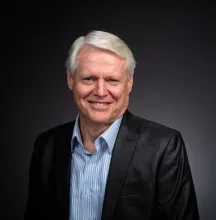
John Elliott serves in the role of President of the United Church of God, an International Association.
