

Paul Moody
This sermon was given at the Bend, Oregon 2011 Feast site.
This transcript was generated by AI and may contain errors. It is provided to assist those who may not be able to listen to the message.
Good morning, brethren. Certainly good to be here with you. Really is a good view from up here. Kind of reminds me of some words Abraham Lincoln spoke. He said something to the effect of, I stepped up onto this platform so that you may see me and I may see you. And in that position, I think I have the better end of the deal.
It's certainly good to be here with you. We appreciate the special music that we have at the feast. I think we would all agree it certainly is a very special part of the feast, certainly a very special part of glorifying God on our behalf.
And I do thank the choir and all those who put all the effort into putting the special music pieces together. It certainly is lovely. I also appreciated Mr. Light's sermonette today. My wife and I and our family have attended the feast in Bend probably about ten times over the years and got to know many of you. But the reality is as I run into you year to year, oftentimes I have to ask you to remind me of your name. And I do apologize for that. The reality is I actually have a photographic memory. It just hasn't developed yet. It is wonderful to be here together and I'd like to welcome all those we have joining on the Cybercast.
It sounds like quite a few of them and also some personal friends from Spokane. So it's good to have you with us. Well, brethren, as we come to observe these Feast of Tabernacles together year after year, we direct our focus on the wonderful world tomorrow. And naturally we would do that. That's what these days are portraying. And as we do, we think about how much better that world's going to be than the world that we live in today.
We look forward to a time when the politics of man are put aside and a new form of government reigns. We'd like to talk about how that new world is going to function, how that new world is going to be managed under the leadership and under the reign of Jesus Christ. And as we do, brethren, as we walk through these days, we read through the biblical prophecies, the prophecies that reveal to us the great blessings of abundance and peace that are going to be realized when these days are finally brought to pass.
Now, as we spend our time reflecting on the wonderful age to come, it is important that we keep a vital principle in mind. And that is for those of us who have been called out now and have received the Holy Spirit of God now, those days to come are not primarily about us. Now, that's not to say that the role we play is not important, because in fact it is. In the millennium, we the resurrected saints will reign alongside Jesus Christ as kings and priests. We're going to be teachers. We're going to be helpers of other people's salvation. But the millennium is a time as well when our spiritual lives are going to be poured out in service to Jesus Christ, to His government, and the rest of the humanity of this world.
But the primary focus of these days is to commemorate someone else's time in the plan of God. I think we all understand that the Holy Days reveal that God is calling all men to salvation, all men to have an opportunity to participate in an incredible destiny, but not all of this time. God has a plan, and He has an order in which He's carrying out that plan.
And we who have been called out now, and have received the Holy Spirit of God now, we've been given the opportunity to go first, the opportunity to be as it were first fruits of His harvest. So here at the Feast of Tabernacles, we're actually reflecting on the opportunity for salvation that's going to be given to those who will be called by God in the Millennium. And our job is to assist Jesus Christ in His work and in service to those individuals.
Now, brethren, with all that said, I'd like to ask a question or two of us this afternoon. And that is, as we sit at the Feast and we reflect on the Millennial Age to come, and we reflect on all the beautiful Millennial prophecies that we see that lie ahead of us, do we ever feel like we're missing out on something in our Christian lives today?
In other words, as we reflect again on these prophecies for humanity, do we ever feel like being called out now is somehow a lesser experience because we live in this world? After all, this world is no world tomorrow. And I think we would all realize that. All we have to do is turn on the television or step outside the front door to see that that, in fact, is true.
So do we think that converted life now ever falls short of the experience that will be realized by those individuals living in the Millennium? I mean, after all, that's when life's going to be functioning, right? That's when life's going to be flowing smoothly. The world is going to be organized as it should. The government of God is going to be reigning. Jesus Christ will be directing the affairs of this world. Do we ever feel like we're missing out now? Well, hopefully, brethren, none of us feel that way about our awesome calling from God. But again, as we sit here and observe the feast, it can be easy for us to start to make comparisons.
And if we're not careful, we can start feeling that we're missing out because of this age, because of this world in which we live. This morning, what I'd like to do is to show to you through the Scripture that the way of life we've been called to live today is, in fact, a comparable reflection of the way of life that is portrayed by this feast of tabernacles.
For those of you who like titles, the title of my message today is, Under the Rain of the Kingdom of God. Under the Rain of the Kingdom of God. So to begin with, brethren, when we consider that millennial age to come, what is it about that time specifically that makes it such a wonderful and such a desirable time for the future?
Well, we can find the answer to that question in a very familiar millennial prophecy. Follow me over, please, to Micah the fourth chapter. Take a look at what Micah has to say. Micah chapter four, and we're going to begin in verse one.
Micah four one says, Now it shall come to pass in the latter days, that the mountain of the Lord's house shall be established on top of the mountains, and shall be exalted above the hills, and peoples shall flow to it. When the Bible talks of mountains and hills, it's referring to governments, mountains being larger governments, and hills being smaller governments and smaller nations.
And the kingdom of God is going to reign over all the governments of the earth. That's what this passage is saying. Verse two, Many nations shall come and say, Come and let us go up to the mountain of the Lord, to the house of the God of Jacob. And he will teach us his ways, and we shall walk in his paths. For out of Zion the law shall go forth, and the word of the Lord from Jerusalem. So the laws of God and the words of the Lord, they're going to flow out over all the earth. They're going to flow out as the standard for living, for all mankind.
And people are going to seek them, they're going to find them, and they're going to live them. Verse three, it says, He shall judge between many peoples, shall rebuke strong nations afar off. They shall beat their swords into plowshares and their spears into pruning hooks. Nations shall not lift up sword against nation, neither shall they learn war anymore. But everyone shall sit under his vine and under his fig tree, and no one shall make them afraid, for the mouth of the Lord of hosts has spoken. Brother in the millennial age is going to be a very wonderful time, because number one, the kingdom of God will reign supreme. The kingdom of God will reign supreme.
Number two, the peoples of the earth will live in willing subjection to the way of God. Peoples of this earth will live in willing subjection to the way of God. And number three, as a result of the first two conditions, God's blessing will flow out over all the earth.
Now, by comparison for you and I today, we should be able to recognize that the way that will govern life in the millennium is, in fact, the way of life, the way that governs our spiritual lives today. Number one, the kingdom of God reigns supreme in our lives. Let's turn over to Philippians, the third chapter. Philippians chapter three, let's see what the apostle Paul has to say.
Philippians chapter three and verse 20. Here the apostle Paul says, For our citizenship is in heaven, from which we also eagerly wait for the Savior, the Lord Jesus Christ. Paul says our citizenship is in heaven. And what that means is, in a nutshell, is that the kingdom of God reigns supreme in our lives today. When your citizenship is in heaven, you look first and foremost to the kingdom of God as the greatest governing authority in your life. Now, yes, we have citizenship in a physical nation. And yes, it has laws and standards that we abide by.
But only so long as they're not in conflict with the laws and the standards of the kingdom of God. That's where our ultimate allegiance lies, is to God, not with men. Now, you'll probably recall a series of incidents that took place in Acts chapter four and five. And there Peter and John, they were teaching Jesus Christ.
They were teaching the gospel throughout Jerusalem. And there were certain leaders who weren't pleased with their words. And so, as a result, they were brought before the high priests. They were brought before the elders and the other leaders. And they were commanded not to speak and not to teach in the name of Jesus Christ. And then they were let go. Well, what happened? Well, as we know, all the apostles continued teaching. They continued teaching the gospel. They continued teaching the resurrection of Jesus Christ. And let's pick up the story and see what happens as a result of that in Acts chapter five.
Acts chapter five and verse twenty-seven. Because as a result, they were actually arrested once again. They were brought before the council. Acts five twenty-seven says, And when they had brought them, they set them before the council, and the high priest asked them, saying, Did we not strictly command you not to teach in this name? And look, you have filled Jerusalem with your doctrine and intend to bring this man's blood on us.
And then Peter and the other apostles answered and said, We ought to obey God rather than men. They said, We ought to obey God rather than men. Obviously, the apostles understood who was that greatest authority in their lives. And brethren, hopefully we do so as well. Clause one, verse thirteen says that God has delivered us from the power of darkness and conveyed us into the kingdom of the Son of His love. And so what God has done for us through the blood of Jesus Christ is to redeem us from the kingdom of darkness.
That's a counterfeit kingdom. It's a kingdom that's reigned over by Satan the devil, the God of this world. And God has taken us and established us under the authority of Jesus Christ in His soon-coming kingdom. Now, God's kingdom is not physically here yet. I think we all understand that. We heard about that already at this feast. Flesh and blood cannot inherit the kingdom of God. We're not in the kingdom. It's not here yet, but it is reigning in our lives.
Second parallel we have here is as God's people today, we too live in willing subjection to His way of life. Just as the people in the millennium will come and seek God's way and will come to humble obedience to it, we too seek to live God's way in our lives today.
We're ambassadors for Jesus Christ. Second Corinthians 5.20 explains that to us. And what that means is that we live before all men as witnesses of who Jesus Christ is and how Jesus Christ conducted His life. We walk through our physical life representing the way, the way of Jesus Christ in our lives. The way that He lived, the way that He walked is the way that we live and we walk and are spiritualized today. The phrase, the way, is actually an interesting one. Early Christians were called followers of the way and that term referred to the fact that they lived according to the way that Jesus Christ lived. In the Greek, the term the way actually means a traveled way.
It means a road. It means a path. And so as followers of the way, we work to travel the same spiritual path that Jesus Christ walked. We strive to pick up our cross daily and to follow Him. Now what's interesting in this concept of the way is that we find that terminology, we find that basic concept existing back in the Hebrew moment we read in Micah the fourth chapter where it says, He will teach us His ways and we shall walk in His paths. It shows the desire of those living in the millennium to follow a better way and to actually implement it in their lives. And as Christians, as people of the way today, the same must be true in our lives as well. And finally, brethren, the third point of this parallel is as a result of the first two conditions, God's blessing flows out in our lives as well. God's blessing flows out in our lives as well. Again, it's a cause and effect that takes place. It's simply the consequence of the right and proper process because Scripture shows that blessings are naturally linked to obedience. Blessings are a result of the obedience to God's way.
Now I'm not teaching a health and wealth gospel. I'm not teaching, you know, just throw your money in the basket and you'll get a lower mortgage rate. You'll never get sick. You'll never have to visit the emergency room. But I am linking together blessings with obedience.
Deuteronomy 30, God laid out this principle of cause and effect for ancient Israel. Turn over there, please, if you would, to Deuteronomy 30. Deuteronomy 30, we're going to look at verse 15 through 20. Deuteronomy 30, verse 15, God says, See, I have set before you today, life and good, death and evil, and that I command you today to love the Lord your God, to walk in His ways and to keep His commandments, His statutes, and His judgments, that you may live and multiply, and the Lord your God will bless you in the land which you go to possess.
But if your heart turns away so that you do not hear and are drawn away and worship other gods and serve them, then I announce to you today that you shall not surly perish, that you shall not prolong your days in the land which you cross over the Jordan to go and possess. Verse 19, I call heaven and earth as witness today against you, that I have set before you life and death, blessing and cursing.
Therefore, true is life, that both you and your descendants may live, that you may love the Lord your God, that you may obey His voice, and that you may cling to Him. For He is your life and the length of your days, and that you may dwell in the land the Lord swore to your fathers to give to Abraham, Isaac, and to Jacob. So what's interesting is, all throughout Scripture, all the way back to Genesis, through the time of Israel, through our lives today, and on into the millennium, God offers a choice.
Life or death, blessing or cursing, and God gives us free will to choose. Now, that doesn't mean that God's indifferent. It doesn't matter to Him which we choose. God doesn't desire, in fact, that we choose life. He says, please choose life.
He pleads with us through His Scripture. He says, I want you to live. I want to be able to pour my blessings out on you. Please choose life. And you know, brethren, that extends out in many other ways in our life. We're commanded to love the Lord your God, are we not?
Scripture says to love the Lord your God with all your heart, with all your soul, with all your mind. Love your neighbor as yourself, and see if it doesn't go well for you. See if you don't have a closer relationship with God and His spiritual blessings are poured out in your lives. See if you don't have happier marriages and happier children and harmony and peace that exist among the people of God. God wants us to walk through this life, and He wants us to prove Him through obedience. Prove Him and see if His way doesn't work.
Prove Him and see if His blessings don't follow. You can actually find that Scripture and that concept in Malachi chapter 3. Let's let's breeze through it quickly earlier in the feast. Let's check it out again, Malachi chapter 3. Beginning in verse 8. Malachi 3 verse 8, it says, Will a man rob God? And yet you have robbed me. But you say, In what way have we robbed you? And the answer is in tithes and offerings.
Verse 9, You are cursed with the curse for you have robbed me, even this whole nation. He says, Bring all the tithes into the storehouse, that there may be food in my house. Improve me now in this, says the Lord of hosts, if I will not open for you the windows of heaven and pour out on you such blessing that there will not be room enough to receive it. So God wants us to test him.
He wants us to prove him through obedience. That's the only right and proper way to test God is through obedience. And in the scripture, God instructs us to do just that. You know, we might say, Well, that maybe doesn't make me feel comfortable. I don't know if I'm comfortable getting in the business of testing God. And I think we can see in the scripture that it's actually instructed in other areas that were not to test God. But there is a difference. Ancient Israel were destroyed, in large part because they tested God.
They died in the wilderness. But how did they test God? They tested him through rebellion. They tested him through disobedience. They wandered in the wilderness and they said, Can God do this? Can God do that? They didn't want to follow God. They wanted to turn back to Egypt. They didn't trust God with their whole heart. They tested God through rebellion and disobedience.
God here says to prove him, to test him. And the only right and proper way to test God is through obedience. Again, follow his way. Obey his law and see if his blessings don't follow. Now, sometimes we can stop, we can step back, and we can say, You know what? I've done those things. I've put God first. I've obeyed him. And still I struggle in this life. I still have difficulties making ends meet. You know, I struggle with the job. I struggle with the mortgage. I struggle keeping the car running. I struggle with health issues and I struggle with physical disabilities in this flesh.
And brethren, that is the reality for many of us sitting here. It is true that many times the faithful of God suffer hardships. And at times it can actually be difficult to find a blessing amongst the trial. But the reality is that God's way works. And the greatest blessings that we can receive from the hand of God in this life are spiritual. The greatest blessings are spiritual. I'm sure physical blessings are nice.
And I like physical blessings. I actually pray for physical blessings for myself and for others. Physical blessings are nice, but they have limitations. Physical blessings are limited like any other physical thing. They're corruptible and they're physical. But spiritual blessings, on the other hand, aren't limited in those ways. Spiritual blessings that come from the hand of God are eternal. I offered to look at the world around us as a whole today. I offered to look at the community, even of Ben Redmond. And as you came in today, as you drove in, you probably saw people that maybe they seemed like they'd been more blessed than you.
Maybe there's people with bigger houses, newer cars. If I was to ask you, who is the most blessed in this world today, brethren, I would have to say that you are. Because you are here. You've come into the presence of God. You're observing His feast of tabernacles, according to His command. A tremendous blessing called conversion, brethren, has been poured out in our lives. And it's a blessing that can't even be compared to these physical things. God's greatest blessings are spiritual, and they are eternal. Now that brings me back to the purpose of my message today. Again, I want to show you that the way of life we've been called to live today is, in fact, a comparable reflection of the way of life we see portrayed by these feast of tabernacles.
So for the remainder of my message, I want to examine three ways in which a type of millennial prophecy has been fulfilled in our spiritual lives today. Three ways in which we reap the blessing of living under the reign of the kingdom of God. Now. So let's jump right into it. Point number one. Under the reign of the kingdom of God, there is healing. There is healing. When Jesus Christ returns to this earth as King of Kings and Lord of Lords, He's going to claim all the nations of this earth as part of the kingdom of God.
And yet that's just the beginning of the process. Brethren, we've all read the prophecies. We know this world is going to be in shambles. This world is going to be in desperate need of healing when Jesus Christ, the King of Kings, returns. Let's take a look at a scripture that begins to describe the process of spiritual healing and physical healing to this world. Let's go to Zachariah the 14th chapter. Zachariah chapter 14 beginning in verse 8. Zachariah 14 8 and it says, And in that day it shall be that living waters shall flow out from Jerusalem, half of them towards the Eastern Sea, and that's the Dead Sea, half of them towards the Western Sea, which is the Mediterranean Sea, and both summer and winter it shall occur.
So we're looking at the rivers of living water that are going to flow out both ways from the temple of God in the millennium. Let's continue the story in Ezekiel the 47th chapter. Ezekiel chapter 47 beginning in verse 1. Ezekiel 47 1 it says, Then he brought me back to the door of the temple, and there was water flowing from under the threshold of the temple towards the east, for the front of the temple faced east, and water was flowing from under the right side of the temple south of the center.
And he brought me out of the way of the north gate, and then he led me around on the outside of the outer gateway that faces east, and there was water running out from on the right side. Then when the man went out to the east with the line in his hand, and he measured one thousand cubits, and he brought me through the waters, and the waters came up to my ankles. Again he measured one thousand and brought me through the waters, and the waters came up to my knees. Again he measured one thousand and brought me through the water, and the water came up to my waist.
So Ezekiel here, the farther out he's going, the farther east he's traveling, that every thousand cubits or so, the living water is becoming more prolific, more pronounced, more water, the farther out it's flowing from the temple of God. Verse 4, beginning verse 4, actually jumping into the middle, again he measured one thousand and brought me through, and the water came up to my waist. Again he measured one thousand and it was a river I could not cross.
So the water was too deep, water in which one must swim, a river that could not be crossed. Verse 6, he said to me, Son of man, have you seen this? Then he brought me and returned me to the bank of the river, and when I returned there along the bank of the river were very many trees on one side and the other. Then he said to me, this water flows towards the eastern region. It goes down into the valley and enters the sea, and when it reaches the sea its waters are healed.
You recall the prophecies that are at play at the time of Jesus Christ returned to this earth. Basically all the water will be poisoned and ruined. All the fish and the living creatures within it destroyed. All the bodies within this world are basically dead and much of the earth is decimated. Verse 9, and it shall be that every living thing that moves, wherever the rivers go will live. There will be a very great multitude of fish because these waters go there, for they will be healed, and everything will live wherever the rivers go.
So there's a miracle that's going to take place in the presence of these living waters. Bodies of water are healed. The fish and the other living creatures are restored. Wherever those living waters of God flow out across the earth, a transformation and a renewal takes place. Brethren, this is an incredible physical miracle that this world will be in desperate need of, but beyond the physical healing, these waters also have spiritual significance because they represent God's Holy Spirit. In the world tomorrow, mankind is going to be given opportunity to seek out Jesus Christ.
They're going to be given the opportunity to develop a personal relationship with Him. The greatest miracle of all in that time will be conversion. God's Holy Spirit will be poured out on the earth. It's going to be poured out on all of those who seek it. The spiritual living waters are going to be responsible for the healing of the hearts and the mind of the people in the millennium. Brethren, you and I have been given access to those spiritual living waters today as well. During His earthly ministry, Jesus Christ explained to us what the source and what the purpose of those living waters are.
Let's go to John 4. John 4. We're going to begin in verse 7. John 4, verse 7. A familiar story to us. It says, A woman of Samaria came to draw water, and Jesus said to her, Give me a drink. For his disciples had gone away into the city to buy food. Then the woman of Samaria said to him, How is it that you, being a Jew, ask a drink from me as a Samaritan woman? For Jews have no dealings with Samaritans. Jesus answered and said to her, If you knew of the gift of God and who it was who says to you, Give me a drink, you would have asked Him and He would have given you living water.
So Jesus Christ is the source. He's the source of which we come to to receive living water. Remember, in the millennium, those living waters are going to flow out from under His throne. They're going to flow out from under His temple in Jerusalem. Verse 13, Jesus answered and said to her, Whoever drinks of this water will thirst again, referring to the physical water from the well.
But whoever drinks of the water that I shall give him will never thirst. For the water I shall give him will become in Him a fountain of water springing up into everlasting life. Again, the living water represents God's Holy Spirit. And when we partake in it through Christ, through the process of conversion, it springs up in us.
And the more we respond and the more we put the Holy Spirit of God to use, the more prolific it becomes in our life and the more it springs up in us in greater abundance. And, brethren, as that process continues on, spiritual life and vitality spring forth. The parts of our nature that were once dead to the ways of God are healed and restored ultimately to Him. The blessing is that if we use that spiritual living water productively, if we use it actively in our lives, it leads eventually to the Father granting to us eternal life.
Let's go to John 7, verse 37. Continue looking at this concept of the living waters. John 7, verse 37, the setting here is the last day of the Feast of Tabernacles. John 7, verse 37 says, On that last day, that great day of the Feast, Jesus stood and cried out, saying, If anyone thirst, let him come to me and drink. And he who believes in me, as the scripture has said, out of his heart will flow rivers of living water.
But this he spoke concerning the Spirit, whom those believing in him would receive, for the Holy Spirit was not yet given, because Jesus was not yet glorified. So again, it's through Jesus Christ that we gain access to his Holy Spirit, that we gain access to these spiritual living waters. And as these living waters flow into us, again, it heals our injured, it heals our polluted hearts and minds, and it restores us in service to God.
Another scripture which shows millennial healing is found in Isaiah, the 35th chapter. Isaiah 35, beginning in verse 5, Isaiah 35, 5, it says, Then the eyes of the blind shall be opened, and the ears of the deaf shall be unstopped. Then the lame shall leap like a deer, and the tongue of the dumb shall sing. This is a wonderful prophecy of physical healing that's going to be poured out on people living in the world tomorrow. Just rather than just imagine what it's going to be like.
Imagine what the condition will be of the people living in that day. Those people at the beginning of the millennium who have come through the great tribulation, have come through the day of the Lord. There's going to be many tragic circumstances. There's going to be many physical disabilities. There's going to be many individuals that will be in desperate need of healing. Imagine what it's going to be like for someone who's been blinded, perhaps blinded from warfare, perhaps blinded from birth.
What it's going to be like when their eyes are opened and they're healed and they're able to see that the source of that healing is their creator, God. Imagine what it'll be like for someone who's been paralyzed because of a piece of shrapnel embedded in their back or a deformity from birth when they're healed and they're able to leap for joy before the Lord. I think that's going to be a very exciting and a very encouraging time, brethren, for you and I to partake in and to see.
Hopefully we will even have opportunity, perhaps, to share in that process. In addition to the physical healing that's going to take place during this time, there's a spiritual element as well. Because the people who live over into the world tomorrow from this world will have lived under the influence of Satan the devil. They will have lived under the influence of the God of this world. And the reality is, he is the cause of much of this world's spiritual disabilities.
Satan, the devil, currently casts a veil over the nations of this world. If you were at the Bible study Mr. Antion gave, you saw that. He covered that very thoroughly. Satan the devil blinds mankind from the light of the gospel. He distorts what many people hear, what they perceive as truth. He causes many to walk in a wrong path, and he influences many to speak against their Creator. During the millennium, God's going to bring spiritual healing to those who have been handicapped by sin and handicapped by the influence of Satan the devil. It's a type of healing that's been realized in the lives of those who have been called out of this world today.
It's a type of healing that has been recognized and realized by you and I, brethren, through the process of conversion. Before our eyes were opened to the truth of God, we could not see the truth. We couldn't see the light of God's truth. Before our ears were unstopped, we could not hear a calling. Before we were healed, we were walking according to the course of this world. We were spiritually lame, and we couldn't walk in the paths of the Lord. And before our tongue was spiritually loosed, brethren, we weren't able to proclaim the praises of Him who called us out of darkness to His marvelous light.
A great blessing of living under the reign of the kingdom of God is healing. Physical and spiritual healing in the millennium and healing in our lives today as well. My second point is under the reign of the kingdom of God, there is peace. Follow me, please, over to Isaiah, the second chapter. Isaiah 2, this is a parallel verse to what we read earlier. Because we've covered pretty much most of this, I'm going to jump down to verse 4. Isaiah 2 and verse 4.
It says, So the millennium is going to be a time of peace and harmony among mankind, but it won't be because there aren't any weapons. It won't be because the swords are now plowshares and the spears are now pruning hooks. It won't be because society is now an agrarian society and that just somehow magically makes everything all better. Cain was a tiller of the ground, was he not? He still stood up and slew his brother Abel. The reality is a person can still pick up a pruning hook.
He can still kill a fellow man with it pretty easily. The reality is it happens quite commonly, things like that, in tribal warfare in many parts of this earth. Last winter I had the opportunity to go to Nigeria to attend a challenger program that Olladaria Kimbo put together. We spent about eight days out in the wilderness, a group of 16 of us. As we were hiking out of the wilderness, and we're talking very remote area, we ran into a little bit of disturbance.
Basically, we're hiking out. We have packs on our back. We have camping gear, fuel canisters, which pretty much everything we had is pretty unfamiliar in that area of the country. And we were confronted by a group of individuals that were very concerned over just who it was we were. Because there was a series of circumstances that had begun to take place in that region.
You see, Nigeria, the northern half is predominantly Muslim, the southern half predominantly Christian. And the Joss region where we were at is right around the central border area. And so there had been some circumstances that had begun to raise themselves up. And over the Christmas holiday, when we were in the wilderness at the closest city, there had been some bombings against some Christian cities or some Christian churches during that Christmas holiday.
And so word had kind of filtered out into the far reaches and people were on edge, understandably. So they stopped our group. They confronted us. We're trying to communicate with them. They didn't speak any English. And no one in our group spoke their tribal tongue. And so communication was difficult until a small boy came up and was able to speak a little bit of their language. And basically what he interpreted was that we were bad men. And so we stood there for a while trying to calm the situation, trying to explain who it was that we were. There were about 10 of them.
There were about 16 of us. And as we're standing there explaining the situation, we see over the hill about a half a mile away about a group of another 20 individuals were running towards our position. And what I remember about that situation is that a couple of them were carrying hoes. You know, talking about the short, short hose about 18-inch long handle that you stoop over and you till the ground with.
And they weren't coming to chop weeds. The reality is that they were afraid. These were actually very peaceful agrarian people. And yet they were afraid, again, these circumstances that had begun to raise themselves up. And actually somebody setting a bomb about two miles away from our pickup point had actually blown themselves up. And again, these individuals were looking to protect their families. They were looking to protect their property.
Well, at that point, we excused ourselves from their hospitality and made our way to the next village where the police chief came out and met us. And we were able to explain who it was that we were and the situation was resolved in a peaceful manner. But the point is, it's not a farm implement that will bring about peace. It can still be picked up and used as a weapon.
But rather, it's through a change of a man's heart and his nature that peace comes about.
It's a change that comes as a result of living according to God's way of life.
As people of the millennium submit themselves to Jesus Christ and they submit themselves to the laws of the kingdom of God, peace will break out over this earth. And as a result, mankind will not learn war anymore. Brethren, God has called us to peace in our lives as well. He's called us to peace as well. And the way that we achieve peace is by submitting ourselves to the ways and the laws of the kingdom of God. Let's go to Psalms, the 119th chapter. Psalms 119, verse 165. It's a very familiar verse to us. Psalm 119, 165 says, Great peace have those who love your law, and nothing causes them to stumble.
And I believe the New King James says, Nothing shall offend them. The principle is, if we love the law of God, we're going to pursue it. If we love the law of God, we're going to live it. It's going to flow out in our lives. And peace will be a result. Philippians 2, verse 5. We heard that passage yesterday. It instructs us to let this mind be in you, which was also in Christ Jesus.
What was the mind of Jesus Christ? We could probably give a whole series of messages on the mind of Jesus Christ, but ultimately the mind of Jesus Christ was the mind of God.
And one of the titles that describes who and what he is is the Prince of Peace.
Brethren, if the mind of Christ is in us, if his nature is dwelling in us, then peace should be our way of life as well.
Isaiah 11 contains another millennial prophecy of peace.
Follow me over there, please, to Isaiah 11.
Isaiah 11, verse 6.
It says, The wolf shall dwell with the lamb. The leopard shall lie down with the young goat. The calf and the young lion and the fatling together, and the little child shall lead them.
You know, I don't know a whole lot about the nature of the wolf, the lion and the leopard, other than what maybe I've seen on National Geographic.
We did go to the IMAX a few weeks ago and saw lions of the Kalahari, I believe it was.
I do know the nature of cats and dogs. I have a few of those. We've been able to observe them over the years. And a few years ago, as my wife was riding her bike home on a Friday evening, shortly before sundown, our dog took off after the neighbor's cat, Blackie.
And our dog chased Blackie into the bushes. So my wife, you know, concerned for the cats, she rides her bike over there real quick to try to save Blackie from our vicious dog.
She arrives just in time to notice that Blackie has a white stripe down her back.
The neighbor's cat, Blackie, was actually skunky. He wasn't happy. And my wife took the full force of his displeasure. So, you know, my wife comes dragging him to the house, you know, knocks on the door, open the door. We're about 20 minutes before sundown. Of course, we couldn't let her in the house. This wasn't acceptable. So there we are. We're out the barn with big jug of tomato juice out there. We're washing her down with that. We're spraying her down with tea tree oil, trying to at least make her acceptable. Eventually, we held a vote and invited her into our home for Friday evening. She took multiple showers, which we all appreciated, and finally got to the point where she was decent enough to attend church on the Sabbath. She came into the hall and sat all the way in the back, which I appreciated. I was leading songs that day.
So she sat all the way in the back. The only person in services that got to sit in their own pew.
The nature of the animals in the millennium will be changed.
And it's just my theory, my personal observation, I think, in the millennium, the skunks will probably spray potpourri, will probably be inviting them into our homes on the Friday evening just to freshen it up for the Sabbath. But Isaiah 11 again, the end of verse 6, and the little child shall leave them.
Says the cow and the bear shall graze, their young one shall lie down together, and the lion shall eat straw like the ox. Verse 8, the nursing child shall play by the cobra's hole, and the weaned child shall put his hand in the viper's den. They shall not hurt nor destroy in all my holy mountain. And why is that going to be? Why is this change of nature, why is this action going to take place? Well, it says, for the earth shall be full of the knowledge of the Lord, as the waters cover the sea. Here we see a wonderful time where even the nature of the animals will be changed. They're no longer going to be harmful. They're not going to be harmful to one another. They're not going to be harmful to any of God's creation. And their behavior is a reflection of the fact that the peoples and the nations of this earth will be living at peace with one another as well. Isaiah 19.24 says that in that day Israel shall be one of three with Egypt and Assyria, a blessing in the midst of the land. So just like the animals, these nations that are mortal enemies, these nations that have never been able to sit down for any lasting peace, it says they're going to be a blessing in the midst of the land. Again, it's because the earth shall be full of the knowledge of the Lord as the waters cover the sea. In other words, this world is going to be immersed in the way and in the knowledge of God. And just as there's not a dry region in the midst of the ocean, there won't be anywhere on the face of this earth that doesn't know Jesus Christ, the Prince of Peace. Brethren, that is indeed truly a blessing at that time to come. And as a response to knowing Jesus Christ, to understanding His way, to having the government of God reigning over them, the nature of man will change and peace will be established.
Now, isn't that similar to what's happened in our lives today as well? Isn't that similar to what's happened through our calling, through our conversion? At baptism, we were immersed in the baptismal tank. We were immersed to put to death the old man, to put to death that old nature and that carnal nature, which was contrary to the way of God. And by the laying on of hands, we became a new creation in Jesus Christ. And we took on a new nature. Through the power of God's Holy Spirit, we were then able to turn and follow Him and dwell together in peace.
Proverbs 16, verse 7, says, When a man's way cleanses the Lord, he makes even his enemies to be at peace with him. God does that. He does that in our lives today. And He'll do that in the world tomorrow. It's a great blessing that comes from conversion, brethren. It's a great blessing to have the peace of God, the peace of Jesus Christ reigning in our lives. One final scripture on the topic of peace is John the 14th chapter. If you'll follow me over there, please, to John chapter 14.
John 14, verse 27.
Jesus Christ, you're speaking. He says, Peace I leave with you. My peace I give to you.
Not as the world gives do I give to you. Let not your heart be troubled, neither let it be afraid. So the peace that Jesus Christ gives us surpasses the peace that can exist among mere men.
The peace of men is quickly broken. The peace of men is not lasting. You know, mankind, nations, they can sit down, they can make peace treaties, they can establish cease fires amongst themselves.
But it's not a lasting peace. It's not an enduring peace. But the peace that comes from Jesus Christ, it is sure, it is steadfast, and it is secure. And, brethren, that is the peace that Jesus Christ has left with us today. Again, in the millennium, those who have been historically at odds with one another are going to be brought into a state of harmony and peace. And that's the way it's intended to be in the body of Jesus Christ as well. As Mr. Light mentioned already this morning, God's called us from a number of backgrounds, from a large variety of history behind us. And He's brought us together, and through the power of His Holy Spirit, He's bound us together as one body, as one family. And He desires, more than that, He expects that we dwell together in peace.
I hope we clearly understand that. Under the reign of the kingdom of God, there is peace.
My third point is under the reign of the kingdom of God, fruitfulness abounds.
Fruitfulness abounds. Amos chapter 9, we're not going to turn there because I thought Mr. Johnson covered that so well, so thoroughly the other day, but Amos 9, 13, I'll just remind us, it says, The plowman shall overtake the reaper, and the treader of greats him sows seed.
The mountain shall drift with sweet wine, and all the hills shall flow with it.
As Mr. Johnson pointed out, it's a time of a great abundance. It's a time that comes as a result of living in obedience to God's way of life. Basically, wherever seed is sown, wherever it's thrown out on the ground, fruitfulness abounds. Let's look at Isaiah the 35th chapter. Take a look at a millennial prophecy of fruitfulness.
Isaiah chapter 35 and verse 1.
It says, The wilderness and the wasteland shall be glad for them, and the desert shall rejoice and blossom as a rose. It shall blossom abundantly and rejoice, even with the joy in singing. The glory of Lebanon shall be given to it, the excellence of Carmel and of Sharon. They shall see the glory of the Lord, the excellency of our God. So even the deserts will rejoice because of blessing.
Rain-induced season is going to fall on the deserts. They will be fruitful. They will produce abundantly. And people are going to take notice of the source from which that blessing comes.
You can help but notice on the way down to Bend, as we come over and down through central Washington and through the central part of northern Oregon, there's a lot of desert-type regions.
And even here in Bend, it's called the High Desert Area, is it not?
And so one thing I couldn't help but notice was in the areas where water was piped in and poured out on the ground, crops were produced and fruit was born. There's vast areas of this world that are just waiting for rain-induced season and writing proper agricultural practices in order to bear abundant fruit. Let's turn to Ezekiel now, the 34th chapter. Ezekiel chapter 34, verse 26.
It says, I will make them in the places all around my holy hill, all around my hill, a blessing.
And I will call showers to come down in their season, and there shall be showers of blessing.
It was kind of interesting. I've heard some speculate. This is a speculation, but I've heard some speculate that these showers of blessing may actually be showers of living water.
Showers that are poured down on the earth that give healing and give restoration to the land.
I suppose that could be a possibility. As the living waters of God flow out through Jerusalem, from Jerusalem, they can be picked up by this earth's natural evaporative process. By the way, this earth circulates water, picked up, evaporated, turned into rain, and rained back down on the earth.
I simply give that to you for a possibility to consider. This is a B, showers of blessing.
Verse 27, Then the trees of the field shall yield their fruit, and the earth shall yield her increase.
Again, it will be a time when tremendous fruitfulness and abundance are realized by the people living in this age.
Fruitfulness and productivity are going to be a way of life in the world tomorrow.
So what about us today? How does this fruitful abundance fit with us?
Well, the reality is, as Christians, Brother Nue and I are expected to take what God has given us and produce much fruit in service to Him. Let's go to Matthew 13.
Matthew 13.
I'm going to look at the parable of the sower.
Matthew 13. Because, brethren, you and I, in our lives today, we've had a seed of the kingdom of God planted in us. We're to use it, and we're to bear much fruit in service to God. Matthew 13.
I'm beginning in verse 10.
It says, So the parables, again, they weren't for everyone to understand, but they were for Christ's disciples to understand. They are for us to understand as well.
Verse 12. Again, there's a spiritual blindness and a spiritual deafness in this world. In part, and at times, it is intentional.
Verse 16.
So Christ is saying, you've been enlightened.
You've been able to understand these things in your life today.
And so as the parable goes on, it explains the sower going out and sowing seed.
It explains how seed fell on different types of ground and why seed wasn't able to be productive under certain conditions and on certain types of ground. And jumping down to verse 23, here it talks about the type of soil that you and I should be.
Verse 23.
It says, So when the seed of the kingdom of God is planted in our lives, when the seed of the kingdom of God is poured out on us, we're not to just sit on it.
In fact, we're to nurture it or to grow it or to develop it and service to God. And some will bear fruit.
Some a hundredfold.
Some sixty.
Some thirty.
Some thirty.
Additionally, God waters that seed within us through His Holy Spirit, that living water that God has poured out on us. And the fruit of the Spirit springs up in our lives.
We produce fruits such as love, joy, peace, long suffering, kindness, goodness, faithfulness, gentleness, self-control.
Those are the fruits of the Spirit.
That's Galatians 5, verse 22 and 23.
Brethren, in your lives, you and I begin to produce fruit that glorifies God.
Fruit that glorifies what it is He is doing in our lives today.
Another passage on fruit production is found in John the 15th chapter.
John chapter 15, beginning in verse 4. Jesus Christ said, Abide in me and I in you.
As the branch cannot bear fruit of itself unless it abides in the vine, neither can you unless you abide in me.
So for us, bearing spiritual fruit requires a personal and a direct relationship with Jesus Christ. It requires a productive relationship that we work at and that we nurture and that we encourage and grow on a daily basis. Verse 5, Christ said, I am the vine. You are the branches. He who abides in me and I in him bears much fruit. For without me, you can do nothing.
Dropping down to verse 8, By this my Father is glorified that you bear much fruit, so you will be my disciples.
So again, we have opportunity in our lives today to bear much fruit.
We are expected, in fact, to do so. When we do, we glorify the Father.
When we do, we identify ourselves as disciples of Jesus Christ.
Let's go to Jeremiah 17, verse 7. This will be our final scripture here on spiritual fruit production. Jeremiah 17, verse 7.
It says, Blessed is the man who trusts in the Lord, and whose hope is in the Lord. Brethren, that's you and I. Verse 8, For he shall be like a tree planted by the waters, which spreads out its roots by the river, will not fear when the heat comes. Here we're talking about those rivers of living water again, the rivers of God's Holy Spirit and God's blessing poured out on us.
So he'll be like a tree planted by the waters, which spreads out its roots by the river, and will not fear when the heat comes, but its leaf will be green, and will not be anxious in the year of drought, nor will cease from yielding fruit.
Brethren, if our lives are invested in relationship to God the Father and Jesus Christ, we'll never see spiritual drought. We'll never see spiritual malnourishment.
We're never going to see that lack of the spiritual food, the spiritual bread of life, the spiritual food that sustains us in our service to God. We'll never cease from producing abundant and good fruit in service to God and Jesus Christ in our lives today. Under the reign of the kingdom of God, fruitfulness abounds.
Now, for a couple words, my children will be sure to enjoy. In conclusion, the way of life, brethren, we've been called to live today, is in fact a comparable reflection of the way of life we see portrayed in these feast of tabernacles. God's way works.
It works every time it's tried. It will work in the millennium, and it's working in our spiritual lives today. Even though you and I live in this world, we shouldn't feel like we're somehow given a lesser experience or that we're somehow missing out on the great opportunities and the great blessings that God has to offer His people. The reality is He has poured those out in our lives in great abundance. Hopefully we can take the opportunity through the rest of this feast and stop and analyze those things and understand how greatly we have been blessed. Brethren, as we keep the rest of this feast of tabernacles, let's rejoice in the fact that God has called us into His service now. Let's also rejoice in the fact that we have opportunity one day to assist Jesus Christ, to be teachers, to be kings and priests, teaching the way to the rest of humanity, teaching the way to all mankind who will one day be living under the reign of the kingdom of God.
Thank you.
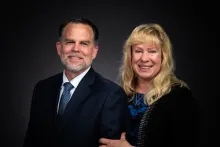
Paul serves as Pastor for the United Church of God congregations in Spokane, Kennewick and Kettle Falls, Washington, and Lewiston, Idaho.
Paul grew up in the Church of God from a young age. He attended Ambassador College in Big Sandy, Texas from 1991-93. He and his wife, Darla, were married in 1994 and have two children, all residing in Spokane.
After college, Paul started a landscape maintenance business, which he and Darla ran for 22 years. He served as the Assistant Pastor of his current congregations for six years before becoming the Pastor in January of 2018.
Paul’s hobbies include backpacking, camping and social events with his family and friends. He assists Darla in her business of raising and training Icelandic horses at their ranch. Mowing the field on his tractor is a favorite pastime.
Paul also serves as Senior Pastor for the English-speaking congregations in West Africa, making 3-4 trips a year to visit brethren in Nigeria and Ghana.
