
Roy Holladay
This transcript was generated by AI and may contain errors. It is provided to assist those who may not be able to listen to the message.
In a moment, Matthew 16. The sermon will be about an hour. The sermon will be about an hour. Follow along. Follow along. Follow along. Follow along. Follow along. Follow along. Follow along. Follow along. Follow along. One of the things I've noticed over the years in talking with members And in talking with a number of ministers also, is that people are always asking questions, and they're seeking answers. And it seems like almost all of the topics of the questions that they ask have one thing in common. They're all based on a desire to know what is God's will. What would God want me to do in this situation? What is God's will? What does God think about this? And I think almost every time we come up with a major decision or we're faced with a trial or a test, we wonder, well, what would God have me to do? The Bible, in fact, tells us and commands us that we are to seek God's will. Let's go over to Ephesians chapter 5. Ephesians 5 verse 15 through 17.
And I'd like to read out of the net translation beginning in verse 15. It says, therefore be very careful how you live, not as unwise but as wise, taking advantage of every opportunity, because the days are evil. So the time we live in is not necessarily a good time. It's an evil time. We need to take advantage of every opportunity. I think King James Version talks about redeeming the time, making sure that we use our time appropriately. It says, verse 17, for this reason, do not be foolish but be wise by understanding what the Lord's will is.
So we're told that we need to understand God's will so that we can reckon our life, we can order our life to go along with that. Now, as Barkley in the daily Bible study writes about this verse, it says, the time in which we are living are evil. And that's probably more true today than it was even back at that time. They must rescue as much time as they can from the evil use of the world. It's too easy to become so accustomed to fall in with what the world is doing, and we need to redeem and use our time appropriately. Now, the NLT translation says, verse 16, make the most of every opportunity in these evil days. Don't act thoughtlessly, but understand what the Lord wants you to do. So many times people are asking, well, what does God say about this? What does the Word of God tell us? What should we do? So we want to cover some of the guidelines today to understand how can you determine what is the will of God? God hasn't left us without understanding. He hasn't left us without tools that we can use to actually come to understand that. As the old saying goes that we're all familiar with, teach a man, excuse me, give a man a fish, and you'll feed him for a day. Teach him how to fish, and you'll feed him for a lifetime. Well, that's exactly what we want to learn to do. We want to learn how do you take the principles that God gives us and apply those across the spectrum in our lives and everything that we do. Now, God gives us many different ways to understand his will. We want to take a look at some of these. Some of these are very obvious. Actually, the most obvious, you would say, is, well, get your Bible out and start reading it. That's where God's will is, and that's absolutely true. But contained within the Scriptures, there are some specific things that God tells us and that we can use.
So let's take a look at these very quickly. Number one are laws and commandments. Laws and commandments. The Ten Commandments are probably the first example you would think of, because they tell us what God's will is. Should we steal? Is that God's will? Or is God against it? Well, obviously, he is. Should we commit adultery? Well, the Bible is very clear on that topic. Should we keep the Sabbath day? And again, the Bible is extremely clear on that. So when you read the Ten Commandments, any commandment in the Bible where it says you should or should not do something, it gives you clear direction on what God's will is on that particular topic. Now too often we don't think of it as God's will. In the world, they think of it as interfering with what they want to do. That God is telling them to do something they don't want to do, and it interferes with their lifestyle. There are many other types of laws mentioned in the Bible, in the scripture, statutes, judgments, ordinances. It would seem that these would be very easy to understand. Just read them. But it's not always that easy. Actually, there are four steps that an individual should follow when you read through some of these. What does the passage say? You know, if you're reading a particular passage in the scripture, what does it actually say? Do you really know? Too often it's too easy to just flip back to a scripture and do what's called proof texting. You go to a scripture and it seems to support your idea that you have already. In other words, you come up with an idea and then you start looking for scriptures to support your idea, instead of studying the scriptures to see what they say and then develop your idea or your principle from that. So what does the passage say? Number two, what did it mean to the people when it was written? What did the Apostle Paul write to the church in Corinth about division?
Was this just something? He thought, well, it'd be good today. I haven't written on division in a while. I think I'll write to the church and tell them not to be divided. No, there was a real problem going on. What was the problem? See, that's where you study the book. You find out why did he write this to the people. Then you ask yourself the third question, how does it apply to me today?
How do we take this principle, this law, whatever it states, how do we apply it today to us or to the around? I've added another category to that. How do we apply it in the millennium? Because some things may be applied a little differently than they would be even today. So how do you go about applying it in the millennium? Now, you can take any number of examples, I think, that would illustrate this. What about the Sabbath day? When God gave the Sabbath to ancient Israel, you might remember, he said, remember the Sabbath day to keep it holy.
Now, why did he phrase it that way? Because they had forgotten the Sabbath. He had begun to reveal it to them. And being the way they were, they forgot about it. So God says, now don't forget it.
You need to remember it. Now, that's an exhortation down through the centuries, because what does it mean to us? How did they keep the Sabbath in ancient Israel? Well, if the whole nation observed it, if you had a whole nation that on the Sabbath, they didn't have to worry about traveling, what, 50 miles, 100 miles to go to church, every little community, you know, that would either meet or they would be in their homes. Not everybody went up every Sabbath to Jerusalem to the temple. It was not practical, it was not possible to be able to do that.
So how do you apply that today? Well, here we are living in the 21st century. How do you apply the Sabbath principle today when God is calling individuals out of nations? He's not calling a whole nation today to follow Him, but we're individuals. We have Germans, and we have Belgians, and we have English, and we have South Africans, and so on. So everybody has to learn to keep and apply the Sabbath principle where He is. You have to keep the Sabbath.
But what about the millennium? Well, millennium is going to be a unique situation. The whole world is going to keep the Sabbath. So things will be a little different at that time if the whole world is doing God's Sabbath day. So this is what I'm talking about. There are principles, and too often we just sort of read over it and say, yeah, I understand that.
And we don't really think about it and apply it as we should to come up and to understand what God's will is. The second thing that we can study in the Bible, or what in legal terms would be called case histories. Case history. Case histories are records, a recorded example of people obeying or disobeying God, and the results with the consequences. What happened to them if they obey? What happened when they disobey? I'll give you the example of Ananias and Sapphira. What does God think about someone lying to the Holy Spirit?
Lying to the ministry? Trying to be deceitful? Well, we find that He struck both of them dead. Now, does God strike everyone dead who lies today? And the answer is no. But God certainly did at that time. It was the first case in the New Testament Church, and it shows what God thinks about it. The example of Cain and Abel, the example of Enoch, the example of Noah, Abraham, Isaac, Jacob, Sarah, Moses. There are many other examples mentioned in Hebrews 11 for us to learn from. Your personal Bible study suggestion would be to do a character study on all of the individuals mentioned in Hebrews 11 and record what you learn about God's will from studying their lives.
What do they reveal about the will of God? I think you will find that that would be extremely interesting. Okay, so you can study case histories, and many of us do that. You just go back, you study the life of David. Why was he a man after God's own heart? And how did he please God? What did he do that didn't please God?
Third thing we could take a look at are letters. Now, in the Bible, they're called epistles. The epistles of Paul, the letters of Paul wrote to specific individuals, sometimes to the ministry, sometimes to a church, sometimes to a wider audience. What about the book of Hebrews?
The book of Hebrews is written to the Jews, and not just in Jerusalem, but scattered abroad. Who was it? James talked about the 12 tribes who were scattered abroad. His message wasn't just to a church, it was widely dispersed. Again, to understand a book of the Bible in this way, you have to apply the four steps that I mentioned earlier. What does the passage say?
What did it mean to the people to whom it was written? How does it apply to us today? And how will it be applied in the millennium? So you take those principles and you go through, and you study it. A fourth way of knowing God's will is the typology and metaphors that are mentioned in the Bible. There's a lot of typology in the Bible, a lot of metaphors that are mentioned. Notice 1 Corinthians chapter 10 and verse 6. 1 Corinthians chapter 10 and verse 6.
It says, now these things, talking about Israel, their example in the Old Testament, said, now these things became our examples to the intent that we should not lust after evil things as they also lusted. So they lusted a lust, as the Bible says. They disobeyed God. They did their own things. In verse 11, notice, now all these things happened to them as examples, and they were written for our admonition upon whom the end of the ages has come.
Now the word example here in these two verses comes from the Greek word typos, and the basic meaning in the Greek means types. You and I are to look at the types or the examples of the Israelites, and we are to follow the admonitions that are given us. So there are types. What happened to ancient Israel?
One type, very clearly, the Bible in 1 Corinthians brings out. They came through the Red Sea, and the Red Sea was a type of baptism. So they came over here as Egypt. They come through the Red Sea. They come out on the other side, Mount Sinai Peninsula, and they've escaped from Egypt. That's a type. The Bible very clearly says it is a type. It's a type because Egypt, being a type of the world, God calls us out of the world. He brings us to our Red Sea. We are baptized, and then we are to head for the Promised Land, and that's where Israel was to go. And they would have been there within one year if they had obeyed God, but they disobeyed. So they had to wander around for 40 years. Forty is assembled in the Bible of trials and testing. So they're headed for the Promised Land. Before they get there, they're tried and they're tested. And so are we. So there are a lot of types, a lot of examples that are mentioned in the Old Testament that you and I can learn from. Let's notice another one in Romans 5.14. Romans 5.14 of the New Testament here says, Nevertheless, death reigned from Adam to Moses, even over those who would not send according to the likeness of the transgression of Adam, who is a type of him who was to come. So Adam was a type of Christ. Now in what way? Because Adam was created and he sent. Christ never sent. In what way is he a type? The word type here, again, is typos in the Greek, and it means that. The answer about being a type, in one sense, is opposites. The two of them were opposites. Let's notice in 1 Corinthians 15 and verse 20. 1 Corinthians 15.20 we read, But now Christ is risen from the dead, and he has become the firstfruits of those who have fallen asleep. For since by man came death, in other words, by man death occurred, by man came also the resurrection. So by Adam's sinning, death was introduced, by man came the resurrection, Jesus Christ, through him. You have the resurrection of the dead. For as in Adam all die, so over here being physical, all die, but it goes on to say here, For an Adam all die, even so in Christ shall all be made alive.
So one is a precursor of death, the other of life. Now the first man was physical creation. That was Adam. The second Adam is the first spiritual creation, because he was the first one to go through the process as God in the flesh to die and be resurrected. So Christ was the first one to be resurrected and be in the family of God in that way. 1 Corinthians 15, 45.
Beginning in verse 45, it says, So it is written, the first man Adam became a living being. The last man Adam became a life-giving spirit.
So Adam became a living being, and from him sprang the human race, Adam and Eve. Through Christ, we all are going to have an opportunity for eternal life because of his sacrifice and the fact that our sins are forgiven, but that he and the Father send back the Holy Spirit. And it is through the Holy Spirit that we will have eternal life. However, the spiritual is not first, but the natural, and afterwards the spiritual.
The first man was of the earth, made of dust. The second man is the Lord from heaven. And as was the man of dust, so also are those who are made of dust. That's all of us. We're dustbags. And as is the heavenly man, so also are those who are heavenly. So those who are called by God, given his spirit, we have the opportunity to be a part of that kingdom. And as we borne the image of the man of dust, we shall also bear the image of the heavenly man. We're going to bear the spiritual image, character image, as well as having the composition of a spirit being in the family of God.
So we find these types mentioned in the Bible. Now, a fifth area that one can look at is something that you don't even have to look into the Bible in many cases, and that is the creation around this. There are many types and metaphors used in the Bible, even, about the creation, about mountains, about rocks, about water, about wind, oil.
You can go on and on. In Romans chapter 1 and verse 18, Romans 1, 18, we read in the CSB translation, For God's wrath, verse 18, is revealed from heaven against all ungodliness and unrighteousness of people who by their unrighteousness suppress the truth. You see, there are people who know better, but because they want to follow their own unrighteous ways, they want to do their own thing. They don't want God telling them what to do.
So they suppress the truth. They suppress the right way, even though they know it. It says, Since what can be known about God is evident among them because God has shown it to them. From the creation of the world, His invisible attributes, that is, His eternal power. So all you have to do is look at the universe, look at the power contained in an atom, look at the power contained in the sun, with the power in all of the suns out there, the stars, and so on.
Tremendous power! And where did that come from? And so His eternal power and His divine nature, you can even discover about God's divine nature, that God has created the earth. And when you look at it and you begin to see the harmony that is here, the blessings that come from God's creation, you can begin to see that God is a God of love, that He's a God of compassion. He's a God who's concerned for human beings. And so you begin to learn about God. Now Paul states here, His eternal power and divine nature have been clearly seen.
So it's not something that's hidden from human beings, but being understood through what He has made, as a result, people are without excuse, God says. They might not know the perfect way to obey God, but the fact that there is a God, they would know that from what we read here. God gives us countless frames of reference to learn from, and that we can learn from. His laws are standards that are universal. I say laws.
What about the laws that govern marriage, laws that govern family, laws that govern the church, laws that govern business? Are those universal, or are they just for Israelites? Are they just for one race? The laws that the Bible reveals on how a man should treat his wife, and how a wife should treat her husband, do those apply to South Africans, as well as American, or to the English, as well as to the Japanese, or to the Chinese? You find those principles of a man loving his wife, and a wife submitting, are principles that go across all boundaries, go across all nations, and are standards that are universal.
How to rear your children. What the Bible says about that. How to deal with one another. You are relationships with each other. Notice what Ephesians 5 verse 21 says through chapter 6 verse 9. Talking here about principles, knowing what the will of God is. How should you treat your mate? How should you treat your children? How should you treat your employees? How should you treat your employer? Let's notice, beginning in verse 21, we're all familiar with this section.
It talks about submitting to one another in the fear of God. Then verse 22, it says, wives submit to your own husband. The husband is ahead of the wife. Then it goes on talking about that. In verse 25, husbands love your wives. Then it talks about how a husband ought to treat his wife.
Then it ends up showing that this is a type of the church. It's a type of Christ and how he deals with the church and how we are to submit to him. Then going on in chapter 6 verse 1, it says, children obey your parents and the Lord. This is right. Honor your father and your mother. Is that a universal principle? The answer is yes.
Then verse 4, you fathers don't provoke your children to wrath. So here's instructions on how to be a good father. Bond servants. In verse 5, if you find yourself as a bond servant, today we would say an employee. How should you respond to the employer or to the company? Then masters, those who are responsible, who are employing others, do the same thing to them, giving up threatening, knowing that your own master also is in heaven. There's no partiality with him. So here are instructions to husbands, to wives, to children, to fathers, to bond servants, to masters. Over in Colossians chapter 3 and verse 18, Colossians 3, 18 through chapter 4 and verse 1, we find the exact same thing again. Mention. Instructions to wives, husbands, fathers, children, bond servants, and masters.
Another good personal Bible study would simply be to make a list or a chart of similarities of all these categories and go through them. And if you are a father, ask yourself, what are the principles that I need to be applying? What does the Bible specifically tell me about how to be a good father? See, these are the type of things that we need to discuss with one another. You need to discuss with your mate, especially if you have children. Now, another tool that Jesus Christ used to get across the will of God were stories, parables, things of this nature that he would tell. It was a common teaching tool of Jesus Christ. You might remember Christ would say, the kingdom of God or the kingdom of heaven is like what? Well, a sower who would go and sow seeds, or a mustard seed. The kingdom of God is like a mustard seed. The kingdom of God is like leaven. The kingdom of God is like treasure, buried treasure. And so all of these examples were used to try to teach lessons about the kingdom of God, how important the kingdom would be or is. And so Jesus Christ used this. You might remember a while back I gave a sermon where I gave a parable. I created my own parable to teach a lesson. And Christ used parables constantly. We know it was a teaching tool, but it was also a tool that hid it from the uninitiated. They'd hear the parable, didn't understand it, but those whom God was working with could, and God has opened our minds. Then there's a seventh point, and that is principles. There are principles that the Bible reveals, and sometimes we have difficulty with principles because they're not specific. When I say specific, thou shall not kill is specific. Thou shall not commit adultery is specific. But sometimes principles are not revealed in the Bible or not that specific. Let's go over to Proverbs 26. Proverbs chapter 26 and verse 4.
It says, Do not answer a fool according to his folly, lest you be like him.
Okay, there's a principle. When do you apply that? But notice verse 5. Answer a fool according to his folly, lest he be wise in his own eyes. Now this question has come up over the years. How do you jive these two together? They seem to contradict each other, but they're not. They cover different situations. How do you know which situation they cover? Well, that's where discernment comes in. That's where wisdom. That's where understanding comes in. You don't answer a fool according to his folly if you're going to be like him. Whereas by answering his question, you appear foolish yourself. Don't answer it. But if there's somebody who's arrogant and haughty and he thinks he knows it all and he's asked a question and you know the real answer to it, then that might be the time that you'd go ahead and answer it, lest he be wise in his own eyes. So a lot of these type of principles require discernment on our part. And where do we get that? Well, we're going to see. Luke 6, verse 30, says, Give to everyone who asks of you.
I've heard this explained to the extreme. Somebody comes and says, I like your Camry. Will you give it to me? Am I supposed to turn my keys over to him? Sure, you can have it. Well, in that case, can I have your shoes? I like your shoes. And first thing you know, you're running around out here without any clothes on. Well, that's not what the Bible is talking about. There is obviously a practical application of this, that people who truly are in need, if you can help, don't turn them away.
Matthew 7, verse 6, Do not give what is holy to the dogs. Are we talking here about bow-wows, dogs? Run around on four legs? Nor cast your pearls before swine, lest they trample them under feet and turn and tear you in pieces. Now, we know if you had a bunch of pearls and you went out here to a pigpen and threw them out, that hog doesn't care about those pearls. He might root around, he might stomp on them, you know, bury them. He's not going to do anything with it. Same thing with a dog.
You don't give what is holy to dogs. Obviously, he's talking about using these examples as a type of individuals who, if you took God's precious truth, his way of life, are his principles and try to talk to them, cram it down their throat, or try to explain that they're going to turn around and bite you. They're going to turn around and it'll be extremely critical, put you down. Why get involved in a situation like that? Again, you have to learn when to apply these principles. So, how do we apply all of these principles that I've talked about? Many different ways that you can study and read in the Bible, and you can begin to see God's will, what God wants you to do, how he wants you to live, how he wants you to treat other people. So, how do we go about applying these principles? Well, there are three main principles that we will look at. Number one is time and place, or time and purpose, I should say. Time and purpose. There is a time for everything, and there is a purpose for everything. Ecclesiastes, the book of Ecclesiastes, chapter 3, Ecclesiastes 3, beginning in verse 1. Notice, to everything there is a season and a time for every purpose under heaven.
There's a time to be born, there's a time to die.
Now, all of us who are parents know the joy of seeing a little baby born.
And after that baby is born, you're being able to take that child in your arms and cuddle it, love it, see it begin to mature and grow and, you know, grow up. But guess what? We grow up. We're teens, become young adults, we're middle-aged, get a little older, we die. It's going to happen to all of us if time keeps marching on. So there is a time to be born, and there's a time to die. We will not go on forever. Human beings try to find the elixir of eternal life and youth. It's right here in the Bible. God says, you know, if you want to live forever, this is the way to do it. But people want to pill. They want to find, you know, some water fountain somewhere that will give them eternal life. And it goes on to say there's a time to plant and there's a time to pluck what is planted. Okay, you go out here and plant your garden. It grows, it produces a crop, guess what? Time to plug it up, time to harvest it, time to, you know, pull the dead vines up. There's a time to kill and a time to heal, time to break down, the time to build up, time to weep and a time to laugh, time to mourn and a time to dance. You see, there's a time to weep and to mourn. Somebody's lost a mate. That's not the time to dance. That's not the time to be cracking jokes. That's the time to be there to encourage. You see, in all of, there are many of these, I should say, not all of them, but many of them. It takes a certain amount of wisdom, discernment, and understanding. In dealing with members over the years as a minister, I've noticed that there are times that you discover that an individual has a certain problem. And, you know, I've been encouraged by others in the ministry. You need to take care of that. And obviously you do. But there are times that you realize it's not the right time right now. If I do something right now, they're going to leave. Maybe they're weak. Maybe they're struggling with a particular problem. And they need some encouragement. They need to be built up. There's going to come a point where you've got to sit down and say, look, you can't keep doing this. And do you realize you're doing this? And, you know, begin to talk to them. What about in dealing with your mate? To apply this to all of us. Dealing with your children.
Just because you see something wrong, does that mean you just automatically blurted out every time you see it? As far as your mate is concerned or your children, there's a time to correct. There's a time to wisely apply the principle. A time to wait and not correct. And again, it takes judgment. Some people, like a bull in the china shop, it doesn't matter if they see some problem. They're going to correct it. They're going to change it. They're going to be out there. They're going to handle it. They're going to take care of it. And then there's, you know, or you sometimes you've got to realize there's the appropriate time. So you can read through this and you'll find there is a time to and purpose for everything. And you and I need God's guidance and judgment to be able to know when. That God supplies through His Spirit. And that's where the Spirit of God begins to come in. God supplies that through studying the Scripture. You know, David committed a sin. And did God immediately send the prophet to Him? Tell Him, look, you did this. You know, there was a period of time before he was confronted with the problem. God may have given him given him a time to repent, and he didn't. And so God had to bring it to his attention. God had to bring it to his attention. Second thing that we need to remember in applying principles are priorities. What are our priorities? If I were to ask you right now, what's your priority? What's your main priority, main goal? I would hope we would all say Matthew 6, 33. What did Jesus Christ say? Seek first the kingdom of God and His righteousness, then all of these things will be added. So we are to seek first God's kingdom.
So when you begin to go through and study in the Scriptures, and you see that God says, okay, here's something that's very clear God wants you to do or not do, and you say, well, I don't know. I know I need to do that, but maybe you begin to vacillate, waffle on it. What does the Bible say? What is your priority? Seek first the kingdom of God. That's our priority. So if we're going to seek first, if God tells us to do something, how does God know that we put Him first? Well, by doing what He says. That we don't put anything before God. He comes first. And His righteousness. So you see how that can be an overriding, guiding principle to everything that we do?
In Romans chapter 14 and verse 7, in the New King James Version, Romans 17, Romans 14-17, the kingdom of God is not eating and drinking, but righteousness and peace and joy in the Holy Spirit. Now, why did Paul put that in that book? See, against eating? Well, of course not. But he says the kingdom of God is not eating and drinking. That's not the main focus of the kingdom. Now, you and I are physical. We have to eat and drink. But the focus of God's kingdom is being righteous, doing what's right, living at peace with one another, and joy in God's Holy Spirit, having the joy and the happiness that comes from obeying God. As the NIV translation says, the kingdom of God is not a matter of eating and drinking, but of righteousness, peace, and joy in the Holy Spirit.
Now, nothing wrong with making sure you eat properly. My wife and I try to do that.
You can almost use the term religiously. I mean, we try to eat correctly, properly, and in balance. But the kingdom of God is righteousness, peace, and joy. Yes, we should do what we can, but we need to realize that there are other things that are more important. What do I mean by that? Remember Matthew 23, verse 23, Jesus Christ in confronting the scribes and the Pharisees during his day. Matthew 23, verse 23, he says, Woe to you scribes, you Pharisees, you hypocrites! For you pay tithe the mint, anise, and common, and have neglected the weightier matters of the law, justice, mercy, and faith. These you ought to have done without leaving the other undone.
So, you know, this is what you need to do, and you don't leave the other undone. Was he saying you don't need to tithe? Nobody was commenting on, was there a habit? A tithing on mint, eight leaves for me, one for festival tithe, one to God. Eight for me, one here, one there. Eight, and so, I mean, they would get down and they would divide it all up, and they were very meticulous because they weren't, they didn't want to give God more than he was due, but they didn't want to shirk God either. What about weighing it? And it weighs a hundred pounds. Okay, here's 10 pounds. I think I'll throw in an extra half pound or a pound, give it to God. I'll set aside 10 pounds for the festival, and the rest of it's mine, you know, that I can use. Well, they didn't think that way, and in so doing they became so involved in the minor type of things of this nature, and how they, see, it wasn't just a matter of tithing, it was how they went about it. There's their attitude and their approach toward it, that they left the other undone. They forgot about justice, mercy, and faith. You and I should never forget those principles. In fact, back in Deuteronomy 10 and verse 12, God in addressing ancient Israel had to remind them. Might say, Deuteronomy 10, 12, is a priority check from God to Israel, and it's a priority check to us, likewise.
And now Israel, what does the Lord your God require of you? So here's a requirement. Do I know the will of God? What is it that God requires of us? Fear the Lord your God. Walk in all his ways. Love him. Serve him with all your heart and all your soul.
See, when it says with all your heart, it's talking about your emotion, your very being.
You serve God with your mind, but you also serve God with your very being, your heart and your soul, with all of your strength, the physical energy that God gives to you. And so this is what God required. Micah 6, 18, very similar to this. Micah 6, 8, verse 8, He has shown you, O man, what is good. And what does the Lord require of you? Again, here's a requirement. But to do justly, to love mercy, to walk humbly with your God. So if we're walking around in pride and arrogance, and we don't love mercy, and we're not dealing with people in a just manner, God says, you know, we're not his. Because this is the way we will react. You might remember Jeremiah 7, 22, 23, the scripture years ago that most of us probably memorized. It says, when I led your ancestors, this is a New Living Translation, out of Egypt, it was not burnt offerings and sacrifices. I wonder from them. That's not why I brought them out of Egypt, to go through offering up all these sacrifices and offerings. This is what I told them. Obey me, and I'll be your God, and you will be my people. Do everything as I said, and all will be well.
Do what God says, and all will be well. So if we know something that is a direct command from God, or displays God's will, we need to do that. So priorities. You and I have to set priorities and what we do. And then the third point is motivation. What is our motivation for what we do? How we do it? See, Christ constantly got down to the motives of the Sadducees and the Pharisees and the scribes. He said, well, the reason why you do this is you're a hypocrite. You're whitewashing sepulchers. You're snakes. You're full of dead men's bones. And He got right into their innermost being. They appeared good outwardly, but inside they were not. Now notice in Exodus 24 and verse 3, Exodus 24 and verse 3, God had given the Ten Commandments. The people heard God speak. They were terrified, and they saw the lightning, the thundering. They heard God's voice reverberating, and they told Moses, you go out and talk to God. Whatever He tells you, you come down and tell us. We'll do it! So, verse 3, Moses came and told the people all the words of the Lord and all the judgments. And all the people answered with one voice and said, all the words which the Lord has said, we will do. We'll do what He said. And He took the book of the Covenant. Verse 7, and He read it in the hearing of the people, and they said, all that the Lord has said we will do and be obedient. So, they entered into what we would commonly refer to as the old covenant. The old agreement. They agreed to obey God. And basically, it was based upon physical blessings. You obey God, He would bless you. They would have rain-induced season. Their children would be healthy. Their cattle would be healthy. Their crops would be great. He would protect them from invading armies. God said He would do all of this. If they obeyed Him, if He disobeyed, well, things would go bad for them. They'd end up in captivity. Yet, God knew from the very beginning, let's notice in Deuteronomy 5.28, that there was a problem with the people. The problem was not God's law. The problem was not God. The problem was not the agreement. The problem was with the people. Most problems we have today are with the people. It's not God's law or His way of life. We have difficulty always adhering to what God says. Verse 28, Then the Lord heard the voice of the words which you spoke to me, and the Lord said to me, I have heard the voice of the words of this people which they have spoken to you. They are right in all that they have spoken. God said, that's okay. You come up here, I'll give everything to you. But notice, verse 29, God puts His finger on the problem. Oh, that they had such a heart in them that they would fear me and always keep all my commandments, that it might be well with them and their children forever. God wanted the best for them, that would be well with them, but He knew there was a problem with the heart. The problem with human beings is a heart problem that needs to be healed. Israel didn't have the ability to fully understand God's law, why God gave it, the purpose behind it, nor did they have the nature to want to obey.
They said they did. Therefore, God had to spell out for Israel, in much greater detail than He does for us today in the New Testament, what they needed to do. And of course, they were also a nation. The whole nation obeying God. So therefore, His law became the ruling law of the land. And what happens when you break that law? And so God spelled all of that out. Back in the book of Hebrews, Hebrews chapter 8 and verse 6, Hebrews 8.6, we read here about the New Covenant that God is establishing. It says, But now He has obtained a more excellent ministry inasmuch as He is a mediator of a better covenant. So the New Covenant is a better covenant. Why? Which was established upon better promises. They had physical promises, blessings or cursings if they obeyed. We have the promise of eternal life. We have the promise of God's Spirit. So there are better promises. For if that first covenant had been faultless, then no place would have been sought for the second. Okay, what was the problem with the first covenant? Verse 8, Because finding fault with them, the fault was with the people, not with God, not with His law, not with His agreement, but with them. He said, Behold, the days are coming, says the Lord, that I will make a new covenant with the house of Israel and the house of Judah. Not according to the covenant that I made with their fathers in the day that I took them by the hand to leave them out of the land of Egypt, because they did not continue in my covenant, and I disregarded them, says the Lord. For this is the covenant that I will make with the house of Israel after those days, says the Lord. Notice the change, and this is a change that each one of us who've been baptized should have experienced. God says, I will put my law in their minds, write them in their hearts, and I will be their God, and they shall be my people. So with our minds, with our intellect, we have God's law written there, but also in our hearts. It becomes our way of life. It becomes how we think, how we operate. This is a poetic way of saying in the new covenant that God will give his people the ability to understand his will and his nature and to want to obey. That we have God's law written in our minds and our hearts. We know the purpose behind it. We love God's law. See, David was a classic example of this. There were some in the Old Testament who understood. David understood. That's why he said, oh how love I lie law. It was his meditation all the day. He thought about it. What a wonderful world it would be to understand God's law. Just taking a principle, what would the world be like if everybody obeyed only one commandment? And you begin to think about all of the changes that would take place.
And God does this by the means of his Holy Spirit. God has given us his Spirit that gives us the power and nature to want to obey. Notice in 2 Timothy chapter 1 and verse 7. 2 Timothy 1, 7. The God has not given us a spirit of fear, but of power and of love and of a sound mind.
So the Spirit of God is not a spirit of fear, but it passes on to us. Let's focus on sound mind. The Loniada lexicon says this about sound mind, to have understanding about practical matters, and thus to be able to act sensibly, to have sound judgment, to be sensible, to use good sense, and sound judgment. There's a further definition talking about not only having sound judgment, but to be just totally sound-minded. And in our mind, self-control, I guess, would be a better word for it. God has given us a priceless gift of being able to understand His will and to make wise decisions. When God gives us His Spirit, it imparts a sound mind. We begin to think in a way we were not sound-minded before. Now we have a sound mind. We can look at things. We can make practical decisions. We can begin to act sensibly. We can say, well, no, this is wrong. That's not the way we should be doing something. After a while, you begin to know and sense. You see something come on television, and you say, we shouldn't watch that.
All that's going to do is degradate us or pull us down. There are certain things that you do, and you have the knowledge that God gives us. Knowledge is good, but it only applies if it's used with wisdom. Wisdom is the application of that. We gain wisdom by learning and living God's will. It's a cycle. God gives you understanding. You understand, you obey. The more you obey, the more God begins to reveal to you His will. And His will has to also do with why He does, why He commands what He says, why we should do what we should do. Why is God giving us the Sabbath day? You ever stop to think about it? One time there wasn't the Sabbath. When God recreated the earth back in the book of Genesis, six days He created everything. Then on the seventh day it says He rested. And God, from that time forward, hallowed that day, set it apart. Now, the Sabbath was made, the Bible says, for man. It was made for us. It is a gift from God to us so that we would stop, number one, and rest. That we would have extra time to study and pray. We'd be able to fellowship with each other. But what is the one major overall lesson that the Sabbath teaches us? Well, it is to put God first. The Sabbath of all of the commandments, the people can say they keep the Ten Commandments. The one commandment that they always argue over is the Sabbath day. And the Sabbath, you have to take a stand. You don't work on that day, and so therefore you've got to be able to stand up and do what God says. As 1 Thessalonians 5.21, again, another one of those scriptures that we've memorized, prove all things. Hold fast that which is good, King James Version. Now, the word prove is doke mezo or dakomazo, and it means to regard something as genuine or worthy on the basis of being tested. In the New Testament, a man said, I've got to take these oxen and go test them. You take a car out and you test it. You want to see what it's like. So you put something to the test. New King James Version says, test all things. Hold fast what is good. The net translation says, but examine all things. Hold fast to that which is good. So God says, we are to look at all things, examine it, test it. Is this of God? Is this what God would do? Is this how I should live? And whatever is good, to hold fast to it. Now Romans chapter 12 and verse 1, Romans 12 verse 1 says, I beseech you therefore, brethren, by the mercies of God, that you present your bodies a living sacrifice, wholly and acceptable to God, which is your reasonable service. And do not be conformed to the world, but be transformed by the renewing of your mind that you may prove. Again, dakkimazoh, what is the good and acceptable and notice and perfect will of God. We are to prove what is that perfect will of God. And it's by a transformation that takes place in our lives.
The net translation translates verse 2 this way, do not be conformed to this present world, but be transformed by the renewing of your mind so that you may test and approve what is the will of God. So we are to know what is the will of God, what is good and well pleasing and perfect. So rather than understanding and applying and learning from the will of God is a lifelong assignment. That's why studying the Bible is an endless process. You might say, I have studied a principle in the Bible, I understand it, there is absolutely nothing more I could ever learn about that principle. Wrong! There's no end to these principles. You think you understand it and you go along and the more you study it, the more you think about it, the deeper it gets. The more understanding, the more comprehension you have about it. And so you and I are constantly all of our life. That's what makes the Bible so interesting. You can say, I've read it, I think I understand it. You go back and read it and you begin to study it and you find there are depths. You begin to plumb the depths of the Bible and you find that it's a lifelong assignment, understanding the will of God. Not just understanding it, but why God says certain things. The ability to make wise decisions is a vital fundamental important prerequisite for leadership. All of us are here today. We're learning to be leaders. We must learn to make wise decisions based on the will of God. Not only so we can achieve benefits in our own lives today, blessings, but also as leaders. We're leaders in training for the world tomorrow. Teach God's way to others. See, anything that we do, we must sort of like a ticker tape. You notice on the bottom of news channels you've got this ticker tape going across. It's either giving you the weather or the ball scores or headlines to the news. There should be a ticker tape going through our mind all the time. What is God's will? Is this God's will? And we need to be evaluating. It's sort of like a filter that we evaluate what we do and what we think. We need to learn to apply these principles and priorities that God is outlining in His Word. We need to make sure we have the proper motivation. We've got to come to understand how relevant these principles can be. I'd like to finish the sermon today where I started by reading Ephesians 5.17. Ephesians 5.17, Therefore, do not be unwise, but understand what the will of the Lord is.
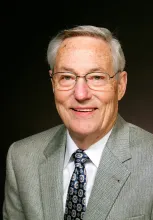
At the time of his retirement in 2016, Roy Holladay was serving the Operation Manager for Ministerial and Member Services of the United Church of God. Mr. and Mrs. Holladay have served in Pittsburgh, Akron, Toledo, Wheeling, Charleston, Uniontown, San Antonio, Austin, Corpus Christi, Uvalde, the Rio Grand Valley, Richmond, Norfolk, Arlington, Hinsdale, Chicago North, St. Petersburg, New Port Richey, Fort Myers, Miami, West Palm Beach, Big Sandy, Texarkana, Chattanooga and Rome congregations.
Roy Holladay was instrumental in the founding of the United Church of God, serving on the transitional board and later on the Council of Elders for nine years (acting as chairman for four-plus years). Mr. Holladay was the United Church of God president for three years (May 2002-July 2005). Over the years he was an instructor at Ambassador Bible College and was a festival coordinator for nine years.
