

Greg Thomas
This transcript was generated by AI and may contain errors. It is provided to assist those who may not be able to listen to the message.
Well, thank you, Mr. Blankey. Happy Sabbath once again, brethren! Hope you are enjoying this beautiful summer Sabbath day. It's kind of interesting, almost humorous. I was standing in the back and seeing all these people standing, singing. Not a sight that I've seen in...
We begin to celebrate the 2014 Fall Holy Day season with the Feast of Trumpets. And of course, that's on Thursday, the 25th of September. We had an announcement about that during our announcement time. The Fall festivals begin after a long three-month gap since we observed that they had Pentecost in June. So I have a question for you. Is the importance of the Fall Holy Days different from the Spring Holy Days?
Is the theme of the Fall Holy Days different than the theme of the Spring Holy Days? And what do the upcoming festivals of God tell us about His future plan for the entire world? God's Holy Days, of course, tell the plan of God if you want to know what God all along always had in His mind about creating humankind. You find the answer in looking at the plan of God.
Humankind became, unfortunately, had enmity against God, became against God through the actions of Adam and Eve in the garden. And the whole process of reconciliation, the whole process of what God has planned into making ultimately everyone into a Son of God is revealed in those Holy Days. Let's go to Leviticus chapter 23, and we'll be in here in Leviticus 23 for a number of times today.
So if you have a little marker or something you can put in Leviticus 23, you may want to, since we'll be turning back and forth to it. And I thought what we would do today is just really quickly recap the first of God's seven annual Holy Days. And of course, before those are mentioned, the Sabbath is the very first festival. That's a weekly Sabbath. It's a weekly Holy Day, not just an annual one. And then we'll spend a little bit more time looking at the four-fall Holy Days. So Leviticus chapter 23 and verse 1, it says, And the Lord spoke to Moses, saying, Speak to the children of Israel, and say to them, The feast of the Lord which thou shalt proclaim to be holy convocations, these are my feast.
And as you know, God takes ownership of his festivals. These are not the feast of Greg Thomas. They are not your feast. They are not the feast of the United Church of God. God says these are my feast. These are the feast of the Lord. Not any church, not any man, not any organization. Continuing in verse 3, Six days shall work be done, but the seventh day is a Sabbath of solemn rest, a holy convocation.
You shall do no work on it. It is the Sabbath of the Lord in all your dwellings. These are the feasts of the Lord, holy convocations which you shall proclaim at their appointed time. So before God institutes the seven annual Holy Days, he tells him about a weekly festival, and we're enjoying that today. That is called the Sabbath day. And that's every seventh day. And we observe that, and we of course realize the Sabbath picture is a number of things, but one of the things it pictures is a reminder that it was dedicated at creation, that God is our Creator.
Another thing it reminds us of is the fact that we hope that that kingdom, that garden that was once established in Eden is restored on this earth. So the Sabbath day reminds us that we long for the kingdom of God once again to be on this earth. So what God announces to Moses here are a reminder of the weekly Sabbath feast before he proclaims the seven annual Holy Days. And as I just mentioned, it is a reminder of God's creation. And by resting, we show that we look forward to the kingdom of God.
We rest because God did so by example. He didn't do so because he was tired. He did so by his example. And as we rest, it reminds us that we are looking forward to the kingdom of God on earth. And by resting on the weekly Sabbath, we also show that salvation is not achieved by works. We rest on the Sabbath day, and it reminds us that salvation occurs because of the grace of God and what Jesus Christ has done for us, not simply by something that we can do ourselves.
And then there are the weekly annual festivals and the events that are associated with the festivals like the Passover and other things. So let's take a look here in Leviticus chapter 23 and verse five. It says, On the fourteenth day of the first month at twilight is the Lord's Passover.
Until the Exodus, the enslaved Hebrews began the sacred year in the fall, just like the Egyptians did. But God instructed them that on the first month of the Hebrew calendar, it was to be called a bib. And it corresponds to our springtime here, those of us who live in the northern hemisphere.
And the spring holy day season begins with this event. It begins with the Passover. And it teaches us that repentance and conversion are not possible without reconciliation. Mankind is alienated from God. A reconciliation has to occur. And who makes that reconciliation possible? Of course, Jesus Christ does. The Lamb of God who shed his blood in our stead. He died for our sins and the sins of the whole world. He died in our place and he made it possible for everyone, ultimately, to be reconciled to God. The annual Passover is a reminder of what God did individually for each and every sinner. And when you look throughout history, those who have already died, those who have not yet been born, those who will be born after the kingdom of God is established, the truth is that every human being who has ever lived or ever will live must acknowledge Jesus Christ as their Savior. That's the only way reconciliation can begin, can occur. Every human being who has ever lived will need to accept his shed blood for the remission of their sins upon their repentance when they come to see themselves as they really are and come to see that their lives are empty without Jesus Christ living inside of them without Jesus Christ being a part of their lives. And since the great majority of all people who have ever lived, never even heard of the name of Jesus Christ, literally billions, let alone accepted him as their Savior, it's ridiculous to think that an annual event that portrays his total sacrifice and complete forgiveness is now obsolete. And that's what many people say. They don't observe the Passover because they think that it was fulfilled. And yet the overwhelming majority of human beings who ever lived never even heard of his name, let alone accept him as their Savior.
How in the world could something so powerful, so beautiful be obsolete or done away? Paul said in 1 Corinthians 5 and verse 7, he said, for indeed Christ our Passover was sacrificed for us. And not just for us alone, brethren, in the church, he was sacrificed for everyone who will eventually come to recognize him as the Savior. Leviticus 23 and verse 6, let's take a look at the days of unleavened bread. And on the 15th day of the same month is the Feast of Unleavened Bread to the Lord. Seven days you must eat unleavened bread. And we know and understand what we do through the instructions of God. We remove bread-like products from our home, things that contain yeast, because yeast is symbolic of sin and evil. And we replace that by eating unleavened bread, which pictures Jesus Christ, the bread of life. And as we eat that unleavened bread, it represents that we want to put Christ in us, in every pore of our body, in our minds emotionally. We want to be healed because of the beating that he took before his death. We want to have God immersing himself inside of us, and Jesus Christ living his life inside of us as the bread of life. And we see in verse 8 that the seventh day of the days of unleavened bread was also a holy day. So this period of time between the first two annual holy days, the first day and the seventh day of unleavened bread, obviously are seven days long. The name, the number seven, is an important number in the numerology, scriptural numerology. It's the number of completeness, the number of perfection. The days of unleavened bread picture the progression of getting sin out of our lives, beginning on the day that we were called throughout our lives to a lifetime of growth prompted by his Holy Spirit that resides in us. And eventually, to the perfection that comes from Christ and him living inside of us. As I've said before, brethren, God is performing a couple of great works.
First work he is performing is international work through his church, and that is the work of preaching the good news of the coming kingdom of God to all of this world. And that includes who the king was, the fact the king is a savior, the fact that the king died for our sins and makes it possible for us to be at one with God to have a relationship with him, and the fact that that king will return to earth and establish the kingdom of God. That's an international work. We spend a lot of money in booklets. We spend a lot of money in sending preachers throughout the world to build congregations, to support congregations. We have TV programs. We do a lot for that international work. But secondarily, we should never forget that God is doing a work in your life. He's doing a work in you as well. Just because we're saved by grace does not mean that we should ignore or tolerate sin in our lives. Our lifelong commission as a person, as an individual, as a disciple, is to reject sin and become more like God in every way. And it's a process. That doesn't happen overnight.
God doesn't play with magic wands. Disney characters play with magic wands. God is not a genie. He is the awesome creator of the universe. And things that are value are long-term oriented.
They take time. Anything of value takes hard work. It takes effort. It's those who want to take shortcuts, those who want instantaneous, spontaneous gratification, who are always looking for the quick way out, the quick way to do something, the shortest way to get something done. But God is interested in the long term. He's not interested in the short term. And yet we don't overcome sin alone. We don't have to overcome sin alone. Symbolized by the third holy day, which is Pentecost, Jesus offers us the most awesome power in the universe to assist us in removing sin and developing godly fruits. And that is reflected in the third annual holy day. If you'll take a look in here in Leviticus 23 verses 15 through 16, remember, of course, the days of unleavened bread, pictured putting Christ in us. He said in John 6, 47, that I am the bread of life. So we don't have to overcome alone. We are not orphans. We are not left to ourselves. When that reconciliation occurs, God gives us help. Leviticus chapter 23 and verse 15, and you shall count for yourselves from the day after the Sabbath, during the days of unleavened bread, from the day that you brought the sheath of the wave offering, you'll count seven Sabbaths shall be completed. Count 50 days to the day after the seventh Sabbath, and you shall offer a new grain offering to the Lord.
Let's take a drop down now here, verse 21. And again, we'll go through these holy days in far more detail when they come around in, obviously, next June-ish for the day of Pentecost. And it says, And you shall proclaim on the same day that it is a holy convocation to you. You shall do no customary work on it. It shall be a statute forever in all your dwellings throughout your generations. So, of course, we understand this feast celebrates the receiving of the Holy Spirit.
Jesus promised that he would not leave his church an orphan. He said the Father would provide a helper, a comforter, a piercleto, someone alongside to help us in our walk with God, in our journey of discipleship. And we know the New Testament church was established on the day of Pentecost in 31 A.D. Observance of Pentecost is not obsolete, and it's not done away because the Holy Spirit is still being given to those who become believers today. Even in the 21st century, and we've had a number of individuals this past calendar year who repented and were baptized and through the laying out of hands literally received God's Holy Spirit. So how could anyone say that the day of Pentecost is somehow done away when the very church itself in 31 A.D. was established on a holy day? One of those mentioned in Leviticus 23. God doesn't give His holy days like a smorgasbord.
Oh, I think, well, just take this one and this one you don't get to eat. Hmm, I won't touch that one.
But yeah, I'll accept this one and I'll take the ones that are fun or the ones that are convenient, but I'm going to reject the other of those seven holy days if they don't fit my style.
If they don't make me comfortable. No, God says, these are my feast, not just one of them, not just two of them. All of them are God's holy days. Well, let's take a look here now.
We've been talking about the day of Pentecost. Romans 8 and verse 13, you don't need to turn there, but here's what Paul said. He said, for as many as are led by the Spirit of God, these are the sons of God. So we need God's Holy Spirit. We need Jesus Christ living His life in us.
The first three holy days we just looked at and the associated Passover with them were the days of unleavened bread in Pentecost and they occurred in the first and third months of the Hebrew calendar. What they have in common is that every being, human being, throughout history, whether they lived, already lived and died, or will yet be born and live and die, whoever they are, whatever century they reside in, they must personally experience repentance and the acceptance of Jesus Christ as their personal Savior. That's represented by the Passover.
Secondly, they need to go through a period of physical life struggling against sin and their own carnal human nature to develop character and obedience. And they must learn to make the right choices. Why would God give the power of the universe to someone who is rebellious, to someone who won't develop the kind of godly character that is required to demonstrate and exercise power with responsibility and with commitment to God? God just will not do that.
And the third thing that everyone who has lived or will yet live will need to do is receive the Holy Spirit. This is the seed of God's mind that enters us upon conversion and helps us to begin to become like God. Again, that's a process. It doesn't happen instantaneously. It doesn't happen overnight. So those are the first three holy days and, of course, the Passover associated with it.
There are no other holy days until the seventh month, so there is approximately a three-month gap between Pentecost and the Feast of Trumpets that we'll be celebrating in about approximately three weeks. What does this time period possibly represent? Why this long gap?
Well, it was a prophetic message from God that there would be—no one wanted to recognize it, we don't like to acknowledge it—but there would be a long time span between Jesus leaving the earth in 31 A.D. and returning again to establish the kingdom of God. Most of his early followers made a mistake. They had the same problem that you and I have. They didn't want to die.
They all believed that Jesus Christ would come in their lifetimes. They all firmly believed it. Paul, in his early writings, said, in we who are alive when Christ returns, he expected Christ to return in his lifetime. He included himself. And that was an expectation they all had.
But the spacings of the Holy Days, the fact that there is a three-month gap between Pentecost, when the Church received the Holy Spirit, and the very next Holy Day that represents the literal return or second coming of Jesus Christ, indicated all along that a long time, like maybe 2,000 years, would elapse between the founding of the Church and when Jesus Christ would return again. And during those 2,000 years, God would call generations of firstfruits to be used by God, and they would participate in understanding God's plan by following and observing the Holy Days that portray the soon-coming King, the kingdom of God that we all long for, the kingdom of God that every one of us prays will occur in our lifetimes.
And generation after generation has longed for that kingdom. The big difference is in the emphasis between the meaning of the Spring Holy Days and the Fall Holy Days.
The Spring Holy Days represent personal salvation. We might say this time it's personal.
It's about an individual reconciliation with each human being and God, and we all experienced that who have been baptized. We confronted ourselves, who we were, what was going on in our heads. It was very personal. And then we decided that we came to understand that sin was something we wanted to get out of our lives. And we've been working for many, many years following that process to take sin out of our lives and replace it with the bread of life, which is Jesus Christ.
And he didn't give us that mission alone. Thankfully, he gave us his Holy Spirit, represented by Pentecost. That is something that the firstfruits experience in their lifetimes during the last 2,000 years. It's rich. It's meaningful. It's personal. On the other hand, the fall Holy Days represent the salvation of all humanity. It looks forward, prophetically, to the intervention of God on this earth. And the emphasis is on the salvation of each and every human being who has ever lived or will ever live. I think you understand that most of the people who have ever lived will not experience the events that are represented in the three, in the Holy Days, I'm sorry, the Holy Days of this fall. First of all, look at it from the perspective of a timeframe. Those who lived and died, it's a future event, right? Those who will be born after these events, they'll hear about it and they'll be taught it as history, as something that happened. Only the elect, those select group of people who are alive at this time and witness what is represented by these fall Holy Days will literally have been there, will have done that.
And like us Americans today, those who come after us in the Kingdom of God will enjoy the benefits of what the founders of that kingdom will do. The founders of the Kingdom of God are Jesus Christ and his saints, and that includes you. And future generations will look back on the times represented by these fall Holy Days and they will enjoy the benefits of what the founders of that kingdom did.
But they will not have been there. And like us Americans today, they will honor the spiritual war heroes who sacrifice help to usher in the Kingdom of God. Those who were faithful with their tithes, those who made living sacrifices every day as physical human beings so that they could stay connected to God and so that they could be prepared to serve as saints for all eternity.
So with that background, let's take a look at the Feast of Trumpets. Leviticus 23 verse 24.
This is the fourth annual Holy Day. Leviticus 23.
Speak to the children of Israel, saying, in the seventh month, on the first day of the month, you shall have a Sabbath rest, a memorial, a blowing of trumpets, a holy convocation.
And again, for those of you here who are rather newish, a convocation is just a nice word of saying, a convention. What do you do at a convention? Well, at a convention, you join with people who are associated with you in some way and you network with them. You spend time with them.
In a theological sense, we call that fellowshiping. We call networking fellowshiping.
And you come and you worship the great God together. And it was a holy convocation. So these are holy conventions, and we do that on each and every holy day. We come together, sometimes multiple congregations, like we will do in the Feast of Trumpets. And together, we worship.
We have a holy convention, and we'll have a couple of services, and we will break bread, we will enjoy a meal together, and we will fellowship together on the Feast of Trumpets.
That's what we'll be doing. Anciently, the blowing of trumpets sounded various messages for ancient Israel. Trumpets were used to call everyone together for war. And when Jesus Christ returns, the unpleasant side of prophecy, but the truth, is that He's coming back as a warrior.
The nations of this world are going to resist Jesus Christ, the Antichrist. And the nations of this world will be convinced that Jesus Christ is the alien, that He is an Antichrist, and they will resist Him. And He has to come back as a warrior. He has to come back to seize authority, and it will not be pretty. It will not be a pleasant time. But trumpets were used to call everyone together for war and ancient Israel. Other times, trumpets were blown to make an announcement. And a trumpet is blown, and an announcement is made. And that announcement is the kingdoms of this world have become the kingdoms of His Christ, of Jesus Christ Himself.
And He shall reign forever and ever. That's an announcement. It's a bold proclamation by the angels when Jesus Christ returns. Let's go to Matthew 24 and verse 30. And again, hold your place in Leviticus. But Matthew 24 and verse 30. Jesus Christ returns to make war against the Antichrist and against those who have prepared themselves to resist Him.
Matthew 24 and verse 30. It says, then the sign of the Son of Man will appear in heaven, and then all the tribes of the earth will mourn. Why? Because they have been taught to believe that this alien is coming to earth to take it over. Well, he kind of is.
He's not really an alien, though. He created it. It's His. It always belongs to Him. And He's coming back in spite of human nature and humankind's resistance against God to establish a kingdom of peace and plenty and prosperity. But they look at the return of Christ as something to be sad, as something to mourn about. And He says, it will appear in heaven and all the tribes of the earth will mourn, and they will see the Son of Man coming on the clouds of heaven with power and great glory.
And He will send His angels with a great sound of a trumpet, and they will gather together His elect from the four winds from one end of heaven to the other. This is what we describe of, as revelation refers to, as the first resurrection. And it will be a time of great rejoicing.
Imagine what it would like to be involved to participate in that. Have you ever watched a sporting event?
You look into a stadium and you see thousands of people screaming and shouting for their team.
Well, unless it's a Cleveland team, then normally you see people taking out hankies and tissues to wipe the tears from off their eyes. But most people, when they're at a sporting event, are screaming and shouting for their team. Yes! Yay, team! Well, this is nothing compared to the screaming and joyful shouting of multiple thousands and tens of thousands and hundreds of thousands who will leave this earth. First, those who had died in the faith, and secondly, those who are still alive in the faith, and who will leave this earth and be transformed into Spirit and rise and meet Jesus Christ in the air and return to him to Jerusalem. Like Christ, they will be given great power and glory at his return. Imagine being part of that. How exciting that would be!
As you literally are lifted off of this earth and defy gravity and are changed in the twinkling of an eye and know that all of that effort was worthwhile, all of that struggle, all of that fighting against your carnal human nature paid off because Jesus Christ in you made it possible for you to be able to be part of the first resurrection. At the return of Christ, great power and glory will be given to us by Jesus Christ. We celebrate the Feast of Trumpets knowing it looks forward to the actual return of Christ on this earth. And he's not coming to earth to continue what we see today. And what do we see today? We see a world of violence, a world of abuse, a world of greed, a world of the strong pray upon the weak.
This is the kind of world that we see today, but he's coming to earth to bring peace and justice and God's law. He's coming to bring an everlasting kingdom, but he's not coming to do these things alone. He's coming with a team, a team of saints. That's you, brethren. He's coming with people who have been prepared to be educators and counselors and leaders and priests and a select group of people who have hundreds of different talents to contribute to this great cause of peace.
And that's what you and I are preparing for every day to be part of that team, to develop the talents God has given us through the fruit of his spirit. The observance of the Feast of Trumpets is not obsolete or done away because Christ is yet to return to earth. How could something so beautiful, so prophetic, so meaningful have been done away or nailed to cross?
It's unbelievable that people would even believe that or make those kind of comments.
As Paul would say as he does in Colossians, it's a shadow of things to come, not an obsolete shadow of something that happened in the past. You know, if you're walking and the sun is behind you and you're walking down the street, you cast a shadow that points in front of you. The casting of that shadow points towards where you are going. And the prophecies outlined in the fall holy days are a shadow of things to come, beautiful things, wonderful things that will transform this world. Every year the church celebrates this feast in joyful anticipation of the Second Coming of Jesus Christ. Now go back to Leviticus 23. If you would turn there with me to verse 26, we'll look at the fifth annual holy day, the Day of Atonement.
This is not usually everyone's favorite holy day, because it is a time when we fast, when we afflict ourselves, and we do so for good reason. Leviticus 23 verse 26, and the Lord spoke to Moses, saying, Also on the tenth day of this seventh month shall be a day of atonement at one month, and shall be a holy convocation for you. You shall afflict your souls and offer an offering made by fire to the Lord. You shall do no work on that same day, for it is the day of atonement, to make atonement for you before the Lord your God. For any person who is not afflicted in soul on that same day shall be cut off from among his people. And any person who does any work on that same day, that person, I will destroy from among his people. So it's a day that we fast. We go without food, and water, for 24 hours from the evening that begins the day of atonement until that day is concluded the following evening. The day of atonement looks forward to a time when the influence of Satan and his demons are removed from this world, and they will be replaced by the loving rulership of Jesus Christ in his saints. Fasting reminds us that we are still weak, mortal beings, and we depend on God for everything. That's what fasting reminds us for. Just go without eating and drinking for 24 hours, and notice how physically weak you become. And then when we become physically weak, we become oftentimes mentally confused because our bodies are shutting down to adjust to the lack of a nourishment that's coming into our cells of our body. We become mentally confused. We become physically tired, and it reminds us that every breath we breathe is through the grace and love of God. That we depend on him for everything in our lives. But fasting reminds us of something else. Fasting reminds us that the world still needs God's healing spirit and needs his kingdom badly. By fasting, we humbly beseech God to help us in our own weaknesses, and we mourn for a world that is still deceived and still suffering the ravages of sin. And if you don't understand what I mean, just take a look at the front page of the Cleveland Plain Dealer on any given day, and you will see a world, a community, ravaged with the end result of sin through article and article page after page. That's exactly what you'll see. Revelation 20, beginning in verse 1, Revelation 20, and verse 1.
And again, we don't have time today to go through this in detail, but we will on the Day of Atonement.
It says, And I saw an angel coming down from heaven, having the key to the bottomless pit, and a great chain in his hand, and he laid hold on the dragon, that serpent of old, who is the devil in Satan, and bound him for a thousand years, and cast him into a bottomless pit, and shut him up, and set a seal on him, that he should deceive the nations no more till the thousand years were finished. But after that, he must be released for a little while. Brethren, the observance of the Day of Atonement is not obsolete or done away because Satan is still, if I can use Paul's phraseology, the God of this world. So how could something that yet pictures the removal of Satan and his influence from humankind, since it hasn't occurred yet, have been fulfilled or somehow be obsolete? Satan still reigns as the God of this world, and the entire world needs Jesus Christ to literally return to earth and restore a spiritual relationship between humanity and its God, and that can only occur when that same slithering being who was in the Garden of Eden and who deceived Eve convinced her to make the wrong choices that led humanity to where we are today. That very same being is the one who is bound for a thousand years and is removed from influencing humankind in any way. Leviticus chapter 23 verse 33, the sixth annual Holy Day is the Feast of Tabernacles. It says, Then the Lord spoke to Moses, saying, Speak to the children of Israel, saying, The fifteenth day of the seventh month shall be the Feast of Tabernacles for seven days to the Lord. On the first day there shall be a holy convocation. You shall do no customary work on it. For seven days you shall offer an offering made by fire to the Lord. On the eighth day you shall have a holy convocation as well. And you shall offer an offering made by fire to the Lord.
It is a sacred assembly and you shall do no customary work on it. Anciently the Israelites left their homes and they built tabernacles during the feast. And these temporary dwellings reminded them that they are strangers and pilgrims in this world. A temporary dwelling is just what it means.
It's temporary. Our lives are temporary. We dwell in flesh, in temporary tents.
And we should long for something better. And what is that better? It's the kingdom of God.
It's the second coming of Jesus Christ. It's being translated and transformed in the twinkling of an eye from a physical human being to a whole new level of existence. That, my friends, that brethren is what we need to long for. And the Feast of Tabernacles is a time which represents that God is going to make his home on this earth. Revelation 21, verse 3 says, Behold, the tabernacle of God is with men and he will dwell with them and they shall be his people. God himself will be with them and be their God. So encouraging. So beautiful. All pictured by the seven days of the Feast of Tabernacles. Observance of the Feast of Tabernacles is not obsolete or done away because Jesus Christ has not returned to earth to establish his kingdom. And the celebration of the Feast of Tabernacles, as I mentioned a few weeks ago, has been substituted by a great deception. It's been substituted by the joy of instant gratification. When you die, you go to heaven and therefore there's no need for Christ to ever return. There's no need for there to ever be a kingdom on earth because you go to heaven and you live in heavenly bliss for all eternity. And when people believe that, then they no longer understand the kingdom of God and they no longer understand what God has in plan for humankind. All right, brethren, let's go again to pick it up here on the last great day, Leviticus chapter 23 and verse 39. Also on the fifteenth day of the seventh month, when you have gathered the fruit of the land, you shall keep the Feast of the Lord for seven days on the first day there shall be a Sabbath rest and on the eighth day a Sabbath rest.
This is a holy day that isn't centered around you and I. By this time, we will already be sons and daughters of God's family at this time. The emphasis is on the multiple billions, tens of billions of people who have never known God and will be given their first opportunity to know who and what Jesus Christ is, to know Him as Savior, to have their first opportunity at reconciliation with God, where God will take the blinders from their eyes and it'll be a lot easier because the prince of the power of the air will be in a spiritual prison. God can remove the blindness from their eyes and they can understand that they are being called. They can understand that Jesus Christ is their Savior too. After the thousand years have ended, an enormous resurrection will occur and all of those throughout human history who were never called will be raised from the dead to life again. Let's read this quickly in Revelation chapter 20 and verse 6. Revelation chapter 20 and verse 6. We'll pick it up in actually verse 10. Revelation 20 and verse 10 is where we'll pick it up. It says, The devil who deceived them was cast into the lake of fire and brimstone, where the beast and the false prophet are, and they will be tormented day and night forever and ever. Then I saw a great white throne, and him who sat on it, from whose face the earth and the heaven, fled away. And there was no, there was found no place for them, and I saw the dead, small and great, standing before God, and books were opened, and another book was opened, which is the book of life, and the dead were judged according to their works by the things which were written in the books. And then on verse 13 it says, The sea gave up the dead who were in it, and death and Hades delivered up the dead who were in them. So the entire world brings back everyone who has ever lived and didn't know God in their lifetimes. Even the sea, the particles, the cells of people who died at sea and were eaten by fish, even those particles are reassembled, and they come out of the sea. People who were nothing but dust in the earth, nothing left but ash and a few dust particles will be reassembled together. And of course, we know the beautiful prophecy in Ezekiel that we sing the song, dry bones, dry bones, dem dry bones, right?
Will be reassembled together to face Jesus Christ during a time of judgment. And for those who are lacking, who need a Savior, they'll be judged guilty, and they'll be told you need to be reconciled to God. According to the book here, you're a sinner. You are, right now, you are separated from the love of God, but we have a solution. The Father is going to call you for the first time, and He's going to open your eyes, and He's going to give you an opportunity to make a choice. You can continue to choose from the tree of the knowledge of good and evil. That's what you did when you lived before. You can continue that choice, and the end result is not very pretty.
Or you can choose from the tree of life, which is Jesus Christ, the King of kings, the Lord of lords.
And eventually, you will be given, after a period of time of your physical life of developing character and making the right choices, you will be given eternal life, and you will be allowed to become a spirit being and live forever. So, brethren, the observance of the eighth day, or for some of us old-timers, the last great day, is not obsolete or done away because Jesus Christ has yet to resurrect the billions of dead souls who never heard His name, have no idea who He is, many who were born and died before He was born on earth, have no understanding of what God's way of life is, who will be resurrected and be given that opportunity. So, I encourage you to look forward to the fall Holy Days this year. I want you to remember that, yes, the early Holy Days are very personal. They're about us. They're about the firstfruits and those of us who personally made choices in our lives to accept Christ, to shed blood, to repent of our sins, to be baptized, to have hands laid on us, to receive the Holy Spirit, to help us as we walk through life.
It's very beautiful and very wonderful for us. But God not only loves His firstfruits, He also loves everyone who has ever lived. We are precious jewels to Him, but He loves all of His creation.
The world needs its loving Creator. The fall Holy Days remind us that God has not forgotten the world and that God has a plan. And He intends in fulfilling that plan. We should not disparage of God's Holy Days. We should not take them for granted. If these are the 45th or 50th year we've been keeping these Holy Days, we shouldn't take them for granted. They're powerful in their meaning.
Beautiful in what they represent and what they reflect for all of humanity. So, brethren, let's look forward to the fall Holy Days this year. Let's prepare emotionally. Let's prepare mentally. Let's make sure that we're praying every day. Let's be studying the Word of God.
And let's be doing everything we can to joyfully serve God and to rejoice during His festivals this fall. Have a wonderful Sabbath day.
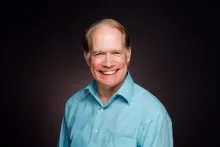
Greg Thomas is the former Pastor of the Cleveland, Ohio congregation. He retired as pastor in January 2025 and still attends there. Ordained in 1981, he has served in the ministry for 44-years. As a certified leadership consultant, Greg is the founder and president of weLEAD, Inc. Chartered in 2001, weLEAD is a 501(3)(c) non-profit organization and a major respected resource for free leadership development information reaching a worldwide audience. Greg also founded Leadership Excellence, Ltd in 2009 offering leadership training and coaching. He has an undergraduate degree from Ambassador College, and a master’s degree in leadership from Bellevue University. Greg has served on various Boards during his career. He is the author of two leadership development books, and is a certified life coach, and business coach.
Greg and his wife, B.J., live in Litchfield, Ohio. They first met in church as teenagers and were married in 1974. They enjoy spending time with family— especially their eight grandchildren.
