
Roy Holladay
This transcript was generated by AI and may contain errors. It is provided to assist those who may not be able to listen to the message.
On the Feast of Pentecost, I gave a sermon on spiritual gifts. I covered a number of the facets of spiritual gifts. As a reminder, I covered the biblical list of spiritual gifts and where they're found in the Bible. And for any who are not here on Pentecost, there are extra copies of the chart. Back on the information table in the lobby, that gives sort of a summary of what we covered. We analyzed at that time the three categories of spiritual gifts.
We discussed the difference between talents, skills, and spiritual gifts. Finally, we scrutinized the difference in the fruitless spirit and spiritual gifts. We covered all of those areas. However, we only began to scratch the surface of this topic on spiritual gifts. I'd like for us today to take a further look at these gifts today and see how they differ from other attributes and activities that we perform as Christians. You'll find that there is a tremendous amount of information contained in the Scriptures.
So I'd like to continue the discussion on this. I'd like to begin by discussing what is the difference between spiritual gifts and spiritual discipline. Each one of us has to develop habits to keep us spiritually strong and healthy. There are things we must do in our lives on a daily basis, a weekly basis, a yearly basis, that help us to grow as a Christian, help us to develop our character, help us to be more God-like.
These disciplines are activities that should be found in every Christian's lives that you can measure, and you can gauge yourself and see where you stand with God by what you do. In Matthew 6, 33, a Scripture that we're all quite familiar with, we're told, seek first the kingdom of God and His righteousness, and all these things will be added to you. So the question is, how do you go about seeking first the kingdom of God and God's righteousness?
What do you do? Well, we know that if we're going to do that, that means daily prayer, daily Bible study, it means to fast occasionally. It describes a daily walk that we have with God, that there is a relationship that we develop, that we cultivate, that we nurture, that day in and day out we're walking with God, and we seek God. As the Bible says, you draw near to God, He'll draw near to you. You resist the devil and he will flee.
So the main thing we need to be doing is drawing close to God. This is what I mean by Christian discipline or spiritual discipline. That we discipline ourselves to do what we know we need to do in order to grow, in order to develop. Spiritual discipline strengthens the individual. Your prayer, your Bible study, your fasting, strengthens you as a Christian. Spiritual gifts strengthen other people. Spiritual gifts are given to help others that you come in contact with and so that you can have a proper impact. In Romans 12 and verse 2, we find that you and I have to live in this world.
God hasn't taken us out of the world when you were converted and baptized. God didn't remove you from society. You're still here. You still have to work. You have to be around others. But notice what verse 2 says, do not conform to this world, but be transformed by the renewing of your mind that you may prove what is that good and acceptable and perfect will of God. So these disciplines, prayer, Bible study, fasting, these type of things, allow us to live in the world but shield us from this world that we don't conform to the world, that we don't live according to the world's standards or way of life.
Spiritual discipline helps us to discern the will of God in our lives, receive the power and the love of God, and in turn reflect the fruit of God's Spirit in our lives. There are significant habits for individual personal growth of a Christian to help us to grow. Whereas spiritual gifts are important contributions that strengthen and enable growth in others and those around us within the body of Christ.
Let's notice in 2 Peter 3.18, again none of these scriptures are things that we don't know. 2 Peter 3 verse 18. Notice what the Bible tells us here. But grow, it says, in grace and in the knowledge of our Lord and Savior Jesus Christ. To Him be glory both now and forever.
Amen. So you and I are to grow in grace and in knowledge. That's what spiritual discipline helps us to do—to receive grace, to receive gifts from God and to grow in those gifts. Spiritual gifts are specific ways that we are able to extend the grace of God to others. You and I are to grow in grace.
The Bible talks about God extends grace to us. Let's go back to Romans 12 again. Romans chapter 12, 1 Corinthians 12, one of the sections that deals with the gifts that God gives. Beginning in verse 4 here. Notice it says, For we have many members in one body, but all of the members do not have the same function. We don't all do the same job. Some sing, others try to sing, some speak, some serve, some give.
They are all of the gifts that God mentions to us. So all the members do not have the same function. So we, being many, are one body in Christ and individual members one of another. Having many gifts differing according to the grace that is given to us. I don't know if you've ever stopped to think about when God gives us spiritual gifts. They are fruits of His grace. The word grace here, as we will see, actually refers to the same thing as gift.
The word gift and grace are the exact same word in the Greek. So when it says that God gives gifts differing according to His grace, the word grace has a little different meaning, I think, than what most people think about. Grace means God's generosity, His gifts, something we don't deserve, but He gives to us. When God extends grace to us and forgives our sins, there's nothing that you and I can do to deserve for our sins to be forgiven. I don't care how many good works we do, how righteous we are. That cannot atone for or forgive our past sins. It's according to God's grace. His free generosity, benevolent gift is given to us in that way.
Then it goes on to say, it says, let us use them. Use the gifts that God has given us. Don't hide them. Use them. Put them in action. If prophecy, let us prophesy. That means preaching in proportion to our faith, our ministry, our serving. Let us use it in our service.
He who teaches in teaching. He who exhorts in exhortation. He who gives with liberality. He who leads with diligence. He who shows mercy with cheerfulness. You'll find all of these qualifiers. Here are gifts, and God shows that we are to put them into practice. We are to use them. Why? First Corinthians 12, verse 7, tells us why.
Part of this is review, but let's notice in 1 Corinthians 12, verse 7, it says, but the manifestation of the Spirit is given to each one. Why? For the prophet of all. That's why. And as I mentioned here, it's not to aggrandize us, but to prophet the Church as a whole. Now notice the chart I handed out to you, the top chart here, titled Spiritual Discipline versus Spiritual Gifts. You'll notice under Spiritual Discipline, that it strengthens a person's growth and devotion to God. And it develops devotion in us. In other words, we are devoted to God. It increases our faith in God, our conviction to follow God, to do what is right. And as an example, prayer, study, fasting, tithing, these are all spiritual disciplines, things that we do on a regular basis that help us to draw near to God.
Spiritual Gifts strengthen the entire Church, help the whole Church. They express devotion to God.
Examples would be teaching, knowledge, giving, exhortation. You know, in all of these areas, if you've got somebody who's an exhorter, who encourages others, like a Barnabas, Barnabas was known for his encouragement of other people. If you have someone locally in a congregation who is that way, and he's always encouraging other people, and you come in, you feel a little down, discouraged, you know, somebody comes up and you walk away, and boy, they have encouraged you, and they've lifted you up. That's a gift that God gives. So, you know, those gifts are to be used to help the Church, not to pat yourself on the back and say, look, I'm so great because I've got a gift. Now, these all come from God. That's why they are spiritual gifts. And as such, you know, God gets the credit. There's nothing that we can do to get the credit. So, again, I've given you a chart to sort of summarize what we are talking about here.
Now, let's take a look at something that people get all confused about.
You've heard, perhaps, the term used before, the priesthood of all believers. And there were those back in 1995 who left our former affiliation, who went a different direction, and they felt that everybody was a minister. And so, they read certain scriptures in the Bible that they thought indicated that they were a minister. And they sort of poo-pooed the fact that there was an ordained ministry, or that people are ordained to certain responsibilities and duties within the Church. So, what is the difference between the ordained ministry and the spiritual gift of ministry?
There is a difference, as we will see. Let's go back to the book of Hebrews, chapter 6 and verse 2.
You might remember, in chapter 6 of the book of Hebrews, the fundamental doctrines of the Church are listed here.
And, well, might as well back up to verse 1. It says, therefore, leaving the discussion of the elementary principles of Christ, let us go on to perfection. So, perfection is actually a doctrine also, or a teaching. Not laying again the foundation of repentance from dead works and of faith toward God, and of the doctrine of baptisms, and of the laying on of hands.
So, notice the laying on of hands is a fundamental teaching, fundamental doctrine, of the Church. Hands are laid on people to set them apart for a specific purpose, specific reason.
Acts 8, 18. Let's notice some of the reasons as they're articulated in the Bible. Acts chapter 8, verse 18. It says, when Simon saw that through the laying on of the apostles' hands, the Holy Spirit was given, he offered them money.
So, when a person is baptized, baptism is for the remission of sins, which means the forgiveness of sins. So, when a person is baptized, they go under that water, and they're buried in water. That picture is the death and burial of the old man. Although their old sins, everything they've ever done wrong up to that point, are forgiven. Now, they rise up, and through the laying on of the ministry's hands, God gives the Holy Spirit. So, then they are set apart specifically for the receiving of God's Spirit so they can become a part of the body. And it is by one Spirit that we're baptized into one body, the Bible says. So, it is through the Holy Spirit. Now, notice in James 5 and verse 14. James 5, 14, it says, Is anyone sick among you?
Let him call for the elders of the church, and let them pray over him, anointing him with oil in the name of the Lord. And so, when we anoint someone, we pray over them. We take oil, we put a little drop of oil on their forehead, and lay our hands on them, setting them apart, specifically asking God to intervene on their behalf to heal them. And so, you find its use in this situation. It's also in 1 Timothy chapter 4 and verse 14. 1 Timothy 4, 14, used for ordination, or setting apart. When a man is ordained as an elder or as a deacon, notice here Paul talking to Timothy and encouraging him. Do not neglect 1 Timothy 4, 14, the gift that is in you, which was given to you by prophecy with the laying on of the hands of the eldership. Or, King James version says, the presbytery, or the elders in the church. And so, through the laying on of hands, Timothy was ordained, and being ordained, he also received the gift, or a gift that was given to him. Now, notice also in 2 Timothy 1, 6, the apostle Paul says, therefore I remind you, 2 Timothy 1, 6, to stir up the gift of God which is in you through the laying on of my hands. Now, there's a debate whether this is talking about being ordained or when he was baptized. Probably baptism. That when he was baptized, hands were laid on him. And Paul specifically talks about laying on my hands. For God has not given us, he says, a spirit of fear, but a power, and of love, and of a sound mind. So that's something we should ask God to stir up within us every day. And I do that. I ask God to give me, take away any spirit of fear, timidity, doubt, worry, to have the spirit of power, and of love, and of sound mind, or self-control, as it can be, also to rule over ourselves.
So, you'll find that God sets people apart when they're ordained. Now, in Titus chapter 1 and verse 5, Paul instructed Titus as a young evangelist.
He says, for this reason I left you in Crete. Titus chapter 1 verse 5, that you should sit in order the things that are lacking and appoint elders in every city, as I commanded you. The word appoint there means to ordain. To ordain elders in every city.
And so, this is what Titus did.
Now, let's go back to the book of Acts, because in Acts chapter 6, we find where the first deacons were ordained. In Acts chapter 6, we'll pick it up here in verse 1. It says, Now in those days, when the number of the disciples was multiplied, there arose a complaint against the Hebrews by the Hellenists, because their widows were neglected in the daily distribution. So, apparently, some of the Greeks who had come up to keep the Day of Pentecost, their widows were not being taken care of, and they were being neglected. Then the apostles, or the Twelve, summoned the multitude of the disciples and said, Notice, it is not desirable that we should leave the Word of God and serve tables.
Therefore, brethren, you find here that they give the members criteria for presenting to the apostles men who could be deacons. Seek out from among you seven men of good reputation. So, they had to have good reputation. Number two, full of the Holy Spirit.
Number three, whom we may appoint over this business. But we will give ourselves continually to prayer and to the ministry of the Word.
And the saying pleased the whole multitude, and they chose Stephen, a man full of faith in the Holy Spirit, and Philip, and Prochorus, and Nicanor, and Timon, and Parmenas, and Nicholas, a proselyte of Antioch, whom they said before the apostles, and when they had prayed, they laid hands on them. So, here you find the original deacons being set apart by the laying on of hands. Now, Philip, who's mentioned here later on, became an evangelist. Yes, an evangelist. Acts 21 verse 8. I won't read that, but you can go to Acts 21 and verse 8.
They were selected and confirmed or established by the laying on of hands.
And so, it wasn't a matter that they were ordained by the multitude. No, they gave the criteria. Now, over the years, I've learned when we have somebody who's going to be ordained in a local congregation that you ask around. Sometimes, I've found in the past that someone that you might think should be ordained, you start asking members, who would you think might be a good candidate for a deacon? And they will say, so and so, A, B, and C, but don't you dare ordains you know, DEF. And well, why? Well, then they'll begin to tell you why. And maybe DE and F was the one that you were thinking about ordaining. So, you know, once you get the input and you began to realize that if the membership do not respect the individual, then it's probably better for you to avoid thinking about ordaining that person. So, the office or function of the ministry here, you find that they ordained others to similar offices and to other offices and functions in the Church.
So, the ordained ministry has a responsibility of ordaining others to offices within the Church. Now, the Church of God has consistently, over the years, followed this Biblical practice of ordination to specific service positions, our responsibilities, our roles within the Church.
And many of you have seen men ordained as elders, seen men and women ordained as deacons, deaconesses within the Church. Generally speaking, the ordination to the office or function of the ministry has been recognized as one of the spiritual gifts in the areas of pastoring, shepherding, teaching, serving. You might remember that Jesus Christ chose 12 disciples, and he ordained them. Later on, they became apostles.
And we notice back here in Ephesians 4 again in verse 11, Ephesians chapter 4 in verse 11, that an apostle is a spiritual gift as well as a ministerial role.
Verse 11, I'll show you what I mean here, says, he who is he here, well refers to Jesus Christ.
He himself gave some.
So the list here of apostles, prophets, evangelists, pastors, and teachers are gifts.
He gave, notice verse 8, therefore he says when he ascended on high, he led captivity captive and gave gifts to men. And what were some of those gifts that were given to the Church?
He himself gave.
So it's a gift. Some to be apostles, some prophets, some evangelists, some pastors, and teachers.
So Jesus Christ very clearly shows that it's a function within the Church, a role, if you want to put it that way, as well as a gift.
And why was this important? Well, because the original 12 apostles were going to be a portion of the foundation of the New Testament Church.
If you go back to Ephesians 2.20, I'll just refer to that. Ephesians 2.20, you find that the Church is built on the foundation of the apostles and the prophets. Jesus Christ himself being the chief cornerstone. And so they all helped to form the foundation of the Church.
However, Jesus Christ made it very clear to his disciples, to the ones who became apostles, that vying for top position is unacceptable conduct for spiritual leaders or ministers in the Church. Let's notice in Matthew 20.
Now, we know that there was at least three different occasions that Jesus Christ had to emphasize this, but backing up here to Matthew chapter 20 in verse 25.
Matthew 20, 25, it says, Jesus called them to himself and said, You know that the rulers of the Gentiles lorded over them and those who are great exercise authority over them. Yet it shall not be so among you.
But whoever desires to become great among you, let him be your servant.
Now, it's apparent that Christ is discussing the attitude necessary for Christian leadership here.
And he contrasts the correct approach with the wrong approach, the wrong attitude. Now, notice it says if you want to become great, the Greek word for great here is magus, and it means great large particularly of physical magnitude. So if you want to be looked upon as a great person, what did Jesus Christ say you had to do? Well, you had to become a servant.
I believe the King James version says minister.
Now, this is where people go off the beam. They say, well, Christ said if you want to become great, let him be your minister. So, therefore, I'm a minister. You know, I serve. And so, therefore, they take that title to themselves. But the word minister here is dikanos in the Greek means simply a servant. Become a servant. Serve people.
And it's talking about whether doing servile work or attendance rendering fee for service.
It basically means just somebody who becomes a servant like a waiter who is a servant. And then he goes on to say in verse 27 that whoever desires to be first among you. Do you want to be first? Now, the word first here is proktos, meaning foremost, hence first. Want to be the one considered the first. You know, the one in charge. One has all the authority. Let him be as your slave. The word slave is dulos, and it means literally slave.
So, if you want to be first, become a slave to others. Now, you don't normally think of a slave as being in charge.
No, it's not talking about that. It's talking about the attitude of service and of giving. So, Christ had to teach his disciples over and over and over again that if you want to be a leader, that leadership is based upon service, and it is based upon humility and having the attitude of a slave. Yes, sir.
You know, that's the attitude that we have. Christ said that the greatest or chief among them would be their servant or their slave.
He made it clear that the primary element of Christian leadership is service.
Now, every one of us sitting here in this room or standing today should be a leader.
That leadership is based upon humility.
It's based upon service and having a slave approach. So, God chose to bestow on men spiritual gifts and to prepare them to perform specific tasks related to leadership and organization of the Church.
And so, he has established various offices, but we are all to serve or to minister. That's what the word minister means.
There are official offices of service, like a deacon or an elder in the Church, but all of us are to serve or be servants.
In the Church, just as in the physical body, there are systems and organs that function to provide order, coordination, and mobility to the entire body. Now, aren't you glad that you have a circulation system in your body?
It circulates the blood around. Aren't you glad that there's a heart pumping and keeps that blood circulating? Are we not happy that we have an elementary canal?
We have elimination functions within our bodies? That we have a system that breathes in air and out to give us oxygen to fuel the body?
So, it is with the Church.
The body's head, as we know, is the center of the activity within a body. And Jesus Christ is the head of the Church. And so, he guides the Church, the body. He is the one who directs the various functions within the Church of the body through human instruments that he chooses, designates, and gifts for that purpose.
I don't know if you ever stop to think about it, but that God actually gives or gives gifts to those who have specific functions within the Church. Their primary function is to serve the body in the capacity that God gives to us.
Now, in the broader context, though, of what the Scripture refers to, there is what the Bible refers to as ministering to serve or to wait upon with the emphasis on work that is to be done and not on the relationship of a Lord and his servant.
So, when the Bible talks about all of us are to minister or to serve, that's exactly what it's talking about. It's referring to the fact that God gives us work to do within a Church.
And sitting here, you may be a person who is hospitable. You may be somebody who shows love, shows patience, has empathy, who exhorts. Whatever the gift might be, you might have a wonderful gift of wisdom, of teaching, of knowledge, imparting, encouraging, and helping other people. As 1 Peter 4 and verse 10 tells us, let's notice, 1 Peter 4.10, I think, helps to explain this.
1 Peter 4.10, As each one has received a gift, so each one of us has at least one gift. 2 Peter 4.10, As we have received a gift, minister it to one another, use it to serve each other.
That's what I mentioned earlier. God gives us gifts so that we might be able to serve others. 2 Peter 4.10, As you receive a gift, minister it to serve one another, as good stewards of the manifold grace of God.
So, through the grace of God, God gives us gifts.
If anyone speaks, let him speak as the oracle of God.
If anyone ministers, in other words, anyone serves or waits, let him do it, as with the ability which God supplies.
Notice that God supplies. God is the one who gives us spiritual gifts. That's why, again, they're spiritual. That in all things, God may be glorified, not us, but God may be glorified through Jesus Christ, to whom belongs the glory and dominion forever and ever. Amen. So be it.
So, we find it's what God supplies.
So, here we find the act, as opposed to the office of ministering or serving, is incumbent upon all of us.
We all have a responsibility. We can't sit back and say, well, it's somebody else's duty. We all have to use the gift that God gives to us.
Service towards others can be accomplished in many ways, and, you know, in many different ways, and does not require ordination.
It doesn't require you being ordained to invite somebody over to your house and to be hospitable.
You don't have to be ordained to come early and help set up chairs or to stay late and help break things down.
You don't have to be ordained to help somebody and to serve someone.
You see, there is a distinction between office or role in the Church. An office would be like a deacon or an elder, and actions and functions within the Church. It is important to understand from the scriptures exactly what the Bible says about that. Some offices or role may require ordinations, others do not. I want you to notice there is a book titled, What You Do Best in the Body of Christ by Bruce Bugbee, What You Do Best in the Body of Christ.
Notice how he summarizes what I've been saying here. There can be a relationship between gifts and ministry position, but there is not necessarily a one-to-one correspondence.
Ministry title indicates general roles.
A man who is ordained as a minister, a general role. Spiritual gifts indicate specific function.
Sometimes individuals in the position of pastors do not have a spiritual gift of shepherding. As they pastor the Church, they may be doing so primarily through their spiritual gifts, such as the gift of leadership, mercy, and administration.
I've noticed some ministers are great at organizing, administering things. Others are terrible. They just don't have it. But others may be great in visiting, counseling, and working one-on-one, but they don't have the other gifts or ability.
Ministerial titles indicate organizational positions. If you have a title and you are called a minister, that's an organizational position. Spiritual gifts indicate ministry contributions or service contributions, where you contribute by serving.
When we confuse gifts with titles, we create problems.
Look at the second chart on the page I handed out to you. The distinctions between ministry, service, and spiritual gifts.
Notice ministry-service positions. That's like an ordained minister, a church pastor, or an elder in the Church. These are all general roles or duties. They are titles of positions.
You know that a person is a pastor if he is in charge of the Church. He pastors the Church.
Notice examples. It could be a pastor. It could be a deacon. It could be somebody who is set aside as a choir director or a Sabbath school director, given specific positions. Then there are spiritual gifts. These are specific functions.
They are tasks to be performed, such as evangelism, teaching, and administration.
You might ask somebody, would you please organize the Passover this year?
Would you mind organizing the Ladies in the Footwashing Service? Or would you mind organizing the Kitchen on the weekly Sabbath? Or do you mind organizing food when somebody dies to give to a particular individual? Those could be you're asking people to administer something that functions within the Church. You're asking them to serve the rest of the body in that way. Now the question comes up to whom are spiritual gifts distributed to?
Who does God give spiritual gifts to?
Both Peter and Paul take it for granted that spiritual gifts are spread widely throughout the Church.
You'll notice that in their writings. In Romans chapter 1 and verse 11, the Apostle Paul says this, I long to see you that I may impart to you some spiritual gift to make you strong.
So Paul wanted to go to Rome that he might impart to them some spiritual gifts. The New King James Version says to establish you. It means to call someone to become firm, stronger, unchanging in their belief. We should not be those who flip-flop back and forth in what we believe, but we know we're strong. We understand what our beliefs are. In Romans 12, having gifts differing according to the grace that is given to us, let us use them. Now, again, the word gifts and grace here are the same word in the Greek.
And the Greek definition according to Loniata, Greek lexicon, is that which is given generously, freely. That's why the word grace doesn't just mean unmerited pardon. That's part of it. That's how God extends his forgiveness to us. It's not something we can earn.
It's freely given to us, an undeserved benefit.
And so you find here, this could be translated, having then gifts differing according to the gift that is given to us, or the grace, the generosity that comes from God. Let us use them, the Bible says.
So we are to use whatever gift that God gives to us.
Now, again, in 1 Corinthians 12 and verse 7, now to each one, 1 Corinthians 12, 7, the manifestation of the Spirit is given for the common good.
Then he goes on to say, to one is given through the Spirit the message of wisdom, to another the message of knowledge by means of the same Spirit. And he goes on talking about this. As I mentioned on the day of Pentecost, it is an error to say that the Church does not have spiritual gifts today. We do not have what's called the sign gifts or miraculous gifts, such as signs and wonders and miraculous healings. But we do have service gifts where we use our gifts that God gives to us, spiritual gifts to serve other people.
And we do have perfecting gifts. These are many times gifts that are given to the ministry to help perfect the Church, such as preaching, teaching, and in those particular areas, wisdom, understanding. Now in 1 Corinthians 12 and verse 30, it says, Do all have the gifts of healing? Do all interpret, but earnestly desire the best gifts? So some gifts are better than others.
And yet he goes on to say, I will show you a more excellent way. And he's talking about the way of love. But that does not negate that there are gifts, and some of them are better than others.
Chapter 14 and verse 1 says, Pursue love and desire spiritual gifts, but especially that you may prophesy. So he says, if you're going to desire gifts, desire especially that you might be able to preach or to teach. And then in verse 12, the NIV translates 1 Corinthians 14 and 12 this way. Since you are eager to have spiritual gifts, try to excel in gifts that build up the Church. So what are the better gifts? The best gifts? They are gifts that build up the Church, that strengthen the Church, that help the Church. So each one of us has gifts that we use to minister to one another. Now, how are gifts distributed in the Church? How does God go about distributing gifts in this Church? Well, I could summarize it simply in this way. The distribution of gifts is totally under the direction of God the Father, through Jesus Christ, his Son, the head of the Church, and through the power of the Holy Spirit. God alone is the one who determines the spiritual gifts and who receives them.
Again in chapter 12 of the book of 1 Corinthians 12, 1 Corinthians 12, 11, but one in the same spirit works all these things, distributing to each one individually as he wills. So God distributes gifts as he desires, as he wills, and as verse 18 says, Now God has set the members, each one of them in the body, just as he pleases.
And so God is the one who places us in the body where he wants us.
Now, as I mentioned the other day, you might desire to be an eye, and you find you're a foot. Or you may desire to be the heart, and you're the liver.
God has put us all in the body, and he's given us all different functions. The heart does not have the same function as the liver. The stomach doesn't have the same function as the eye, and the ear doesn't have the same function as the brain. They all have various functions, and we're very blessed that we have them all.
If you had a body and didn't have a brain, you'd be in trouble. If you had a body and didn't have a stomach, you'd be in trouble. Or if you didn't have a liver, you'd be in trouble. Or kidneys, whatever it is. Each one performs a different function, and each one is absolutely vital for the Church. Each one performs its own function, and one cannot say, well, we don't need the other. The liver can't say, I don't need the stomach. We all need one another to fulfill the functions that God has given to us.
God has given us these spiritual gifts.
Let me just summarize, and we'll finish with this. There are certain characteristics that can be noted in regard to the distribution of gifts. Spiritual gifts are limited by the will of God.
Spiritual gifts are limited by the will of God.
He is the ultimate source of all spiritual gifts. He distributes spiritual gifts within the body.
He knows the needs of the body.
Do you think that God doesn't know the needs of the local Chattanooga Church?
That He doesn't know what our needs are? That He doesn't know what our spiritual gifts, our needs are? And that He makes the best fit for each individual in their role of service within the Church? But, secondarily, spiritual gifts are limited as to extent.
They are limited as to extent.
That means, simply this, that every member in the body has spiritual gifts, but no individual has them all. There is not one of us here who has every spiritual gift mentioned in Romans 12, 1 Corinthians 12, and Ephesians 4, in all of these chapters. Because no single individual has all gifts, we need the various types of service which each give within the Church.
Brethren, I recognize that each one of us is vital within the Church.
We all need to realize that. You can come here every Sabbath and say, well, I'm the lowest person on the totem pole, and there's nothing that I can do. But that's not true. You need to realize that we all have gifts. God gives us those gifts, and He expects us to use those gifts to put them into practice.
Now, another thing is that spiritual gifts are limited as to time.
Spiritual gifts are limited to time.
Just as every member does not have all gifts, it appears that every generation does not have every gift listed in the Bible.
The foundational gifts of the apostles and the prophets, as we read back in Ephesians 4 and 11, were abundantly found in the first era of the Church. There were twelve apostles. Those were the original apostles. Paul was an apostle. Barnabas apparently was an apostle. James, the Lord's brother, was an apostle. Probably Judas, the Lord's brother, was an apostle.
These are obviously not as prevalent today. How many apostles do we have running around in the Church today? Well, as far as I know, we don't have any.
There are not the same type of miraculous gifts being given. Signs, wonders, miracles, walking down the street, people being healed, raised from the dead. Although those types of things. But the Church today still benefits from the results of the gifts given in the early Church. The Scriptures also indicate that those contemporaries of Jesus Christ, those who lived with Him, who were taught by Him, were given miraculous power.
That was not experienced in later generations. In Hebrews 2, you can go back and read through history. After the first century, where do you find that all kinds of miraculous gifts are the, say, healings and signs and wonders were performed? Notice here in Hebrews 2, beginning in verses 3 and 4. Hebrews 2 begins in verse 3. It says, How shall we escape if we neglect so great a salvation, which at the first began to be spoken of by the Lord, and was confirmed to us by those who heard Him? God also bearing witness, both with signs and wonders, with various miracles and gifts of the Holy Spirit, according to His own will. So according to God's will, He gave those at that time.
The Father endows the Church as He wills. He knows exactly what each member needs, what each congregation needs, and what each generation needs in order for it to be perfected. And you will find that there are not always the same gifts. I don't find this today with a lot of people running around speaking in tongues. Yet in the first century, that seemed to be a common gift. Why? Well, because they went all over the Roman Empire, and God gave them the ability to speak in other people's tongues and languages. Today we don't have that, but we've been blessed with people who speak other languages besides English. We've got German elders, we've got French, we've got people who even speak Swahili, we've got people who speak all kinds of languages. Then finally, the fourth point is that spiritual gifts are limited as to capacity.
When you age, have illnesses, injury, overall health problems, they can certainly exert a limiting effect on the exercise of spiritual gifts. As somebody gets older, they might not be the same dynamic preacher they were when they were younger. Somebody has a head injury. They may not have the wisdom, the knowledge that they had earlier. These types of things can be limited because of an individual's health. They're not able to serve in the same capacity.
So, brethren, God has given us tremendous gifts for His Church, and we need to realize what a blessing it is for us today. One of the things that we have not covered, which we need to cover in the future, is how do you go about identifying what your own gifts are? Do you know what kind of spiritual gifts you have? And are you limited because you don't know? I think most of you stop and look and ask yourself, what am I good at? How can I serve? You might begin to realize that you have spiritual gifts. Some of you here are wonderful when it comes to hospitality. Some of you are great when it comes to just saying, I want to work. I want to serve and help in that way. Being helpers, serving, always asking, where can I be of help? What can I do? You see, we all have various gifts, so we need to learn how to evaluate ourselves, be able to see what kind of gifts we have, be able to discern the difference between natural talent, natural ability, things that we should all have, such as the fruit of God's spirit and discipline, and know what truly are spiritual gifts. We also need to understand that we can still use a gift, even though we might not recognize what it is. Somebody might not have come up and you might not have thought, well, I've got this spiritual gift, but in many cases you still exercise it without naming it. You don't have to have a whole list to say, okay, I've got this gift, therefore I'll exercise it to be able to exercise it. Because if God's given you a gift, then he tells us to stir up that gift. That's where knowing what it is, you can stir it up and perhaps use it more and develop it more. So, at some point in the future, we'll try to tackle that particular topic and go through that. So, rather, let's make sure that we use the gifts that God has given to us, again, for the prophet of the church as a whole.
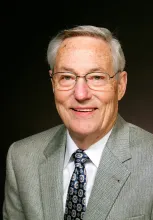
At the time of his retirement in 2016, Roy Holladay was serving the Operation Manager for Ministerial and Member Services of the United Church of God. Mr. and Mrs. Holladay have served in Pittsburgh, Akron, Toledo, Wheeling, Charleston, Uniontown, San Antonio, Austin, Corpus Christi, Uvalde, the Rio Grand Valley, Richmond, Norfolk, Arlington, Hinsdale, Chicago North, St. Petersburg, New Port Richey, Fort Myers, Miami, West Palm Beach, Big Sandy, Texarkana, Chattanooga and Rome congregations.
Roy Holladay was instrumental in the founding of the United Church of God, serving on the transitional board and later on the Council of Elders for nine years (acting as chairman for four-plus years). Mr. Holladay was the United Church of God president for three years (May 2002-July 2005). Over the years he was an instructor at Ambassador Bible College and was a festival coordinator for nine years.
