

Mark Welch
This transcript was generated by AI and may contain errors. It is provided to assist those who may not be able to listen to the message.
I didn't make mention, but we certainly wanted to welcome our guests today. I'm very happy to have all of you today.
Brethren, I want to take the time to go through an overview of what we covered last weekend at the General Conference of Elders there in Cincinnati, Ohio. I'd like to start off with a story that was told by Victor Kubik. Victor was not one of the keynote speakers, but I think that his message that he presented to us really encapsulated all that the weekend was supposed to be about. It seems there was a fellow who was a city slicker who decided he wanted to go Green Acres. He wanted to sell his home in the city and move out to the country. And so he did just that. When he got there, he noticed that on his property there were a good many trees, and the trees were obstructing a view of a real nice pond that he had. So he decided, I'm going to cut some of those trees down. So he went to a hardware store and talked to the owner there and said, What can you give me that will really get rid of these trees? How do I chop these things down? And so the owner of the hardware store says, Well, I've got a chainsaw for you that you'll be able to knock five trees down, take care of all the branches. I mean, you'll have those things down to almost nothing in just a few hours. The man says, I'll take it. He goes home, chops down his trees, but it took him a long time. It wasn't some little short thing. It took him a long time to get those trees down. So he said, I need to get my money back. This guy told me this thing was to knock those trees down. I chopped them all up and it was so quick and it wasn't so quick. So he brings his chainsaw back to the store and tells the man what took place. And the owner says, Well, let me see that chainsaw of yours. So he gives them the chainsaw. The owner takes the chainsaw. The motor starts all the south. The city slicker says, Well, what's that sound?
Should I explain that?
He was trying to use the chainsaw with it. Okay, folks, we need to be on our toes a little more than that today. Good night. Now, there is a relevance to that story, to what Mr. Kubik then related to us. Over the years, you understand that Mr. Kubik is from Russia. He actually grew up the first few years of his life in a refugee camp when he fled Russia, when he was a young child. And he's been back to Russia on a number of occasions, and we've got a number of Sabbath keepers there in Ukraine, about 10,000 strong. And over the years, he's developed quite a relationship with the Sabbath keepers there in the Ukraine. And he's brought them literature. They've taken it upon themselves to take some of our literature and translate it into Russia and so forth. And there was an opportunity that they had when they had some of our literature early in the early goings. And they said, you know, there were two pieces of literature that they really felt very highly about. One was our booklet, What is Your Destiny? And the other, interestingly enough, were the Seven Laws of Success. That may...and I may have thought they might have wanted to really love the Prophecy booklet, but it was the Seven Laws of Success, showing that we can be successful as we live God's way of life. But the one that they really...they loved both of them, but the one more than the other would be, What is Your Destiny? Now, as you well are aware, over the years, there was a lot of suppression, a great deal of suppression in Russia, the Ukraine, and the rest of the world, and that was the end of the religion. And of course, that came to an end when they became more of a free state. When that took place, the Russian brethren there said, you know, we need to get up to Siberia. And most of these people had come out of Siberia. They had moved further south when they had been released. And so we need to take this Gospel up to Siberia and get the message for them.
They didn't have any money. They didn't have anybody get there. No vehicles. But what they did is they said, you know, we're going to simply put this in God's hands. We are going to trust God that He'll give us the vehicles. We're going to trust God that He's going to give us people that we can stay at in their homes overnight. We're going to trust that God's going to allow those people to feed us, to fuel our vehicles, and we're going to go. And you know something? They did just that. They went up to Siberia. They had their campaign with our literature, United Church of God literature. And then they came back the same way. They didn't have anything. And the thing that really struck me is Mr. Kubik gave us, after we had had a report about our church finances, and here we are as a church in America who's got so much, so much in a way of material goods, that we've got a multi-million dollar budget. It's not what it once was, but it's still a multi-million dollar budget. They had nothing. And they took the gospel to the people in Russia, and they were able to do something with it. It's just like that chainsaw. It works so much better when you start it. And when the Russian brethren came up to Victor, this was, I think, several years ago, after they had done this, and they said, you know, Mr. Kubik, Brother Victor, you know Brother Victor, you and the United Church of God can do a lot more with God's Holy Spirit.
And he thought, that's true. We can do a whole lot more than what we're doing with God's Holy Spirit. Let's take a look at Zechariah 4.
Zechariah 4.
In verse 6, Zechariah 4-6. So he answered and said to me, This is the word of the Lord to Zerubbabel, not by might nor by power, but by my spirit, says the Lord of hosts. The Russians may not have had a lot of things, but one thing that they had, and we have it too, but one thing they really prized and used more as a tool was the Holy Spirit of God. You know, I thought it was interesting that as Victor was speaking to us, he may mention of the fact that, and I had not really thought of this, I was there in Indianapolis when the United Church of God was founded. But we're now starting a new 19-year time cycle. Now we're going to go back a little ways. For those of you who have been in the church a while, some of you are wondering, well, what in the world is a 19-year time cycle? Well, when you take a look at the New Testament, you see that things seem to happen in 19-year intervals. You know, the Gospel went out to the Holy Land, and 19 years later it went to Europe, and so on and so forth. Well, the United Church of God was starting on 19th year. And isn't it interesting the theme for the conference this year was, Edifying the Body Through Spiritual Gifts. Edifying the Body Through Spiritual Gifts. Brother and I really believe that we can go forward a lot faster with what the gift and gifts God has given us. In times gone by, one of the keynote speakers was Scott Ashleigh. Scott made mention that he developed a study paper on spiritual gifts years ago. He presented that to the powers that be, and they just stuck that in a drawer someplace and didn't go anywhere. I think that needs to go someplace. Now, what are we talking about? Are we talking about the United Church of God is going full blast Pentecostal? No, I'm not talking about that. But we are talking about looking into the Scriptures, seeing what it was that empowered the New Testament Church of God. Why did they grow so fast? Why did they go by leaps and bounds? What was it with those people that we can learn from? And we're talking about in the Scriptures. We're not talking about some emotionalism. We're not talking about something that is weird, or what the Scriptures actually say.
Have you ever given thought? I know I have. How do you baptize 3,000 people in a day? Especially when you only... Let's say they used all 120 of the people that were there, and they say they were all fellows. And as you may be aware, you don't need to be a minister to baptize somebody. You do need to be a minister to lay hands for God's Holy Spirit. But you don't need to be a minister. You need to be a fellow to do that, but not a ordained minister to baptize. So they probably used all the disciples to do that, then the ministry would come with to lay hands. But again, how do you do that for 3,000 people in a day? You try to work that out. It was a real interesting task.
But as we went through the whole weekend, this discussion about edifying the body through spiritual gifts, I think that my eyes were open more. I've given sermons on this in the past. It's not like as though I'm a newbie on this subject. I've given sermons on this in the past, and I will in the future. But I think that after having listened to what was said, if we will get out of God's way, we might be able to do even greater work than we've ever done before. There was a question and answer where we had all the council, all 12 council members and a couple of department heads on the stage, and they have an open mic like this, and they just say, Okay, any of you men or women, this is on Saturday night. Any of you who got a question to ask to the council, feel free to come up here and ask. In some, I forget exactly how this went, but somewhere during the course of this, we were talking about growth in the church.
And Mark Mickelson asked those of us that were there that evening. We weren't all there Saturday night. Some were still at dinner and other things. But I would imagine there were a good 200 or 300 of us there, ministers and ministers' wives. He said, How many of you came into the church after 1975?
Raise your hands. And out of the 300 people, there might have been a dozen hands, 15 hands, very few hands.
Most of the people came into the church, in that group, ministers and ministers' wives, between 1965 and 1975. Why? We've got more money now. We've got more resources now. We've got the Internet. There are so many more things we've got. We had television back in the day. We had 8 million plane troops going out every month. Yes, there are some things we had back then we don't have today. But now, we've got over 4 million people who go to our website.
Different people. Unique visits to our website every year. 4 million. Almost 5. It's 4.6 million. And so the thought is, maybe we are... Maybe we are... My thought... Mark didn't really say what his thought was. My thought is, maybe we are just getting in God's way. Maybe we need to get out of God's way and let the spirit, in the proper way, flow. In the proper way, flow. So that being said, is kind of a foundational idea. Let's go through some of the things we discussed at the conference this last weekend. First of all, what are spiritual gifts? What are they?
How do spiritual gifts, incidentally, differ from talents? Are they one and the same? Are spiritual gifts and talents one and the same?
God is a merciful God who loves this whole creation. Let's take a look at Matthew 5. Matthew 5.
In verse 45, That you may be sons of your Father in heaven, for he makes his Son to rise on the evil and on the good, and sends rain unto just and on the unjust. So if you are a human being, God is going to smile upon you in some ways. It's not that he just gives all the good things to the people who obey him, he just gives wretched things to the people who don't know. God loves all of his creation. Every one of his creatures, God loves. Now he is disappointed in a good many people. But then God realizes he's not called everybody right now. But all that being the case, we see here in verse 45 a principle. And the principle is that God gives good things to every human being. Every human being is given talent by God. Every one. Every one of his creatures.
Because he loves his creation, he wants his creation to prosper and to flourish, he wants them to grow. And so we've got people who are doctors, we've got people who are dentists, we've got people who do various services that are helpful for the human race.
So that's a talent. And largely that is a physical thing. Now a spiritual gift is just that. A spiritual gift is something that is spiritual. You know, a talent that we have, a physical talent, probably comes from our parents or our grandparents or somewhere up the, you know, in our family tree somewhere. That comes through heredity. But a spiritual talent, a spiritual gift, you don't get from mom and dad. You don't get that from grandma and grandpa. A spiritual gift, you get from God himself. You get from God himself. It is a spiritual gift. A spiritual gift.
So there's a difference. Let me just kind of go through this a little more explicitly here. A natural talent comes to you from God through your parents or grandparents or your family lineage. Whereas a spiritual gift comes from God independent of your heritage.
You know, an example would be, over the years I've had a number of teachers when I was going through high school that were outstanding. There's one lady and I told you about Mrs. Sherliff on a number of occasions. Mrs. Sherliff was just an outstanding, she was a Latin teacher. I took two years of high school Latin. Helped me really build my vocabulary. People think Latin's a dead language until they realize that over 96% of the English comes from Latin. When a new word is coined, they go to the Latin to coin a new word. So it really helps you understand the English language. But Mrs. Sherliff was just one of these, she was an older woman back in those days. She probably was when I was going through high school, probably in her late 60s. But she was just an old-fashioned moralist. She would tell you this story, we'd go through the Gallic Wars or something like that, and then she would finish the lesson about 20 minutes early, and she would just sit at her desk. And she'd say, okay, kids, what's this topic for today? And we would just talk about it, because back in these days, these were the days of the hippies and the love movements of Vietnam and all those things. And so all the young kids, all the teens would bring up things that were interesting to them. And if it was something that was moral and right, she would be right there with us. If it was something that was goofy and odd, she would say things that make people realize, you know, that's goofy and odd. What are you thinking that way for? But she had a way of doing that, where we didn't rebel, we looked forward to that. And after school was all done, there was always a nice group of people who would go to Mrs. Sherliff's classroom, sit down and just talk with Mrs. Sherliff. Now, that's a talent, but that's not necessarily a spiritual talent. Does she have a spiritual ability to convey the truth of God? No, she didn't. So just because you have a talent doesn't mean it's a spiritual gift. Now, they can match. We can't have people who are in the church, who are teachers, who also have the ability to teach spiritual things. So sometimes there is a crossover, but not necessarily.
A natural talent we have from birth, and then we develop that through the course of time. A spiritual gift is given as God sees it's needed. You may have walked through the doors of this congregation X number of months ago, and you may not have had a certain spiritual gift, but you may have it now, because the Detroit church needs that gift, or the church in general needs that gift. So God looks down and says, you know, I can give this person. This person can handle this. I'm going to give this person this gift.
So it's not possessed from birth, but as God sees the need for you as an individual and for the body of Christ. Now the benefit for either a natural ability or a spiritual gift is pretty much the same. To benefit mankind.
To benefit mankind. For the spiritual gift is to benefit mankind in the church. So you see there is a difference between what a spiritual gift is versus a physical talent.
Now who did God give these gifts? To whom did God give these gifts? And I want to, you know, my notes, there was a comment made at the end of the conference. I'm going to take out of order and bring here and place right here. Because unfortunately, you know, we're going to go through the book of several sections of the book of 1 Corinthians talking about gifts. They were a church that had a good many spiritual gifts, but because of that they had a good many problems. So don't think just because God gives us a spiritual gift that somehow we're home free, and that everything is, we've seen kumbaya all day long, all that sort of thing. Spiritual gifts can be quite heady and they can destroy people. As a matter of fact, one of the greatest beings who ever had spiritual gifts was a being by the name of Lucifer. Lucifer had a great many spiritual gifts. He couldn't handle it. Look what it did to him. So I say that to all of us so that we realize that if we have spiritual gifts, let it not go to our heads. They're here for the service of God and His church. It's not for us to have big heads about. We don't want to become like Lucifer who turned into Satan. Let's turn to 1 Corinthians chapter 14. 1 Corinthians chapter 14.
Let's notice some interesting thoughts here as we talk about spiritual gifts.
1 Corinthians 14 verse 1. 1 Corinthians chapter 14.
Pursue love and desire spiritual gifts, but especially that you may prophesy. Prophesy means inspired teaching. When we typically think of prophesy, we think of foretelling future events. That word can mean that, but it can also mean inspired speaking. Here it's talking about inspired speaking. But notice this. Desire spiritual gifts. These are something that we should desire. It's not something we should be afraid of because Lucifer had it and couldn't handle it. No, we are to desire them. But notice something here. Notice where this is placed in this book. Again, this church had problems with spiritual gifts. Here we have in chapter 13, 1 Corinthians 13, what is commonly referred to as the love chapter. And then as we start chapter 14, verse 1, he continues the thought, pursue love. So one of the things we want to keep in mind as we're thinking about these spiritual gifts is we want to drop whatever spiritual gift we have. We want to drop it in the framework of proper, godly love.
If our spiritual gift is not used in the proper framework of godly love, then, as it says earlier in chapter 13, though you may have the gift of prophecy and understand all ministries and all knowledge, though you may have all faith, and all those are spiritual gifts, by the way. You can remove mountains, you bestow all your goods to feed the poor, that's a spiritual gift, by the way. And though I might give my body to be burned and not have love, it profits me nothing. So if we don't use a spiritual gift in the context of godly love, it doesn't profit anybody anything. And remember, God has given us spiritual gifts to profit the church. So this is something we need to keep in mind. Same chapter, 1 Corinthians 14, verse 12. Even so, you, since you are zealous for spiritual gifts, let it be for the edification of the church that you seek to excel. Now, what did Paul have to say to this group here? Paul was continually saying to the church in Corinth, you know, I come among you and you, this one's got a prophecy and this other one's got a prophecy and this one's got a saying, and this one's got this over here. They are trying to one-up each other. Paul says, let's not do that. If God has given you a gift, great. Be zealous for it, but remember the purpose. The purpose is to edify the church, to edify the body of Christ. You know something, brethren, in a real sense? To you, to me, this should be very encouraging. You know why?
We walk out of this hall and we're one person among six billion, or whatever it is, on this planet. We're just, we're, you know, we're kind of like cosmic dust. We're nothing. But everybody is somebody in the body of Christ. Everybody is somebody in the body of Christ. God has specifically thought of you, your name, who you are, what your background is, before He ever decided to bring you to where you are today. He discussed it with Jesus Christ. He may have brought it up before the Council of Elders there, the 24 elders. Is this the right time? Put your name in a blank. Is this the right time to call you? The answer was, yes. And so you were called. Let's turn over to 1 Corinthians 12. Here's a chapter dealing largely with spiritual gifts. And notice here that basically this chapter is saying that everybody is somebody in the body. You may think you're nothing, but God doesn't think that about you. Now see, the question is, what is your gift? What are you going to do to help the body? The United Church of God has been kind of languishing at 7,500 people in this country for the last couple of years. Give or take a couple hundred people. We've got about 7,500 people for the last two or three years. 7,500. Don't ferry too much on our weekly Sabbath.
What's it going to take for us to get off that? Well, I'm sure the ministry has got things to do, but I think the membership, we've all got things to be doing. And perhaps we're just not getting out of God's way, allowing His Spirit to really burst forth and do the work we've been called to do. 1 Corinthians 12, verse 12, For as the body is one, and as many members, but all the members of that one body being many are one body, so also is Christ.
Okay, so God's a God of variety. God has different ones doing different things, but it's just like a regular family. We've got a mom, we've got a dad, we've got kids, everybody's got their responsibilities, everyone's got their place, saying it's true with the family of God. For by one Spirit we are all baptized into one body, whether Jew or Greek, whether slaves or free, and have been made to drink into one Spirit.
God doesn't care for white, God doesn't care for black, God doesn't care for Oriental, God doesn't care for American Indian, He just doesn't care. Now, He's made the various races, but in God's eyes, as you go through the Scriptures, God doesn't place a big emphasis on race, He just simply doesn't. God loves everybody. He wants everybody to excel. He wants everyone to get to the best place they can spiritually. That's where it is at with God. He says, whether you're Jews or Greeks, it really doesn't make a difference. Verse 14, For in fact the body is not one member, but many. If the foot should say, because I am not a hand, I am not of the body, is it therefore not of the body? Now, today you've got some people who would say, I don't give sermonettes. I've been in the church all these years, I should be giving sermonettes. Well, is every male supposed to give sermonettes in the church? Is every female supposed to be a deaconess in the church? No. Does that make you a lesser person because you don't have a specific thing you do? Well, there are other things you do. There are other gifts that God has given you. You do what God has given you. Verse 16, If the ear should say, because I am not of the eye, I am not of the body, is it therefore not of the body? If the whole body were an eye, where would be the hearing? If the whole were a hearing, where would be the smelling? Again, there are different needs for the body, and you've been called to fill one of those needs. Notice verse 18, But now God has set the members, each one of them, in the body just as he pleased.
Brother, wrap your mind around that. Don't be daydreaming here. Wrap your mind around verse 18. God Himself put you individually. You put your name in the blank. God puts you in the body as it pleased Him. Have we thought about that? Lee was talking in his sermon that day about how many times we look at each other, or look at ourselves in a negative light. But think about how God said, again, put your name in the blank. I'm going to bring this person into the tri-church, because here's what they can bring. Here's what they can offer. Here's what they bring to the table. God said He was pleased to put you in the church. It's nice to know He pleased God, right? So it pleased Him to do this with us. Verse 19, if we all were one member, where would the body be? But now indeed there are many members. This is verse 20. Yet one body, I cannot say to the hand, I have no need of you, nor the head to the feet, I have no need of you. Brethren, we have need of one another. Know much rather those members of the body which seem to be weaker are necessary.
I've discussed with you over the last number of years I've been your pastor about a lady that I helped pastor in North Carolina. I wasn't the pastor, I was the associate pastor in Raleigh, North Carolina. I had a lovely lady by the name of Goldie Jones who lived in Durham, North Carolina. And I will never forget Goldie. God says He calls things what they are. And she was gold. Here's a woman who basically her whole body was joined together, locked in horrible arthritis. She could only move an arm, a few fingers, rotate her neck a little bit.
Other than that, she was as stiff as a board. She could not move. She spent her whole life in an 8x10 room with visitors coming to visit her. And I always come to myself fortunate to visit Goldie. When you went to visit her, you went to visit her to give her encouragement. She encouraged you. I remember back in those days, back in the mid-1980s when I served in that area, Goldie would go to the feast.
How did she go to the feast? She can't drive a car. We had a deacon and his wife who had a... because he was a painter by trade. He had a big Oconoline van, and he would take that van and take everything out of the van. Take that hospital gurney of Goldie's, put that in that van, and go to Norfolk, North Carolina for the feast. And I remember seeing people helping them get her out of there and wheel her into the scope arena for the feast there in Norfolk, Virginia.
Goldie couldn't do much, but she was an encouraging person. Back in those days, I forget what kind of device we gave her, but there was a little typewriter or something that we could put on her chest. She was able to move just a little bit to peck out little notes, and she would do her little notes, and we'd send those off for her, where she was encouraging other people. So, what is our excuse? If we say, we can't do something, what's our excuse? She was somebody in the body.
She was somebody in the body, and God richly loved her at all that she stood for. So, again, if we can make sure we get ourselves out of God's way, there's so much that can be done to allow God to have His Spirit work in us and dwell in us. As we are going through the discussion at the conference about the gifts, spiritual gifts, the question was brought up, and I brought the question up myself a few years ago in a sermon I gave you.
Is there any place we can go into Scriptures that delineates all of the spiritual gifts of God? Is there any place we can go that shows what they all are? The answer to that is no. There's no one place we can go to the Scriptures that show all the spiritual gifts, but there are three places that give partial lists. Let's take a look at those three places. The first place is Romans 12, verses 3-8. Romans 12, verses 3-8. Let's turn over there for a moment, and we'll take a look at that section. Romans 12, verses 3. For I say, through the grace given to me, to everyone who is among you, not to think of themselves more highly than they ought to think, but to think soberly, as God has dealt to each one, a measure of faith.
So right here at the get-goes, as Paul realizes, he's going to discuss these spiritual gifts, he says, don't allow yourself to get big-headed. God gives you some really interesting way to serve. Don't let it go to your head. I want to go to one of the last pages I have in my notes and bring it up to this point. Bob Baran, who is a pastor there in Canada, who was on the council for a number of years, Bob made a very interesting, very clarifying thought as we were going through the conference. Bob said this, if you think you have a spiritual gift from God, bury it.
And he paused just like I'm doing now. I want to give you the same effect. That wasn't the end of what he was going to say. If you think you have a spiritual gift from God, bury it in humility, and then you'll be useful to God. Bury your spiritual gift in humility. Drop it in a framework of love. And then we will use that gift the way God intended. We won't have the big heads. We won't have a lot of discussion among one another, who's greatest, who's best. When we are humble people, that isn't even thought of.
Could it be, brethren, the reason why the church is not growing the way we'd like it to be is because we've got too many ego problems in the church.
I'm just saying, could it be? I think so. I think so. I think we look here at verse 3, Paul's trying to warn us, Don't think of yourself more highly than you ought to think. I know people have said, I'm going to be president of UCG one day. They bought a house accordingly so they could be president. Well, that person never became president of UCG, and thankfully so.
Verse 4, as we have many members, this is Romans 12.4, For as we have many members in one body, but all the members do not have the same function.
So we, being many, are one body in Christ and individually members of one another, having then gifts differing according to the grace that is given to us, let us use them. And we've talked before how grace is a multifaceted item. And you have been given at least one gift. Now, you think, I don't have any gifts from God. Yes, you do. Are you baptized? Yeah. Were hands laid on you for the receipt of God's Holy Spirit? Yeah. Well, you've got the gift of God's Holy Spirit. So already you've got one that you know of for sure. Now, I'm betting that there's more than just that one. But that's a good place for us to start. Having then gifts differing according to the grace that is given to us, let us use them. Prophecy, or spiritually speaking, in proportion to our faith. Verse 7, or ministry. And let's not get caught up in that word ministry. When you think of the word ministry, you think of somebody like me, a minister. Well, the Greek there means service. A minister is to serve. This is talking about, are you a servant? If you're going to serve, use it in your serving. You don't have to have a name on an organizational chart, and I've said this to you so many times. You don't have to have your name on an organizational chart to serve. Goldie Jones never had her name on any organizational chart, and she became famous, relatively famous, in the region back in those days. Her house burned, well, it didn't burn down, but there was a tremendous fire in her home. Her caregiver went to go shopping. Fire in a house. Goldie can't move. The whole house burns with the exception of her room. Didn't touch her room.
Interesting. God knows His own. Okay, where were we now? So here we are in verse 7. Serving, use it for serving. He who teaches in teaching. After services, I had a number of people come up to me and ask about the sermon. They were excited about what we were covering at the conference and so forth. Can women teach? Well, we're not going to use women for sermons or sermonettes or Bible studies or that sort of thing, but can women teach? Well, what does the Scripture say? The Scripture says, your older women teach you younger women. Mothers teach their children and so forth. We've got women who, when we have Sabbath school, when we teach Sabbath school, can women teach? Absolutely, women can teach. It seems to me there was a man by the name of Apollos who was taught by a woman by the name of Priscilla. He was a minister. And as she listened to the minister, she said, you know, he's a pretty interesting guy, but he doesn't have the story straight. So let me kind of sit next to him and tell him the story. And he didn't get all funny about it. You know, he was a Greek. His name was Apollos. You know, he didn't say, well, let me think about this. No. So can women teach in a proper setting? Of course women teach. And of course, you ladies, you teach in so many different ways. And one of the big things that I came away from in the conference is this idea that, you know, women certainly are not second-class citizens, spiritually speaking, in any sense of the word. And there are so many things that we would like our ladies to do, according to the Scriptures. We're not going to have women ministers and things of that nature. But there are so many things our women can do. Just like there are so many things our men can do, and perhaps we would not have been allowing God's Spirit to lead us in proper ways. Verse 8, Romans 12-8, He who exhorts in exhortation.
You know, can you encourage people? Do you have a gift, a spiritual gift? And it takes a spiritual gift. First of all, you need to know the brethren. You need to be with them and talk with them. You need to have the discernment to know what's happening in their lives. And then as you have the discernment as to what's happening in our lives, then you get to know them. And then, if you've got a spirit of encouragement, that gift, then you know the right thing to say to them, the right timing, the right venue. You put all that together, and that's a complex thing to properly encourage. You know, some people, it's like a duck in water. To some people, they think, well, I don't have any gifts. And yet, they're some of the greatest encouraging people I know. Barnabas was called the son of encouragement. It's a tremendous spiritual gift. You may have that gift, the gift of encouragement.
He who gives with liberality. We've got people in a church who make a really big dollar. Not me! Even before I was a minister full-time, I didn't make a big dollar. But we've got some people who make a really nice buck. There are some people who know how to make money.
I remember two fellows I used to pastor years ago, I think I've used this story, but it serves the point here. We've got some newer folks in the audience, so they haven't heard all my stories.
I was talking to the one man, and these fellows had nice homes that they weren't ostentatious by any means. But the one man, he owned a community newspaper. He owned several apartment buildings and some other properties and so forth. But he had a really good eye for timber. He knew wood. He could take a look at a stand of trees and see, well, that's nice for shade, or there's some really good wood there for sale. So what he would do is he would go out with another friend there in the local church, and they'd buy a lot of land. A plot of land, a good-sized plot of land. Because it had really good money to harvest on with those trees. They'd harvest the trees off, sell it, and the other guy was a surveyor. He would survey the land into the various plots and then sell the property. So one day I'm talking to this one fellow. I'm curious. He said, I know that you just had this latest deal go through. What did you make? He said, we didn't make that much money. Oh, come on, how much did you make? $300,000.
$300,000 is kind of a lot of money to me. And they would just do this every couple of three times a year. That's in addition to all the other things they were doing. One guy was a full-time surveyor. The other guy had his community newspaper. He had his apartment buildings and all. And the other guy, well, he made $300,000. But see, both of those fellows were also extremely generous. They were very generous people. And if you needed something, they were there for you. And they didn't make a big show of it. It says here, some people give with liberality. And that is something that God can give people. I've not been so blessed. But God has blessed other people with that gift. He who leads with diligence. These are all spiritual gifts. Spiritual leadership. And again, you don't have to be ordained to lead spiritually. I'm thinking of a fellow we have over in the Ann Arbor congregation. I don't want to embarrass anybody here, but we've got an older gentleman in the Ann Arbor congregation. We've had a couple of socials over there where, during the course of the social, we are given a sheet of paper and say, Say something, say one thing nice about everybody in the church. And so, you know, there's 70 of us over there, and people say, Okay, I've got to give a list of names. One nice thing about everybody. There's one gentleman whose children are in their mid-60s. Give you the idea of his age. His children are in their mid-60s. So many of the people wrote and said, You know, I really enjoyed talking to Mr. So-and-so. He's that man. He's real people. I don't think he's got any more than elementary school education. But a hard-working man, made his way in the world. Loving wife and family and so forth. And just salt of the earth and gives tremendous advice. He leads by his example. People come to him for advice, and he gives advice. That's a gift. And he's got it.
Okay, so that's one place where we've got a list to give gifts. But that's not a comprehensive list. You also have 1 Corinthians 12, verses 8-10. 1 Corinthians 12, verses 8-10. And that same chapter, verses 28-30. Let's take a look at that. 1 Corinthians 12. You're there a little bit ago. Here's a second listing of spiritual gifts. Again, this is not a comprehensive list by any means, either. When you add all three lists together, it doesn't mean you've got all the words on this. 1 Corinthians 12 and verse 8. For to one is given the word of wisdom through the Spirit.
A spiritual gift of wisdom. Do we know somebody in the Bible who was given wisdom as a spiritual gift? Rather a prominent name in the Old Testament. Felt by the name of Solomon. To another the word of knowledge through the same Spirit. To another faith by the same Spirit. To another gift of healings by the same Spirit. Are healings only in the province of an elder who anoints people?
I'm thinking of another couple in Raleigh, North Carolina. In this case, the husband was an elder. The wife was a faithful wife. They were both members of the church. Polynesian, I think, extraction. Both had master's degrees. They were very educated people. Just, again, salt of the earth people. People go to the fella to be anointed. He was the minister. He would anoint to be healed. But so many times in the five and a half years I was in Raleigh, North Carolina, people would say, yeah, but I went to Mrs. And I asked Mrs. to pray for me. And when Mrs. prayed for me, I got an answer to my prayer.
Don't frown. Ladies' prayer is going to be answered. The point I'm making is she had a gift where when she would be praying for people she wasn't anointing anybody, but when she would pray for people, God heard her prayers.
And people were healed. And people had other things. There were other blessings that came their way because of Mrs. Elder. And, of course, that could be true for any woman, not just elders' wives. Verse 10, The working of miracles, to another prophecy, or inspired speaking, also foretelling of the future events, to another discerning of spirits.
So many times I think our ladies think that there's nothing in these lists that pertain to them, or very little, but I've known so many women over the years who are really good at discerning other people. That's a gift. There are people who walk around and they've got no clue. They can talk to a person and be totally bamboozled. They fall victim to every sales pitch. On the other hand, there are other people, men and women, who have the ability to size up a person, to size up a situation. They are discerning people. And I've known so many women over the years who I would get counsel from. I would call and say, well, what do you think about this situation? And that's a gift. Everyone doesn't have that. The difference between one person who's got radar and another person who doesn't. When you've got the radar, you see. Or the sonar. You can see things other people aren't seeing. It's a spiritual gift.
To another, different kinds of tongues. And to another, the interpretation of tongues. Now, the United Church of God doesn't run away from the idea of speaking in tongues. We run away from the idea of the way the world views it. The way the world views it, they talk about glossolalia. And tongues is some unknown language that, you know, doesn't conform to any rules of language. That's the name of glossolalia. No. We take a look at Acts 2, and we understand how tongues properly work. When the apostles were speaking, people heard them in their native tongues. Much like today, if we were at the United Nations, and I was speaking, I might be speaking in English. But the German guy hears me in German, the Italian guy hears me in Italian, the French guy hears me in French. So the gift maybe is more in their hearing. Remember what it says there in Acts 2? The Galileans are speaking, but we all hear in our various tongues. And that's real tongues speaking. Known languages. Now, God has not given us that gift today, maybe because we've got time to learn French and German and all these other things. But there may come a time at the end of the age where God says, you know, I've got to speed this up. We need more people in the international work. In Alessandro, you're Italian, I believe. I made you that way. I'm going to give you the gift of speaking Italian. Go over there!
Dropping down to verse 28, 1st Corinthians 12. And God has appointed these in the church, first apostles, second prophets, third teachers. Notice, the gift of miracles. The gift of miracles. The gift of healings and helps and administrations. Varieties of tongues. Are all apostles, are all prophets, are all teachers, all workers of miracles? Of course not. We're a body. Everyone's got their own niche in the body.
The last section that talks about spiritual gifts is in Ephesians 4.
Ephesians 4, starting here in verse 11.
He himself gave some to be apostles, some prophets, some evangelists, some pastors and teachers. For the equipping of the saints. Brethren, is it just the job of those who are ordained to equip the saints?
I think our Detroit church is a good example. How many times when I'm walking out the door, there's normally a group of three or four guys over there by that piano. You guys know who you are. What are you doing? You're talking to one another. You're teaching one another. You're exhorting one another. You're equipping one another. It's a beautiful thing. You know who you are. And you ladies do the same sort of thing. We equip one another by helping one another. For the edifying, for the building up of the body of Christ. Verse 13. Till we all come to the unity of the faith, the knowledge of the Son of God, to a mature man, to the measure of the stature of the fullness of Christ. And I really believe that, as I said so many times, I think Ephesians 4 and verse 13. To me, if you were to reduce the Bible down to one verse about the growth of a Christian, it would be this verse here. You know, our perspectives, we want to grow to be mature in Jesus Christ. Of course, to do that, we have to have the sacrifice of Jesus Christ and all those things. But that's a really good summary statement about where God wants us to be heading. Verse 14. That we should no longer be children, taught to and fro, carried about with every wind of doctrine. Verse 15. But speaking the truth in love. Notice, speaking the truth in love. Love and humility. Verse 16 now. From whom the whole body joined and knit together by which every joint supplies. Doesn't say just the ministers, just the ordained people. Every joint supplies. You are to supply something.
According to the effect of working by which every part does its share.
This is self-correcting. You and I can look at this section of Scripture and say, Am I doing my part? Am I doing my share? Do I know what my spiritual gifts are? Have I defined those? Has God helped me to see what those are? Am I shirking my duty? Am I being negligent? Am I being just kind of out in the stratosphere? These are all questions we have to ask ourselves before God. I do, you do.
Knit together by which every joint supplies according to the effect of working by which every part does its share. Notice, when we all do our share, it causes growth of the body for the edifying of itself in love.
Now, Scott, actually, as he was summarizing his material, said if we want to take those three lists, we can actually divide those three lists in Romans, 1 Corinthians, and Ephesians. As you look at spiritual gifts, there are three major categories of spiritual gifts. Let me give you those. Three categories of spiritual gifts. I'll give you some examples. Number one, are sign gifts, S-I-G-N. Sign gifts. Do you have a sign gift? A sign gift would be, speaking in tongues, interpreting tongues. A sign gift would be, you've got the gift of miracles. A sign gift would be, you have the gift of healings. Do you have that gift? A sign gift. You go before God and you discuss that with him. A second type of gift are what we call perfecting gifts. Perfecting or maturing gifts.
If you've got a perfecting gift, you are good at teaching. Spiritually teaching. Spiritually leading. Again, you don't have to be ordained for these things. You can be ordained. You don't have to be ordained to lead by example, lead by your conversation, lead by your wise counsel. Teaching. Leading. Evangelism. Obviously, that would be something that is ordained in person. Pastoring. Those would be maturing gifts. God obviously has given his gifts to his ministry. But you know, the largest section of gifts, spiritual gifts, are the third category. The third category is service gifts. Service gifts. Those would include the encouragers. It would include the givers.
It would include those that I think are fairly rare. Those who show mercy. I say rare. Rare in this one very limited sense. I was thinking about this. We had a number of breakout groups where we would discuss the spiritual gifts of God. The last one I went to was, what spiritual gifts do you see in your local congregations? I was thinking about various issues. I made several comments in that particular session, three different comments. I won't tell you who I talked about or what I said. But it was all positive. But one comment I wanted to make and never got a chance to make was regarding this showing mercy. It's interesting how God has designed the human being. Our mind is very close to our mouth. Have you ever noticed that? Have you ever noticed how close our mind is to our mouth? And yet, sometimes we don't engage the brain to the mouth. And there are times when all of us have been guilty of saying things we shouldn't have. There are times when all of us have been guilty of saying things to other people that really hurt them. Really knock them down. Most of the time we've not wanted to do that on purpose. We've done it accidentally. We did it without thinking. But I feel a sense of mercy can be shown where we do engage the brain. We are tempted to say something that could cause harm to the person, but we don't say it. And when we don't say the hurtful thing, then we're being merciful. When we don't say the hurtful thing, we're being merciful. And unfortunately, too many times all of us have been guilty of being unmerciful, of saying things we should not have said, using wrong timing. Sometimes it's the right thing to say, but even the inflection of the voice makes a difference. You know, I've said so many times, computers are easy. People are hard. We are hard. Communicating one to another, that's a tough thing. Because people can be the inflection, it can be your eye contact, it can be your lack of eye contact. So many different things can come to the fore when it comes to showing mercy. But that's one thing I was thinking about. Because over the years I know I've been guilty of this. As a pastor, I've seen where we've victimized one another with what we call friendly fire. You know what friendly fire is in the military? Where one comrade shoots another comrade. We've been guilty of friendly fire, saying things to our own members, our own brothers and sisters in the faith that have hurt them. And we've all been guilty of that. And so we need to be merciful by making sure we keep our mouths shut at times.
You've got other parts of service helps to be administration. You may not think of it this way, but being an organized person can be a spiritual gift. I was relating to Ann Arbor earlier today that we've all known Type A personalities.
You've got to love them! They walk into a situation, they get things done. Sometimes they leave a wake of people in the bag, you know, as they're getting things done. But Type A people, they get things done. Now, where Type A people, many times they've got to learn the lessons, is you've got to walk at your sand. Because in the midst of, you know, you're kind of like the bull in the china shop. You're getting stuff done right and left, and there's some broken bodies behind you back there. And of course, then you've got other people who are really good administrators who aren't a type... Well, they may be Type A, but they use the No Mercy thing, and they watch what they say and how they do it.
But not everybody's organized. We in the ministry are an interesting example, and again, I've used this in the past, where I remember a friend of mine moved from Raleigh, North Carolina, the fellow I was working under. He moved to Buffalo, New York, and he had his first deacons meeting, and he said, okay, I'm just kind of getting a feel for who does what here, and he had a whole army. It was a really large church that gets somebody 10 or 12 deacons. He said, okay, who does what? He said, well, no one really wanted to say it, because if I say what I do, it may seem like I'm boasting.
And so Mike said, well, who sets up the hall? And all 12 hands go like it. So obviously, the pastor there probably was not too organized. He knew how to get the church. He was going to bring his Bible. There may not have been a whole lot more he was organized at, but the organization was not his strong suit.
But we need people who are organized. We need people who are organized. So those are some categories of our gifts. Robin Leber gave an interesting segment, and I'm doing this all now through the idea of spiritual gifts. He was talking about orientation. You know, this last Wednesday, Maryland was there. I had my first Bible study in Windsor, Ontario. A lovely group of people.
We had one man, I think, Dan, who was a brand new person, who asked some interesting questions. One of the interesting questions Dan asked, he said, what's the difference between you guys and all these other Church of God groups? How would you want to answer that question? What's the difference? Why should I come here? We got into a nice discussion about that, but I certainly would ask your prayers. You know, back years ago, with worldwide, we had 160 people attending over in Windsor. 160. We had seven in our Bible study, eight counting me.
And yet, we've got 240 people who get literature in Windsor proper. God told Paul about Corinth. God says to Paul, we've got many people in this city. And there are many people getting literature in Windsor. I would like to see that grow. And I'd ask that you help us with your prayers on that. You know, all of Canada has six full-time ministers. All of Australia has got six full-time ministers. Australia is roughly the size of the United States, and Canada is larger. I think, apart from Russia, Canada is the second largest landmass in the world. Six ministers covering all of Canada.
We would love to see that grow, and we ask for your prayers. But Robin gave kind of an orientation-type message, I thought. Let's turn to Hebrews 3. Going back to Dan, who asked the question, How is the United Church of God different from these other churches? I said, well, you know, Dan, we've got a culture. You know, there was a doctrinal split with the worldwide church who got our parent organization back in 1995. And a number of different groups formed out of that.
I said I was recruited to go to Living Church of God early on, and I didn't decide to go that direction. I felt very strongly personally that, as God has been patient with me over the years, I need to be patient with God. And back in early 1995, I obviously knew, as did all of you, that the doctrines are right now.
They're changing doctrines. But what do we do? What do we do? Already some groups had already formed. Should I go with one of those groups? I was invited to. I said, no, God's always been patient with me. I need to be patient with God. Maybe God's going to change this. Maybe God's going to do something with this whole situation. And so I waited until I could wait no longer. It was after the last day of Unleavened Bread in 1995, when I was told by the powers that be with worldwide that I simply had to start teaching the undoctrinal material, which I did not do, would not do.
I said, well, if that's the case, because you told me I didn't have to, and I wasn't doing it, I said, but if that's what you want, then you've got my resignation. As it turned out, I found out years later, talking with Dares McPeely, he and I resigned on the same day. Just kind of a little interesting aside for me. But notice, when I was talking to Dan, the new person who wins, I said, one of the big differences between the Church of God groups is just organization.
Some people feel they need to have one man in charge. God can use one man. He did it with Moses. He did it with Herbert Armstrong. Does God have to use one man? No. During the time of the Judges, there were several judges in charge of Israel at any given time. When you had a monarchy, you had a northern tribe, a northern kingdom, and a southern kingdom. You had many people in charge. You had two kings and several prophets. With the apostles, you had 12 of them. The bottom line is, God is not concerned about organization as long as it's godly.
He doesn't care whether it's one or 12 or whatever. But, Robin's talk to...turn to the Scripture here... Hebrews chapter 3. This needs to be our orientation. Hebrews chapter 3 and verse 1. Therefore, holy brethren, partakers of the heavenly calling, consider the apostle and high priest of our confession, Christ Jesus. We're not going to get all hooked...we shouldn't get all out of focus as to whether we've got this one man who I teach nothing but Herbert Armstrong or that other man.
No. We need to have a group that looks to Jesus Christ as our apostle. Now, I'm not saying Mr. Armstrong didn't do great and wonderful things. He did. But we've got some of the groups that have come about after his death, and that's their claim to fame. Our claim to spiritual reality is having Jesus Christ as our apostle.
He's the one that we look to. Ephesians chapter 2. Philippians chapter 2. And verse 2. Philippians 2.2. Fulfill my joy by being like-minded, having the same love, being of one accord of one mind. What one mind are we talking about? Well, verse 5 talks about that one mind, the mind of Christ. But we're not there yet. Verse 3. Let nothing be done through selfish ambition or conceit. Brethren, I say to you, maybe the reason why we have not grown like we would like to is because we've got too much of this in the church, whether it be in the leadership or the membership or both.
Let nothing be done through selfish ambition or conceit, but in the lowliness of mind, let each of us think others better than himself. Let each of you look out not only for his own interests, but also the interests of others. Remember when we were talking about spiritual gifts, how they've got to be buried in humility?
They've got to be dropped in a framework of love? Well, when we do that, then we've got, verse 5, the mind which was also in Christ Jesus. Verse 6. Who, being in the form of God, didn't consider robbery to be equal with God, showing his great stature, but made himself of no reputation, taking the form of a bondservant and coming in the likeness of men, and being found in the appearance of a man, he humbled himself, and became obedient to the point of death, even the death of the cross.
So here we're looking at an individual, Jesus Christ, who was the epitome of humility. And that is what we look to. That is where, you know, we want to make sure our focus is. Now, just a few things here as we're going to start winding the sermon down. Something for you to be praying about. Right now, the United Church of God has got 349 elders worldwide. 349. Back when I was ordained, and some of you were there when I was ordained on Trumpets in 1979, we had 1,600 ministers.
1,600 worldwide back in those days. 1,600. Now we've got 349. We've got 272 elders in this country, 77 in the rest of the world. In this country, in the United States, we've only got 81 pastors. 81. 64 of which are full-time, like myself. Only 64 guys like me, who get paid full-time to do this.
A little better than one estate. We need more. And frankly, for your sake, we need better. You need better than me. You need something else. Well, not something else, but something better. I'll give you what I can. But we want to be praying that God will give us even better men than we've got now. Of the 81 pastors we've got in this country, we've got 12 that are part-time. Mr. Joseph came down and spoke. He had a wonderful message in Ann Arbor a couple of weeks ago. He's got a retirement from the school system here in Michigan.
He works part-time. He's not a full-time man. We've got five men, five, who have a full-time job and still pastor at church. We've got John Miller down there in Ohio. He owns his own company. He has a number of employees, and you would think he was full-time just like me. We've got Steve Buchanan over in the Arizona area. Those of you who have been in the church any length of time, if you've been to the feast in Tucson.
Steve ran that feast site for 25 years. He doesn't get paid anything. He runs full-time pastors churches, several of them, plus running other things. So keep that in mind. We need more people. We need God to call more, and for those who we have to be inspired by God, be blessed by God, to properly work with the people of God.
Peter Eddington gave a...this is one of the last ones I'll mention here. We'll call it quits. But Peter Eddington made mention about the evangelism. And this is something I was not aware of. I was aware that there was a series on, I think, I don't know if it was a network or cable, called the Bible. Did some of you see that? The Bible? That series beat American Idol for ratings. Now, is that unbelievable? Normally American Idol is in the top five. They've slipped a little bit this year.
They're probably still a top ten show. But the Bible beat American Idol for ratings. There's a game show network. I don't get that on my cable, but there's a game...I don't think I do. There's a game show network. And there's a Bible game show that's number one. So Peter was saying, look, there is a hunger out there.
There's a hunger and a thirst for the truth. And we've got it. The question is, what are we going to do about it? As I may mention, we've got 4.6 million unique visitors every year to our website. Different people, not the same people. And if you take a look at those who repeat, 47% repeat.
Time and again, coming to our website. But 4.6 million total who come, different people. We've gone from being the 30th largest religious website in the world last year to the 13th largest website in Christendom this year. And the only people that are ahead of us, there are several Catholic websites that are ahead of us. There's a Mormon website and there's a JW, a Jehovah's Witness website. But we're bigger than a lot of these, we're bigger than the Baptists, we're bigger than a lot of these people, all these televangelists you see, our website's bigger than theirs.
We've got some real tools that we have available to us. I don't want to see us sticking at that 7,500 number a year for your... unless that's what God's will is. Now if that's what God's will is, then fine.
We want to do what God's will is. Brethren, I've given you today an overview as to what we've covered. Hopefully it was a balanced overview. We want to use more of God's Spirit. We want to be like a New Testament church. We are not Pentecostals by any stretch. But we do want to get out of God's way. We do want the Spirit to work on us powerfully. And each and every one of us has to ask the question, are we allowing God fully to use His Spirit in us?
Only you can answer that in your life and only me in mine. But let's make sure we ask the question. Let's make sure we search for the answer.
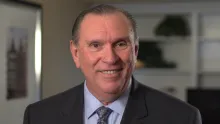
Randy D’Alessandro served as pastor for the United Church of God congregations in Chicago, Illinois, and Beloit, Wisconsin, from 2016-2021. Randy previously served in Raleigh, North Carolina (1984-1989); Cookeville, Tennessee (1989-1993); Parkersburg, West Virginia (1993-1997); Ann Arbor and Detroit, Michigan (1997-2016).
Randy first heard of the church when he was 15 years old and wanted to attend services immediately but was not allowed to by his parents. He quit the high school football and basketball teams in order to properly keep the Sabbath. From the time that Randy first learned of the Holy Days, he kept them at home until he was accepted to Ambassador College in Pasadena, California in 1970.
Randy and his wife, Mary, graduated from Ambassador College with BA degrees in Theology. Randy was ordained an elder in September 1979.
