

Scott Ashley
This transcript was generated by AI and may contain errors. It is provided to assist those who may not be able to listen to the message.
Well, today, as we know, the majority of our women... I'm glad we had a few of you out here to kind of balance things out a little bit. But the majority of them are from LaConnor for the Women's Emission Month weekend, as we know. So this is for all the rest of us that are here, I guess. But this is also... I don't know if we have a lot of teens or anything here, but this is especially for the younger generation and for children as well that are old enough to understand. But this also applies to all of us, regardless of our gender or age.
You know, we're living, as we look around the world today, watch the news, if you watch the news at all. It's hard to watch the news. But we're living in very trying and very troublesome times. You know, how the day goes by when you turn on the news, you don't hear of some kind of a killing or in the Greater Seattle area somewhere, or robbery or mugging or something like that. Somebody's attacked. And that goes on. It's amazing. I grew up here, and I don't think it used to be that way years ago when I was young. But it's that way today. You turn on the news, you can hardly get through one news broadcast.
I saw something tragic happening here somewhere in the Greater Seattle area. It reminds me of what Paul wrote to Timothy and what was probably his final epistle, 2 Timothy 2. And I'll begin there in my introduction. We're very familiar with this particular Scriptures here, but 2 Timothy 2 beginning in... I was just telling Timothy chapter 3, I should say, excuse me, 2 Timothy chapter 3 beginning in verse 1, where Paul wrote, but know this in the last days, the prophecy for the last days, perilous times will come, or as my margin says, times of stress.
Why? Because men will be lovers of themselves. They'll just be thinking about themselves. And they'll be lovers of money, boasters, proud, blasphemers, disobedient to parents, unthankful, unholy, unloving, unforgiving, slanderers, and without self-control and brutal and despisers of good, traitors, headstrong, haughty, lovers of pleasure, rather than lovers of God, having a form of godliness, but denying its power from such people to turn away. That's pretty strong. But here the Apostle Paul is inspired to describe what the world would be like, as it says here, in the last days.
Now, at the time he wrote this, maybe he thought he was living in the last days, but by the time he wrote this letter, he realized that he probably was going to die before Christ returned by this time. He might have been thinking because of the situation they were facing using the last days, but this is really a prophecy for our time today, because it does very adequately describe the times we're now living in.
It drives it to a T, unfortunately. Now, when people become brutal and without self-control, what happens throughout society? What happens? It breaks down, doesn't it? And the same thing happens that happened back before Noah's blood. Let's go back to Genesis 6. What happened back then? Genesis 6, verse 5, Then the Lord saw that the wickedness of man was great in the earth, and that every intent of a thought to his heart was only evil continually.
Which resulted in what? Verse 11. The earth became corrupt before God, and the earth was filled with violence. And today, again, we see a world that is becoming corrupt before God, and also one that's becoming filled with violence. You hear about violence every day, and we don't even hear the half of it. Did Christ prophesy 2,000 years ago that that would be the case? Let's go to Matthew 24. Beginning in verse 1. Matthew 24, 1, Then Jesus went out and departed from the temple, and his disciples came up to show him the buildings of the temple.
But he said to them, Don't you see all these things here? Assuredly I say to you, not one stone shall be left here upon another, that shall not be thrown down. And as he stood on the Mount of Olives, his disciples came to him privately then, and said, Well tell us, when will these things be, and what will be the sign of your coming, and the end of the age?
What was one of the major signs that Christ gave? Let's go down to verse 32, and we'll go through all these. You're familiar with them. But verse 32, he said, Learn this parable from the fig tree, When his branch has already become tender, and puts forth leaves, you know that summer is near. So you also, when you see all these things, he describes here in these previous verses, we see them all kind of coming together and escalating and happening at the same time, Know that it is near, even at the doors. Assuredly I say to you, this generation that's living at that time will not pass away, will by no means pass away, till all these things take place.
How long does that take? How long does it take for an entire generation to pass away a hundred years? You decide. Verse 35, Heaven and earth will pass away, but my words will by no means pass away. But of that day and hour no one knows, not even the angels of heaven, but my Father only.
But as the days of Noah were, he said, So also will the coming of the Son of Man be. For as in the days of Noah, before the flood, they were eating and drinking and marrying and giving a marriage until the day that Noah entered the ark, and they did not know until the flood came and took them all away.
So also will the coming of the Son of Man be. People will deny what's happening, they'll deny the times they're living in, they'll just go on like, well, it's going to keep going on forever.
Well, what was it like in the days of Noah, as Christ mentioned here in the days before the flood? Well, as we just read in Genesis 6.11, the earth was filled with violence.
Now, you look back on the 20th century, most modern time in the history of mankind, with all the things that were developed, man landing on the moon, going into outer space and coming back, all the tremendous technological advancements. But the 20th century saw a lot of violence, didn't it? The earth was filled with violence in many areas during the 20th century. There was World War I, World War II, Korea, Vietnam, Gulf War, and so on and so on. Of course, this year there's been now Iraq and Afghanistan in the 21st century. But all those wars, major wars in the 20th century, and who knows what will trigger another major conflict in the future?
When that does happen, the United States of America may not be ready.
As we're now greatly reducing our military, at least the plans are to greatly reduce our military, which could tie into an interesting prophecy in Ezekiel. Let's go to Ezekiel just a minute. Go to Ezekiel 7.
Ezekiel 7, beginning in verse 10.
Doom has come to you, you who dwell on the land. The time has come. A day of trouble is near, and not of rejoicing in the mountains.
Now upon you I'll soon pour out my fury, and I will defend my anger upon you, and I will judge you according to your ways, and I will repay you according to your abominations. My eye will not spare, nor will I have pity. I will repay you according to your ways, and your abominations will be in your midst. Then you shall know that I am the Lord who strikes. Verse 10, Behold the day, behold it has come. Doom has gone out. The rod has blossomed, pride has butted. Violence has ridden into a rod of wickedness. None of them shall remain, none of their multitude, none of them, nor shall there be a waiting for them. Verse 12, The time has come, the day draws near. Let the buyer rejoice, nor the seller mourn, for wrath is on their whole multitude, for the seller shall not return to what has been sold, though he may still be alive, for the vision concerns the whole multitude, and shall not turn back. No one will strengthen himself who lives in iniquity. Those last two verses, verses 12 and 13, I just want to paraphrase them as they are in the Living Bible because it explains it in a little more meaningful way. Living Bible paraphrases verses 12 and 13 this way, Yes, the time has come, the day draws near.
There will be nothing to buy or sell, for the wrath of God is on the land. And even if a merchant lives, his business will be gone, for God has spoken against all the people of Israel. All will be destroyed. No one, no one of those whose lives are filled with sin will recover. Then there is what says next, in verse 14, They have blown the trumpet and made everyone ready. But no one goes to battle. But no one goes to battle. Why not?
Well, for whatever reason, we will not be able to respond when the time comes. Maybe we won't have the will to respond. That's the kind of way it's going right now, isn't it? People are fed up with the wars in Iraq and Afghanistan, and they potentially the purpose in that, all the lives are lost.
They don't want to go to war, they don't want to go to battle. And if we go back to an isolationist policy before World War, like we did before World War II, what will that lead to? But it's difficult when other nations who are enemies, who'd like to bring us down, they realize we really don't have the will to go to war. But this is a prophecy saying that we're not going to.
We won't be ready. They have blown the trumpet and everyone is made ready, but no one goes to battle. Now how can all of you, and I know how many here of younger generation who understand this, but how many of our younger generation, how can you prepare, any of you younger people, or all of us are that concerned, how can we prepare for that particular eventuality?
How can we prepare for this future reality that we're seeing here, prophecy? How can we be ready to face the times we're now living in and what the future may bring, and these times we're now living in? That is one I wanted to briefly look at this afternoon.
And I want to begin by giving you the answer and example of a remarkable young woman. Actually, she was a remarkable teenager. Then we'll look at why we have wars and what it will take to make it through the times ahead of us. I'll start my title a little bit later. First, I want to show you an example for all of us to follow.
I want to begin with a quote from this individual. I want to see if any of you can guess who may have written this, or who may have said this, and when it might have been said. Here's the quote from this young girl. See, it sounds like today will have been today. She received a book from the library with the challenging title, What Do You Think of the Modern Girl? I'd like to discuss this subject today. The writer criticizes today's youth from head to toe, though without dismissing them all as hopeless cases.
On the contrary, she believes they have it within their power to build a bigger, better, and more beautiful world, but that they occupy themselves with superficial things without giving thought to true beauty. In some passages, I had the strong feeling that the writer was directing her disapproval at me, she says, which is why I finally want to bear my soul to you and defend myself against this attack.
I have one outstanding character trait that must be obvious to anyone who has known me for any length of time. I have a great deal of self-knowledge. In everything I do, I can watch myself as if I were a stranger. This self-awareness never leaves me. And every time I open my mouth, I think, you should have said that differently, or let's find the way it is. I condemn myself in so many ways that I'm beginning to realize the truth of my father's adage. Every child has to raise itself.
Parents can only advise their children or point them in the right direction. Ultimately, people shape their own characters. In addition, I face life with an extraordinary amount of courage. I feel so strong and capable of bearing burdens. I feel so young and free. And when I first realized this, I was glad, because it means I can more easily withstand the blows life has in store.
That's an amazing quote. Especially when we understand who wrote it, where she wrote it, and the circumstances under which she wrote it. An even more remarkable the age at which she wrote it. But before revealing that, let's continue with more of what she wrote. If you are wondering whether it's harder for the adults here than for the children, the answer is no, it's certainly not.
Older people have an opinion about everything and are sure of themselves and their actions. It's twice as hard for us young people to hold on to our opinions at a time when ideals are being shattered and destroyed, when the worst side of human nature predominates, when everyone has come to doubt, truth, justice, and God. It's difficult in times like these. Ideals, dreams, and cherished hopes rise within us, only to be crushed by grim reality. It's a wonder I haven't abandoned my ideals. They seem so absurd and impractical.
Yet I cling to them because I still believe, in spite of everything, that some people are truly good at heart. It's utterly impossible to build my life on a foundation of chaos, suffering, and death. I see the world slowly being transformed into a wilderness.
I hear the approaching thunder that one day will destroy us, too. I feel the suffering of millions. And yet, when I look up at the sky, I somehow feel that everything will change for the better, that this cruelty, too, will end, that peace and tranquility will return once more.
In the meantime, I must hold on to my ideals. Perhaps the day will come when I'll be able to realize them.
Would anyone like to guess who said that any of you have an idea who wrote that and when they might have written it? Anybody? Yes. That back there? That's who it was, was Anne Frank.
She was 15 years old. That particular quote there was from her diary, it was written on July 15, 1944, in a secret attic in Amsterdam, Holland, by a 15-year-old Jewish girl, Anne Frank. About three weeks later, on August 4, 1944, they were finally discovered after being in hiding there for nearly two years. They were discovered by the Nazis, taken captive. She probably died sometime in February 1945 at a German concentration camp. Of the eight people who were hiding in that attic for those nearly two years, only Anne's father, Otto Frank, survived. But he survived with her diary in his hands. He took her diary out and took it with him, and he survived with her diary, so it could be printed for the world to read. It's a wonderful read. All young people should read it. Her father, Otto Frank, died finally on August 19, 1980, but the diary of Anne Frank is still readily available today. Here she was confined to a small attic with seven other people for two years, during one of the darkest times in the 20th century. Fearfully waiting to be discovered, yet hoping against hope that she wouldn't be. And even then, as late as July 15, 1944, she wrote in her diary, I feel so strong and capable of bearing burdens. I feel so young and free. How could she feel free? She was captive in an attic, but her mind was free. She entered her diary on that day, again by writing, In the meantime, I must hold on to my ideals. Perhaps the day will come when I'll be able to realize them. Of course, that day will come on the eighth day when Anne's life will be restored. You look around the world today, why do we have continual wars? Many thought that World War I would be the war to end all wars, while wars have continued, and we'll continue into the future until we finally come to this, as also prophesied by Christ. Let's go to Matthew 24 again. Matthew 24, verse 21, where Christ said, Then there should be great tribulations, which has not been since the beginning of the world, nor until this time nor ever shall be, unless those days were shortened, no flesh would be saved, but for the elect's sake those days will be shortened. You know, Anne Frank was trapped in the middle of World War II. She was trapped in the midst of a war that had gone... a war in a world, I should say, a world that had gone mad in that area, at least. When she wrote this in regards to her thoughts on the cause of war, I want you to listen to this 15-year-old girl. Here's her thoughts, which she wrote in her diary, about a month before the one I just gave you, but she wrote her thoughts on what caused wars. Here's what she wrote in her diary on May 3, 1944. What's the point of war? Why or why can't people live together peacefully? Why all this destruction? I don't believe the war is simply the work of politicians. Oh, no. The common man is every bit as guilty.
There's the destructive virgin people, the urge to rage, murder and kill. And until all humanity, without exception, undergoes a metamorphosis, wars will continue to be waged, and everything that has been carefully built up, cultivated and grown, will be cut down and destroyed, only they have to start all over again.
That is a large part of it. Even as we're told in the book of James, that's what James Pexley basically tells us. Well, let's go to James 4, beginning in verse 1, where James asked that question that Anne Frank was asking herself.
Where do wars and fights come from among you? Do they not come from your desires, for pleasure? That war and your members? Don't they come from you wanting to all, all is wanting to get our own way, maybe the expense of someone else? You've lost and do not have, you murder and covet and cannot obtain, you fight in war, that you do not have because you do not ask, and you ask and do not receive because you ask amiss, that you may spend it on your own pleasure, you can have your own way, and you can have your own way.
And that's what he said. That you may spend it on your own pleasure, you can have your own way, in other words, that's the way of human nature. And that's part of the cause of war. But for a girl of 15, Anne Frank had amazing insight. She understood a major cause of wars.
Of course, another major cause of wars is the spiritual influence of Satan and his demons. He looked back at Hitler. Hitler himself was undoubtedly demon possessed, maybe by Satan himself. I don't know, he was a madman. And Revelation 1217 clearly tells us that Satan can become enraged and make war. So that's the cause of wars. Unless until human nature has changed, and until Satan is taken out of the way, and until mankind goes through, as Anne Frank put it, a metamorphosis, until Satan is taken out, by Christ himself wars are going to continue. And as Anne put it in her diary, everything that has been carefully built up and cultivated and grown will be cut down and destroyed until that time comes.
What about man? Can he find solutions? What about the United Nations? What about NATO? What about the North Atlantic Treaty Organization? What about the Geneva Convention? Well, they'd be able to broker a lasting peace. Notice the prophecy in Jeremiah. Jeremiah 3, verse 23, which says, "...truly in vain is salvation hopeful from the hills, and from the multitude of mountains." Of course, here we see our symbolic of smaller nations, mountains are symbolic of the larger, more influential nations.
But the United Nations and NATO and other alliances of nations are not going to bring salvation. They will not find a way to bring about lasting peace or deliverance from wars. Where must salvation come from? As a lot of part of this verse says, "...truly in the Lord our God is the salvation of Israel." Only God's going to bring about lasting peace.
But right now, that is the last place the United States and the people of the world are going to look. They're not going to look to God, are they? And few, if any, today would want to look to the Lord our God for salvation from war, peace. So what then will it take to make it through the times ahead of us? I want to look briefly at three examples, an example for individuals, and another cause and factor for the downfall of nations, which directly relates to the two factors for war, human nature and Satan, who we've already touched on.
Let's go back to Ezekiel 14. Ezekiel 14. Begin in verse 12. The word of the Lord came again to me, saying, When a land sins against me by persistent unfaithfulness, I will touch up my hand against it. I will cut off its supply of bread. I'll send famine on it and cut it off man and beast from it. Even at these three men, Noah, Daniel, and Job were in it. They would deliver only themselves by their righteousness, says the Lord God.
And going on to verse 17, Or if I bring a sword, if war comes upon the land, and say, Sword, go through the land, and I cut off man and beast from it because of war and the sword. Even though these three men were in it, as I lived, says the eternal God, they would deliver neither sons nor daughters, but only themselves would be delivered.
What tells us that making it through the times ahead of us is a personal responsibility for all who are old enough to be responsible for themselves. But what can we learn then from the examples of Noah and Daniel and Job when it comes to making it through the times ahead of us? Let's take a look first at Noah. Noah lived a time when the whole earth had been come corrupt before God in a time when the earth had become filled with violence.
In fact, it became so filled with violence back at the time of Noah, it reached a point of no return. It had reached a point where there would be no return to God by any influence that Noah and his family could make. They couldn't make any influence to turn the world around. It was too gone, too far the other way.
But God did spare Noah and deliver Noah and his family. Why? Why was Noah and his family delivered? It's coming back again to Genesis 6. Genesis 6, beginning at this time in verse 6, And the Lord was sorry that he made man on the earth.
He was grieved in his heart. So the Lord said, I will destroy man whom I have created from the base of the earth, man and beast, creeping thing and birds of the air, for I am sorry that I have made them. But Noah found grace in the eyes of the eternal. Why did Noah find grace and favor in the eyes of God? Verse 9, this is a genealogy of Noah. Noah was a just man, perfect in his generations. As my margin has it, Noah was blameless, having integrity.
Why was Noah blameless? And why did he have integrity? Because, as the latter part of verse 9 tells us, Noah walked with God. Noah walked with God. And that is the basis of my title. My title is, Walk with God. Walk with God. Of course, I know a walk with God at a time when the entire world was going in the opposite direction.
I mean, not just the majority of the world, the entire world was going in the opposite direction. Everyone. To the point where the entire earth was corrupt before God and was filled with violence. So how can we make it through the times ahead of us? Follow Noah's example. Be blameless. Hold to integrity. And walk with God, regardless of what happens in the world, or what influences the world tries to impose on you. Let's take a look at Daniel. Daniel is also an excellent example to follow, especially for the more youthful among us.
Because Daniel was taken captive to Babylon as a very young man. He was probably only a teenager when he was taken captive to Babylon. Just like Anne Frank was very young when she had to go into hiding. But he was even a very young man, maybe a teenager. Again, you made up his mind that he was going to walk with God, no matter what. He made his mind up at a very young age, as a teenager, maybe before. He made up his mind to follow and obey God, even when highly pressured to do otherwise. Let's go back to the book of Daniel for a moment.
Let's look at his example. Daniel 1, beginning in verse 1, In the third year of the reign of Jeholchim, king of Judah, Nebuchadnezzar king of Babylon came to Jerusalem and besieged it. And the world changed for Judah at that moment, and for Daniel and for his family. The whole world changed overnight. Verse 3, Then the king instructed Ashpenaz, the master of the eunuchs, to bring some of the children of Israel and some of the king's descendants and some of the nobles, young men in whom there was no blemish but good-looking, gifted in wisdom and possessing knowledge and quick to understand, who had ability to serve in the king's palace, and whom they might teach the language and literature of the Chaldeans.
And the king appointed for them a daily provision of the king's delicacies, and of the wine which he drank, and three years of training for them, so at the end of the time they might serve before the king. Now, among those of the sons of Judah were Daniel, Hananiah, Michiel, and Azariah. So Daniel was among these children of Israel, these young men in whom there was no blemish.
Verse 8, But Daniel, as a very young man here, taken captive by the most powerful man in the world, by the powerful nation of the world, as probably a teenager, but Daniel purposed in his heart that he would not defile himself with a portion of the king's delicacies, nor with the wine with which he drank. Therefore he requested of the chief of the eunuchs that he might not defile himself. He wasn't going to defile himself by going contrary to what God instructed, but it even just came to food.
Daniel decided he was not going to compromise God's way of life. He wouldn't defile himself. What result for Daniel did that bring? Verse 9, God brought Daniel into favor and good will with the chief of the eunuchs. Daniel found favor with God because he wasn't going to compromise. He wouldn't defile himself. He made up his mind. He set his heart to follow God and walk with God. So he found favor with God, and God blessed him and later delivered him from the lions, Dan, as you know, because Daniel was found innocent, Daniel 6 22, in that incident, and also because Daniel prayed and made supplications and gave thanks to God daily, Daniel 6 10.
He always focused on God and put God first and looked to God throughout his entire life. As it says, he prayed before God and made supplications daily, as was his custom since early days, Daniel 6 10. At the time he was a teenager, a young boy, since his youth.
So Daniel also walked with God from the time of his youth. And Danielist made it through the violence of his time and was protected and delivered from that violence. He was found favor even though he was a captive in Babylon most of his life. Third man that was mentioned there back in Ezekiel is Job. Now one of the major causes of war and violence and death is the influence of Satan, as we know. The Apostle Paul said, we do not wrestle against flesh and blood, but against principalities, against powers, against the rulers of the darkness of this age, against spiritual hosts of wickedness in the heavenly places, Ephesians 6 verse 12.
And we're in the world today that's going in that direction, those kind of influences. Does God notice your character and your integrity and how you strive to walk with God? Does God notice that? Let's go back to the book of Job. Job chapter 1. Let's look at a few scriptures here. Job 1 verse 1.
There was a man in the land of us whose name was Job, and that man was blameless and upright, and one who feared God and who shunned evil. He turned away from evil. He wouldn't go there. It was before him all the time, but he turned away. He resisted it. He wouldn't harbor his mind on it at all. He turned away immediately. He wouldn't allow it to influence him.
Verse 8. Then the Lord said to Satan, He said, Hey, have you considered my servant Job? Have you considered Job? That there's no one like him on the earth? Wow, what a statement. A blameless and upright man, one who fears God and shuns and turns away from evil at every turn. Every time it comes before him. So Satan then challenged God and said, verse 9, does Job fear God for nothing?
Verse 10. Have you not made a hedge around him, around his household, and around all that he has on every side? You have blessed the work of his hands and his possessions. They've increased the land. He's very wealthy. Everything's increased. His children are doing great. He's got these ten children. They're healthy. He's got all these wonderful possessions. He's extremely wealthy and rich. You've just blessed everything about him and put a hedge around him and protected him. So I'll tell you what, God, Satan says, why don't you stretch out your hand and touch all that he has. Take away some of that stuff. Take away your hedge of protection.
Let me at him. And he will surely curse you to your face. He won't be too to you then. He won't be blameless then. He won't hold on to his integrity then.
Which brings up this question. Should we only walk with God and hold to our integrity when things are going our way?
What if things aren't going our way?
Should that make any difference?
God didn't allow Satan to strip Job of everything except his life.
He didn't allow Job to be covered with very painful boils over his entire body and don't experience healing for a long time.
Satan didn't touch Job's wife, left her alone, who then said this, Job 2, verse 9. Then his wife said to him, do you still hold fast to your integrity? After all this, curse God and die.
How did Job respond to that? Verse 10. But he said to her, you speak as one of the foolish women speaks.
Should we indeed accept good from God and should we not accept adversity?
And all this Job did not sin with his lips.
But he was struggling, so I don't understand as we know.
But Job continued his strive to walk with God even though it was resolved as being severely tested and challenged.
How did it all turn out in the end? Let's go to Job 42. Job 42, verse 12.
Now the Lord blessed the latter days of Job more than his beginning.
For now he had 14,000 sheep and 6,000 cattle and 1,000 yoke of oxen and 1,000 female donkeys.
He also had 7 sons and 3 daughters.
Verse 15. And in all the land were found no women so beautiful as the daughters of Job.
And the father gave them an inheritance among their brothers.
And after this Job lived 140 years and saw his children and grandchildren for 4 generations.
So Job died old and full of days.
And he died walking with God.
And was greatly blessed.
Regardless of the adversity he went through.
God restored everything two-fold.
But he died walking with God with his integrity intact.
And that is also what it will take for all of us to make it through to whatever lies ahead of us.
For how difficult it gets.
In conclusion then, remember the examples of Noah and Daniel and Job.
Who all walk with God in spite of living in a world filled with violence.
In spite of anything that God allowed to happen to them.
And remember also the example of Anne Frank. What a wonderful example.
She did demonstrate tremendous courage and resolve.
Even at the tender age of 15.
In the midst of being in the middle of a horrendous war with madness all around her.
And remember, think about this, just about three weeks before she was finally discovered and took her captive.
Five months after that she died.
Remember what she wrote in her diary on July 15, 1944.
I hear the approaching thunder that one day will destroy us too.
I feel the suffering of millions.
And yet when I look up at the sky I somehow feel that everything will change for the better.
The discruity too will end.
That peace and tranquility will return once more.
In the meantime, I must hold on to my ideals.
Perhaps the day will come when I'll be able to realize them. And that day will come for all who walk with God.
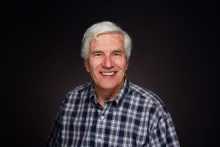
Steve Shafer was born and raised in Seattle. He graduated from Queen Anne High School in 1959 and later graduated from Ambassador College, Big Sandy, Texas in 1967, receiving a degree in Theology. He has been an ordained Elder of the Church of God for 34 years and has pastored congregations in Michigan and Washington State. He and his wife Evelyn have been married for over 48 years and have three children and ten grandchildren.
