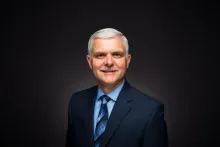


Randy Urwiller
This sermon was given at the Steamboat Springs, Colorado 2018 Feast site.
This transcript was generated by AI and may contain errors. It is provided to assist those who may not be able to listen to the message.
Happy Fusetapper-Neckels! Okay, can we try that again? Can we do a second take on that? Happy Fusetapper-Neckels!
Okay, that sounds a lot better. It's okay to be a little excited tonight, isn't it? Yes, it is. Yes, it is. Well, welcome to the Fusetapper-Neckels 2019 Steamboat Springs, Colorado. It's wonderful to be here with you. Tonight, I have the privilege to address the question that we always reflect upon at the start of the feast. You know that important question, don't you? Why are we here? No, that's not what I was going to ask. No, that's not what I was going to ask. I was going to ask, why are we not there?
Why are we not there? You know, back where we call home. There on the other side of these mountains, and aren't they gorgeous? From East Texas? There are a lot of Texans here. I think it's because we're ready for the cool air, and it's beautiful up here. Why are we not there back home doing our normal Sunday evening thing? Like watching football game, or maybe you're more into Masterpiece theater? I don't know. Why aren't we back home doing laundry, relaxing on the patio, studying for the exam? Kids. Why aren't we playing video games, giving the kids their baths, or wishing that we didn't have to go back to work in the morning? And you don't. Why are we not there?
Well, to put it simply, we're not there because we worship God. We've been preparing to keep God's feast, and here, on a Sunday night in beautiful Steamboat Springs, Colorado, since way last year.
Now, some of us have sore backs, I'm sure, from sitting too long, and others are feeling woozy because of the higher elevation. Some of us have left our employer scratching their heads, wondering not too happy with us, leaving and taking vacation middle October. Some with children in school have pulled them out of their classes just when school was starting to roll, and you're getting your routines down, right? And we have college students here who will be missing exams and not so conveniently trying to keep up with their coursework. We have parents quietly keeping their children settled right now in our midst after this excitement of traveling all day. And for some of us, the hour is getting close to our usual bedtime. I'm not going to say what my bedtime is. And yet, here we are tonight.
And yes, yes, it is a sacrifice for us to be here to keep God's feast, and we gladly do it, don't we? We've gladly stepped away from our regular routines, and we're all excited to be here. We're looking forward to seeing old friends and making new ones, enjoying good food, doing fun things, building great memories without the feast. But first and foremost, we're here because we worship God. And it's good. It's good that we put other things aside because we are commanded to worship God only. The Bible makes that point clearly. It's stated in Exodus 34.14. You can jot that down. Exodus 34.14, God declares, For you shall worship no other God, for the Lord, whose name is Jealous, is a jealous God. Now, God is jealous, but not in a carnal, greedy, covetous way, but in the sense that He expects us to have an exclusive relationship with Him. In Matthew 4.10, Jesus made that clear when he rebuked Satan, saying, You shall worship the Lord your God, and Him only shall you serve.
God only is to be worshiped, not fallen angels, not false religion, not riches, not power. It's certainly not the person you look at in the mirror. And that's you, not ourselves. Worship is a term that can be misunderstood, some limited to mean only what one does in a religious service, especially the singing of praises, or some limited to a feeling of this extravagant love and extreme submission. Now, those can be aspects of worship, but the Bible reveals true worship to be much more than that. When we do a word study of various Greek and Hebrew words translated as worship in the Bible, we can distill their similar meanings into three vital actions. We can distill them into three vital actions. We worship God when we obey Him. The song talked about bowing. We worship God when we obey Him and bow down before Him. When we revere Him, respect and believe Him, that's part of our worship, and also when we serve Him, when we sacrifice the self for Him. And keeping the Feast of Tabernacles is evidence of our worship of God in these three ways, as we're going to see. If you please turn with me over to John chapter 4 verses 23 through 24.
John 4, 23 through 24. And I keep repeating it until I find it. Here we are. John 4, 23. Jesus declared that God is seeking true worshipers. True worshipers. So let's read this together. But the hour is coming and now is when true worshipers will worship the Father in Spirit and truth. For the Father is seeking such to worship Him. God is Spirit, and those who worship Him must worship in Spirit and truth. Well, since we know that worship means to obey, revere, and serve God, what must we do to be true worshipers of God? Meaning genuine, faithful, and real. And what does Jesus mean? Those who worship Him must worship in Spirit and truth. Well, we worship God in truth when we choose to practice God's way of life and do one more thing. Do it. We just can't choose. We have to put that choice into action. Do it. Now, this requires understanding God's Word. It requires understanding the Bible and having the help of God's Holy Spirit. Jesus declared that man shall not live by bread alone, but by every word that proceeds from the mouth of God. Matthew 4, 4. Very well-known Scripture. And we must study and live according to the Bible. For as Jesus said in his prayer to his father in John 17, 17, your word is truth. He said, sanctify them by your truth. Your word is truth. And a third well-known Scripture. But do we really think about it and act on it? John 6, 63. Jesus said, the words that I speak to you are spirit and they are life. To be true worshippers of God, the Father must first call us and open our minds to understand His Word. And with the help of His Holy Spirit, He leads us to repent of sin and trust in the sacrifice of Jesus Christ for our sins and for salvation. And then upon baptism and receiving God's Spirit in us, we commit ourselves to obeying, revering, and serving God, worshipping Him for the rest of our lives and until Christ returns. And when Christ returns, we'll put on immortality and serve forever in God's Kingdom. And so we worship God because we humbly accept the truth. He has revealed to us. He's revealed to us things which are not known by the billions of humanity back there and not here tonight. God only is worthy of our worship and love. Among the things God reveals to us is to keep the Feast of Tabernacles. And we have willingly complied. God didn't make us do it, but we choose to do it. So, yes, we have left our normality behind us somewhere. We have experienced various degrees of disruption, especially disruption to our comfort zone loving selves, haven't we? And we are not there, but we're here, worshipping God together in the first holy convocation of this year's Feast. These are acts of true worship so that we might be together as members of God's family and together learn more about God and His coming Kingdom. And when we read and consider God's instructions about keeping the Feast, we're reminded why God is worthy of worship and worthy of our love. Let's turn to Leviticus chapter 23.
Let's please turn to Leviticus chapter 23.
And we'll begin reading in verse 33. Here God instructs us about keeping the Feast in the eighth day. Leviticus 23, 33. Then the Lord spoke to Moses. The Lord spoke to Moses, saying, Speak to the children of Israel, saying, The fifteenth day of the seventh month shall be the feast of tabernacles, for seven days unto the Lord. On the first day there shall be a holy convocation, and you shall do no customary work on it. For seven days you shall offer an offering made by fire to the Lord. On the eighth day you shall have a holy convocation, and you shall offer an offering made by fire to the Lord. It is a sacred assembly, and you shall do no customary work on it. So God established these eight days in the weekly Sabbath, and also the Feast and other holy days we read about in chapter 23. He set those apart as a time for His people, His people, to assemble before Him. And God requires us to gather in holy convocation. It is a requirement, and do no customary work. And therefore we treat these days with great reverence towards God. We should. For it is God who created and established them. So we gather in sacred assembly before Him, as we are right now, to be instructed from His Word. And, of course, instead of offerings of animal sacrifices, we will give monetary offerings, tomorrow we'll pick one up, as God has blessed us. Now, again, we could have chosen to ignore God's instructions, right? But we haven't, because we choose to worship God. We know that God is our potter, and we are clay. We are the work of His hands. It's Isaiah 64.8. We know that He has power over life and death, and He tells us to choose life. Deuteronomy 30, verse 19. We choose life that we may live. God wants all people to choose life. He wants all people to live. And He has made eternal life available to us and to all mankind through the sacrifice and resurrection of Jesus Christ. Please hold your place here. We're going to come back to Leviticus, but let's look at Colossians 1, verses 13-17, please.
Colossians 1, 13-17. He's made eternal life available to us in all mankind through Jesus Christ His Son. Colossians 1, 13. We read, He, referring to the Father, He has delivered us from the power of darkness and conveyed us into the kingdom of the Son of His love, in whom we have redemption through His blood, the forgiveness of sins. He is the image of the invisible God, the firstborn over all creation. For by Him all things were created that are in heaven and that are on earth, visible and invisible, whether thrones or dominions or principalities or powers. All things were created through Him and for Him. Isn't that amazing? God is our great and loving Creator. We owe Him all of our worship for His love and His astounding promise of salvation, that true life. Like all mankind, we were condemned to die because of our sins. But Jesus Christ so loves the Father and every human being that He willingly paid the price of death for our sins. And so we might put on immortality and live in His kingdom. God is most worthy of our worship.
Now, let's turn back to Leviticus 23. We'll read a little bit more in this chapter. It's during the feast that God reminds us of our physical and temporary existence with His instruction to live in booths or temporary dwellings. Let's read of Leviticus 23, starting in verse 40. Here we read, Well, now today, the hotel rooms we dwell in, they are a step up, maybe two, from living under tree branches. And we're grateful to God for that. But still, our brief stay in these rooms reminds us of our brief and mortal existence. However, if God's Holy Spirit dwells in us, when Christ returns, the Father will resurrect us to eternal life. Romans 8-11. And we will put on immortality. It's a great chapter to read about that. Verse 15. And until that time, as we read in 2 Corinthians 5, verse 1, it tells us, You remember how it goes? It reads, And so we know when last Trump, when it sounds and Christ returns, we shall be changed. And we worship God, and we await our new spirit bodies that will be given to us.
Now let's turn over to Deuteronomy 14. Another good reason why we worship God. Deuteronomy 14, please. God intentionally set the timing of this feast to coordinate or coincide with the third and final harvest season in ancient Israel. That third and final harvest season was primarily that of figs, pomegranates, grapes, and olives. In fact, the Feast of Tabernacles is also called the Feast of In-Gathering.
This final harvest foreshadows God's great harvest of humanity.
In those ancient times, if you were a farmer in his family who had labored in the fields over many long and exhausting days, then that final harvest was truly special and well worth celebrating. You see, another year's harvest of food was secured. They had great cause to worship and praise God, their Creator and Sustainer, for that third and final harvest. And God commanded his people then to bring their families along with their ties from all their harvest and to travel to rejoice before him at his feast. And we're going to read this in Deuteronomy 14, verse 22 through 26. Deuteronomy 14, 22, You shall truly tithe all the increase of your grain that the field produces year by year. And you shall eat before the Lord your God in the place where he chooses to make his name abide. The tithe of your grain and your new wine and your oil, of the first born of your herds and your flocks, that you may learn to fear, revere the Lord your God always. But if the journey is too long for you so that you are not able to carry the tithe, or if the place where the Lord your God chooses to put his name is too far from you when the Lord your God has blessed you, then you shall exchange it for money, take the money in your hand, and go to the place which the Lord your God chooses. And you shall spend that money for whatever your heart desires. For oxen and sheep, for wine or similar drink, for whatever your heart desires. And you shall eat there before the Lord your God, and you shall rejoice, you and your household. So coming before God with their tithes at the end of the harvest, the people would have physical evidence clearly and clearly recognize God's blessing upon them. They had great reason to give him thanks. And God intends that we do the same still today. And so we bring our tithes to spend at the feast, both we and our families. Yet, God also instructs us not to rejoice only with our families. We must include others. You turn with me, please, to Deuteronomy 16, verses 14 through 15. Deuteronomy 16, 14, we read, And you shall rejoice in your feast, you and your son and your daughter, your male servant, your female servant, and the Levite, the stranger, and the fatherless, and the widow, who are within your gates. Seven days you shall keep a sacred feast the Lord your God in the place that the Lord chooses, because the Lord your God will bless you in all your produce and in all the work of your hands, so that you surely rejoice.
It's no coincidence that at this feast God specifically instructs that no one be overlooked. Every person is to have cause for praising God and rejoicing before him. The Feast of Tabernacles in the eighth day also picture that future time, we understand, when God completes the in-gathering harvest of mankind, which Jesus Christ will undertake when he establishes the kingdom of God on earth. No one is to be left out. And that great in-gathering of mankind should especially excite us because of our own part in helping with it. Let's turn to Revelation 1, verses 5-6, please. Revelation 1.5.6, breaking into mid-thought here. And from Jesus Christ, the faithful witness, the firstborn from the dead, and the ruler over the kings of the earth, to Him who loved us, and washed us from our sins in His own blood, and has made us kings and priests to His God and Father, to Him be glory and dominion forever and ever.
He has made us kings and priests to God and Father. That's to be our role. Our role is God's Spirit-born sons and daughters in His kingdom. We understand that that means we're going to help all people learn about God. Why? So that they, then, can choose to worship God. That they can choose to worship Him in Spirit and in truth. Let's look at Isaiah 11, verses 9-10. Isaiah 11, verses 9-10.
God's kingdom will be a time of true peace, true justice, and true righteousness on earth. Not quite what we see right now. And Isaiah makes it clear that God's in-gathering will include all people, Gentiles and Israel. Isaiah 11, verse 9. They shall not hurt nor destroy in all my holy mountains. And it's a symbol referring God's kingdom. For the earth shall be full of the knowledge of the Lord as the waters cover the sea. And in that day there shall be a root of Jesse, who shall stand as a banner to the people. That's Christ, Jesus Christ. For the Gentiles shall seek Him, and His resting place shall be glorious. In verse 12. And He will set up a banner for the nations, and will assemble the outcast of Israel, and gather together the dispersed of Judah from the four corners of the earth. What you read in verse 11 is that, in essence, there is going to be a second Exodus. The remnant of Israel is going to be gathered together to God. I'm sure we're going to have a part in that. Micah 4, verses 1-2. Micah 4, 1-2 comes right after Jonah. It's always easy to find Jonah. Micah 4, verse 1. During the millennium, God will seek... Excuse me, people will seek God, and His instruction. They will turn to Jerusalem to learn the ways of God. Micah 4, verse 1. Now it shall come to pass in the latter days that the mountain of the Lord's house shall be established on top of the mountains above all human governments, over everything. And it shall be exalted above the hills, and people shall flow to it. People shall flow to it. Many nations shall come and say, Come, let us go up to the mountain of the Lord, to the house of the God of Jacob. He will teach us His ways, and we shall walk in His pass. For out of Zion the law shall go forth in the word of the Lord from Jerusalem. It's exciting! In Zechariah 14, verses 16-17, Zechariah 14-16, we learn that people will then keep God's feasts, and especially the feasts of Tabernacles. Zechariah 14-16. And it shall come to pass that everyone who is left of all the nations which came against Jerusalem shall go up from year to year to worship the King, the Lord of hosts, and to keep the feasts of Tabernacles. And it shall be that whichever of the families of the earth do not come up to Jerusalem to worship the King, the Lord of hosts, on them there will be no rain. A little motivation there. Now imagine that future time. People the world over will want to be here like we are now, keeping the feasts, learning about God and salvation. They will want to be here, as it were, and not there. No longer unaware, no longer rebellious against God. It will be our task as kings and priests to help instruct them in how to worship God, how to obey, how to revere, how to serve God in spirit and in truth. Now to help us focus and prepare for our future task in the kingdom, let me ask us a question. What would we teach those people living in the millennium to do in order for them to have the best feast ever? We hear that a lot, I think. What would we teach people living in the millennium to do in order for them to have the best feast ever?
Well, of course, I've thought about this and I have some answers. Well, we would probably start by warning them not to let all the excitement about being at the feast and the new surroundings, all that great fellowshiping, all the new friends and old friends are remeeting, all the eating and the fun, not to let all that cause them to neglect their personal relationship with God at the feast. Only by staying close to God will they be able to have that spiritually uplifting experience that God wants them to have. So we would remind them to pray every day because prayer is absolutely vital to having a close relationship with God.
We'll need to advise them not to skip their prayers at the feast just because they're away from home or because they're too embarrassed to tell others they're sharing a room with that they need private time for prayer. Frankly, we'll probably just tell them, go talk to them. Just go do it. Work it out. Get your prayer done. We'd likely urge them to read the Bible every day and to read more than what they read just during services.
We might encourage them to read some psalms of praise during the feast, like Psalm 145 about the majesty of God. Oh, and we'd tell them to jot that down. And we'd also encourage them to read Psalm 146 about the joy of those who trust God. Beautiful psalms to consider during the feast. We'd also encourage them to meditate on God and on His love towards us ever, well, since ever before time began.
That's a long time. We might suggest that they reflect on the horrible history of mankind's disobedience and how much better life is when people love God and keep His laws and truly love one another. And although it is a feast, we would also urge them to fast at the feast. Now that might surprise them a little bit, but then we'd explain that we don't mean for them to fast from the good food and drink at the feast, but to have staying from those needless things that would distract them from focusing on God and enjoying His feast.
I don't know if they'll have iPhones in that time, but we understand that's why we'll have to teach them about not being distracted. Now these are four good habits we'll need to explain. They are what God's people should do to stay close to God, and especially during the feast. They help to keep one humble and in a right attitude, spiritually strong and extremely keen to worship God. But we also know that something more is needed to have a best-ever feast. Worship requires that we obey, revere, and serve, and spirit and truth. So we'd also instruct people in the millennium of how to worship as followers of Jesus Christ. How to worship God as followers of Jesus Christ.
Well, what would we teach them? We would urge them to attend every service. We would need to remind them that services, they are coming before the throne of God. Yep, they are coming before the throne of God at services. So we'll encourage them to do their best to keep their appointment with God and be on time too. You know, we might have to whisper in their ear, you want to be on time, especially if you want rain back home.
I don't know. It might help. We'll encourage them to imitate the king's example of love and kindness towards all. And we might relate to them how at the feast, we help the elderly and families of small children too. We'll encourage them to sing their praise to God with gusto, to stay focused, to take notes and review them later. I think we'd exhort them to practice good fellowship. We'd encourage them to be welcoming and friendly, invite others to dinner or out on outings.
We'd encourage them to spend time with those who can't move around so well. Go over and see them. We'll prod them to go beyond chitchat, though some won't need much prodding. We might suggest that they talk about how God has helped them in life, about unexpected blessings he's given. We'd certainly encourage them to encourage one another in the ways of God. And we'd remind them that God loves to hear them talk about him. In fact, we'd remind them of Malachi 3.16 of how he records their names in a book of remembrance.
We would also encourage them to serve and share. After all, give me thanks to God, doing good works, and sharing our sacrifices that greatly please God. We know that from Hebrews 13 verses 15 through 16. Perhaps we'll inspire them with our own stories of how we served at the feast back before the kingdom came. How did you serve, Lolascus? Can you imagine people doing that? Well, how did you serve at the feast? We'll tell them of the humble glories of ushering, the humble glories of mother's room and sound booth, and a choir, and much more. And here's a glorious thing to serve. We'll tell them how we took some widows to lunch, how we babysat other children, how we sent cards of cheer to shuttings back home or held someone's hand and prayed with them. That's very encouraging. Perhaps we'll recount how as kids we tried harder to make our parents smile all through the feast. Maybe as parents, we actually did the really cool stuff our kids really wanted to do, but we really didn't want to do. We might tell them about that. And then, of course, we would need to tell them to have fun and try new things. We'll remind them that God commands us to rejoice before Him at the feast. And that idea means to have fun. The word actually is related to dancing, kicking up your heels in high spirit and rejoicing before God. So we might suggest that they go up in a hot air balloon, ice skating, horseback riding, or better yet, we might encourage them to go bareback riding on a lion or sledding with penguins. Now, remember, things will be quite different in the Kingdom.
And they'll need to try some new cuisine. They'll need to step out of their comfort zones. And they'll need to show the kids, the grandkids, and the great grandkids that they still got it. Simply put, we'll tell them to build great memories and great relationships. Yes, to rejoice before God. That's what we'll tell them.
That's what we'll tell them. All those people and their families in the millennium about keeping God's Feast of Tabernacles. Now, they're not there yet. They will be. But we're here now. Now, what are we going to do during the Feast?
We are at the Feast of Tabernacles for the next eight days, including the eighth day. We're here to worship God because He commands it and because He is so worthy of our worship. And as we worship God, we'll keep learning more about His plan of salvation in our part in it, our part in His great harvest. So, brethren, let's keep the Feast. Let's become more like our Father and His Son, Jesus Christ, as we obey, revere, and serve Him as true worshipers. Happy Feast!
