


Andrew C Lee
unedited video available at https://youtu.be/wuO_LJtOyBE
This transcript was generated by AI and may contain errors. It is provided to assist those who may not be able to listen to the message.
Good afternoon, everyone! Hope you're doing well today. So I hope everyone had a good week. It's always nice to have a holiday weekend when those of us who are working get an extra day off. We actually had Friday off as well ourselves where I work, so I was excited about that and having the extra time. So as we all know, we're entering the fall Holy Day season, and coming up soon will be the time when we start to turn our minds towards everything that the fall Holy Days picture. We think of the triumphant return of Jesus Christ and the end of man's rule on earth. We think of the granting of eternal life to all who have been called by God through the ages. We think of the end of Satan's influence on the earth. And we think of the ushering in of God's kingdom and the opportunity that all who have lived are going to have to know God as we know Him. And if we look at the calendar, this is not meant to be depressing, this is meant to be good. Within a four-week span of 28 days, we're going to attend 15 church services, if we attend all of the different services on the Sabbath, during the feast, and on the Holy Days. And we'll spend a good chunk of time fellowshiping with our fellow brethren. So my goal today is not to dig deep into the details of the individual Holy Days that we're going to go through, but I'd like to take a step back and just think broadly about what is it? What are the major themes and what are some of the lessons that we should think about that encompass these days? It's easy, as we go through our day-to-day lives, to have our minds occupied by the different struggles that we deal with, whether it's job, whether it's school, whether it's health problems, the different trials and day-to-day things that we have to deal with. And sometimes we get so close to all the things that are going on that it's difficult to step back and take in the broader picture that's going on.
I'd like to use a brief illustration. Some of us think better visually. I'm not going to have a contest in terms of who can guess what this is. It'll come clear as time goes on. How many of you have taken art class before? In high school or somewhere else? Okay. So you guys might have heard of the art form called pointillism. Pointillism is a technique of painting in which small distinct dots of color are applied to patterns to form an image. If you look it up on Wikipedia, you'll see that the French artist Georges Serrat was one of the main people who developed this technique. In fact, the pattern of blotches that you see here on the screen are part of one of Georges Serrat's paintings. If you can name that painting, I'll think of a prize that I can give to you after services. Those who study art often look in very close detail. You might have seen this in a movie or in a documentary at some point in time. They might even take a loop and they'll come up close to a painting and they'll study the brush strokes. They'll learn a lot about how the artist made that painting based on the brush strokes, whether it was laid down quickly and sloppily and kind of slapped onto the canvas, maybe even using something like a spatula, or whether it was painted very finely with a brush taking time and putting that on the canvas very carefully. Now, if you take a loop or a glass and look at this very closely, all you're going to see is a bigger incomprehensible cluster of dots, right? But the interesting thing about a pointless painting is when you step back, it starts to take form. We see that clump of dots, if you can make it out from there, start, in this case, to take the form of a man, a man who seems to be standing there, looks like he has a mustache. We stand back a little bit from the painting, those dots, all that noise, that cluster of things, starts to come together and starts to form an image. And we step back a little further, we see a full painting. I don't recall the exact name of this one, but there was a series that Sarat did about the circus, and this happens to be one of them. And so the pointless made all kinds of paintings, this is probably a more famous scene in the park from Sarat, using that same method, where they put the small little dots up on the canvas. And if you're standing close to it, you'd have no idea what it is, especially if you're using a magnifying glass or something of that nature. But when you stand back, when you take in the entire picture, the dots come together and everything converges to form a coherent picture. So, I'd like to use that as a backdrop as we start thinking about the Holy Days, and the things that we're going to be experiencing, hearing, and thinking about, as we go through these next number of weeks between now and the end of the feast. And as all these different dots and points come towards us, we need to keep in mind what the big picture is. Focus in on a few of those points. And I'd like to focus in today on three of those that I think are salient points that broadly describe the things that God is doing, and what it is He's trying to show us through these Holy Days. So, unfortunately, that's the end of the visuals for today. And to make it a little easier, I'll go ahead and get rid of the screen.
All right. That looks like I'm almost in the center. Good. So the first point that I'd like to mention today and spend a little time thinking about, that's, again, a major point, is we're forming this picture of what it is that God is doing and illustrating to us through the Holy Days, is that we have a purpose. The first point is that we have a purpose. I'm done with the projector.
If you'd like to keep it on me and make me look blue, that's okay, too.
I was going to say I was feeling a little blue today. So the first point is that we have a purpose. And our purpose is for today, is for the world to come, and most importantly, it's part of a purpose for all of mankind. There's something really important to think about as we go through these upcoming Holy Days. It's a purpose for today, for the world to come, and a purpose for all of mankind. And it's not just a general purpose, it's a very specific purpose, and it has to do with each and every one of us personally. It's important to understand that. Let me give a little background in terms of why I say that. I'm going to read a small snippet from a Wall Street Journal article. This is from March of 2014. And it's an interview with a man named Victor Stretcher, author of the book called On Purpose. And the article points out, it says, four years ago, Dr. Stretcher, professor and director for innovation and social entrepreneurship at the University of Michigan School of Public Health, lost his daughter Julia to heart disease. She was 19. In an effort to move forward, Dr. Stretcher began researching the links between having a meaningful purpose in life and one's health. There's strong science showing, he said, that having a transcended purpose helps you in changing your behaviors, in changing your life, and it's also good for your health. Researchers found that people who had a weak purpose or no purpose in life were two and a half times more likely to develop Alzheimer's disease than people who had a strong purpose in life. People with a strong purpose have been shown to live longer, to be less likely to get heart attacks, and less likely to get a stroke. Our current model in public health and medicine tends to focus on avoidance of disease and avoidance of premature death. Scaring people, though, is not that motivating. Having a purpose reduces your defenses to change. You see more clearly the reality of your behaviors, and you're more likely to change them.
A woman who has just retired, for example, decides her purpose is to help support her daughter and her grandchildren. If she starts thinking about that purpose, she'll be more open to keeping herself healthy so she has the vitality to be a better mother and grandmother. The article goes on in this interview in talking further about what he found as he researched the idea of purpose. But in the business world today, in the religious world today, the idea of purpose is something that's injected in a lot of places. I think the whole reason for that is that more and more we have a group of people living today who don't have a purpose. As more and more people cast about around this world, not really knowing why they're here, not having a specific purpose within their own lives, we find more and more that people get strongly attracted to a place where there is a purpose, where there's something they can attach to, where they feel like they're accomplishing something. It makes people happier, and God really has built that into us, that we need a purpose. We need somewhere that we're going and that we're driving in life. I think as we see displayed in the Holy Days, God has a plan. God has a purpose, and it's something that's part of his mind as well. He didn't just place this creation out here to kind of, well, let's make some people and see what happens. He has a very specific purpose that he's laying out in what he's doing. Turn with me, if you will, to Ephesians 2. The first part here of thinking about purpose, Ephesians 2, we'll look at the clear purpose that we have for today within our existing lives. We think often about the fall Holy Days as being forward-looking, the things that God is going to do when he returns, when he brings his kingdom to come. But our purpose starts with a purpose that we have for today. Ephesians 2, verse 8. Here Paul writes to the Ephesians and says in verse 8, So this lays out the fact that, as it says here starting in verse 8, we're saved by grace through faith that we have, but we are created for a purpose, for a purpose that we are created for, a purpose for good works, which God prepared beforehand that we should walk in them. So this lays out the fact that, as it says here starting in verse 8, we're saved by grace through faith that we have, but we are created for a purpose, and part of that purpose in today's life, the life that we're living, is to perform good works. Let's read further in Matthew 5 that lays out this purpose in a little more detail, and also gives a little more meaning and attachment to God that goes along with it. Matthew 5, we'll read verses 13 through 16. Matthew 5, verse 13 through 16. These are probably among the most well-known Bible passages aside from the Lord's Prayer, the Beatitudes in the book of Matthew. Matthew 5, 13 through 16.
We saw in the first passage in Ephesians that we were created for good works. Matthew 5 in this passage now attaches it to something even more. That one of the reasons we do these good works, the way that we're supposed to act, is supposed to produce a result, and that is that people will see those good works and glorify God who's in heaven. So the things that we do, the purpose that we have today of doing good works, are meant to be for a reason, and that is to demonstrate God, to demonstrate His love for mankind, to demonstrate His priorities and the things that He wants to accomplish, and to show that to other people. Lastly, we won't turn there, but I think we're familiar, at least in part, with 2 Corinthians 5.20, which uses the term saying that we're ambassadors for Jesus Christ. If we read some of the more modern interpretations of 2 Corinthians 5.20, it talks about us acting in a way as though we're pleading with people to be reconciled to Jesus Christ. So the works that we do, the contact that we have with other people, is almost like Jesus Christ reaching out through us to others saying, Please be reconciled to me. Come to me, give up your sins, and have a relationship with Jesus Christ, because of the way that we live, the purpose that we have. But our purpose goes on beyond what our purpose is today. And that's something that's incredibly encouraging as well about these days, because our purpose goes out into the future. Jesus Christ has called us so that we could rule with Him. And that's one of the fantastic things about these Holy Days. Again, as we think of this example, this illustration of a pointillist painting, we get so lost sometimes in our everyday life because there's so many things that come at us. And if you think of it in the context of the painting that I showed you, it's like these dots are just zooming past us, and we can't really make sense of them. And as we step back, as we take in this Holy Day season, we think about God's plan and what He's trying to do, it's incredibly encouraging because God has a reward, not only a reward, but a purpose and a plan for each one of us. You turn to Revelation 3.21, Revelation 3 and verse 21. It's not at all wrong to think about what it is that God has in store for us. We should yearn for that reward, that payoff at the end, when God's plan is fulfilled, that plan that includes each and every one of us. And Revelation 3.21, He promises that to Him or her who overcomes, I will grant to sit with Me on My throne, as I also overcame and sat down with My Father on His throne. So how incredible is that to understand, to know that God and Jesus Christ want to share eternity and have us help them rule the earth? To help others to learn. I think we understand that ruling doesn't mean we get to beat up on a bunch of people and tell them what to do. It's a matter that we get to serve them. We get to do the same thing that Jesus Christ did when He came to this earth to show people His way, to lay down His life as a sacrifice, and to humbly bring people to God. And we'll have the ability to do that. And not only the ability, but the power to accomplish that and to see incredible results from doing it. Revelation 1, verse 6, talks about being kings and priests to God and the Father, and to Him and be glory and dominion forever and ever.
So as we look forward, as we think about what it is that's being laid out in the completion of God's plan, we see that the opportunity for rulership, the chance to serve and to give in a much greater way than we can ever do as human beings today, is something that's waiting for us. As we prepare for that future purpose today, we do it by developing that same humble and serving attitude that Jesus Christ had. We see that in Philippians 2, Philippians 2, verses 5 through 8. In case there's any doubt, I think we might recall some of the Scriptures when the disciples came to Jesus Christ and He talked to them and said, we shouldn't be lording it over other people, speaking to the disciples, like the rest of the world does. He set out a different model for leadership. He set out a different model of what it is to rule and have authority. It wasn't one where from the top down you come down and start telling everyone what to do, and you beat people on the head when they don't do it, and you get to tell people how great you are because you get to say how things get done. Instead, in Philippians 2, verses 5 through 8, it lays out the same idea of servant leadership that Jesus Christ was talking with His disciples about. Philippians 2, verse 5, He says, Let this mind be in you, Paul writing to the Philippians, which was also in Christ Jesus, who being in the form of God did not consider it robbery to be equal with God, but He made Himself of no reputation. He took the form of a bondservant and came in the likeness of men. And being found in appearance as a man, He humbled Himself, and He became obedient to the point of death, even the death of the cross. So we see, as pointed out here, we have a purpose, a purpose that's not only for this life, doing good works and pointing people towards Jesus Christ, but a purpose for eternity that magnifies that, that builds on the attitude of service and humility that we begin to develop now through God's Holy Spirit, that we're able to take forward as we're perfected into His kingdom, and helping so many more people be able to come to Him, to have productive lives, to learn and develop in ways that they couldn't do in this lifetime without Him. And that's really the greatest part of God's purpose, is that it does extend out to all mankind.
To me, that's the most exciting thing about what we believe. I've run into different people over the years at work and so forth, and had different discussions with them. And I still remember one guy as I was sitting down and having lunch with him, and he was telling me all the challenges that he was having, and a church he was attending, and how some of the things that happened at that church were just turning him off. And his conclusion from that whole situation was, you know, I just don't want to have anything to do with Christians anymore.
Because I feel like I always just get taken advantage of. There's always some hidden agenda behind what they're doing, and they're always trying to work one more thing out of me. And then he looked me in the eye and he says, do you think I'm going to go to hell?
And it's funny, maybe in a way, but it was a serious question for him, because he was conflicted.
He knew there was a God. He had this experience with people who claim to be working in the name of God, and he felt that he was in the end just being manipulated and taken advantage of. And he didn't know what to do with that. And to me it pointed out, and it brought home very strongly, one of the great truths that we have, and again, as we think of the macro picture of what God is trying to do, is that God wants everybody to have eternal life. God wants everybody to know Him.
And He's not going to let small things that happen in this lifetime stand in the way of people having the opportunity to know Him and to be able to make a knowing choice of whether or not they're going to follow Him. Turn with me, if you would, to 1 Timothy 2. To me, this is a great comfort, because I think we all know, as a matter of numbers, as a matter of just ability, people are not going to get God's Word out to every single person in the earth today, and not everyone is going to be called. They're people in all kinds of far-reaching places in the earth who, throughout history, have lived and died without ever understanding the name or the concept of Jesus Christ and salvation through Him. It's incredibly comforting to know that God's purpose allows for everybody to have an opportunity to know Him. 1 Timothy 2, verses 1-7.
How exciting is that? How great a purpose is that that we can be a part of in any small and large way? Turn with me, if you will, to 2 Peter 3, verses 9, where this is brought forth one more time. 2 Peter 3, verse 9. God's desire for the entire world, the purpose that He has for mankind as a whole. 2 Peter 3, verse 9.
Here we're told that the Lord is not slack concerning His promise, as some count slackness, but He's long-suffering toward us, not willing that any should perish, but that all should come to repentance. So we serve a God who has called us and given us a purpose, a purpose in this life. He's got a purpose for us going forward as we take what we've been given now, that small bit of God's Holy Spirit that we have, that we work with and try to move forward to follow Him and not follow our human ways and begin to learn His ways and take on His attitude. And then it moves into the greatness and the fulfillment of that purpose. As Jesus Christ returns, sets up His kingdom on earth, and we can work with Him to see that all people who have ever lived will have the opportunity to know Him, and to draw people towards Jesus Christ, to help them to understand His way of life, to know why it is that they should take on that way. And I believe we're going to see a large majority of those people, as they do that, and as they really have a chance to understand Him, come to salvation. And how exciting will that be when we think about the Holy Days? Have you ever thought about that, in terms of being a part of that process of seeing thousands of people, maybe even tens of thousands of people, that you individually work with as a result of those discussions and that teaching that you give them, coming to Jesus Christ and accepting Him, and receiving eternal life and becoming part of God's family? How incredible a purpose is that, and how exciting is that going to be? So as we think, first of all, in this season, about that broad picture and the purpose that God has, we need to remember, keep in the forefront of our minds, that God does have a purpose, He does have a plan. It extends to each one of us individually.
It's part of this life and what we do. It's part of the next life that we look forward to. And it extends out to everybody that we know today and everybody that ever lived. Let's move on to a second point, in terms of that broad context and understanding what God's trying to do in His plan. Something to look for as you're listening to messages, as you're fellowshiping with people throughout these Holy Days. And the second big theme that I want to hit is the idea that we are valuable to God.
We are of great value to God.
Now we hear and we say, and rightly so, that we're just dust. God could raise up stones instead of us. But the fact is, He didn't.
God didn't raise up a stone to sit in your pew. He raised you up and He brought you here to sit in the pew.
For a reason. God's calling is personal. He knows each and every one of us. In the struggles and distractions that we have every day in life, as those dots come at us, and they're so confusing because we're seeing them close up and they don't really form a picture, it's easy to let go of that understanding, isn't it? Because we feel like we're adrift. We feel like you're a cork in the ocean sometimes, right? And you're just getting tossed around, the next wave comes around, you get popped up, and you get thrown up in the air and you flip five or six times, you don't know which way is up, and then you hit back in the water and you try to float on again. You feel like you're just being carried along by these currents. But that's not actually the case. The fact is that God does know each and every one of us, and we are valuable to Him. Turn with me, if you will, to 1 Corinthians 6.
1 Corinthians 6, and we'll read verse 20.
1 Corinthians 6, verse 20.
Here there's a relatively simple statement that's made, but there's a lot of depth to it when we take it apart.
We were bought with a price. What's that referring to? It's referring to Jesus Christ who gave up His life so that we could be forgiven of our sins and so we could come to God. But it's also using an analogy. It's using an analogy of an investment that's made.
You think of taking a large amount of money, whatever large sum you might have, and investing it in something that you want to have as a productive good. Maybe you're a farmer and you decide, I'm going to invest in a combine. I remember growing up as a kid in Minnesota through one of the big farm crashes, and a lot of farmers had spent all kinds of money taking out big bank loans, and they'd taken out those loans to invest them in large pieces of farm machinery. And they did it hoping for a return. They made that investment, sometimes went to great risk to go to a bank and get a loan, to rent a big piece of equipment, and they wanted to get a payback from that equipment.
They didn't want to just look at a shiny combine sitting in the barn. They wanted to have that combine out there. It was harvesting their fields. It was enabling them to get a better yield, to get a faster harvest, and in the end to earn money. The investment was made with a purpose. Think of anything else that you invest a large amount of money in, maybe a vehicle, so you can get around, so you can go to your jobs, so you can shop, so you can take care of your children, so you can have the transportation that you need. Those investments that are made are made for a purpose, and likewise, we were invested in through that precious blood of Jesus Christ.
And you treat an investment differently, don't you? How is it that you treat a new car when you buy a new car? Especially those first few months that you own it, right? You're treating it very carefully, you're pulling it into the garage, you're trying to put a cover over it, even though it's in the garage. When you go to the grocery store, you don't park in the spot that's right next to the grocery carts, do you? Sometimes, if it's a new car, you park it way out on the edge, where nobody else is going to park next to you, because you don't want to see a ding in that car, right?
Because you know, and it's very fresh in your mind, the amount of money you just spent for that car. God says we were bought with a price, and a very expensive price. Let's not forget the fact that God knows us, and He values us. Do you ever think that God looks at you as His new car? He doesn't want to get a ding in it?
He wants to park you on the edge of the parking lot, so nobody else slams into you? We have value to God. As much as we don't get egotistical about it, as much as we don't earn salvation through anything that we do, He has given us value by extending His calling to us. And we shouldn't forget that fact. It's so easy to get beaten down in the things that go on in life. As we step back and see that big picture, we have to remember that we have value to God.
Malachi 3.17, we're not going to turn there, but he refers there, Malachi does, to God calling His people precious jewels. Precious jewels. That's how He thinks of us. Turn with me, if you will, to Matthew 10. It's easy to doubt what this means on an individual level. If you've ever worked for a large corporation, the CEO was some picture that you saw, somebody who would never know your name if they encountered you in the hallway.
And we tend to think about that in terms of what we are to God. Or we think of the governor of the state or the president of the country. The fact that, yeah, they're our leader, but if they bumped into us in the hallway, or if we somehow had a chance to go and have an audience with them, they would have no idea who we were. And that's true. But it's not the case with God.
Turn with me to Matthew 10. We'll read verses 29 through 31. Matthew 10, 29 through 31. Here we read, Are not two sparrows sold for a copper coin, But yet not one of them falls to the ground, apart from your father's will. But the very hairs of your head are all numbered. Don't fear, therefore, you are of more value than many sparrows. Now, numbering the hairs in our head is sort of a variable thing. It's a little easier for some of us than for others, right? But God can do it no matter how many hairs there are there.
And he's making a point here when these words come out in the Bible. He's saying even these things like sparrows, you sell a couple copper coins, you throw in to buy a sparrow, God knows when one of those falls to the ground. Now, how he knows that, how his mind can comprehend those things from a physical perspective, there's no way we can understand that.
We can't keep track of things that way. But what's written here makes it clear that God understands every one of us. This idea or analogy of numbering the hairs on our head is meant to portray the detail with which God knows us, each and every one of us. He thinks of us as a precious and personal investment that he's made. And we shouldn't doubt the fact that we have that kind of value to him.
Now, the Apostle Paul used sports analogies in the Bible. He used the analogy of boxers and people who train and what they go through. So I feel safe using a sports analogy in a sermon.
I was thinking this time of year about professional football, actually. You might think of college football, you might think of NBA basketball as well. And you think of the investment that goes into players, individual players. I mean, the salaries these days are just insane.
And the tens of millions of dollars for a single year. Do you think the investments that these owners put into the players? Now, what's interesting to me about this analogy is you look at a team. Have you ever looked at a pro football team on the sidelines? And you see all these guys on the sidelines, right? They're wearing their sweatshirts, they're wearing T-shirts, they're wearing polo shirts. All with the team emblem on it, right? You've got all these assistant coach of this and trainer for that and second assistant to this. I was looking around a little bit on the Internet to try to get an idea of how many staff members an NFL football team has.
They have, what, 42 players on the roster. And easily, the hands-on staff that works with those players, especially if you include the physical trainers, the medical type of staff, outnumbers the individual players. Those players are so valuable, even the guy who got the last spot on the roster. Those players are so valuable that you have more than a one-to-one ratio of coaches and other assistants working with those players. You've got more people helping them than you have actual players.
If you add up the front office staff to that, the scouting staff, and everything else that goes in it, that investment is being guarded, and they want success out of that investment. Now, I'm not going to say that we want to be treated like the Cleveland Browns treat their quarterbacks. That's probably not a good analogy. But think about it in these different ways, in terms of things that are out there where there's a great investment made. We see it every day in our lives in terms of the amount of care and concern and nurturing and work that goes into protecting an investment like that and helping it to grow and succeed.
And a professional football team, even though it doesn't always seem like it by what you see on the field, has a goal of winning. That's what they want to do, and they're doing everything that they can to achieve that goal. That's how it is with God as well. Sometimes with the things going on in our lives, it's hard to believe that God's on our side. We suffer through some things, and we feel like we're being tortured.
But, you know, when you think about it, if you went to an NFL training camp and you looked at an individual player going through drills, especially when they're doing two-a-day practices, and they're running their wind sprints, if you didn't know anything about the game of football, you might think the coach that was working that player out was torturing him. How similar is that to our lives sometimes? We think we're being tortured. We think we're being run around in circles for no good reason. But God assures us that we're an investment.
We're precious to Him. We have meaning to Him. We have value to Him. And He's going to do what He needs to do in our best interest to see that investment pay off, because that's what He wants more than anything else. He doesn't want to lose His investment. He wants to see success in all of us. Turn with me, if you will, to Philippians 1. Philippians 1. We'll see this born out in a couple of passages within the Bible.
Philippians 1. We'll read verses 3 through 6.
Philippians 1, verse 3. Paul writes, he says, I thank my God upon every remembrance of you, always in every prayer of mine, making requests for you with all joy, for your fellowship in the Gospel from the first day until now, being confident of this very thing, that He who has begun a good work in you will complete it until the day of Jesus Christ.
Carry that verse with you as we go through these fall Holy Days, because that's one of the things that these days mean for all of us as a reminder. It's a reminder that we can be confident in this thing, that He who began a good work in us is going to complete it to the day of Jesus Christ, the day of His return that we think about on the Feast of Trumpets, the day when His kingdom comes in its fullness, which we think about at the Feast of Tabernacles.
You know, when we look back in the Bible, if you think about it, all of the prophecies that are in the Bible about Jesus Christ— I didn't go back to study how many of them there are—the Bible is full of them. If you want a rehearsal of some of them, go to the book of Matthew. The book of Matthew repeatedly goes back and says, as it was written, as the prophets said, and then it quotes a prophecy from the Old Testament about Jesus Christ. And those prophecies came true. The second season, if you will, of how God works with mankind with the Holy Spirit.
Think of all the prophecies that are in the Bible and the Old Testament about the coming of the Holy Spirit and how God would bring power. And He did it. Why should we doubt that any part of the last part of God's plan, which includes us as individuals, why should we doubt that that is going to be fulfilled as well?
Just like He fulfilled the coming of Jesus Christ, just like He fulfilled the coming of His Holy Spirit, He is going to see His work and His plan through. And He is going to do it through each of one of His individual people. We can count on that. We can call on Him. We can claim that as we put ourselves before Him. Turn with me, if you will, to one more verse on this theme.
That's Matthew 7. We'll read verses 9 through 11. God uses the analogy all the time of being a father. And I think of this in a couple ways, both of which are outlined biblically. We're not going to go through the passages right now. One of them is the idea of walking with God. I've spoken on this in the past. And the idea of walking with God. And you think of a father who's looking, watching his son or his daughter learning how to walk.
And how that father reaches out in the hand and wants to see that child take that first shaky step, to let go of the coffee table and lean forward and see those steps taking place. That father wants, with all of his might, to see success as that child learns how to walk. That's God working with us. The other way I think of it is, and again it's used in the parables in the Bible, of somebody who's leaving an inheritance to his children.
The Bible uses that as well when it talks about a king who departs and leaves servants in charge. It talks about the prodigal son and the inheritance that's left. And that father who has means wants his children to develop the ability to work with those means and take them and develop them even more when they're inherited. The last thing that somebody who has means wants is a fool for a child, because they'll take the inheritance that's left for them and then they'll squander it.
God sees us the same way. He's leaving us an inheritance. He's leaving us his spirit. He's given us the power in small amounts that we have right now as human beings. And he wants us to develop those things, use it, and grow with it, so that when we're given that full inheritance, when his kingdom comes, we'll be ready to use it in a responsible way, in a way that furthers his mission, his purpose. Matthew 7 bears out these thoughts in terms of how fathers act with their children. Verse 9, here it says, What man is there among you when his son asks for bread?
He'll give him a stone. Or if he asks for a fish, he'll give him a serpent. So if you then, being evil, know how to give good gifts to your children, how much more will your Father who's in heaven give good things to those who ask? So we're precious to God. He considers us a great investment that he's made.
And so as we look at these days that we're going to go through, all of the things that are pictured, one of the concepts and the major themes I encourage everyone to keep in your mind as we think about this plan of God being fulfilled all the way through the coming of his kingdom, and God's word and way being available to all people, is that involves each and every one of us individually. The God that's working out that plan knows each of us by name. The God who's working out that plan wants more than anything to see each one of us succeed in that walk with him.
He's going to do whatever he needs to to see that succeed. It's not always going to feel good. Just like a physical workout doesn't always feel good.
But the results of it are exactly what it is that he wants because of our value to him. Let's turn to the third point that I think is important to keep in mind as we go through these days. And this is the incredibly encouraging point that all things will be made new. All things will be made new. When we think about it, what is coming up in these days and what we picture is the wiping out of the world as we know it.
And the ushering in of a new world that's built on the foundations of God's way of life. Everything being made new, but it's not just the earth that's being made new. It's us as individuals, as we're resurrected with a new body and with abilities that we're just not able to have physically in these bodies that deteriorate day by day.
I know all of us as we age, no matter what age we are, all of us can note certain things that change day by day. We struggle with aches and pains, especially as we get older, and we will have that new body that will help us.
You know, thinking about what's to come, thinking about the things that are ahead, actually helps to sustain us. Did any of you see the movie Unbroken?
A few people? I thought it was... I didn't see the movie. I read the book. I thought it was an incredible book. The story of Louis Amperini, who was an Olympic runner, and he actually set a record in the armed forces. A record I don't think anybody ever wanted to beat, which was the number of days spent marooned in a life raft at sea. That's not a record you wish on anybody. But he and his colleague, Russell Phillips, spent 47 days at sea in a life raft.
And he goes through in a section of his book, and he describes just how horrid it was. Sharks circling this life raft, ways that they would try to catch animals of different sorts to eat, ways that they would try to collect rainwater so they could drink and just keep themselves alive. And one of the things he talked about that they did was that they spoke in incredible detail about their favorite foods. They would talk about the recipes that were used to prepare those foods. They would talk about the ingredients of those foods. They would talk about how their moms would go in the kitchen, and how they would mix up those foods, the bowls they would take down, the spatulas that they would use, and how they would prepare those things. And you might think in one way that's torture when you're in a life raft all alone in the middle of the ocean, but they were sustaining themselves through those things. They were sustaining themselves, and they were waiting for a time when everything would be made new for them.
Their surroundings would be different, and they could go back to something that they were familiar with, comfortable with, they would have plenty. And they were yearning for that point in time when their situation would be made different and new. We should look on the promises of the things that come, not as something that's selfish or something that shouldn't be thought about, but we should look to those things. God gives us the Holy Days, the time of the renewal of the whole earth, so we can put a great deal of hope in that time. So we can look forward to it with yearning, so it can give us the courage that we need to keep going when things get difficult.
Turn with me, if you will, to Romans 8.
Romans 8, verse 18.
In a way, Paul in Romans lays out this exact sort of mode of dealing with things, and realizing what is going to be in order to get through the sufferings that we have in the current time.
Romans 8, verse 18, he writes, I consider that the sufferings of this present time are not worthy to be compared with the glory that shall be revealed in us.
So we're promised, through what Paul writes here, that we're going to experience things that are so many times greater than anything that we're able to suffer here in the flesh. And we're supposed to take great hope in that. 1 Corinthians 15, which we think of often at the Feast of Trumpets, goes in more detail on this. We'll read a few verses from 1 Corinthians 15 that talk about this, and how all things are going to be made new, in this case, in a physical sense, with our own bodies, and how we'll be renewed. 1 Corinthians 15, we'll start in verse 42. Here Paul writes, so also is the resurrection of the dead.
The body is sown in corruption, it's raised in incorruption. It's talking about the fact that we live a physical existence. Our bodies are corrupt. They degrade.
They start to disintegrate almost from the time that we're born, and slowly come apart physically. But when we're raised, the new body comes in perfection, because we know we'll be made spirit, the resurrected body, and no longer physical. Verse 43, it's sown in dishonor, it's raised in glory. It's sown in weakness, but it's raised in power.
It's sown in natural body, but it's raised a spiritual body. There's a natural body, and there's a spiritual body, and so it is written.
The first man, Adam, became a living being. The last Adam, referencing Jesus Christ, became a life-giving spirit.
And just as Jesus Christ was raised in spirit after living his physical life, we know that will be waiting for us.
In verse 50, For the trumpet will sound, and the dead will be raised incorruptible, and we shall be changed. For this corruptible must put on incorruption, this mortal must put on immortality. So when this corruptible is put on incorruption, and this mortal is put on immortality, then shall be brought to pass the saying that is written, Death is swallowed up in victory. How incredible will that be?
Think of all the planning that we do in life that's all having to do with our own deaths. The fact that we know that our lives are going to come to an end. Imagine how that equation would change if we knew that we would and could live forever without any degradation in our abilities. How incredible would that be? It changes the entire equation of how you live your life and what you do with your life.
Isaiah 35, it won't turn there, but in verses 3-6, it goes on from there and talks about specific things. It talks about the fact that God will come, the eyes of the blind will be opened, the ears of the deaf will be unstopped, the mute will be able to speak, the lame will leap like a deer, talking about people who have a hard time walking and they can just run and leap, and that waters will burst forth in the wilderness and streams in the desert. Something we can look forward to, something to cling to, and to bring into our field of perspective here as we go into the Holy Days, the fact that all things are going to be made new. And lastly, this idea of things being made new extends beyond our own physical bodies and mankind in general and goes out to the earth. Because God talks as well about a new heavens and a new earth, not just us as new individuals that will live in it. Think of the natural disasters that we deal with today. Certainly we've all seen Hurricane Harvey, the devastation that's been going in Houston, and it's just incredible when you look at the hundreds, thousands, tens of thousands even of houses that have been flooded and destroyed through that. You think of all the things that we do to take precautions today against the weather and the types of cataclysms that come. And this is not the first time big things have happened. I mean, we can rewind all the way. Some of you might have heard of Krakatoa. Krakatoa was an island in Indonesia. There was an eruption there of a volcano back in the late 1880s. It was in 1883. The accounts I read say that between 36,000 and 120,000 people were killed. It spawned tsunamis, and from what I've read, it took five years for the earth's climate and weather cycle to get back to normal because of the amount of ash that blew up in the air when Krakatoa blew up. It formed a whole new island in Indonesia. All of these things, these things that we fear, can't control, these cataclysms in the earth, are all going to be wiped out and made new when Jesus Christ returns and brings a new heaven and a new earth. Turn with me, if you will, to Revelation 21. Revelation 21, verses 1 through 4. Hear John speaking by inspiration of the Holy Spirit. Revelation 21, verses 1 through 4.
So, the third thing that I encourage everyone to think about as we go through these fall Holy Days is the fact that God is going to make all things new. Part of that big picture that we're looking at, God is going to make everything new. Us as individuals and the earth around us, which is degrading and which sometimes causes such horrible difficulties and pain and suffering for us. All of these things will be made new. So, in conclusion, as we think about the beauty of a pointillist painting, we have to step back. We have to take in the entire field of vision. We have to let those dots merge together and form the entire picture. And what I hope I was able to do today is to spend a little bit of time reinforcing some of the major concepts that stand behind the Holy Days season that we're going into. We're going to hear lots of sermons, 15 or so of them over the course of the next four weeks, maybe more than that, about all kinds of different things. But they're going to come around this big set of concepts that I laid out. The fact that God has a purpose. He has a purpose for us and he has a purpose for mankind. The fact that we are precious to God is his physical and also spiritual, maturing spiritual creation. And the assurance that God gives us that all things will be made new. So, let's take advantage of these Holy Days. Let's take advantage of the feast that's coming up for all of us who are able to attend. And use the time as profitably as we can. At the feast, for example, spending as much time as we can, fellowshipping with our fellow brethren, meeting some new people, spending time talking about this hope and this reality that we're waiting for, trying to find every way that we can to separate that time during the Holy Days and the feasts. Make it different. Make it separate from the day-to-day lives that we live in, things we get immersed in day-to-day. And take advantage of the opportunity that we have to be in a concentrated place with God's people, having the ability not only to hear His word spoken, but to fellowship with other people who have God's Holy Spirit and encourage one another. So, I hope this has been an encouraging message for everyone. I wish you all a wonderful Holy Day season coming up and a great rest of the Sabbath.
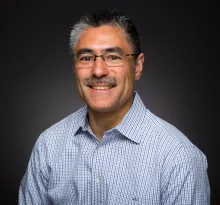
Andy serves as an elder in UCG's greater Cleveland congregation in Ohio, together with his wife Karen.
