

Mike Phelps
This transcript was generated by AI and may contain errors. It is provided to assist those who may not be able to listen to the message.
Brethren, we are just five weeks away from the Passover and the days of Unleavened Beren. We are looking forward to the time when this awful winter is behind us. Somebody told me that they went back into the history of the area, and this has been some of the worst snow we've had for the last 40 years.
I don't know what it's like in your neighborhood, and my neighborhood people are very zealous about plowing their driveways and their sidewalks up until the last snow. In our area, we've got about two inches, and almost nobody is doing anything anymore. They say, FOOY! They're trying to look at the calendar and find a day where it's 40 degrees, so it all melts away. But we'll be happy five or six weeks from now when we're looking at the Passover and the days of Unleavened Beren. Of course, that's the end of March, folks, and we want to make sure we're praying that God gives us good weather at the end of March for the Passover.
I was remarking to some people, I've conducted Passover services where I was concerned because it was so hot I would sweat into the bread, and I conducted Passover services where I thought I was going to freeze to death, so you just never know what's going to happen that time of the year. But we're looking forward to observing God's annual Holy Days with their very rich meaning. We're encouraged, we're inspired by the understanding of the plan of God. Each and each Holy Day has its own special place in the beautiful plan of God. As we prepare for the Passover and days of Unleavened Bread, we think on a number of different themes that come with the Passover and days of Unleavened Bread.
Certainly, one theme would be humility, a kindred theme would be servanthood. But are these the values that our society places a high value on? In recent years, I've been struck by the me-orientation that so many people seem to have. And perhaps now more than ever before, I find this to be the case. As I was preparing my remarks, knowing what I wanted to cover with you today, in my research, I came across an article that you might find interesting.
We're going to read a little bit of this summary. This article is put out by the Mayo Clinic, and Mayo Clinic has this article discussing the Narcissistic Personality Disorder. Narcissistic Personality Disorder, the NPD. As I go through this, you ask yourself, if you're seeing some of this today in our society, I think brethren, too many people in our society, not a majority by any stretch, but too many in our society to one degree or another fall victim to this disorder.
And second, certainly would love to have all of mankind fall victim to Narcissistic Personality Disorder. Because that goes quite contrary to some of the themes we have for the Passover in Days of Unleavened Bread. So what exactly is the Narcissistic Personality Disorder, the NPD? Well, here's what I'm quoting directly now from the Mayo Clinic study. Here's the overview.
Narcissistic Personality Disorder is a mental condition in which people have an inflated sense of their own importance, a deep need for excessive attention and admiration, troubled relationships, and a lack of empathy for others. But behind this mask of extreme confidence lies a fragile self-esteem that's vulnerable to the slightest criticism. Now, have you seen any of that in our society? I've seen too much of that in our society. Symptoms of Narcissistic Personality Disorder would be these. And again, this is from the Mayo Clinic study. People have an exaggerated sense of self-importance, have a sense of entitlement, and require constant excessive admiration.
Expect to be recognized as superior even without achievement that warrant it. Monopolize conversations and belittle or look down on people they perceive as inferior. Have an inability or an unwillingness to recognize the needs and feelings of others. At the same time, the article goes on, people with Narcissistic Personality Disorders have trouble handling anything they perceive as criticism. They can become impatient or angry when they don't receive special treatment.
They act with rage or contempt and try to belittle the other person and make themselves appear superior. They have difficulty regulating emotions and behavior. Now, recently, as I've been thumbing through the Fox News page online, I saw where two television personalities were removed from a social platform. The reason they were removed from a social platform—I won't tell you which one—is because they dared. They had the audacity to say something to the effect, don't we in our society need to have an open conversation about things? That's all they said. There wasn't any belligerent speech.
There were no bad words. There was no finger pointing. They simply said, don't we have to have the ability to have an open conversation about things? And this social platform said, basically, no, we don't. And you're gone. You're off. No explanation was given. They simply were removed. Narcissistic Personality Disorder. People who think so highly of themselves and what they think. It's so little of what you think. Now, why do I bring all this up? And what does this have to do with Passover and the Days of Unleavened Bread? Well, I'm trying to draw a contrast here, brethren, between what is happening in our society and what God has called us to do, what God has called us to be.
A major theme of our high calling is that we have been called to humble servanthood. We have been called to humble servanthood. And we certainly see that in the Passover and the Days of Unleavened Bread. Now, although Passover is not a holy day, it is a festival. It's the first festival of the year. And I want to take a note of how God introduces the whole year's festival season. How does God do that? Let's take a look over here at John 13. We know what that chapter is about. But let's note it.
Paul told Timothy that he would be a good minister of the gospel if he kept people in remembrance of the truth of God. What I'm about to tell you is nothing new, but it's my responsibility to put these things in our remembrance. John 13, starting here in John 13, verse 3. Jesus, knowing that the Father had given all things into his hands, and that he had come from God and was going to God, that he had come from God.
He was the one God had requested that God created all things through Jesus Christ. And when you think, here's a being that created the vastness of this universe, that created our Son and stars even much larger and more powerful, that he came from God and he came in the form of human flesh. In verse 4, he rose from supper, laid aside his garments, took a towel, and girded himself. And after that he poured water into a basin and began to wash the disciples' feet and to wipe them with the towel of which he was girded.
That great being who emptied himself of all the various attributes of glory to come into flesh came as a humble servant. And he asks, and God asks, that we follow that tremendous example, the humble foot-washing example. And this is how God begins our discussion of all of the Holy Days with humility, with servanthood. Let's go to Matthew 20. Matthew 20. Matthew 20 in verse 28.
Read lettering in my Bible, just as the Son of Man did not come to be served, but to serve and to give his life a ransom for many. So when you combine these concepts of a humble foot-washing servant to the fact that we have been called to serve just like that, this is what we want to concentrate with on today in this particular message.
And if you want a theme for our message, it would be this. It's a question. And here's the question. What are three essential keys to humble servanthood? What are three essential keys to humble servanthood? Now, again, brethren, I don't believe that the great majority of people in this country suffer from narcissistic personality disorder. But we see too much of that kind of thinking in our society.
And you and I can't allow ourselves to think like that. We must be people of God who are looking to the things of God, the pure word of God, as we heard earlier. Let's look at Colossians 2. I've quoted this in the past. I want to quote it again. Colossians 2. We don't want to become like the society around us. We want to be like that frog that was in the water that started to boil and was okay and didn't realize the water was boiling and took his life.
Colossians 2, verse 8. Beware, lest anyone cheat you through philosophy and empty deceit, according to the tradition of men, according to the basic principles of the world, and not according to Christ. So we've got to be careful about the philosophy of the world, the things that Satan wants to pound our brains with, 24-7-365. Now, before we discuss these three essential keys to humble servanthood, I'd like to get our bearings first. I'd like to kind of get our minds on the same page. Recently, Mr. Kubik wrote in an E-News article, this latest version that came out on Thursday, that we are to examine ourselves.
That's something we all know, and we all do. But we also know that too many times in the past, I'm sure, maybe early in the past when we first came to a knowledge of the truth, maybe our self-examination was a little too toxic, where we were beating ourselves down. Well, there's a purpose for that examination, and that purpose for examination is so we appreciate the fact how desperately we need the sacrifice of Jesus Christ. Yes, we are sinners. We don't need to wallow in the fact of all the shortcomings.
We understand those. We understand those only too well. But we also need to appreciate very much not only do we have a great need, but we also have great provision that has been made for us, the sacrifice of Jesus Christ. We must keep that in our mind. Let's turn over to Jeremiah 29. Let's take a look at this from God's perspective. You know, it's easy for us to look at things from a human perspective, but let's look at it from God's perspective.
You know, last week I gave a sermon on the webcast for Beloit that I gave here probably a couple years ago.
I just went through the five Old Testament sacrifices and showing how those five Old Testament sacrifices teach us how we should be a living sacrifice. And I made the comment that when God put together those five Old Testament sacrifices, the first three didn't deal with sin.
Now, when we think of the sacrifice of Jesus Christ, what do we think of? Well, we think of the fourth and the fifth sacrifice. We think of the sin and the trespass offerings that dealt with sin. But with God's thinking, He's thinking about, oh, burnt offering, you know, grain offering or meat offering and peace offering. And those don't deal with sin. They deal with our relationship with God, our relationship with our fellow man, and the peace offering is basically all of the above, our relationship with God and man. That's God's thinking. Now, when we think about examining ourself for the Passover, yes, we need to understand we've got our sins and faults and failings and ployables and all of that. But from a positive perspective, let's look at Jeremiah 29. And again, I love this Scripture. I've quoted to you a number of times.
I took chapter 29 of Jeremiah, verse 11. For I know the thoughts that I think toward you, says the Lord, thoughts of peace and not of evil, to give you a future and a hope. This Passover season, let us think on this as well. Yes, we've got tremendous need, but God has given us tremendous provision, and He's got a tremendous love for us. So, in framing our discussion as we look at it from God's point of view, brethren, let's see ourselves as God sees us. Is all that God sees, is our failings and faults, is that all God sees of us? Let's take a look at John chapter 3.
You had well-known the Scriptures, John chapter 3 and verse 16. Probably the most well-known Scripture in the Bible. John 3, 16.
I think in the years past I've given a sermon here about this one verse.
John chapter 3 and verse 16. For God so loved the world. Notice, God so loved the world. If you go over to somebody's home and they fix a nice meal for you, one of the things you might say to the host is, I really love that. I so enjoyed that.
What you're doing is you're making the statement, you're making it superlative, you're enhancing it. And that's what God is. God so loved the world. He so loved and loves you. That he did what? That he gave. He initiated. He reached out with his only begotten son.
That whoever believes in him should not perish but have everlasting life.
So when God looks at you, he sees a future king. He sees a future priest. He really enjoys being able to have the Passover with us. He rejoices to have the Passover with us because he loves us so. First John chapter 3.
First John chapter 3.
First John 3 verse 2.
Beloved, now we are children of God. Right now, after we were baptized, our sins were forgiven, hands were laid on us. You know, Eric experienced this here not that long ago. Hands were laid on him. He received God's Holy Spirit just as you did.
His name as yours was written in the Lamb's Book of Life. And you're a part of the family.
Now we are the children of God and has not been revealed what we shall be. We know that when he was revealed, when Christ comes at his second coming, we shall be like him. We'll no longer be flesh. We'll be glorified. And we shall see him as he is because we are of the same family. So this is how God looks at us. He sees, as he understands the great love and provision he has for us, he sees our great potential. We must never forget that. But let's also think about the rest of the world. Now, the rest of the world is not being called. Now we understand that. But there will come a time when the rest of the world will have their opportunity. We talk about that on the eighth day of the feast, don't we?
How does God see those people? Let's take a look at Matthew 9.
Matthew 9. God hates sin. There's no doubt about that.
But what else? Matthew 9, verse 36.
Matthew 9, verse 36. But when he saw the multitudes, he was moved with compassion for them, because they were weary and scattered like sheep, having no shepherd.
God loves the world, not their sin.
I gave a sermon a number of years ago at the feast—this is back, I think, in the worldwide Church of God days—where I asked the question, do you love the world? And people probably think, well, no, we shouldn't love the world, but I finish the rest of that comment. Do you love the world as God does?
Do we love the world as God does? Well, certainly Jesus Christ here says, saw the multitudes and was moved with compassion. He realized they didn't know. They didn't understand.
But he also realized they have the same kind of potential that you and I do. Let's look at Ezekiel 37.
Again, it's the last eighth day, the last great day. I talked about this in Wisconsin. Ezekiel 37.
To the people of the world, when their time comes, Ezekiel 37, verse 3, They've been down there a long time.
The spirit and man will be given to them.
When you realize you died, who knows how many years before, and now you're standing in the flesh breathing.
You know only God can do that.
Dropping down to verse 14.
I will put my spirit in you. This is not just talking about the spirit and man. It's talking about the spirit and man. It's talking about the spirit and man. It's talking about the spirit and man. This is not just talking about the spirit and man. It's talking about God's Holy Spirit. I'll put my spirit in you, and you shall live. I'll place you in your own land. Then you shall know that I, the Lord, have spoken it and performed it, says the Lord.
So we frame our thinking along the lines of how much God loves all of mankind and what the future holds for all of mankind. Now, with that as a background, let's turn our attention to three essential keys to humble servanthood.
The first key is submission.
Submission.
Why is submission to God important?
Submission to God is important because it helps us develop the proper attitude of mind where we have reverence for God, for who He is, for what He is, for what He has done for us.
We submit to that understanding of the great God and our relationship to that great God.
Submission is important because we make a commitment to yield to God, to yield to God so we can better hear Him, so we can better receive what He has for us, so we can better obey Him.
When you're thinking about those people who are thinking about getting baptized, people say, well, what is it all about? And I say, well, you know, I normally go through three sessions with somebody.
You know, what is your call? How have you been called? How do you know if you've got the right kind of faith? And how do you know if you're repentant? And I see that in Acts 2.
The latter part of the chapter.
I'm sure you can go through half a dozen or eight or ten different sessions. I make it fairly simple. But the bottom line is, for people coming to an understanding of why they need baptism and what baptism is all about, baptism is a matter of commitment.
That we're committing ourselves to yield to God, to humbly yield to Him and be His servants.
Why else is submission important? Because we've been told to take up our cross and follow Jesus Christ.
We've been told to deny ourselves, to surrender to His direction, to His calling, to His purpose.
We commit ourselves to following Christ, leaving everything behind. What did Paul say? He called all those things as dung to accept Jesus Christ.
That's why submission is so important.
Practically, talking about submission, we're giving everything over to Christ, such as our personal agendas, such as our personal motivations. We're going to be giving up self-promotion, self-pride, self-arrogance.
And we want to submit so that we are humble, teachable, and at one.
Jesus Christ is the ultimate example here. Let's take a look at Philippians 2. Philippians 2.
You know, also very well-known scriptures.
An essential key to humble servanthood is submission.
Philippians 2.5. Let this mind be in you, which was also in Christ Jesus.
What was in his mind? Well, we're going to read about that. Who, being in the form of God, did not consider robbery to be equal with God, but made himself of no reputation, taking the form of a bondservant, and coming in the likeness of men.
That being who created the entirety of the universe, who created our Son. How close could you and I as flesh get to the Son?
And yet, Jesus Christ emptied himself and came as a human being. God and flesh, yes.
He made himself of no reputation, taking the form of a bondservant. He set the example, the high bar of humble servanthood. And being found in the appearance as a man, he humbled himself and became obedient to the point of death, even the death of the cross.
The same one who said in John 17.5—I'm not going to turn there, you could maybe put in your notes— John 17.5, And now, O Father, glorify me together with yourself, with the glory with which I had with you before the world was.
Scripture tells us that the Father gave commands that Christ perfectly and lovingly obeyed. Let's take a look at John 12.
John 12.
Last two verses of the chapter, verses 49 and 50.
Again, red lettering, John 12, 49 and 50. For I have not spoken on my own authority, but the Father who sent me gave me a command what I should say and what I should speak.
Now, Jesus Christ was not doing this as some sort of a robot. Out of the abundance of the heart, the mouth speaks.
Yes, God gave him a command. Jesus Christ was submitting to the Father.
But this is also in his heart. He wasn't just doing this because he was ordered to do it. He wanted to do it. He loved to be able to do it. It was what he was.
What I should say and what I should speak. And I know that his command is everlasting life. Therefore, whatever I speak, just as the Father has told me, so I speak.
Let's also look at John 5, verse 30.
John 5, verse 30.
I can of myself do nothing. As I hear, I judge, and my judgment is righteous, because I do not seek my own will. But the will of the Father who sent me, Jesus Christ, our perfect example, submitted himself to the great God.
He sets the high bar of submission.
In your notes, you might write down 1 Corinthians 11, verse 3, where it talks about the head of Christ as God. Jesus Christ had no problem with submission. He modeled it for us. He was a tremendous example. The question for us is, how are we doing being submissive to God? Being faithful and carrying out God's directives.
God's ways in our life. It's essential for us if we want to be a humble servant.
So we need to be analyzed. We examine ourselves. Let's analyze our hearts and our minds to see if we are humble servants.
And let's make sure we follow the example of Jesus Christ. So submission is one of the essential keys to humble servanthood.
A second key.
And I'm not saying these are all the keys, but these are just three that I was thinking about as I was putting my thoughts together. A second key of humble servanthood is service. Service. What's the import of service? Jesus Christ came as the greatest servant that ever walked this planet, and we are to follow his example. Service helps us to refocus our priorities, getting our hearts and minds off of ourselves and onto others. Service helps us to glorify God. We see that in Matthew 5. We're talking about being a light of the world. And why are we a light? So it gives God glory.
Service teaches us humility. That's why we start the festivals of God with foot washing.
Start the festivals of God with foot washing. Remember what Jesus Christ said in Matthew 20, verse 28. We read all this, re-quoted for us. Just as the Son of Man did not come to be served, but to serve and to give his life a ransom for many.
Let's take a look at Mark 7.
Again, for those of you who were in Wisconsin, I gave this as a part of a sermon this last year. But there's import here to what we want to look at. Mark 7.
Starting here in verse 31.
Mark 7, verse 31.
Again, departing from the region of Tyre and Sidon, he came through the midst of the region of Decapolis to the Sea of Galilee. Then they brought to him one who was deaf and had an impediment in his speech. And they begged him to put his hand on him.
So this individual had a couple of issues that were not allowing him to live his life to the full.
And Christ took him aside from the multitude and put his fingers in his ears and spat and touched his tongue. So what are we seeing here? Jesus Christ took him aside from the multitude.
You know, a person in that situation could very easily get lost in a crowd, get lost in a shuffle, be overlooked. And yet Jesus Christ took the time, it says here, to take him aside from the multitude. Jesus Christ is modeling compassion. He wants this individual to realize that he is looking at him and him individually, showing compassion to him. Took him aside, put his fingers in his ears, spat and touched his tongue. He wanted this individual to realize, I know what your issues are. I know you cannot hear that you see my mouth moving, but you don't even know. You don't hear the words. You're not able to use your speech the way you would like to.
He had an impediment in his speech.
So Christ is miming to him. He's telegraphing to him. I understand. What is Christ modeling here? He's showing a tremendous amount of empathy, not only compassion, but empathy for this man.
In his service, in his humble service to this man. He's showing a tremendous amount of compassion and empathy.
Then, looking up to heaven, he sighed. And again, more empathy here. He wished it wasn't so for this man. He sighed and said to him, if that's the thought that is, be open. Immediately, his ears were open and impediment of his speech was loose, and he spoke plainly.
We see here the mercy of service. We are asking ourselves, how can we be a more humble servant?
We can ask ourselves, how compassionate are we? How empathetic are we? How merciful are we? Jesus Christ modeled that for us. He said it's a tremendous example. These are things that you and I could be praying about. Father, help me to be more compassionate. Help me to be more empathetic. I don't want to be like a rock. I want to be empathetic. I want to understand people and walk in their shoes.
You know something, brethren? If you can do that, if you are good at doing that, people will just love being around you.
They will seek you out. They will ask you to pray for them and fast for them, because they will feel that you are a kindred spirit. You have empathy for them.
Let's go to Matthew 14.
You see another example of service, Jesus Christ service. And how Jesus Christ was working with His disciples here.
Matthew 14.
And verse 14.
When Jesus went out and saw a great multitude, He was moved with compassion. This is obviously something that was very much a part of His nature. God is love. Christ was love. Christ is love. Was moved with compassion and healed their sick. What it was evening, His disciples came to saying, this is a deserted place and the hour is already late. Send the multitudes away that they may go into the villages and buy themselves food.
Not a lot of empathy there. You know, just tell them to get going. You know, hey, it's five o'clock.
Business hours are done. Send them away.
But Jesus said to them, they do not need to go away. You give them something to eat.
Jesus Christ is teaching His disciples a lesson here.
We are to be humble servants. We are to serve the needs of the people as they have need.
As we have the ability. You know, in your notes, you might want to jot down James chapter 2 verses 15 through 17. I'll read that for you, James chapter 2 verses 15 through 17. If a brother or sister is naked in destitute of daily food and one of you says that in depart in peace be warmed and filled, you know, much like these disciples were saying, but you do not give them the things which are needful for the body, what does it profit? Thus also faith by itself, if it does not have works, is dead.
Christ didn't want His disciples to have a dead faith.
They saw there was a need, and Christ is now telling them, I want you to fulfill that need.
Verse 17. Then they said to Him, we have here only five loaves and two fish.
So in one sense, the disciples are seeing clearly they can't do it on their own. They don't have what it takes to do it on their own. And again, that's what God wants us to understand as well. What did Christ say? Verse 18. He said, bring them here to Me.
So in our service toward others, we must realize we have our limitations. But we go before the great God and say, Father, you want Me to serve? I've got My limitations, and if you want Me to serve, you're going to have to help Me to serve these people.
Verse 19. Then He commanded the multitude to sit down on the grass. So there's some organizational things here. And He took the five loaves and the two fish, looking up to heaven.
Here's how you're going to serve. Here's where the power comes from. Looking up to heaven. He blessed and broken and gave the loaves to the disciples. Now notice, Christ didn't distribute this. He gave the loaves to the disciples. And the disciples gave it to the multitude.
So Jesus Christ is empowering them to serve. He's empowering them to serve.
Verse 20. So they all ate and were filled, and they took up the twelve baskets full of the fragments that remained. Now those who had eaten were about five thousand men besides women and children.
A tremendous testament to what can be done service-wise when God is backing you up.
And again, we see Christ modeling here compassion. He wants the disciples to realize that He's not a Christian. That they need to serve people at their point of need.
And brethren, if you and I want to be really good servants of God the Father and Jesus Christ, we need to ask God to help us to be able to see people at their point of need. And once again, there is a gift for that.
Sometimes people can walk right by and not see where there's— where to get to that in just a moment—where there is a need. But if we are asking God to help our nerve endings to be spiritually raw so we can see where the needs are, then we can begin to help.
And, you know, maybe the thing—the only thing we can do for a situation is pray and fast.
Well, as—week after week, as I stand up here and read these prayer requests, prayer and fasting is a big deal. It's a very big deal.
One of our older members in the Chicago congregation wrote me after I sent out a Friday evening announcement asking for prayers. He said, you know, Mr. De Losandro, I don't think I've ever seen a time— and this is an older gentleman in our congregation— I don't ever think I've seen a time in our congregation. We've had so many people with such desperate needs.
So many people with such desperate needs. I said, amen.
So we don't want to, in any way, look down upon prayer and fasting. Those are tremendously powerful tools for serving God and God's people.
Let's look at another way that we can serve. You see it over here in John 10. Again, being modeled by Jesus Christ. John 10. John 10. Again, another one of my favorite scriptures I quote to you all the time.
John 10.
The thief, referring here to Satan, does not come except to steal, to kill, and to destroy. But Christ as I have come that they may have life and that they may have it more abundantly. You know, here we see the opportunity for us to give to one another through offering hope.
Sometimes you think, well, what do I have to give to help serve somebody? Can we encourage people? Can we offer hope? Can we see that the glass is half full? Can we talk about the wonderful and the powerful miracles of God?
Can we talk about the things God has done in our life that has gotten us through situations?
You know, over the years I've known more in ways, more in terms of membership of the church, when I've been going through my personal trials, and members of the church—not so much ministry, although they've helped—but so many times it's been members, rank-and-file members of the church, who come to me and say, you know, Mr. Nelson or Randy, you know, here's what I think, or here's what I've understood, or here's what I've experienced, and just really inspire me, encourage me, just motivating me to put one foot in front of the other.
And we, with God's help, can do that. We can offer hope, serving by offering hope.
Let's look at Matthew 11.
Matthew 11. Matthew 11, verses 28 through 30.
One of the ways we offer hope is we talk about our Lord and Savior, Jesus Christ. We point people to God. Verse 28, Matthew 11, 28. Come to me, all you labor and heavily late, and I'll give you rest.
We've got a number of people in our congregation who are heavily laden, and I'm sure they look to God, to look to Jesus Christ for rest. And where you have found rest, be sure that you make it a point to discuss that with people.
Take my yoke upon you, Christ says, and learn from me, for I'm gentle and lowly in heart, and you'll find rest for your souls. For my yoke is easy and my burden is light. So we talk to people about the hope that we have in Christ, the abundant life, true rest, how our burdens can be lightened.
You know, one of the last times I spoke to you, I talked about the one scripture where it talks about how we, it was this scripture right here, where we talk about how we take the burden, the burden rolls off of our shoulders, and we roll that onto Christ's shoulders. Too many times the reason why we're squashed and pounded down to powder is because we take it all on our shoulders. We need to be encouraging one another, serving one another, by offering the hope that is in Jesus Christ, that is in Jesus Christ.
Brother Knight brings us to the third aspect, the third key to humble servanthood. Key number one was submission. Key number two was service. Key number three, the third essential key to humble servanthood, is sacrifice.
Sacrifice.
True, godly love is seen in self-sacrifice, where we set aside ourselves so we can give and serve others. Let's look at 1 John 3.
1 John 3, verse 16. 1 John 3.16. By this we know love because he laid down his life for us, and we also ought to lay down our lives for the brethren.
We ought to lay down our lives for the brethren. 2 John 3.16. Brethren, Jesus Christ was willing to be on call 24-7-365.
That's a big ask.
Are we willing to be on call to serve?
Are we willing to be on call? Are we willing to interrupt our schedule?
To scrap our schedule? To mess up our plans?
If a brother or sister is on the phone and they're maybe crying and their heart is broken and they've got some real issues, are we willing to set aside whatever we were doing at that moment to be on call?
Jesus Christ was. He modeled that for us. Let's go to Matthew 4.
Matthew 4.
Verses 23 and 24.
Matthew 4.23. And Jesus went about all Galilee preaching in the synagogues, preaching the gospel of the Kingdom, healing all kinds of sickness and all kinds of disease among the people.
Now, I'm sure Jesus Christ here had a certain game plan. I'm sure he had a certain agenda, a certain plan on how he wanted to conduct his ministry. He knew the area, and in his mind he probably had some sort of things mapped out where he was going to go and how he was going to teach and so forth. So he's doing that here. But notice, verse 24. Then his fame went throughout all Syria. Well, I'm sure he understood that was going to happen.
And they brought to him all sick people who were afflicted with various diseases and torments and those who were demon-possessed, epileptics and paralytics, and he healed them. Verse 24 speaks to him being on call.
Verse 23, you know, here's his game plan. But verse 24, here's where I'm on call. And I wasn't scheduling this, but y'all come. If you've got need, you please come. We'll take care of you.
Christ was always willing to be on call. Are we? The second pointer about sacrifices we see in Christ's life is that Christ is always alert to others' needs.
And again, that takes a heart and a sensitivity. Some of us have—some of you have that. Some of us have that. Naturally, some of us have to go to God and say, I need more of that. I need much more of that. Sometimes I overlook things I shouldn't be overlooking. Sometimes I get mad at myself. Because maybe I overlook some things. But Christ was always alert to others' needs. He was on the lookout for ways to help others.
Sometimes we can miss opportunities to serve because we may lack sensitivity. We may lack spontaneity. We may be too unwilling to allow our schedules to be upset.
Let's look at Luke 7. Let's look at Luke 7.
Luke 7.
Luke 7, verse 11.
Now it happened the day after that he went into a city called Nahun, and many of his disciples went with him in a large crowd. And when they came near the gate of the city, behold, a dead man was being carried out, the only son of his mother. She was a widow, and a large crowd from the city was with her.
Now, Jesus Christ was a busy guy. He had to establish a New Testament church. He had to fulfill all these Old Testament prophecies.
Very busy guy. He could have seen that and just kept on going. But no, Jesus Christ was alert to the needs of others.
Verse 13.
Notice this theme.
Now this speaks to Christ and how well people in that region knew him.
He wasn't just anybody.
They stopped the procession. Christ came over and touched. And he said, Young man, I say to you, arise. So he who was dead sat up and began to speak, and he presented himself to his mother. Then fear came upon all, and they glorified God, saying, A great prophet has arisen among us, and God has visited his people. And this report about him went throughout all Judea and all the surrounding region.
So here you've got Jesus Christ being alert.
But there's the rest of a story here, as Paul Harvey used to like to say.
The rest of the story, this is in the first time we see this part of the country.
We see this part of the country in 2 Kings 4, verses 18-37, where Elisha raised the son of the Shunomite woman, who had died.
So this part of the country had seen a resurrection from the dead before.
And Jesus Christ was letting people realize that God still works powerful miracles.
And Jesus Christ was an example of one who was alert to that need.
Last thing I want to cover with you today, in terms of sacrifice, is that for Jesus Christ, no service opportunity was too small.
No service opportunity was too small. Let's go to John 21.
Jesus Christ has been crucified. He's been resurrected. He's going to appear to His disciples.
But for Jesus Christ, the task, the science of the task, is never the issue.
Jesus Christ always wanted people to follow His example.
He specialized and took great pains to wash feet, to fix breakfast, to serve lepers. Nothing was beneath Jesus Christ. John 21, verse 4.
But when the morning had now come, Jesus stood on the shore, yet the disciples did not know that it was Jesus. They're out there fishing. Jesus Christ is standing on the shore. We drop down to verse 9.
Christ had asked them to come back in the shore. Then as soon as they had come to land, they saw a fire of coals there, and fish laid on it and bred. Who put that together?
Jesus Christ is making breakfast for the guys.
He's making breakfast for the fellas.
Nothing is too small for Him to deal with.
Jesus said to them, bring some of the fish which you have just caught.
And again, the reason they caught all these fish is because God was there. Christ was there to help them.
Simon Peter went and dragged the net to the land full of large fish, 153.
And although there were so many, the net was not broken.
Again, a lot of different things here that we can dwell on in terms of lessons to be learned. But obviously, they were very successful because they followed what Christ told them to do. Then Jesus said, come and eat breakfast.
If he had one of those little triangle things, he would have rung that and they would have come running. Come and eat! I made breakfast for you.
But none of the disciples dared ask, who are you, knowing it was the Lord? Then Jesus came and took the bread and gave it to them, and likewise the fish.
So Jesus Christ is serving them breakfast.
A little thing. But sometimes, brethren, little things have bigger happening surrounding them.
Verse 17.
Actually, verse 15. So when they had eaten breakfast, Jesus said to Simon Peter, Simon, son of Jonah, do you love me more than these? He said to him, yes, Lord, you know that I love you. He said, feed my lambs.
Christ had fed them. Now he's saying to them, feed my lambs. Verse 16. He said to him a second time, Simon, son of Jonah, do you love me? He said, yes, Lord, you know that I love you. He said, tend my sheep. He said to him the third time, Simon, son of Jonah, do you love me? Peter was grieved because he said the third time, do you love me? He said to him, Lord, you know all things. You know I love you. Jesus said, feed my sheep.
To Peter, the man who had three times before denied Jesus Christ.
And now three times Jesus Christ is saying, are you going to commit yourself to a life of humble servanthood?
Are you going to commit your life to humble servanthood? And Peter was saying, yes.
Peter saw where he had made mistakes and how he needed to amend his life.
So, brethren, today we've taken a look at what is essential in our service to the great God. As we think about the Passover, as we think about the foot washing, as we think about these keys to humble servanthood, let us keep these very much in our hearts and minds. Let's remember that God starts the whole of the holy day process, the festival process, with the idea, the concept of washing feet, with the concept of humble servanthood.
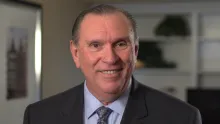
Randy D’Alessandro served as pastor for the United Church of God congregations in Chicago, Illinois, and Beloit, Wisconsin, from 2016-2021. Randy previously served in Raleigh, North Carolina (1984-1989); Cookeville, Tennessee (1989-1993); Parkersburg, West Virginia (1993-1997); Ann Arbor and Detroit, Michigan (1997-2016).
Randy first heard of the church when he was 15 years old and wanted to attend services immediately but was not allowed to by his parents. He quit the high school football and basketball teams in order to properly keep the Sabbath. From the time that Randy first learned of the Holy Days, he kept them at home until he was accepted to Ambassador College in Pasadena, California in 1970.
Randy and his wife, Mary, graduated from Ambassador College with BA degrees in Theology. Randy was ordained an elder in September 1979.
