
What Counsel Does God Have for Us When Our Back Is up Against the Wall?
Given on
Given in
Downloads
Downloads
To download a file, right-click (or long press) a link above and choose Save As.
When Israel found itself at the Red Sea they had their back to the wall. There are many lessons for us to learn about their experience. This sermon will explore what God wants us to do when we feel that our back is against the wall.
Transcript
This transcript was generated by AI and may contain errors. It is provided to assist those who may not be able to listen to the message.
On the first day of Unleavened Bread, the title of my sermon was, What is our focus in life? Is our focus in life being victims of Satan or overcomers with God? The basic thrust of the sermon was for us to take a gut check, or have a gut check, on where our hearts, minds, and spirits are in relation to the midst of life's hardships and trials. And as I look out in the room here, and I know most of you in the room, I know that there are so many of us in this room who have really very severe trials that we're going through.
We have, as I said earlier, we've all been victimized by Satan and society, and in some cases we've victimized ourselves with bad decisions that we've made. So all of us have been victimized in this life, but does that mean we have to play the victim card? Is that the mindset that God wants us to be caught up in?
Rather than those who are victims of Satan are caught up in the hardships and the trials of the past and present, to the place where they see no way of moving forward. The reason for that is because their main focus is on looking at the hardships and trials and not looking at the great God. And brethren, I say this to all of us. I think it's true that probably all of us in this room have done that. I don't think there's probably a person in this room, especially as we've gone through...
I've gone through... you've gone through some very typical trials in life. I think it's been very easy for us to have the pity parties, for us to take a look at where we've been and feel victimized because we've been victimized. But is that where God wants us to stay? No. God wants us to be overcomers with God.
Those who are overcomers with God are just as fully aware of the trials, the hardships, the difficulties that they've gone through, the suffering they've experienced in the past and perhaps the present. But they are telling themselves they are going to, with God's help, look forward. Their backs are against the wall. Our backs are against the wall. And when our back is against the wall, there's one way to look. That's up. We want to look up.
We want to look toward God. So last week's sermon dealt mostly with a way of thinking. Now today, in the message I want to give you, is the other side of that coin. Both messages, last week's message and the first day of my living bread and today's message are like bookends. We talked about the attitude last week. Today we want to talk about action. We want to talk about action. First of all, let's have a little bit of a definition of terms.
What does it mean to have our back up against the wall? When we feel our back is up against the wall, just like Israel, the reason I'm giving this sermon, I'm thinking about Israel, they felt their backs were up against a wall, a mountainous wall. Their back was up against the Red Sea. They felt they had nowhere to go, nowhere to turn. They felt they were going to be victimized by Pharaoh and his army, again represented by Satan.
They feel people who were back up against the wall many times feel that we've got no option. But, brethren, we as Christians always have options, and our greatest option is looking to the great God. So there will be times in our life where everything will seem to go wrong, from the little things to the great things. Last week coming to services was a minor example for Mary and I. You know, the previous evening, Night to Be, we drove to the east side of Detroit for the Night to Be.
It was cold and rainy and windy, and we drove 70 miles one way to get there, 70 miles to come home. No problems at all. Got up, and first they have unleavened bread to come here. Started the car up. What is that awful sound?
Put the car in reverse, got out of the driveway. Made it about three houses, and that car would not get out of first gear. Lived back home, put the car in the driveway, took Mary's car over here. Had the car dragged into the dealer. Transmission totally shot. So all week long, and then of course this is a fleet car, the church gives me a fleet car, it's a fleet car from the church.
All week long, the enterprise, the fleet car company, said, well, do we scrap this car? Do we replace the transmission? It was just yesterday, said, well, we're going to replace the transmission. Fix it before you give it back to you. So it's things like that. Now, that's a minor thing.
As I look out here at some of you, I see some very serious trials that are happening in your lives. The fact that your car doesn't run wouldn't rank even in the top 100 some of the things that you're going through. But, you know, these little things that irritate us. It could be little things, but then they can be great things as well. So the question I want to ask today, brethren, and hopefully answer for you, if you want to take notes and put something across the top of your page, this is kind of a thematic question I want to ask. What counsel does God have for us when our back is up against the wall? What counsel does God have for us when our back is up against the wall?
Now, before we focus on some specific actions, I want to kind of get our bearings here for a moment. Let's take a look at a couple of lessons that God wants us to learn before we even start thinking about the things God wants us to do. Lesson number one, when our back is up against the wall, we need to remember sometimes it's God who put us there, or God who led us there. If our back is up against the wall, maybe it's God who led us there. Sometimes we're there because of, you know, inappropriate decisions or bad decisions or unwise decisions you and I have made ourselves. But sometimes, especially like we see in the case of Israel, God led them there. He wanted their back to be against the wall. Let's go to Exodus chapter 13 for a moment. Exodus chapter 13. You might just want to put a marker in this area because we'll be coming back and forth to this area of the scriptures. Exodus chapter 13 verses 17 and 18.
Exodus 13 verses 17 and 18.
Then it came to pass when Pharaoh had let the people go that God did not lead them by the way of the land of the Philistines, although that way was near. For God said, less perhaps the people changed their minds when they see war and return to Egypt. So God led the people around the way of the wilderness of the Red Sea, and the children of Israel went up in orderly ranks out of the land of Egypt. Now verse 18 is interesting. I want to read verse 18 in a revised standard version. Sometimes we learn so much more by just looking at another version of the Bible. Exodus 13 verse 18 and revised standard says this, but God led the people around by the way of the wilderness toward the Red Sea, and the people of Israel went up out of Egypt equipped for battle. Equipped for battle. They thought they were ready, you know, for anything. Just send it my way, God. We'll take care of it. There's three million of us here, two to three million of us here. Whatever comes our way, we can handle it. You know, brethren, sometimes we as Christians feel the same way. But you know something God knows better. God knows that in many cases we aren't equipped to handle what it's about to take place in our lives. God knows the best way for us. He knows the best path for us to take, even if that means our backs are going to be against the wall. Now in Exodus chapter 14, let's look over there for a moment. Let's see understand God's thinking here. Let's drill down, understand what God's thinking is here. What is God trying to accomplish? Exodus chapter 14 verse 4. Exodus 14 verse 4, then I will harden Pharaoh's heart so that he will pursue them, and I will gain honor over Pharaoh and over all his army, that the Egyptians may know that I am the Lord, and they did so.
Brethren, God loved the Egyptians every bit as much as he loved the Israelites. What he was doing here was showing the Egyptians, and he was planting seed. Now these fellows were about to die. The army was about to die, but God's going to resurrect them. And in the resurrection, God wants to have them recall in their mind, you know, does it pay to fight the true God? Or did we learn some lessons as you were gasping for breath, as you were drowning in your in your Egyptian military gear? Did we learn something there? And so God's going to use this as a teaching tool because of his great love for the Egyptians. We drop down to verse 13.
Moses said to the people, Do not be afraid, stand still, and see the salvation of the Lord. So not only does God want the Egyptians to learn something, he wants the Israelites to learn something, the salvation of the Lord. And dropping down to verse 31, Thus Israel saw the great work which the Lord had done in Egypt. They saw it, they witnessed it. So the people feared the Lord and believed in the Lord and the servant Moses. So there was a reason here why God did what he did. Yes, going the way of the Philistines, a proven path. We'd be going from point A to point B. It would be much quicker. It'd be probably much quicker in your life to go from point A to point B. But God sidetracks us at times. He can sidetrack us with health issues, interpersonal issues, economic issues, or all of the above, and other kinds of things. Because there are times where God wants to put us and have our back up against the wall. And right now, as I look at the audience, I know some of you are right there. I know some of you are right there. And so we certainly want to understand God's thinking as we are right there with our backs up against those walls. We as human beings, we want to take the path of least resistance. But in God's mind, so many times, brethren, he wants us to take the path of much resistance. Because he wants to teach us valuable lessons. The path of much resistance. And you know what you might want to jot down Proverbs chapter 14 and verse 12. I'm not going to turn it out. I'll just read it for you. Proverbs 14 and 12. There is a way that seems right to a man. The Israelites probably thought they knew of the proper path to go to get out of Egypt. There is a way that seems right to a man, but its end is the way of death.
And so God realized that they go on the way of the Philistines. The Philistines seeing two and a half to three million people going through their land, they would have been attacked. The Israelites were not battle-hardened soldiers. They didn't have implements of war unless they, when they spoiled the Egyptians, they took some. But I'm sure they weren't properly prepared. They weren't ready for what they were going to find. So God gave them the longer route because he realized there were lessons they needed to learn. So, brethren, let's understand something. God knows how prepared we are for what's really ahead. He knows how prepared we are for what's really ahead. God may need to stop you. God may need to stop me. He may need to stop us and strengthen us as our backs are against that wall. Now, let's take a look again. Exodus chapter 14 verse 13.
And Moses said to the people, do not be afraid. Stand still. Stand still. Now, we as Americans are action-oriented people. We tend to say to one another, don't just don't just stand there. Do something. Don't just stand there. Do something. But God's not saying that. He's saying just the opposite. God's saying, don't just do something. Stand there. Don't just do something. Stand there. Why is God saying that? Because when we're standing there, when our backs are against the wall, when everything looks like it's crashing down on our head, that gives us an opportunity to recalibrate our thinking. Where we're at. Where is our relationship with God? Let's recalibrate our thinking. Let's get our spiritual bearings. We're up against it. There's no doubt about that. And God wants us to appreciate the fact that we're up against it. He wants us to realize there's only one door that's open to us that gets us away from that precarious position. And that door is Jesus Christ. That door is God. So lesson number one, when our back is against the wall, let's remember that sometimes the reason we're there is because God led us there. Another lesson before we get into the specifics, what God would have us counsel He asked for us, lesson number two. As our backs are against the wall, remember that God is there working in your behalf.
As you're there, you're back against the wall, life is crushing in on you. Remember that God is working right there with your back against that wall. You're not moving an inch. God is there, right there, with you, working on your behalf.
Exodus 14, verse 21. Exodus 14, verse 21. You know, Israel, they've got their backs to the wall. The army is coming. Pharaoh wants to re-enslave the people. They probably kill a good number of them, but he wants to enslave them, drag them back into Egypt. They've got mountains on two sides. They've got the Red Sea on one side, and Pharaoh's coming on the only side that's left.
Their back is up against the wall. Chapter 14, verse 21. Then Moses stretched out his hand over the sea, and the Lord caused the sea to go back by a strong east wind all that night, and made the sea into dry land, so the waters were divided. So the children of Israel went into the midst of the sea on the dry ground, and the waters were walled to them on their right hand and on their left. Now, there are some of you who are here today that were not here on the first Holy Day, but one of the remarks I made on the first Holy Day was, here you've got in these two verses, God is calling the shots. God's plan is never limited to what we as human beings do. God's plan is what God wants to do, and what we see here in verse 21 and 22, it was God who opened the Red Sea. It was God who closed the Red Sea. And as we made, as we remarked back in the first day of Unleavened Bread, he did it by a strong east wind. We remarked that there is interesting history to this. Back when Kublai Khan wanted to invade the Japanese homeland, back in 1274 and again in 1281, those two years, Kublai Khan was going to set an invasion force, kind of like the Spanish Armada. He was going to invade the Japanese home island. And in both cases, Kublai Khan's fleet was badly damaged by a strong wind, by a typhoon. The Japanese had a name for that. They called it kamikaze, divine wind. Brethren, here we have in Exodus chapter 14, God using divine wind. And it may well be that, so far as history is concerned, it may well be that God intervened in human history back in 1274 and 1281 because maybe he didn't want the Japanese home island to be invaded by Kublai Khan. I don't know. But God certainly was here to protect Israel. God is working here on Israel's behalf with divine wind.
Verse 19 and 20. The angel of God who went before the camp of Israel moved and went behind them. The pillar of cloud went from before them and stood behind them. So it became between the camp of the Egyptians and the camp of Israel. Thus it was a cloud and darkness to the one. But it gave light to the other, so the one did not come near the other all that night. Their back is up against the wall. I know I quoted this last week. Their back is up against the wall. But again, I want to point out to you that God is there working on their behalf. Where are you right now? Where is your back right now? Are you up against that? Are you going through something that's really a big trial in your life? Maybe God has led you there because he wants a closer walk with you, just like God wanted here with Israel. He was about to establish a nation here, a very special nation. God is doing the same thing with people in this room. Why are you where you're at? What does God want? Well, he obviously loves you. He wants the very best for you, but he may have led you there to learn lessons, and now he's working your behalf. Are you and I seeing that? Are we asking God to help us to see what's going on here? Many times as a pastor, one of the hardest counseling sessions I have is when I'm going to see a brother or sister in the faith, and the brother and sister is going through just a earth-shattering type of a trial. On the Richter scale, really, really bad. Number 10, people say, well, Mr. D., why is God doing this? Why is God doing this to me? And, of course, it's easy to say, very easy to say, well, God loves you, and, you know, God is strengthening you, and that's true. But when the people are sitting in front of you, and they're crying, and they're wringing their hands, it's a very difficult situation. And, of course, some of you are going through those kinds of situations right now. But it is true. God does love you. God is working with you. And, frankly, brethren, even though you and I as human beings, we want to be comfortable, that's not high on God's list for you and I. Our comfort is not a high priority in terms of God's desire for you and I. What God's desire for you and I is to learn and to grow and to become more like Him. If that means we've got to go through the crucible of fire and affliction, then God says, so be it. Didn't Jesus Christ go through that? Are we not able to follow our leader? If we're going to be Christian, should we not do the same, live the same kinds of life and go through that same crucible that He did? Not that we're going to be tortured or crucified, but we still go through life's trials and difficulties.
Verse 22, Exodus 14, 22, So the children of Israel went into the midst of the sea on dry ground in the waters where I walled to them on the right hand and on the left.
Brethren, there are times in our Christian walk with God that God will deliver us from our predicament. I've lost track of the number of people I've anointed over the years where they may have had cancer or various other very awful things. I've anointed them and they've been healed. On the other hand, there have been other people I've anointed. They're very zealous people, people of faith, people who are obedient, people are doing what the Bible says, really good folks, anointed them. They don't get healed. Paul didn't get healed and he begged God three times for healing. In Paul's case, it wasn't a matter of his lack of faith. He was a man of tremendous faith. In Paul's case, it wasn't a matter that he was a man who was disobedient. No, he was very obedient to God. But there are times in our life, brethren, where God says, I'm not going to remove this trial from you, but I will be there to help you go through this trial.
When you think about it, certainly it's miraculous for God to just remove something. Tremendous miracle. One and done. It's gone. But if you and I are laboring under a tremendous trial, it's, you know, a minute by minute pain, or other things that we're going through. Social issues, or whatever, economic issues, whatever we're going through. And we've got to rely upon God on a daily basis, a moment by moment basis. That truly, that truly is miraculous. And that's something that God wanted us, them, to learn. 2 Corinthians chapter 12. I may mention this a moment ago, but let's turn here. 2 Corinthians chapter 12.
2 Corinthians chapter 12, starting here in verse 7. Unless thou should be exalted above measure by the abundance of the revelations. Pause there for a second. God realized that Paul was a man who was writing a good portion of the New Testament. God realized that Paul was a man that, you know, as word got out to the various local congregations, Paul's coming. Paul's going to be here next Sabbath, or Paul's going to be here next month. And the word would go out that Paul was coming. That stuff could be quite heady. You know, the people are wanting me to speak. Now Paul said himself he wasn't much of a speaker. Great writer, not much of a speaker. But he was the Apostle. And people said, well, we want to be there to see him. That can be quite, you know, that can affect a person's vanity. So Paul says, lest I should be exalted by the abundance of the revelations, whether verbal or oral. God said, you know, Paul needs, I need to work with Paul. I love him too much to let this thing get out in front of him, where he gets too big for his own britches.
A thorn in the flesh was given to me, a messenger of Satan to buffet me. He was being victimized, wasn't he? Lest I be exalted above measure. Considering this thing, I pleaded. Wasn't a half-hearted, you know, sleepy type of a prayer. Considering this thing, I pleaded with the Lord three times in a mighty part from me. And he said to me, nope, not going to happen, Paul. My grace is sufficient for you. My strength is made perfect in weakness.
So God says, I'm going to take you through this trial. I'm not going to remove it, but you and I are going to walk through this step by step. Notice Paul's thinking now. Is he thinking like a victim, or is he thinking now like an overcomer? Let's see what he says. Therefore, most gladly, I'd rather boast in my infirmities that the power of Christ may rest upon me.
So here is a person who's being victimized, but he doesn't want to play the victim card. He says to himself, I want to look forward. I'm in my trouble. I'm in my pain. I'm in my my back is against the wall, but I'm going to look forward as an overcomer with Christ.
And as I brought out last week, isn't it interesting that he says the power of Christ may rest upon me. We talked last Saturday, last Holy Day, about how the pillar of cloud and fire would sit on the tabernacle and then move. Some days would stay there and stay there in days, maybe weeks, I don't know, and then move and go in a certain direction. People followed that cloud, but that cloud rested on the sanctuary there, just like the power of Christ is resting on us. We don't have a pillar of cloud or fire above our head, but we've got God's Spirit that rests upon us and helps us and directs when we should move and how we should move. There are times we do need to stand still, but there are other times we need to move forward. Verse 10, therefore I take pleasure in infirmities and reproaches and needs and persecutions and distresses for Christ's sake. For when I am weak, then I am strong.
When I am weak, then I am strong.
A couple of thoughts about this section of Scripture, brethren.
Firstly, tough times correct us. Let us not forget that. There are times in our life where we are going through the difficult times because there is something that God wants to correct in us. Not always. You can take that to the wrong extreme, which is bad theology. That every time something is happening in our life, it's because we're sinning or something. Now, that's simply not the case. There's plenty of examples in the Scriptures where people are valued servants of God. Job was one of the most righteous people who ever lived. Look what happened to Job. But tough times do act as a correction for us. Is there something that God is wanting us to learn? Is there something God is wanting us to see? Let's not just do something. Let's stand there. Let's think about where we're at. Let's kind of recalibrate our thinking and get our bearings. The second thing we want to think about from this section of Scripture where Paul said that God's grace is going to be there for him. The second thing is that tough times deepen us. Tough times deepen us.
You can have a plant. You can have a tree where if they don't have enough water, the roots go deeper and deeper to get to that water. As the roots grow deeper and deeper, it makes for a stronger plant. It makes for a stronger tree.
And so what's true for vegetation? If it's true of a house plant, it's got to be true of us. Tough times deepen us. And lastly, in terms of this section of Scripture, tough times, brethren, provide unique opportunities. Tough times provide unique opportunities. Think about it for a moment. Think about the people in the Scriptures who went through some of the toughest times in manageable. You've got Abraham back against the wall. He's going to have to...he's being told to sacrifice his own son. But what's the opportunity there? The opportunity was called father of the faithful because of how he came through that trial. Joseph had his back up against the wall, sold into slavery, convicted of a crime falsely he didn't commit, and yet he became the second most powerful person in that whole region. What you and I might call a prime minister of Egypt, one of the most powerful nations of its day. David was a man who was chased hither and yon in the wilderness, and it deepened him because he became man after God's own heart. Wrote the Psalms. When you're in trouble, when you're hurting, so many times you pull out the Bible and you turn to the Psalms because they speak to you. Those Psalms speak to you because of the man who went through the mill. Jeremiah was thrown into jail as a traitor, and yet look what he was able to do in terms of his proclamations and the books that he wrote in the scriptures. Job, as we mentioned a moment ago, lost everything. Talk about our back against the wall every time somebody brought him news. It was devastating news, and yet God was there for him.
So I think it's important, brethren, to realize the second point that when our backs are against the wall, God is there working in our behalf. Now, lastly, last section of my sermon today. When your back is against the wall, what specific actions does God want you to take? What specific counsel does God have for us? We've got a number of things here for you. I'm sure this list could go on and on and on, but as I was thinking about this and meditating on and putting my thoughts together, I came up with these items here. I just want to relate to you. When your back, letter A, I'll letter these, letter A, when your back is against the wall, focus on God's will, not our own. Focus on God's will, not our own. If there's ever a time when we need God's help, it's now. Our back is against the wall. We don't know which way to turn. We don't know which way to go. We're doubting our own sanity at times. We want God's ear. We want God's helping hand. And we're not going to have either of those things if we're doing our own thing. So the first thing we want to be doing when our back is against the wall is focus on God's will. What does he want from us? And what does he want us to do? Not what we want, but what does he want? Romans 12, verse 2.
Romans 12, verse 2.
We'll start in verse 1. Romans 12, verse 1. Beseech you therefore, brethren, by the mercies of a God, that you present your bodies a living sacrifice. Back is against the wall. This is certainly something God wants us to do. He wants us in our thinking.
Holy, acceptable to God, which is a reasonable service. And do not be conformed to this world, but be transformed by the renewing of your mind. So here we see that God wants us to, you know, get our bearings, to recalibrate our thinking, to not just do something, but to stand there.
By the renewing of our mind, that you may prove what is the good and acceptable and perfect, what? Will of God. So when your back is against the wall, when my back is against the wall, focusing on God's priorities, God's will will help us with our priorities, help us with our outlook, help us with our actions. Letter B. When our back is against the wall, stay committed to God's word. When our back is against the wall, stay committed to God's word.
When our backs are against the wall, we don't need for things to get any worse, things are really bad. We don't need things to get worse. We don't want to lean to our own understanding, as we've done in the past, because that will bring us into a situation where things get worse, real quick. So we want to stay committed to God's word. What does His word say? Not that what does my heart say, what does my mind say, what does my next door neighbor say, or my best friend say, what does God say? Romans chapter 10 and verse 17. Romans 10 verse 17.
So then faith comes by hearing, and hearing by what? Hearing by the Word of God. Hearing by the Word of God.
We have faith in God. People say, I don't know, my faith is not where it should be. Well, are we studying the Scriptures? Are we looking at the examples in the Bible that teach us about faith, that would strengthen our faith?
We had the example last week in a sermon about Elisha and how the King of Syria was coming after him with a whole army, surrounded him.
And Elisha's sermon was so afraid because there was this massive army around them. He thought, man, we're dead. We're toast.
And yet Elisha prayed to God and said, show him what we've got here.
And his mind was opened, his eyes were opened, and he saw all the chariots and horsemen of God, you know, the angelic host around. And it will only take one angel to take care of a vast army, but there were plenty of them there.
As we read those stories and we think about the things that are surrounding us and our back being against the wall, we think about the Red Sea situation, the situation that this may mention of Elisha's prophet, the fact that, you know, Elijah was able to pray and it didn't rain for three years, and all the various things we've got in the scriptures that fuel our faith.
We need to be letting those things just permeate our hearts and minds.
Let her see. When our backs are against the wall, what is God's counsel for us? Let her see.
Walk by faith and not by sight.
Walk by faith and not by sight. Second Corinthians chapter 5.
Second Corinthians chapter 5 verse 7.
For we walk by faith, not by sight. We walk by faith, not by sight. Now, what does that mean exactly? That's a whole sermon to itself, but let me give you a little bit of the tip of the iceberg answer here. Let's go to Hebrews chapter 11, which is the faith chapter. Hebrews chapter 11 verses 1 and 3. Hebrews chapter 11 verses 1 and 3. Hebrews 11 verse 1. Now, faith is a substance of things hoped for, the evidence of things not seen. So faith is a spiritual item. Faith is a spiritual dimension. And as Christians, as people whose names are now written in the Lamb's Book of Life, we have access and there's evidence of things that the world doesn't know about. They don't see. That we can know about and we see. Verse 3. For by faith we understand that the worlds were framed by the Word of God so that the things which are seen were not made of things which are visible.
So, by faith we see that God created the whole of the universe.
We're not scientists. We're not geologists or whatever. But we can have faith and we realize God, our dad, did that. So we walk by faith, not by sight. It was by faith that God protected the Israelite families at Passover evening. At this time of the year we think about those things.
As I may have mentioned in the sermon prior to Passover, or maybe even at the Passover, I forget now what I may have mentioned this, but when God protected not just the adults on Passover evening, when that blood was on the sides of the door on the top of the lentil there, not only were the adults protected, everybody in that home was protected, including the children. Now today in our Passover service, and properly so, we have just the adults who are baptized come. But then does that mean that we as Christians, our children aren't protected? As an article of faith, we believe that they are. We've got 1 Corinthians chapter 7 and verse 14, verse 15, where because of our relationship with God, because we have blood on, you know, Christ's blood in our life, our children are in a special category. We walk by faith realizing we've got the blessing of children, don't we? How many of you over the past have talked about the various blessings that have come upon your family because of the blessing of children?
You've got God's miraculous parting of the Red Sea.
You think God's no respecter of persons. He loves you. Can he part the Red Sea in your life?
Certainly he can do that. You have the example of the daily manna and the quail, God feeding people. Again, miraculous happenings. By faith, we understand God did these things. We know that Jesus Christ performed many healings, both physically and spiritually. And so, brethren, when our back is against the wall, we need to walk by faith and not by sight. Letter D.
Letter D. Big one here. They are all big, but this one, especially as you feel you're being ground to powder, we need this. When your back is against the wall, ask God for courage.
Ask God for courage. Times are hard for some of you in this room. Times are dark for some of you in this room. Times are maybe even desperate. I think I say that properly, so times are even desperate for some in this room. These are times that call for courage. The courage you and I, we just don't muster on our own. This is a gift from God. God's grace gives us the courage that we need. And if we're lacking in courage, and brethren in heaven, we all lack in courage, as you and I have gone through tremendous trials in the past, I know that I have.
This whole sermon, I built this whole sermon around things happening in my life and things I needed to learn. I'm not giving this to you because I'm on some ivory tower and you poor people out there. You big bunch of sinners, you know. We're all in the same boat. We're all clay. We're all human. We're all fallible. And we all have need of courage. We all have need of God giving us the courage we need on a daily basis. Isaiah 41. Isaiah 41, starting here in verse 10. Isaiah 41 verse 10. Fear not, for I am with you. Remember what we talked about earlier, how God, your back's against the wall, but God's right there with you as your back is against the wall? Fear not, for I am with you. Be not dismayed, for I am your God. The great one who created everything, the greatest being ever, is with us. And we must not be dismayed. I will strengthen you. I will give you the courage. Yes, I will help you. I will uphold you with my righteous right hand.
Behold, all those who were incensed against you shall be ashamed and disgraced. They shall be as nothing, and those who strive with you shall perish. In verse 11, not only talks about our physical enemies, it talks about situations in our life. God's going to be there with us. Again, He will help us either overcome the situation, walk through the situation, and we may take the situation away, alter it, but God is going to be there with you through it all. Verse 12, you shall seek them and not find them, those who contend with you, those who war against you shall be as nothing, as a non-existent thing. Who can stand against the great God? And the great God is standing with you, as God stood there with Shadrach, Meshach, and Abednego. You know, whenever Kedanza said, boy, I threw those three guys, we had those three guys thrown in the furnace, I don't see three guys there, I see four guys there. As Stephen was being killed, and yes, God allowed him to die as a martyr, but he looked up and saw Jesus Christ standing at God's right hand. That's sitting, standing. Standing for Stephen, standing for you, standing for us as we go through these hard times. Verse 13, for I, the Lord your God, will uphold your right hand, saying to you, fear not, I will help you.
Lastly, letter E. What counsel does God have for us when our back is against the wall? Letter E. When your back is against the wall, seize the opportunity to grow.
Seize the opportunity to grow.
Romans chapter 8. I borrowed a little more heavily than normal from last week's sermon, but I think that these points, I just want to bring these points to us over and over. I think they're important points. Romans chapter 8 and verse 37.
Romans 8 verse 37. Yet in all these things we are more than conquerors through him who loved us.
When our backs are against the wall, we are more than conquerors. I do want to read to you again from Barnes and Oates, a commentary on this section of Scripture.
On this particular phrase, more than conquerors, this is Barnes and Oates, as I say, says, keep on being conquerors to a greater degree, or keep on winning in a glorious victory. We gain the victory, that is, they have not the power to subdue us, to alienate our love and confidence, to produce apostasy. We are the victors, not they. And notice now what Barnes and Oates also says about that section of Scripture. Our faith is not destroyed. Our love is not diminished. Our hope is not blasted. It's not simple victory. It is not mere life, and continues with what we had before. But he says, it is more than a simple triumph, as God has helped us to be more than conquerors. It says, it augments our faith. It increases our strength. It expands our love to Christ. The word used here is a strong, emphatic expression, such as the Apostle Paul often employs, and which is used with great force and appropriateness here.
Brethren, today I've asked the question, what counsel does God have for us when our back is against the wall? Some final thoughts. Let's remember that when our back is against the wall, doesn't mean God's mad at us. Doesn't mean God is mad at us. There are some, again, as I made mention earlier in the sermon, that if something's going bad, there are people in the church that almost automatically say, well, you sinner you. Kind of like Job's friends, you sinner you. What's wrong with you? Buck up and we're going to get your act together.
Many times when our back is against the wall, that's not the point at all.
When our back is against the wall, doesn't mean God has turned our back, his back on us. Because your back is against the wall doesn't mean God has turned his back on you.
Another concluding thought. When our back is against the wall, these are times, brethren, for us as Christians with God's Holy Spirit, it is time for us to make a choice. Are we going to be victims of Satan, or are we going to be overcomers with God? We've got an attitude to choose.
And yes, we can choose one or the other. We've got a frame of mind. We've got a frame of reference we can choose. We can panic, or we can trust. We can focus on our liabilities, or we can focus on our opportunities. We can turn away from God, or turn toward God. It may not feel like we have the choice of what attitude we'll have, but we do have choice. God always gives us a choice.
Now, the negative response will come naturally. Satan will help you. He will guide you into the negative. We don't want his guidance. We don't want his help. We need to make a choice to respond in full, faithful confidence. And lastly, a final thought. When our back is against the wall, these are times we need to be reminded that we should never underestimate the power and the wisdom of God. The power and the wisdom of God. No matter how hopeless a situation may seem, you and I may well be on the threshold of one of God's greatest displays of his wisdom and power, just as Israel was at the Red Sea.
Have faith that God will change the circumstances, or that God will provide the opportunities and transform our life, your life, my life.
So we may well be on the threshold of one of God's greatest displays of his wisdom and power in our life, as his hand touches us as our back is against the wall.
So, brethren, today we've asked the question, what counsel does God have for us when our back is up against the wall? We've taken a look at a number of vital lessons that kind of puts our mind where it should be. We've looked at five different things God wants us to do. I'm sure that's not a comprehensive list by any stretch of imagination. I'm sure you're probably going to add another five or ten to that list. I just wanted to give us something to begin working with, because, brethren, I love you a great deal. I know as your pastor, and for those of you who are visiting, God loves you a great deal. He doesn't want to see you suffering without us. Pain needs to have something, brethren, that we profit from. If we go through life and we just experience the pain and we don't profit from it, then we've really kind of wasted an opportunity. We need to be able to look at life that way. It's hard when we're in the pain, when we're experiencing the difficult times, we just want to get through it. But God says, okay, you're going through the pain, take it, use it, and understand why it's there and profit from it.
If I have any questions on a sermon, please see me afterwards.
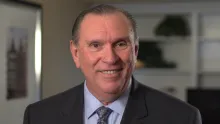
Randy D’Alessandro served as pastor for the United Church of God congregations in Chicago, Illinois, and Beloit, Wisconsin, from 2016-2021. Randy previously served in Raleigh, North Carolina (1984-1989); Cookeville, Tennessee (1989-1993); Parkersburg, West Virginia (1993-1997); Ann Arbor and Detroit, Michigan (1997-2016).
Randy first heard of the church when he was 15 years old and wanted to attend services immediately but was not allowed to by his parents. He quit the high school football and basketball teams in order to properly keep the Sabbath. From the time that Randy first learned of the Holy Days, he kept them at home until he was accepted to Ambassador College in Pasadena, California in 1970.
Randy and his wife, Mary, graduated from Ambassador College with BA degrees in Theology. Randy was ordained an elder in September 1979.
playlist
Related Sermons

The Last Day of Unleavened Bread Pictures All This and More
