
Scott Ashley
This transcript was generated by AI and may contain errors. It is provided to assist those who may not be able to listen to the message.
Tomorrow night we will again partake of the symbols of the new covenant Passover. Last Sabbath I gave a sermon to cover some of the deeper aspects of the meaning of the broken bread, the bread which represents Christ's body, which is broken for you, as stated by the Apostle Paul. I illustrate how the broken bread represents the wrongful sufferings that Christ took upon Himself for our benefit, so that by His stripes we are healed, which was the title of last week's sermon. I then illustrated the emotional and spiritual healing we can then claim for any and all wrongful sufferings that we have experienced or that we may have inadvertently inflicted on someone else. Now today then I want to take a deeper look at the meaning and implications of the wine that we drink at Passover, which is symbolic of Christ's shed blood. So today we'll take an in-depth look into the meaning of the wine and to what it pretends for all of us who partake of it, and what it means to partake of the cup containing the wine. That's basically going to be the focus of today's sermon. Especially to prepare for the Feast of Unleavened Bread coming up, and our countdown to Pentecost begins during the Feast of Unleavened Bread. And as we prepare for the day which portrays our marriage to Jesus Christ, does the wine have anything to do with the countdown to Pentecost as we prepare for what that portrays our wedding to Jesus Christ? That's what we're going to take a look at today as we take a deeper look into the meaning of the cup of wine that we all partake of at Passover and as we'll do tomorrow night. Title for this afternoon's sermon is, What Does It Mean to Drink from Christ's Cup? What does it mean to drink from Christ's cup? Let's go begin in John chapter 2 to look at the first miracle that Christ performed at the very beginning of his ministry. John chapter 2 beginning in verse 1. It says, on the third day there was a wedding in Cana of Galilee, and that'll be a Jewish wedding. And it says, and the mother of Jesus was there. Now both Jesus and his disciples were invited to the wedding. So they're all there at this wedding. And of course one of the traditional drinks served at a wedding is wine, often used to toast the bride and groom at their wedding reception. At the time of Christ, the one drink you didn't want to run out of in a large wedding feast was wine. Continuing on here in John 2 verse 3, they did run out of wine. And when they ran out of wine, the mother of Jesus said to him, well, they have no wine. They've run out of wine. And Jesus said there in verse 4, notice this very strange response that Christ gives to his mother in verse 4. He says, woman, what does your concern have to do with me? My hour has not yet come. Again, that seems like a rather strange response for Christ to make. What in the world was running out of wine at a wedding feast have to do with Christ's statement, my hour has not yet come? His hour wasn't going to come for another three and a half years.
Now, this is right after Christ was baptized by John the Baptist, and right after Christ had chosen his 12 disciples, which is recorded in chapter one of John. So this is about three and a half years before the hour, his hour to be crucified, or the hour he'd institute the New Testament Passover service with his disciples would come.
So this is undoubtedly the first miracle that Christ performed, or lived with him, it was probably. Here at this Jewish wedding feast, they run out of wine, and Mary, Christ's mother, simply makes Jesus aware of that. And the response is, what does your concern have to do with me? My hour has not yet come. Again, what would running out of wine at this wedding feast have to do with Christ's statement? My hour has not yet come. Actually, it has everything to do with it, as we will see, especially when we understand the deeper meaning of the wine that we all partake of in the Passover, especially as we partake of that cup of wine. Let's continue here in John 2 for the moment. John 2, verse 5, His mother said to the servants, Whatever he says to you, do it. Now there were set there six water pots of stone, according to the manner of purification of the Jews, containing 20 or 30 gallons of peace. And Jesus said to them, Fill the water pots with water, and they filled them to the brim. Now that would be between 120 and 180 gallons of water.
Verse 8, He said to them, Draw some out now, and take it to the master of the feast. And they took it, they took some out, and when the master of the feast had tasted the water that was made of wine, and did not know where it came from, but the servants who had drawn the water, they knew. The master of the feast called the bridegroom, and he said to him, verse 10, Every man at the beginning sets out the good wine. And then when they get so well drunk, and they really are not going to know the difference anyway, then the inferior wine.
But you have kept the good wine until now. This beginning of signs Jesus did in Canaan of Galilee, and manifested His glory, and His disciples believed in Him. So the beginning sign or miracle that Christ gave that He was the promised Messiah, was to turn over 120 gallons of water into a very high-quality wine at a Jewish wedding feast.
Even though His hour had not yet come, and was still about three and a half years away. Now remember again, wine is a major drink that is used in an associated with a Jewish wedding feast. So now with that back, that little incident in mind there, let's move forward three and a half years to the time when Christ's hour did come.
Let's go to Matthew chapter 26. Matthew 26 verse 26 on that Passover evening as He was instituting this New Testament Passover service with His disciples. It says, as they were eating, Jesus took bread and blessed and broken and gave it to His disciples and said, take, eat, this is my body.
I covered the meaning of that last Sabbath. Verse 27, then He took the cup and gave thanks and gave it to them, saying, drink from it all of you. For this is my blood of the new covenant which is shed for many for the remission of sins. So here then when Christ's hour had come, He used His wine to symbolize, symbolize His blood of the new covenant. Now wine is not actually mentioned here by name, but Christ refers to it as the fruit of the vine and there's no doubt whatsoever that it was wine.
And it was a cup of wine that they were they all drank from. Now, notice what Christ says next in verse 29. But I say to you, I will not drink of the fruit of the vine, of this fruit of the vine, from now on until that day when I drink it new with you in my Father's kingdom. So here, Christ plainly tells us that when we are resurrected to eternal life, to be in God's kingdom, that Christ will once again drink wine with all those who will be in the kingdom of God with Him.
Now let me ask this question. Do these three examples all tie together? We have three examples here. I've just given you number one. We have Christ's first recorded miracle of turning over 120 gallons of water into a very high quality wine at a Jewish wedding feast.
Two, we have Christ filling a cup of wine at the New Covenant Passover. He filled a cup with wine and He gave it to His disciples and said, drink from it, drink from this cup, all of you.
So there's one cup He filled with wine, He passed it around to His disciples and He asked all of them to drink from that cup. That's the second example. And then third, we have Christ telling His disciples, I will not drink of this fruit of the vine from now on until that day when I drink it new with you in my Father's kingdom. So, I question again, do these three examples of wine all tie together?
If so, how do they all tie together? What is the common denominator that ties them all together? And what does all this have to do with our question and with the title of this sermon, which is, what does it mean to drink from Christ's cup? Now, Christ said in Matthew 26-29, He said, I will not drink of this fruit of the vine from now on until that day when I drink it new with you in my Father's kingdom.
What day is that day referring to? Specifically, what day is that? What will take place on that day? Let's go to Revelation 19 and find out. Revelation 19. I'll begin in verse 5.
Then a voice came from the throne, saying, Praise our God, all you His servants, and those who fear Him, both small and great. And I heard, as it were, the voice of a great multitude is the sound of many waters, and is the sound of mighty thundering, saying, Hallelujah for the Lord God, omnipotent reigns. Let us be glad and rejoice, and give Him glory, for the marriage of the Lamb has come, and His wife has made herself ready. She's made herself ready for this marriage. Verse 9. And He said to me, Right blessed are those who are called to the marriage supper of the Lamb. This, then, is that day to which Christ was referring to in Matthew 26-29. He was referring to His wedding day. To the day when the marriage of the supper of the Lamb would come, when it would take place at Christ's return. At this future wedding feast, Christ will once again partake of the food of the vine, to celebrate the marriage of Jesus Christ to His church, and to probably partake of the toast God the Father will make on behalf of His Son and His Son's bride at their future wedding feast.
Now let's look at two interesting links that we have to all of this. In these three examples of wine, Christ makes two interesting links. I'll link these all together. First, He links running out of wine at that Jewish wedding feast, the very beginning of His ministry, with the Passover wine by saying, Woman, what does your concern, her concern of running out of wine, what does your concern have to do with me?
My hour has not yet come. That links that event to the event of the New Testament Passover service. And you could say, my hour, we could say, has not yet come for instituting the New Covenant Passover, when I will pass my cup of wine to my disciples and tell them to drink from it, all of you.
Now the second link is Christ links the Passover wine to the wine that will be used at His future wedding feast when He takes His church to be His bride by saying, I will not drink of this through the vine from now on until I drink it new with you in my Father's kingdom. That links all these things together. Now how does all this tie together? Is there a common denominator, and what is that common denominator? And most importantly, what does it really mean to drink from Christ's cup?
Again, in Matthew 26, 28, in reference to the cup of wine, Christ said, this is my blood of the New Covenant. He said, this represents my blood of the New Covenant. What is the major difference, or at least a major difference, and not the major difference, between the Old Covenant and the New Covenant? What is the Covenant? A Covenant is an agreement between two parties. Now if one of those two parties in this covenant is God, that makes an extremely important covenant for the other party who is making that agreement or covenant with God.
And we are the second party in this case. Now the Old Covenant was between God and the nation of Israel. And the terms of that covenant were the Ten Commandments. God agreed to physically bless Israel and to make them his own special people, that they would in turn agree to keep the Ten Commandments.
And in Mount Sinai, when he gave them the Ten Commandments, the nation of Israel agreed to those terms. They said, and with one voice, as recorded in Exodus 24 verse 3, with one voice that said, all the word which the Lord has said, we will do. Now everybody said, we do. We agree. We do. Like in a wedding when you say, I do. That's what they said.
They said, we do. I do. From God's perspective, that was a marriage proposal God made to the nation of Israel. It was a marriage covenant. And with one voice, all of Israel said, we do. We will do. When they said that, they actually were agreeing to that marriage covenant with God. They were agreeing, in essence, a spiritual sense, to marry God, to be married to God. Or to Christ, since Christ is the God of the Old Covenant, or Old Testament, who proposed to them and who gave them the Ten Commandments at Mount Sinai.
So the Old Covenant was a marriage covenant with God being married to the nation of Israel. And a number of scriptures clearly tell us that and point that out. Let's go to Jeremiah chapter 3. Jeremiah 3. Jeremiah 3, let's begin in verse 12, where God told Jeremiah to tell Israel, says, go and proclaim these words towards the north and say, return backsliding Israel. They've been going contrary to God. They'd discarded, they'd abandoned God's laws, and they were going their own way.
But God says to them, return backsliding Israel, says the Lord, and I will not cause my anger to fall on you, for I am merciful, says the Lord. I will not remain angry forever. Only acknowledge your iniquity that you have transgressed against the Lord your God.
And now knows what he says next. He's like, he's talking about spiritual adultery here, and he's using those terms. Only acknowledge that you have transgressed against the Lord your God, and have scattered your charms to alien deities under every green tree, and you have not obeyed my voice, says the Eternal. In other words, what he's saying there, he says, you have not been faithful to me. You've broken your marriage vow.
You said we do, and now you've broken your marriage vow. They, in essence, were committing spiritual adultery. They're no longer being faithful to God. Verse 14, but notice God's attitude toward Israel. Even then, even after years and years of being unfaithful, he says, return, O backsliding Israel. Return. Why? For I am married to you. You're supposed to be my wife, and a wife is supposed to be faithful to her husband.
But you've gone after all other kind of gods you want to go with under every green tree. But I'm married to you.
Now, Jeremiah wrote over 700 years after God had made this marriage covenant with Israel in Mount Sinai, and God here, after all Israel had done in turning away for him, still considered himself married to Israel. And he still wanted to take her back. He wanted to give her a chance to come back and be his wife, if you will. He said, return, O backsliding Israel, for I am, I'm still married to you. You're still my wife. Let's go to Ezekiel 16.
Ezekiel 16. Let's begin in verse 1 of Ezekiel 16.
Again, the word of the Eternal came to me, saying, Son of Man caused Jerusalem to know her abominations, and say, excuse me, that's it, yeah, that's verse 2, Son of Man caused Jerusalem to know her abominations. In other words, to show Jerusalem her abominations in God, the next few verses, reflects back on what the people of Israel and Judah were like before he rescued them. He wanted them to understand what they were like before he rescued them, and then to reflect back on what he did for them after he rescued them, which we'll have in the next few verses. Verse 3, and say, Thus is the Lord God to Jerusalem, your birth and your nativity are from the land of Canaan. Your father was an Amorite, and your mother a Hittite. As for your nativity, when Israel was being born as the people of God, as the nation of God, as for your nativity, on the day you were born, your neighbor, your naval cord was not cut. Nor were you washed in water to cleanse you. You were not rubbed with salt, nor wrapped in swabbing clothes. It was like a baby that was born and abandoned by his mother, left to die.
Nobody wanted you. Nobody pitted you, he says in verse 3. No, no, I pitted you to do any of these things for you, to have compassion on you. But you were just thrown out into the open field to die. They were slaves in Egypt. They didn't, their life was, had no value to the Egyptians. You were thrown into the open field when you yourself were loath on the day you were born.
And when I passed by you, God says, and I saw you struggling in your own blood, dying there, belong the road in the open field, abandoned. I said to you in your blood, live.
Yes, I said to you in your blood, live.
And I made you thrive like a plant in the field, and you grew and matured, and you became very beautiful. Your breasts were formed, your hair grew, but you were naked and bare. You know, in Egypt, they're all about to be destroyed as slaves, and as God puts it here, they were dying in their own blood. They'd been abandoned. Their life had no value whatsoever. Then as God rescued them, he began to bring them to maturity, as he wanted to make Israel into his own special people. And they began to mature, but it says they were still naked and bare. That is, they were spiritually still naked and bare. They were not clothed with God's righteousness. They had not yet been given God's righteous laws, but they were becoming beautiful to God as he looked upon them, as he rescued them in their own blood, as they were dying, as he brought them out of Egypt. So again, this ties into the sermon that Tim just gave, but why were they very beautiful to God, even though they were not yet clothed with God's righteousness? Well, the reason is, is because they were in a very humble state. They had been humbled to the point where their very existence now depended on God. They were going to all die. The only way they could live is if God rescued them and had compassion and look upon them, intervened on their behalf. They couldn't have been in a more humble state than they were in at that time. And there is nothing more beautiful to God than humility.
Ezekiel 16, verse 8.
And when I passed by you again and looked upon you, indeed your time was a time of love. So I spread my wing over you, or as we read in Exodus 19, 4, I bore you on eagle's wings and I brought you to myself. I was just before he made the covenant of the Ten Commandments. I brought you to myself so you could become a special people to me, so I could make you beautiful and make you become my bride.
So I spread my wing over you and covered your nakedness.
When God brought them to himself in Mount Sinai, how did he cover their nakedness?
He gave them his righteous laws. He gave them the Ten Commandments along with his statutes and judgments. And when we have God's laws, it's God's laws that cover our nakedness. Without... we don't only have our own righteousness, that's the way the Bible says we're naked and bare before God if we only have our own righteousness. We have to have the righteousness of Jesus Christ and the righteousness of God to be clothed. Otherwise, spiritually we're naked and bare.
And he made a marriage covenant with them when he brought them out and rescued them to make them a special people, so they could be bound to God and be his own holy people. Again, verse 8, when I passed by you again, indeed looked upon you. Indeed, your time was a time of love, so I spread my wing over you and covered your nakedness. Yes, I swore an oath to you. I entered into a covenant with you. It was a marriage covenant God entered into with them. And you became mine. You became married to me. Says the Lord God. Now, once they entered into this marriage covenant, became bound to God, what did God do then? Verse 9, Then I washed you in water. Yes, I thoroughly washed off your blood. Cleaned them up. I anointed you with oil. I clothed you in embroidered cloth and I gave you sandals that badger skins. Again, very interesting terminology God uses.
Sandals are symbolic of walking with humility. He wanted Israel to remain humble. So as he goes to 1610, says, I clothed you with fine linen. I mean, I clothed you with badger skin. And then goes on to says, and I I clothed you in embroidered cloth and gave you sandals of badger skin. I clothed you then, excuse me, going on says, I clothed you with fine linen and covered you with silk. In other words, they were covered with God's righteousness. They were clothed with God's righteousness. I clothed you with fine linen. What is being clothed with fine linen? Symbolic of. Again, fine linen, it says, is the righteous acts of the saints. Revelation 19.8, symbolic of being clothed with God's righteousness. Continue verse 11 of Ezekiel 16. I adorned you with ornaments, put bracelets on your wrists and a chain on your neck. I put a jewel in your nose, earrings in your ears, and a beautiful crown on your head. I mean, he's making really the most beautiful bride he can possibly imagine. Because of God's righteous laws, that he's bestowing upon them. Thus you were adorned with gold and silver, and your clothing was a fine linen, silk, and embroidered cloth. You ate pastry of fine flour, honey, and oil. You were exceedingly beautiful, and you succeeded to royalty. He became God's bride. You entered into marriage covenant with God himself, with Jesus Christ. What greater royalty could ever be bestowed on any people than to become the bride of Jesus Christ, the bride of God, and have a covenant with God, being his own special people? See, the old covenant was a marriage covenant, and when Israel agreed to that covenant, they became married to God, married to Christ, if you will. But there was a problem. Israel was unfaithful. They committed idolatry by going after other gods, which to God was a form of spiritual adultery. So what did God then do? What do you have to do? He wanted him back. He said, come back to me, return to me, and be faithful, and I'll take you back. But they wouldn't. They refused. So God then had to write them a certificate of divorce. Let's go back to Jeremiah. Jeremiah chapter 3 again. Jeremiah 3. Let's begin this time in verse 6. Jeremiah 3 verse 6. The Lord also said to me in the days of Josiah the king, have you seen what backsliding Israel has done? She has gone up on every high mountain and under every green tree and there played the harlot. However, she's committed adultery against God.
And I said after she had done all these things, even after all of that, he said, return to me, I'll take you back. You can still be my wife. I'll restore our relationship. What'd she do? But she did not return. She wanted to do with God.
And her treasurer, Sister Judah, saw it. And then I saw that for all the causes for which backsliding Israel had committed adultery, because she was married to God, I had put her away and given her a certificate of divorce. Now God hates divorce, but Israel left him no other choice. Her update was so bad and so grotesque that God finally had to just put her away. This then freed God from his marriage covenant with Israel. Free God to marry again, especially after Christ died. Christ died and that severed that marriage covenant. He was then free to marry again. He was free to make a new marriage covenant with a new bride to be. Only this time it's going to be different. What was going to be the difference this time? Big difference this time. What's the difference? What's the difference between the old marriage covenant and the new marriage covenant?
Both covenants are marriage covenants, but what's the difference? Let's again go to Matthew 26. Matthew 26, again verses 27 and 28. Verse 27, then he took the cup and gave thanks and gave it to them saying, drink from it all of you. For this is my blood of the new covenant, this is my blood the new marriage covenant, which is shed for many for the forgiveness of sins. Now notice here in verse 27 especially, notice here that the emphasis is not so much on the wine as it is on the cup of wine. The major emphasis is on the cup itself. Again, verse 27, then he took the cup and he gave thanks and gave it to him saying, drink from it, drink from this cup, all of you.
Now here in this particular occasion when Christ instituted this with his disciples, they were not each given their own cup, but they all had to drink from Christ's cup. They all drank from the cup of Christ, which is what we are symbolically doing at the Passover, even though we all drink from individual cups. Now what does that mean? See, all that ties, this ties into an old Hebrew tradition and it ties into the major difference between the old covenant and the new covenant. According to Hebrew tradition, when a young man, a young woman, were to become engaged, to be married, the groom to be poured wine in a cup and they offered it to his fiance. If she drank from that cup, she was accepting his proposal for marriage. By handing her that cup, he was proposing to her to take her to be his bride. If she drank from that cup, she was accepting his proposal. She was saying, I will become engaged to you. And then by that act, they then became engaged to be married. In addition to that, she was also agreeing to experience all of their life together and to go through all the experiences life would bring upon them together. And all that would entail both during the time they're engaged and before they were married and then during the time of their marriage, to accept everything that might come their way, good and bad.
And when we symbolically drink from Christ's cup, as we do at the Passover, we are in essence accepting Christ's proposal to be his new bride. He said, I'm gonna make a new covenant. I'm gonna make a new marriage covenant. I want you people now, you spiritual people of God that I'm calling. I want you to be my bride. I'm gonna propose to you, will you drink from my cup? Will you accept my proposal? And we drink from that cup. We are accepting Christ's proposal to take us to be his bride and all that entails. All that entails during the time of our engagement, again, both good and bad. In every Passover, we symbolically drink from Christ's cup. We are renewing that commitment. We're in essence saying, I still want you, Christ, I want you to take me to be your bride. Regardless of my faults, regardless of my struggles and shortcomings, I want to be your bride. I want you to be my husband.
I want you to keep that engagement. Don't break it off.
Now, what's the major difference between the old marriage covenant that God made with Israel and the new marriage covenant Jesus Christ makes with all of us? When Israel agreed to the old covenant, the old marriage covenant immediately became married to God. When we agree to the new covenant, we become betrothed or engaged to God, that is, to Jesus Christ. Unlike the old covenant, we must then prove our faithfulness first before Christ will formally take us to be his bride. Before we can actually become the bride of Christ, we must first prove our faithfulness ahead of time. And we must grow to spiritual maturity and we must make ourselves ready before the wedding takes place. Now, the Apostle Paul was trying to help the Church of Corinth to do that, to make themselves ready to prove their faithfulness to God and so on. He was trying to help the Church of Corinth to do that when he wrote. What he did is recorded 1 Corinthians 11. Let's go to 1 Corinthians 11 and begin in verse 1. 1 Corinthians 11, verse 1. Where Paul writes to the Church of Corinth here, he says, O, that you would bear with me in a little folly, and indeed you do bear with me. Then he says in verse 2, For I am jealous for you, because Paul here is representing God, he's representing Christ to the people in Corinth, he says, For I am jealous for you with godly jealousy, for I have betrothed you to one husband, that I may present you as a chaste virgin to Jesus Christ.
See, we are not only betrothed to Christ, not yet married to Him, and that is the major difference between the old marriage covenant and the new marriage covenant. But when we drink from Christ's cup at Passover, we are accepting Christ's proposals to take us to be His bride, and we are renewing that covenant we are making to become His bride. We are saying, don't break off the engagement. I want to be your bride. But during our engagement period, which lasts for the rest of our lifetime, we must improve our unconditional love and our loyalty to Jesus Christ, which we have to do prior to that marriage in order to then become His bride. What is that going to take? What will it take to prove our love and our loyalty and our faithfulness? What will it take to make ourselves ready? See, what does it mean to drink from Christ's cup? Before answering that, I want to take a look at another cup that we could drink from and not people in the world drink from and what that means. It portends. Is there another cup we could drink from instead of Christ's cup if we chose? What about what was referred to in the Bible as the cup of Babylon? What does it mean to drink from the cup of Babylon? From the cup of the world's systems and from the cup of the world's ways. Let's go to Revelation 17.
Revelation 17. Let's begin in verse 1. And you'll notice the terms wine and cup are used in here as well, so it all ties in. Then one of the seven angels who had the seven bowls came and talked with me, saying to me, Come, and I will show you the judgment of the great harlot who sits on many waters, with whom the kings of the earth have committed fornication. And then the heavens of the earth were made drunk with the wine of her fornication, because they were drinking from her cup. And they were drinking in excess from her cup. They were becoming drunk. So he carried me away in the spirit of the wilderness, and I saw a woman sitting on a scarlet beast, which is full of names of blasphemy, having seven heads and ten horns. The woman was arrayed in purple and scarlet, and adorned with gold and precious stones and pearls. She was adorned! She was clothed, but it wasn't the righteousness of Christ. It was with the gold and materialism of this world, which has no value as far as God is concerned. The woman was arrayed in purple and scarlet, adorned with gold and precious stones and pearls, having in her hand a golden cup. Here we have a cup again. Well, this cup does not contain wine, symbolic of Christ's blood. Instead, she has in her hand a golden cup full of abominations, and the filthiness of her fornication. And on her forehead a name was written, Mystery Babylon the Great, the Mother of Harlots, and of the abominations of the earth. In verse 6, and I saw the woman drunk with the blood of the saints. This cup was full of the blood of the saints who had been martyred by her. And I saw the woman drunk with the blood of the saints and with the blood of the martyrs of Jesus. And when I saw her, I marveled with great amazement. We don't want to drink from that cup. I want to drink from the cup of Babylon. Why not? Chapter 14. Go back to chapter 14 from 1, verse 9. Revelation 14, verse 9. Then a third angel followed them, saying with a loud voice, If anyone worships the beast in his image and receives his mark on his forehead or in his hand, he himself shall drink of the wine of the wrath of God. If you drink from the cup of Babylon, this is what you're going to get. He himself shall also drink of the wine of the wrath of God, which is poured out full strength into the cup of his indignation.
And he shall be tormented with fire and brimstone in the presence of the holy angels and the presence of the Lamb.
Let's go to chapter 16 of Revelation. Revelation 16, verse 19, which continues this thought. Revelation 16, 19. Now the great city was divided into three parts, and the cities of the nations fell, and great Babylon was remembered before God to give her the cup of the wine of the fierceness of his wrath.
So drinking of the cup ultimately symbolizes sharing the consequences of what is in that cup. It means having to accept whatever is appointed by God for one to experience from sharing in that particular cup, for better or for worse. And drinking from the cup means participating in whatever that cup contains. And great Babylon was remembered before God to give her the cup of the wine and the fierceness of his wrath. We don't want to drink from that cup. I'm not going to turn there, but I'm also going to read this. Psalm 11 verse 6. Psalm 11 verse 6 adds this, Upon the wicked he will rain coals of fire and brimstone, and a burning wind. This shall be the portion of their cup.
That then is what it means to drink from the cup of Babylon, to drink from the cup of the ways of this world. You will then receive what's in that cup, and the consequences of what's in that cup. So what then does it mean to drink from Christ's cup? Let's go to Matthew 20.
Matthew 20 verse 20. Matthew 20. Says, Then the mother of Zebedee's sons came to him with her sons, kneeling down and asking something from him, something from Christ. Who are the sons of Zebedee? They were James and John, as we're told in Matthew 4.21 and Matthew 10 verse 2. James and John.
And he said to her, verse 21, What do you wish? Christ said to her, said, What do you wish, this mother? And she said to him, Grant that these two sons of mine may sit one on your right hand and the other on your left in your kingdom. But Jesus answered and said, You do not know what you ask. Are you able to drink the cup that I am about to drink? Are you able to drink from my cup? He's asking her. These two boys, James and John. Are you able to drink from my cup? You even realize what that means. Verse 22.
You do not know what you ask. Are you able to drink from the cup that I'm about to drink? Are you able to be baptized with a baptism that I am about to be baptized with that I am baptized with, I should say. And they said to him, they answered, We are able. But in reality, neither one of them, neither James nor John, knew what that really meant. They had no idea. Verse 23. So Jesus said to them, You will indeed drink my cup. You are going to drink from my cup and you're going to drink what that means and what that will bring. And you'll drink from what's contained in that cup, just as I have. You will indeed drink my cup and be baptized with a baptism that I am baptized with, but to sit on my right hand on my left is not mine to give, but is for those for whom it is prepared by my father. But drinking from Christ's cup for James and John, he said, Indeed you will drink from my cup, he told, Christ told James and John. What does that mean for them? What did it mean for James and John? What did it mean for them to drink from Christ's cup? What did they experience? What happened to them? In what way were their lives tested? In what ways was their love and their loyalty and faithfulness tested? What did drinking from Christ's cup contain for James and John? First, what about James? Just a couple scriptures show what it contained for James. Let's go to Acts chapter 12. Acts chapter 12, first two verses. Acts 12 verse 1. Now, about that time Herod the king stretched out his hand to harass some from the church, and then he killed James, the brother of John, with the sword. So James' ultimate portion from drinking from Christ's cup was that he had to prove his love and his loyalty and faithfulness by becoming the first apostle to be martyred. He had to prove that he was loyal and faithful to God even though he had to die to prove that he had to die. Death was a portion of his cup. He proved his love and loyalty by dying, by being the first martyr. What about his brother John? John wrote the book of Revelation. It was probably the longest living possible. He probably lived to the age of 100, maybe even slightly beyond 100.
What did he experience? What did drinking from Christ's cup contain for John? I can just summarize it. He suffered a great deal of persecution and he saw and experienced much heartache, much disappointment. You think about it. Look what happened in his lifetime from 30s AD all the way up until 100 AD or so. He saw and experienced the demise of the early New Testament church. First century, he saw the demise of the church. It was growing. It was becoming a great church and all of a sudden he just got torn apart.
He saw and experienced the demise of the early first century church. He saw the love of many wax cold. He saw a brother turning against brother.
He saw heresy creep into the church and overtake the church and destroy the church. So by the end of that first century, there wasn't much left. Much of this had been destroyed. John saw and experienced all of that and he spent a number of his elderly years confined to the prisoner on the Isle of Patmos.
That's what it meant for John. But what does drinking from Christ's cup mean for you and me? Well, I don't know. We all know what it meant up to this particular time in our lives, from the time we were baptized until now, but we don't know what it means for the future. When we were baptized, none of us saw what we would experience. None of us, going back to the time of your baptism, did you have any idea what was going to happen between then and now? What you would go through? What the church would go through? How your faith would be tested? How your love would be tested? Do you foresee any of these things? I don't think any of us did. None of us really knew what we were going to go through in our journey with Jesus Christ. None of us knew what it would ultimately mean to drink from Christ's cup when we were first baptized, because drinking from Christ's cup means sharing in Christ's experiences. It means experiencing a portion of what he experienced. It means going through a portion of what he went through. It means walking where he walked. It means having to learn how to love others as he loved us, and having to love the people of the world as he loved the people of the world and died for them. It means learning how to forgive others as he forgave us. It means learning how to extend mercy as he has extended mercy to us. It means learning to live by faith as Christ had to learn to live by faith. It means all that and more. But let's look at the positive side of this as we conclude. It also means inheriting what Christ has inherited. That's the positive side. And everything else we go through in this life leading up to that time that our life ends is worth it, because we then will inherit what Christ has inherited. Let's look at a psalm, just a couple verses in Psalm 16. Let's go back to Psalm 16, verses 5 and 6. Psalm 16 verse 5. O Lord, you are the portion of my inheritance. You are the portion of my cup.
You maintained my lot. You uphold my lot. The lines have fallen to me in pleasant places. Yes, I have a good inheritance because I'm going to inherit your cup. I'm going to inherit what you inherit. When we drink from Christ's cup, that means we're also going to inherit it what Christ has inherited. We're going to receive what Christ has received. We're going to get the same portion He's given, eternal life in God's kingdom. So, drinking from Christ's cup, for those who prove their love and their loyalty and faithfulness will mean inheriting what Christ has inherited.
Christ and Christ's inheritance of eternal life will become our inheritance. That will be our portion from drinking from Christ's cup. We will rise forever in the kingdom of God. And there's no greater inheritance than anyone could ever receive than that which is received from drinking from Christ's cup. In conclusion then, drinking from Christ's cup means accepting Christ's proposal to take us to be His bride. And all that entails. But before we become His bride, we must first prove our love and our loyalty and our faithfulness to Jesus Christ. Again, He's already proven His love and His loyalty and His faithfulness to us. And drinking from Christ's cup means accepting whatever comes our way. Even as Christ had to accept whatever came His way. As He had to say to His Father, Father, if it is Your will, take this cup from Me. Nevertheless, not My will but Yours be done. Luke 22, verse 42. And to be the bride of Christ, we must make ourselves ready before our marriage to Christ takes place. And that is what it means to drink from Christ's cup. As symbolized by the wine that we all partake of at Passover.
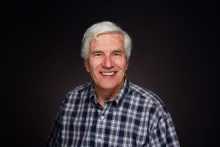
Steve Shafer was born and raised in Seattle. He graduated from Queen Anne High School in 1959 and later graduated from Ambassador College, Big Sandy, Texas in 1967, receiving a degree in Theology. He has been an ordained Elder of the Church of God for 34 years and has pastored congregations in Michigan and Washington State. He and his wife Evelyn have been married for over 48 years and have three children and ten grandchildren.
