


Robin S Webber
This transcript was generated by AI and may contain errors. It is provided to assist those who may not be able to listen to the message.
This past week, I received a phone call from an individual that attended our Las Vegas congregation for the very first time last week. It was a blessing to be able to talk to him, a younger gentleman.
He mentioned that he's been looking for a body of people in a fellowship that actually reads out of the Bible during services. We can take that for granted in the Church of God community, especially for many of us that grew up in this way of life or came later.
Somewhat versed in what Mr. Gardinire brought out in the first message, that the Bible in the great sense is our life. That's our compass. That's our mother's star. That's our north star. That's how we live our lives. When somebody comes into the Church of God community, we expect that we're going to open up our Bibles. I've often had a phrase, and you know that over the last many years now, that I've been your pastor, that our motto in our churches, the churches that I am pastor of, and I'm sure Greg would have the same thoughts just in a different way, he's visiting us, that it's just a threefold motto. Our doors are always open, our Bibles are always open, and our hearts are always open. That's what a fellowship in the body of Christ ought to be like. We don't come to services to be amused by prose or jokes. This is holy time. This is serious stuff. This is our life and the life of Jesus Christ that is in us. Because he's mentioned that to me, it just always strikes me what a rich experience that we have. That we open up our Bibles, that we take apart scriptures, that we connect scriptures, both of the Old Testament and the New Testament, that we look at the scriptures as being one continuous revelation that expands and expands and expands between these covers. Mr. Howe, a couple of weeks ago, spoke on the aspect of becoming an even more effective student in our services as to what we hear as we hear the Word of God expound it and what we read and how we incorporate it. This is going to be the sequel.
I'd like you to turn to Proverbs 20 and verse 12. Join me if you would there as an opener. Proverbs 20, Proverbs being a book of wisdom and insight.
Proverbs 20 and verse 12, it tells us this. The hearing ear and the seeing eye, the Lord has made them both.
In a sense, Mr. Howe's message a couple weeks ago told us here in services, to use an old Marine Corps term for those of you that might have been in the Corps, listen up during services. Listen up. Follow. Be attuned. Be involved. Be with the speaker. Open up the Bible. Open up your ears. I want to build on that now and go a step further.
Because it's not just opening up our ears or opening up our eyes because God has given us both to experience Him. But it's also not enough just to do that in services once a week. A little dab will do you. But throughout our lives, every day, on our Mondays, our Wednesdays, our Fridays, to read and to study at home between services. And that's more important than ever.
And that's why in this message I came to, as Mr. Howe did a couple of weeks ago, I want to go back to basics. Because the basics are our foundation. I'm going to go back to basics. Why is that? I remember first hearing the broadcast probably about 1962 with my mother in La Mesa, California, with the old plastic radio on the kitchen table. And I remember a man coming on saying that they're telling you today that there are no absolutes. Well, I'm here to tell you differently because there's a God in heaven, and He's given a revelation, and I'm talking to you today. How much more so? That was 1962, and here we are in 2021. We live in an age of non-absolutes. When I was growing up, maybe it's your experience. I think we all kind of, to a degree, grew up together, just some of us before some of you, that we grew up in a sense of understanding math as one plus one equals two. We came to understand that in life, life is like math. One plus one equals two. We came to understand that what you see is what you get. Today, we do not have that. In fact, there's more and more a progressive sense that don't teach math as an absolute. One plus one doesn't really equal two unless you feel that, and that's your truth.
We live in a world today where we used to think that God created people male and female.
Now we have what is called something that we had never heard two words put together like this until recently. Now we have what is called gender fluidity.
We live in a world that no longer teaches absolutes, that nations don't really have boundaries that should be secure to where we have law and order. And when I'm saying that, I'm not talking about not having immigration. All of us, especially as Americans, we are basically mutts from around the world all together here. All of our parents, whether they came over in 1620 or if they came over in 1880 in Ellis Island or whether they came up across the Rio Grande in the last 15 to 20 to 30 to 40 to 50 to 60 years, we're Americans. But recognize that the lines are disappearing. The secular and humanistic community wants to take a big eraser to all that we have known to this point, and one plus one no longer equals two. Well, I'm telling you here today that we have a book that is about absolutes. Here's what I want to share with you. Let's open up the Bible for a second just in the intro phrase. Join me if you would in James 1. In James 1, and it's one of my favorite verses in the Scripture that gives me at least comfort, and I hope it will to you, in James 1. Let's pick up the sword in verse 17.
Every good gift and every perfect gift is from above and comes down from the father of life with whom there is no variation. His purpose and his plan and his revelation for humanity that he created through Christ is one plus one equals two. And there is no shadow of turning. What does that mean to us when you understand, as Bob is trying to explain, the world of Hellenism or Rome? He's using a term where there's no shadow of turning. He's talking about like a sundial in a garden. We've all gone to gardens and all the paths lead to the center, and you'll see kind of a sundial there in the middle. And it has that little piece. This is the PowerPoint. You don't want to miss it. And it has that little piece like this. That's called a gnomon. It's called a gnomon, and that casts a shadow to tell you what time it is. What this is telling us, the God that made this universe reigns over it. The shadow does not turn. His purpose is fixed. His revelation is true. He has shared with mankind from Eden on, whether it's rejected or not, that there is one way.
He is God. He is Father. And Jesus Christ is His Son by which He rules over all things.
Hebrews 13 verse 7, you might just want to jot that down. It says, Jesus Christ. Think this through, please. Jesus Christ the same yesterday, today, and forever.
What does that tell you and me as people that follow the book? People of the book. It tells us that God deals with a straight edge. His purpose does not change. What is shared in the Old Testament, which is the New Testament concealed by the time you get to the New Testament, it is the Old Testament revealed. It's one book. It's expanded. It's the Exodus story of God drawing people out of this world to tell them that there's a better world coming.
There's a new age coming, and I want you to be a part of it. You are in training. You're not just down on your own here. You are in training.
This is what Isaiah 40 verse 8 says. Isaiah 40 verse 8, too, to lay some track here.
In Isaiah 40 and verse 8, let's pick up the thought here, what it says about the Word of God.
The grass withers. The flower fades. And we see that. We know how, when we do have rain, how lush and how wonderful even Southern California, the hills are actually green. The poppies come up and all of that. But we know by the time it gets to late April and May, especially in Southern California, those poppies start going, ooh, they start to wither. The grass withers. The flower fades. But notice this. But the Word of our God. This word, this revelation, that was so important to him that he used a variety of beings, a variety of people from different linguistic groups, different ethnic groups, different tribal groups. He used the Jewish scribe of old to copy down this word to you and me today. And if they made one error on the page, they had to throw it out because they were they were running because they were they were writing something that was holy. We think of the Greek monk up on those cliffs above the Adriatic or in the Aegean, high up on a cliff. You see these kind of monasteries translating, writing down in the Greek for centuries and centuries and centuries. We later on think of somebody like a white cliff in the 14th century or later on a tendell in the 16th century that wanted to sand blast down underneath the Latin and get to the original language. What was the real meaning? What was God really telling humanity that's made in his image and likeness? And there are men and there are women that did not love their life unto death, but sacrificed that we might have this word today. Oh, they may not know exactly what we know in the revelation that God has given us, that they are worthy of every respect. And thus we honor this word that has come down to us that we can read in our own tongue. Imagine for a thousand years you had some holy figure, some religious figure up there speaking in a language that nobody knew.
And you just kind of learned after a while you heard a note, see everybody just bowed or said amen at the same time, but they didn't know what it said. And over these last 500 years we are able to read the Word of God.
So with that stated, here's my SPS specific purpose statement. What saith the Scriptures? What saith the Scriptures? Romans 4 and verse 3, that clarion question asked by the apostle Paul. I've had you out something like you just to look at it for a moment. You can use it later on in your own study, but let's just take a look at that for a moment. We're going to be talking about the Word of God, but let's get a connection and you'll kind of know where I'm going to be taking you in the next few minutes.
Let's understand, if you have it in front of you, that there's the Living Word. And that Living Word is the Son of God, exalted. He was the Creator. And in John 1 it says, verses 1 through 3, 4, that in the beginning was the Word and the Word was God. There is a Living Word, and that Living Word continues to be the same yesterday and forever. We have the Spoken Word, whether it was the one that later on became Jesus Christ in his pre-incarnate state as the one that gave Moses the Ten Commandments.
He is the Spoken Word. He is the Spoken Word as Matthew, Mark, Luke, and John would come and write down what he said that we have today in the poor Gospels. He is the Spoken Word, which is now a written Word, and a Word that is meant to be read. A Word that is meant to be read, and a Word that is to be planted in our hearts, not only attached to our eyes, but to become stuck in our heart, as we'll come to talk about. And then a Word that is to be acted upon.
Remember how Mr. House so eloquently took us through the aspect of Shema, which in the Hebrew means to hear. And for the Jewish mind and the Israelite mind before, to hear was to obey. We'll talk about that a little bit later. And then, notice words that bear fruit. So I've tried to give you a connection of where we're going in this message in kind of just a front sense.
You've got that. We're going to move on now. What does that Word do for us? Let's go back to basics. 2 Timothy 3. Join me if you would there, then, please, as we move into the body of the message. In 2 Timothy 3 and verse 16, let's take a look. All Scripture is given by the inspiration of God. Again, we may be familiar with this, but we have newer people amongst us.
That term, all Scripture is given by the inspiration of God, literally means, if broken down, that it is God-breathed. It's not some imagination of an Israelite of old or somebody that predated Israel. All Scripture. And we have words in these, between these two covers, that go back in time that cover 6,000 years of human history, where God was involved, where God had to take off his hands. It deals with the patriarchs of old, from Job around 1800 BC, all the way to events that are yet going to occur ahead of us.
So we see that all Scripture is God-breathed. Now, I'm going to take a breath and step back for a moment, bring you back on board here. Let's understand. That is a revelation to you today, why you are here today. You didn't cook up in your own mind that it is God-breathed. That is a matter of faith. That is a matter of God dealing with our minds and our hearts.
There's a lot of nice people out there. There's a lot of good people out there. But they're not people at this time, as we know, that God is working with to bring up as a first fruit. But He's entered your mind. He's entered your heart that you've come to see that this literally is... this actually seeps out of eternity into time and space and into your mind and into your heart to act upon, because God wants you to be a part of His family. All Scripture, not half of it, not the part we like, the part we don't like. All Scripture is given by inspiration of God, and it's possible for doctrine, for reproof, for correction...
uh-oh, there's that word... for correction, for instruction in righteousness, that the man of God... and I'll just paraphrase... and the woman of God may become complete, thoroughly equipped for every good work. You and I are here today. The reason we even take the time to be here is we believe that we are reporting to a Creator God, and that He has this word in front of us that we discuss during church service time, but not only during church, but every day of the week.
John 10, verse 35. Join me if you would there, please. And this is a verse that will lead you to understand the importance of study.
In John 10, verse 35, notice what it says here. Jesus answered, It is not written in your law, I said you are God's. Is it not written in your law, I said you are God's. If He called them God's, to whom the word of God came... and notice what it says here.
Let's highlight this. And Scripture cannot be broken.
If you cannot see, if you think it's broken, if you think it's not quite fitting, you ever done that where you work with something, you're trying to put two parts together, coupling them together? If it's not fitting, be patient. And if we're patient, if we keep on reading, and if we keep on asking, God will supply it to us. And if He doesn't supply it to us, it's just not time for us to know. What? It's time for us to know? No, it's not time for us to know. Why? Because Father knows best. Just ask Job. So what does this have? Oh, John 6.63. Let's just lay these verses out. I know some of you have heard these verses for 30 or 40 years. Well, guess what? We're going to drill them deeper today. John 6.63. Notice what it says here. It is the Spirit who gives life, the flesh, prophets, nothing. Notice the words that I speak to you are spirit. And notice it says, and they are life. I know some of us in our church community right here, as well as throughout the nation and our fellow citizens throughout the world, to continue to exist, to live, to grow, have been having to take oxygen.
We've come to understand that oxygen is life.
This is what God is telling us. The words of God are like oxygen that fill us, that allow us to live before Him. It's that important. So what does this have to do with us today? And again, why are we here?
As a church, we often speak about authentic Christianity. Bob just alluded to that. We strive humbly, as best as possible, to emulate the example of the first century church in the words of Jesus Christ. We often speak of authentic Christianity. But I want to go a little bit further and speak of being an important aspect of being just that. What does it mean to be an authentic Christian? That's a good question. Am I authentic? I don't know. Am I real? What's this about?
Let's call it being a radical Christian. Now, when I use the word radical, we get a little shaky because we think of the radicalism of today. We think of the radicalism back in the 60s. That's not correct where I'm going when we interpret this. The term radical stems from the Latin word radax. You might just want to jot that down. Your first word that you've ever written in Latin, maybe, I'm not sure, radax. The word radax literally means to root, to go down deep, to sink in, to go all the way down to where you can stand drought and you can stand the storms of life. That's what we desire out of our fruit trees. I think I see the clarks out here with their the avocado orchard that they did have when it was at its greatest. You wanted those trees to get down there. You wanted them to sink because of erosion or storm or this or that.
It means to be rooted. It means to seriously... Here we go. Here's another example. Seriously entrenched. That's not given to spiritual erosion.
Out of the book, The Radical Disciple, and I'm going to quote John Stott. Many of you have his commentaries. He said this, today the term Christian is a broad term referring to nearly a billion people.
It was first used in Antioch, which I think most of us are aware of, to collectively describe people from many backgrounds rather than a singular, ethnic, or racial group. Why is that? Because Antioch, at that time in the first century AD, was one of the three great cities of the Empire. Rome, Alexandria, and Antioch, which was on the eastern tier.
There were all sorts of different people, but it wasn't just Jews that were gathering. Everybody's kind of looking through their eyeglasses. There were more people that were there.
We're familiar with that term Christian. I know sometimes we say, well, it was slanderous or it was kind of an epithet. Oh, there's those Christians. It was actually used because they didn't have any other term to describe this multi-ethnic, multi-polyglot group of people. They called them Christians. They put them all together. Since that time, and we know in our own literature and our own definitions, we talk about Christians. But the term that we really want to think about is disciple. Disciples are used much more. You know, Christian is only used three times. I'm not saying don't call one another Christian. Don't go there. But I'm saying to really hunker down, disciple is the term that we really want to think about. Very important. Join, if you would, with that thought in John 831. Let's take a look at this in John 8 and verse 31. Before we get there, let's break down and give you. Did you all know that you are disciples of Jesus Christ? So what is a disciple? A disciple broken down defined as one that is taught or trained is a trained one. He's the follower of a master. He's a student. He's one who is under the discipline, disciple discipline, of becoming like the master. It wasn't just enough to know what the master was like. Are you with me? You want to disciples follow different rabbis in the first century AD, not only because of what they said, but they wanted to be like them.
And so we take a look at this in John 8 verse 31. There's a challenge here in Jesus says it plainly. Then Jesus said to the Jews who believed him. Not the people that were antagonizing him. He said, if you abide, that means that you stay within the framework. If you abide in the framework of my word, you are my disciples indeed. It's not just somebody that's following him.
It's somebody that's becoming like him, becoming like the living word, the one that is incorporating his spoken word. You and I in the 21st century that have the opportunity to read the word, to drink it in, to allow it to saturate us. The water of the word.
Especially during the summer, we that live in this Mediterranean climate, you just don't take your hose and put it by a tree for one or two minutes. Put it on slowly. Susan tells me I need to put it on slower. But you let it sink. You let it sink. You let it sink. You let it sink.
Because you have to get ultimately down to those roots way down there.
And you see, you are the fruit of God and we want to be rooted in his word.
With that thought, then, join me in Psalms 119.105. Psalms 119.
A verse that's familiar, but we're going to build upon it. Psalms 119.
Psalms 119.105.
Your word is a lamp to my feet and it's a light to my path.
There's a song about this. Your word is a lamp unto my feet.
We lose that sense, especially post-Thomas Edison.
Look up. Light. Tonight in your house. The lights. When you go outside, you switch on the back porch light. You switch on the front porch light.
Think of a world when darkness was like the bottom of a coal mine.
And God is telling you, and he's telling me, in this day and in this age, when it's going to become darker and darker, dear friends, that these words of life that do not change from the creator who knows what makes and allows the creation to operate best. We're going to need more of this lamp. We're going to need more of this light. So importantly, join me if you would in Psalms 119, just over the page where we see in Psalms 119 verse 129. Notice what it says. Your testimonies are wonderful.
They're even wonderful when it hurts us because we recognize that we're not living up to his testimonies. But remember what it said in Paul's writings, that it's also for correction to get us back in alignment, to get us on the straight road to being able to follow Jesus. Therefore, my soul keeps them. It's not enough to know them, but to keep them. One plus one equals a spiritual two. The entrance of your words gives light into these dark spots that we don't even recognize.
It gives understanding to the simple. I opened my mouth and panted for I long for your commandments. I want to go to Psalms 129 verse 13. Psalms 119 verse... Oh, maybe that's where I was. Okay, that's where I was. I got that one. Let's go to Hebrews 4 and verse 12. You say, well, I know what Hebrews 4 and verse 12 says. I've been in this way of life for 30, 40 years. Well, guess what? We're going to read it again. Because every day when you look at the Scripture, you recognize that you probably need it more and God needs to go deeper with us. In Hebrews 4, and let's pick up the thought in verse 12, for the Word of God is living.
It's not dead. It's not a fossil. This is not a dinosaur. People want to make it a dinosaur today. They want to put it in a museum and they want to challenge this. Can you believe that at one time people really believe this stuff? That's what our college-age students are facing in university today. It's alive. It's living. It's powerful. And to the degree that humanity has incorporated Christian principles, there has been a big, big difference. Sometimes it takes time. Sometimes it takes centuries. Sometimes it takes decades. But even what we're going through today in this age, in this nation, in other nations, when you recognize that our founding document, the founding document of all documents of America, in the Declaration of Independence, it says all men are created equal by nature's God. Now, sometimes it takes a long time to get there.
Because we're so used to going down a certain course. But to recognize that when we think of this nature's God, as it was put in the Enlightenment, nonetheless we can course correct.
And if not as a nation, then as human beings, ourselves, individual to offer the right hand of fellowship to all that come on our way and to treat all that are in our lives with respect and with dignity.
Therefore, it's like a two-edged sword piercing even to the division of soul and spirit of joints and marrow and as the discerner of the thoughts of the hearts of the mind.
So, where do we go from here? I'd like to share Psalm 119. It's just nice to read scripture, isn't it? Psalm 119.
Again, let's pick up the thought if we could in verse 9.
Here we go. Let's hear the words of God. Now, I turn to Psalm 119. I'm turning page after page after page, and guess what? I'm still in Psalm 119. You know what I'm talking about. It's the longest chapter in the Bible.
It says in Psalm 119, verse 9, How can a young man cleanse his way by taking heed according to your word? With my whole heart have I sought you. Oh, don't let your commandments wander from me. Your word I have hidden in my heart that I might not sin against you.
We hide God's word. We endearingly sometimes it has to be spiritually stuffed in there out of necessity, but we are to tuck it down deep. We're to allow the water of the word to go down so deep that it continues to nourish us even through the droughts. I want to use an example here.
Never underestimate you allowing God's word to saturate you, to be a part of you, that it becomes a rhythm of your mind and of your heart when you need it to bring you back to God. I'm going to share a story with you. It's a story from Lois Taverberg. She wrote the book, Walking in the Dust of Rabbi Jesus. I'm going to be quoting from page 138. It shows how the power of God's word can resonate in you sometimes for months or seasons or years when you need it. Victor spoke last two weeks ago, I believe it was, when we talked about Shema. Shema means here in Hebrew. It means to hear and responses then to obey. Every Jewish child has grown, grows up, some of you, maybe out of a Jewish background or having experienced Judaism. There are different verses of the Shema which are repeated several times during the day, but the parents teach their children at a very early age. Here, actually Jesus quotes it in Mark. It says, Hear O Israel, the Lord your God, the Lord your God is one, and you shall love the Lord your God with all of your heart, all of your mind, all of your soul. And then Jesus included, and the second is likened unto it, you shall love your neighbor as yourself. Every Jewish child has learned this from the post-exile period on as far as we know. Let me share this story with you. The story of Rabbi Eliezer Silver searching for Jewish children after World War II. You can just imagine grandparents getting kids out of Austria, out of Germany, trying to send them into a less hostile country.
He was looking for children after World War II that had been taken by well-meaning folk in convents and monasteries and farmhouses. He entered a French monastery to inquire, and was told, no one fit that description. And all were Christian with German names, Schwartz, Kauffman, obviously very German. But, as we know, could be Jewish as well.
Silver asked if he might visit the war, just to walk around and just to scan them to see the young faces. As he went into the different dorms, as he went down the different wards, he began to sing in Hebrew. Shema Israel Adonai Elon Yahu Adonai HaKhar Some faces lit up, and tiny voices began to join in. They recognized these ancient words, the words of God, from early memories of their fathers and mothers, reciting them each morning and evening in their prayers. Dear brethren, and we are all children of God, and our Father is teaching us to incorporate and to internalize and to be saturated and to appreciate His Word that comes out of this holy book, to embed it. It was embedded deep in them. Isaiah 30, verse 21, you can jot it down. I used to write a column on that. This is the way, walk you in it.
And they were called back into that way, the way of their ancestors, in the way of the book, the way of Judaism. They heard the echo, they heard the Word, it was so familiar to them, they could not help but to respond. And that's how the Word of God is with us, as God's Spirit as well. The two convicting spirits that are mentioned in the Bible, the Spirit of God and the Word of the convicting elements of God working with us, as they combine, we get back on the path. We escape as these children, even with these benevolent overseers, they were able to go back to their roots. Let's deal with another story, a very real story about the echo of God's Word. Join me if you would in Matthew 4. In Matthew 4, in time of need, and that's why we have to drink in this book, in time of need, God will be there for us. This is the story of Jesus in the wilderness temptations. I'm just going to, I'm not going to go down, down deep on this for sake of time, but I want you to notice what it says in Matthew 4. Then Jesus was led up by the Spirit into the wilderness to be tempted by the devil. It's interesting, we always think that the Spirit is leading us to paradise. It also leads us into the wilderness to be refined and to be defined. And when he had fasted 40 days and 40 nights, afterwards he was hungry. And being the Son of Man, being in flesh, I'm sure, you're sure, 40 days, he's literally exhausted. Some of us that have recently had COVID knows, know a little bit of what exhaustion is like. Everybody you talked to, I was just talking to somebody out here before his service, they said, oh yeah, know what that one's like. Said, yeah, like a Mack truck that runs over, thinks it's missed and comes back and gets you one more time just to make sure. But Jesus is out there for 40 days. Now when the tempter, that is the adversary or the devil, came to him, he said, if you are the Son of God, command that these stones become bread. But notice what happens here.
But he answered and said, it is written. It is written. It's in the book. It's in the scrolls.
It's the divine Word of God. It is written, man shall not live by bread alone, but by every word that proceeds from the mouth of God. That was a direct quote, if you want to jot it down, from Deuteronomy 8 verse 3. Because those are the scriptures that Jesus grew up as a Jewish lad.
That they learned to repeat and they learned to know every Jewish lad until age 12 minimally was incorporated in schooling and in religious education. This was like A-B-C-D-E-F. This is like knowing your capitals of the states. Hello out there. All 50. This was just part and parcel of them. Then the devil took him up into the holy city, set him up in the pinnacle of the temple, and said, if you're the son of God, throw yourself down for it is written, he shall give his angels charge over you. You see, Satan can also quote scripture, but the way he does it does not end up spiritually. One plus one equals two. Satan's got bad spiritual math. Just remember the Garden of Eden. God says you can ask every, you know, he mixed his truths with error. What did Jesus come back with? Jesus said again, it is written again, you shall not tempt the Lord your God. So once again, he quoted from scripture. Boom, boom, just like that. He quoted from Psalms from Deuteronomy 6 16. Let's take it one step further. And he said, then again, the devil took him up and showed him all the kingdoms of the world and says, oh, you can have all of this if you'll just worship me. You know, God, the Father up there in heaven. Watch this. Everybody look up PowerPoint time. God will just close his eyes to forget this. Just do this for me and it's all going to be okay. And God will close his eyes. No, you can't. God can't close his eyes. He's omnipresent. He's all in all. He's everywhere. He sees everything. This way, God never blinks. And what he'd say, he said, it is written again, you shall not tempt the Lord your God. No, it's down verse 10. It says, away with you, Satan, for it is written, you shall worship the Lord your God and him only shall you serve. Jesus is the heavenly rabbi. He is our teacher. He is our model. We want to be like him.
That's the whole thrust of the New Testament. That's so often the thrust of Paul that we are being perfected so that we might come into the full measure of him. He is not only Savior. He is not only high priest. He is also teacher.
So what do we do as we go home? I'm going to give you real quick points. I'm going to tell you how many. I'm going to go real quick. It'll be under 100. Real quick. The reason I'm giving this to you, I hope I've encouraged you to see the wonderment of God's Word and our need to study it. And you're also good. You bring your Bibles. You open up your Bibles here. Hopefully your hearts are open. That's up between you and God. But what do we do on our Mondays, Wednesdays, Fridays, and all those days in between? We have our Goliath, just like David has his Goliath, and did have his Goliath in the valley over there. But God asked him to do something. Or at least he took that initiative. He picked up five stones. He was going to do his part. He was going to ask God to do his part.
That giant was coming down because he said, you have blasphemed the God of Israel.
He kind of took his calling as a Israelite, kind of seriously. And we are spiritual Jews.
We are that spiritual Israel. We are the continued story of God's revelation. So just a few things I want to share with you. I'm going to be real quick.
Number one, in your home, ask. When I'm saying this, I'm going to be very honest. Concession is good for the soul. I've got to develop, and I've got to grow, and everything is going to tell you right now. So let's do it together as a family. It's more fun. Number one, ask God to join in our study of his word. Ask God to join in our study of his word.
Let's understand, when we open up the Bible, we are in that sense entering holy territory. Think of Moses moving towards the burning bush. God wanted Moses to understand that he was entering holy territory, and he asked him to do something. Now, I'm not telling you to take off your favorite slippers in the morning before you read the Bible. But recognize what you're entering. This is God's holy word. Acknowledge that it's holy by acknowledging him. Just think of the reverence that the Jews themselves have for the Torah. If you've ever seen the ceremony where they go up into the cupboard, and they move the Torah, the scrolls, back and forth. Okay. In that sense, understand that we are a spiritual Israel. We are, as Paul also defines, spiritual Jews.
In that sense, we need to have that same reference. Ask God to direct your study.
Let's reflect on Psalm 119, verse 18. I'm just going to take you to one verse here. Psalm 119. Join me, if you would, please. One night.
In verse 18.
The psalmist's prayer, Open my eyes, Open the eyes of my heart, That I may see, Wondrous things from your law.
I'm a stranger in the earth. Don't hide your commandments. Don't hide your ways. Don't hide the words of Jesus Christ that the Living Word came and gave us a spoken word that later on became a written word that is to be enacted upon word and a word that is to bear fruit. When we do that and we've asked God to be our partner, make your study personal. Meditate on it. Reflect on it. Ask God for his intervention to help you make the changes or address this need in your life. Those may be commandments that you're reading. Those may be the words of Jesus that you're reading. That might be the example of what Susan was sharing with me. Some of her reading of the aspect of the patriarchs and of Isaac and Rachel and later Jacob and Rebecca. Frankly, their errors are there for us, and they're good points, too, to allow us to understand how we live our lives. Bottom line, you might want to just, on your Bible, maybe your front page, just put Psalm 119 verse 18. Remember to include God in your study to direct you. Number two, be flexible in your studies. We all learn different ways. Got it? We all learn different ways. I'll just be very honest.
Susan can go through a book like a midwesterner, which she is, eating corn on the cob, just like this. Watch this. Just like in the old corner.
And she starts at the beginning. Now, I always want to go to the end and see what happens. She starts at the beginning like a typewriter. The old ones that you're going to know, some of you are too young to preach old typewriters.
That's Susan. I tend to, your friend and your pastor, I tend to go kind of reader's digest version. That's how my mind works. I tend to read articles. I tend to read essays, and I tend to absorb or non-absorb. We all do at different rates. I know I need to start at the beginning and start at the end of things. Now, some of us, and it's by personality, and there are personality types, they love devotionals. That really means a lot to them. Get a page, and others, they've got to read the whole book. We all have different learning styles. So, what I'm saying here is to be flexible, and to be so flexible that sometimes I know people say, I heard that message, so I'm going to read the Bible from beginning to end.
Tired of this, I've been in the church for this way of life, this way of life, Bob, first enough the church for 30 or 40 years, and I've never read the Bible straight through, so I'm going to do that. I'm going to be like a dog with a bone, like this.
Recognize God's Spirit might be prompting you based upon a need to break from that.
Maybe you're so deep and chronicle you can't get enough of it. Good luck.
Maybe, though, you need to turn to Philippians that day.
Maybe you need the inspiration of joy. Maybe you need to hear the words of Christ in the gospel.
So, be flexible. Know what's going on there. That's very important. And to slow down. Don't read with speed. Read with meaning.
And also, one last point in this, in what you're reading, you may not completely understand at that time. Pray about it, but also to recognize that there'll be another time. Maybe this is not the season of your life to understand what is being said. So, be flexible in your studies. Number three, read the Bible like a king.
Read the Bible like a king. Why do I say that? Because you and I, too, are being trained to be a kingdom of priests. And to go to, I'm just going to go to one verse here. Join me if you would in Deuteronomy 17. In Deuteronomy 17, and picking up the thought in verse 18. Join me if you would there, please, Deuteronomy 17. 18.
Also, it shall be, speaking of those that are in the royal line, when they said on the throne of their kingdom that he shall write for himself a copy of this law in a book from the one before the priest, the Levite. So, it had to be a special book. Couldn't just be a hand-me-down. This had to kind of be an official book from the priest and the Levite. And it shall be with him, and he shall read it all the days of his life, that he may learn to fear or to respect the Lord his God. There is fear within that, too. And be careful to observe all the words of this law in these statutes, that his heart may not be lifted above his brethren. Now, sometimes people are really nice until they get a title or until they get a position. And then, all of a sudden, you don't recognize that person. Can you imagine having the crown on your head, what that does to an individual?
And that he may prolong the day of his kingdom, that he might live for others, he and his children in the midst of Israel. I'm going to share something with you.
You know that I always say that Susan and I have been in this way of life and blessed since we were kitlets. Some of you that are near my age, 39, not just joking, is that, well, remember maybe when your parents first heard the World Tomorrow telecast and you heard this thing called the Ambassador Bible College, the Ambassador College Bible Correspondence Course. I see Bev, I know Bev grew up in the church. And, you know, back in the 60s, you didn't really have a lot of discussion with your folks. What they did, you did. You know, it was either yes or go to your room, I'll be visiting you pretty soon. So anyway, there was not a lot of this discussion. So whatever Mama and Papa did, we did. My mother, Thomasina, Diane's good friend over here, very studious, very dramatic, diligent. So anyway, hello, my mom. So anyway, she did that. I'm going to show you something that we did and maybe some of you did. And it was the best thing that ever happened is that they would always ask you to write out all the verses. So this is Robin Webber's writing, or probably about age 13 or 14. Page after page after page with this. Knowing that one day I had to be good, but I, you know, I was 13 or 14, I knew I had to be good one day. And so I kind of looked at the verse, and it would be like this. I'd go, okay, now I'm going to have to write this whole thing down. I hope it's maybe three verses that just have two lines. And then you go to Jeremiah 28. I'm going home by verses 1 through 20. And that meant that it had to be written out.
And there was a lot of writing. This was on top of homework at school.
I'm not making fun of this. It was the best thing that ever happened to all of us. We were following the principle in the Scriptures. And when I wrote down in that day and age, I was going to have to reexamine and define in my life as I was challenged with what I believed in. Some of us, when we think back in 1995, well, being in Pasadena, I was probably longer challenged than a lot of you. But in that sense, this was the core. This was that, in that sense, what I learned was like that Shema with those Jewish kids in France and that convent. So that when the time came, what I had been taught, what I had heard, was so down deep inside of me. It was God's truth. It was God's way. It actually made sense to me when I was 12 and 13 and 14. You know, I didn't have to go to high math to figure that out. And it was like that echo came up to me 30 years later. That's why we need to love God's Word and we need to incorporate it. And write it out. Maybe sometimes not write everything, but write it out because then you're using all your different senses. You know, it's like the old Asian proverb, I hear and I forget. I see and I remember. But allow me just to go to this last point to fill in the rest of that Asian proverb.
I'm actually going to skip that point. I'd like this point better. I'm going to show you how that works in a minute. I'll tell you something. This is fun. And Susan has to go through this because she's married to me and I'm the one speaking up here. But Susan can be behind closed doors and then she comes down. You all think I'm the talker because I'm up here as the pastor, but she can come down and for scores of minutes. Suzanne's laughing. I can see. And she will share with me what she has just read in a way that I could not even begin to explain to you in the eloquence and in the simplicity and in the personal need of making that happen in her life. And her sharing that with me because she is the tool of God on me that she wants to have me share with her in our life as a married couple. And there's a blessing to that. Join me, if you would, in Luke 6.38 to share. And Bob did a very nice job in how to share today describing of that hope that lies within us. And we're going to conclude with these two verses. Luke 6 verse 38. Just notice what it says here. Give, and it will be given to you.
Good measure, pressed down, shaken together, and running over will be put into your bosom. For with the same measure that you use, it will be measured back to you.
When you offer God's word to your spouse, to a dear friend, this is what we should be doing after services. We're not here to talk about football. We're not here to talk about this, or that, or this movie. We're here to talk about the Word of God. With what measure you give, God says it will be given back. It is a natural law of cause and effect. Join me, if you would, in Matthew 13 verse 12. In Matthew 13 verse 12.
Maybe that's not what I want. I do not want that. Oh, you know what? Luke, that verse was a little scary. You don't want to go there right now. Luke 6.38.
Here we go. Let's take these in tandem. Let's see if... maybe that was it. Okay. Let's just play off with this.
Take what you are reading and find a way of bringing it into your life that day. Take what you read in the morning and ask God through the prayer that you asked Him to invite Him into that study with Him. You're studying together with God. You're opening the book, but He's opening your heart. Ask Him, then, to help you incorporate it in that day. Go out and meet your prayer, whether in conversation and or in conduct. Whether in conversation or in conduct. Because remember what I said at the end about that Asian proverb? I see and I forget. I hear and I remember, but the last part of that is simply this. I do and I understand.
This is the most beloved, greatest book of understanding that we can possibly read.
I hope I've invited you and enticed you and excited you about remembering what Paul says as you go into your Mondays and Wednesdays and Fridays and all the challenges of life and the joys of life that are all mixed up together in this life. That you always ask every day of your life, oh, you know what? I haven't done it yet.
What saith the Scriptures?
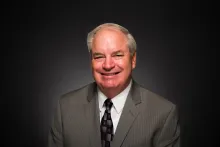
Robin Webber was born in Chicago, Illinois, in 1951, but has lived most of his life in California. He has been a part of the Church of God community since 1963. He attended Ambassador College in Pasadena from 1969-1973. He majored in theology and history.
Mr. Webber's interest remains in the study of history, socio-economics and literature. Over the years, he has offered his services to museums as a docent to share his enthusiasm and passions regarding these areas of expertise.
When time permits, he loves to go mountain biking on nearby ranch land and meet his wife as she hikes toward him.
