

David Schreiber
This transcript was generated by AI and may contain errors. It is provided to assist those who may not be able to listen to the message.
Well, good to see all of you again. Happy Sabbath! It's always good to see a few new visitors with us, and always good to see all of you back.
Well, something's happening tonight or tomorrow night, or maybe even last night, depending on the community where you live. You can feel it in the air. You can hear its sound. Listen to its sound.
Oh, yes, cash registers. It's the sound of commercialism. Like virtually everything today, you need to follow the money.
Well, Halloween, which started out many years ago as a religious holiday, first a pagan religious holiday, then a pagan Christian religious holiday in the United States, has become a very commercialized holiday.
It's largely centered around selling themed merchandise, like costumes. And there's a yard that I drive by in Chamberlain Road here that is unbelievable.
They have the entire yard with figures, ghoulish figures. Some of them have got to be 10 or 12 feet tall.
And it's got children with their heads missing and all kinds of ghoulish and freakish Halloween-type. This individual's got to have spent $1,000 on these things.
It's amazing how people have gotten into Halloween, particularly the last decade or so.
The holiday is largely centered around themed merchandise, lots of candy, and aggressive marketing tactics.
I can barely walk by something in Home Depot without it going, boo! I thought, what was that? Right in the middle there was some silly... I'm controlling myself here... There's some silly figurine that's talking. My wife, when she was working in retail, used to comment about how these freaky little things would... She'd walk by them, they'd shout out at you, they'd say something to you and terrify people. That's the idea of it. It's supposed to be a day of fear and terror.
I hear some facts about Halloween that you may not know. First of all, one fact I discovered is that, though I've been in the ministry for a few years, I have no record of having ever given a sermon on Halloween. So that's why I'm talking about it today. So that's one thing.
Another is that one quarter of all candy sold annually in the United States is purchased for Halloween. In the USA, pre-Halloween chocolate and confectionary candy sales alone will reach $325 million.
$325 million. Halloween is now the second largest commercial holiday in the United States after Christmas.
Today, including candy and costumes and...yards. As I mentioned, Americans will spend an estimated $10 billion annually on Halloween.
Americans on costumes alone will spend $490 million on costumes...for their pets.
That's $490 million on costumes for their pets. That's more than double what they spent in the year 2010.
There's nothing like having your dog looking like a ghoul. I mean, there's really some...don't knock it unless you've tried it.
In Britain alone, this is just the United Kingdom, Halloween costumes and decorations, which are made from cheap plastic and synthetic materials, will create 2,000 tons of plastic waste by people discarding their Halloween costumes.
2,000 tons of material that will fill up UK dump sites to take a thousand years to degrade because they're synthetic or they're plastic.
So it's going to take a long, long time for those 2,000 tons and those landfills to finally be consumed naturally.
Now, that's interesting because this week, some of the greatest intellectual minds on Earth are gathering in Gascole to talk about climate change.
Do you think that one of the statements that they will make when it's over is that we should do away with Halloween because it hurts Mother Earth?
It creates, in the United Kingdom alone, where this conference is being held, 2,000 tons of plastic waste filling dumps.
Do you think they will make that statement? No, they won't.
When Martin Luther nailed his 95 theses or objections to a door of a church in 1517, that's considered the beginning of the Protestant Reformation, it was no accident that when he nailed that on the door of the church, and by the way, some people think, Oh, what a bold, dynamic act of courageous faith he did. What a rebel!
No, that's not the case at all. In every community, the church door was the local community bulletin board.
It was the Facebook of its day.
And when you were in town, if you wanted to read people's opinions and ideas, if you wanted to read everyone else's opinions and ideas and what they did that day, you would go to the church door and they would have posted it on the church door.
Again, it was the community bulletin board.
Well, it's no accident that the religious reformer Martin Luther chose October 31st to post his 95 objections. The church doors of Wittenberg were something, again, of a public community bulletin board.
He knew that thousands of pilgrims would see his 95 theses, which he hoped would spark study and spark a reform among religious leaders, which is exactly what happened.
Now, Martin Luther knew the origin of Halloween, that it dates back to a pagan Celtic festival known as Sawin.
The festival, he knew, was adopted later by the Romans and accepted by the Catholic Church and ultimately renamed as All Saints Day in honor of the deceased saints. Luther knew all that, and he condemned the idolization of saints and church festivals, Catholic Church Holy Days.
He said, why would you want to pray to saints? They're dead! They're not in heaven. They're in the ground. They're awaiting the resurrection. They're dead. So they can't intervene for you. Why in the world would you want to honor them or pray to them for things in your life? He was detested by that kind of thinking. Even though his main concern was the sale of indulgences, he knew that on this occasion, October 31st, that great crowds, including the educated masses, would be coming to the church to view the relics of the saints. He also detested and despised idolizing saintly relics. And so he knew that on that day, that when he nailed his thesis on the door of that church, that thousands upon thousands upon thousands of people would walk by and many would stop and read his 95 objections to the Catholic Church. So let's take a look and talk a little while about the history of Halloween. I am not going to bore you with all the gory details. That was a bad pun, I know. I'm not going to bore you with the gory details. I am just going to mention, read from a few paragraphs from a site that's actually very good, called History.com. And in the past, I've recommended, if you're interested in seeing a bare-knuckle analysis of Christmas, take a look at History.com and their Christmas show annually. No holds barred. They show all the paganism, all the ancient pagan roots, and they don't hold anything back. It's really a great show to watch. Also, they have one in Halloween in which they do the exact same thing. They do not sugarcoat the history of Halloween observance. But I know we have some here who are very young and may not know much about the holiday. So I'm going to just read from a few paragraphs and maybe just make a few comments about the history of Halloween before we look at our scriptures. All right, let's begin. Quote, Halloween is a holiday celebrated each year on October 31st, and Halloween 2021 will occur on Sunday, October 31st. That's tomorrow. The tradition originated with the ancient Celtic festival of Samhain. Now, that's the correct pronunciation. It's spelled S-A-M-H-A-I-N, and I've heard people pronounce it as Samhain, but Celtic people pronounce it, and they should know. They invented the word. They pronounce it Samhain. When people would light bonfires and wear costumes, the ward off ghosts.
In the eighth century, Pope Gregory III designated November 1st as a time to honor all saints. Soon, All Saints Day, incorporated some of the traditions of Samhain.
The evening before was known as All Hallows' Eve and later Halloween. Over time, Halloween evolved into a day of activities like trick or treating, carving jack-o'-lanterns, festive gatherings, donning costumes, and eating treats.
Continuing Halloween's origins date back to the ancient Celtic festival of Samhain, the Celts, who lived 2,000 years ago, mostly in the area that is now Ireland, the United Kingdom, and northern France, celebrated their new year on November 1st.
The day marked the end of summer and the harvest and the beginning of the dark, cold winter, a time of year that was often associated with human death.
Celts believed that on the night before the new year, the boundary between the world of the living and the dead became blurred.
On the night of October 31st, they celebrated Samhain when it was believed that the ghost of the dead returned to earth.
Continuing on May 13th, 609 AD, Pope Boniface IV dedicated the pathonon, which by the way was a pagan temple. My wife and I have had the pleasure of being able to be in that building, and it is quite magnificent.
So the Pope took this building in Rome, and he dedicated it in honor of all Christian martyrs, and the Catholic feast of all martyrs' day was established in the Western Church.
It was Pope Gregory III later who expanded the festival to include all the saints as well as martyrs and moved the observance from May 31st to November 1st.
We're almost through the history from the History Channel.
Next paragraph.
By the 9th century, the influence of Christianity had spread into the Celtic lands, where it gradually blended with and supplanted older Celtic rites.
In 1080, the Church made November 2nd all souls' day, a day to honor the dead.
It is widely believed today that the Church was attempting to replace the Celtic festival of the dead with a related Church-sanctioned holiday.
Nothing new there. Anyone who studied the history of Christmas and Easter and other major Christian holidays understands that that's actually quite common.
Next paragraph.
Continuing, Halloween was much more common in Maryland. That's where Catholics emigrated to, so they were accepting of Halloween.
And the Southern colonies, the Southern colonies, were primarily populated by people from the Church of England, and the Church of England accepted Halloween.
Final paragraph.
As the beliefs and customs of different European ethnic groups and the American Indians meshed, a distinctly American version of Halloween began to emerge.
The first celebrations included play parties, which were public events held to celebrate the harvest. Neighbors would share stories of the dead.
I don't know how you do that if you're alive. I don't know how you share stories of the dead, but whatever.
Tell each other's fortunes. Can you imagine that? Well, let's see. Wow. It looks to me like you're going to die someday.
Tell each other's fortunes. They would dance and sing.
So that's it from the History Channel. That's all the history we're going to have today. Certainly, if you are interested in it, Google and the Internet has a lot of very valuable information on the history of this day.
So why do some people keep it? Even many religious people who claim to be religious observe Halloween. So why?
Well, one type of reasoning that I've heard used to celebrate holidays of pagan origin is presented in this way.
They say God couldn't have a problem with paganism because most everything originated in paganism.
For these folks, there's no attempt to deny that modern religious customs such as Christmas and Easter and Halloween or the adoration of the cross all began as pagan worship activities.
They don't deny that. They won't debate that with you. They accept that. They correctly point out that much of our cultural heritage has pagan origins, including the wedding ring.
The English language has pagan origins. The days of the week are all named after Roman pagan gods. The months are all named after Roman pagan gods.
Our modern governments are structures of democracy. Our governments are all from ancient Greece. Pagan Greece. Our architecture, most of it, is from pagan lands.
The arts, the things that we hold dear in society, sports, came from ancient Greece. It's called the Olympics. That's where we get that heritage.
That's why we have an obsession over sports because the Greeks had an obsession over sports.
How about Hollywood? Movies and all that? Sorry, it came from ancient Greece. They had theater.
And that's where the idea of idolizing people who acted, people who pretended to be something they're not, were made into celebrities and put on a pedestal.
So much of what our culture has today, there's nothing new. It's just a repeat of a lot of ancient pagan cultures within this world. And that needs to be acknowledged. That needs to be understood and appreciated.
The difference is, of course, is that God condemns the use of a pagan religious practice in an attempt to worship Him.
He does not condemn things just because they were originated or started by pagans, unless they violate His law, one of the Ten Commandments.
So this is how many sincere people just say, everything's pagan. Everything started in paganism.
So therefore, that gives me permission to worship God by blending these pagan ideas and religious beliefs into quasi-Christian beliefs and relabeling it and calling it good and calling it Christian.
And of course, many people will say, oh, it's okay, because it's just for the kids. Just for the kids. You think the kids are buying $490 million worth of costumes for their pets?
I doubt it. You think kids are spending $325 million in candy this year? I doubt the kids are spending all that kind of money.
Okay, so it's for the kids.
Now, what I just explained may sound like valid reasoning, and it does to many people, because millions and millions of millions of very sincere people who go to church once a week and read their Bibles and pray every day and keep Halloween believe that they're doing the right thing, because that is what they have reasoned.
Now, it may sound like valid reasoning. The problem with that reasoning is that it's based on human reasoning, human philosophies of self-justification, not on the Word of God. And that's what we're going to be looking at today. This is looking at an issue from a mere human perspective, not from God's perspective. And if you want to know whether something is right or wrong, don't ever ask a human. Because, first of all, if you get five of them together, you'll get six dogmatic, different answers. So you don't want to ask a human. What you want to do is you want to go to this book. You want to go to the Word of God and see what the Word of God says.
So the place to find out what God thinks about these things, about proper worship, how he desires to be worshiped, is to look into the Word of God, not to think about human philosophies and people's opinions and reasoning and all of these things that human beings come up with. So we're going to begin by going to Deuteronomy chapter 12. You can begin the turn there. We're going to begin in the book of Deuteronomy. The people of Israel had been immersed in the culture of Egypt, where there were many false gods, and they worshipped their gods in various ways.
Israel was eventually going to a new land where many of its inhabitants had interesting and attractive worship practices towards their local pagan gods. Knowing this, God had a warning. He wanted to tell them in advance what they would find, and he wanted them to know what his expectations were about how they would worship him. So he had an important message for the people of Israel. Deuteronomy chapter 12 and we begin in verse 28. It says, I want you to notice the standard. He doesn't say when you do what's good and right in your own eyes. What you think is the proper way to worship God, what your ideas and opinions are, it says what is good and right in the sight of the Lord your God. In other words, what's good and right how God sees it, not how you see it. You know, they have a phrase today. W W J D. What would Jesus do? The phrase isn't what would you do? The phrase is putting yourself in the shoes of Jesus Christ, what would Jesus do? What's his perspective? What would he do on it? And in a similar way, this is exactly what God is saying. When you want to go into this land, if you want to do what's good and right, number one, is do it my way, how I want it done, not how you want it done. Verse 29, when the Lord your God cuts off from before you the nations which you go to dispossess and you displace them and dwell in their land, take heed to yourself that you are not ensnared to follow them after they are destroyed from before you and that you do not inquire after their gods. Don't even ask the question, God says. When you get into that land, don't go there. Do not say, what's the way that you worship God? It's immaterial. It doesn't matter, God says. It's what I want that matters, not what you want, not what they're doing.
So that you do not inquire after their gods, saying, how did these nations serve their gods? I will do likewise. You shall not worship the Lord your God in that way for every abomination. That's a Hebrew word. Now, what it means is direct translation to English is disgusting. And I think that has greater impact than abomination because we don't use abomination in our world today. That is a common word. The direct translation from Hebrew to English would be just something that is totally and completely disgusting. For every disgusting thing to the Lord they do which he hates they have done to their gods. For they even burn their sons and daughters in the fire to their gods. Whatever I command you, be careful to observe it and do not add to it. So does a pope or any man have the ability to declare days festivals? To declare a day a church holiday? Does anyone have the ability? No, that's adding to the law of God. Men, mere men, do not have the ability to create festival day, to create holy days. Be careful that you do not add to it, that you do not take away from it. So God wants his chosen people not to worship him or attempt to honor him with borrowed pagan rituals or standards. Halloween is a Catholic Church death festival. That's its origins. I can't sugarcoat it any more than that. It's a festival that celebrates death, darkness, the underworld. So why would anyone think that has anything to do with the true God or with Christianity? It's artificial. It was invented by man. In this case, it was invented by a pope. I'm going to read verses 29 through 31 from the translation God's Word for today. So please bear with me. Here's what it says. The Lord your God will destroy the nations where you are going and force them out of your way. You will take possession of their land and live there. And after they've been destroyed, be careful. You aren't tempted to follow their customs. So don't go somewhere and say, well, that's attractive. That's pretty. It glitters. It closes in the dark. I think I want to do that. I think I'll bring that into that. That's the way that I'll worship God.
Don't even ask again. This is God's Word for today. Don't even ask about their gods and say, how did these people worship their gods? We want to do what they did. Never worship the Lord your God in the way that they worship their gods, because everything they do for their gods is disgusting. And to the Lord, He hates it. They even burn their sons and daughters as sacrifices to their gods. Now, we in the 21st century, we're so enlightened and so advanced, we, of course, wouldn't even dare think of burning our sons and daughters as sacrifices to Molech. Instead, we'll exterminate them while they're still in the womb. So instead of sacrificing your children to Molech, we'll just sacrifice fetuses to convenience.
And materialism. Because we're so smart, we're so advanced, we're so enlightened as the people here in the 21st century. And of course, God calls it all totally disgusting. God knows human nature. He knows our human mind. He knows that people will be attracted to pagan customs and want to adopt them to worship the creator of heaven and earth. Why? Because they're usually party time. Hey, there's nothing wrong with having a good party at the right time. They're usually party time. There's usually lots of glitz and glitter. There's usually a free-flowing of alcohol involved. There's oftentimes gift-giving instead of something like trick-or-treat. That's kind of unique, where we want to teach our children to come to the door and, following the example of Tony Soprano, have a shakedown. Excuse me. Trick-or-treat. In other words, you give me something, or I'm going to destroy your personal property. Does that sound like a Christian concept to you? Doesn't sound like a Christian concept to me, but that's the idea behind trick-and-treat. Give me what I want or else. But that's the culture that we live in today. But God knows human nature, and He calls all of these things disgusting. What God detests is the use of pagan religious practices in an attempt to worship Him. He's not pleased when people copy or borrow religious customs from pagan observances and then relabel them in an attempt to worship the true God. You know what? You can put whipped cream on a cow pie and call it a Sunday. But it's still a cow pie. And from God's perspective, you can do anything you want to a pagan holiday and blend in Christian ideas and Christian symbols and call it Christian. You can do anything you want, and it's still disgusting to God. If it is true about religious observances, what about other cultural practices that originated in paganism? I want to get back to a statement that I made a little bit earlier. People say, well, what about the wedding ring, the English language, the days of the week, which are named after pagan gods, and the months, the modern government, architecture, the arts, many of our games and social customs. And unfortunately, many in the Church of God have always confused and blurred these distinctions. The truth is that God condemns the relabeling of pagan religious practices in an attempt to honor or worship Him. He does not condemn other customs that originated in paganism unless they violate one of His commandments, His moral law. I've known people, very sincere people, that—no, I don't play chess. It originated in paganism. I don't play board games that have dice, because dice originated in paganism. No, I'm sorry, I don't touch playing cards, because playing cards originated in paganism. So there are some people who can be very sincere, but they blur the distinction between what God detests, and that is borrowing a religious pagan observance and trying to make it a way to worship the true God, and just the influence of cultures within the American society or throughout the world.
Okay. So let's go to Deuteronomy chapter 18, if you'll turn there. We'll take a look at another scripture. So why doesn't God Almighty want to be worshipped like other gods? Why is He so strong on that? It's because the awesome creator of the universe gives clear instruction regarding the practices that honor Him and glorify Him, and we try to respect those. When one attempts to honor God by borrowing a pagan religious practice, it dishonors Him by equating His status to the same level of a man-made false God. Instead of exalting His majesty, we pull Him down on the level with those borrowed practices, we pull Him down to the level of a pagan man-made God. If we want to worship God and please Him, we have to do it in a way that He says pleases Him. Deuteronomy 18. Let's read this scripture together. When you come unto the land which the Lord your God, this is verse 9, when you come into the land which the Lord your God is giving you, you shall not learn to follow the abominations, again, the detestable things, the Hebrew word to Abah, of those nations. There shall not be found among you anyone who makes his son or daughter to pass through the fire, or one who practices witchcraft, that was Halloween about witchcraft, or there are symbols about witches on brooms and the influence of the dark side, or one who practices witchcraft or a sooth slayer, or one who interprets omens or a sorcerer, all these are connected with the celebration of Halloween, or one who conjures spells or a medium or a spiritualist, or one who calls up the dead. Is Halloween about calling up ghoulish, half-dead or undead freakish things out of the earth to stalk the night? Of course it is! That's what it's all about. Dabbling in the dark, evil, spiritual world. So continuing, one who calls up the dead, verse 12, for all who do these things are detestable in abomination to the Lord because of these detestations the Lord your God drives them out from before you. God says this is the very reason I'm driving these people out of the land that I'm giving to you.
And God's point is, if you do the same things, I'll drive you out of the land. You know what? Exactly what he did. Exactly what he did. Continuing, verse 13, you shall be blameless before the Lord your God, for these nations, which you will dispossess, listened to soothsayers and diviners. And as for you, the Lord your God has not appointed such for you. So they may have done that, but that's not what you're appointed to do. That is not the proper way to honor me, to worship me, or to keep my law. There's nothing cute about dabbling in the evil, spiritual world. Now, Satan, transforming itself into an angel of light, of course, will have cute little silly costumes, and do everything to make dabbling in the dark real jovial and comical and all. It's innocent. It isn't that sweet. And isn't that wonderful? No, it's none of those things. It's an area in which a Christian should not dwell, should not be involved in. There's nothing joyful about a ghostly festival of death. God tells his people to stay away from everything and anything that plays in the dark side of this spirit world. And yes, it's true, magic may be entertaining if it's mere illusion, and the human eye is capable, through illusion, of being deceived and tricked. And if it's that, then magic is fine. But if it's sorcerer's magic, it's something to avoid. Because it's evil. It's from the dark side. Let's go to Exodus 34, verse 12. If you'll turn there with me, Exodus 34, 12. Maybe God is more open-minded than Mr. Thomas is presenting, and maybe God doesn't care. Maybe I'm exaggerating about the kind of relationship God wants to have with his people. Let's see. Exodus chapter 34, verse 12. Take heed to yourself, lest you make a covenant with the inhabitants of the land, where you are going, lest it be a snare in your midst. But you shall destroy their altars, break their sacred pillars, cut down their wooden images. For you shall worship no other God, for the Lord, whose name is Jealous, is a jealous God. That's from a Hebrew word, kana, a jealous God, exclusive. He wants us only for himself. He doesn't want to share us with other gods. He doesn't want us to bring down his awesome majesty, his exaltation down to the level of other gods by blending in their worship practices and calling it good, calling it godly. I'm going to read verse 14 from the translation of God's word for today. It says, Never worship any other God, because the Lord is a God who does not tolerate rivals. In fact, he is known for not tolerating rivals. If you were to go to a dictionary, you would see the jealousies defined as feeling or showing suspicion of someone unfaithful in a relationship.
God likens false worship and sorcery to committing adultery against him. Being unfaithful to our covenant and our relationship with him. Trying to honor God by observing an artificial festival of death is like committing adultery and telling your wife you only do it because you want to honor your relationship with her.
Psalm chapter 97 and verse 9.
The psalmist wrote, For you, Lord, are most high above all the earth. You are exalted far above all gods. So why would we want to pull the great God down to a level of bowing religious practices in an attempt to honor him? You are exalted far above all gods. You who love the Lord hate evil. Those who love God, they don't dabble in evil. They don't dress up in evil. They don't participate in things that evolve evil. They don't fill their hearts and minds with ghoulish things regarding evil. They hate evil. He preserves the souls of his saints. He delivers them out of the hand of the wicked. Light is sown for the righteous and gladness for the upright in heart.
When we love God, brethren, we hate evil and everything associated with evil. Why? Because evil is the exact opposite of who and what God is. It says here that God preserves and protects his people from Satan. When his faithful die, they are preserved by him in a peaceful death until the first resurrection.
They don't pop up out of the ground on all hollows, Eve and roam through the world. They're not half-dead. They're not undead figures striking the earth on Halloween Eve. No, God's people are protected by him. We have a phrase we say, rest in peace. And when his faithful die, they cease to exist. That personality, that part of them that encapsulates who and what they are, that goes to God and is preserved in what we would call a spiritual library.
Their consciousness ceases and they await a resurrection. Absolutely nothing to do with what we see going on in Halloween celebrations. Nothing at all. And I want you to notice what is sown for the righteous. What does it say here in verse 11, is sown for the righteous? Darkness? The dark side? The netherworld? Is that sown for the righteous? No. Light is sown for the righteous. And gladness for the upright in heart. Is the upright in heart motivated by boom?
Fear? The unknown? Being scared? No, I'm afraid that's not what the upright in heart experiences. They experience gladness. Well, one might say, yeah, that's all right, Thomas. With all of that, that was the Old Testament. I'm a New Covenant Christian. So, none of what you read from the Old Covenant applies to me. Okay, fair enough. Let's take a look at some New Testament scriptures. John chapter 4 and verse 19.
John chapter 4 and verse 19. A very powerful statement by Jesus Christ. He's talking about theology and the proper way to worship God. Isn't that what we have been talking about through the scriptures that we looked at in Deuteronomy earlier, Exodus? The proper way, not choosing for ourselves and saying, oh, this is how I choose to worship God. But stopping and saying, you know, since he's the great God, maybe I should ponder and ask him how he would like to be worshipped.
So, in John chapter 4 and verse 19, Jesus is having a discussion with a Samaritan woman. The Samaritans had their own version of the Torah. Actually, they only had the first five books of the Bible. They had the four written by Moses and the book of Joshua. So, they had their own Torah, and it was written a little differently than the Hebrew Torah. They worshipped on their own temple on Mount Gerizim, so they didn't worship in Jerusalem. They kind of had a parallel religion to Judaism. All right? So, knowing that, the context, let's pick up the discussion. The woman said to him, sir, I perceive that you are a prophet.
This is right after he told her how many times she had been married and that the man she was living with now, she was just shacking up with. And she realized there was something very special about this man who could read my heart. She just met me. How does he know all of that?
Verse 20, our fathers worshipped on this mountain, meaning Mount Gerizim, but you Jews say that in Jerusalem is the place one ought to worship. And Jesus said to her, woman, believe me, the hour is coming when you will neither on this mountain nor in Jerusalem worship the Father. You worship what you do not know. We know what we worship for salvation is of the Jews. But the hour is coming and now is, that is for the faithful who are being called, beginning with Jesus Christ, and now is when the true worshipers will worship the Father in spirit and truth, for the Father is seeking such to worship him.
God is spirit and those who worship him must worship him in spirit and truth. What's Jesus saying to her? He's saying you don't get it. You don't get to worship God the way you want to. You don't get to say, well, we have our own Torah and we have our own temple and this is good and acceptable and God is honored. Jesus says, belagna, pork belagna.
That's simply not true. To worship God, you have to worship him in spirit and in truth. He says, you know what? Pretty soon you're not going to be able to worship God, even in Jerusalem. He's predicting the fall of the temple, by the way. In Jerusalem, they won't be worshiping God in the temple. He says, because it's not about physical things, it's not about what we want, it's not about people's choice to worship God their way. The real question is, how does God want to be worshiped? And you know how he wants to be worshiped, Jesus says, in spirits and in truth, not in a sham, not with blended pagan rituals, not the way that we want to worship him, the way that he desires to be honored and to be worshiped.
The woman said, verse 25, I said to him, I know the Messiah is coming, who is called Christ. When he comes, he will tell us of all things. And Jesus said to her, surprise, I who speak to you am he. I'm trying to tell you this right now, if only you're listening to what I have to say. So Jesus tells the woman what he feels about proper and acceptable worship. People simply can't worship God the way they want to, the way they desire to. It's not honored or respected by God. We must worship God in the way that he instructs and desires if we truly are interested in honoring him in the way that he desires to be honored. I want you to remember that the very same being who just said this to the Samaritan woman is the very same being who spoke to Moses in Deuteronomy, the chapters we just read a few minutes ago. Deuteronomy 12 and Exodus 34. Worship in spirit and truth doesn't include invented festivals by popes. It doesn't include using borrowed pagan practices. It includes worship the way that God says. And the first place to start is Leviticus 23 and see what he declares as my feasts. He takes possession and ownership of those festivals. Let's go to Ephesians chapter 6 and verse 10. Ephesians chapter 6 and verse 10.
Paul writes to the congregation in Ephesus, Verse 12.
I just don't understand it personally. I just don't understand the attraction to it. Verse 13. I'm going to read verse 10 from the American King James Version, which is a translation we don't quote from often here. The American KJV, verse 10. And have no fellowship with the unfruitful works of darkness, but rather reprove them. So have nothing to do with these powers, these principalities, these rulers of the darkness of this age.
These spiritual hosts of wickedness stay away from them. Don't participate in anything with them. Again, brethren, this is serious. A few chapters earlier, in Ephesians chapter 2, Paul said that Satan was the prince of the power of the air, the spirit that now works in the sons of disobedience. I know much of this world today doesn't really believe that there's a Satan anymore. He's the butt of jokes. If much of the world is convinced he's a myth, then he doesn't really exist. But Satan is real, and he's the present God of this evil world, and he pulls the levers behind every government, every culture, everything that exists on this globe.
He's pulling the levers behind the scenes. The so-called world leaders are basically puppets, being driven by their human nature, by their desire to control, by their greed, and by the influence of Satan the devil in their carnal minds. There's nothing comical or entertaining about the pain and human suffering that Satan provides on the earth. 2 Corinthians chapter 11 verse 14 says that Satan and his ministers are transformed into an angel of light. Isn't that exactly what Halloween is doing? Well, let's have cute little costumes. There's nothing to fear.
Why, this is all about fun and games. This is all about—I put my phone away—this is all about cha-ching. But Satan is real, and there's nothing cute. There's nothing fascinating about wallowing with the undead and entertaining ourselves with movies or customs of ghoulish, flesh-eating demons.
Paul tells us we need to stand strong in the Lord and have no association with these dark spirits or teaching children to shake down others to get what they want. That's not a good Christian habit. We want to teach anyone's children. 3 John chapter 1 and verse 11. John makes a comment here in On Context. He's talking about a minister who had turned evil and was abusing the brethren.
And John said, when I get there, I'm going to deal with this problem. But here's a statement that he makes that is, I think, very appropriate for what we're considering and talking about today. 3 John chapter 1 and verse 11. He wrote, Beloved, do not imitate what is evil but what is good. He who does good is of God, but he who does evil has not seen God. Why? Because God has nothing to do with evil. It's totally contrary to his character. It's the exact opposite of who and what God is. So why would a Christian want to participate in a celebration centered on evil spirits or death?
Well, there's really only one answer, and it's very logical when you understand human nature. There's a strong desire to conform and to be accepted by the modern culture. I've known people who left of faith. I have a few friends who left of faith. And particularly said, oh, I'll promise you one thing. I'll never keep Christmas. I don't care what they say. I don't care what they do. I understand its pagan origins.
And I'm leaving the church, but I will never celebrate Christmas. No kidding. You drive by their house three months late. Big Christmas tree with lights all over it in the front one. They're not only celebrating it, they're broadcasting that they're celebrating it. Because there's this need to conform. There's this need to join the lemming parade off the cliff. That's when human beings do. Human beings are basically sheep.
And sheep have some wonderful characteristics as mentioned in the scripture. And sheep have some very negative characteristics also mentioned in scripture. And we want to conform. And that's wired within our carnal human nature from birth. And that is a reason why people begin to observe days like Halloween. So John states here to imitate what is good. We just read that here in 3 John. So are the pagan roots of Halloween good?
Of course not. Was Pope Boniface IV doing good when he dedicated the pagan pathon in Rome to honor all Christian martyrs and declared all martyrs day? Did he have that authority? Is that good? Well, of course not. Was Pope Gregory III doing good when he designated November 1st as a time to honor all saints? Who gave him that authority to create church and move church festivals and dates around?
Is even a humorous celebration of a night of demons and ghouls ghost and the undead something that's good? Well, of course not. None of these things are good. The scriptures we've read today, I could have a lot of other New Testament scriptures about evil, condemning evil, and God telling his people to avoid it.
But for the sake of time, I think we get the point. So the scriptures we have read today can be paraphrased in this way. God says, I am the true God, not like any other man-made God that has ever been created by man. I'm set apart. I'm not honored by the ways that mere man decides that I should be honored or worshiped. My awesome majesty cannot be polluted by religious practices borrowed from things that I literally despise. And I literally despise things, religious practices, that began in paganism and are brought over in a sorry attempt to try to honor or worship me.
I love good. God says, I hate all evil and anything associated with it. Brethren, Jesus Christ was the bread of life, not the undead. He's the bread of life. Not of death, not of festivals of death, festivals that celebrate the dead, or the one-night rising of ghoulish, freakish figures. No, he is the bread of life. He said in John chapter 8 and verse 12, I am the light of the world. He who follows me shall not walk in darkness, but have the light of life. Jesus is not the darkness of the world.
He's not interested in ghoulishness, freakishness, the resurrection of half-dead, freakish figures for one night. That has nothing to do with Jesus Christ, what he taught, what he believed, what he wants his disciples to know and understand. He said, I am the light of the world. He says, my people shall not walk in darkness. So the scriptures are clear. We can either worship God in spirit and in truth, as we are taught.
We can honor God in the way that he desires. The best place to start is Leviticus 23. The best place to start are those same holy days that we see Paul observing in the book of Acts many, many, many, many years after Jesus Christ had been crucified and was sent into heaven.
Paul was keeping those Hebrew holy days in a new covenant way. We can either do that or we can worship God the way we want to in order to fit in with our culture. In order to receive acceptance by others, the guy across the street when we put up the little signs and the trees with lights on. I'm one of you. I'm just like you are. That's a choice, brethren. And like anything in life, the decision is yours. But I hope and I pray that God will grant us the wisdom and the courage to always worship him, not the way that people want to worship God, not the way that a culture says you should worship God, but instead to worship him in spirit and in truth.
Have a wonderful Sabbath day.
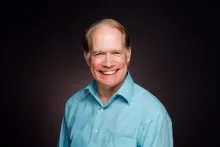
Greg Thomas is the former Pastor of the Cleveland, Ohio congregation. He retired as pastor in January 2025 and still attends there. Ordained in 1981, he has served in the ministry for 44-years. As a certified leadership consultant, Greg is the founder and president of weLEAD, Inc. Chartered in 2001, weLEAD is a 501(3)(c) non-profit organization and a major respected resource for free leadership development information reaching a worldwide audience. Greg also founded Leadership Excellence, Ltd in 2009 offering leadership training and coaching. He has an undergraduate degree from Ambassador College, and a master’s degree in leadership from Bellevue University. Greg has served on various Boards during his career. He is the author of two leadership development books, and is a certified life coach, and business coach.
Greg and his wife, B.J., live in Litchfield, Ohio. They first met in church as teenagers and were married in 1974. They enjoy spending time with family— especially their eight grandchildren.
