
Rick Shabi
This transcript was generated by AI and may contain errors. It is provided to assist those who may not be able to listen to the message.
Brethren, as you're well aware, our Heavenly Father knows how to get our attention. He knows how to get the world's attention. He's done a very good job with that through this COVID-19 virus, and also getting our church's attention, getting our attention.
In a recent article and a recent sermon, Victor Kubik, the President of the United Church of God, wrote this. Right now, he, talking about God, is telling the world, I have breaking news. I interrupt this program with this special message. Using the coronavirus crisis, God is drawing attention to his message of repentance and reconciliation with him by striking the things that the world idolizes. Sports stadiums and arenas are closed. Theaters are closed. Cruises and exotic travel have stopped. The worship of money is met with a blow to the stock market and the economy. When he wrote this, the number was 22 million people have lost their jobs. Of course, that's over 30 million people now. As never before, he goes on to say, we are forced to stay home. God is giving us all extra time to think. He continues, this warning message is not only for the world, but also to us when God is called. He tells us to stop, think, recalibrate. This is the time to adjust, readjust our lives. We need to take care of our personal things that we've neglected in this busy world. This is a time to become aware, take responsibility, forgive, and find peace. The time is now to think differently, which is the meaning of the Greek word in the Bible that has translated repentance. Very important words that Mr. Kubik gave to us both in the e-news and in a recent sermon. Also, as you're well aware, on the weekend of April 25th and 26th, we had a churchwide fast. One of the stated reasons for that fast, I quote, for our minds and hearts to be humble so we can understand and act on the deep things taught by Jesus Christ about repentance, becoming like Him and abiding in Him. Now, brethren, I want to ask a question today. I have asked that question of myself. I want to ask it to you. What is the state of your spiritual heart? What is the state of your spiritual heart? What is the state of your heart's health? And how about mine? Of course, when I was thinking about this, when I was getting my thoughts together, I was thinking primarily about myself. But as I began to think more and more deeply about it, I thought this would be a message that would be good for me to bring to you as well. In your notes, you might want to jot down Jeremiah 17 in verse 9. Jeremiah 17 in verse 9. I'll read this for you. The heart is deceitful above all things and desperately wicked. Who can know it? Human nature, we may be baptized. We've been baptized for decades. You know, I was baptized on November the 15th, 1972. It's been a few years. But you know what? My human nature is still intact. My heart is still what it was in terms of being deceitful. Hopefully I've grown to some degree. Hopefully I've overcome to some degree. But I still have human nature. I still have things that I've got to work on. In that regard, I've got a heart situation. Mark chapter 7. I'd like you to turn there. Mark chapter 7 verses 21 through 23.
Mark chapter 7 verses 21 through 23.
For from within, out of the heart of man, proceeds evil thoughts, adulteries, ornications, murders, thefts, covetousness, wickedness, deceit, lewdness, and evil eye, blasphemy, pride, and foolishness. All these evil things come from within and defile a man. So again, we may have been converted for decades. But that doesn't mean that we are having an easy goal of life. I'm not going to turn there, but you know what Paul said in Romans chapter 7. The things he didn't want to do, those are the things he did, and vice versa.
He had been a baptized member for what? About 20 years at that point. Something like about 20 years. So, same thing is true for us today. Now, from a physical point of view, according to the World Heart Federation, the coronavirus poses a particular risk to people over the age of 60, and those who have underlying medical conditions, including cardiovascular disease and hypertension. So this obviously gets my attention. You know, from a physical point of view, I've got issues with my heart. I've been taking blood pressure medication since I was 28 years old. I've had open heart surgery, quadruple bypass. So obviously, with addition to my age, the fact that I tend to have issues with my respiratory system, and with my blood pressure and heart disease, I'm a target for the coronavirus, and I've got to be very careful. So, even from a physical point of view, what's happening on the world scene is affecting great many people in terms of their thinking about their heart.
So, brethren, we know from a spiritual perspective, our hearts are in need of healing. We know that physically our hearts, many of us, have need of healing. And I found myself asking the question, as I was thinking about those things, what is God's prescription for a heart that's drifting? Do you have a drifting heart? Do I have a drifting heart? You know, the challenge that a drifting heart presents to all of us is we can be drifting and not really know it. We can be heading someplace downstream, downriver, that is harmful.
We can be heading to the various things in a body of water that can be harmful to us as we're drifting. So, we've got to take careful thought about where we are. And I think God has especially, brethren, given us an opportunity. And I'll talk later on in the sermon about this and probably next week as well. But I don't think this is a coincidence as to why God is engulfing the whole world with basically a stay-at-home order.
God is getting the world's attention. I think there's a reason behind that. And I also think there's a reason behind us being separated physically from one another. Obviously, well, we want to be together, but God is doing something here, I believe, to get our attention, to make us stop and think and recalibrate and ask ourselves, where are we spiritually? Where is our heart? Now, as far as this sermon is concerned, I'm asking the question, what is God's prescription for a drifting heart? Point number one, we must acknowledge our deep need.
We must acknowledge our deep need. And in that acknowledgement, we've got to acknowledge our heart's chief enemy, Satan the Devil. I'm not going to have you turn there, but in your notes, you might want to jot down Luke 22 and verse 31. Luke 22 and verse 31. And the Lord said, Simon, Simon, indeed, Satan has asked for you that he may sift you as wheat. That he may sift you as wheat. Brethren, Satan wants to take full advantage of our situation. He wants to take full advantage, as we heard in a sermonette, alluded to in a sermonette by Mr. Willis, that we're by ourselves. We don't have the opportunity to strengthen one another and encourage one another like we normally do.
Now, yes, we've got email and yes, we've got a telephone and we've got all sorts of other things that we can do and we have been doing. We've been actually doing a good job with that, but it's just not the same. We need to be physically with one another to really make all of that come together and work properly. So maybe Satan wants to take advantage of the situation. If you or I are in a process of drifting to some degree, maybe he's nudging us along a little bit towards the danger, towards the rocks, towards the waterfall, so to speak.
Maybe he wants us to nudge us toward the brink of our destruction. We've got to be careful about that and understand where he's coming from. I would like you to turn to Genesis chapter 6. Genesis chapter 6. We're going to take a look at verses 5 through 7. Genesis chapter 6 verses 5 through 7.
Now, let's take a look at how the God of this world, the God of this age, has affected mankind's heart. Genesis chapter 6 verses 5 through 7. Verse 5. Then the Lord saw that the wickedness of man was great in the earth, and that every intent of the thought of his heart was only evil continually.
And the Lord was sorry that he had made man on the earth, and he was grieved in his heart. So the Lord said, I will destroy man whom I have created from the face of the earth, both man and beast, creeping things, birds of the air, for I am sorry that I have made them. Boy, those are powerful words. It shows the power that Satan has on mankind's heart. And again, even though we are converted people, the God of this age is still broadcasting very loudly, 24-7, to each and every one of us.
And if we are in a state of spiritual drift, we've got to wake out of that. We've got to come out of that. So God, I'm feeling personally that God is taking this world and hitting the reset button in a number of ways, especially for those of us in the church, for those of us to take the time that we have, to take a look.
You know, we have a Passover self-examination and re-examination, but we should be doing this all the time, not just that Passover time, all the time, and ask ourselves, as we have the time, where are we in a relationship with God? And you know, brethren, I don't care how many years you've been in the church.
You know, we were talking, I think, either before the Bible study or during the Bible study about how many generations we have now in the faith. And, you know, I'm first gen. I don't go back too far. You know, I started listening to the broadcast in 1967.
But, you know, and I think I was the Duran said, they mentioned that their kids are fifth generation. So we've got, you know, from me at first gen to a fifth generation here in our midst. But think about the Bible greats in their heart. Abraham, father of the faithful, was willing to give his wife away twice. And he had a good wife. He had a good wife, but he was willing to give her away to Pharaoh and to Abimelech that says something about his heart, at least a portion of his heart. Sarah encouraged her husband to go with Hagar. Moses, due to his sin, striking the rock, was not allowed to enter the Holy Land, the Promised Land. David, because of his situation with Uriah and Bathsheba, tremendous amount of sin. He had some heart issues. Peter, a leading leading member of Christ's entorizer to disciples. Peter was guilty of hypocrisy. We see that in Galatians chapter 2. Respective persons. Paul said he had to withstand Peter face to face. A heart issue. So, brethren, let's acknowledge the fact that you and I, all of us, have the potential to have a heart that drifts. And we don't want to be there.
I want to have you take a look at the book of Hebrews for a minute. I'm going to be here just for a couple of minutes, perhaps. Background to the Hebrews, since it doesn't talk about the destruction in 70 AD, most scholars would place the back of the dating of the writing of that book probably to the late 60s AD. Written to first and second generation Jewish Christians, talking about generations. The people that we believe Paul, most scholars would think Paul wrote the book. There is some debate about that. But the author of the book was working with the people he was writing to in the book of Hebrews that they stay in the faith. In the Roman Empire at the time, the practice of Judaism was sanctioned and protected by Roman law. Christianity, on the other hand, wasn't. It wasn't sanctioned. It wasn't protected. There was persecution was setting in. And some of the Jewish Christians faced a dilemma. Whether they should keep on being a professing Christian or just return to their roots, many generations of roots in Judaism. So the letter warned Christians against returning in any way back to Judaism and forsaking Christianity. Now the reason I bring that up, there's three different scriptures here in Hebrews I want to point to your attention. Hebrews chapter 2 and verse 1. Let's turn there. Hebrews chapter 2 and verse 1.
Therefore we must give the more earnest heed to the things which we have heard, lest we drift away. Lest we drift away. Brethren, I don't care whether you're 1st Gen or 5th Gen. Any of us can drift away. The greatest pastor there ever was or ever will be was God the Father. A being by the name of Lucifer drifted away. We know the results of that. And that being may have been a holy righteous being for billions of years for all we know. But he drifted away and then sin became a part of the story and you know the rest. Let's turn to Hebrews chapter 6. So Paul is writing to these people to beware lest they drift lest our heart drift. Now let's turn to Hebrews chapter 6 verses 4 through 6.
Hebrews chapter 6 verses 4 through 6.
For it is impossible for those who are once enlightened, those who God have called and have tasted the heavenly gift, have tasted God's Holy Spirit and have become partakers of the Holy Spirit and have tasted the good Word of God. That milk that we heard of and the meat that was alluded to in the sermonette today have tasted the good Word of God and the powers of the age to come if they fall away to renew them again to repentance since they crucify again for themselves the Son of God and put them to an open shame. So here Paul is writing to them or the author of Hebrews is writing to them saying, watch yourselves lest you drift away. You've got a background of many, many, many generations of the truth through the Old Testament Church of God, the congregation of Israel in the wilderness. And now he's writing to them saying some may fall away and if they fall away and don't want to repent, they're not coming back because their heart has gone to the place where they don't want to come back. And now we turn to Hebrews chapter 10. Hebrews chapter 10 verses 26 and 27. Hebrews chapter 10 verses 26 and 27.
For if we sin willfully, we're not talking about an occasional moment of weakness, we're talking about returning to sin as a way of life. We have decided that we don't want this way of life anymore. It's gone from a heart that's drifting to people being really on the knife's edge and some falling away to people saying, you know, forget it. We don't want any part of this. If we sin willfully after we receive the knowledge of the truth, there no longer remains a sacrifice for sins, but a certain fearful expectation of judgment and fiery indignation which will devour the adversaries. We're going to let that be a warning to us. We don't want to be in a situation where we find that we are drifting because Satan will take that and work with that. He does want to sift us as wheat. He does want to shipwreck our salvation. So we must be very, very careful. Now, prophecy indicates that the bride of Christ is preparing herself. And this is the good news. The bride of Christ is preparing herself. She's overcoming. She's growing. She's learning. She's doing all the right things. I mean, the bride of Christ is never going to be perfect in this flesh, but God is pleased with the fact that as she grows and overcomes and has the occasional stumble, she asks for forgiveness. God puts her back on her feet after accepting that shed blood of Christ for those sins and onward they go. But prophecy shows another side to God's church. Let's turn to Matthew 24, the Olivet Prophecy. Matthew 24, verses 9 through 13. This section of Matthew 24 is especially written to God's church. Matthew 24, verses 9 through 13. Then they will deliver you, we Christians, up to tribulation and kill us. And you will be hated by all nations for my name's sake. You know, here you might want to put in parentheses in your notes Revelation chapter 6 that talks about a martyrdom of the saints at the end of the age. Notice now verse 10, Matthew 24, verse 10. And then many will be offended, and because they are offended, they will betray. And as they are betraying, they will hate one another. This speaks to what's happening to some Christians' hearts. Offense, betrayal, hatred. Verse 12. And because lawlessness will abound, the love of many will grow cold. The heart is not where it needs to be for some Christians at the end of the age. Verse 13, but he who endures to the end shall be saved.
So this is prophesied for some in God's church. Luke chapter 18, verse 8. I'll read this for you. Luke chapter 18, verse 8. The last part of the verse.
And when the Son of Man comes, will he really find faith on the earth?
When the Son of Man comes, will he really find faith on the earth? Where is the heart there? It's drifted. It's gone downstream. It's heading for the rocks. We don't want that. In your notes, you might want to write down Revelation chapter 3 verses 17 and 18. Revelation chapter 3 verses 17 and 18.
I'll read this for you, talking about the Laodicean church. Because you say, I am rich and have become wealthy and have need of nothing. Now there is a heart that overstates what it thinks it has spiritually. There's some real danger there. People who feel they've got it made.
Arrogant, spiritually speaking. Because you say, I am rich and have become wealthy and have need of nothing and do not know that you are wretched, miserable, poor, and naked, blind and naked. I counsel you to buy from me gold refined into fire, that you may be rich. White garments that you might be clothed, that the shame of your nakedness may not be revealed, and anoint your eyes with eyes that you may see.
So basically, Jesus Christ in this letter to this church is saying, wake up! Wake up! You're not what you think you are! And brethren, is it possible that the reason we're having this lengthy stay at home as individuals is because our our maker is saying, don't think you folks are where you need to be as well. Now, I don't mean as brethren's sermon to be some big condemnation. What I do mean this sermon to be is a discussion for for me, for you, that we take the time to look at ourselves in in the light of God's eyes, God's Word, and ask ourselves the question, where is our heart? Where is it? Satan wants our heart. He wants our heart as well as our mind. He wants us to love the things we ought to hate, and to hate the things we ought to love.
Satan wants to to implant in our hearts his motivations, his reasonings, his outlooks on life. Satan wants to weaken your heart. How does he weaken your heart? He can do it very, very subtly. He's a very subtle creature. He doesn't always have to come on you full force. But maybe our prayer is dwindling. Maybe our study is dwindling. Maybe our meditation time is dwindling. Maybe we only fast very, very occasionally. Maybe we're not serving as we used to do. Maybe we don't pray for the work of the church as we used to do.
He's weakening us. He would love to weaken us. He would love to render our hearts ineffective by blocking the flow of God's Spirit. And if you and I have not been doing the spiritual disciplines as we need to be doing them, then that flow of God's Spirit will be weakened.
And ultimately, he would disable our hearts, much like we read about in the book of Hebrews.
So, brethren, let's acknowledge point number one. That we've got a weak heart. Let's acknowledge. I'll read for you 1 Corinthians 10 and verse 12. 1 Corinthians 10 and verse 12. Therefore, let him who thinks he stands take heed, lest he fall. 1 Corinthians 10 and 12. Therefore, let him who thinks he stands take heed, lest he fall.
So, what is God's prescription for a heart that might be drifting? Number one, acknowledge our need. Acknowledge our situation. Point number two. What is God's prescription for a drifting heart? Point number two. Appreciate God's plan for healing and strengthening our heart. You know, we've gone through the difficulties. We talked about all the negative stuff. The positive thing is God is there for us. You know, Mr. Willis in his sermonette today read from Peter a scripture I love so very much, especially when it's read from the J.B. Phillips translation, New Testament translation. We are God's personal concern. We are God's personal concern. And so, he's got a plan for healing us and healing our and strengthening our heart. What is that plan? Well, let's turn to Psalm 51.
David, as we talked about earlier, had some really extreme heart issues. But, what has David been known for? David has become known for being a man after God's own heart.
Man after God's own heart. So, let's appreciate that God's got a plan to heal and strengthen our heart. Psalm 51. We're going to take a good long look at the portions of this Psalm today.
To me, one of the key portions of the Psalm is verse 10.
Psalm 51 verse 10. Let's take a look at that.
Psalm 51 verse 10.
Created me a clean heart, O God, and renew a steadfast spirit within me.
Create in me a clean heart. Two ideas there. Create and a clean heart. Two ideas I want to zero in. I want to read you a fairly lengthy section. It's about a good-sized paragraph from Barn's notes. I think Barn really gets it on the head here. I quote, The word rendered create is a word which is properly employed to denote an act of creation that is causing something to exist where there was nothing before. It is a word which is used in Genesis 1.1. In the beginning, God created the heaven and the earth, which is commonly used to express the act of creation.
It is used here, clearly, as a recognition of the divine power to create something that did not exist before, or a feeling on the part of David that this could be done by God alone. Only God alone can affect the change that is needed here. But is God going to do that by himself? Stay tuned for the rest of the sermon. We'll talk about that. Going back to Barn's. The idea, however, is not that a new substance might be brought into being to which the name clean heart is, but that he might have a clean heart that is a heart made pure, that his affections and feelings might be made right.
He might have what he considered what was conscious that he did not now have—a clean or a pure heart. This, he felt, could be produced only by the power of God. So the idea that God here needs to create something that wasn't there before—a purity of heart because of David's sins—and that that heart was going to be cleansed by the power of God.
We don't have the power to wash away our sins. Christ, through his sacrifice, we have his sacrifice that washes away our sins, but we can't do that on our own. This is going to be something God himself does. So the second point was very clear. Appreciate God's plan for healing and strengthening our heart. There's a plan here. We talk about that plan every year at Passover.
Point number three. What is God's part in the cleansing of our hearts? What does he do? And then lastly, we're going to see what do we need to do? We have got a part in this program. In God's prescription for a drifting heart, part number three, God's part in the cleansing of our heart. Let's go back here to Psalm 51. Go up to verse one.
Psalm 51 verse one. Notice what David says. And I want to take this apart in three sections. Have mercy upon me, O God. Have mercy upon me, O God. Notice David doesn't venture to call him my God. He's feeling pretty low here. David does not venture to call him my God, but he appeals to God for who God is. Have mercy upon me, O God. He knows he is in need of tremendous mercy. And so he goes to God and asks for that mercy.
And notice the next phrase. Take loving kindness according to the multitude of your tender mercies. Excuse me again. Why did David put it that way? The multitude of your tender mercies is what David asked for. Why did he ask for that? He asked for that because he had a multitude of sins that needed to be dealt with. There was his adultery with Bathsheba. There was the shedding of the blood of Uriah. There was the unrepentant attitude and hypocrisy he had for nearly, what, almost a year or about a year or so.
He gave occasion to his enemies to talk badly, blasting the name of the righteous God. There was a multitude of sins over a fairly lengthy period of time that David indulged himself in. So he says, according to your loving kindness, according to the multitude of your tender mercies, he needed a multitude of mercy because of the multitude of a sin. Then lastly, he says, blot out my transgressions. Now we're going to see this thought in verse 9 as well. Here in verse 1, we have an image of a debt out of the account book.
Erase that debt, Father. With your loving kindness, with your mercies, your tender mercies, blot out. Totally erase, eradicate my sin. This is God's way of working with our heart.
Psalm 51 verse 2. Psalm 51 verse 2. Wash me thoroughly from my iniquity and cleanse me from my sin. Now the Hebrew word for wash here usually is talking about the washing of clothes.
So David says, wash me as one would wash a filthy garment. Wash me as one that like you'd wash a filthy garment. In your notes, you might want to put a job down in Isaiah chapter 64 verse 6. Our righteousness before God is as filthy rags. They need to be washed in the shed blood of Jesus Christ. The Hebrew word here for thoroughly says wash me thoroughly. The Hebrew word for thoroughly is literally multiply. And that stands out as an emphatic phrase in that sentence. As my sins are manifold, so manifoldly wash me. Psalm 51 verse 7. Purge me with hyssop and I shall be clean. Wash me and I shall be whiter than snow. Now hyssop is associated with purification of a leopard. It is a shrub that can be used to cleanse, to clean, and he wants to be cleansed of his sin. And of course, it's interesting that he uses that phrase, referring to or alluding to the cleansing of a leopard. Leprosy is like a type of sin. It is destructive. It is of the flesh. It goes deeply into the flesh. It marrs it. Dismantle takes apart the flesh, just like sin does. So he says, Purge me with hyssop and I shall be clean. Wash me. But again, he wants to be cleansed. He feels he is defiled because of his sin. And the idea of washing is used often in the scriptures. I'll read this for you, and your notes you might want to jot down Isaiah chapter 1 and verse 16. Isaiah chapter 1 and verse 16, where it says, Wash yourselves, make yourselves clean, put away the evil of your doings from your before my eyes, cease to do evil.
David wanted to be washed thoroughly because he had committed a thorough number of sins. Then it says here, and I shall be whiter than snow. He wanted to be entirely clean. He didn't want to have any last message of the sin in him. And again, I'll read for you Isaiah chapter 1. You don't need to turn there. Isaiah chapter 1 and verse 18. Come now, let us reason together, says the Lord, though your sins are like scarlet, they shall be as white as snow. Though they are red like crimson, they shall be as wool. And then lastly, in terms of what God does, Isaiah, excuse me, Psalm 51 verse 9. Psalm 51 verse 9. Hide your face from my sins and blot out all my iniquities.
Hide your face from my sins. David doesn't want God to view them, to look at them. He wants his face to be averted from them. And it brings up the thought that I've said on a number of occasions that I feel such an interesting wordplay. Isaiah, and I'm not going to turn to this, but Isaiah chapter 38 verse 17, where the thought is stated, cast all my sins behind your back.
Cast all my sins behind your back. God, don't look at my sin. Don't look at them. Loth them out, cleanse me, and don't look at what I've done. And again, at the end of verse 9 of Psalm 51, blot out all my iniquities. Take them entirely away. Let the account be erased, canceled, destroyed.
Loth them alone. That leaves me with the last point I want to discuss with you today. You know, what is God's prescription for a drifting heart? Number four.
Let's understand our part in strengthening the heart.
Let's understand our part. Now, I've discussed this as we've been going through the material today. I really feel that in the context of world history right now, it's a unique context. I think God is wanting to get the world's attention for various reasons, maybe preparing the world for something that's down the road. We notice how soon down the road, maybe it's a number of years down the road. We'll talk more about that, I think, next week. In terms of maybe an overview of some prophecies. But I think we're in a very unique world history context. We're in a time of separation. We're at a time where we can be more alone with our thoughts, with God's thoughts. We could spend more time thinking about God's thoughts and how they relate to our thoughts, you know, our thoughts, God's thoughts, or are they far afield? And again, I feel that right now we're in a unique place in history because I believe God is preparing us for what's coming down the road. Again, I'm not making any assertions about time frames here because I don't know. Is something going to be happening two or three years down the road or ten years? I don't know. I don't want to pretend like I know. I don't. We'll see those things in the rear of your mirror. But again, I think God has something very much in mind here. And when you think about in Scripture, brethren, when there have been times when God's leaders and we are—God's church now is the leadership of the world, spiritually speaking. I don't care what station you are in the church. I don't care whether you're the head of the church or the person most recently coming into the church. When you take a look at how God has used—the point being we are leaders, spiritually speaking. But think about Moses, his 40 days of fasting. Think about Christ, his 40 days of fasting. Think about Saul, whose name became Paul, who after his conversion was with Christ in Arabia for apparently about three years. These individuals were separated because there were things that God wanted to do to fortify them for their upcoming service.
Moses, Christ, Paul. I'm sure there are other people that my mind didn't think of at the time, but those came out clearly to me that God was separating them for 40 days or three years or whatever the period of time to fortify them. And I'm thinking right now, brethren, I think God is wanting to fortify us. There's a job we have been called to do, and we need to make sure we're—we've got the right heart in us to do that job. To do that job. So what are we here to be doing?
I want to emphasize something I read to you earlier.
This is something we were talking about David and him having a—God creating him a clean heart. We talked about how only God can do some things, but then there were other things that were alluded to. The idea of purification. I read this to you from Barnes. The idea is, however, not that a new substance might be brought into being to which the name a clean heart might be given, but that he might have a clean heart, that his heart might be made pure, that his affections and feelings might be made right, that he might have what he was conscious, that he might excuse me, that he might have what he was conscious, that he did not now possess a clean or a pure heart.
Now with that in mind, I would like you to turn to 1 John chapter 3. 1 John chapter 3.
1 John chapter 3. Let's look at the first three verses. 2 John chapter 3. Let's look at the first three verses.
1 John chapter 3. Let's look at the first three verses.
2 John chapter 3. Let's look at the first three verses.
I have, I think, seven things down I could have talked about, but I realized I wouldn't have the time to do that. So I cut it down to two. Letter A. We must prepare our hearts.
We must prepare our hearts. In parentheses, in my notes, I've got classwork, education. We've got classwork to do. We've got education to take care of.
A favorite scripture of mine. I guess there's so many of them, but Ezra chapter 7 verse 10. Let's take a look at Ezra chapter 7 and verse 10.
Again, this dovetails very nicely with the sermon that we heard earlier today by Mr. Willis.
Ezra chapter 7 and verse 10. For Ezra had prepared his heart.
He had prepared his heart to seek the law of the Lord, and to do it, and to teach statutes and ordinances in Israel.
So there is classwork for us to do if we want to prepare our hearts to avoid spiritual drift for our heart. He prepared his heart by seeking the law of the Lord. In other words, he prepared by studying, by going deeply into the Word of God. And brethren, we have that at the time. We're not spending as much time driving to and from work. We're not spending as much time on a golf course, whatever it is that you do for your enjoyment. We've got more time. Let's be honest about that. Not like as though we've got oodles and oodles of extra time, but we've got more time. And we can take more time, our discretionary time, and do more study of the Word of God.
And we study it with the intent of knowing how to actually apply it.
It says there, you to seek the law of the Lord and to do it.
Excuse me. How to actually apply? What did David do? A man after God's own heart. He thought deeply, he meditated deeply about the law of God. How could he be employed in his life? He thought about it on his bed. How he was going to act the next day.
And it goes on. Not only is he going to find out how he can actually put this into practice, but to be so well versed in the law of God, he would be able to teach it. He would be a master of the subject. You know, there's nothing more encouraging or inspiring to hear. It's somebody who's giving a sermon or a message, a sermonette, a Bible study, and they really know the Word. And they're going here and they're going there. And it really is inspiring.
And there's nothing stopping us.
Excuse me. Nothing stopping us from that. From that, one of the things that was made mentioned, Peter Eddington gave a presentation during our general conference of elders this last weekend, last Sunday. He was saying that our website among Christian churches, our website is the 13th largest in the world. 13th most viewed in the world. And we're stacked up against the Catholics, all the Protestants, the Latter-day Saints, the Adventists. We're 13. So we've got a tremendous amount of information on our website for us to be able to look at and so we can master the truth.
Our own Beloit and Chicago websites. We've got a tremendous amount of information on those sites. Our old Chicago website with a selective, you know, you've got all Mr. Fay's either sermons or Bible studies on the book of Revelation. You want to find out what that says? You've got to be available to you. Master the subject.
Let's turn our attention now to Hebrews chapter 4. Hebrews chapter 4. Hebrews chapter 4 and verse 12. Now we're talking about the idea of getting into the Word of God and how this is going to help strengthen and fortify our hearts. Hebrews 4.12. For the Word of God is living and powerful and sharper than any two-edged sword, piercing even to the division of soul and spirit and of joy and sorrow, and is a discerner and thoughts and intents of what? Is a discerner of the thoughts and intents of the heart? Of the heart. God gives us the tools we need. The Word of God says is living. It's always alive. It's always active. It's always working in us as we allow it to work in us in conjunction with God's Holy Spirit. It's a message to the human heart. Therefore, the Word of God is living and full of life to the believer. It says the Word of God is powerful. It is energizing. You know, part of the issue I face, maybe you face the two during this stay-at-home order stuff, is, you know, I'm doing a lot more sitting around than I want to say that I'm doing. And I don't feel like the energizer bunny. I feel like I must have the other batteries. But the Word of God is energizing.
The Word of God is sharper than any two-edged sword. It means it's penetrating. It's convicting. It's convincing. It takes away man's nature. Well, I shouldn't say that. It doesn't take away our nature, but it takes man's nature and helps us to see what is good the wheat from the chaff. God's Word helps us to discern what is good and not good with the use of God's Holy Spirit. Then, as it says there, it discerns the thoughts and intents the purposes of the heart. I like the quote from Kenneth Wost here. Wost writes, the word discern means to judge, to sift, to analyze. The Word of God is able to penetrate into the furthest most recesses of a person's spiritual being, sifting out and analyzing the thoughts and intents of the heart. Well put by Kenneth Wost. So letter A, we must prepare our hearts. That's our classwork. Lastly, letter B.
Letter B, we must obey from the heart. We must obey from the heart. As we have class work and education, we also have field work. We've got a lab. The heart is nothing but a muscle, and the muscle must be exercised. It must be exercised. Let's turn our attention now to Romans 6, the baptismal covenant chapter. Romans 6. This chapter is a vital, basic, spiritual information that we always ask those who are counseling for baptism to read and reread the fine print of this chapter. Romans 6 and verse 17.
Let God be thanked that though you were slaves of sin, yet you obeyed from the heart that form of doctrine to which you were delivered. You obeyed from the heart. Brethren, we're not talking about outward compliance here. We're talking about inner dedication and commitment, not outer compliance. True inner dedication, true inner commitment to God and God's way of life from the heart. You've counted the cost. You have counted the cost. You have accepted God's way of life. You've said you don't want Satan's way of life anymore. You're sold on God's way of life. You will not tolerate any other way of life as a way of life. I mean, yes, you and I, we fall short. We sin. We may drift, but that's not what we want. We want God and his way of life. We are sold on it. We want to accept anything else. No matter how appealing society may make it, we don't want that. Let's take a look at one person. It's kind of like our family tradition. You know, many times when I'm praying, most of my Bibles, especially my first ones and my last ones, the section of Scripture around Matthew 6, you can always tell that somebody's been looking at that section quite a bit because there's all sorts of oil marks from my hands. I've been turning to that section of Scripture. You can tell I turn there quite a bit. Our Father who is in heaven. When I think about that phrase, our Father, it's not just my Father. It's our Father. It's everyone who's listening to my voice right now. He's your Dad. But also through the ages.
Moses is Dad. David's Dad. Peter's Dad. And when I think about our family tradition and the Church, there are times I start walking. You know, sometimes I'm walking and praying. I say, God, I'm not upholding the family tradition very well here. There's a tremendous family. You know, Hebrews 11. I think, look at these people in Hebrews 11 and what they did.
Look at what we see in Revelation 6 about people being persecuted to death.
And sometimes I look at myself and I feel just like the Apostle Paul in Romans 7. I said, no one has been threatening me with the torture or anything. Why did I fall down on my face there? Why did I not act better there? Why didn't I not think the right thing there?
So we've got a tremendous, you know, our Father in heaven. We've got a family tradition to it. But let's take a look at a little bit of this in Hebrews 11. Hebrews 11, verses 24 through 27.
Hebrews 11, verse 24. By faith, Moses, when he became of age, refused to call the son of Pharaoh's daughter, choosing rather to suffer affliction with the people of God than to enjoy the passing pleasures of sin. How many times have I looked at that section and given myself a mini-sermon, thinking, you know, I could have done so much better? Look at what this man was, you know, look what he had, and he rejected, and the price he paid to be there, rid of the passing pleasure of the sin, so that he could be true to God and have the right kind of heart. And again, we know Moses, as we talked about earlier, wasn't perfect. You know, he was not able to go into the promised land, but he was a great man of God. Verse 26. Esteeming the reproach of Christ's greater riches than the treasures in Egypt. For he looked to the reward. By faith he forsook Egypt, not fearing the wrath of the king. For he endured as seeing him who is invisible. That's the family we're a part of. That's the tradition we hold to. Last scripture I want to read for today is over here in Romans chapter 6. Talking about how we must obey from the heart. Romans chapter 6 verse 2. Romans 6 verse 2.
How shall we who died to sin live any longer in it? We've died to it as a way of life. Doesn't mean we're perfect, but we've died to sin as a way of life. Dropping on to verse 11. Likewise, you also reckon yourselves to be dead indeed to sin, but alive to God in Christ Jesus our Lord.
Verse 12. Therefore do not let sin reign in your mortal body, that you'd obey it in its lusts, but present yourselves to God as being alive from the dead and your members as instruments of righteousness to God.
Verse 14. For sin shall not have dominion over you, for you are not under the law but under grace. So yes, brethren, we are dead to sin, but we are alive to God. We are presenting ourselves to God as being alive from the dead and our members as instruments of righteousness to God. We are obeying from the heart, not out of compliance, out of dedication, and out of commitment. So today, brethren, I have asked the question, what is God's prescription for a drifting heart?
Four parts to the answer. Number one, acknowledge our deep need. Number two, appreciate God's plan for healing and strengthening our hearts. Number three, we found out what God's part in the cleansing process is. And number four, we took a look at what our part in the cleansing process is. We must repair our hearts and that we must obey from the heart. So, brethren, let's be thinking very, very carefully about this time we're now living in because God has gotten our attention. And we want to pay close attention to our Father and learn from Him.
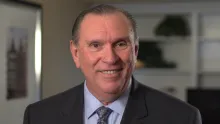
Randy D’Alessandro served as pastor for the United Church of God congregations in Chicago, Illinois, and Beloit, Wisconsin, from 2016-2021. Randy previously served in Raleigh, North Carolina (1984-1989); Cookeville, Tennessee (1989-1993); Parkersburg, West Virginia (1993-1997); Ann Arbor and Detroit, Michigan (1997-2016).
Randy first heard of the church when he was 15 years old and wanted to attend services immediately but was not allowed to by his parents. He quit the high school football and basketball teams in order to properly keep the Sabbath. From the time that Randy first learned of the Holy Days, he kept them at home until he was accepted to Ambassador College in Pasadena, California in 1970.
Randy and his wife, Mary, graduated from Ambassador College with BA degrees in Theology. Randy was ordained an elder in September 1979.
