

David Schreiber
This transcript was generated by AI and may contain errors. It is provided to assist those who may not be able to listen to the message.
Well, hello, everybody! Good to see all of you this afternoon. A special thanks to all who just were up here singing in our accompaniment. It was very lovely, and we certainly want to, on behalf of the whole congregation, thank all of you for all of your labors. I know that you've got to work long and hard to make something that sounds so beautiful come together the way that you did. It's not the easiest thing, and we appreciate your efforts. I do want to say hello from Detroit and Ann Arbor. Of course, every time I'm here, I always remark about the hall and how nice it is, and I have to say the same thing. It's always nice to have a nice hall like this, and you folks are just tremendously blessed to have your own place to meet. My wife made some special treats for our young people. She has a sideline job that she does at home, kind of a cottage industry, in addition to her full-time job, but she makes cake pops, and so in the spirit of the season, she made little lambs and little lions. Those are for the young ones. Now, how young is the question? How young?
I told my wife, I said, you know, we should put a sign or something here, because these poor little ones are not going to survive to get to that. You know, I don't know exactly what Mr. Murray spoke on today. It sounds like from what Mr. Lennox said that he went through your traditional discussion about the meaning of the day, the talking about the trumpets and the seriousness of the times we're living in. I certainly appreciate the commentary that Mr. Lennox had, Mr. Blackwell had, Lennox Blackwell, because he kind of set my sermon up very nicely for me here. You know, we are here for the Feast of Trumpets.
The Feast of Trumpets has a great many things that we can think about that we can ponder on. And today, I want to take a look at this from a very personal personal perspective. We're not going to look at prophecy a great deal. We're going to look more into the Christian living aspect of this. But to get a foundation for where I want to take us today, I would like you to turn over to Matthew chapter 24. Matthew chapter 24 is the Olivet prophecy, as you're very well aware.
And in this prophecy, you've got a very good synopsis of what's going to happen at the end of the age. Of course, you can see a much fuller explanation in the Book of Revelation. We're not going to go there. I don't think at all today for this sermon. But I do want to take a look at something here, because something really struck my mind. You know, as a church pastor, you're thinking, you know, months in advance, what are you going to be giving on the Holy Days?
And of course, this time of the year is heavy workload for us in the ministry. Mr. Blackwell is talking about going to the feast now closely. The Holy Days come. But I took a peek at September. And I don't know if you looked at it or not, but we got 30 days in September. We're going to be in church 12 of those days.
That's 40% of the time. 40% of the time this month, you and I will be in church somewhere if we're going to the Feast of Tabernacles. So that's a lot of church. And that means that there's a lot of preparation, so far as the ministry is concerned.
But I saw something here in Matthew 24 that I wanted to bring across to us. Let's take a look at the beginning of verse 21. Matthew 24, 21. For then there shall be great tribulation, such as has not been since the beginning of the world, until is time no, nor ever shall be. Great tribulation. We realize from the time that this starts until the time that Jesus Christ comes back.
It will be three and a half years. The great tribulation starts, and of course, if we were to relate this to the book of Revelation, this would be seal number five. As you are well aware, the book of Revelation has seven seals that span the whole of the book. This will be seal number five. Let's drop down to verse 29. Immediately after the tribulation of those days, so we're going to establish a timeline here. Immediately after the tribulation of those days, the sun will be darkened, the moon will not give its light, the stars will fall from the heavens, and the powers of the heavens will be shaken.
Here we see the sixth seal, which we call the heavenly signs. You've got the tribulation, and you've got the heavenly signs, which sets up what we see immediately after this. Taking a look now, starting here in verse 30. Then a sign of the Son of Man will appear in heaven, and all the tribes of the earth will mourn, and they'll see the Son of Man coming on the clouds of heaven with power and great glory.
So here we see, let's read verse 31 too, and he will send his angels with a great sound of a trumpet, and they'll gather together as a let from the four winds from one end of heaven to the other. So here we see now the second coming of Christ, and what we're seeing here is the seventh seal. And in the book of Revelation, the seventh seal covers the remainder of the book, and the seventh seal itself is broken up into seven trumpets, again, as you're aware.
The last trumpet is when Christ returns. We're seeing that right here. The day that we're talking about today, the Feast of Trumpets. Now, there are seven trumpets, not just the last trumpet. There are seven. But we want to focus in on what else is being said here in this chapter.
Let's take a look at the surrounding discussion. Verse 32. Now learn this parable of the fig tree, from the fig tree. When its branch has already become tender and puts forth leaves, you know summer is near. Brother, you and I need to be paying very close attention, not only to the signs of the times in world news. And as I think I've heard earlier today from Mr. Blackwell, it sounds like Mr. Murray covered this, what kind of world we're living in.
Very desperate times. But, brother, these are desperate times spiritually, too. Satan knows he's got a very short time. He knows who you are. He knows where you live. And he doesn't want to leave you alone. You are being targeted by Satan the devil.
Verse 33. So you also, when you see all these things, know that it is near, even at the doors.
So as Mr. Blackwell pointed out, there is a sense of urgency that each of us must have, and none of us in this room gets a free pass on a sense of urgency. Not one of us. Not me. Not you. None of us. Surely, I say to you, this generation will by no means pass away till all these things have taken place. Heaven and earth will pass away, but my words will by no means pass away. But of that day and hour, no one knows, not even the angels of heaven, but my father only.
Now, verse 37, we're starting to narrow in on where I want to focus today. But as the days of Noah were, so also were the coming of the Son of man be.
Now, of course, we know those days were very evil, so evil that God had to extinguish almost all life from this planet. He saved a few people in the ark, in the animals, but virtually the rest of mankind was destroyed. For as in the days before the flood, they were eating and drinking, marrying, giving, and marriage until a day that Noah entered the ark.
Now, when you read verse 38, what do you read? Well, I read there that life was kind of going on as normal for that generation, just as life is going on as normal for our generation. It's an evil generation. There are all sorts of things that vex God as he sees what's going on, but it's become the norm today. And did not know, verse 38, and did not know until the flood came and took them all away, so also will the coming of the Son of Man be. In other words, people of the world will have no clue. But, brethren, we have to be clued in. Satan has a target on each of our backs. He is relentless. He will not stop. He doesn't want you to receive salvation. He doesn't want you to be in that first resurrection. Notice what it says here now, verse 40. And this is where my mind got the churning about the sermon today. Then two men will be in the field, one will be taken, and the other left. Two women will be grinding in the mill, one will be taken, and the other left.
My question for each and every one of us, and again, no one gets a free pass on this.
Are we going to be the ones who are taken? Are we going to be the ones who are resurrected in that first resurrection? Or are we going to be the ones who are left behind? Jury's out for every one of us.
We need to make sure that we have that right relationship with God, and we continue that right relationship with God. Because if we don't have it, we'll be left behind. And, brethren, this is one point in life where you and I don't want to be left behind. I'd like you to turn over to 2 Corinthians chapter 13. There's a scripture we read here every year at Passover, or near the Passover. 2 Corinthians chapter 13 and verse 5. But it's applicable today as well. 2 Corinthians chapter 13 and verse 5.
Examine yourselves as to whether you are in the faith. Test yourselves. Do you not know yourselves that Jesus Christ is in you unless, indeed, you are disqualified? Brethren, when you take a snapshot of the Church of God at the end of the age, what do we see? We actually see a couple of different snapshots. The question again is, what snapshot do you want to be a part of? You've got one snapshot that shows that the Church of the end of the age, Jesus Christ says, well, when I come, will I find faith on the earth?
The same snapshot would say, well, you know, you've got a Laodicean spirit. Self-sufficient. You think you've got everything you need. You're rich and increased.
We could have read from Matthew 24, what it talked about at the end of the age, Christians will betray one another. They will be offended. They'll become lawless.
Now, that's a snapshot we don't want to be a part of. But you and I can be if we're not careful.
The other snapshot is of people who have examined themselves. People who have taken it upon themselves to make sure they are close to God the Father and Jesus Christ.
People who get real sustenance from their Bible study and their prayer and their fastings and their meditations. People who, when they come to Sabbath services, they want to learn.
They want to apply what they learn. They're not just listeners. They're doers of the Word.
Now, we've got two different snapshots there. The question is, which snapshot am I going to be in? And what snapshot are you going to be in?
We need to examine ourselves. Over here in John chapter 15 is a way that we can examine ourselves. And I want to go through this section with you today. It meant a lot to me as I was mulling this over in my mind and reading this section of Scripture. Hopefully it will be helpful to you as well in this Feast of Trumpets. John chapter 15 starting in verse 1 and going through verse 8. So, the section I'm going to key in today in the sermon. In my Bible, it's all red letter, every word of it. The words of Christ. Chapter 15 verse 1, I am the true vine and my father is the vine dresser. Every branch in me that does not bear fruit he takes away. And every branch that bears fruit he prunes that may bear more fruit. You are already clean because of the word which I've spoken to you. Abide in me and I in you, as the branch cannot bear fruit of itself unless it abides in the vine, neither can you unless you abide in me. I am the vine. You are the branches. He who abides in me and I in him bears much fruit, for without me you can do nothing.
If anyone does not abide in me, he is cast out as a branch and is withered, and they gather them together and throw them into the fire and the air burned. If you abide in me and my words abide in you, we will ask what you desire and it shall be done for you. By this my father is glorified that you bear much fruit and so you will be my disciples. My point today is not a declarative sentence, it's a question. I want to ask a question and keep on coming back to that question and hopefully answer it from a number of perspectives as we look at chapter 15 here. The question I have for me, the question I have for you is what kind of branch are you? What kind of branch am I?
Am I? Are you? Are we throwaway branches? Are we branches that bear much fruit? How do we know?
How do we know either way? When you take a look and you examine yourself, do you see your life as being a very fruitful life, spiritually speaking? Maybe you can look back in your life and say, well, you know, when I was first baptized, there was a great deal of fruit, but over the years, I don't know if I see as much fruit. There may be some on the room who say, you know, I don't know if I see any fruit. Now, sometimes people can be awful hard on themselves. Sometimes you need to have a friend discuss that with you, somebody you can trust and you can confide in and they'll say, well, you know, you're just being awful tough. There's fruit. I see it all the time. As a pastor, I see that as well. But rather, what kind of branch are you? What kind of branch am I? Let's take a look very carefully now at verse 2. Verse 2.
Every branch in me that does not bear fruit, he takes away. So the first branch we want to look at here is the throwaway branch. Let's set our sights on. Let's narrow our focus and take a look at the throwaway branch. You know, when a gardener is going through his vineyard, or the bind dresser is going through his vineyard, he looks and he sees that certain branches are no longer bearing fruit. And when he sees that, he takes a very sharp knife and he cuts those branches. He then gathers those branches, he throws them into the fire. And of course, here, Jesus Christ is not talking about just branches. He's talking about people. People maybe one time in their life they first come into the church. They are so zealous. They can't get enough prayer and study and fastings and meditations of being with God's people and doing the things of God and praying for the work and all those things. But then as time goes along, that simmers down. That cools off. That's no longer the way it once was. And if we're not careful, the branch can just grow dormant, then dead. Now, why does that happen? We've all known people where that's happened. I've lost track over the years. I've been coming to church since the mid-sixth or been a part of the church since the mid-sixties. Many of you the same. Some of you longer than that. Some of you have been born into the church. And over the years, how many people have we seen come and go? And then we see them sometimes. Maybe we go out for lunch, like today. Some of you probably went to a restaurant for lunch. You might see somebody you used to know. And they don't even know it's a holy day. Don't even care it's a holy day. How do you and I guard against that? Verse 6 of chapter 15 helps give us some of the answer. Verse 6, John 15, 6. If anyone does not abide in me, he is cast out as a branch in his wither. And they gather them and throw them into the fire, and they're burned. But then you drop down a little bit further by this might... No excuse me. Verse 2. Go back to verse 2. I'm sorry. Every branch of me that does not bear fruit, he takes away. Every branch that bears fruit, he prunes, that may bear more fruit than in verse 4. Abide in me. So how do we know we're going to be developing fruits, proper fruits? Because we abide in Jesus Christ. We abide in God the Father. If we're not abiding in God the Father and Jesus Christ, then we're not going to grow. We're not going to be fruitful. And to the degree that you and I are abiding in God the Father and Jesus Christ, we will be fruitful. We will be fruitful. So to abide means we have to have a continuing contact through our prayer, through our study, through our fastings, through our meditations, through getting together with the brethren on the weekly Sabbath, on the annual holy days, midweek if we possibly can. Maybe a phone call here or there. But we abide with the people of God, but more importantly, we abide in God the Father and in Jesus Christ. Over here to Romans chapter 10. Romans chapter 10.
And verse 17.
So then faith comes by hearing and hearing by the Word of God. Romans 10, 17. You know, Christ said, when I come, will I find the faith on the earth?
Will I find the faith? Well, where does faith come from? It comes from abiding in God, abiding in Jesus Christ. It comes from the Word of God.
You know, for years in the early 1970s, I went to Ambassador College in Pasadena, California. And every, I think, three of the four years, the Rose Parade fell on a day that was not the weekly Sabbath. One day it fell on the weekly Sabbath. But every year that it didn't fall on the Sabbath, the student body at Ambassador College in Pasadena would use the Rose Parade as a fundraiser for the student body. And we did all sorts of things. We turned the college property into one large parking lot. We charged for parking. We sold programs. We sold food. We did all sorts of things to make money for the student body. I remember one year, one of the things I did is I had a stand that I was in charge of out of the Rose Parade. And there's 5000 people, and this one looked like a small stand, but it filled 5000 people. And everything that happened in that stand, I was responsible for. From the selling of programs, the selling of food, safety, you name it, I had to make sure all those things were working well. And probably most of us have seen the Rose Parade on TV. All the beautiful floats, all the beautiful flowers. But one thing you don't see on TV, because you can't see it, you've got to smell it. And that is the smell of all those flowers as each float comes by. And how beautiful the fragrance is right next to that road. You know, as the floats are going down the road, you just have a tremendous smell. But one year at the tournament of Rose's Parade, Standard Oil had a float. Beautiful float, going down the road, everything was as it should be, and all of a sudden, the float stopped. It stopped. And of course, you can't... One thing like that stops. Everything behind it stops. And where there's a staging area for the Rose Parade, it's several miles away, and every float has got to get in its specific border. And then the whole thing takes hours to go by at a certain point. Well, the Standard Oil Company float stopped. Why did it stop? The Standard Oil float was out of gas.
Out of gas. I mean, I don't know if they were ever going to live that down. But brethren, can we find ourselves out of gas? And everything behind us backing up, and all sorts of woe and tribulation, because we are out of gas. As I mentioned, we've had people who, once were with us, they're no longer with us, they ran out of spiritual gas. It can happen to me. Don't think it can happen to any of us in this room. Take heed, lest we fall. It can happen to anybody. Minister, member, anybody. It can happen to anybody. So, if we're not bearing as much fruit as we would like to see, let's analyze some of the barriers to fruitlessness. Let's take a running analogy here. When you look at the plant, the plant life, and you look at spiritual life, what are some of the barriers to a plant that is not fruitful? One barrier is a lack of proper nourishment. It's not getting the nutrients it needs. It's not getting the water it needs.
I won't ask for a showing of hands, but how many of us have a plant in our home that looks like it just came from Death Valley? You know, we've got some plant that we like, we bought, we spent so much money for, and we forget to water it. And so, after a while, what was nice and green and lush turns kind of an ugly color and just kind of barely hanging in there.
Well, it's being deprived of proper water and nutrients. But the same thing is true in our life. If you and I are being deprived of the proper nutrients, we're going to be fruitless.
Hebrews chapter 5. Hebrews chapter 5 verses 12 through 14. Now, brethren, the people here, the Pauls writing to, these were people who were in the church for decades. They should be well down the road from where they're at. And yet, they're not.
They're not. They were languished in the world. They were laid down. They were laid down. They were laid down. They were laid down. They were laid down. They were laid down. And yet, they're not. They're not. They were languishing. They were not charged. They were not plugged in. They were out running out of gas. Verse 13. For everyone who partakes only of milk is unskilled in the word of righteousness, for he is a babe. But solid food belongs to those who are of full age. That is, those who by reason of use have their senses exercised to discern both good and evil. So, notice the phraseology in these three verses. We want to be people who are skilled. We want to be people who are exercised for exercising the Spirit of God and allowing that Spirit to grow strong and beautiful in our lives. We don't want to be like the people here of the book of Hebrews, who had so much given to them and began to let it die on the vine. Another barrier to fruitfulness is disease. Sometimes plants give diseases. Many times the disease or the insect stations will move from the dead wood into the healthy part of the plant, the healthy part of the organism. Let's go over to Hebrews chapter 12, Hebrews 12, where we can see that can happen to us as well. Is there something infecting us some sort of infection spiritually that's causing us to be ineffective, that's blocking the flow of spiritual nutrients from God the Father and Jesus Christ to us? Hebrews chapter 12 in verse 1. Therefore, we also, since we are surrounded by so great a cloud of witnesses, let us lay aside every weight in a sin which so easily ensnares us. Are you and I ensnared? Are we being tripped up? And let us run with endurance the race that has set before us. Notice the phraseology, run with endurance. You know, we as Christians are not sprinters. We're marathon people. We're in it for the long haul. Satan would like to tell us, well, you know, things just haven't gone your way, have they, since you've been a part of that church. Well, we're in it for the long, we're in it with endurance. Verse 2, looking unto Jesus, not looking into the situations we've had in life that disappointed us, being overcome by that, but looking unto Jesus, the author and the finisher of our faith, who for the joy that was set before him endured the cross, despising the shame and has sat down at the right hand of the throne of God. Verse 2 packs a wallop. Jesus Christ, who was tortured to the point of not being recognizable, who went through three different trials by the civil courts, three different trials by the religious courts, six trials in all, all in a 24-hour period, then was horribly beaten and tortured. He went through all sorts of mental anguish. All those he loved fled from him. All these trials, then to be tortured and then crucified. And in all of that, it says that Jesus Christ, for the joy that was set before him. Now, obviously being tortured and crucified is not a joyous thing the way you and I think of it, but the way God thinks of it, the way Christ thinks of it, is that, well, he looked at the end result. The end result was the fact that you and I have salvation. You and I are going to live for eternity because of what he did in that 24-hour period and for the whole of his life. Because Christ sent one time, that sacrifice, that physical sacrifice, would have been meaningless.
So for all years of his life, he had to set the perfect example. Again, Satan had him very much in his crosshairs, but Jesus Christ didn't blink spiritually. He did everything he needed to do to be our example and to be our Savior for the joy that was set before him. So, brethren, I ask you, in terms of, you know, we're looking at disease here as a barrier to fruitfulness.
Do you have unresolved issues from your past? Are there people in your life, people in your past, that have caused you to be really very angry and that anger has gotten a hold of you? Maybe there's a root of bitterness growing? There could be any number of things that have happened in your life or in my life where we have unresolved personal issues. We've got to take care of that. We've got to take care of business spiritually. Of course, the best way for us to take care of that is to have an attitude of forgiveness. Forgiveness doesn't mean that we condone what has happened to us. We may have been hurt tremendously. Forgiveness doesn't mean we condone. We don't say it's okay or anything of that nature. Forgiveness doesn't mean we've necessarily reconciled.
Over the years, I've known how many people have I known over the years who have been so horribly hurt and abused by people who are now dead. People who are now dead, and it's impossible to be reconciled. But when we forgive, what we're saying is, I'm going to release the anger. I'm going to release the poison that's in my system. I'm not going to allow that anger and that poison to be a detriment to me. I'm not going to allow that anger and that poison deaden me spiritually.
I must release that. Of course, Christ says over and over in the Gospels how we need to forgive. How we need to forgive. Another barrier to being fruitful is if we are improperly pruned. You know, all of us before God are like a plant or a bush or a tree. We need to be properly pruned, but if we improperly prune, then we can find ourselves being fruitless. Maybe we realize in our life there are certain things that need to be cut out.
But we don't go far enough in cutting those things out. We take a little snip here and a little snip there, but like a weed, if we don't get the tap root, we don't go deep. That thing is in us and it's still going to keep on coming. So we need to go deep to make sure we make the proper cut. Sometimes we cut the wrong things. We say, well, I need to be busy. I need to be doing things when we do a lot of busy work. Well, that's what the Pharisees did. The Pharisees did a lot of busy work, but we've got to do the proper work, not the busy work. Proverbs chapter 3. Proverbs chapter 3 starting here in verse 5.
Proverbs 3, 5, Trust in the Lord with all of your hearts and lean not to your own understanding. Lean not to your own understanding. Allow God to wade into your life. Don't fight him as he's in there pruning away. We'll talk more about that as we go through the sermon. In all your ways, acknowledge him and he shall direct your paths. Don't be wise in your own eyes. Through the Lord and depart from evil, it will be health to your flesh and strength to your bones. Don't be wise in our own eyes. Make sure the proper pruning is taking place, that the energy is going to where it needs to be. Let's take a look now, going back to John chapter 15. There are other ways that we can be held fruitless, but we don't want to just keep on going through that one aspect of this. Let's move forward. John chapter 15. So we've taken a look at the negative. We don't want to be the throwaway branch. We don't want to be the one who's left when Christ returns. Two are taken, one left. We don't want to be the one left. We want to be the one that's gathered up, where the angels take up the saints and they meet Christ in the air. We come down to Jerusalem and we rule for the thousand years and beyond that. That's what we want. But here in John chapter 15 verse 2, verse part of verse 2, every branch of me that does not bear fruit, he takes away. Okay, we talked about that. Every branch that bears fruit, he prunes that it may bear more fruit.
I'm sure that all of us as pastors realize that it just seems that the last several years our people in the church and the various congregations are going through tremendous trials. Not everybody, of course, but in every congregation there are people that just seem to be hit over and over and over. It's like waves crashing against the shore.
Some families, some individuals seem to have it just one after another with almost no let-up. But what is that? Well, sometimes, frankly, it can be either you or I acting in a way that's not proper. And we're just paying the consequences for bad decision-making. Sometimes that's the reason. Other times it's gone to Father and Jesus Christ waiting into our lives to prune us.
Now, I want to give you some information so you can analyze which situation is it. Is it because we made wrong decisions, bad decisions, we're paying the price, we're are bad decisions? Or is it because God the Father and Jesus Christ are waiting into our lives and there's things that need to go. And they need to go because God the Father and Jesus Christ love us so much. God the Father and Jesus Christ, when they look at us, they want to see much fruit. They want to see good fruit. They want to see the fruits of His, God's Holy Spirit in each and every one of us. And so there are things we're doing that are blocking the growth of all those beautiful fruits that you see in Galatians chapter 5. God's going to wait in, Jesus Christ is going to wait in with a very sharp knife into our life and they're going to start cutting. And they're going to cut, and they're going to cut, and they're going to cut, get rid of the deadwood first. Then even areas that aren't dead but aren't necessary, some of those things are going to go So more of the proper fruit of the sap can go to where it needs to go so you have more growth.
God has a work to do. Let's discuss how God's going to prune, how God has been pruning.
God prunes us with determination and precision.
He brings a very sharp knife. Now God doesn't wait into your life or mine, haphazard, doesn't come in slashing and burning. He comes in with a game plan. He knows what he wants us to accomplish. He knows where he wants us to be. He takes a look at our life. He wades into an area. Okay, this person's not growing in love like they should. So because they're not growing in love as they should, this needs to be pruned out. This needs to go. This needs to go. Very sharp, very quick, very precise. If the knife isn't sharp, if it's dull, then you hurt the plant. You hurt the bush or whatever you're pruning. Have you had sharp pain in your life in various areas? Maybe it's because God is waiting into your life or Jesus Christ because they are reaching out to you or to me in a way that they want us to grow. Now, at times, this seems to be drastic. At times, his pruning seems to be extreme. At times, his pruning seems to be unnecessary. But God does it so the branches bear their full potential. Their full potential. This is what God is doing in our lives. And what this means, plain and simple, is if you are a branch in the vine which is in Christ, you're going to go undergo a pruning in your life. You're going to go through some really difficult times. Those difficult times are inevitable. They are inescapable, but they are necessary and everyone's going to go through them. A few months ago, in Detroit and Ann Arbor, I gave a sermon, the title of the sermon, What Do You Do After the Worst Day of Your Life?
I may mention some of the difficulties I had gone through. I was a man who was a minister, had been a minister for decades now, having to stand in front of his congregation in Detroit and Ann Arbor, and to let the congregation know that after 29 years of marriage, Mr. D was getting a divorce. It's not an easy thing to say in a congregation and churches that value family so much. It's not an easy thing to have to go through as a church pastor.
I may mention some of the things my wife had to go through, especially in 1999, where in a five-month stretch, her one stepbrother had a liver transplant. Then her stepdad had open-heart surgery. Then Mary went through a very hurtful divorce.
And then her brother Todd, who was only 32 or 33 years of age, was killed in a car accident.
All that in a five-month period of time. What do you do when you go through the worst periods of your life? Might not be one day. Might be a week. Might be a whole year. What do you do when that happens in your life? We took a look in the book of Acts, Acts chapter 8, where Saul was wreaking havoc on the church. What did those people do? They were scattered to the winds. They had to leave their homes. They didn't have the social network we have today. They were destroyed financially. Some of their relatives were put in jail, not to be let it go anytime soon. What did they do? They took a deep breath, and they put one foot in front of the other, and they kept on going. That's what they did. When you take a look at Acts chapter 9 and the rest of the chapter, the book you see where the people of God, after those horrendous times, they kept moving forward, and they did the work. Even though they lost their homes, they had to flee for their lives, it doesn't say they went every place and just shut up. They went every place, and what did they do? They preached the gospel. They preached the gospel. The very thing that got them persecuted, they weren't going to back down from what their calling was. So what do you and I do after the worst day of our life? What do we do after God wades into our life and starts using the knife that says, I'm going to take a loved one out of your life? Or I'm going to wait into your life, and I'm going to take that job out of your life? There's a number of things that we do there's a number of knives God has at His disposal, and most of us in this room have experienced the number of those knives, and they're very sharp and they're very hurtful. But God doesn't mean it to hurt us. He means to teach us, to teach us, so that we grow stronger through the trial. Now, with all that in mind as we discuss how God does this, let's take a more careful look here at chapter 15 of John, and let's remember some important points.
Number one, we see in verse 1, John 15, where it says, I am the true vine, and my Father is the vine dresser. For now, let's never forget that God is the vine dresser. He is the one who's in charge. It's not Satan who's in charge, it's God who is in charge. Again, God isn't coming into our life just to slash and burn and cause injury and pain. God comes because He loves us so much. Jesus Christ came because He loves us so much, and He wants the best for us. In your notes, you might want to jot down 1 Peter chapter 5 and verse 7. 1 Peter 5, 7. I want to read this verse to you from the J.B. Phillips translation. It's not a very well-known translation, it's just a New Testament translation. But I think this translation really, if you want to turn there and follow along, please do so. But to me, this shows so much about the heart of God the Father and Jesus Christ.
1 Peter 5, 7. Again, this is in the J.B. Phillips. And I just love the way this is written. To me, this is so encouraging. Where it says, you can throw the whole weight of your anxieties upon Him, for you are His personal concern.
You are God the Father's personal concern. You are Jesus Christ's personal concern.
They have a plan. They put that plan together. Jesus Christ came to this world to die for you and for me. But let's make it individual. He put your name in the blank. He came to die for you because you are His personal concern.
Let's remember a second thing about the plan that God has. We see it here in John chapter 15. And that is that the Father has a purpose for your life. There's a reason you go through the trials and the tests and the prunings of life. There's a purpose. What is that purpose? Chapter 15 verse 2.
Every branch of me that does not bear fruit, He takes away. But notice now the rest of this verse. And every branch that bears fruit, He prunes that it may bear more fruit. So here's a purpose God has in the plan as you go through the trials and the tests, as you prepare yourself for this feast of trumpets and the second coming of Christ and the resurrection, that you bear more fruit.
Verse 5, I am the vine, you are the branches. He who abides in me and I am bears much fruit.
So we go from more fruit to much fruit. Verse 8, by this my fathers glorify that you bear much fruit. So you'll be my disciples.
So yes, God the Father and Jesus Christ wield a very sharp knife. They've got a purpose. And that purpose is a loving purpose. Jeremiah chapter 29.
This is not a prophecy we're going to read here in Jeremiah, but a statement of the love of God toward us. Jeremiah chapter 29.
And verse 11, For I know the thoughts that I think toward you, said the Lord, thoughts of peace and not of evil, to give you a future and a hope.
These are the thoughts. This is what is uppermost in God's mind and Jesus Christ's mind. To give you hope. To give you something better than you have now.
So as I said, when God looks at your life and mine, He has certain expectations. We're Christians. You know, just Tuesday, I did something in my ministry. I've been in a ministry now since 1979. Some of you may have been there when I was ordained in a feast of trumpets, as it was in 1979. So today's an anniversary of some kind for me.
I've probably taken my shoes and used all my fingers and toes to how many years it's been, but ordained in 1979 there in Roma Hall in the Detroit area. But something I've never done before I did on Tuesday. That is, I baptized somebody in prison. A young man, he's 25 years of age, he will not be getting out anytime soon. But I'll tell you one thing about this young man. I visited prisoners in a number of areas, a number of states, and there have been very few like this gentleman. I would dare say if we were to have a Bible B where you'd have a moderator asking questions and we all lined up against the wall and as our turn came we were to answer a question. If we'd answered it wrong we had to sit down. This guy would be one of the last guys standing because whenever I discussed things in the Bible with him I would say, well over here it says, they say, oh yeah, Mr. D. And over here it also says. I mean he would be able to hold a biblical discussion with anybody. Now of course you might say, well you know he's a prisoner, he's got nothing but time on his hands. Some of that's true. But a lot of people do a lot of things with their time who don't study the Word of God. So you know God has expectations for Him. I told Edward what God's expectations were for Him there in jail. He'll be there another 10-12 years for the young man. But God has expectations for us as well. He wants us to fulfill those expectations. He wants us to grow. So God has got a very sharp focus. We need to appreciate that focus He has for us in our lives. I've been saying this all through the sermon, but the third thing you need to remember is that the vine dresser's pruning knife is sharp. It's sharp. It's not dull. Dull knife would be hurtful.
Go back to John 15. Put a mark. You should put a mark on it. I should have told you that earlier on. John 15.
Where it says, You are already clean because of the word which I've spoken to you.
You're clean. You know, there have been clean cuts made here. Not something with a dull knife that's jagged. You're a clean vessel here. Hebrews 4 talks about this. Hebrews 4 and verse 12.
Hebrews 4 and 12.
For the word of God is living and powerful and sharper than any two-edged sword, piercing even to the division of soul and spirit, to the joints and marrow, and is a discern of the thoughts and intents of the heart. That's why we need to abide in Christ, abide in God. We need to keep our minds focused on the Scriptures, our minds fully into the Scriptures. You know, the Flynn Church is a lucky church. As I look at the audience here, I see a good mix of young and old. Some congregations are not fortunate enough to have the same mix that we have here in Flint. We have the same kind of mix over in Ann Arbor. On Wednesday, Mr. Murray, myself, Mr. Joseph, Mr. Rhodes, four of us got together for lunch. We do that once a month, no, the first Wednesday of the month. And we got to lunch. And one of the things that we were discussing, and I bring this to the attention of our young people. If you're in your 20s, 30s, or 40s, 40s, you're young. But one of the things that we're concerned about is there's coming a time when people like Mr. Murray and myself, Mr. Joseph, Mr. Rhodes, you know, we can't serve forever and ever and ever. We need to turn over the mantle to you who are in your 20s and 30s and 40s.
And we need people who are in their 20s and 30s and 40s who know the Word of God, who can defend the faith. We desperately need you to come through for us if this church is to continue to grow and to thrive. We can grow into dormancy. It did in the Middle Ages. I don't want that. You don't want that. Now, of course, we don't know when Christ will return. Maybe Christ is going to return in just a few years. I don't know. But we've got to prepare like as though he won't come in a few years. That means our young people need to be really getting into the Scriptures.
You may not be able to take time off from work and go to ABC. I can understand that. Again, years ago, we had back in Pasadena, we had it. We did have a Bible B.
And here you've got all these Ambassador College types who are current students, graduate students, and just members in a church in Southern California. This is back in the worldwide days. And they had a Bible B. And the last guy standing was somebody who never went to Ambassador College. But he went through all of our literature. He just studied it voraciously. He bought one of these nice Bibles at the wide margins. He put in plenty of notes. He knew the Scriptures!
And, brethren, we've got so much to offer. You know, the United Church of God website is just full of information. If we would apply ourselves, we sometimes we lament, oh, I wish I could have gone to Ambassador College, or I wish I could have gone to ABC. You can get all of that right in your own home, on your computer screen, or you can write for the literature and we'll gladly send it to you. And you can avail yourself of it and be the leaders that we need. So you young people, please, please, take us up on the challenge. Pick up the gauntlet. We know that you can do it. All four of us were talking about how we're concerned. We're concerned. All four of us said we were concerned with some of our older folks in the church who've been in the church for 20 and 30 and 40 years who can't properly defend the faith. All four of us said we're concerned about that.
A member came to me here a few weeks ago and said, Mr. D, here's a study paper that some of the people I used to know with our worldwide church of God. Here's a study paper. Here's why they don't keep the Sabbath. There was 15 questions and answers as to why they don't keep the Sabbath. It was like eight pages or eight tiny print. It's on their website. Worldwide Church of God is now Grace Communion International. So under Grace Communion International's website, you've got one of their biggest things that they get asked for is this article, Why They Don't Keep the Sabbath.
So this last month, four weeks in a row, I went through, began going through, I've gone through 10 of those 15 questions. It's taken me four Sabbaths to go through 10 questions. And in some cases, I've got to go phrase by phrase. Here's what they say, but here's what the Bible says. Now all of that's on the members.ucg.org site. We can go to our local Detroit or Ann Arbor sites and pick up those sermons. But we need to be able to go through and say, well, they say the Sabbath is a ritual. Is the Sabbath a ritual? Since when is the Sabbath a ritual? And over and over, there's a discussion about, well, Christians believe that nine of the ten commandments are, and we need to be keeping nine of the ten. I say, okay, now who's a Christian? Who are we saying Christians are? Are they the ones who dunk? Are they the ones who sprinkle? Are they the ones who have women in the ministry or not? Are they the ones who will ordain non-syllabic gays?
The Lutheran Church of America will do that. The Presbyterian Church of America, the two largest bodies in those organizations, they will baptize non-syllabic gays into their ministry. We need to be able to defend the faith. We need to be able to look into this sharp word of God, not just so we can defend the faith and know the answers, but so we can go in and allow God to correct us where we need to be corrected. A fourth thing we want to remember about our father as the vine dresser is that he really only removes what is unnecessary. He only removes that which is unnecessary. First, he'll take out the dead wood. Then he'll take out some of the wood that you may not think is, you know, you may think we need it, but God makes other decisions for us. He says, you know, if you hold on to this, it's a crush to you, and we need to get this out of your life so you can move forward. I think probably all of us, if we look at our lives deeply enough, we'll see where we've got our own crutches, where we've hung hamstrung ourselves so we don't move forward the way we should. Now, the last thing I want to cover with you is the connected branch. Let's go back over to John chapter 15 again. John chapter 15 verses 4 and 5.
Verse 4, Abide in me, and I in you, as the branch, and I bear fruit of itself, unless it abides in the vine, neither can you unless you abide in me. I am the vine, you are the branches, he who abides in me, and I in him bears much fruit, for without me you can do nothing. We have to abide in God the Father and in Jesus Christ.
You know, there are those, not just the series I was going through, but there are other groups that would say, well, we Christians, we can do this, we can do that, we don't need to worry about the Sabbath, the Holy Days. And the reason went this way. As some of our men, we needed to have better credentials to get Ambassador College accredited, and so to get Ambassador College accredited, we sent some of our men to get further training in a university that was Methodist-based.
And when they went there, they basically became Methodists, and they came back and they began teaching their things, and of course, that's why we had to split in 1995. But the thinking was, well, you know, we see all these wonderful people, and all these wonderful people are good people, and because they're good people, that means they're Christian people.
And because they're Christian people, that means their doctrines are right, and if their doctrines are right, our doctrines are wrong. And that's when we began to see those of us who were around in 1995, well, you know, the Sabbath, we don't need to keep the Sabbath. Christians don't need to do that. It's a ritual. It was obsolete. It was done away with the Old Covenant, is their explanation. But the fallacy of that reasoning is this.
They want to look, you know, and bear with me for a moment here, for those of you who remember, at the end of Mr. Armstrong's life, what did he talk about over and over and over again?
To the place where he said, oh no, here it comes. He's going to talk about those two trees. Remember that? Over and over, talking about the two trees. Good and evil.
I think God was warning us, because in 1995, we were being told, we need to be like these good people out there in the world. Is that what God wants for us to be? Good people? We've got a book in the Bible by the name of Leviticus. Leviticus teaches us God wants us to be holy people. And there's a difference between being a holy person and a good person. Holy doesn't mean sinless, by the way. It means dedicated to God. We need to be dedicated to God and the purposes of God. We have been called to be a holy people by a holy God, not to be good people like the people in the world. So let's take a look at this idea of abiding in Christ. As we study the Word of God, and I've made people have asked often, what do I, I don't know what to study. Study the Gospels. Study the life and the teachings of Jesus Christ. I mean, go through those, go through the life of Jesus Christ there, Matthew, Mark, Luke, and John. And study it with a fine-toothed comb. Get to know how we thought, because as Christ thought, we need to think. How do Christ answer questions? We can learn from that. We can answer questions the same way. How did Christ respond in certain situations? We should respond in the same way. How did Christ love others and have compassion for others? We should do the same. How did Christ submit to the Father? We should do the same. How does Christ, how was able to be so self-controlled? Well, obviously, it was God in the flesh, but there are things we can learn there. Things we can learn. We need to be a connected branch. Let me give you more specifics. Number one is, if we're going to be connected, we need to make time. We need to make time to be connected to God the Father and Jesus Christ. We live in a world that's fighting for your time. Come home from work. It's so easy for us to say, well, I don't have time for my spiritual pursuits. I'm going to do this or that or the other. You name this, that, or the other. We need to make time. Christ did. Let's take a look at Mark chapter 1. Mark chapter 1.
In verse 35. Mark chapter 1 and verse 35. Now in the morning, having risen a long while before daylight, he went out and departed to a solitary place, and there he prayed. Early in the morning, he made time. Early in the morning, he went someplace where he could have one-on-one time with God. No distractions, nothing else, crowding out things out of his mind. He wanted to have time where he could focus and be alone with the Father. We say we're too busy. Think about the life of Jesus Christ, brother. Jesus Christ had a full schedule. Jesus Christ had three and a half years to fulfill all the Old Testament prophecies regarding him. Jesus Christ had three and a half years to establish the New Testament Church. He had three and a half years to teach his disciples, which was going to be the foundation of the New Testament Church. He had three and a half years to make sure he defeated Satan. He had three and a half years to make sure, in his whole life, actually, to make sure he maintained that proper walk with God. He was a very, very busy individual. His schedule, you know, if he had a day timer or whatever we use today, our smartphones, man, that thing was booked up.
But he made time for the right priorities. And we need to make time, too.
Brother, if we're not making time for the right priorities, we might ask ourselves, what is it that's more important than the fact that my Savior died for me?
Is this TV program that important that I'm going to value that program over the fact that Christ died for me? Is it more important I have a relationship with Monday Night Football than a relationship with God the Father and Jesus? What is it that, you know, are restoring a car or going and doing this or shopping? You name the pursuit that may be in your heart or mind. Now, those things may not be evil, but we have to have the proper set of priorities. And again, brethren, there's not anybody in this room, myself included, who gets a free pass on this. All of us, if you have got to make sure that we make the time. Maybe in some ways, ministers are more susceptible. We can say, well, hey, I'm out serving the brethren all the time. Well, we've lost our share of ministers, too, haven't we? We've lost our share of ministers.
So we need to make sure, minister, remember all of us, that we are close to God and we're making the time. The second way we make sure that we're abiding and growing fruitfully is that we get to know God and allow God to get to know us. Now, you say, well, God knows us. He knows everything. But what did Christ say to some who said, well, didn't we do these mighty works in your name? What did Christ say? Well, you know, hey, I never knew you. You didn't spend any time talking to me. You didn't spend any time pouring through my word. You didn't seem to spend any time adjusting your life according to what you saw in my word. Yeah, you came to church. You went to the feast. Yeah, you mechanically wrote a check to send off to the home office. But where's your heart?
You did a lot of mechanics. Years ago, Len Martin gave a sermon in Ann Arbor. Len made a very interesting poem. He said, look, just because you go and sit in the McDonald's doesn't make you a hamburger. Just because you come to church and take up a seat doesn't make you a Christian. And again, that's true for each and every one of us. That's true for each and every one of us. No exceptions. Genesis chapter 18.
Now, here you've got the story about Sodom and Gomorrah. The story where Abraham was going to did reason with God, and successfully so. But why was Abraham so successful in discussing things with God? God had a certain program or a certain thing he wanted to do. Abraham said, well, you know, Father, let's look at it from another perspective. It's not that Abraham was wiser or more loving than God. Of course, that would not be the case. But God, as a father, enjoys listening to his children. Do you enjoy listening to your kids? I do. Most of the time.
Genesis chapter 18, verse 17. Again, the context here is what's going to happen in Sodom and Gomorrah. Verse 17, the Lord said, shall I hide from Abraham what I'm going to do? Since Abraham shall surely become a great and mighty nation, and all the nations of here shall be blessed in him. Referring to the fact that Abraham has been faithful to God, God's going to bless him. And through him will have the blessings, the physical blessings that you and I now are experiencing in this nation. But also the spiritual blessing that through Abraham comes Jesus Christ. Now, verse 19 is key. For I have known him. I know him. We're friends. We talk.
I have known him in order that he may command his children and his household after him, that they keep the way of the Lord to do righteousness and justice, that the Lord may bring to Abraham what he has spoken to him.
I have known him. That takes time. That takes effort. Before you got married, you got to know your mate. If you're not yet married, you're taking time right now and dating to get to know people. You want to get to know them. God wants to get to know us.
Sure, certainly he sees us. He knows our heart and our mind. But there's a difference there. With somebody walking with God versus God, just kind of listening into our thoughts. When we begin to interact with God in our thinking, when we get to interact with God and in the way we live our life, and that we're just going through life in God's some tangent someplace, but we are interacting with Him. We're always asking His input. We're following His input. There's a two-way street there. We're walking hand in hand with God.
That's the way we get to be known by God.
Another characteristic of a body in Christ is true discipleship. True discipleship. Luke 9. This is going to be the last scripture I quote today. Luke 9. We will finish early.
I've gone about an hour. It's longer than I normally go back home. You know, back home, we've gone to a 90-minute church service. So Mr. Murray, bless his heart, is down in the hour right now trying to fit his hour-long service and sermon into 45 or 50 minutes.
So I just had to tease him last night. Yesterday, unless, as you know, Malcolm, he said, you know, it's really tough. I'm going to take my 50-minute sermon and expand it for an hour.
Of course, he had a big grin that he's always famous for, a loving fellow, great fellow. But I couldn't miss the opportunity to tease him a little bit. Luke 9.
Verse 23. Talking about discipleship here. Then he said to them, If anyone desires to come after me, let him deny himself, and take up his cross daily and follow me.
Take up his cross daily and follow me. You know, over the years, people have thought what this verse means inside of you taking up our cross. Well, you know, people like me, I'm almost deaf in my left ear, or I've got to wear glasses. That's my cross in life. Or maybe we've got some people who've got other disabilities. That's their burden in life. That's not what this verse is talking about. That's not anywhere near what this verse is talking about. When this was written, people understood what a cross was. A cross was an instrument of death. We need to take up the instrument of our death on a daily basis. We die to ourselves. The old man is crucified every day. The way you normally think, the way I normally think and act and do, like I said there in Proverbs, don't do those things. We lean on God, not on ourselves. So our daily cross is our discipleship with God. Yeah, some of us have disabilities and handicaps, but that's not what this verse is referring to. It's referring to taking up a daily instrument of your spiritual where the man of the world is being put away. Take up that cross. Crucify the old man. Get rid of the old habits, the old way of thinking, the old way of doing things. We need to do it daily and follow me. Verse 24, if whoever desires to save his life will lose it, but whoever loses his life for my sake will save it. So there you have it. This is what God wants from us. Take up our cross in discipleship. What is it that we used to be like? That needs to go. We need to have a totally new perspective on life. We need to be abiding in Christ so that power is flowing through us and we can be fruitful. There's a story told about an older gentleman who lived in a remote village, different country, kind of a backward country, a number of years ago. Where he was from, they had very little in the way of creature comforts. It was a backward nation. He lived way out in the outback in this particular nation, way out in the boonies. He made his way out in the boonies and he made his way out from where he lived to civilization. He was impressed by seeing the lights at night. He said, you know, I'm going to do this for my village back at home. So he went around and they gathered up. He asked people and they gave him light bulbs. They gave him plenty of light bulbs. They gave him switches for the light bulbs. He went back home. He began hanging these lights, light bulbs on different trees and different places around the area. He began, you know, putting and fixing the switches here and there the best he could, bailing them here and there. People said, well, what are you doing there? He said, wait till dark comes. Wait till dark comes. You're going to see what I'm doing here. So dark comes, flips on the switches. Nothing. Why nothing? Because all he had was light bulbs and switches and no electricity.
He had no juice. Brethren, we can come to services. We can go to the feast. We can write our tithe check. We can look like the light bulb in a switch. But if we don't abide in God the Father and Jesus Christ, we have no juice. If we don't have the juice, we're not going to have a fruit. If we don't have a fruit, one will be taken and one will be left. So the question I have for me, the question I have for you, is what kind of branch are we? I hope that all of you have a great feast at Tabernacles. I'm looking forward to seeing a number of you there in Wisconsin delts. So you have a great feast.
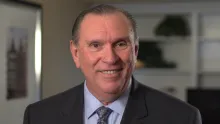
Randy D’Alessandro served as pastor for the United Church of God congregations in Chicago, Illinois, and Beloit, Wisconsin, from 2016-2021. Randy previously served in Raleigh, North Carolina (1984-1989); Cookeville, Tennessee (1989-1993); Parkersburg, West Virginia (1993-1997); Ann Arbor and Detroit, Michigan (1997-2016).
Randy first heard of the church when he was 15 years old and wanted to attend services immediately but was not allowed to by his parents. He quit the high school football and basketball teams in order to properly keep the Sabbath. From the time that Randy first learned of the Holy Days, he kept them at home until he was accepted to Ambassador College in Pasadena, California in 1970.
Randy and his wife, Mary, graduated from Ambassador College with BA degrees in Theology. Randy was ordained an elder in September 1979.
