
Ben Light
This transcript was generated by AI and may contain errors. It is provided to assist those who may not be able to listen to the message.
What kind of feast will you have this year? Will it include anxiety? Maybe fear? Frustration that it won't be as enjoyable as past feasts? Will it be a feast season with limitations and barriers? Again, I want to ask you, what kind of feast will you have this year? To begin to answer that question, I want to take a look at a scripture.
Eventually, I will answer that question. But before we do, we want to take a look at some scriptures so that we can get to the context and background of that question and what the answer is. If you'll begin turning to Acts 16 and verse 16. To give you context, I also want to give you some context of what's going on here in Acts 16, beginning in verse 16. Paul is present with Luke, and we know Luke's here because he uses first-person plural pronouns. So we know that Luke is actually involved in this event.
And Timothy and Silas are traveling with Paul, and they're preaching in the city of Philippi. Paul, at this time of life, is in about his mid-forties. He's been in the ministry preaching for almost 20 years. So he, as the commercial plays on our TVs today, he knows a thing or two about a thing or two. He's seen a lot. And by now, he's become pretty experienced at what Christianity is all about.
So let's take a look at this episode and see what he has learned over those almost 20 years of being converted. And obviously, before that, even in Judaism, he was a faithful Pharisee as a younger man. Let's see what he has learned over the years through trusting God's providence. We're going to say, we could say, what we're about to read is Paul has a bad day. As a matter of fact, this day is horrific. Paul's having the kind of day that none of us, maybe one or two, but let's say most of us, will never experience in our entire lifetimes.
That's the kind of day he's going to have here. So let's read about it. Acts 16, verse 16. It says, now it happened as we went to prayer. Again, you see, we, Luke, is the author of the book of Acts, so he's obviously with Paul at this time. That a certain slave girl, possessed with a spirit of divination, met us, who brought her master's much profit by fortune-telling.
So, for a little cash, she would tell you something that you didn't know about yourself. We have that same profession going on in our world today. And the girl followed Paul and us, remember Timothy and Silas are also part of this party, and cried out, saying, these men are servants of the Most High God, who proclaim to us the way of salvation. These men, and over and over again, she's following them, yelling that. It says she did this for many days, that's verse 18. But Paul greatly annoyed. You know, after a while, you can't take it anymore. So Paul greatly annoyed, turned and said to the spirit, I command you in the name of Christ Jesus to come out of her.
And he came out that very hour, and when her master saw that their hope of profit was gone, the scam was over. No longer could he be sucking coins out of the pockets of gullible people by her giving them a fortune telling. It says they were upset, and they seized Paul and Silas. Now, the Greek word seize, they didn't say, excuse me, would you come with me? No, this is physically violent. They seized Paul and dragged him.
Again, this isn't being nice, this isn't saying, would you come with me kindly? No, this is an act of violence upon these men. Seized Paul and Silas, dragged them into the marketplace to the authorities, and brought them to the magistrates and said these men, being Jews, little anti-Semitic commentary there, exceedingly trouble our city, and they teach customs which are not lawful for us, being Romans, to receive or observe. Verse 22, then the multitude rose up together against them.
So a riot begins. Now they've caused a riot because of their teachings, because of what they did by casting the demon out of this slave girl. The multitude rose up together against them. The magistrates tore off their clothes and commanded them to be beaten with rods. They didn't say, well, I noticed that that's really a nice shirt you have on. Would you kindly unbutton your shirt and take it off?
No, it says they tore their clothes off. And when they had laid many stripes on them, they threw them in the prison, commanding the jailer to keep them secure. Verse 24, having received such a charge, he put them into the inner prison and fastened their feet in stocks. So they're just not in the prison. They are in the most foul, stinking hellhole of a prison. No natural light. You don't know if you're going to vomit because of the smell of stale human sweat, or urine, or human feces, because you're overwhelmed by the smell of all three when you are in an inner Roman prison.
And your feet are shackled. So how would you feel? I'd say Paul's having a bad day. Have you ever had a day this bad? Oh, I know that we've faced threats with viruses in our lifetime. We've even had some pretty scary presidential elections. But have we ever had a day like this? Verse 25. So let's see how Paul reacts to this. But at midnight, at a time when Mr. Thomas has been sleeping for an hour and a half, Paul and Silas were praying and singing hymns to God.
What? Singing hymns to God? Singing hymns to God? And the prisoners were listening to them. Suddenly there was a great earthquake so that the foundations of the prison were shaken, and immediately all the doors were opened and everyone's chains were loosed. Imagine you're sitting there and you have these chains around your ankles, around your feet. It says, fasten their feet in stocks, and you look and it just pink and it falls right off your feet. You think that would be impressive? The chains were loose in verse 27. And the keeper of the prison, we wouldn't know him today as a warden, awaking from sleep and seeing the prison doors open, supposing the prisoners had fled, drew his sword, and was about to kill himself, because in Roman culture you were personally responsible for those prisoners and if they escaped, you were either going to end up in the inner prison, which was a fate worse than death, or you were going to be killed yourself for disobedience to your job, which you had been told to do as keeper of the prison.
So he prepares to kill himself. Verse 28, then Paul called with a loud voice, saying, do yourself no harm, for we're all here, we haven't gone anywhere yet. Don't do yourself in. Then he called for a light. Why does he call for a light? Because this is the inner prison. They don't have Mickey Mouse night lights in an inner prison.
It's dark, it's dank, it's foul. You can't see your hand this far from your face. There's no natural light. So he called for a light and ran in and fell down, trembling before Paul and Silas, and he brought them out and said, SIRS, what must I do to be saved? Now he may have been thinking physically, but Paul, hey, there's an opportunity here. There's an opportunity to preach the gospel, to tell them about Jesus Christ. So they said, Believe on the Lord Jesus, and you will be saved, you and your household.
And they spoke the word of the Lord to him, and to all who were in his house. So this isn't something that happens within a couple of minutes. They leave together with the warden. They go to his home. They spend time in his home. He soothes their wounds. He washes their wounds. They tell him about Jesus Christ, about the purpose of Christ, about salvation. His family is present. They're all hearing all through the night about Jesus Christ and him as Savior.
To all who were in his house. And he took them the same hour of the night and washed their stripes, took them to his house, and washed them, cleaned them up. And immediately, he and all his family were baptized. After some hours had gone by, and they had learned and heard the encouraging message of Jesus Christ, the Savior in the kingdom of God. Now, when he had brought them into his house, he set food before them. So they even ate together. They spent enough time to eat together and have a meal. And he rejoiced, having believed in God with all his household.
So I want you to notice here that beyond the physical environment surrounding Paul, and what's the physical environment? There's been a riot. He was kind of the cause of that riot. There were false accusations. There's an arrest. There's a severe beating. There's a stinking prison that he's thrown into. So how does Paul respond? Is he whining? Is he complaining? Is he cowering in fear? Is he a helpless victim? Do you see any sense that Paul is suffering from anxiety? Here's Paul having panic attacks.
No. It says that he and Luke and the others are singing Psalms after midnight. So loud that the other prisoners can hear them singing. They're not singing under their breath. They're not pretending to sing by just moving their lips. They are literally singing so loud the other prisoners can hear them singing. How's this possible? Would you react this way? How is any of this possible? It's possible because Paul had come to a point in his life where he realized that it was his decision each and every day to choose the attitude and the mindset that he was going to have that day, no matter what happened to him on the outside.
Paul understood that. He refused to be a victim. He refused to pout, blame. God blame other people for the situations he found himself in. He was determined in spite of what was going on around him on the outside to be positive and make the most of every opportunity. Even though he's hurting, even though he's had a bad day, when he has that opportunity to talk about Jesus Christ to that jailer, he even takes that opportunity after singing psalms at midnight in a foul, dank prison.
How about us, brethren? Again, I want to ask you, this is how Paul responded to a really bad day. So let's draw a parallel from that to the feast this year, the fall feast. What kind of feast are you going to have? Remember the example in Acts, chapter 5? We're not going to turn there because recently it was mentioned in one of the sermons or sermonettes, but I'll just consolidate basically what the event is. Acts, chapter 5, these are the earliest disciples, some of the earliest ones, before Paul's even converted. They're in the temple preaching after they had been told not to preach Jesus Christ in the temple.
Again, there's another event, kind of a riot. They're arrested, they're brought before the council, and in verse 28, the council says to them, Did we not strictly command you not to teach in his name? We would say today, What part of no don't you understand? That's what they say to the disciples. The disciples just calmly. So it says that they were beaten and commanded once again not to teach in his name. And how did they react to that?
I would say that's kind of a bad day. Any time you get a beating, it's going to be a bad day. How did they react to that? Verse 41, it says, So they departed from the presence of the council, rejoicing, that they were counted worthy to suffer shame for his name. What had they learned? They had learned that each day you determine the kind of day you're going to have, and it doesn't matter what happens on the outside. What matters is what's going on in the inside. The attitude and the mindset of that gray matter between our two ears.
You see, brethren, they, like the example we just saw from Paul, they too refused to be victims. To pout, whine, blame God, blame other people for the situation they found themselves in. They were determined, just like Paul, in spite of what was going on around them, to be positive and to make the most out of every opportunity.
So who do you think Paul learned this from? Where did these earliest disciples learn this from? Well, they learned it from the great teacher himself, Jesus Christ, the mentor. Let's go to John 16, verse 22. John 16, verse 22. Jesus knows exactly what will occur to his physical body during a scourging and crucifixion. He knows exactly what's going to happen to him in a very short period of time. He knows the violence that's going to be done to him, the extreme pain that he's going to experience through scourging, through the act of crucifixion itself, having nails driven through his body into a piece of wood behind him. He knows all of that. He knows the mental anguish that he'll experience through crucifixion.
In spite of that, here's what he says. John 16, verse 22. He says, therefore you will now have sorrow, but I will see you again. He's talking about the resurrection when he walks back out of that tomb. But I will see you again, and your heart will rejoice, and your joy no one will take from you.
Has someone taken your joy? Have the events of the last five, six months taken the joy out of your life? Have you allowed the enemy, Satan the devil, to steal, to take joy out of your life? Verse 23, and in that day you will ask me nothing, because you'll be able to pray directly to the Father, so you won't need to go to Christ. You'll be able to have access directly to the Father, like Jesus has. Most assuredly I say unto you, whatever you ask the Father in my name, He will give you. Until now you have asked nothing in my name.
Ask, and you will receive that your joy may be full. So on the eve of his death, what's he thinking about? He's thinking about joy. His disciples reflecting joy. Joy that can't be taken away from them because of the hope and because of the knowledge that they have. Joy because what's really important is what's happening on the inside, and that transcends what happens on the outside. No matter what kind of so-called day it is, no matter what happens to you physically, that you have the right mindset and attitude on the inside, and the result of that is a fruit of the Holy Spirit that we know of as joy.
Christ desires that we all transcend what's going on around us and have joy. Not just some joy. He doesn't say a little bit of joy. Occasionally have joy. Joy on Wednesdays between 2 and 3 p.m. No, He doesn't say that.
He says full joy. Have we allowed this world's events, what's going on in some of the cities of our country, or viruses, or other things going on in our heads, have we allowed those to steal our joy, maybe allowed our own personal problems to take away our joy? Let's go to the next chapter, chapter 17, verse 13. Let's see what Jesus asks the Father to do, something very important to Jesus Christ. Again, on the eve of His death, He's going to ask something important to the Father in prayer.
Chapter 17, verse 13. But now I come to you, and these things I speak in the world, that they may have my joy fulfilled in themselves. So He's saying here in the eve of His death that He has joy, and He's praying to the Father that the joy that He has could also be in His disciples. Are they in you? Are they in me? Verse 14. I have given them Your word, and the world has hated them, because they are not of the world, just as I am not of the world.
I do not pray that You should take them out of the world, but that You should keep them from the evil one. He says, I pray that You keep them from that wicked influencer that we know of as Satan the devil. So are we reflecting the same degree of personal peace and joy that Jesus Christ had on the very eve of His death, knowing He was about to face a really bad day, one that would take His life?
Habakkuk. Let's go to Habakkuk, chapter 3 and verse 17. Actually, I have nothing to read here. I just wanted to see how long it takes everybody to find the book of Habakkuk. Habakkuk, chapter 3 and verse 17. Let's see if the prophet got it. If the prophet came to understand that it isn't important what goes on in the outside, what's really important is what's going on on the inside. In a few weeks, we will be celebrating the kingdom of God on earth. But the first place that the kingdom of God has ever established, my friends and my brothers and sisters and Jesus Christ, is between our two ears.
That's where the kingdom first needs to be established. And that's made possible by the gift of God's Holy Spirit. Habakkuk, chapter 3 and verse 17. He says, Though the fig tree may not blossom, nor fruit on the vines, Sounds like famines on its way, though the labor of the olive may fail, and the fields yield no fruit, It's not a good sign, all the vegetation's dying, gonna be hunger time, though the flock may be cut off from the fold, And there be no herd in the stalls, so not only no vegetation, there's no meat to eat, Sounds like some pretty terrible days ahead, shortly.
Yet I will rejoice in the Lord, I will joy in the God of my salvation.
Verse 19, The Lord God is my strength, He will make my feet like deer's feet. I'll do things that I will not normally capable of doing, to handle what is about to occur, in this case famines. And He will make me walk in my high heels to the chief musician with my stringed instruments. The prophet here learned the exact same thing the Apostle Paul learned. He learned the exact same thing that the early disciples learned that we just read about, who were told not to preach the name of Jesus in the temple and did it anyway, and were beaten for it. He learned the same thing that they learned. And that is to transcend the negative physical events in this world and the focus on what is really important, the inside our thinking, our attitude generated by our own self-talk. As I said a minute ago, before the kingdom of God arrives on earth, it is intended to first be established between our two ears. Playwright George Bernard Shaw said this, and I quote, A Native American elder once described his own inner struggles in this manner. He said, Inside of me there are two dogs. One of the dogs is mean and evil. The other dog is good. The mean dog fights with the good dog all the time. When asked which dog wins, he reflected for a moment and replied, The one I feed the most.
Which dog are you feeding? Through the events that have been occurring in our society the last five or six months, what dog have you been feeding? 1 Peter 4, verse 12. If you'll turn there with me. 1 Peter 4, verse 12.
Peter writes, we've looked at Paul's example, we've looked at what Jesus Christ said, we've looked at some examples of the disciples early in the book of Acts. Now let's see what Peter says here. 1 Peter 4, verse 12.
Oh, there's a virus! Yeah, and there have been viruses since the day Adam and Eve left the garden. The doctor said, I have cancer. Well, that's unfortunate, we'll certainly pray about it, but fossil remains show that human beings have been having cancer and arthritis and heart disease since Adam and Eve left the garden. My point is, that's not some strange thing that has happened to us, that's the result of living and being physical human beings. But in spite of whatever that is, Peter says, but rejoice to the extent that you partake of Christ's sufferings. So even if you suffer like he did to the degree that he did, he said we need to rejoice, that when the glory is revealed, you may also be glad with exceeding joy. Again, a little bit of joy. Joy occasionally, on Wednesdays from 2 to 3 p.m. I don't know if I got that same time right again or not. No, none of those. Ick seeding joy.
Verse 14, If you are reproached for the name of Christ, blessed are you, for the Spirit of glory and of God rest upon you. On their part, he is blasphemed, but on your part, he is glorified. I know that last part, especially verse 14, can be a little bit difficult to comprehend. So I'm going to read those verses from the translation God's Word for today. Dear friends, Don't be surprised by the fiery troubles that are coming in order to test you. Don't feel as though something strange is happening to you, but be happy that you share Christ's sufferings. Then you will also be full of joy when he appears again in his glory. Verse 14, If you are insulted because of the name of Christ, you are blessed because the Spirit of glory, the Spirit of God, is resting on you.
So here's the answer to my original question on what kind of feast. Fall, festival, season you're going to have this year. You will have exactly the kind of feast that you are determined to have. In spite of any obstacles, setbacks, problems, unexpected events, you will have the kind of feast that you decide in advance that you are going to have. And you know what? That's really no different than life itself. As a Christian, you are going to have the kind of tomorrow that you decide to have. You'll have the kind of life that you decide to have. Because it really doesn't matter what's going on in the outside. What really matters is what's going on inside of our heads and between our two ears. I'd like to talk now, as I conclude this sermon, I'd like to talk about how we can prepare to have the best feast in our lifetimes if we're determined to, no matter what's going on in the outside, no matter what is going on in the world. Let's begin by going to Leviticus chapter 23 and verse 1. Two points I have to conclude this sermon. Number one, realize that God is giving you a personal invitation to celebrate His feasts. They're not my feast. They're not the feast of the Church of God. We didn't invent them. We have no authority over them. They happen to be God's feast. And He tells us that. Leviticus chapter 23 verse 1. And the Lord spoke to Moses, saying, Speak to the children of Israel, and say to them, The feasts of the Lord, which you shall proclaim to be holy convocations, holy conventions. These are, He says, my feast. God takes ownership of them. They belong to God. Six days shall work be done. He begins to mention the first feast, which is a weekly feast. We're observing that today. Six days shall work be done. But the seventh day is a Sabbath of solemn rest, a holy convention. Thank you, all of you who are here today, for attending a holy convention. For those of you on Zoom who weren't able to make it today, thank you for taking the time in your homes to watch this and to participate in a holy convention. Between two Amen's, an Amen that starts services and an Amen that will conclude services. Continuing, you shall do no work on it. It is the Sabbath of the Lord in all your dwellings. These are the feasts of the Lord, and He takes ownership of them, holy conventions, convocations, which you shall proclaim at all their appointed times. So God is extending to you a personal invitation to celebrate His feasts with Him this year. And whether you can physically attend the feast this year, or because of health concerns, can't attend the feast this year, they are still God's holy days. They are still festival days, no matter what events are going on or happening in this world. We need to be determined to participate and joyfully celebrate these days and worship on these days. Preferably, if we are healthy in person, and if not, at least making that connection through Zoom or some other way to make sure that we are connecting with God's church, connecting with spiritual messages, and connecting with God's people. Beginning in four weeks, we are going to begin to observe some of God's awesome prophetic times ahead.
I want you to remember that Paul told the Gentile Corinthians 55 AD, more than 20 years after Jesus was crucified and was resurrected. He told them regarding the spring holy days in 1 Corinthians 5 and verse 8, talking to Gentiles, the book of Corinthians, Therefore, let us keep the feast, not with old leaven, nor with the leaven of malice and wickedness, but with the unleavened bread of sincerity and truth. So we continue to keep God's holy days because Paul showed us by his example encouraging Gentiles to continue to keep them in a new way, in a spiritual way. There was no temple in Corinth. There was no Levitical priesthood in Corinth. There was no altar in Corinth, and all of that is okay. Paul said that doesn't matter. Let us keep this feast in a new way. In four weeks, we'll be celebrating the Feast of Trumpets. That's mentioned in Leviticus 23 and verse 24. We'll celebrate the literal return of Jesus Christ to this earth as King of Kings and Lord of Lords. At that time, also the first resurrection will occur. And the faithful in Jesus Christ throughout history will be raised from the dead to meet the returning Son of God in the air and return with him to establish the kingdom of God. Then after that, we will be celebrating the Day of Atonement on Monday, September 28. On that day, while picturing the suffering of humankind under the control of Satan, we'll be fasting that day. We look forward to a time when the evil one and all of his demons will be removed from the earth, so the kingdom will have the right environment to prosper and thrive without his influence there. Then after that, October 3 through the 10th, including the last great day, we'll be celebrating the Festival of Tabernacles. That's the 1,000-year millennium of the kingdom of God on earth, a beautiful time when the biblical prophecies regarding universal peace and prosperity and human fulfillment will be accomplished. And then finally, the 8th day, also known to some of us who are older than dirt, as of the last great day, verse 36 in Leviticus 23, will anticipate a time when multiple billions of people who have ever lived, billions who lived and died their entire lifetime without ever having an opportunity to know Jesus Christ. The majority of people living and dying today, I might add, will have their first opportunity to be called and converted and saved. God will offer forgiveness and redemption to the overwhelming majority of human souls who never even heard the name Jesus Christ uttered in their entire lifetimes. We know this as the Great White Throne Judgment. Again, we'll celebrate that on October 10th. So that's the first thing that I wanted to mention in a way that we can prepare to have the best feast in our lifetimes. Number one was God is giving you a personal invitation.
And the second is fellowship. Fellowship. Your mind is a terrible neighborhood to go into alone. Have you ever noticed that? Our mind can be a dark place filled with carnality and biases, selfishness, self-delusion. To counter that, we need to have two essential forms of fellowship. The first form of fellowship is fellowship with God each and every day. 1 Corinthians chapter 1 verse 9. Turn there with me. 1 Corinthians chapter 1 and verse 9. We'll see that we are called into the fellowship with Jesus Christ. 1 Corinthians chapter 1 verse 9. God is faithful, by whom you were called into the fellowship of His Son, Jesus Christ, our Lord. Verse 10. Now I plead with you, brethren, by the name of our Lord Jesus Christ, that you all speak the same thing, and that there are no divisions among you, but that you were perfectly joined together. We can't be perfectly joined together, I might add. If we're not fellowshiping together, if we don't know each other, if we're not spending time, we certainly can't be perfectly joined together, in the same mind and in the same judgment. We do this fellowship with God daily through routine Bible study and prayer, meditation, occasional fasting, and personal worship, personal glorifying God by the things that we say. I want you to notice how in this scripture in 1 Corinthians, Paul equates the fellowship with Jesus Christ as leading to unity in the Church congregation. When we're close to God in the basics, prayer and Bible study and meditation, when we're close to God in those things, we're more likely to fellowship with the brethren and have unity. One thing that I've learned over 50 years of living God's way of life is when people stop doing the basics, they stop coming to the Church.
When they start neglecting prayer and Bible study and meditation, then they think that they're an island and they start staying home more and more and more. That's the first essential form of fellowship. That's with our Lord Jesus Christ. The second essential form of fellowship is with our brothers and sisters in Christ. Let's go to 1 John chapter 1 and verse 5. 1 John chapter 1 and verse 5. John chapter 5. John says, This is the message that we have heard from him, and declare to you that God is light and in him is no darkness at all, if we say we have fellowship with him.
That's Jesus Christ. If we say we have fellowship with him and walk in darkness, we lie and we don't practice the truth. Next verse. But if we walk in the light as he is in the light, we have fellowship with one another. I have fellowship with you, you have fellowship with me, we all have fellowship with one another. And the blood of Jesus Christ his Son cleanses us from all sin.
So the Apostle John here equates fellowship with one another as important as fellowship with God. He says they go hand in hand. And why is fellowship so important? Because our carnal minds need to be refreshed and renewed by fellowship with other believers. The Sabbath and the Holy Days give us an opportunity to do this in person.
There's nothing as powerful as doing it in person. Yes, and I know these are extraordinary times, but just like they've discovered that schooling through Zoom is second best compared to attending school, so is fellowshiping second best compared to being able to be there in person literally attending services. So if we can't physically attend services, due to health reasons, maybe we have a difficulty wearing a mask, maybe because of pre-existing conditions, we're very cautious and don't want to go out into a public area like a Sabbath services, then that means that we need to make an extra effort during the fall Holy Day season to make sure that we're fellowshiping with others.
We have brethren in this congregation who have come to the pavilion during the week and sat down more than six feet apart from each other and just fellowshiped for a while. Why? Because they know they need that time with their brothers and sisters in Christ. It's truly that important. Or maybe we can go to a park to meet someone, or a few extra phone calls, or you can see each other on Skype, or if you're on the Apple platform, what's it called, FaceTime.
Whatever it may be, we need, if we're not able, to attend the feast physically in person to make sure that we're getting that extra fellowship time in with our brothers and sisters in Christ. That's important if we want to have the best feast in our lifetimes in spite of what's going on on the outside.
Fellowship gives us an opportunity to get outside of our heads, which again, our minds are a dangerous neighborhood to go into alone, to get outside of our heads and share our lives with the faithful. Brethren, we need each other. We need to have a positive influence on others. Others need to have a positive influence on us.
We need people to check the thoughts and attitudes that we have that are unbalanced and, frankly, oftentimes, just are not right. We need other people who know us and love us to provide that mental and emotional and spiritual balance in our lives. We need to be humble enough to seek that balance.
We need to be like the earliest generation of the Church of God. It states in Acts 2 and 42, and they continued steadfastly in the apostles' doctrine and in fellowship. In the breaking of bread, they shared meals together, they shared time together, and in prayers.
God has established His festivals and this year the Fall festivals to give us the privilege and the opportunity to fellowship. The best kind, obviously, if we're able to do it, is physically attending, being there, one-on-one. And if we're not able to do that, then we need to make an extra effort to make sure that we're getting that fellowship in some way. Hebrews 10, verse 23, Scripture is a very powerful one we've been reading for years, but I think it's important to read in this context. Hebrews 10, verse 23. Let us hold fast the confession of our hope without wavering.
For he who promised is faithful. Don't lose hope. Don't become impatient about the return of Jesus Christ. Don't give up. Don't be a quitter. Verse 24, and let us consider one another in order to stir up love and good works. I can't stir you up with love and good works if you're never around. You can't stir me up with love and good works if you're never around. Not forsaking the assembling of ourselves together, as is the manner of some, but exhorting one another in so much more as you see the day approaching. I'm going to read to you what the Believer's Study Bible says about this verse, because I think they just hit the nail right on the head.
Early Christians had a fellowship which drew them together for worship and preparation. The author of Hebrews asserts that this practice of assembling together ought to increase as the believing community sees the day of Christ approaching. This passage provides one of the strongest affirmations in the Bible of the crucial importance of the local church and the necessity thrust upon each Christian to be faithful to a local community of saints.
God's holy convocations are coming up beginning in a month. And as much as possible, we need to share our lives with the other disciples of Jesus Christ. As I said earlier during the announcements, locally, those who are able to wear masks are welcome here in the main worship hall. Those who are unable to wear masks due to health or small children are certainly welcome to worship in the social hall. We'll have six feet social distancing set up there for the holy days. Our final scripture today, 1 Thessalonians chapter 5 and verse 8. Please turn there with me. Last scripture that we have for this day. 1 Thessalonians chapter 5 and verse 8.
1 Paul was inspired to write to our brethren in Thessalonica, 2 But let us, who are of the day, be sober, putting on the breastplate of faith and love, and as a helmet of hope and salvation. 3 For God did not appoint us to wrath, but to obtain salvation through our Lord Jesus Christ, who died for us, that whether we wake or sleep, we should live together with Him. 4 He does not say that we should live apart from Him. 5 You live where you want to live, and I live where I want to live, and we all act like we're just isolated islands somewhere. 6 No, He says we should live together with Him, with the Spirit of Jesus Christ present in our lives. 7 Therefore, verse 11, comfort each other and edify one another, just as you also are doing. 7 Brethren, I can't comfort and edify you if you're not here. 8 You can't comfort and edify me, which oftentimes I need more than you'll ever know, unless you're present, unless you're here, unless you're participating in fellowship. That's very important. The way to get out of a dark place and to stay out of a dark place is to be with other people, gods, people. Fellowship with them. Share your life with them. So, in conclusion, brethren, what kind of feast will you have this year? The answer is the same one you determined to have and planned for. It's your choice and decision in spite of what's going on in the outside world. You can determine that you will have an awesome fall festival season. You can enthusiastically accept God's invitation, and you can joyfully worship Him at His holy convention this year. You can look forward to the fellowship and share your life with others. You can get excited about God's plan and His individual plan for your life.
Or, like anything else in your life, you can choose to think differently.
So, what kind of feast are you going to have this year?
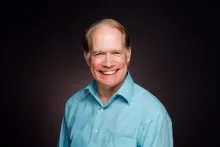
Greg Thomas is the former Pastor of the Cleveland, Ohio congregation. He retired as pastor in January 2025 and still attends there. Ordained in 1981, he has served in the ministry for 44-years. As a certified leadership consultant, Greg is the founder and president of weLEAD, Inc. Chartered in 2001, weLEAD is a 501(3)(c) non-profit organization and a major respected resource for free leadership development information reaching a worldwide audience. Greg also founded Leadership Excellence, Ltd in 2009 offering leadership training and coaching. He has an undergraduate degree from Ambassador College, and a master’s degree in leadership from Bellevue University. Greg has served on various Boards during his career. He is the author of two leadership development books, and is a certified life coach, and business coach.
Greg and his wife, B.J., live in Litchfield, Ohio. They first met in church as teenagers and were married in 1974. They enjoy spending time with family— especially their eight grandchildren.

