

John Elliott
A Harvard University study that lasted 84 years studied thousands of participants pursuing the answer to this question. Of all things considered, the main predictor of happiness and a fulfillment overall in life is good relationships, basically love. We should realize that the greatest goal to strive for is to pursue everlasting life in the coming Kingdom of God.
This transcript was generated by AI and may contain errors. It is provided to assist those who may not be able to listen to the message.
Brethren, whether we were able to make it to the feast or see it online, people get to the age where they can't attend personally, but at least we had a glimpse of that coming kingdom of God, of brethren being in harmony, being able to taste a little bit of that coming kingdom. We know it's very small here now, but it's supposed to be just a taste from when God instituted it to today. That feast always was something that was looking forward to that coming kingdom. This gives us hope, and a hope that goes beyond this life. Notice in Titus 2, verse 11. It says, For the grace of God that brings salvation has appeared to all men, teaching us that denying ungodliness and worldly lusts, we should live soberly, righteously, and godly in the present age, looking for the blessed hope and glorious appearing of our great God and Savior, Jesus Christ. So it's called the blessed hope. That's what we have, because we're looking forward to that kingdom of God coming. And believe me, the way rural conditions are, and we've always said, well, there's always been problems. But if you notice, it's just getting ratcheted up. Do you think in some way, we have gone backwards to what conditions were in World War Two, with planes and small different tanks and things? No, we're living now in a world where they're using laser guns. They're using artificial intelligence. They're coming up very soon with robot soldiers. So it's a whole different world. It's not getting any better in that sense. Thankfully, though, we're still able to enjoy the good side of technology. And we haven't had great famines and things like that. But we've had serious epidemics just a little over two years ago. We had the COVID epidemic around the world. Most people got it. So he's talking about the blessed hope. He said about Jesus Christ, who gave himself for us, that he might redeem us from every lawless deed and purify for himself his own special people. Zellas for good work. So he's purifying. It's a process. Nobody's perfect, but he is through his blood, through what he has done to purify himself. His own special people zealous for good works. Doing God's business, getting the gospel out, teaching the truth to the world.
And so hope is one of those great virtues that are mentioned in the Bible. And after the feast, we should look at that kingdom much more vividly and be able to compare it to the present, what the Bible calls evil world. And it's so important to have that kingdom of God in our sights, because as we get older and have more aches and pains, we know the solution is the kingdom of God. Being resurrected, having a new body, having everything that God has promised. That to us, it's still a bit abstract, but one day, the body that we will have, we will never want to be back in this body again. So we need to keep sight of that coming kingdom and consider how blessed we are to know these things. But also it's not just saying, thy kingdom come, but that I am preparing for that kingdom. So it's not something passive, you just kind of wait it out. No, we have to be actively preparing spiritually and physically for that coming kingdom. One thing to always keep in mind in the midst of different trials, and that is a relationship with God, with Jesus Christ, with a church, with family, friends, and social groups. It doesn't really cost that much money to be able to achieve all of this.
I've been reading a book called The Good Life, Lessons from the World's Longest Scientific Study of Happiness. I came across it quite a number of years ago, but it didn't have a book on the subject. Now it did come out. These are from Harvard scientists. And what was their conclusion after 84 years of following these participants from their early 20s all the way through their lives, and now it's the third generation, they're still being tested and they're always adding to the surveys to keep up with them. Robert Waldinger, director of the Harvard Study of Adult Development, the one thing he says that they have learned from 84 years, and not only from their studies, but also studies done around the world about what produces true happiness. He says, the one thing that surpasses all the rest in terms of its importance is this.
The clearest message that we get from this 84-year study is this. Good relationships keep us happier and healthier. Period. Not how much is in your 401k account. Not how many conferences you spoke at or keynoted. Not how many blog posts you wrote or how many followers you had or how many tech companies you worked for or how much power you yielded there or how much you vested at each. He adds also how much money you made, how much you have in your accounts. He said, no, the biggest predictor of your happiness and fulfillment overall in life is this. Love. Love others. Keep that relationship going through life. Now, they had a survey years ago.
He mentioned here that in a 2007 survey, millennials, which means babies born after the year 2000, were asked about their most important life goals. 76%, which means three out of four, said becoming rich was their number one goal. 50% said a major goal was to become famous. And then, more than a decade later, after millennials had spent more time as adults, similar questions were asked again in a pair of surveys. Fame was now lower on the list, but the top goals again included things like making money, having a successful career, and becoming debt-free. These are common and practical goals that extend across generations and borders. It wasn't just done in the U.S. around the world. That's what society tells us. It's going to make us happy.
And then they say, one hard truth that we would all do well to accept is that people are terrible at knowing what is good for them. This is what their experience after 84 years, that people still put the wrong goals in life. More important than how people would answer the question are the unspoken myths. There are many, but chief among these myths is the idea that happiness is something you achieve, as if we're an award that you can frame and hang on the wall. Or as if it were a destination, and after overcoming all of the obstacles in your way, you will finally arrive there and then just hang out for the rest of your life. Of course, it doesn't work that way. These surveys didn't show that at all. Then he gives an example of two Harvard men involved in the study in their early 20s, John and Leo. Both were from upper-class homes, and they decided to pursue careers. One of them, John, said he wanted to be a lawyer. The other wanted to be a writer, Leo. But he became a schoolteacher. John became a lawyer and was quite successful in his field. But in the decades of studying their lives, it was the schoolteacher who found lasting happiness and not the lawyer. Not the one who made the biggest bucks, had the biggest office, biggest title. Why?
The lawyer had answered that what made him happy was giving in to my inner drives. In other words, just give in to my desires. Buy something new. Go someplace exotic. Do whatever all these things. That's... In the end of his life, he said he was empty and unhappy. And while he had tried to make himself happy, he had been preoccupied in every stage of his life with himself and what he desired. He began his career hoping to make life better for others. But over time, associated his achievements less with helping people and more with professional success. Fame and fortune. Convinced that his career and his accomplishments would bring him happiness, he was never able to find a path to joy. The school teacher, Leo, made much less money living in a modest home, but he was the happiest over all those decades. The survey found he thought of himself primarily in relation to others. His family, his school, and his friends appear often in his reports to the study. And he is generally considered as one of the study's happiest men.
By his own accounting of things, Leo lived a rich and satisfying life. He wouldn't show up on the evening news, and his name was not known beyond his local community. But he had four daughters and a wife who adored him. He was remembered fondly by friends, colleagues, and students, and throughout his life rated himself as, quote, very happy or extremely happy.
On these study questionnaires, John, unlike John, Leo found his work meaningful, specifically because he took pleasure in the benefit that other people derived from his teaching. It's easy enough now, looking back on these two men's lives, to see the links between what they each believed, the decisions they made, and how their lives unfolded. Then, though, these authors mentioned the idea that healthy relationships are good for us has been noted by philosophers and religions for millennia. In a certain way, it's remarkable that all through history, people trying to understand human life keep coming to very similar conclusions. With a few exceptions, science has not been much interested in the ancient world or in received wisdom. Striking out on its own path after the Enlightenment, that was in the 16th and 17th century, science has been like a young hero on a quest for knowledge and truth. It may have taken hundreds of years, but in the area of human well-being, we are now approaching a full circle. Scientific knowledge is finally catching up to the ancient wisdom that has survived the test of time. So, science wasn't pursuing anything like good relationships. They thought things, discovering things, was going to make all the happiness in the world. And of all the wisdom literature, it is the Bible that contains the most information about good relationships. Notice in Genesis chapter 1, the very first chapter of the Bible, Genesis chapter 1, which is the first relationship that is mentioned here, Genesis 1, 26, and 27, then God said, let us make man in our image, according to our likeness. Let them have dominion over the fish of the sea, of the birds of the air, and over the cattle, over all the earth, and over every creeping thing that creeps on the earth, different types of reptiles, mostly. But here, the point about dominion is not something that man was going to just exploit. This is more the terms used as a caretaker, someone that was going to take care of the earth, make sure that it was well kept, and use it for the good of all, and not just a few. So God created man in his own image, the image of God he created him, male and female he created them. First of all, it was the relationship that male and female should have with God. It wasn't some abstract idea. No, God manifested himself. He was there with them. He was there with them. And notice in Genesis chapter 2 verse 15.
Then the Lord God took the man and put him in the garden of Eden to tend and keep it. Again, the terms here are to take good care of it.
And the Lord God commanded the man, saying, Of every tree of the garden you may freely eat, but a tree of the knowledge of good and evil you shall not eat, for in the day that you eat of it, you shall surely die. In other words, the countdown begins to your death.
Verse 18, in the Lord God said, It is not good that man should be alone. I will make him a helper comparable to him. And then it goes on to say, Verse 22, Then the rib which the Lord God had taken from man, he made into a woman, and he brought her to the man. Adam said, This is now bone of my bones and flesh of my flesh, and shall be called woman, because she was taken out of man. And this is a quote from God himself. Therefore, a man shall leave his father and mother, and be joined to his wife, that shall become one flesh. So that's the relationship. So you have two relationships going on here. First one is to God. He's the one that made us. He put us on this earth. God the Father and Jesus Christ as his son, the one the mediator. He's the one that has done most of the interactions with human beings until that kingdom is established, and everything is judged and purified, and then God the Father's going to come down at the end. And chapters 22 and 23 of Revelation is when God the Father comes down, because everything has been taken care of. But we're not there yet, by any stretch of the imagination. And then we go to Genesis 3 verse 17. After man and woman take of the forbidden fruit, he says, then to Adam, he said, because you have heeded the voice of your wife and have eaten from the tree of which I commanded you, saying you shall not eat of it, cursed is the ground for your sake. In toil you shall eat of it all the days of your life, both thorns and thistles it shall bring forth to you. And you shall eat the herb of the field, in the sweat of your face you shall eat bread till you return to the ground. See that countdown when you return to the ground for out of the it you were taken for dust you are and to dust you shall return. And so there in a nutshell is the beginning of this present evil world we live in.
In this relationship with God and with human beings, starting with a family, with marriage, and everything else, God created it to be the strength of the family, of the person themselves. And no matter how well you could have been in the Garden of Eden, beautiful trees and everything else, the important relationship was between Adam and Eve, and it didn't work out that way. They decided to do things on their own, and God allowed that. And basically the first son that is mentioned there is Cain, and he became a juvenile delinquent and a murderer. That didn't sound good. Not a good harbinger, was it, of future things?
Now notice in Luke chapter 22, Luke chapter 22 and verse 15, we can say this is the summary of that Harvard 85-year study combined with all the best studies around the world on this topic of what is the good life? Luke 12 verse 15.
It says, And Christ said to this person, Take heed and beware of covetousness, which is greed. For one's life does not consist in the abundance of the things he possesses. Now society says that's the most important goal. And that's why these scientists pull their hair out because they say, look, all the statistics we have had 84 years worth of them, and people that put all their happiness and just physical things, they turn out to not be very happy unless they have good, healthy relationships. Christ goes on to say, Then he spoke a parable to them, saying, The ground of a certain rich man yielded planerfully. And he thought within himself, saying, What shall I do, since I have no room to store my cramps? This man has so many riches. So he said, I will do this. I will pull down my barns and build greater. And there I will store all my crops and my goods. And I will say to my soul, which means say to myself, You have many goods laid up for many years. Take your ease. Eat, drink and be merry. Just the typical attitude. Just party and spend to your heart's content. But God said to him, Here's the relationship that you foregod, who gave you all of these things? To whom does it ultimately belong? It's to God. We don't possess anything. We haven't made one inch of dirt in this planet. We were put here, but we didn't create it. And it goes on to say, Fool, this night, your soul will be required of you. You're going to die. Then whose will those things be which you have provided? Not long. You're not going to be able to enjoy them like you thought. So is he who lays up treasure for himself and is not rich toward God. So that relationship with God is very important. Make sure we keep it as it should be. And then he said to his disciples, Therefore I say to you, do not worry about your life, what you will eat, nor about the body, what you will put on. And this the word worry means anxious concern. It doesn't mean we think everything's going to fall down from heaven. But he says here, don't get consumed by that.
Life is more than food and the body is more than clothing. He's saying, basically relationships are more important with God, with family, with church, with friends and social groups. There in that Harvard study, they mentioned that they noticed people that had even if they go and play some type of card games and get together with people or do something else and they even included tennis. So I'm happy with that because I have a tennis group that I enjoy every week going out and just just getting together with others and having good relationships that way.
So then it goes on to say, Consider the ravens for they neither sow nor reap, which have neither storehouse nor barn and God feeds them. Never seen one of those nasty crows. Have you ever seen one that's very thin? That's no, they're pretty healthy as creatures. God knows how to feed them, of how much more value are you than the birds. So he knows what we need. But he also knows what kind of relationships we're developing. And which of you, by worrying, can add one cubit to his stature? Now, if you're short, you're not going to get any bigger by just trying to think and force it. If you then are not able to do the least, why are you anxious for the rest? Again, that word, anxious. Consider the lilies, how they grow. They neither toil nor spin. And yet I say to you, even Solomon, in all of his glory, was not arrayed like one of these. And of course, in those days, they didn't even have microscopes like we have. Or you can look at one of these little flowers. And as you get farther and farther, the more beautiful the flower gets, the more the symmetry that it has.
If then God so clothes the grass which today is in the field and tomorrow is thrown into the oven, how much effort does God put in these things? How much more will he clothe you, O you of little faith? Now, we just think we have to do everything for ourselves. We forget about faith in God, putting him first. And do not seek what you should eat or what you should drink, nor have an anxious mind for all these things the nations of the world seek after. And your father knows that you need these things. But here's a priority. Seek the kingdom of God and all these things shall be added to you. And then famous verse afterwards, do not fear little flock, for it is your father's good pleasure to give you the kingdom. So that's talking about every one of us here. We are God's little flock, and we should never forget what God is providing for us. Notice now in Mark 10 verse 31. Mark 10 verse 31.
I'm going to read it here in the New Living Translation. Mark 10, 31. Much clearer in the New King James, it says, but many who are first will be last and the last first. In the New Living Translation it says, but many who are the greatest now will be the least important then. Talking about in the kingdom. And those who seem least important now will be the greatest then. The Bible knowledge commentary mentions, quote, rewards in God's kingdom are not based on earthly standards, such as rank, priority, or duration of time served, personal merit, or sacrifice, but on commitment to Jesus and following Him faithfully. Relationships again. It is that important. Let's go to Matthew 25 because I mentioned it's not just asking thy kingdom come, but also saying, Father, I'm preparing myself spiritually for that kingdom. I will continue to do so till my dying day. In Matthew 25, after Christ talked about the end time period, this is a warning to the church members. It says in Matthew 25, verse 1, then the kingdom of heaven shall be likened to ten virgins who took their lamps and went out to meet the bridegroom. Now five of them were wise, and five were foolish. So the way they had the weddings in those days, it was a big event because people didn't have much money for any type of other activity. So weddings and funerals were two things that were pretty big. Sometimes they lasted a week. But here are these virgins. They were the handmaidens of the bride.
And so the bride had already gone with her husband, and now the husband was going to take her back to the home that he had prepared for her. He said, those who were foolish took their lamps and took no oil with them. But the wise took oil in their vessels with their lamps. But while the bridegroom was delayed, they all slumbered and slept. And at midnight a cry was heard, Behold, the bridegroom is coming. Go out to meet him. Then all of those virgins arose and trimmed their lamps, which means that's a way to make them burn better. And the foolish said to the wise, Give us some of your oil, for our lamps are going out. But the wise answered, saying, No, lest there should not be enough for us and you, but go rather to those who sell, and buy for yourselves. And while they went to buy, the bridegroom came, and those who were ready went in with him to the wedding, and the door was shut. Afterward, the other virgins came also, saying, Lord, open to us. But he answered and said, As shortly I say to you, I do not know you. Watch therefore, for you know neither the day nor the hour in which the Son of Man is coming. So it's up to us to have that extra oil, to not neglect our prayer life, our studying of God's Word, of meditation, occasional fasting, being able to be close to them, and also about good relationships, because we better make amends with those that we can. And first of all, we have to make sure we go before God and keep that relationship healthy. Open ourselves to Him, just like a son would or a daughter to His or her father. And then Jesus Christ is there to help us. We can depend on Him. And then family, and what is the Church, the brethren, what we're doing here to help us out. We have some members that did a wonderful thing during the feast, and they actually drove from Temecula and picked up some of the widows and others and took them out to have dinner with them. And these people don't have much money, but you know what? That's the Spirit. We care for each brethren here, whether they're young or old, everyone is precious here. You are part of God's people. You are respected and loved, and above all things, one day you're going to see that kingdom because you are faithful. So, you know, nobody is left behind here. Take care to the last dying breath. And so, it's not just praying thy kingdom come, but also talking about, Father, I'm preparing for that coming kingdom by the relationships that I'm building with God, family, church, friends, and social groups. We were made to be with others, to help others, and to be helped by others. So that is the good life that God created for all of us. One last scripture, John 10, verse 10. Remember what Christ came to do? John 10, verse 10.
He said, The thief does not come except to steal and to kill and to destroy. I have come that they may have life and that they may have it more abundantly.
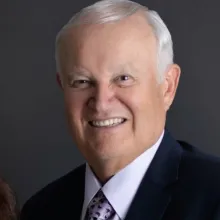
Mr. Seiglie was born in Havana, Cuba, and came to the United States when he was a child. He found out about the Church when he was 17 from a Church member in high school. He went to Ambassador College in Big Sandy, Texas, and in Pasadena, California, graduating with degrees in theology and Spanish. He serves as the pastor of the Garden Grove, CA UCG congregation and serves in the Spanish speaking areas of South America. He also writes for the Beyond Today magazine and currently serves on the UCG Council of Elders. He and his wife, Caty, have four grown daughters, and grandchildren.
