

Paul Moody
This sermon was given at the Branson, Missouri 2013 Feast site.
This transcript was generated by AI and may contain errors. It is provided to assist those who may not be able to listen to the message.
Well, good afternoon, everyone. That was certainly a very, very beautiful piece of special music from this eighth day, this last service, Worthy is the Lamb. It's interesting that in the book of Revelation, Christ referred to as the Lamb of God, and I don't hold me to the number here, but it's something like 20 times out of 22 in the New Testament. There's two other places where he's referred to as the Lamb in the New Testament, but I think all but two of those are in the book of Revelation. But a very, very beautiful piece of special music, Worthy is the Lamb, from Revelation chapter 5. This is a difficult assignment. What do you cover when everything else has already been covered? But of course, we are now nearing the conclusion of the eighth day, the final feast day in God's tremendous plan of salvation. He has not only for us, but for the entire world. Of course, the meaning of this day was very thoroughly explained this morning in the sermon by Mr. Ott and the sermon by Mr. Dobson. So I'm going to maybe cover something a little different here today, but it was very exciting arriving here for all of us, I think, eight or nine days ago when we arrived. Something you always really look forward to, as we mentioned even earlier, how we look forward to the Feast of Tabernacles every year, even many months in advance and planning for it. And it's very exciting when you arrive here, but boy, when it's done and you look back at it, where did the time go? It seemed to go so fast. And it's a little bit sad to think about it coming to an end and leaving, heading back for home here at the conclusion of this final service. It's going to be another six and a half months now before we begin next year's Spring Festival season, around the middle of April or so. And we're all, of course, getting older. And you don't know what will next year bring, not only for our nation and for the world, but even in our personal lives. How many of us will be back here again next year to observe the Feast? And who knows, even as mentioned by Mr. Dobson just a moment ago, what kind of trials and difficulties and things might come our way this coming year. God began my mind to the truth back in December 1962. I just signed up for the service and got up my mind right after I'd signed up. So I end up going in. Now, no, Mr. Pirwes talked about all these services and how about everybody raise their hand. They got to the Coast Guard, just one person raised their hand. That was me. I was in the Coast Guard. I was at one oddball out. But I did my stint in the Coast Guard, and after that I got out. I started really signing into the truth and applied for Ambassador College in the spring of 1964. I was finally accepted at the last possible. So I kept getting these Dear John letters, where we're still reviewing your application. Right at the very last second I was accepted about the middle of August, just about two weeks before classes began in 1964. On March 23rd, 1965, I counseled for baptism Dr. Clinton Zimmerman. He died not too long ago, but he had a brief counseling about maybe 20 minutes, but it was very meaningful. But he asked me a question I never forgot. He asked me, is there anything that could ever happen to you in your life that would cause you to leave God's truth?
And then he went through some possibilities, and he went into torture. What if you're captured in torture? Would you give up the truth if you were tortured? Well, wow, I was a young man about 22 years old the time, and I had to think that. I had to answer honestly. I said, well, you know, to be truthful with you, I really don't know how I'd hold up under torture if somebody was really torturing me. But I said, I would do this. I'd ask God to give me the strength to persevere.
And so I would never forsake his truth, ever turn away from it.
I was baptized in the pool down in the basement of the pool down there at the student center in Pasadena later that afternoon. I've never yet been tortured, thankfully. I hope I never will be.
But we all have gone through some torturous experiences over the years in the church. This is my 50th piece of tabernacles now, my wife's 51st. And since back in 1965, when I was baptized, how many people have, for one reason or another, left the truth?
How many ministers have left? Far too many. Now, if you had to narrow it down to two things, what two things must we all do in order to survive whatever lies ahead of us, to make sure we're going to remain faithful to the calling God has given us to the very end of our lives, or until Christ returns whichever comes first? What two things would guarantee us to be there when Christ returns and to be made faithful throughout the rest of our lives, no matter what happens? That's what I'm going to look at here in this final sermon, in this feast in Branson here in 2013. What two things must we all do to stay the course, to fulfill the calling that God has given to us, no matter what happens this next year, between now and the spring holidays, and between now and the next feast of tabernacles? Now, before I give you the first thing that we all must do, I would like to reiterate the experience and example of the Apostle Paul. Paul began, of course we know, as Saul. His name was originally Saul, Saul of Tarsus. And as we all know the story of Saul, he began as a great persecutor of the church. He was going to try to wipe out the church. He was extremely zealous, but he was zealous against Christ and against the truth and against the church. It was being raised up. And suddenly God got his attention, didn't He? On the road to Damascus, He blinded him.
Interesting concept. God blinded him to open up his eyes. Paul was blinded so he could see. I want to stop just for a moment here and give a word of encouragement to all of us as parents.
If all had been in the church for many years, we've had children, we've raised children in the church. Many of us have children who are no longer on the same path we are on for one reason or another. Many of us have children who are currently blinded in a spiritual sense to understand the truth, that we understand, and maybe gone their own way for whatever reason. But don't be overly worried. We do have a great God who loves our children even more than we do. And remember, they are His children even more than they are our children.
And God, as was mentioned just a little bit earlier today, God desires all men to be saved and come to the knowledge of the truth, 1 Timothy 2, verses 3 and 4. So when the time is right, God is very capable that He will open their minds, of all those who have been blinded, even as was the case of Saul of Tarsus, who was a persecutor of the church. And of course, he then became a great perpetuator of the faith, a tremendous example of faith and perseverance.
But when God opened Saul's mind, I wonder if Saul had any idea in the world what he was going to go through to stay the course, how God was going to use him, and what would be required of him as the Apostle Paul, as he would become. Now we covered some of those trials in my sermon on the first holy day, as recorded in 2 Corinthians 11, verses 23 to 28.
I say Paul began as a great persecutor of the church, but he ended his life as a great keeper of the faith and a great example of someone who kept the faith to the end of his life, which shows us not how we begin our calling that's important, it's how we end our calling that's important. Let's turn there to see again, just read again in 2 Timothy how Paul ended his ministry and his calling that God had given him, even though he went through some horrible, horrible experiences and difficulties. But here's two verses just to show the end of Paul's life. 2 Timothy 4, again verses 7 and 8. 2 Timothy 4 verse 7, where Paul says here in his final epistle, as far as we know, that he wrote before he died, he says, I have fought the good fight. I have finished the race. I have finished the race. I have kept the faith.
Finally, then there is laid up for me the crown of righteousness, which the Lord, the righteous judge, will give to me on that day, and not to me only, but also to all who have loved his appearing, who look forward to that day when Christ is going to return to establish the kingdom of God here on the earth and to open up the minds of the entire world. But how can we all be assured of ending our calling as the Apostle Paul ended his? How can we all be assured of continuing to fight the good fight so we can finish the race and keep the faith through the very end of our physical lives whenever that time might come? What two things must we do to fulfill our calling as the Apostle Paul fulfilled his calling? First thing we must do to fulfill our calling is really easy to state. Simple thing to state, and maybe even intellectually understand.
But sometimes, certain times in your life, it's a little hard to put it into practice and to hold to it. The first thing we must all do is very simple to say. It's the first thing we must live by faith. No matter what happens, we must live by faith. Now, it's one thing to have faith, but it's another thing to live by faith.
Many of us discovered that distinction when it came to observing the Sabbath and Holy Days. It was one thing to prove the Sabbath. It was one thing to prove the Holy Days, but it was another thing to actually begin observing them and to live by faith that God was going to work things out so we could observe them and keep them. I found out in 1970, when the World Wide Church of God laid me off, I was laid off in 1970.
I was hired and graduated in 1967. I was hired by the church, worked for the church for three years, and I was laid off. And I had to go up to Seattle to find employment. Seattle at that time had 15% unemployment. Boyne was laying off all kinds of people. They had very large unemployment then. And so I found out what it was to live by faith, to be able to have to try to find a job and have to keep the Sabbath and the Holy Days and bring that up in your job interview.
It's kind of brought out. The Sabbath then became not only a faith commandment, it became a test commandment for me, as it did for I think many of us when we came in to the truth when God called us. Let's go back to Exodus chapter 31. The Scripture we used to read a lot when it came to the Sabbath as being a test commandment. Exodus chapter 31 beginning in verse 12. The Lord spoke to Moses, saying, Speak also to the children of Israel, saying, Surely my Sabbath you shall keep.
For it's a sign between me and you throughout your generations. You may know that I am the Lord who sanctifies you. Dropping down to verse 16. Therefore the children of Israel shall keep the Sabbath, to observe the Sabbath throughout their generations as a perpetual covenant. It's a sign between me and the children of Israel forever. For in six days the Lord made the heavens and earth, and on the seventh day he rested and was refreshed. So here God tells Israel that the Sabbath was to be an identifying sign between God and them. Between God and those who would have a special covenant relationship with God from that time on.
And because in 1970, as for me, that became a test commandment for me when I got laid off. Even as it did for Israel, as they were en route to Mount Sinai, as you read in Exodus 16, the Lord said to Moses, Behold I'll reign bread from heaven for you. And the people should go out and gather a certain amount of quote every day that I may test them whether I walk in my law or not.
And of course he ran down that manna and they let him stay over the next day at stake except on a sixth day he'd bring the double portion. And it stayed over the Sabbath, it didn't stink, so they wouldn't have to go out and gather it on the Sabbath. It was a test commandment for them and a sign to see whether Israel at that time was going to live by faith, whether they're going to live by faith and obey God and keep the Sabbath.
As I said when I got laid off in 1970, I found that out. I had to go up to Seattle, try to find a job, and I interviewed with a company up there. I won't mention who it was, but it was a very prominent company. They're still there. They offered me an excellent job, excellent salary. There's only one catch. They didn't require to work on the Sabbath, but there's two or three times a year where I have to come in and deal with situations on the Sabbath, and you have to agree to do that.
I wouldn't agree. They wouldn't give me the job. So I got another job. Didn't pay much. But it was a job of vital living, and it taught me a very valuable lesson that God can take care of you if you live by faith, regardless of how much money you make or don't make. That God can take care of us no matter what happens, no matter what the future may bring.
But what does it mean to live by faith? What does that really mean? Again, we can go to the apostle Paul, who explains what it means in his second letter to the church at Corinth. Let's go to 2 Corinthians chapter 4. 2 Corinthians chapter 4. I'll begin in verse 8, or just read verses 8 and 9. 2 Corinthians 4 verse 8 says, We are hard-pressed on every side, yet we're not crushed. We are perplexed, but not in despair. We're persecuted, but not forsaken. We're struck down, but not destroyed. Why were they not crushed, in despair, forsaken, or destroyed by the events that pressed against them on every side?
They weren't because they lived by faith. Because they lived by faith, they had faith that God was going to see them through it one way or another.
Now what does that mean? What does it mean to live by faith? Verse 16, Paul says this, Therefore we do not lose heart. First and foremost, it means we'll never lose heart.
That's what it means to live by faith. We'll never lose heart, no matter how bleak it is, no matter what comes at us, no matter what Satan can throw at us, no matter what kind of trials or difficulties we face, no matter how desperate things may be. It means when we live by faith, it means we're never going to lose heart. We always know that everything is eventually in God's hands. It means we'll never give up or let loose of the calling that God has given us, even if we're facing death or the possibility of perishing.
Second Corinthians 4, verse 16 again, Therefore we do not lose faith, even though our outward man is perishing, yet the inward man is being renewed day by day. For our light affliction, which is but for a moment, is working for us a far more exceeding and eternal weight of glory.
And the next verse then here clearly tells us what it means to live by faith. Verse 18, While we do not look at the things which are seen, but the things which are not seen, for the things which are seen, they're only temporary. They're here today and they're going to be gone tomorrow. We've got a whole new world that God is going to create. This whole world's going to be gone at some point in the future. The things which are seen are temporary, but the things which are not seen, as we've been given a view of and a vision of in this feast of tabernacles, those things are eternal. They're going to last forever. So the live by faith means that we don't look at or focus on our present circumstances, no matter how bad they seem to be.
We don't focus on things that we can see or things that we can feel emotionally, because all those things are only temporary. They're but for a moment, Paul said. They are but for a moment, especially when compared to eternity and to the eternity of war that God has set before all of us. So the live by faith means we look at things which are not seen. It means we look at things which are eternal. So the live by faith means we look forward to, I look way beyond, I should say, our present circumstances to the future instead of to the present. 2 Corinthians 5 verse 1. We know that our earthly house, that is this tent, this temporary body that we have, is destroyed. We're all dying. We're all getting older. So when that happens, we know we have a building from God, a house not made with hands eternal in the heavens. 3 verse 7. As for we walk by faith, not by sight. We don't look at our present bodies and are getting older. In fact, we're going to die. We walk by faith. We have an eternal future. So we have an eternal future even if we're realizing we're going to die someday or if we're facing a situation which may take our lives. Whether we're not, we might face death from aging, death from disease, death from disease or some health condition, or maybe death at the hands of man. It doesn't matter.
Hebrews 9, 27 tells us, is appointed for all men to die once. Every human being is only, this life is only meant to be temporary right now.
But what if we are facing a situation where we could die, maybe prematurely, by some situation or by the hands of man or whatever? Should our faith be dependent on whether or not God intervenes for us in that moment when maybe we're facing something, maybe at the hands of man, as some did? What if God doesn't intervene? Does that mean we didn't have the faith?
Let's answer that by looking at an outstanding example of what it means to live by faith.
This example we're all very familiar with, but it's good to reiterate and go over it again. Let's go back to Daniel chapter 3. Daniel chapter 3, back during the time of Nebuchadnezzar, when he was the king of Babylon, and Babylon was the mightiest and most powerful empire in the world. Nebuchadnezzar being the king was the most powerful individual in the world. He held the life and death over people's heads. Daniel 3 verse 1, Nebuchadnezzar the king made an image of gold whose height was 60 cubits and so on. And he sent word to gather together all the administrators and the governors and consulars and satraps and so on and judges and magistrates to come to the dedication of the image which King Nebuchadnezzar had set up. So they all came together, verse 3, and all the officials of the problems gathered together for the dedication of the image that King Nebuchadnezzar had set up. And they stood before the image that Nebuchadnezzar had set up.
And then a herald cried aloud, To you it is commanded, O people, nations, and languages.
That the time you hear the sound of the horn, the flute, the harp, lyre, and sultry, in symphony with all kinds of music, you shall fall down and worship the gold image the King Nebuchadnezzar has set up. And whoever does not fall down and worship that image shall be cast immediately into the midst of a burning fiery furnace. And your life is going to be toast, literally. That was the threat. And he had the power to carry it out.
But then King Nebuchadnezzar, who had the power of life and death in his hands, was told this, dropping down to verse 12. He said, You know, Nebuchadnezzar, there are certain Jews whom you have set over the affairs of the province of Babylon, namely Shadrach, Meshach, and Abednego. And these men, O king, they don't pay any attention to you.
They don't bow down when they hear the music.
They have not paid due regard to you. They do not serve your gods or worship the gold image which you have set up. Then Nebuchadnezzar and Rach and Furey gave the command to bring Shadrach, Meshach, and Abednego. So they brought these men before the king. Can you imagine that? What would you feel like if you were there in that position? Would this have caused you to have fear and trepidation? Would you have feared for your life and that sort of situation that they faced?
Would you be tempted to maybe turn away and worship the image to forsake the calling that God had given you in order to belong your physical life? Verse 14, Nebuchadnezzar spoke, saying to them, It is true, Shadrach, Meshach, and Abednego, that you do not serve my gods or worship the gold image which I have set up. Now, if you're ready at the time you hear the sound of the horn, flute, harp, and lir, and sultry in symphony with all kinds of music, if you're ready to fall down and worship the image which I have made, well then good. But if you do not worship, you should be cast immediately into the midst of the burning fiery furnace. And who is the God who could deliver you from me? No God could deliver you out of my hands. That was Nebuchadnezzar's position. But how would you have answered if you were there standing there before King Nebuchadnezzar in that moment? How would you have answered? Could you and I still live by faith in what appeared to be certain death? And what if God didn't deliver you? What if the thought came in the back of your mind, well maybe God won't deliver me. I mean, he may or he may not.
Does he really know the situation I'm in? What if God did not deliver you from the hands of someone who had the power of life and death over you? Would that alter your faith that God did not deliver you? Would that cause your faith to be a little bit shaky? Just that thought of that.
If we ever had to face a similar situation, we would know there is a very real possibility. We would know there is a very real possibility maybe that God wouldn't deliver us.
We don't know if God delivers us or not in a situation like that.
Indeed, as we know, as we'll see a little bit later, there are many cases where God did not deliver people who faced certain death in situations like that. But we're just realizing or thinking that maybe God might not intervene. Would that indicate a weakness in faith? No, not at all. As we'll soon see. Should it make any difference in our faith if God intervenes or not? Should that make any difference? Would you and I have answered as Shadrach, Meshach, and Abednego answered? Again, part of verse 15, and who was a God who would deliver you from my hands? Now, verse 16. Shadrach, Meshach, and Abednego answered and said to the king, O Nebuchadnezzar, we have no need to answer you in this matter.
What did they mean by that? We have no need to answer you in this matter.
They meant that it didn't make any difference whether God delivered them or not. It didn't make any difference. They'd already made a decision. No matter what they faced, they were going to remain true to God, and the calling God had given them.
Regardless of what happened, it didn't matter. He could take their life or not. It didn't make any difference. They meant that the true God that they worship was all-powerful and could preserve their lives even if Nebuchadnezzar put them to death. There was a future for them regardless of whether Nebuchadnezzar took their life or not. It was God who was sovereign over life and death, not them, not Nebuchadnezzar. Verse 16 again, Shadrach, Meshach, and Abednego answered and said to the king, O Nebuchadnezzar, we have no need to answer you in this matter. If that is the case, if you take our lives, our God whom we serve is still able to deliver us from the burning fiery furnace. And He will deliver us, O King! He is going to deliver us. If He doesn't deliver us now, He's going to deliver us later. That's what they're meant. They knew there was a future regardless of whether He took their life. God's the one that has sovereignty over life, not King Nebuchadnezzar, not any man, no matter how powerful He is. But they realize God might not deliver them, as indicated in the very next verse, verse 18. But if not, if God doesn't deliver us from the furnace, if He allows us to die, let it be known to you, O King, that we do not serve your gods. Normally, worship the gold image which you have set up that doesn't make any difference.
Let it be known, O King, that it doesn't matter whether God delivers us or not.
We're still not going to worship your image that you've set up. We're still not going to turn away from the fantastic calling that our God has given us. It doesn't matter. Now, you probably wonder if you've been standing there with Shadrach, Meshach, and Abednego in this situation. You probably wonder, I wonder where God is. Does He know the situation I'm in? Does He know this could be the very end of my life? I wonder where if God is there on His throne, if He sees what's happening. See, where was God? Let's read on. Verse 19.
Them who can have a caneser was full of fury and expression on his face changed. And he spoke the commandments that they heat the furnace seven times. And he commanded certain mighty men of valor in his armory to bind Shadrach, Meshach, and Abednego and cast them into the furnace. So then these men were bound in their coats, their trousers, their turbans, and their other garments were cast into the midst of the furnace. And therefore, because the king's command was urgent and the furnace was exceedingly hot, the flame of the fire killed those men who threw them into the furnace. And these three men, Shadrach, Meshach, and Abednego, fell down bound into the midst of the furnace. Then King Nebuchadnezzar was astonished. And he rose and heist and spoke, saying to his consulars, didn't we cast three men into the furnace?
Don't I see a fourth person there? Who was that? Where did he come from? And they said, well true, O king. But look, he answered, I see four men loose walking in the midst of the fire, and they are not even hurt. And the form of the fourth is like the Son of God. Where was God? He was right there with him. He was right there all the time.
And that's true in every situation we face, whether we see God or not, whether anybody else sees him or not. He's always there. He's right there. He's not way off somewhere. He's right there. He's with his people. He knows everything we face, every situation you face. He's right there with them all the time. And that's true whether he delivers or not. That's God's decision. Nebuchadnezzar gives us the bottom line here in verses 28 and 29. Verse 28, Nebuchadnezzar spoke, saying, Blessed be the God of Shadrach, Meshach, and Abednego, who sent his angel and delivered his servants who trusted in him and who lived by faith. And they have frustrated the king's word and eulogued their bodies that they should not serve nor worship any God except their own God. Therefore, verse 29, this is kind of humorous in a way, therefore I make a decree that any people in national language who speaks anything against the God of Shadrach, Meshach, and Abednego shall be cut in pieces and their houses shall be made as sheep, because there is no other God who can deliver us. So, we'll be moving fast. You can see by this, Nebuchadnezzar was still in kind of a power trip here, but he did learn that there is no God like the true God.
There's no other God who can deliver like this. And he was astonished.
Well, our original question was this. Should our faith be dependent on whether or not God intervenes or not? And if we felt that God might not intervene, would that be any indication that our faith might be a little weak? The answer to both of those questions is simplified here, and by Shadrach, Meshach, and Abednego is no. No, our faith should not be dependent on whether or not God intervenes. And no, knowing that God might not intervene, does no way indicate that our faith is weak. Shadrach, Meshach, and Abednego knew God might not intervene, but didn't make any difference. Again, verse 18, but let it be known to you, O king, that we do not serve your gods. If he doesn't intervene, it doesn't matter. Nor will we worship the gold image which you have set up.
Let's come back to our world today.
Things can happen to us, and we can all face situations that can cause our mind to be filled with turmoil and uncertainty. We can have storms raging on in our minds.
Well, what if that happens to us? What if our minds are filled with turmoil and uncertainty and all kinds of things going on? What if our present circumstances are wreaking havoc on our minds and our thoughts? What if our inner thoughts are raging like a storm because of something that's happening that we have no control over? With a lot of turmoil going on in our minds, can we still live by faith? And if we could, what would that mean? What would that feel like? What would it feel like to live by faith our mind was in turmoil? That is, what change would take place in our mind if we could begin to live by faith at a time when our mind was raging with uncertainty and turmoil?
I want to illustrate that with a real-life example. I'm just going to use an example to illustrate this. I'm going to kind of make an analogy from it. Let's go to Matthew chapter 8. Now, this is a physical storm, but we can make an analogy here to a mental and emotional storm that might be raging in our minds as well. Matthew 8 verse 23. Now, when he got into a boat, his disciples followed him, and suddenly a great tempest arose on the sea. So the boat was covered with waves, but Christ was sleeping. Then the disciples came to him and awoke him, saying, Lord, save us, we're perishing! The storm is raging! We're going to perish!
But he said to them, why are you fearful? Oh, you of little faith!
Then he arose and rebuked the winds in the sea, and there was a great calm.
Can God do that? Can Christ do that for us in a mental and emotional storm that might be raging in our minds? See, what does it mean to live by faith? It means that our thoughts can be calmed as well in the midst of turmoil. That God can even calm our minds and our thoughts in the midst of a raging storm. As illustrated by a Psalm, a particular Psalm, Psalm 107. Let's turn back to Psalm 107. We can see the analogy connected here. Psalm 107, beginning in verse 25.
Psalm 107 verse 25, but sympathetically here. Three commands and raises the stormy wind, which lifts up the ways of the sea. They mount up to the heavens, they go down again to the depths, their soul melts because of trouble. They reel to and fro and stagger like a drunken man, and at their wit's end. Then they cry out to the Lord in their trouble, and he brings them out of their distresses. So now we're talking about a storm that can be causing distress in our minds. He calms the storm so its waves are still.
So God can calm all storms, physical storms and even those storms that may be raging in our minds and in our thoughts. If we live by faith, he can calm all storms. How is that possible?
What must we know in order for our thoughts to be calmed in the midst of a raging storm?
Whether it's a storm at sea, whether it's a storm of controversy, or a storm going on in our mind over some situation that we're facing?
What must we know in order for that storm to be calmed? This verse has already been covered, I think at least once or maybe twice. But let's read it again, because this is the key. Romans 8, verse 28. Romans 8, 28, where Paul wrote, Romans 8, 28, where Paul wrote, for we know that all things can work together for good to those who love God and to those who are the called according to His purpose. And all of us are in that boat. We are all the called according to His purpose, and I think all of us here love God. This is, don't worry about it, you can calm your thoughts. All things can work together for good, and he says they will work together for good. It's a very positive statement.
But for our minds to be calm in the midst of a raging storm, we must know that all things work together for good to those who love God and to those who are the called according to His purpose.
Now how is that possible? How is it possible for all things to work together for good to those who love God? How is that possible? It's important to understand, when you understand not only that that's a statement, it's true, but why is it true? How is it true?
It's possible, and it's true, because God is sovereign over all things.
God has power over everything, as Nebuchadnezzar found out.
God is all-knowing. God is all-powerful, and God is always there. And nothing that happens to us can thwart God's plan and purpose.
You know, Satan is the God of this world right now, and he's trying to destroy mankind. He's also loved, and he's trying to. He's been trying very hard for many years to destroy God's church and God's people. But you know, you have to realize and understand that Satan is only a tool in God's hands, as Job learned. Let's turn back to the book of Job. This past Sabbath, Mr. Dobson gave a fantastic sermon on the book of Job, showing lessons that Job learned, that he had to learn, even though he was a righteous man, he had things he had to learn about himself.
I want to bring out another point, a lesson that Job needs to learn about God as well. Let's go back to Job. Job 1, verse 1, there was a man in the land of us whose name was Job, and that man was blameless and upright. He feared God, and he shone evil. He turned away from evil.
And there's a day, verse 6, when sons of God came to present themselves before the Lord, and Satan came along with them. And God said to Satan, where do you come from? He said, all going to and fro here and there, checking everybody out, seeing what they're doing, seeing what lives I can mess up today. See what kind of trouble I can cause.
Then the Lord said to Satan, have you considered my servant Job? Have you noticed him?
That there is none like him on the entire earth, a blameless and upright man who fears God and shuns evil? And then Satan answered the eternal and said, does Job fear God for nothing?
That's a good question.
And I guess we can turn that around to all of us and ask us, do we only fear God and live by faith when God blesses us?
Or can we still fear God and live by faith, even in the midst of horrific trials and losses?
That is the bottom line question, which boils down to this, is God's sovereign over all things? Does God have control of all things, no matter what happens?
Does God even have sovereignty over Satan?
And anything that Satan might throw at us?
That's another thing that God wanted Job to learn, that God wants all of us to learn, that even Satan is no more than just a tool in God's hands.
Job learned that. How? Well, again, he learned that through a long series of questions directed to Job by God himself, Job 38. Mr. Dobson mentioned that. Turned that a little bit. Let's go there and look at that just briefly, though, Job 38. It begins in Job 38, where God answers Job, how the world went.
And he says, who is this who darkens counsel with my words without real knowledge and understanding who God is? Prepare yourself like a man, and I will question you, and Job, and you answer me.
He says, where were you when I laid the foundation of the earth? Tell me if you were there back then. Who determines its measurements? Who stretched the line upon it? To what were its foundations fastened? Who laid his cornerstone when the morning star sang together and all the sons of God shouted for joy? Verse 19, where is the way of the dwelling of light? And darkness, where is its place?
You may take it to its territory, that you may know the path of its home. Do you know because you were born back then, that you understand all those things?
Verse 35, can you send out lightnings and say, here they are. Who has put wisdom in the mind? Who has given understanding to the heart?
Job 40, verse 8, would you indeed in all my judgment, would you condemn me that you can be justified? Do you have an arm like God? Can you thunder with a voice like his?
In verse 12, can you look on everyone who is proud? Do you know how to bring them down? Can you humble them? Do you know how to humble people? Do you know how to correct all the problems in the world, Job? Do you know how to work people's minds and get them to learn what they need to learn? Can you tread the wicked in their place?
Finally, after all these questions, which demonstrated God's great power and sovereignty over all things, Job answers, as we know, in verse 42, verse 1, then Job answered the Lord and said, I know now that you can do everything. I know you have sovereignty over everything.
And I know that no purpose of yours can be withheld from you, no matter what happens in our lives. So what did Job learn? What does it mean to live by faith?
It means knowing and believing that God can do everything, and that no purpose of God can be withheld from him.
That is the bottom line of what it means to live by faith.
So the first thing we have to do then to fulfill our calling is learn to live by faith. Or as Paul put it to the church in Colossae, as we recorded in Colossians 3, verses 1-2.
If then you were raised with Christ in baptism, seek those things which are above, where Christ is sitting at the right hand of God. Set your mind on things above. Don't set your mind on things of the earth. Don't set your mind on your life, what's happening in your life. Set your mind on things of God. So the first thing we must do is to live by faith, not to live by sight.
Not look at the way things are, but look to the future.
Now, what's the second thing then we must all do to fulfill our calling? Let's go one other point here.
Second thing we must all do is endure to the end.
Endure to the end. In his Sermon on the Mount, Christ foretold that it wouldn't be easy for his disciples to fulfill their calling. They were given. Let's go to Matthew chapter 5.
Matthew chapter 5, or excuse Matthew 7. Let's go to Matthew 7. I meant Matthew 7. Matthew 7, verse 13. Christ said it was going to be difficult. Again, we've covered this as well, in this feast this year. He entered by the narrow gate, for wide as the gate, and broad as the way that leads to destruction. And many go that way, because narrow is the gate, and difficult is the way which leads to life, leads to eternal life. And there are few who find it.
Well, God has shown us that way. But once you find it, you have to stay on it. You can't let anything take you off that way or that road. No matter how difficult or how narrow it gets, no matter how uncertain it is, no matter what you can't see coming around the next corner, you've got to stay on it.
Now, at this time, Christ's disciples had no idea how narrow and difficult it was going to be in their lives.
Did Christ warn them of some of the trials and difficulties they were going to face? Yes, He did. He also warned all of us as well. Let's go to Matthew 24. Matthew 24, verse 1. Then Jesus went out and departed from the temple. His disciples came to show Him the building of the temple. He said, did you see all these things? Assuredly, I say to you, not one stone is going to be left upon the other that shall not be thrown down. And as He said of the Mount of Olives, disciples came to Him privately, saying, well, tell us, when will these things be and what is going to be the sign if you're coming on the end of the age? And then He gave us many signs, many of which are happening right before our very eyes right now. What were some of the signs that He gave to indicate how narrow and how difficult it would get? What would some of God's people living at the end of the age have to endure? Verse 4. Take heed that no man deceives you. You better watch out. There's going to some of them along and they're going to want to deceive you and get you to go off on another course. So beware that no man deceives you. For many will come in my name, proclaiming that I am the Christ. But they're going to still be deceiving many at the same time.
And you will hear of wars and rumors of wars. It's either you're not troubled, for all these things have to come to pass, but the end is not yet. Nation will rise against nation, even kingdoms against kingdoms. It's given me world wars. We've had two world wars already and maybe in another one right now. World War on Terror. And there's going to be famines and pestilences and earthquakes in various places. And all these are the beginning of sorrows. And then we can't only imagine this. Some people lived in this years ago and during the Inquisition, but it's hard for us to imagine. At the time this might happen again, but that's what it says. Then they will deliver you up to tribulation and kill you, and you will be hated by all nations for my name's sake. And then many will be offended and betray one another and will hate one another and turn against one another. And then many false prophets will rise up and deceive many. And because lawlessness will abound, the love of many will grow cold. That's one thing we can never do. We can never let the love of God in our hearts grow cold. Never let the love of God toward one another ever grow cold. No matter who we are or where we are as God's people.
And that's so sad because God, Satan has done a really good job of splitting God's people up today and in all different places. And I see that very thing happening. The love of some of God's people are growing cold toward other of God's people. It should never happen. It shouldn't be that way. We've got to recognize that and try to change that. Because the love of many might grow cold. Then it says in verse 13, But he who endures to the end will be saved. So fill our calling then. We must live by faith and we must endure to the end. Regardless of what difficulties or trials or tribulations we might have to face. In the Old Testament, many had to live by faith. Let's just turn now to Hebrews 11. Hebrews 11 verse 8. Again, we've been in this chapter a number of times already during the feast. Verse 8, By faith Abraham obeyed when he was called to go out of the place which he would receive as an inheritance. And he went out, not knowing where he was going. He put his life into God's hands. He lived by faith. He said, I'm going to follow God's instructions no matter where it leads. What happens? Verse 23, By faith Moses, when he was born, was hidden three months by his parents because they saw he was a beautiful child. And they were not afraid of the king's command. They didn't fear the king. They feared God. And they lived by faith. By faith Moses, when he became of age, refused to be called the son of Pharaoh's daughter. He decided, I'm going to give all that up, all that position, that wealth, that notoriety, the glory that he had, because he came to understand there was a God in heaven who had given him a special calling. I'm going to put my life into God's hands. I'm going to trust my life to him. So he refused to be called the son of Pharaoh's daughter, choosing rather to suffer affliction with the people of God, and to enjoy the passing pleasures of sin.
Steaming the approach of Christ greater riches than the treasures in Egypt. For he looked to the reward, the eternal reward that God would give him, the eternal reward of eternal life in God's kingdom. So by faith then he forsook Egypt, not fearing the wrath of the king, for he endured, he endured, as seeing him who was invisible. God was real to him, even though he couldn't see him visibly. But he was there. He knew he was there. Verse 32, and what more shall I say, for the time would fill me to tell of Gideon, and Barak, and Samson, and Jephta, and David, Samuel, and the prophets, who through faith subdued kingdoms, worked righteousness, obtained promises, stopped the mouths of lions, quenched the violence of fire, escaped the edge of the sword, and out of weakness were made strong, because God gave them their strength. They were strong spiritually.
And they became valiant in battle, and turned to flight the armies of the aliens. Women even received their dead, raised to life again.
In the Old Testament, many lived by faith, and many had to endure to the end, and lived by faith even though God did not deliver them, as we continue. Others, verse 35, were tortured, not accepting deliverance. And God didn't intervene. It didn't matter. They knew they had a future. They knew there was a better resurrection.
Not accepting deliverance that they might obtain a better resurrection. Still others had trial of mockings, and scourgings, and chains, and imprisonment. And none of us, I hope, have never gone through any of these things. But it shows what they endured. And they remained faithful even through all these things. They were stoned. They were sawn in two. They were tempted. They were slain with a sword. And here God didn't intervene. It didn't matter. It didn't matter. They knew their God was sovereign over life and death.
They were tempted. They were slain with a sword. They wandered about in sheepskins and goatskins, being destitute, afflicted, tormented. Of whom the world was not worthy. They wandered in deserts and mountains and dens and caves of the earth. And all of these, having obtained a good testimony through faith, did not receive the promise. They died.
God, having provided us something better for us, that they should not be made perfect apart from us.
What must we do to fulfill our calling? We must live by faith. We must endure to the end, no matter what happens. And whether or not God might intervene to save us, as some situation might arise.
In conclusion, then what should we say of all these things? Let's turn to one final scripture.
Let's go back to Romans chapter 8.
Romans chapter 8. Let's read verses 31 to 39.
Romans chapter 8 verse 31, where apostle Paul writes, What then shall we say to these things? What's the bottom line here? What shall we say to all of this? All these examples.
If God is for us, who can be against us?
If God is for us, who can be against us? For he who died did not spare his own son, but delivered him up for us all. How shall he not with him also freely give us all things through the sacrifice of Jesus Christ, who remained faithful? And if we endure to the end? Who shall bring a charge against God's elect?
It is God who justifies us. It's God who can make us right through Christ's sacrifice.
Who is he who condemns? What matters is to make us somebody who condemns us, as long as God doesn't condemn us. Who is he who condemns? It is Christ who died, and furthermore, who is also risen, who is even at the right hand of God, who also makes intercession for us, who knows everything we face. He hears all of our prayers. He knows our struggles. He understands them because he went through them even far worse than we ever did.
So then Paul comes to this conclusion in verse 35. Who then shall separate us from the love of Christ? Can anything? Shall tribulation? Any kind of distress that's going on in our minds?
Shall persecution or famine or nakedness or peril or sort? As it is written, for your sake we are killed all day long. We are counted as sheep for the slaughter. Yet in all these things we are more than conquerors through him who loved us. For I am persuaded, Paul said, and I hope we are all persuaded this way as well, I am persuaded that neither death nor life nor angels nor principalities nor powers nor things present nor things to come nor height nor depth nor any other created thing shall ever be able to separate us from the love of God, which is in Christ Jesus our Lord.
Now, none of us know exactly what's going to happen in the months and days ahead of us, or what trials we might face between now and the next Feast of Tabernacles. None of us even know for sure whether we'll be here in the next Feast of Tabernacles. We do know this. This is absolutely certain. If God is for us, who can be against us?
And if we let nothing separate us from the love of God, if we continue to live by faith, and if we endure to the end, God will be for us, and he will be for you if you live by faith and endure to the end. God will be for you. So who could ever be against you?
So what must we do to fulfill our calling? We must all live by faith, and we must all endure to the end. So let nothing separate you from the love of God, which is in Christ Jesus our Lord. And you will fulfill your calling, and you will be with Christ in the Kingdom of God when he returns. I hope you all have a very, very safe trip home from the Feast of Tabernacles.
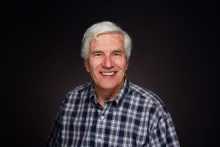
Steve Shafer was born and raised in Seattle. He graduated from Queen Anne High School in 1959 and later graduated from Ambassador College, Big Sandy, Texas in 1967, receiving a degree in Theology. He has been an ordained Elder of the Church of God for 34 years and has pastored congregations in Michigan and Washington State. He and his wife Evelyn have been married for over 48 years and have three children and ten grandchildren.
