
Frank Dunkle
This transcript was generated by AI and may contain errors. It is provided to assist those who may not be able to listen to the message.
Well, good afternoon, everybody, and glad to be here with all of you today. And I want to welcome those that are on the stream, uh, device with us, wherever you might be. Welcome, welcome. And those that may be hearing this message down the line, whether next week or a year from now or whenever, we want to welcome you and hope that it'll be a blessing to each and every one of you.
We are approaching the spring festivals, and Paul's words in talking to that audience then was to encourage people to examine themselves before they take the symbols of our Lord's sacrifice. Now, that's very, very important, but every day, not just before the New Testament Passover, as we recouple and remember that we are under the New Covenant through Jesus Christ, and for what he has done for us and what we are to become in Christ before our Heavenly Father. But every day, every day, should be a day of measuring ourselves, and to, in one sense, be sure that we are using God's yardstick and not one of our own making, because I've got some news for you, and that's one of the reasons why I'm going to be bringing this message now. At times, we as human beings measure differently than God, just as we were singing that his ways are not our ways. His thoughts are not our thoughts. And sometimes we need to learn to—this is going to be a key word for us in the course of this message today—we need to learn to measure and to understand as God understands. So that's just going to kind of allow us to get into the flow and to understand, perhaps, with God's guidance. This is where I'm going to be leading all of us today. There's an old expression that is often mentioned to people, especially when something's not quite happening right for an individual, or you wonder what's going on. And the expression simply goes like this, what in the world is wrong with you?
What in the world is wrong with you? But I'm going to change that around a little bit for this message today and to catch your attention and maybe have an aha moment and maybe even say, Weber, where are you going with this message? Now, I just mentioned what in the world is wrong with you. Now allow me to paraphrase that. What in Sodom is wrong in you? What in Sodom is wrong with you? And you might say, oh, wait a minute, Weber, where are you going with this one, based upon our interpretation, our measure of the Scriptures, or perhaps what we have known so far?
Well, Scripture informs us in Revelation 18, one of the great themes of Revelation. And down through the ages is simply this. We are to come out of this world. And what I want to share with you going into the intro of this message is simply this. Babylon, we so often focus on Babylon. Babylon is simply Sodom on steroids. But they're connected. They can become one. Same spirit, same fake, unless repented of. So that's why I say, what in Sodom is wrong in you? Because so often, and I'll be addressing that, we think of one item out of Sodom. And that's why God destroyed it.
And again, so often we do equate Sodom with one's sin. And there's much more to that story that we'll be getting in as we go along. And that's why, again, the question and the title of this message is simply this. For those that are note takers, what in Sodom is wrong with you?
In so doing, we're going to travel with a few people that you know. We're going to travel with Abraham. We're going to travel with Lot. We're going to travel with Mrs. Lot. We are going to also travel with the Sodomites. And we are going to be traveling with Elijah.
With Elijah. And most importantly, God, not Elijah, but Ezekiel. Excuse me, but with Ezekiel. And most importantly, God's Word. Let's begin by turning to the Scriptures. That's why we're here. And join me, if you would, in Genesis 13. In Genesis 13. We're going to kind of go from several chapters through Genesis and then build upon this and bring it down to our time. In Genesis 13 and beginning in verse 1, we find that Abram went up from Egypt. He and his wife and all that he had. And also Lot, who was his nephew, Lot was with him. And Abraham was very rich in livestock and silver and in gold. And he went on his journey from the south as far as Bethel to the place where his where his tent had been at the beginning between Bethel and I. To the place of the altar, which he made there at first. And there Abram called on the name of the Lord. Now, there's two very important facts here. We're going to break it down as we go along. Again, Abram, later Abraham, is known for two specific items. Number one, he was a man that was in a tent. He tinted. He was a pilgrim. He did not put down roots in this world or the age that he was at. So a tent is important. And then also out of this, you see in verse 4, it says that the altar. One thing about Abram, later Abraham, was simply this. He never sacrificed to God on a pagan altar. It was always separate. Always separate. Very important. This is the story of why God showered blessings on this man and used this man, and that from his seed would come a great blessing to all of the world. So you see, he did not touch down permanently. He was a man on the move. He was a man that lived in a tabernacle, lived in a tent, lived, as it says in the Greek and the New Testament, in a dwelling. But it didn't have roots down in this world. Now notice then, Lot also went with Abraham to have flocks and herds and tents. Well, you know most of the story here, and that is that they came into the land and nephew Lot, his shepherds, and the workers for Abram began to quarrel as to where they were going to settle. And so we find that Abram said, look, we don't need this. We don't need this turmoil in our family. And so I'm going to give you a choice. I'm going to give you a choice where you're going to settle. Now I want you to think about choices because God gives us choices every day in life. We're not robots. He gives us free moral agency. And between the impulse that comes to us—that's what's in front of us—between the stimulus and the response is a moment that we make choices. And those choices are going to be perhaps a blessing and or perhaps difficult and be a challenge and perhaps even be a curse. And notice what it says in verse 10 of chapter 13, and Lot lifted his eyes and saw all the plain of Jordan, where—excuse me, I can't quite read my glasses—and Lot lifted his eyes and saw all the plains of Jordan, that it was well watered everywhere.
That is, before the Lord destroyed Sodom and Gomorrah. Now notice this is very germane to our discussion. Notice what it says here, like the garden of Eden, like the garden of the Lord. Notice that, like the garden of the Lord. This is a reference back to Eden. Like the land of Egypt as you go upward towards Zoram. Then Lot chose for himself and all the plains of Jordan, and Lot journeyed east, and they separated from each other. Now notice what it says now in verse 12, Abraham dwelt in the land of Canaan. And notice, and Lot dwelt in the cities of the plain. Now double focus, and pitched his tent even as far as Sodom.
Even as far as Sodom. Let's back up for a moment. What are these verses telling you and telling me on this Sabbath day? There is a typology that is going on here when it mentions about the garden of the Lord. It speaks back to Eden. And we remember in Eden, in Genesis 2 and Genesis 3, that we find that with the tree of good and evil, there's a strong typology here. With the tree of good and evil, not everything that glitters is gold. Not everything that is green, we might even think of money in that sense, greenbacks, is good. That's extremely important to understand. And to recognize then the importance that, and this is what I want to share with all of you today, because this is really a big part of the story, where we choose to pitch our tent.
And we might be thinking right now in maybe challenges that are facing you, where are you pitching your tent? Because where you pitch your tent as we go forward in this story has repercussions, and not only for ourselves, but at times for family members, for friends, for fellow members in our congregations, no stone thrown into a pond punks down by itself. There's always going to be a ripple effect, and so we have to understand that, and to recognize that he pitched his tent as far as Sodom.
Now, if I can make a comment, reputations normally go before people, and also before communities, cities, and societies. I would suggest, I could almost say no, but I'll stay with suggest, I'm not that old, I wasn't there, but to recognize, I would suggest that Sodom's reputation, the one that we normally center on, but we're going to find out there's a whole lot more, went before it, and yet he pitched his tent there. I'd like you to turn over with me for a starting scripture, 1 Corinthians 15.
1 Corinthians 15, Paul's writings, and notice what we find in 1 Corinthians 15 over and verse 33. Basic instruction, not high theology, just cause and effect, black and white, here it goes, do not be deceived, evil company corrupts good manners. And then notice verse 34, awake to righteousness, and do not sin, for some do not have the knowledge of God, and I speak this to your shame. Now, who's he speaking to? Is he speaking to a convention of Buddhist?
Oh, Buddha wasn't alive yet. Well, no, Buddha was alive at that time. That's a whole other story, but anyway, got my time off. But he's not speaking, he's speaking to those that are covenant people. He's speaking to those that say we are the saints of God. He's speaking to that church in Corinth, saying, be careful who you associate with. That's very important. That association would go on and have a cause and effect. We recognize by being there, ultimately, that as we go through the chapters, that Lot would be kidnapped.
And that Uncle Abraham would come to the rescue. He had his own little private militia. He was well off, and he joined other kings of the area. He actually did his own guerrilla activity, it seems, and he saved his nephew Lot and brought him back. The common enemy of both Abram and plus the cities of the land, including Sodom, was crushed. And so I think we're all very aware, well aware of the story that Melchizedek, king of Salem, came along, right?
And what Abram did as an example is, he offered up the tithes of what he took with him. He gave it to Melchizedek, this priest-king, of Salem. And this is good, and this is right. Now we're going to find a contrast. Are you with me? We're going to find a contrast here from him. Now we notice verse 22 of Genesis 14. Genesis 14, 22. I've already described giving the offering to Melchizedek, but Abram said to the king, actually verse 21.
Now the king of Sodom said to Abram, give me the persons and take the goods for yourself. But Abram said to the king of Sodom, I have raised my hand to the Lord, God most high, the possessor of heaven and earth, that I will take nothing from a thread to a sandal strap, and that I will not take anything that is yours, lest you should say, speaking to the king of Sodom, speaking to a king over a perverse culture, unless I, unless you say, I have made Abram rich.
So you notice two things. Number one, Lot pitches his tent in a really bad neighborhood, and we're going to find out how bad it is beyond perhaps your normal conception of Sodom. Abram, in contrast, going to keep his distance. Bad company corrupts good manners. Now we pick up the rest of the story, and the rest of the story we're going to go to chapter 18. This is just background.
We're providing contrast. We're asking ourselves today, because Abram and Lot, they've come, they've gone, they've lived, they've existed. They stand before God, or will stand one day before God.
Big question is here, where are we pitching our tent? And very important, chapter 18. Then the Lord appeared to him by the terebin trees of mammary on the plains of mammary. As he was sitting in the tent door in the heat of the day. Now when it says, then the Lord appeared to him, this is important. This is what we call a fancy Greek word. This is a theophany. This is a God appearing. This is no less than the I AM, the one that is the pre-existent Messiah, as we know as Jesus Christ, the I AM. He comes and he's got a couple of angels with him. You'll see the language go back between men and angels, but now it says, and as he was sitting in the tent in the heat of the day, so he lifted his eyes and looked and behold three men were standing by him. And when he saw them, he ran from the tent door to meet them. And notice, and he bowed himself to the ground. There was an element of worship here because again, this was a theophany. And he bowed and said, and he said, Lord, I've now found favor in your sight and don't go away. We want to take care of you. Please let a little water be brought and wash your feet and rest yourselves under the tree. And I'm going to bring a morsel of bread that you may refresh your heart. After that, you may pass by and as much as you have come to your servant, and they said, do as you have said. Now, it's very interesting that again, when you think of Bedouin hospitality, when you're out on the plains of Mamre, when you're in the sands of the Nagav, Middle Eastern hospitality is noted around the world because you take people in after what they've been through. But this is extra special because again, Abraham now, his name's changed, Abraham understands who he's dealing with. Very important. And so this kind of continues, and so they have this meal. Now, what he's going to do in this, because we're going to go real quick here, there's going to be two major announcements, just two, not three, not four, so it'll be all right. There's going to be two major announcements of why this God visit to Abraham, where he's plucked his tent down, not in the city, but in the plains of Mamre. He's going to talk about Sarah, and that the promise is still on, that through Sarah, that seed will come out and the earth will be entirely blessed. So we understand that.
And then notice what it says as we go now to the second announcement.
In verse 18, verse 16, pardon me, verse 16, notice what it says, after they gave that announcement, this is powerful stuff. Then the men rose from there, and they looked towards Sodom, and Abraham went with them to send them on the way. This reminds me very much of Luke 951, in Luke's Gospel, where he speaks about Jesus, and of why he was sent to this earth when it says, and he fixed his eyes on Jerusalem.
That was not going to be broken. And so we see they fixed and says there, and they looked towards Sodom. One of the words is that fixed, that the I Am was on a mission. And Abraham went with them. And that was verse 17. And the Lord said, shall I hide from Abraham what I am doing? And since Abraham shall surely become a great and mighty nation, and all nations of the earth shall be blessed in him. For I have known him in order that he may command his children and his household after him to do righteousness and justice that the Lord may bring to him. That the Lord may bring to Abraham what he has spoken to him. Now notice verse 20. And the Lord said, because the outcry against Sodom and Gomorrah is great, and because their sin is very grave, I'm going to go down now and see whether they have done all together according to the outcry against it that has come to me. And if not, I will know. And then the men turned away from there and went toward Sodom. But, always remember something, the small words in the Bible are really incredible. Now, so, but, therefore, and. Because it sets the stage of what's about to happen. And notice, but Abraham still stood before the Lord. So the two men, or the two angels, began to move. So, guess what? You want to look up? This is the PowerPoint for a moment. Here's Abraham, and here's the one that's defined as the Lord. And they're about to go into a conversation.
See, God is all present. He knows everything that's happening here on the earth. He knows the sparrow that has led to the ground to comfort us, but He also knows the evil that snuffs up from the earth and fills with the smoke of Satan and the demons and our own human nature.
And now He's going to go down. He's going to say it for Himself, and He's going to deal with something. He says, should I hold this back? So He's going to go down. And now we enter into a very interesting conversation. It says again, verse 21, to set that I will go down now and see whether they have done altogether according to the outcry against Me, and if not, I will know. God is a righteous judge. He doesn't go on hearsay. He doesn't go on sounds like, looks like.
He's down there seeing what's happening. Then the three turned away from there. Then the men turned away and went toward Him. But Abraham is here. Now verse 23. And Abraham came near and said, would you also destroy the righteous with the wicked?
Suppose there were fifty righteous within the city. Would you also destroy the place and not spirit for the fifty righteous that were at? Now let me explain something here with you.
God is great enough and magnificent enough that He can take our questions.
He took questions from Abraham. Right? We all agreed. This is a big, this is, He's asking, He's talking to God here. He takes them from Job. Job had all sorts of questions. David, what is man that you are mindful of him? And when we are praying, God does not mind us asking. Asking is good. He's our Father. Jesus Christ is our elder brother. So they can take our asking. But in the asking, be ready for a teaching moment. If you want to jot down a note to stay with where I'm going and we're all together, this is going to be a teaching moment for a Brahm.
Abraham. And so we start going down. Remember when we were kids, we used to, you know, especially with NASA and the rockets would go up and you know they bring in the television. We'd all kind of watch it when we were young in elementary school back in the 60s. And then you'd always have the countdown. 10, 9, 8, 7. Well, this is where we're going down with this. So Abraham kind of starts high. He goes with 50. And then later on we recognize then, just for the sake of time, then he goes down. Well, what about minus 50 minus 5? What about 45? Then he goes down to 40. Then he goes down to 30. Do I hear 20? Then he goes to like an auction. Then he's going down to 20.
And then notice what it says in verse 32. Then he said, let not the Lord be angry, please, and I will speak. But once, just one more time, one more time, suppose 10 should be found there. And then the I am says, I will not destroy it for the sake of 10. So the Lord went his way as soon as he had finished speaking with Abraham and Abraham returned to his place.
What are we doing here?
Abraham, a good man, a man of covenant, a spiritual pilgrim, a physical pilgrim, a man that would ultimately even be willing to sacrifice his earthly son, the son of promise, Isaac. And yet, even at this point, he did not understand the depravity that was coming out of Sodom. He didn't really recognize really how bad it was in there and why God was going to do what he's going to do. And we're going to come to that in a few minutes. God, in this sequence of the famous countdown from 50 to 10. And we, if I can make a comment to skip ahead, we know there weren't even 10, right? There were not even 10. Again, and I think this is where we need to think about as we're going towards the New Testament Passover and every day. God's ways are not our ways.
We do not always see society. We don't even see ourselves, perhaps as much as God does. And we need an awakening of the contrast between Babylon and the heavenly Jerusalem, between the example of Jesus Christ versus our own being apart from Him. God knew exactly where He was going. He was trying to bring Abraham along. Can we go to chapter 19 now? Here we go. Now, the two angels came to Sodom that evening, and Lot was sitting in the gate of Sodom. And when Lot saw them, he rose to meet them, and he bowed himself with a face towards the ground.
And he said, here now, my lords, please turn to your servant's house and spend the night and wash your feet. And then you may rise early and go on your way. And they said, no, no, no, no, but we're going to spend the night in the open square. That'd kind of be like today, being in Los Angeles.
The way that downtown Los Angeles now is, unfortunately. And say, I think I'll bunk out there at about Fourth Avenue and Flower. Skip and Suzanne might remember where that is from LA days. And we'll just be safe and sound, along with the other thousands of people that live on the street.
So what does Lot say? Lot comes back, but he insisted stalling. So they turned to him, and he entered his house, and then he made them a feast. And notice, interesting, baked unleavened bread. Something happening here. That's another day. Now, before they lay down the men of the city, the men of Sodom, both old and young, all the people from every quarter, surrounded the house.
And they called Lot and said to him, where are the men who came to you tonight? Bring them out. Bring those men to us that we might know them carnally. To know them carnally.
Now, let's understand something. This is basically a mob scene. The house has been surrounded, and they want to basically, and I'll be delicate on this, they want to gang rape these two men. This is the story. This is the graphicity of what is going on here.
It tells me one thing, too, about life. Always be very careful when you're in a big crowd.
Sometimes you will do things in a crowd that you wouldn't do individually. And what is the temperature of that crowd? What is that crowd about? They had no respect for visitors, strangers, coming in to Sodom. So Lot went out to them through the door, shut the door. So Lot went out to them through the doorway and shut the door behind him and said, please, my brethren, do not do so wickedly. See now, I have two daughters who have not known a man. Please let me bring them out to you, and you may do to them, do to my daughters, who have not known man. Now, they are married. It talks about their husbands, but that's a cultural thing. We'll talk about that another time. You were considered married in ancient culture because there were arrangements that were made from youth forward by the parents. So they were in a technical sense of marriage, but it says here that their husbands had not known them. Only do nothing to these men, since this is the reason they have come under the shadow of my roof. And they said, stand back. And then they said, this one came in to stay here, and he keeps acting as a judge. Now we will deal worse with you than with them. Do you understand what they're saying? They're going to go after Lot, and came near the door to break down the door. But notice this. This is encouraging, but humorous. Notice what it says here. Put them in, reached out their hand, and pulled Lot into the house with them. Shut the door. And they struck them in. And they struck them in who were at the door of the house with blindness, both small and great. And so they became weary trying to find the door. Then the men said, Lot, have you anyone else here? Son-in-law, your sons, these mob, they wanted to... I'll let you fill in the blanks. And whoever you have in the city... No, excuse me. Let me go back up here, and then they struck them in. And then the men said, Lot, have you anyone else here? Son-in-law, your sons, your daughters, whomever you have in the city, it says, take them out of this place.
For we will destroy this place, because the outcry against them has grown great before the face of the Lord, and the Lord has sent us to destroy it. So Lot went out and spoke to his son-in-laws, who had married his daughters, and said, Get up, get out of this place. For the Lord will destroy this city. But his son-in-laws thought he was joking. And when the morning dawned, the angels urged Lot to hurry, saying, Arise, take your wife and your two daughters who are here, lest you be consumed in the punishment of the city. And now notice verse 16 with all of this. Are you ready? It says, And while he lingered, the men, notice, literally took hold of his hand. Lot was getting yanked hither and yon, wasn't he yanked from the mob? Now yanked ago, his wife's hand and the hands of the two children, the Lord being merciful to him. And they brought him out and sent him out beside the city. So it came to pass when they had brought them outside the city that he said, Escape for your life. Do not look behind.
Do not look behind, nor stay anywhere in the plain, escape to the mountains.
Verse 22, further on down, it says, Hurry, escape there.
We know later on in verse 26, his wife looked back and became a pillar of salt.
Dear brethren here in San Diego and those that are listening on the stream and those that may hear this message in the future, it is so important when God gives us word, when God gives us prompting of his Spirit, when the moment comes. This is a phrase that I've used before, but I won't apologize.
Get up, get out, get going. Get up, get out, get going. Those are three steps.
There is a time when a window is open and then it closes. There's a time of a door of opportunity to move through and it will close. You don't believe me? Ask the Jewish population of Europe in the 1930s. Some got out. Six million didn't. There was a time in Josepha, where he speaks after James the Just, James you would know in the Bible as the brother of Jesus, that James the Just had died. It actually mortified both the Jews and the Christian community in Jerusalem because he was actually in a sense loved by all, but he'd been martyred.
And there was in the temple, there was a voice that came forth and it said, flee! Flee!
It was speaking to the Christian community of Jerusalem. It was time to get out of Dodge. It was time to get out of the city. And that's when you began to have that movement out of Jerusalem towards the hill country into Pella. Did all the Christians flee? I don't think so. Knowing human nature. This has a stark warning for each and every one of us.
Sodom would be destroyed. Sodom would be destroyed. What are some lessons that we can learn from this?
Oftentimes what happens is we look at this story and we can say, oh, I am so glad I am not like them. The gang that got around Lot's house, we can say, oh, I do not want to be like that.
No, we don't. Because Sodomites, you know, all the people of Canaan in that area, they had an ite behind them. So they were known, quote unquote, as Sodomites, just like there were Jeppu sites, just like there were Hittites. It's kind of a neat last name for all those tribes there. You're an ite here and an ite there. But of course, we've used it now for another phraseology for illicit relationships. And so often we think, well, that is why God destroyed Sodom, is because of homosexuality. In part, in part, yes. But that's only a part of the story.
What I'm trying to share with you today are a couple thoughts here.
Be careful that we judge too harshly without recognizing that there's a part of Sodom in each and every one of us. And I'm going to get to that in a moment. Just a few thoughts that here we are as the people of God. We want to make sure that we don't take on the thought pattern of that Pharisee back in Luke 18, 9 through 14. Oh, God, I am so thankful that I am not like that man over there. And that we put our focus and we put our energy on the other individual rather than recognizing that God has all plenty of heart work and homework for each and every one of us to come to the stature of Jesus Christ. You might want to jot down Matthew 7 and verse 5 where it says, you know, before you're dealing with the other person, before you're taking the speck out of their eye, first take the beam out of your eye. That's very important.
I'd like you to go to James 2 and verse 10. That's one we will look at in person. James 2 and verse 10. In James 2 and verse 10. In James 2, and let's take a look at verse 10.
For whoever shall keep the whole law, and yet stumble in one point. Notice what it says. He is guilty of all.
We have normally codified sin using the base of the language out of the original text as the missing of the mark. The missing of the mark. For some of you that were in the armed services and used a gun. Target practice. My dad being Marines did target practice over at Camp Matthews, which no longer exists. Anybody know where Camp Matthews was?
Okay. Remember, I grew up in San Diego, so I know where. Okay, Camp Matthews. It's all suburbia now.
If you miss the mark by one inch, I have a question. Have you missed the mark by one inch? Have you hit the mark? If you're off one inch, have you missed the mark?
This is not high algebra, folks. Be bold. If you haven't hit the bullseye, and you're one inch off, have you missed the mark? Oh, good. Okay. Oh, the American education system. It's a wonder. You got it. Okay. If you miss it by a mile, have you missed the mark?
But we in our sometimes self-righteousness — I'm about to pass south. There's too much here.
Simply, we've missed the mark. And we can condemn others, not recognizing where we ourselves need the grace and the mercy of God. I want to share a thought with you. If you will join me now over in the book of Ezekiel. Let's go to Ezekiel 16.
Ezekiel 16. Ezekiel 16 is the very famous chapter about Ezekiel speaking on behalf of God about Jerusalem and what happened in Jerusalem. Again, the word of the Lord, verse 1, came and he's saying, Son of man caused Jerusalem to know her abominations. The same city that God inspired to be the unifying capital of the kingdom of Saul and the kingdom of David, the same city of which they brought in the Ark of the Covenant, to remind them of good God, the same city where the temple was built, to where the Shekhana, the very presence, the very cloud entered into the Holy of Holies. And yet they departed from that. They began to flaunt themselves, make alliances, cozy up to, prostitute themselves to the nations around them. Notice verse 35. Now then, O harlot, hear the word of the Lord. You're not talking about Hollywood. He's talking about Jerusalem. Notice verse 30. How degenerate is your heart, says the Lord God, seeing you do all these things, the deeds of a brazen harlot. Now let's go to verse 44. Indeed, everyone who quotes Proverbs will use this proverb, speaking about Jerusalem in the feminine sense, like mother, like daughter. That's where it comes from. Like mother, like daughter, like father, like son. You are your mother's daughter, loathing husband and children. This is speaking to the people that were to be the light to the world, to the nations, to the Gentiles, to the Canaanites. But you're like your mother's daughter, loathing husband and children. You are a sister of your sisters who loathed your husbands and children. Your mother was a Hittite, and your father is an Amorite. Your elder sister, speaking of Jerusalem, is Samaria, that northern kingdom. Remember Jeroboam corrupting them not by one calf, but two calves, changing the days of the feast, with the daughters on earth. And your younger sister, who dwells to the south of you, is Sodom and her daughters. You did not walk in their ways, nor act according to their abominations, but as if that were too little, you became more corrupt than they in all of their ways. And as I live, says the Lord God, verse 48, neither your sister Sodom nor your daughters have done, as you and your daughters have done. You're worse! You're worse! Look!
This was the iniquity of your sister Sodom. She and her daughter had pride, fullness of food, abundance of isleness. Neither did she strengthen the hand of the poor and the needy.
And they were haughty and committed abomination before me. Therefore, I took them away as I saw it. Notice verse 52, you who judge your sisters hear your own shame, also because the sins which you committed were more abominable than theirs. They are more righteous than you. Yes, be disgraced also and bear your own shame because you justified your your sin, your, excuse me, your, you justified your sisters. We often think of Sodom being destroyed because of homosexuality. But what was the root of it? What were the sins? And notice what it says here. Again, let's focus up here about the sins. And it was, look, this was the iniquity of your sister Sodom. Pride, fullness of food, and abundance of idleness. Neither did she strengthen the hand of those that were needy. I'm going to go very quickly here about these four sins. And I want you to think about them. I want myself to think about them. I want this to be a we sermon.
I like to emulate Daniel and Daniel 9. I'm not talking down to you. I'm talking, hopefully, with you. These are things that we all go through, that we need to look at. And we're going to take them apart one by one. Let's take a look at this, what's going on here. Remember, the first sin was pride. Pride. I want to share something. Pride was the original sin. And pride is the handle that fits all sins. In Ezekiel 28, I'm not going to turn to that right now, but you can shout down Ezekiel 28 verse 12. Speaking to Lucifer, speaking to the adversary, it says, you were in Eden.
Oh, you were in Eden, that original garden of Eden. And you were there.
You were there in that garden. Remember the garden? The garden effect of Sodom being in a garden. But pride slipped in. Join me if you would in Isaiah 14.12. And Isaiah 14 verse 12.
We're getting there.
Here we go. Yes. I'd like you to go to verse 32. Verse 12. How have you fallen from heaven, O Lucifer, son of the morning? How are you cut down to the ground? You who weakened the nations, for you have said in your heart, I will ascend into heaven. I will exalt my throne above the stars of God. I will also sit on the mount of the congregation on the farthest side of the north.
I will ascend above the height of the clouds. I will be like the most high. And yet God says, yet you shall be brought down to Sheol, to the lowest parts of the earth. I want to share something with you. Have you ever heard of the eyes have it? The eyes have it. Of course, that's a different spelling of I. That's, you know, the English way of doing it.
Five times in three verses, five times in three verses, I comes up. What does that tell us about pride and who is God? Who's making the rules from war?
I'll share a story with you. I shared it actually by Redlands two years ago when Mr. Armstrong was alive. Sometimes people would send him a letter. And what he would do, he'd take a red pen. In that letter, he starts circling the eyes.
And even when you don't think you're, you think you're really trying to push those eyes out, they crop up.
The eyes are a part of our life conversation.
They can be audibly also heard as me, me, me, me, me.
As we come up to the New Testament Passover, we are not to glory. It's not about the world. It's not about us. It is about us, but there's someone else, actually, too, the father and the son that are before us.
It's a hard exercise. I'm just speaking bluntly. May I? It's hard to purge the I and the me out of our conversations because it only reflects our language, reflects our hearts. It doesn't start with our tongue. It starts with our hearts. I happen to have a really good eye buster.
I actually have two good eye busters in me busters. Number one is the Holy Spirit, and number two is somebody named Susan Weber.
She doesn't let me get away. She's one tough cookie, but you need a good coach. And you know what? Just like the apostle Paul, I have not yet apprehended, but that which I do, I press on forward to squeeze self by God's grace, by Christ's example, and a good wife. How filled are we still with self? Can I make a comment without God's help? There is no help. There's no hope. We are indimibly linked. Just like Adam and Eve that wanted to be their own God and Goddess, have their own truth, choose right and wrong, and then somehow mistakenly think that they were going to live forever.
I'm asking you, if you'll join me, that as we move towards the New Covenant Passover, that we will really consider this first part of pride. Pride separated the realm of God and the realm of Satan. It separates nations. It separates citizens and nations. It separates Christians. It separates congregations. It can separate dear brethren within those congregations. It can separate men from their wives and vice versa. It can separate adult children from their parents. Pride is divisive. That's why God hates it. God does not like division. He does not like subtraction. Do you ever notice? But he does love addition and he loves multiplication. At least that's how I read the book of Acts. I would earnestly ask you and those that are listening today and those that will be listening in the future, consider the sin of Sodom. What part of Sodom is wrong in you?
Pride challenged the early church. Pride challenged Paul and Barnabas in the middle of their missionary journey, and they separated. Now God used it in spite of that, because now, rather than being together, they separated and parted and covered more ground. But the initial one was not going to back down from the other, and there was a split. That's just one example.
Let's go to the other one here. Number two. We see that it says that they were overfed. They were overfed. They, in a sense... Let me go back here a second so I can spot the Ezekiel 16. Oh, okay. Thank you. Okay. It says here... Oh, yeah. It says, she and her daughter had pride. Fullness of food. Fullness of food.
Basically, what this is saying is that they were overfed. They were gluttonous.
It was a waste of the gifts and the resources that God, in a sense, gave man by nature itself. And here's a city that was out of balance. This was a waste of gifts of nutrition, a waste of resources. Here, Sodom was placed in a garden-like setting, and they abused the resources provided, and they overfed themselves. They were not, again, measured.
And this is an admonition and a wake-up call for we as Christians. Think of our spiritual lives, that you and I have been invited into the presence of God, and Jesus says, anybody that thirst come unto me, and I will give him living water.
Jesus and John said, I will give you nutrition from heaven. I am the bread of life. I am the bread of life. So what are we feeding on?
You know, today in America, we want to say one thing about one part of nutrition, the other. You know, we can say, well, this person is doing that, or this person is doing that, but how often do we fall just simply for what? Salt, fat, and sugar, and think we're going places. Now, I'm not a nutritious. I'm just saying we can look at one person and say, oh, well, they're a glutton. Just look at the size. Fill the room. And yet we can dabble. The question here is simply this. I'm going to ask you a question, make it an analogy.
As we come up to the New Testament Passover, maybe even tonight, tomorrow, are we existing on sugar and fat and salt? May I say something? I like them just as much as all of you do, okay? Spiritually, though. Nutritionally.
From a gracious God that's given us a garden-like setting that as citizens of the New Jerusalem, we are already in a typology experiencing in part what that gracious God does. He gives us the bread of life, His very, very sun. And yet we dabble spiritually and salt and fat and sugar. And therefore that we think then as Sandy's leading us through this wonderful series on the fruits of the Spirit, that somehow those fruits of the Spirit are going to emerge.
Pride. Number two, gluttony. We need to get on a spiritual diet program big time, as we say. Number three, it says, an abundance of idleness, an abundance of idleness. They were lazy.
We can be spiritually lazy. So much that we forget who and what we are about. We can be lazy in praise, lazy in thanksgiving, lazing in recognizing that we are not saved by our works, but saved by God's grace that does not do away with works.
It's not grace versus works. It's grace and works. But grace is the locomotive. Grace is the locomotive. God the Father is the engine in what He elected to do.
And then we get to travel along on that railway towards the Kingdom of God with Jesus Christ as our conductor.
We can become lazy. We can be putting in time. Well, here come the holy days. Don't be lazy with the holy days. Okay? Wake up, as it says in Ephesians. Wake up, O sleeper. Start now. Don't bump into the holy days. Don't fall into the holy days. They are God's GPS towards His purpose and His plan. And if any of us are on a G note, if we've ever... I don't know how to use that. Susan uses her smartphone. I don't. I'm still with pencil and paper. Okay, so that... But, you know, look for a course correction. You know, have you ever done that all of a sudden? You're going along? Susan's got a little smartphone. All of a sudden, beep, beep, beep, beep, beep. Okay, we blew it. Got to go back.
We need to go back and recognize what God is telling us through the story of Sodom.
What we have been called to get up, to get out, to get going, and keep looking up to God to be our source. There is no third option in this one. I often speak about a third option. I may give that sermon. There is no third option. When you look at the Bible, it's a contrast between two. The God of the universe, the God of this age, the tree of life, the tree of good and evil, two different ways, two different outcomes.
Two different cities. Jerusalem, Babylon, Allah, little sister, Sodom.
You can't have a foot in both of those worlds. Yes, we live around, no, here right in San Diego, smaller town. We're up from north. You have about three and a half million people here.
We're up there with Megalopolis with about 20 million.
But the question is this. I'm going to make it real simple. This is called Anglo-Saxon simple, coming down from high Norman, okay, French. It's simply this.
My concern for all of you, dear brethren, is to simply ask you, where are you pitching your tent?
Where, that's key, where do you pitch your tent in God's camp or the camp of this world? God will understand that as you deal with pride, as you deal with gluttony, being overfed, not using the nutrition from above, being lazy, and then to recognize then also the aspect. The last one is idleness. And then it says, didn't strength the hand of the poor and the needy? That was another one. So often we think, didn't strengthen the hand of the poor and the needy. And we do want to be generous to people that are down and out at times, downtrodden as much as we can, because there's so much. You can only do so much, and you can do this and do that. But I would say, too, that spiritual hospitality, undone, because we're consumed with self.
There is physical hospitality. There's having somebody over on a Saturday night, there's somebody you take out for dinner here after services or this or that. But think of this in a greater sense as far as spiritual hospitality and what you're sharing. What you put on the table of your conversations with one another. Are you feeding or are we taking away? Where is our conversation? Our conversation comes from our heart. It comes from our heart. And our conversation... Oh yeah, you can talk about the pot rays, and you can talk about it's going to be a nice day at the beach. I'm not saying to just be a monk. Don't do that. But what we talk about, how we share ourselves, tells us where we've pitched our tent. Whether we are in Sodom, or in the desert, or in the desert, or in the desert, or in the bottom, or whether we are planted in the heavenly Jerusalem above.
Let's allow this message, God willing, to be a teaching moment. To recognize we can say, oh, those sodomites. I'm glad I'm not like them. But that when we recognize the rest of the story, the rest of the sins of Sodom.
Let's humble ourselves before God. Be thankful that He's still working with us.
And get up, get out, and get going, and moving towards God.
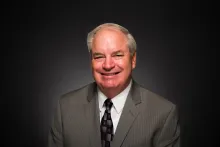
Robin Webber was born in Chicago, Illinois, in 1951, but has lived most of his life in California. He has been a part of the Church of God community since 1963. He attended Ambassador College in Pasadena from 1969-1973. He majored in theology and history.
Mr. Webber's interest remains in the study of history, socio-economics and literature. Over the years, he has offered his services to museums as a docent to share his enthusiasm and passions regarding these areas of expertise.
When time permits, he loves to go mountain biking on nearby ranch land and meet his wife as she hikes toward him.
