

John Elliott
This transcript was generated by AI and may contain errors. It is provided to assist those who may not be able to listen to the message.
I prepared this sermon back in the middle of August. I don't normally prepare my sermons four months in advance, but this sermon was special for me in the sense that I knew I was going to be having the open-heart surgery, a quadruple bypass. I had done due diligence. I had talked to my surgeon about what was going to happen. I had talked to some of his staff. I went online and took a look at exactly how the procedure was, how the surgery was going to go. It was set for seven o'clock in the morning on Friday, August 28. To be honest with you, when you realize that you're going to go into a room and have surgery, that they are going to crack open your chest, they're going to stop your heart, they're going to put your body on a machine so the machine breathes for you and passes your blood throughout your system for several hours. Then they're going to rip a vein out of your leg, they're going to sew it into your heart, and you're wondering, how do they do that? How does that thing not leak? You know, the guys always wonder about the engineering of stuff. How does that work exactly? And then, after all that is done, they've got to kick-start your heart and take you off of those machines. Now, as I thought about that, that gave me some pause. I think it would give anybody some pause. And I gave this sermon to myself back in August. And I think that perhaps you might benefit from some of my thinking, because I was asking myself some very important questions for me.
And I'm wondering, brethren, if those same questions you shouldn't be asking to yourselves. Let's begin our sermon today, our message today, by going over to 1 Corinthians chapter 3.
1 Corinthians chapter 3 verses 1 through 3. And I want to read this in the New Living Translation. You can follow along on whatever you've got there on your lap. 1 Corinthians chapter 3 verses 1 through 3. Again, in New Living it says, This dear brothers and sisters, when I was with you, I couldn't talk to you as I would like to spiritual people. I had to talk to you as though you belonged to this world, as though you were infants in the Christian life. I had to feed you with milk and not with solid food, because you weren't ready for anything stronger, and you still aren't ready. If you are still controlled by your sinful nature, you are jealous of one another and quarrel with each other. Doesn't that prove that you are controlled by your sinful nature? Aren't you living like people of the world? Now, what I find interesting, brethren, is the Apostle Paul wants this church to act a great deal, to live a great deal more maturely. Again, we hear some of that from Wayne today in his message. But this church was only about 4 or 5 years old. We're not talking about Christians who had been with the faith a long time. Most of the people in this church were Gentiles. They weren't people who were Jewish extraction or something of that nature, where for generations they knew about the Sabbath and the Holy Days and tithing and all those things. These are relatively new people to the faith. The church was 4 or 5 years old. Paul says, you know, you guys should be further down the road than you are, but I've got to treat you as spiritual babes. Now, let's also turn to another group of people that Paul had a very similar discussion with over here in the book of Hebrews.
Hebrews chapter 5. Let's go there. Now, as you're turning to Hebrews 5, let me give you the background. Again, we've discussed this in times gone by, but here we have a group of people who weren't basically 4 or 5 years into the faith.
Here we've got a group of people who have a Jewish background, people who've known about the Sabbath, the Holy Days, all of the things in our church culture. They've known about these things for generations. Now, they still were relatively new as Christians because Christianity was a new religion, if you will. But this group of people were about ready to leave Christianity and go back into Judaism.
Paul was very concerned about that. And notice what he says here to this group of people, starting in chapter 5 verse 12. For though by this time you ought to be teachers, you ought to be well down the road, you need someone to teach you again the first principles of the oracles of God. You guys need to go back to kindergarten. You guys need to go back to first base, Paul, saying, you've come to need milk and not solid food. For everyone who partakes only of milk is unskilled in the word of righteousness.
For he is a babe, but solid food belongs to those who are of full age. That is, those who by reason of use have their senses exercised to discern both good and evil. So here you've got two churches, the church in Corinth, and the people there in the... Paul was writing to you called the book of the Hebrews. One church, relatively new, the other church, relatively old in many ways, in terms of culture. And yet both, Paul said, you know, you guys really need to be further down the road than you are.
Now, the question I was asking myself in the middle of August prior to my surgery is, where's Randy Delosandro on that road of growth? How mature am I, really? I might not get out of that operating room alive. These may be my last days on earth. You know, you don't want to think like that. I certainly didn't dwell on that. We'll talk more about that as it certain progresses. But it's something that you had, I had to think about.
And of course, brethren, you never know. DeLee Hargrove, wonderful lady that she was, didn't know that when her husband was rubbing her back, that that was going to be the last time he was going to do that. That when she gave him that big beautiful smile of hers, that was the last time he would see that. After 53 years of marriage, you know, for all we know, any one of us this evening could die in our sleep. So we need to be asking ourselves where we are. You know, we look at the world scene, and it's so obvious that something is very wrong with the world.
Now, you and I know the world has never been right. It's always been Satan's world. But as you and I look at what's happening around us, even in our lifetime, we see the things that are just horribly wrong, horribly wrong, internationally, nationally. And as I've said on a number of occasions, prophecy shows us that some of the end-time Church of God are simply not going to make it. Simply not going to make it. So, brethren, if you want to take some notes today, you might want to jot this across the top of your page. It's a question. The question is, where are we on life's journey from the immature to the mature?
Where are we on life's journey from the immature to the mature? And again, I gave this sermon to myself back in the middle part of August. But I'm thinking maybe it might be helpful for you to hear what I was thinking. Let's take a look as we begin the message today at our spiritual goal. Let's take a look at an overview. And today I'm going to use a number of different translations, because I think sometimes it's so helpful for us to look at different translations to help us see a truth of God.
We don't always have to have a dictionary or encyclopedia. Sometimes all we need is a different translation. Now, you and I don't have the money to buy all these books. Most of us in this room, or many of us in this room, have access to the Internet. All of us have access if we want to go to the library. You can go to the library and get on the Internet.
And there are plenty of sites that are free of charge. You can go to on the Internet that have all the Bible helps you want, including different translations. But we want to turn to Ephesians 4 and verse 13, because this is where you and I need to be. Ephesians 4 and verse 13.
And I want to read this from three different translations, none of which you probably have on your lab. The first one is from the God's Word translation. Ephesians 4 and verse 13 says this, This is to continue until all of us are united in our faith and in our knowledge about God's Son, until we become mature, until we measure up to Christ, who is the standard.
So we are not to measure ourselves among ourselves, but we are to measure up to Jesus Christ. He is the standard. Now, reading that same verse, Ephesians 4 and verse 13, from the international standard version, says this, Until all of us are united in the faith and in the full knowledge of God's Son, and until we attain mature adulthood and the full standard of development, the full standard of development in Christ. So that's a part of the journey. It's a standard of development. We need to develop. Same Scripture, Ephesians 4 and verse 13, from the Mase New Testament. So being united in a perfect belief and acknowledgment of the Son of God, we grow up to that full state of maturity required by Christ. So this measuring up to Christ, Him being the full standard of development, is required by Christ. If we indeed are, you know, somebody asked me the other day to give a sermon on the marriage of the Lamb.
I don't think I've ever heard a sermon on that subject. I know one person who feels they've got it nailed down, but when I look into the Scriptures, I don't see a whole lot on that subject.
But I do know a few things about the marriage supper of the Lamb. One, it takes place after Christ returns. And secondly, the bride is making herself ready. And so we need to be making ourselves ready, and that's a requirement, the Scripture says. So once again, brethren, I ask, where are we? You know, I ask myself, where am I? You ask yourself, where are you on that journey from immaturity to maturity? When we first were converted, we were not very mature. We were babes in Christ. Most of us have been in a church a long time. I began listening to the telecast, going on telecast, began listening to CHYR radio out of Leamington, Ontario, Canada, back in 1967.
I remember one day the Detroit Tigers were being killed by the Boston Red Sox, and I said, enough of this! The score was like 13 to 1 or something. And my little, remember back in the days, back in the 70s, the little transistor radios? And my little transistor radio, my ear was glued on to that. And I started flipping through the stations. And I came across this guy, I caught real quickly as I was flipping through. He was talking about the Bible.
But he was talking about the Bible in a way that I had never heard before. And back in those days, I listened to a lot of different preachers. And here is Garner 10 Armstrong talking about the United States and Britain prophecy. If that doesn't get you hooked, I don't know what is. But I began listening to this guy. I ran downstairs, told my mom, Mom, here is a guy who is talking about the scriptures and he sounds like he is not insane. He knows what he is talking about. And it is interesting, it is fascinating. We have never heard this stuff before. And that was the beginning of my walk with God, starting back as a 15-year-old, living in Roseville, Michigan, listening to CHYR at a Leamington, Ontario, Canada. Very immature back in those days. How mature is Randy right now? How mature are you right now? And so when I was looking at my life, I was thinking about a number of areas. I am not going to have time to go through all my notes today, only about half of them will go through three areas. And I looked at myself and I said, where am I on my journey from worry to being faithful? Am I still a worry warrant? And that ran very strong in my family. Now, I don't know about your family, but I think, and bless my parents, they were great people. I owe so much to the way they reared me. They weren't in the faith when they reared me. My dad was not a religious man at all. But they instilled so many wonderful values in me as parents. I am totally indebted to them. But my mother felt that worrying about something was an aspect of love. And she was professional at it. There are times I feel I am professional at being a professional, or at least a journeyman, worried. I was really good at it.
And my father, there are times when married to this day, we'll say things like, well, hey, Chuck, if I bring up something negative, because my dad was the kind of guy that he could find a black lining up every silver cloud. If there was some negative aspect of something, Chuck de los Andros would find it. So where am I in a journey from worry to faith? Let's take a look at Matthew 6. Let's get some of the counsel of Jesus Christ here. Matthew 6.
We'll look at the tail end of this chapter. And starting in verse 25, and going to the end of the chapter, it's all red letter, meaning all the words of Jesus Christ, all very special counsel, a unique counsel given to us by God in the flesh, Jesus Christ. Matthew 6.25. Let's just read this section, and we're going to go through and analyze. Therefore, I say to you, do not worry about your life, what you will eat or what you will drink, nor about your body, what you will put on. Is not life more than food, and the body more than clothing? Look at the birds of the air, for they neither sow nor reap, nor gather into bonds, that your heavenly Father feeds them. Are you not more valued than they? Which of you by worry could add one cubit to your stature. So why do you worry about clothing? Consider the lilies of the field, how they grow, they need your toil and your spigot. I say to you, that even Solomon in all of his glory was not a raid like one of these. Now if God so clothes the grass of the field, which today is, and tomorrow is thrown into the oven, will he not much more clothe you, O you of little faith? Therefore, do not worry, saying, what shall we eat, or what shall we drink, or what shall we wear? For after all these things, the Gentiles seek. For your heavenly Father knows that you need all these things, but seek first the kingdom of God and His righteousness, and all these things shall be added to you. Therefore, do not worry about tomorrow, for tomorrow will worry about its own things. It is sufficient for the days of its own trouble.
Now, brethren, there is a real difference between you and I showing genuine concern about something and us worrying about something. There is nothing wrong with a genuine, legitimate concern, but worry is faithlessness. Worry is faithlessness. Worry presents us with a dual temptation to distrust God and to substitute fear for practical action.
Worry presents us with a dual temptation to distrust God.
Let's take a look at verses 25 and 26. Therefore, I say, you do not worry about your life, which you will eat, or what you will drink, nor about your body, which you will put on. Isn't that life more than food, and the body more than clothing? Look at the birds of the air, for they neither sown or gathered into barns, yet your heavenly Father feeds them. Are you of that more value than they?
So basically, Jesus Christ is saying, if God will take care of the birds who have no spirit in them, no holy spirit, they're not the children of God, then won't He take care of us?
Worry presents us with that temptation to distrust God and to substitute fear. Look at verse 31. Therefore, do not worry, saying, what shall we eat, or what shall we drink, or what shall we wear?
Verse 31 speaks to fear. There's a lot of fear in the world today. There's a lot of anger. We're going to talk about anger in a little while. A lot of fear, a lot of anger in the world, and yet, that, when we find ourselves worrying, we find ourselves substituting worry for something that's more practical. And what's more practical, we find here in verse 33. But seek first the kingdom of God and His righteousness, and all these things shall be added to you.
So we need to be very appreciative of the fact, brethren, that worry is something that is a double-edged sword that cuts, in terms of us being led to distrust God and to substitute fear for practical, spiritual action. Worry also means we're paying attention to what may happen, instead of putting our energies to work in effective ways.
Spending time, you know, looking at the what-ifs and pondering the what-ifs and getting upset about the what-ifs, as opposed to getting on our knees and saying, Father, I am deeply concerned. I don't want to worry, Father, but I am deeply concerned about X, Y, and Z. I've got the surgery that's coming up, or I've got an issue with my son, or with my daughter, or at work, or with a next-door neighbor, or with my health, or whatever, with my family. My family life isn't what it should be. We can do a lot of nail-biting and that sort of thing. Excuse me. As opposed to spending our energies, we're going to fast about it. We're going to pray about it. I'm going to go to one of my friends in the church and ask them to fast and pray about it. We're going to marshal all the spiritual effort and machinery we can to overcome this. Brethren, worry takes it away from life. It doesn't add to life. Jesus Christ here, in Matthew 6, is teaching us to focus our minds, to channel our efforts, to direct our energies to Him, not the black hole of our fears. Remember the old Twilight Zone? I think they probably have a Twilight Zone marathon somewhere on TV right now. This time of the year they normally do.
They start with that Twilight Zone music and they show the cave. They show some little critters' eyeballs in the cave. They talk about the pit of your fears. God doesn't want us focusing in on the pit of our fears. He wants us to channel our efforts to look to Him.
Now, that's worry. Let's take a look at the other end. Hopefully you and I are further away from this end being worry. We're down the road and this end is faith. We're closer to that end. Faith stretches you. Worry shrinks you.
Faith takes you where you couldn't go on your own. Worry will keep you back shackled to the past. It will keep you shackled to dark things. You don't want to be shackled to the dark things. Now, one of the things I had to come to grips with, and I believe that I did, realizing I was going to be having that operation, a quadruple bypass, I had asked myself, well, do I have faith in God or don't I? The bottom line was, I felt that I did. I felt that your prayers, the prayers of people literally from around the world, as I got cards from all over this country, all over Canada, I got cards from Mexico, I got cards from Europe, I got cards from Australia, Tasmania, all over the place, Germany, all over the place. And I knew that people were praying for me from literally all around the world. And I realized that my life was in God's hands. Your life is in God's hands. And I didn't have to work up a lot of emotion. That's not faith. It was simply an acknowledgement that, Father, my life is in your hands. If you want me to come out of that operation successfully, I'm going to come out of that operation successfully. If you want me to die on a table, I'm going to die on the table. My life's in your hands. What do you want? Whatever you want, obviously, I bow to your judgment. And certainly, brethren, I'm sure probably most all of us have been in that situation where we had to just talk to God along those terms and realize that we were to walk hand in hand with Him in faith. We're going to believe what God says in the Scriptures. We're going to believe He's going to act on what He says in the Scriptures, and we're not going to waver. Now, I would like you to turn over to Ephesians chapter 6.
Mr. Denon has been giving a series of sermons on the armor of God. He asked me if he could do that, and I said, sure. I said, I gave a sermon on that subject many years ago. I think it was during the days of Unleavened Bread. We were meeting as a joint group over in Canton, Michigan. It's been a long time since, go ahead, Bob, go ahead and give that sermon. But let's take a look at something here, because I want to talk about the shield of faith. Ephesians chapter 6 starting in verse 10. Finding my brethren be strong in the Lord.
We're not going to be strong in our own flesh. We're not going to be strong in our own mind. We're not going to be strong in our own ways. No. We want to be strong in the Lord and in the power of His might. Now, going into my surgery, I recognize that my surgeon was famous. He was on national TV. He was the one who was in charge of the department where they do heart transplants at the University of Michigan. I couldn't have asked for a better surgeon. I had a great guy. And yet, I realized that as good as he was, my life was not in his hands. My life was in God's hands.
And the power of His might, not Dr. So-and-so's might, put on the whole armor of God that you might be able to stand against the wiles of the devil. In the sermon I'll be giving in January, we're going to talk about the wiles, not only the devil, but the demons and the kinds of things they're going to throw at us and have thrown at us. If we do not wrestle against flesh and blood, against the principalities, against powers, against the rulers of darkness of this age, against spiritual hosts of wickedness in heavenly places, therefore take up the whole armor of God that you might be able to stand in the evil day and having done all to stand.
Now, Bob's been going through a lot of this I don't want to take away from what he had to say, but I want to concentrate for a moment on verse 16. Above all, taking the shield of faith with which you will be able to quench all the fiery darts of the wicked one.
Now, Breton, I want you to appreciate the fact that the Apostle Paul lived when the Roman Empire was thriving. It was thriving. The Roman Empire wouldn't come to an end for over 400 years. The Roman Empire was in its prime when Paul was living. And Paul knew about the exploits of the Roman legions, how they conducted themselves, how they were equipped. I'm sure he saw many Roman soldiers over the course of his life. And he realized that they are different types of shields.
Now, one shield that was in play during the time that Paul was alive was the round shield, probably about the size of one of our large pizzas. And that was used mostly for gladiatorial contests. That was not the Roman shield. The Roman shield was a shield that was two and a half feet wide. It was four and a half feet long. It was designed to help cover the bulk of the Roman soldier's body. Because back in those days, your average Roman soldier was about five foot six inches. People were much shorter back in the day. And so they had this shield. Now, it wasn't just a wooden plank with some way to hold on to it. You had the wood, normally a thick hardwood, and then you had a... if they could do this, they would have fixed some metal to the outside of the shield. To that, they would overlay it with a very thick skin of some type, some type of leather, the thicker the better. And then to that, they would have special oils. Now, why did they do that? We see here in Paul's writing that the spiritual shield of faith would be able to quench the fiery darts. What did the Roman army face? They faced enemies all throughout the known world that were excellent archers. And the archers would take the tip of their arrows and they would dip it in pitch, they would dip it in tar, they would dip that arrow tip into something flammable. They would light it, and then they'd shoot it at the Roman soldiers. And their hope was that the arrow would stick into the shield. If the shield wasn't properly protected, the shield would be... would burn up with flame. But because there was the wood plus the metal plus the leather, many times the arrow would ricochet off. Or if it stuck, that special oil they had would extinguish the fire.
So, brethren, we have to appreciate the fact that we have a shield of faith. Satan has fiery darts that he wants to send our way. And as he sends those fiery darts our way, we can very much be protected by the shield of faith. Not by worry, but by the shield of faith.
And the Romans were very cagey with their strategy. If they were coming up to a group of people, they would stand shoulder to shoulder, they would stand shield to shield, and yet all those shields and the guys behind the shields, well, you couldn't penetrate them. But you could shoot over it, you know, you would aim a pie, you have the nice arc, the arrow comes down, the soldier behind. So what did the Romans do? The Romans had what they called the turtle. And what you'd have is the guys, you know, the front line fellows, then the guys in the interior would take their shields and put them over their heads. The fellows on the sides would take their shields and put them on the sides. And so what you basically had is a walking group of men that had shields on all four sides and above them, and they would just put those long spears, lances out in front of them, and they'd walk like a turtle. That's why they got the name. We can likewise be protected by the faith we have in God. So I asked, rhythm, where are you, where am I? I asked myself, I asked you, where are you on the journey from worry to faith? The second area I was looking at in terms of myself was where am I, where was I, where am I, in my journey from anger to love? We live in a very angry world. We've got one guy running for president, Donald Trump, who's really capitalizing on the anger in this country. And for a fellow who's gotten, you know, I'll be honest with you, I don't want to see Donald Trump as president of this country, but it's not what I want, it's what God wants. Heaven help us, literally. Yeah, I'm not saying anything about the other lady, either. Heaven help us if Mrs. Clinton gets into office. But that's my own personal opinion, which is worth about a cup of coffee.
But there's a lot of anger in this nation. And, you know, in my life, I've known my share of anger, and knowing some of you, some of you have known your share of anger over the years.
Now, it used to be, the psychologists say, the best way to handle anger is, let it rip!
Let it all hang up! And they used to say, well, what you need to do is get yourself a nice pillow. And then, if possible, get yourself a good gun. Take that gun and shoot that pillow full of holes.
Now, that might be good for handymen. You know, if you feel, interior house looks like Swiss cheese because of all the bullet holes. But now, psychologists, of course, this probably comes and goes, but now, what they say is that that idea was a dangerous myth.
They say that some people use this theory as a license to hurt others. Researchers found that letting it rip with anger actually escalates anger and aggression, and does nothing to help you or the person you're angry with resolve the situation. It's best to find out what is the trigger for your anger, and then to develop strategies to keep those triggers from tipping you over the edge.
As I was doing my research for the sermon, as I was thinking about my life, it was interesting reading because I thought, in several cases, I found myself being described.
Anger makes your mouth move faster than your mind. You know, when I said that over and over, I had the same reaction I'm getting here.
You can't see one another, but I can see all your faces. I see people smiling, I see people juggling. Anger makes your mouth move faster than your mind. Who's experienced that? Well, most of us in the swing have experienced that. Anger overemphasizes the negative of the situation. Anger often complicates a potentially simple problem. The what-ifs, the worry comes in. You have worry with anger. You've got a real tempest in a teapot there.
Anger will shrink you. Anger can dominate you. Anger can overtake friendships. It can annihilate friendships or marriages. Anger is not our friend. Anger is the friend of fools.
Man's anger with man's imperfections is often misguided and misdirected because of ignorance, false presumptions, misunderstandings, etc.
So again, I ask myself, where am I? Because I'm a person who I knew anger. Anger and I were buds. We were friends. As Crocodile Dundee would say, we were mates. Anger and I. Thankfully, I don't think Mary's seen much of that in the 11 years we've been married, but there was a time where it really was pretty bad. A couple of different types of anger that you may find in yourself. You've got people who are spewers. Are you a spewer with your anger? A spewer just spews it out over whoever provoked them. They just let it rip. Someone with a hot temper, short fuse, someone who sees red, they're just going to let all the infective out, all over you. If you're not a spewer, into the language part of it, then you might be a stewer. Are you a stewer? A stewer is someone who bottles up his or her anger, trying to bury it, trying to control it, but that person is like a volcano and eventually they're going to pop. We need to properly dissipate that anger. We need to properly funnel that anger out of our system somehow. The Bible is very full about how we can do that. Let's take a look at a couple of scriptures along these lines over here in Ecclesiastes chapter 7.
Ecclesiastes chapter 7 and verse 9. This is from the New King James. Do not hasten in your spirit to be angry, for anger rests in the bosom of fools.
That's not Randy Delosander. That's the word of God. Anger rests in the bosom of fools. In Psalm 37 verse 8, Psalm 37 verse 8, it says, Cease from anger and forsake wrath. Do not fret, it only causes harm.
Now, from the New Century version, I want to read Proverbs chapter 22 verses 24 and 25. This is the New Century version. Proverbs 22 verses 24 says, Don't make friends with quick-tempered people, or spend time with those who have bad tempers. Verse 25, If you do, you'll be like them, and you'll be in real danger. So watch those people who see red, who've got the short views, and so forth. There are a couple of verses, though, when it comes to going from that direction of anger to the direction of love. Let's look at Romans chapter 12. I think I'll probably only be able to give you two of these points today. Romans chapter 12 verses 1 and 2. I beseech you therefore, brethren, by the mercies of God, that you present your bodies a living sacrifice, holy, set apart, acceptable to God, which is your reasonable service. Do not be conformed to this world. Again, this world is an angry place. It's getting more and more angry by the day. Satan is an angry being. If we give ourself over to anger, who are we giving ourself over to? Do not be conformed to this world, but be transformed by the renewing of your mind. If our mind is a mind that's full of anger, we need to renew that with God's Holy Spirit, that you may prove what is that good and acceptable and perfect will of God. Ephesians chapter 4 verses 31 and 32. Ephesians chapter 4 verses 31 and 32. Where it says, Let all bitterness, wrath, anger, clamor, and evil speaking be put away from you with all malice. It's the leavened bread. It's all leavened. Bitterness, wrath, anger, clamor, and evil speaking.
And once you get rid of the leavening, we bring in the unleavened. And verse 32, Be kind to one another. What does it mean to be kind? Kindness is showing a proper, positive action to people who have been unkind to us.
Be kind to one another. Tender hearted, not hard hearted. Tender hearted, forgiving one another, even as God and Christ forgave you. We are Christ ones. We are Christians. God wants us to be tender hearted, forgiving, and so forth. When I was looking at myself, I had to ask myself about how much of a loving person I was or wasn't. And I'll bring this up for you as well. What I did here as I was going through my self-examination, I was looking at various qualities of love.
I'm going to make this rather quick. We're almost out of time here. But there are two verses, Romans 12, 9, and 10. That's all I'll be able to have time to go. Well, one other verse besides that. Then we'll call it a day.
But let's take a look at these through various, again, different Bible translations help us to see things so much clearly. We don't have to have commentaries and all that sort of thing. Just a different Bible translation, many times, helps things, really clarify things. Romans 12, 9. I want to read this out of the English Standard Version, the ESV, the English Standard Version, Romans 12, 9, which says, Let love be genuine. A poor one is evil, holds fast, and what is good. Let love be genuine. Another way of saving that is, let love be sincere. If we want to move from anger to love, we need to be genuine and sincere. Not hypocritical, but be genuine and sincere in our love.
Something that Wayne brought out several times today in his Sermonette, we find in verse 10 of Romans 12. I want to read this in the God's Word translation, Romans 12, 10. Be devoted to each other like a loving family.
Excel and showing respect for each other. But notice an aspect of love here. To be devoted to each other like a loving family. Now, to be honest, brethren, as I know you in this room, as I know the people of Ann Arbor, some of us don't come from loving families. Let's be honest about that. We don't come from loving families. It's hard for some of us to even envision what that means. And yet, God has given us His book, His instruction book. And if we don't have a loving family, if we came from a family that was dark and had all sorts of issues, there's still no excuse for us because we've got the Word of God to look into. God shows us what a loving family should be. God our Father, Jesus Christ our elder brother, our mother the church, our brothers and sisters in the faith. We take a look at the scriptures along those lines and we see how to be a loving family. So, ways to love, be sincere, be genuine. Ways to love, be devoted to others as a family is. And also, a third way here is to show others honor and respect. Wayne was talking about that as well today, to show honor and respect. And here we see that in the last part of verse 10 of Romans 12. And again, I'm going to read through three different versions here. The last part of Romans 12.10. First, from the Bible in basic English, where we need to put others before ourselves in honor. Put others before ourselves. And then to read the last section, and when we put them all together, we get a very nice view here. And again, this is all by just by taking different Bible versions, Bible translations. Putting others before you in honor. Now, the International Standard Version, that same section, Romans 12.10, the last part, says, excel in showing respect for each other. Something we should excel in. That we should work towards. Labor, strive, excel.
Again, going back to the English Standard Version, the ESV, Romans 12.10, the last part, it says, outdo one another in showing honor. So we are to put others before us, excel in showing respect, and outdo one another. In other words, it's like we're striving to be the very best at loving and honoring one another. The very best. The highest quality.
Then lastly, last scripture I'm going to turn to today is over here in Colossians 3.12. Colossians 3.12.
Therefore, as the elect of God, holy and beloved, put on tender mercies.
Tender mercies. Not anger, not wrath, not clamor, not evil speaking. Let us put on tender mercies. Kindness. Again, doing good for people who've done ill to us. Humility. Jesus Christ said, Father, forgive them. They don't know what they're doing.
Neatness. Where we use life as a teaching moment. When somebody is ill toward us and realize that is the way of the world. And we don't respond by being ill back to them. Because that is the way of the world. We are to be a light. We are to be the salt of the earth. We are to be a beacon on the hill. And it says here at the very end of verse 12, to be long suffering. That word is perfectly put together. Long suffering. It's like those big, long German words. One German word that equals a paragraph. Because they take all these things and put them all together. Verse 13. Bearing with one another and forgiving one another if anyone has a complaint. In other words, you have a legitimate beef with somebody. You have a legitimate grievance. Somebody has really hurt you. There's no ifs, ands, or buts.
But it says that even if you have the complaint, you are to beareth that person, forgive that person. Even as Christ forgave us. Because certainly God the Father and Jesus Christ have got something against us. We are great sinners, aren't we? And so we shouldn't be shy to realize, well, we need to be what God wants us to be and not what human nature it has to be.
So, brethren, I had five major points here. I got through two today. I got through three in Ann Arbor, and the longer the sermon goes, the more I add on to it. So, if I were to give this sermon a third time, I'd probably give one point.
So, we'll save the rest of this for some other time. Our time is up. But certainly, these are things I was thinking about about myself, but I felt it would be good for us to take a look at it and just ask ourselves, where are we on life's journey from the immature to the mature?
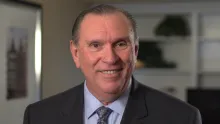
Randy D’Alessandro served as pastor for the United Church of God congregations in Chicago, Illinois, and Beloit, Wisconsin, from 2016-2021. Randy previously served in Raleigh, North Carolina (1984-1989); Cookeville, Tennessee (1989-1993); Parkersburg, West Virginia (1993-1997); Ann Arbor and Detroit, Michigan (1997-2016).
Randy first heard of the church when he was 15 years old and wanted to attend services immediately but was not allowed to by his parents. He quit the high school football and basketball teams in order to properly keep the Sabbath. From the time that Randy first learned of the Holy Days, he kept them at home until he was accepted to Ambassador College in Pasadena, California in 1970.
Randy and his wife, Mary, graduated from Ambassador College with BA degrees in Theology. Randy was ordained an elder in September 1979.
