
Mario Seiglie
This transcript was generated by AI and may contain errors. It is provided to assist those who may not be able to listen to the message.
Now we are ready for the message today. It's always good to ask ourselves, why are we here? You've heard that from Mr. Armstrong such a long time ago, but it's always good to refresh. Why are we here? The first reason is because we are keeping the fourth commandment.
But even beyond that, is because we want to enter the kingdom of God. We want to be part of that kingdom when Christ returns and to be part of what Hebrews 11.35 calls the better resurrection. That so many men and women of faith fought, the good fight of faith, to be part of that better resurrection. Specifically, it mentions in Revelation 3.11 about the Philadelphia Church where he says that during this church in particular, which reflects the era when God is going to intervene in world affairs, and he says during Revelation 3.11, because you have been faithful and kept my word, I will keep you from the hour of trial that will test the entire world.
So we know that hasn't happened yet. That's still in the future. But in particular, he's talking about that church period. And then he says, let no one take your crown because God has offered us to be part of his kingdom as kings and priests. And there is a crown for those that are baptized who have God's spirit, who when Christ comes back is going to crown this group in the first resurrection. And so why are we here? We want to be part of that. We want to be obedient.
We want to be faithful. We don't want to fall by the wayside. And so it's important that we focus on that. It requires effort, faith, sacrifice, hope, and perseverance. And so as every Sabbath we come and we learn new things about God's ways, at least a fourth, if not closer to a third of the Bible has to do with prophecy. And Paul mentioned there in 1 Thessalonians 5, verse 21, do not neglect prophecy.
And he considers it that it's important to talk about where we find ourselves in Bible prophecy as much as we can know here as we start 2019. And so it's good to give an update. And I'd like to just go over where we find ourselves as best as we understand the prophecies of today. And so I'd like to first begin in 1 Corinthians 13, what is called qualifying, what we are about to study. 1 Corinthians 13, verse 9. Now the term qualify means that you're cautious about what you're going to say.
1 Corinthians 13, 9, Paul was also cautious. He said, for we know in part and we prophesy in part. So even Paul didn't know everything about prophecy, although God had revealed so many things to him. And then going on to verse 12, he says, for now we see in a mirror dimly, but then face to face, now I know in part, but then I shall know just as I also am known. And so he was humble about this. We should be humble. God has the last word, but again he tells us we can discern, we can watch what's going on in world events.
There's important scripture which is found in Matthew 24. Matthew 24 and verse 32, Christ said, now learn this parable from the fig tree. When its branch has already become tender and puts forth leaves, you know that summer is near. So you also, when you see all these things, know that it is near at the doors. And so just like in a fig tree, when spring is about to appear, the buds start coming out.
You know there are going to be leaves pretty soon that are going to be coming out. And so we understand here that we have to be looking out for those buds that are going to blossom, that announce the springtime. And so God also put in his word how these blooms are going to give us a warning of what is going to happen. And so I'd like to go over three points about prophecy that Christ gave in the Gospels, in the book of Revelation, and also the apostle Paul gave these prophecies. And so the first scripture, which is a key scripture, is found in Luke 17 verse 26.
Luke 17 verse 26.
Christ is talking here about the signs of his coming.
And verse 26 he says, So here Christ, first of all, is mentioning something about this generation of Noahs. They were not alert. They were not watching. And so they went on with their normal lives, just following the current of society, and they were not watching for the signs. And so they were caught up in the flood because they were so wrapped up in their own lives, in their own situation, they were not aware. Now the second thing that Christ is also telling us that just like in Noah's day, the earth was filled with violence, and people were degenerating, they were losing their moral values. And so also, just like that happened in Noah's day, so it is going to be repeated in the end times. And so there's something about Noah's society that is a reflection of what's going to happen in the end times. Also, going on to the next verse, he said, verse 28, Likewise, as it was also in the days of Lot, they ate, they drank, they bought, they sold, they planted, they built. But on the day that Lot went out of Sodom, it rained fire and brimstone from heaven and destroyed them all. Even so will it be in the day when the Son of Man is revealed.
And so he's again mentioning the people in Sodom and Gomorrah were just going on.
They didn't know any of the signs. They weren't looking. They weren't looking to God. They weren't looking to the truth in those days. They could have sought it, but instead they were just partying and having a wonderful time and didn't realize that the judgment had come upon them. And so it was too late. And then he goes on to say in verse 32, remember Lot's wife, because Lot's wife, knowing the truth, actually, instead of being protected and fleeing, she turned back. She wanted to go back to the society of Sodom and Gomorrah. She longed for that. And so God is also warning us that we have to keep our focus. We know this coming kingdom is rapidly arriving, and we need to be prepared for it. Notice what it says in Luke 18, verse 8. Christ says, I tell you that he will avenge them speedily. Nevertheless, when the Son of Man comes, will he really find faith on the earth? So it's a condition. Are people still going to be following faithfully God's way of life or not? Or will they let themselves be swept by the society just like in Noah's day, just like in Lot's day, that they were not looking, they were not aware, they were caught unaware. And so it's a warning to us.
Also, Matthew 24, in verse 12, it tells us, just like in Noah's day and Lot's day, so it will be, in the end time, it tells us here in verse 12, talking about these signs, he says, in Matthew 24, verse 12. He said, and because of lawlessness will abound, the love of many will grow cold. So that's one of the conditions. There's just going to be so much disregard for God's laws that even the church can be affected by that and lose their spiritual fervor because it's so easy to just be overwhelmed by the society that surrounds us.
Notice before we go to the next subject, but what was it that made Noah's society wrong before God? Why was God using it as an example of lawlessness? Notice in Genesis chapter 6 in verse 12. This is what happened in Noah's day. It says, verse 12, So God looked upon the earth, and indeed it was corrupt, and all flesh had corrupted their way on the earth. They were not following God. Verse 13, So it tells us here that this is one of the characteristics of Noah's day. Now, how about Sodom? Why did Sodom become so immoral? Why did it just lose its moral compass and start just in all of this sexual depravity? The root causes are described in the Bible. In Ezekiel chapter 16 verse 49, God tells us here what produced that evil.
Ezekiel chapter 16, it's almost a study here in sociology, in analysis of society, when it describes here, chapter 16 verse 49. It says, So that's the first thing.
And so Sodom was very prosperous. You could say there was opulence. There was a lot of prosperity. And so what happened? People had a lot of time and money on their hands, and they just started cavorting, started lowering their morality. And it's very interesting that that happens many times when you have these conditions. Pride. I'm fine as I am. I don't need God.
I'm having a good time. I've got money. I can throw money against the problems that I have to solve them. Abundance of idleness. A lot of free time. They didn't strengthen the hand of the poor and needy. And they were haughty and committed abomination. There wasn't a real compassion. People were thinking about themselves more than others. I have a book here which I appreciate a lot. It's called Slouching Toward Gomorrah by Robert H. Bork. He was presented as a Supreme Court candidate, but eventually he was too conservative, and they went against him. But in this book, he analyzes society very carefully. And he says we are headed toward Sodom and Gomorrah. Just like Christ described, society would eventually be.
I'd like to read 2 Timothy chapter 3, 1 through 4 in the message Bible version. It says, Don't be naive. There are difficult times ahead. As the end approaches, people are going to be self-absorbed, money-hungry. Certainly, 100 years ago, you couldn't say that people were that self-absorbed. They still lived in communities. They helped each other out. Money-hungry, most people were too poor. They didn't have access too much. Most people lived in the farms 100 years ago.
He says they're self-promoting, so it's people that have no humility. They self-promote themselves. It's about me, me, me. Even sociologists have branded the generation here in the 1980s, 90s, and forward, the me generation. They're very self-absorbed, stuck up. In other words, vain, profane. Look at the vocabulary they use because the vocabulary reflects what a person is on the inside. It reflects their thoughts and attitudes. And if it's filthy speech, it's because there are filthy attitudes and filthy thoughts. How do the abundance of the heart, the mouth, speaks? Said Jesus. Contemptuous of parents. We see this more than ever before.
Lack of respect. Accrued. Course. Dog-eat-dog type of mentality. I'm going to get to the top, whether I have to step on everybody to get there. Unbending, slanders, impulsively wild.
You see that. And by the way, this book, Slouching Toward Gomorrah, Robert Bork, of course, judge, famous lawyer, writer, he identifies in the 1960s was when that seed was planted in American society with this type of attitude. From the spoiled kids of that baby boom generation, the parents cuddled them, there was more money, so the kids really didn't have to work very much. They didn't go hungry like the previous generation in World War II and even before that, the Great Depression. These kids were coddled, they were given so much, and so they took it for granted.
And here in this book, it talks about the group called the Society for Democratic Democracy. It was students from Berkeley and many other places, they made a group, SDS, Society for Democratic, or system as such. And they were going to promote socialism and all of these rights that everything had to be equal, that sex had to be equal for everybody, and from there, many of these became the professors in the universities in charge of the media and politics, and that eventually reached what we see today. So anyways, here it goes on, Paul describing that end time, he says, savage, cynical, treacherous, ruthless, as we see in these mass killings.
They say that every six days there's a mass killing, either in the US or somewhere else.
Bloated windbags, addicted to lust, and allergic to God. They'll make a show of religion, but behind the scenes, they're animals. Stay clear of these people. So Paul is telling Timothy, look, that's going to be the society in the end time, and if you see people with those attitudes in Timothy's day, stay away from them. And so we see here kind of the key description, are we living more and more like in Noah's day and in Lot's day? Yes, we are. We see the statistics, for instance, talking about, you know, the morality index. They measure extramarital affairs. Just shot up. They've doubled since 1970. Gambling is more and more accepted.
They just changed the laws this past year, where you can do all kinds of sports gambling.
Homosexuality, of course, that has spread. Abortion multiplied premarital sex.
Alcohol and drug abuse.
Violent and nonviolent crime. And how about honesty? I always like to ask here, we have Joel Thomas. I asked him the other day, how honest are people when they write up contracts? And lawyers have to write them up. And he mentioned about 50% are the ones that honor contracts. 50% finally don't honor them. That was not the case 30, 40 years ago.
People were men and women of word. Their word was good. You could, on a handshake, do a deal.
How do you feel about doing a handshake today? When you buy a house, the reams of paper that you have to use. Why? Because of all the contracts that have been broken. And so today, you can't rely on a person's word. You have to tie them down with dozens and dozens of documents.
Talking about the earth with violence. The doomsday clock, which is used by a group of scientists, atomic scientists, to deal with nuclear weapons and nuclear material. They have put the doomsday clock at two minutes to midnight. That means the world is closer to a nuclear apocalypse than it has been since the height of the Cold War in 1953. It's never been that close to 12. The last time the doomsday clock was this close to midnight, the U.S. and the Soviet Union had just tested the first hydrogen bombs. That we are so close to the end of civilization now, as we were then, is a sobering indictment of the present.
Back in 2012, just six years ago, at least it was five minutes before midnight. And it has steadily been getting closer to the danger zone of... So we are looking at a world that is increasingly more anarchic, more filled with violence, and also with immorality. Let's go to Matthew 24. I do want to talk a little bit about crime, the crime, right? Because that is a point that is brought up on occasion, and I want to clear some of that information. Matthew 24, verse 4.
I'll cover that in a moment, but this is the second point. Let no one deceive you, because it's easy to be deceived in this day and age. He said in Matthew 24, 4 through 5, Jesus said to them, when He asked about the sign of His coming, Take heed that no one deceives you, for many will come in my name, saying, I am the Christ, and will deceive many. In verse 22, it says, And unless those days were shortened, no flesh would be saved, but for the elect's sake, those days will be shortened. So God is going to have to intervene, because the situation on earth gets to be so dangerous.
So what is going to be found before Christ comes? Many groups claiming, talking about Christ, the Messiah, and that they represent Christ the Messiah, the coming Messiah.
And this is not limited just to Christian churches, because Islam, the Muslim religion, actually also talks about a Messiah. And they used part of the Bible, but in a distorted sense, but they're looking for the Mahdi, M-A-D-H-I. That to them is their Messiah. So they're saying, come to us, because we're going to have the Islamic Mahdi come and establish the kingdom, and deceive many. Of course, this first state of deception corresponds to the White Horse in Revelation 6.
And we should ask our question, how firm am I in the church? What can undermine my faith?
Here are four pitfalls, four dangers that can undermine our faith. The first one, laziness and neglect. We have the description of five of the virgins that were waiting for Christ to come, and they didn't have any reserves of oil in their vessels. And when Christ came, they just were in such a weakened condition, they had become cold, spiritually cold, that when Christ came, it was too late. They were not ready. They were not prepared. And so I find today it's hard to keep the fervor, the zeal. It's easy to let the neglect take over.
So let's keep that in mind. In other words, we can be our worst enemies. Don't blame someone else, it's just our neglect. We're not close enough to God. We're not examining the scriptures. We're not looking at the world conditions and realizing it is getting closer and closer. If God pulls a plug on this earth, it is well within the conditions that He has described. In other words, today, these conditions already exist. There are few things that still have to happen, like the sacrifices and Jerusalem have to begin. But the Israelis already have a wall around Jerusalem, and they already have talked about having those sacrifices. So it's a matter of time. The second pitfall or danger that we have is becoming offended. In other words, you can become disappointed, maybe with church members, maybe with minister, the minister. Whatever it is, don't let a root of bitterness arise, because we are all imperfect. This church is imperfect. God's way is perfect, but not the people who walk in it. So you're always going to find imperfect people. I describe this church as repentant sinners, right? We still don't do what we should, but we are repentant. We are humble. We go to God for Him to cleanse us, and we want to continue in His way. But there's nobody perfect in this church, and so we can be offended if we allow them. But if you have God's spirit working and you're strong, you're not going to be offended. There's a scripture in Psalms 119, which is of great comfort. Psalms 119, verse 165, it says, Great peace have those who love your law, and nothing causes them to stumble.
The old King James says nothing will offend them because they're close to God. They're not going to let picky things get in the way, and they're going to come to church not for others, but come because God has invited us. This is where He has shown us the path we want to continue on it. But the third great danger is wordliness, getting too wrapped up in worldly ways. And these are called the weeds that we can get caught up. The good plant is caught up by the weeds. Matthew 13, verse 22. Matthew 13, verse 22.
It says, Now he who received seed among the thorns is he who hears the word, talking about the word of God, and the cares of this world and the deceitfulness of riches choke the word, and he becomes unfruitful. He doesn't put the priorities in order.
You don't put the cart in front of the horse. You put the horse in front of the cart. First God, His ways, the cart is the physical needs and the material means to continue. It has its place, but if you put that first and then you put God's second, it's not going to work properly.
So some of these weeds can be drunkenness, illicit sex, the lust for money are just a couple.
And then you have the fourth great danger, which is doctrinal deception. We can go off the deep end First Timothy 3 verse 15 tells us that the church is the pillar and the bulwark or the wall of truth. The church is a place where the pillars are the truths and also the protecting wall. So we are here with the doctrines that are taught in the Bible.
And sometimes people get caught up. For instance, some people start keeping Sunday instead of the Sabbath day. That's doctrinal deception. The idea of grace versus law, that now they say, well, God doesn't matter, doesn't care what day we keep. We're all just under grace and that means that there's no law. And actually what we have is either you choose law without grace or law with grace. So I choose law with grace. I want to obey God, but I need God's grace.
But God's grace without law, that doesn't work at all. And then one of the other dangers, doctrinal deceptions, is getting caught up in this messianic Judaism where you get wrapped up into the Hebrew words. And somehow you need to use these Hebrew words because that makes you more righteous. It makes you have more acceptance before God. And you've got to come up with these terms that come from Hebrew and basically how many people speak Hebrew here? I don't think there are too many, if any. And yet I don't see Jesus Christ telling us that we have to use Hebrew terms.
And he used the terms that we see that the New Testament is in Greek. It's not in Hebrew. And this was what was transmitted. Paul wrote to the Gentiles because they understood the Greek language. They didn't understand Hebrew. And he didn't tell them, well, you still have to use these special names for God or for Jesus or for something else. People can get caught up in this type of Messianic Judaism and start adopting some of the traditions there. So the last point I want to make in Matthew 24 verse 6 and 7. He said, And you will hear of wars and rumors of wars. See that you are not troubled, for all these things must come to pass, but the end is not yet. For nations will rise against nations, just like World War I happened. World War II happened. And Kingdom against Kingdom. That's a group of nations. And there will be famines, pestilences, and earthquakes in various places. Just had a tsunami off of Indonesia there. Killed hundreds of people. They were just having normal time. They didn't have any warning. And here it came.
The water just came and swept them away. So that can happen at any time.
All these are the beginning of sorrows. In Mark 13.8, it adds one more element. It talks about uprisings, revolts, dealing with terrorism. And this is something that is going to be more the norm as it is today. Terrorism, even here in San Bernardino. How many people were killed? And here are a thousand oaks. Another.
And it's happening in cities, not only in the U.S., but around the world.
There are around 10,000 nuclear weapons in the world. With only 200 going off, it would destroy the entire earth. Now we have robots as becoming soldiers. We have drones. We have these nuclear weapons in the sea with submarines on the earth. In the air with planes. And now, unfortunately, it's getting closer to space. So you will hear more and more about the armed forces of space, because there are going to be more satellites there, and some of them can hide nuclear weapons. One of the saddest bit of news in 19, I mean 2018, came from the World Health Organization, which said abortion was the leading cause of death worldwide in 2018, killing 42 million people. So more people died from this intentional abortion. We're not talking about something spontaneous or because... No, we're talking about healthy children being killed in the womb.
That should boggle our mind that more people died this past year than the whole population of California. Talking about pestilences and all of these different diseases. Of course, venereal diseases are rampant. They're worse than ever. 39 million people have died, according to the World Health Organization of AIDS. 39 million. Now, the Black Plague in Europe, back in the 1350s or so, killed around 30 million. So this AIDS has killed more people than the Black death in the Middle Ages. 76 people, 76 million people, have been infected since 40 years ago.
The abortion number boggles the mind, but each of those 42 million intentional abortions represents a living human being whose life was violently destroyed in their mother's womb. Each unborn baby already had their unique DNA that was distinct from the mother.
But some say, well, crime in many places has gone down. And that is true. But not because people are stealing less. It's not because they have become more moral that now they're behaving better. No! They're getting caught more easily because of the technology and other measures which I'm going to read. So it's not, oh, this is the sign that we still, Christ is not coming because, well, the crime rate has gone down. But that's just one isolated part which has to do basically with all the technology available. Look what technology makes it much harder now to steal things.
Here I have the factors contributing to the crime decline by the Pew Research.
It says, better policing. Law enforcement strategies have improved over the past two decades. And police have better access to data that can help identify where and when crimes occur. So now it's just a matter of time. The police can all converge in one area. They know exactly. They got the computer. They know who the people are, where they are, the gangs involved. So, of course, that is a great blessing. But it's not because people are better, because they're getting caught more. The waning crack cocaine demand, violence and addiction that characterized the crack epidemic of the 1980s has subsided. So many people have died from crack cocaine. They finally decided, hey, this isn't a good idea. Also, changing demographics. The average age in the U.S. population has risen, and research shows that older people commit fewer crimes. So we don't have quite as many adolescents as before. More incarceration. The U.S. prison population has increased dramatically since the early 1990s, taking many dangerous offenders off the streets.
Of course, that's being reversed in some areas like California. We'll see what happens. Less cash at hand. Certain street crimes may be less common because Americans tend to carry less cash. That in the past, due to the growth of credit card transactions and many others. So they know before people had to carry a lot of cash around. Now you can't really cash in the credit card. You can get caught. Anti-crime technology ranging from sophisticated car and home alarm systems, video surveillance equipment, and also even cars cannot be hot-wired like they were in the past. So of course, it's made it more difficult through technology. But you can't take that and say, oh everything else is hunky-dory and hey nothing's going to happen. No, this is because the police started instituting zero tolerance. Started in New York. Bratton came over here in Los Angeles. He applied zero tolerance. And you know what? Crime went down. But again, these are all constraints. It's not talking about people becoming more moral because all of these other parts of morality index, they're all up. So also the European Union, we know with the church right there in the center of it, they are a mixture of countries. Some are strong, some are weak. But the point is that European Union does exist. And it is based on alliances, just like Daniel mentioned there in chapter two. All of that is being fulfilled. So let me just wrap everything up here. What can we do? First, maintain a personal relationship with God. We need to renew our spiritual lives, as it says in 2 Corinthians 4, 16, day by day. We need to be close to God.
Number two, keep studying the Bible, examining God's truths. Let them be in you and his principles. Number three, stay active in the church. Don't become passive.
Support, serve, take advantage of the opportunity in the church. So many things that we need people to help and to share. Prepare for the feasts. Keep that second tithe so we can honor God when we go to the feast at the end of the year here in the Feast of Tabernacles. God will bless you if you put him to the test. And finally, stay alert and aware. Be on the lookout for those buds that appear and announce the springtime. And so let's go to the last Scripture, Luke 21, 35. We've used this many times, but I'm not going to apologize. It's in the Bible. It's talking about the end times, and it has a lot of good advice. Luke 21 and verse 36, it says, Watch therefore. Now that's talking spiritually and also physically. Watch your condition.
Examine yourself. Don't be like those in Noah's and Lot's day. They didn't know what was coming. Watch therefore and pray always that you may be counted worthy to escape all these things that will come to pass. So do you want to go through those things or do you want God to spare us? There's nothing wrong with wanting to be spared, as he mentioned there in Revelation 3, that he will spare those from the hour of trial that will come upon the entire earth. He says, and pray, and to stand before the Son of Man. It means that when Christ comes, we will be ready.
We will be looking forward to that coming and being part of that glorious kingdom of God. So, brethren, where do we find ourselves in prophecy? We are very much into this end-time scenario, but we don't know how much is left, what's going to happen. But, brethren, the signs are there for us to stay alert and watch world events and also our own spiritual state.
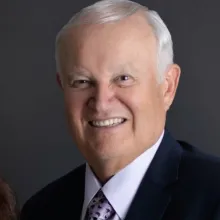
Mr. Seiglie was born in Havana, Cuba, and came to the United States when he was a child. He found out about the Church when he was 17 from a Church member in high school. He went to Ambassador College in Big Sandy, Texas, and in Pasadena, California, graduating with degrees in theology and Spanish. He serves as the pastor of the Garden Grove, CA UCG congregation and serves in the Spanish speaking areas of South America. He also writes for the Beyond Today magazine and currently serves on the UCG Council of Elders. He and his wife, Caty, have four grown daughters, and grandchildren.
