
Greg Thomas
This transcript was generated by AI and may contain errors. It is provided to assist those who may not be able to listen to the message.
Welcome to the afternoon service of the Last Day of Unleavened Bread. Wasn't that special music awesome? Someone told me during lunch, boy, they really sound good! I didn't have a chance to hear them, but that was spectacular. Thanks to each and every one of the chorale members for practicing and for providing such a beautiful special music for us today and this Holy Day. Well, welcome again to the seventh day of Unleavened Bread. It has been a wonderful festival. And I don't know about you, but in all reality, my head has been spinning. With all the activities of the last couple of weeks, you have everything prepared for getting ready for the holy days, and then you've got the Passover the night to be much observed. You've got the first holy day. You've just got all of these things going on, and these days have certainly gone by very quickly. But as we conclude the second service on the seventh day of Unleavened Bread, I have a question that I would like to ask each and every one of us as individuals here today. And that is, where do we go from here? Mr. Miller mentioned in the sermon this morning that Pentecost is about six weeks away, looking forward and looking toward Pentecost. Where do we go from here? I think that's a very honest question. And to answer that, I think it's good to begin by recapping what Jesus Christ has done for us. Because Jesus Christ made everything possible that we have. And that includes the fact of what this feast represents, because He is the bread of life, the living bread. This feast, if you've ever thought about it, has pictured seven days of fasting from leaven. Seven days of fasting from sin. Every day, we were not only to avoid leaven, but we were also, each and every day, to take a little piece of unleavened bread and eat it. And of course, eating that unleavened bread pictures Jesus Christ, the bread of life, dwelling in us, His righteousness dwelling in us, which makes so many things possible in our lives. This festival is an annual reminder of our obligation to become holy, because God doesn't tolerate sin. And we understand the change is a process, not an event. But God does not tolerate sin. And these days remind us of that, and they look forward to something that is very powerful and very beautiful. But I have to ask the question again, where do we go from here? I think rule number one, to understand where we go from here, is to never forget the big difference between Satan's purpose and God's purpose. You see, Satan's purpose is to have leaven. Satan simply expands things. He takes an existing substance, and by corrupting it, by defiling it, he expands it. Now that's in direct contrast to God. God is a multiplier. God creates something out of nothing. God takes one of something, and he multiplies it a hundredfold, a thousandfold, five thousandfold.
So as, again, where Satan simply takes an existing substance and through perversion just expands it, God is a multiplier. He creates something out of nothing. And to fully appreciate the bread of life and the fact that he's creating something out of us, I think it's important for us to understand a few things. Before we answer that question, where do we go from here? Let's go to Micah, Chapter 5 and Verse 2. Micah, Chapter 5 and Verse 2, a very beautiful prophecy about the coming of the Messiah, Jesus Christ, and where he would literally be born. Micah, Chapter 5 and Verse 2. It says, But you, Bethlehem, Ephrathah, though you are little among the thousands of Judah, yet out of you shall come forth to me, notice M to me, the one to be ruler in Israel, whose goings forth are from old, from everlasting. Again, this is talking about Jesus Christ, the ultimate divinity of Jesus Christ. I'm going to read this from another translation, the New American Standard Bible. But as for you, Bethlehem, Ephrathah, too little to be among the clans of Judah, from you, one will go forth to me, again, capital M, to be a ruler in Israel, his goings forth are from long ago, from the days of eternity. Again, a very powerful prophecy about Jesus Christ. It's even more powerful if we remember what the name Bethlehem means. Do you know what the name Bethlehem means? Well, according to the weary Bible notes, here's what it says about this verse. Before I say what the name Bethlehem means, if you don't remember, if you don't recall, it says, quote, this is from the weary Bible notes, this was the birthplace of King David, as well as his most eminent descendant, Jesus Christ the Messiah. The phrase goings forth refers primarily to Christ's pre-incarnate appearance as an angel of the Lord, thus affirming the existence of Christ before his birth in Bethlehem. The phrase from long ago may mean from days of old, or it may mean from eternity, indicating the eternal existence of the Messiah. And sure enough, this prophecy was fulfilled. We know in Matthew 2, verse 1, it says, Now after Jesus was born in Bethlehem of Judea, in the days of Herod the king, behold, wise men from the east came to Jerusalem. This little, seemingly insignificant village of Bethlehem, which was about five miles southwest of Jerusalem, its very name is Bethlehem, which means the house of bread.
Isn't it interesting that the bread of life was born in a village named the house of bread?
Turn with me, if you would, to Exodus 16.
We're going to take a look at an event in which this ruler that was mentioned in Micah, chapter 5, was present. He was evident. He was there. He was the one who comes forth to me, as spoken of in Micah, chapter 5, verse 2.
He was the one who would eventually come out of, be born a human being and come out of Bethlehem. So let's see this ancient event where this ruler was present, the very one who would come from a village called the house of bread.
Exodus 16, verse 11.
And the Lord spoke to Moses, saying, I have heard the complaints of the children of Israel. How many times did we hear that expression today?
Human beings, as we are.
Speak to them, saying, at twilight you shall eat meat, and in the morning you shall be filled with bread.
Filled with bread, and you shall know that I am the Lord your God. So it was that quails came up at evening and covered the camp, and in the morning the dew lay all around the camp, and when the layer of dew lifted, there was on the surface of the wilderness a small round substance as fine as frost on the ground. So when the children of Israel saw it, they said to one another, Manah, or what is it? I can remember in the early days of my marriage, my new bride served a few meals in which I said to myself, I didn't verbalize it, I said to myself, Manah, what is it?
And this was an experience that the Israelites had as well, for they did not know what it was.
I experienced the same feelings. And Moses said to them, This is the bread which the Lord has given you to eat. So I want you to notice that God gave them the opportunity to be filled with this bread. And this was only physical bread, but as we'll see later on from a statement by Jesus Christ Himself, it was something that was symbolic of a far greater bread, a living bread. So brethren, do we want to be filled with bread? Do we want to be filled with the bread of life in every area of our life?
Or are there still parts or compartments of our life that we've been holding out, we've been closing ourselves off from God?
If we understand that this feast is about sincerity and truth, it means that when people see us, what they see is what they get.
And the same kindness in which we treat our wife at home is the same way we treat co-workers, is the same way we fellowship with others during Sabbath services. In other words, no longer compartmentalized areas of our life. Well, this is the way I am at home, and I put on a church face, and this is the way I act at work, and this is the way I, when I'm hanging around the guys or the gals, no, brethren, I am, I'm asking the question, are we filled with the bread of life? Every part of us, every core of our being, the bread that they were given to eat only sustained physical life, but the bread we are offered provides us an opportunity for eternal life. Let's take a look at verse 16. It says, This is the thing which the Lord has commanded. Let every man gather it according to each one's need, one omer for each person, according to the number of persons. Let each man take for those who were in his tent, and then the children of Israel did so and gathered some more, some less. So they measured it by omers, and he who had gathered much had nothing left over, and he who gathered little had no lack. Every man had gathered according to one's need. So even the family representative in this case who took some of this manna and brought it back to the family, everyone was filled. Everyone had the need that they had supplied for them. Brethren, we all have an individual need for the bread of life. I can't take your share. You can't take my share because all of our needs are different. We each have the opportunity, the privilege to go to God and receive what we personally need for that day. And on any given day, your need may be more. Maybe you're going through a tough time, and you need some extra prayer, or maybe you need a combination of prayer and Bible study and meditation because your need is great.
The next day, my need might be greater. But are we going to the throne of God? And are we appreciating the fact that He'll give us exactly what we need? Some more, it says some less. Every man gathered according to each one's need. What's our need? Are we making the effort to go to the throne of grace each day to make sure that that need is being met? Verse 19, Moses said, Let no one leave any of it until morning, notwithstanding they did not heed Moses, but some of them left part of it until morning, and it bred worms and stank.
Moses was angry with them, and so they gathered it every morning, every man according to his need. And when the sun became hot, it melted. You see, brethren, as Jesus Christ Himself said, give us this day our daily bread.
If that day we don't go to the throne of grace, that is a day that's gone forever without an opportunity that day to retrieve it again. That opportunity is lost. That day gone is an opportunity lost. And we can't store it up. We can't go to God and say, give me a week's supply.
Help me to give me a doggy bag to get me through the next three or four days. It doesn't work that way. It says they gathered every morning, every man according to his need. Verse 22, And so it was on the sixth day that they gathered twice as much bread, two omers for each one, and all the rulers of the congregation came to Moses, and he said to them, This is what the Lord has said.
Tomorrow is a Sabbath rest. A holy Sabbath to the Lord bake, what you will bake today, and boil what you will boil, and lay up for yourselves all that remains to be kept until morning. So they laid it up till morning, and Moses commanded, and it did not stink, nor were there any worms in it. So the day before the Sabbath they had what we might call a double portion. Brethren, we can't come to church as Seventh-day Christians. Mr. Miller mentioned this morning about coming out of the closet. Well, I have a phrase that similar is kind of related to that, and that is, we cannot be Seventh-day Christians.
It just does not work. A Seventh-day Christian is someone who's ignoring their relationship with God and God's people Sunday through Friday, and suddenly, on the Seventh-day, they appear as a disciple of Jesus Christ during Sabbath services. Brethren, we can't live our lives that way. We can't say to God only on the Sabbath, okay, I'm here now. Give me today my daily bread. I've been ignoring you all week now. Give me a supply that'll last me for another seven days until I come back here again. No, brethren, our daily relationship throughout the week is what carries us.
That day-by-day relationship that we build with God, that's what carries us. That's what prepares us to have a deeply fulfilling Sabbath. It's called a preparation day for a reason. It's because on that day, we should already begin thinking of the joy of the Sabbath and spiritual things and preparing ourselves to get the most out of God's Sabbath day. We can't expect to gorge on the bread of life one day a week and be spiritually happy. It just doesn't work that way.
Verse 31, in the house of Israel, called its name Manah, and it was like a white coriander seed, and the taste of it was like wafers made with honey, and Moses said, This is the thing which the Lord has commanded. Fill an omer with it to be kept for your generations, that they may see the bread which I fed you in the wilderness when I brought you out of the land of Egypt. I'm going to allow Holman's Bible dictionary to define what Manah is for us, just so we understand, because it was rather a unique miracle.
It says, Manah, a grain-like substance, considered to be food from heaven, which sustained the Israelites in the wilderness and foreshadowed Christ, the true bread, from heaven. They continue, The small, round grains or flakes which appeared around the Israelites camp each morning with the dew were ground and baked into cakes or boiled. Their name may have come from the question the Israelites asked when they first saw them. What is it which in Hebrew is Manah? The Bible emphasizes that God caused Manah to appear at the right time and place to meet His people's needs.
That's exactly what Jesus Christ wants to do for us, brethren. Verse 33, Moses said to Aaron, Take a pot and put an omer of Manah in it and lay it up before the Lord to be kept for your generations. As the Lord commanded Moses, so Aaron laid it up before the testimony to be kept and the children of Israel ate Manah forty years until they came to an inhabited land, they ate Manah, until they came back to the border of the land of Canaan.
So as a memorial, they were encouraged to put it in a pot, it was actually a gold pot, and to put that pot inside of the Ark of the Covenant. The interesting thing is, and this is just an aside, that when Solomon dedicated the temple and they brought the Ark of the Covenant and they found someone who was brave enough to look inside of it, as recorded in 1 Kings 8 and verse 9, the gold pot was missing.
It wasn't there. So that might make a good sermon at her. Interesting study in what happened to that gold pot. But brethren, during this forty year event, a physical type of bread provided to them, it was provided by the very one who would later become known as Jesus Christ, the living bread of life. He was there. He did it for them. He helped them. He gave Israel Manah in the wilderness. So with that little bit of background, let's now go to the book of John, and we'll see Jesus Christ, the bread of life, referring to this event and making very wonderful promises for you and I and all of those whom the Father has called to his way of life.
John chapter 6 and verse 30. It says, therefore they said to him, What sign will you perform then that we may see and believe you? What work will you do? Do us a little magic trick, Jesus. Try to impress us in some way. Show us a sign. And they said, Our fathers ate the manna in the desert as it is written, He gave them bread from heaven to eat.
And then Jesus said to them, this is verse 32, Most assuredly I say to you, Moses did not give you the bread from heaven. You know what Jesus is implying here? I gave your ancestors the bread from heaven. But my Father gives you the true bread from heaven. If you're being called, if you're understanding this message, Jesus says, It is my Father who is drawing and attracting you to connect the dots, and He is giving you the true bread of heaven, which is His Son Jesus Christ.
Verse 33, For the bread of God is He who comes down from heaven and gives life to the world. Then they said to Him, Lord, give us this bread always. They're not quite connecting the dots, obviously, because they're not being called. And Jesus said to them, I am the bread of life. One of the powerful I am statements. Again, going back to what God Yahweh told Moses as He identified Himself, I am the bread of life.
He who comes to me shall never hunger, and he who believes in me shall never thirst. But I said to you that you have seen me and yet do not believe. All that the Father gives me will come to me, and the one who comes to me, I will by no means cast out. So if you had a difficult year, have you slipped, maybe gone backward? Have you been struggling with issues or problems or things in your life that you know aren't right?
I want you to know today that Jesus Christ will not cast you out. You need to go to the throne of grace, and you need to say, Lord Jesus, or Father, Holy Father, please forgive me of my sins and my transgressions and help me. Grant me that gift of Your Holy Spirit and help me to clean up my act, to change my life. Verse 38, for I have come down from heaven not to do my own will, but the will of Him who sent me, referring to the Father.
This is the will of the Father who sent me, that of all He has given me, I should lose nothing but raise it up at the last day. And what the goal of Jesus Christ is, is not a single one of us will be lost. Not a single person that God ever calls and gives His Holy Spirit to.
His goal is, is not a single person is lost. That's how Jesus Christ feels about us. Verse 40, and this is the will of Him who sent me, that everyone who sees the Son and believes in Him may have everlasting life, and I will raise Him up at the last day. The Jews then complained about Him because He said, I am the bread which came down from heaven. They didn't accept or believe that He was there, that He had originally been with ancient Israel at that time.
So let's take a few minutes to ponder the symbolism of this living bread that we've been talking about. And turn with me, if you would, to Matthew chapter 26 and verse 26. And we'll just think about some symbolism.
Some symbolism of Jesus Christ.
Here the Scripture says, and as they were eating, Jesus took bread, blessed it, and broke it, and gave to the disciples. And He said, take, eat, this is my body. Now why would this be significant? Well, there's no reason for you to turn to Exodus 12, verse 18, but I'll read it for you. It says, in the first month, on the fourteenth day of the month at even, which is the time Jesus Christ was instituting this Passover here, celebrating it with His disciples, you shall eat unleavened bread. The original Hebrew is, you shall eat matzah. That's the Hebrew word, matzah. You shall eat matzah, until the twenty-first day of the month at even.
Now we look at matzah today, we Americans, and we normally see a square sheet of matzah. It wasn't always that way. Original matzah was actually made to be round. It wasn't until a very smart Jewish entrepreneur, Rabbi Manashevitz, created his own company around 1888, and being a smart businessman, he realized there was less waste if he made bread on his machine square rather than round. And he began to make, for the first time ever on a machine, matzah that was square. And at first, Rabbi Manashevitz got a lot of flack from his fellow Jewish rabbis who said, this violates Passover. Matzah must be made by a human being. It cannot be made by a machine. And he worked his way through that. And, what you also may or may not know, is in 1990, Manashevitz paid a one million dollar fine for price fixing for matzos.
Now, you might think, who in the world would ever think of price fixing on a matzo? Well, Manashevitz and another company called Straight, and another company called, I think it's Horvath, colluded to fix the price of matzos. And they had secret meetings, and they were caught by the federal government, and they were fined. And why do I mention all this? Because we Americans, we tend to think of matzo as a round sheet of hard, unleavened bread. And, originally, it was more like this. It was more round. But whether it's square, or whether it's round, or whether it's baked to be a little more soft, or whether it's baked to be very hard like this, it all has a lot of similar physical qualities, which are very symbolic. And I'd just like to talk about it for a few minutes. First of all, like matzo. Matzo, Jesus Christ, was unleavened. He was without sin. And he was a perfect, complete sacrifice. It says in Hebrews 4 and verse 15, For we do not have a high priest who cannot sympathize with our weaknesses, but was in all points tempted as we are, yet without sin. Unleavened. Just like matzo. Another interesting thing is the rapid process of hot baking causes it to have stripes. If you've ever taken a look at a sheet of matzo, you will see that it has stripes. Peter wrote in 1 Peter 2 and verse 24, Who himself bore our sins in his own body on a tree, that we, having died to sin, might live righteousness by whose stripes you were healed. If you've ever taken a look at matzo, you will notice that it is pierced with holes. So it'll cook evenly. As a matter of fact, you can hold it up to the light. You'll see light through the little pinholes that are in it. The holes are punched so that heat can pass through the dough quickly. You don't want it to overcook on one side and be raw on the other because there's no leavening agent that could happen. So it has holes in it. It's pierced. John wrote in John chapter 19 and verse 33, But when they came to Jesus and saw that he was already dead, they did not break his legs, but one of the soldiers pierced his side with a spear. In verse dropping down to verse 37, another scripture says, They shall look in him whom they have pierced. Another quality, if you look at a piece of matzo, is it looks like because of the way it's cooked, some parts of it are a little hotter, are the first parts to get on the baking oven or on the grill, however, whatever kitchen term we would use. And if you look at it closely, it has brown spots on it. Those brown spots look like bruises. They certainly do. Isaiah was inspired to write in chapter 53 and verse 5, but he was wounded for our transgressions. He was bruised for our iniquities. The chastisement of our peace was upon him, and by his stripes we are healed. The fifth, or the final quality, symbolism that's interesting about a typical piece of matzo is because it's very thin and it's baked, it's hard and can be easily broken.
In 1 Corinthians chapter 11, Paul said, in referring to what he had received, the instruction from Jesus Christ, he said, that the Lord, that same night, I also delivered to you that the Lord said on that night that when he was betrayed that he took bread, and when he had given thanks he broke it, and he said, Take ye, this is my body, which is broken for you.
And certainly the quality of matzo is that it breaks very easily. If you've ever witnessed a Passover ceremony, you have seen the elders take those sheets of matzo and so easily just break them. You can, if you listen closely on that night, you can just hear the crunching of the matzo being broken, just like the body of Jesus Christ was broken.
Well, brethren, with this background in mind, I'd like to now go to a miracle. And again, it's going to tie in with bread. This is the only miracle that is mentioned in all four Gospels. Now, if someone wants to be technical, yes, the resurrection is mentioned in all four Gospels. But as far as miracles go, the miracles of Jesus Christ, this is the only one that is literally mentioned in all four Gospels. And this morning I learned they are Matthew, Mark, Freeman, and John. You had to be at the morning service to appreciate that. Obviously, Matthew, Mark, Luke, and John. We'll go to John's account, John 6 and verse 4, if you'll turn there with me. John 6 and verse 4.
Again, some lessons here for us to ponder as we think about where we go from here, the opportunities we have, and how God wants to see, desires, multiplication in our lives.
John 6 and verse 4. Now, the Passover, a feast of the Jews, was near. So it wasn't yet the Passover. And the bread in this story is leavened bread. It's not unleavened bread. Verse 5, Very interesting. Where shall we buy bread that these may eat? And he said this to test him, for he himself knew what he would do. So he's testing Philip. He knows he's going to perform a miracle here. He knows exactly what he has planned. And by the way, the reason he asked Philip is if you go to Luke's account, you will see that this took place in the village of Bethsaidia, which happened to be Philip's hometown. So in essence, he's saying to Philip, do you know any bakeries around here where we can buy lots of bread? And Jesus, of course, is saying this tongue in cheek. Verse 7, For every one of them may have even a little or may have a little. So again, Jesus spoke to Philip because he was from that village, and that's where this event took place. The Believer's Study Bible says that 200 denarii is approximately two-thirds of a man's yearly wages, and yet this would be insufficient to feed 5,000 men plus their women and children. And they didn't carry this kind of money with them.
Judas was a good treasure. I'm sure he was pretty tight with the shekels, but they did not walk around with this kind of money with them. So picking it up now in verse 8, One of his disciples, Andrew, Simon Peter's brother, said to him, There's a lad here who has five barley loaves and two small fish.
But what are these among so many? Then Jesus said, Make the people sit down. Now there was much grass in the place, so the men sat down, and the number of about 5,000, this is 5,000 men, not including women and children, and Jesus took the loaves, and when he had given thanks, he distributed them to the disciples, and the disciples to those sitting down, and likewise of the fish, as much as they wanted. So I want you to notice how orderly God is. Jesus Christ didn't personally hand this out.
He used the representatives of his church to do the task of distribution. He gave it to his disciples. His disciples went, and they distributed this miracle, this bounty, to all of those who were sitting out there. This was not a massive free-for-all, like a Black Friday sale at Best Buy.
God is methodical. He's organized, and everyone there had an individual chance to take what they wanted. By the time it came to them, there was enough. Each one, without any feeling, any competition, from people around them or pressure, had the time to take that bread and be filled. Again, how about us, brethren? Is that the approach we have when we're going to the throne of grace each day? Is that the attitude we have? Verse 12.
So when they were filled, when we go to the throne of grace, are we being filled, or is it a rush job? Are we given God crumbs, or are we spending the time we need to be filled? So when they were filled, he said to his disciples, Gather up the fragments that remain so that nothing is lost, and therefore they gathered them up and filled twelve baskets with the fragments of the five barley loaves which were left over by those who had eaten.
Then those men, when they had seen the sign that Jesus did, said, This is truly the prophet who has come into the world. So let me ask again, brethren, are we daily partaking of the bread of life until we're filled, or are we walking around suffering from spiritual malnutrition? Just like the ancient manna, what was left over couldn't be hoarded.
They weren't offering doggy bags. You couldn't take anything home with you. If you missed, you missed out on an opportunity. And the same is true for us. Each day is a precious gift from God. Each day in life is a precious gift from God, and it's an opportunity. And if we allow that day to go by, that's an opportunity lost. So we certainly can seize the next day, but that day that went by that we didn't take advantage of that is a missed opportunity.
So the feeding of the 5,000 men was through the multiplication of the loaves that the little boy had. Five loaves miraculously became a full meal for thousands with 12 baskets filled with leftover fragments. So again, where do we go from here today? God wants you and I to participate in an ongoing miracle. Your life is that miracle, and He wants you to participate in that. God, by His very nature and essence, is a God of multiplication. Again, let me emphasize the contrast, please. Satan works through leaven. Leaven doesn't multiply. Not really. It simply expands something that already exists, and He usually corrupts it, defiles it. It simply takes a substance and it puffs it up or it just spans what it is already present.
But in contrast to this, what the bread of life is doing in your precious life is multiplication. He's given you a tremendous gift. That is His Holy Spirit. And where do we go from here? We use that power and we multiply the fruits of the Spirit in our lives. We multiply the talents that He has given us, perhaps. We revive some talents that are dormant. We've always known we had, but we just kind of never took seriously.
Perhaps they're spiritual talents, spiritual gifts that we're not even aware of. We multiply our attitude of service towards our family and towards our church, towards our community. We multiply the intensity of our love for our brothers and sisters in Jesus Christ and for all of our loved ones. You see, God is interested in multiplication. And part of that interest is also in the church, growing and multiplying.
Let's go to Matthew 28 and verse 18 and see the commission that He gave His disciples, the same individuals that we just read in John 6, whom He gave that bread to that He had multiplied. It said He had given it to His disciples and the disciples to those who were sitting down. Here's the same commission that He gave to the same men. And Jesus came and spoke to them, saying, All authority has been given to Me in heaven and on earth, and therefore go therefore and make disciples of all nations, baptizing them in the name of the Father and of the Son of the Holy Spirit, teaching them to observe all things I have commanded you and lo, I am with you always, even unto the end of the age.
So just like the miracle of feeding the five thousand, the Father is interested in multiplying the family of God. He wants to multiply with new disciples. He wants new children. He wants to expand His family. He gave His original disciples the task of preaching the Gospel and preparing a people.
And in the 21st century, that's our task today. That is the role that He has given His modern disciples, that's you and I, through our lives and through our efforts to preach the Gospel to prepare a people. That is how important multiplication is to God.
Are we doing our part? Are we doing our part in our personal lives, the examples we're showing to our co-workers, the example in our community, the example to our unconverted family members, and of course, hopefully, a positive example to the new individuals God is calling to the faith as they come to Sabbath services. How important is multiplication to God? It's so important that we have individuals here today who have been celebrating their very first days of unleavened bread.
That's how important it is to God. Are we excited about that? Do we realize that we all have a part to play in that? How important is multiplication to God? Where do we go from here? Multiplication is so important to God that He said to Adam and Eve in Genesis 1 and verse 28, Be fruitful and multiply, fill the earth, and subdue it. How important is multiplication to God? So important that He told Noah in Genesis chapter 8 and verse 17, He said, Bring out with you all of every living thing of all flesh that is with you, birds and cattle, and every creeping thing that creeps on the earth, so that they may abound on the earth, be fruitful and multiply on the earth.
How important is multiplication to God? So important that it says in Acts chapter 6 and verse 7 that the word of God spread and the number of disciples multiplied greatly in Jerusalem, and a great many priests were obedient to the faith. How important is multiplication to God? So important that Peter wrote in 1 Peter chapter 1 verse 2, Grace to you and peace be multiplied.
That's where we go from here, brethren. We've all been given so much. God's grace, God's love, God's mercy, and the gift of the Holy Spirit. It's time to take this lifetime of experiences that we've had and begin the multiplication process, even to a greater degree than we ever have before. Let's allow ourselves that the Feast of 2016 was a breakthrough feast in our lives. A time when our growth just skyrocketed, that God can look down in history and say, this was a time when my people came alive.
This was a time when my people multiplied abundantly the things that I had given them. Our final scripture today, 2 Corinthians chapter 9 and verse 6, if you'll turn there with me, 2 Corinthians chapter 9 and verse 6. The first part of this was read by Freeman this morning in his preparation for the offering.
But I'll go a few more verses deeper into the scripture. 2 Corinthians chapter 9 and verse 6. So where do we go from here, brethren? Are we going to put what we have under a bushel and hide it, or are we going to come out of the closet? Are we going to be a light to the world? Are we going to realize that of all people on earth, we are the most blessed, that we won the lottery, the eternal lottery? Far better than anything you could win in the state of Ohio. You don't even have to pay taxes on the eternal lottery, which is God's gift of eternal life, because in this lifetime, He said, I want you!
Come to my way of life! Come and follow Jesus Christ! Come to God's church in His way of life! 2 Corinthians chapter 9 and verse 6. But this I say unto you, He who so sparingly will also reap sparingly. That is an absolute eternal law. And we can leave this Holy Day, and we can hold stuff inside of us, hold the opportunities, hold the talents, hold our abilities to develop a deeper sense of love and dedication.
And we can sow sparingly from this point on. And you know what's going to happen? We will reap sparingly. Very little growth. Very little is going to happen in our lives. And he who sows bountifully will reap bountifully. Brethren, maybe the message of these Holy Days is it's time for all of us to plant some new seed. Some new seeds in our lives. Verse 7, so let each one of us give us He purposes in his heart, not grudgingly or out of necessity, for God loves a cheerful giver.
And God is able to make all grace abound towards you, that you, always having all sufficiency in all things, may have an abundance for every good work. So where do we go from here? Well, one area we can go is in an abundance for every good work. We can look for a need and fill it. We can see someone who's hurting and walk up and encourage them. We can put to practice these 10, 20, 30 years of God's way of life that's ingrained in many of us and begin to demonstrate those things in a far more powerful and living way.
After all, we have the living bread of life in us. Verse 9, as it is written, He has dispersed abroad. He has given to the poor. His righteousness endures forever. And then verse 10, now may He who supplies seed to the sower and bread for food supply and multiply the seed you have sown and increase the fruits of your righteousness. So where do we go from here? Well, let's multiply the seed that God has sown in our hearts. The truth He has sown in our minds. And let's increase the fruits of the righteousness of Jesus Christ that we have because He resides in us.
So where do we go from here? We sow bountifully in our lives. We daily go to the throne of grace and we partake of our daily bread. If we're willing to do this, God will multiply what is in us. He'll take us to levels of growth and love that we never thought was possible in our own lives. God will multiply what is within us and He'll increase our fruits and our righteousness that we have from Christ.
That is the bread of life living in us. So as we conclude the festival this year, let's deeply appreciate the bread of life. And the fact that He dwells in us. And the fact that He is a God of multiplication. And He wants to multiply what's in our lives. He wants us to multiply the fruits of His Holy Spirit. He wants us to multiply the good works that we're capable of. He wants to multiply the love that we have so we're more greatly dedicated towards the church of God.
Towards our brothers and sisters in Christ. Towards our own families. He wants us to be His children and develop the mind of Jesus Christ. Have a wonderful Holy Day.
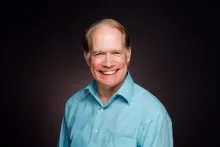
Greg Thomas is the former Pastor of the Cleveland, Ohio congregation. He retired as pastor in January 2025 and still attends there. Ordained in 1981, he has served in the ministry for 44-years. As a certified leadership consultant, Greg is the founder and president of weLEAD, Inc. Chartered in 2001, weLEAD is a 501(3)(c) non-profit organization and a major respected resource for free leadership development information reaching a worldwide audience. Greg also founded Leadership Excellence, Ltd in 2009 offering leadership training and coaching. He has an undergraduate degree from Ambassador College, and a master’s degree in leadership from Bellevue University. Greg has served on various Boards during his career. He is the author of two leadership development books, and is a certified life coach, and business coach.
Greg and his wife, B.J., live in Litchfield, Ohio. They first met in church as teenagers and were married in 1974. They enjoy spending time with family— especially their eight grandchildren.
