
John Elliott
This sermon was given at the Victoria, British Columbia 2016 Feast site.
This transcript was generated by AI and may contain errors. It is provided to assist those who may not be able to listen to the message.
Music is a wonderful part of life and is certainly a very fitting, wonderful, inspiring part of worshiping God. And musical instruments and music and hymns, songs are part of that which God has included in worship of Him. We're very thankful here at the feast site for all of those who have been involved in music. It takes a lot of practice, it takes a lot of preparation, and so thank you to everyone, including our choir, our ensembles, those soloists who have helped out as well. It's really enrichened every service during the feast here in Victoria.
How would you describe this world? Think about it for a moment. How you would describe this world would vary person by person, around the globe, because it really depends on your perspective of where you are in the world, of how this world has impacted, how it affects you.
One perspective would be your nation's place in the world. That would have a dramatic effect on your view of the world. If you were from, say, India, one of the most populous, the second most populous nation, with a very small footprint, few natural resources, few opportunities even to obtain food and decent living, or Africa, or the Philippines, or Japan, or China, North America, South America, Central America. Where your nation is often depends on whether you have proper rainfall, or whether the climate attracts animals, insects that bring illnesses, or promote viruses, or is hot, or it's cold.
So many things depend on one's perspective of the world, your nation's economy, its status among other nations. Another perspective is your country's place. What is that country as far as its ability to participate, its recognition among other countries. And then there's your personal place within the nation, your location within a country, within a nation. Not only the location, which varies widely, but then also the location of your environment. Is it urban, intercity, suburb? Is it rural? Is it agrarian? Is it inspiring? What is there? Then it comes down to your perspective of the world based on your living quarters. And living quarters vary widely within any country, within any city, within any territory.
Another perspective would be your position in a nation, your physical place, your family. How does that family and its lineage fit within the nation? That would include things like your race, many races in many nations. How is that race viewed? Your gender, your age, your age, gender, and race, and place, your career, your position, your income.
All of these can affect perspective of how we look at the world. Another perspective is your relationship with society or your relationship with the world. How you personally interact, how you make it all function for yourself and for those around you. It's a very complex thing that we have that we call the world, that we call society. The word world in the New Testament typically is translated from a Greek word, cosmos. And cosmos has an interesting definition. All those things that I just spoke about really come down to one thing, and that is an arrangement. The word cosmos, one of its main meanings is the arrangement. And so as you look at the world through your lens, you have a place within an arrangement.
A physical arrangement, a social arrangement, a status arrangement, an income arrangement. And you interact with other people, with governments, with taxation, with benefits or blessings from those countries and what they provide, what your employer provides or what you provide to your employees, within your spouse, your family, etc., etc. It's quite an arrangement that goes on in what we call the world. The arrangements of this world are interesting. You could go back and look at Egypt, for instance. If you tour Egypt, one thing that strikes you right off is they had quite an arrangement. The Pharaoh was basically what the whole country fed and focused on was getting him to heaven, that one person.
And the whole structure of the economy was to pull in goods and services and people, to build things for that Pharaoh, and ultimately those staff around him had the charge of figuring out how he was going to be transported and how to get him there. And if you lay the Israelites over that and their burdens, it all formed this chain and there was an arrangement. Arrangement with layers of people. Some were privileged, others were the worker bees, others were slaves.
As we see how the Israelites were, they were part of the world. They were part of an arrangement and they filled a certain niche in that. When we look at Babylon, where the nation of Judah, kingdom of Judah, came, Babylon in its gardens and its arrangements and its palaces and its structure, it was the first empire of the world and it had far-reaching tentacles and people brought in things and goods and slaves.
There were gods to feed from all the conquered countries and a great management system went on there. That was conquered by Persia, it was conquered by Greece. We come down to Rome, as we heard in the message by Mr. DeMoor. There was an arrangement that went on in Greece and Rome and people filled in various things from the top to the bottom and how the food chain went and how people in foreign nations were brought in and made citizens and they were put to work on roads.
Some of them were simply for blood-sport entertainment in the end. We come down through time, the Holy Roman Empire, through the Dark Ages, coming out through the enlightened period of the Renaissance and all the arrangements that were taking place in Europe and all the fights and the structures, the Protestant Reformation, people clamoring and fighting and going to war and doing all kinds of things for the arrangement. Who would have the power over the countries? Who would receive the money through the churches?
Who would get the extra lands? Who would be those who were able to be entitled and countries were ravaged over that and continue to be down through our time today?
If we fast forward to today, do you see the arrangement? Now let's ask, how do you see the world? Do you see it through the enlightened eyes of an arrangement that Satan the devil, the God of this world, has been promulgating, promoting and working on to where things are inequitable, things certainly aren't just or fair, but that's part of the arrangement. That's how those in certain circles, either seen or unseen, working from the back or being privileged in the front, that's how hand shakes hand, little fingers, little back deals, little things made in private money transactions, people having opportunities, other people essentially paying the bill.
Today we have an arrangement where people all want to get ahead. And to get ahead by working in this arrangement is something that we can observe, we can see or we can participate in.
There are inequities, there are qualities, and often inferior qualities, can help some in the arrangement. There are marketing, there are sales, there are methodologies that we all know about and we accept as false.
Whether it's campaigns, campaign promises, product promises, quality, you know, anything that has the word quality on it is the opposite. We accept that. There are cheapened goods, maximized profits for an entitled few, rewards for loyalty to profits to persons, sometimes cover-ups, and what do we call it? We call it business.
The busyness of the fabric of society. Business coupled with politics and the politicians are really in business and so it goes around the world.
We have classes, we have corporations, we have governments, politicians, politics. We have entitlements, we have favors, we have an elite, and we have the working class.
Today I'd like to examine the concept of kingdom, call it a country, call it an entity of any kind, and the arrangements that get associated with kingdoms.
Then I'm going to ask you to join me in asking, which kingdom am I of? Which kingdom am I of?
Now you might say, well that answer is real easy. But in effect, we find that we live in this world and there's a tendency to be of the arrangement, not just in it.
But it is something we're to be coming out of, to be separating ourself from a certain kingdom and joining another.
We look in the dictionary at the word kingdom. One definition from dictionary.com is anything conceived as constituting a sphere of independent action or control, i.e. the kingdom of.
You can fill in the blank. So any sphere of independent action or control, it kind of opens it up, doesn't it?
Whatever you want to do, whatever you want to feel, whatever initiative. However you want to drop a kingdom in, whether it's a concept or a literal thing, whether it's my physical household and my lineage and my land and my property and my business, that could be my kingdom.
It could be a kingdom of some corporate entity or a national entity, something we could say, yes, I want to succeed and dive into or with our individual independent action or control.
Let's go to Genesis chapter 10 and verse 8 and see the first use of the word kingdom in the Bible.
Genesis chapter 10 and verse 8.
Cush begat Nimrod and began to be a mighty one in the earth.
And he was a mighty hunter before or in place of the Lord.
And therefore it is said like Nimrod the mighty hunter before the Lord or in place of the Lord. One people looked to instead of the Lord.
And verse 10 and the beginning of his kingdom was Babel, Arachad, Kaylech, and in the land of Shinar.
So we see here he has launched something independent of God and it's a sphere.
It's a sphere there down in the lower Mesopotamian area that ultimately would end up with a tower where people, would be able to do anything they imagined.
They had this thing going and it was working for them.
Let's go to the last use of kingdom in the Bible.
Revelation chapter 17 verses 12 through 18.
Let's see how this same kingdom, this Babylon-ish kingdom that began there at Babel, turns out in prophecy.
Revelation 17 and verse 12. It happens to be also the last use of the word kingdom.
The ten horns which you saw are ten kings who have received no kingdom as yet, but they have received authority for one hour as kings with the beast.
The beast, the great beast that terrorizes and brings humanity to its almost end.
It says in verse 13, these are of one mind.
Ah, they have an arrangement.
And they give their power and authority to the beast.
And these will make war with the lamb.
You can see where the kingdoms of this world are headed.
The arrangement of this world that began with Satan cooking up something with Eve and with the demons. You can see where that is headed.
It's kind of bookends led by the God of this world, as 2 Corinthians 4, 4 talks about.
Now in John chapter 8 and verse 44, Jesus makes this a little bit personal.
It's easy to point at some Jews a long time ago and say, but let's just take what he says here and try to apply it to me.
I invite you to do the same if you like.
He states here in John chapter 8 and verse 44, You are of your pater the devil.
The Greek word pater means the author, the originator.
Kind of like a father is the author of a family, the originator of a family, because it's through his seed that the family develops.
So the pater of a concept, in this case the world or the arrangement, this pater of yours, you are of your author, originator, the devil and the desires of your father he wants to do.
Now we want nothing to do with Satan on the one hand.
On the other hand, it sure would be nice to benefit out of this world society, wouldn't it?
In order to really benefit, you really could weave yourself in, see some opportunities, make some sales on hyped up stuff, etc.
You could get into this arrangement, and then we would be of the author.
We would be kind of thinking and acting like him.
That's the whole point here.
When we think about wanting to do the desires, let's see what they really come down to.
He says, the desires of your father you want to do.
He was a murderer from the beginning.
If you go back in that history, and you think about all these kingdoms of the world, and Babylon being the iconic system that the Bible uses, you think about that. What is history about? History is largely the wars, the killing, the murders of people, people against people striving to do better in the arrangement than they have been.
Trying to get an upper foot, an upper hand, more land, better economy, more this, more that, more gold, more power, more worker bees.
A murderer. From the beginning, he does not stand in the truth because there's no truth in him.
See, it's God. It's a different kingdom that is truth.
And when he speaks a lie, he speaks from his own resources, he's a liar and the pater of it, the originator of it.
Well, that kind of works well, doesn't it? Murdering and lying, to get what you want, works. If you don't think so, check out the, well, I won't name them, but there's a few little groups from various countries at times that work in town and they murder and they lie.
You know, it works. And you can raise that up to nations. Nations go to war. What do they go to war over? Well, they generally go over to war over lies. You go back and look what starts the wars.
It's usually slander, accusations, things that God hates over the horizon that you can't see, that you then get your people all riled up about, and then you go kill. So it's lies and murder.
And we have civilization based on that. And what's the end part of it? Massive parts of human civilization has died over the arrangement through the years.
You know, you think about how accurate information, intel, intelligence is.
You know, it's always, I've heard this or I think that or we've been told that or whatever. So we'll bundle this all up. And now we'll go murder people.
And sometimes it's the innocent who get caught in and probably even the soldiers are often innocent. They get called up and they're fed a bunch of lies.
And they're the ones that go out and do all the killing. And who are the ones that survive? That's the people at the top. The people at the top. It all works for them somehow.
Israelites were slaves in such a kingdom, that of Egypt. Let's go back to Genesis 15 verse 13. Notice something that would be said as a prophecy about their role in that arrangement.
Genesis chapter 15 and verse 13. There's a parallel here between you and me and the society of our day.
Genesis 15 verse 13. Then he said to Abram, Know certainly that your descendants will be strangers in a land that is not theirs and will serve them. They will be stitched into that society.
And they will afflict them four hundred years.
And also the nation whom they serve I will judge and afterward they shall come out with great possessions.
That is what you and I have been called to do. We've been enlightened to this world, this society, its author, its originator.
And the mechanisms that drive its success are not something that we want to be part of.
The lying, the murdering, and all the elements that go with that. It's something that we are to come out of.
And so God brought Israel out of Egypt to himself to worship him in spirit and truth.
God's kingdom, portrayed by Jesus Christ as light and darkness, taking them out in darkness, leading them as light to a new place, a new way of life.
That was a great contrast to the world. It was an arrangement, but it was a different arrangement. It was a godly kingdom, a godly government.
In God's government, everyone was free to love and serve one another. God and each other. In fact, they were commanded to.
Everyone was to help one another. When it came to the Feast of Tabernacles, God didn't say, Okay, now I hope the arrangements worked out well for you. If it did, go out here and build yourself a palace.
No, he said, take all the money that God has blessed you. Now share that with your sons, your daughters, the traveler, the stranger within your gates, the Levite, the widow, the fatherless.
Everybody gets to be blessed, and everybody is to rejoice. That is God, God's kingdom.
The Israelites were to be a kingdom of priests to God, very separate from the world, from the society.
You can read in Exodus 19, verses 4-6, how God wanted them to be a model nation to the world of a different world, a different society, a different kingdom.
And that was to then show godliness and be a model nation showing God's way of life.
That never happened. And unfortunately, that covenant, the Sinai Covenant, has not been fully fulfilled.
We look at the time in prophecy, which the Feast of Tabernacles portrays, and we see, once again, elements of that being fulfilled.
A remnant will be brought back. That remnant ultimately will be a godly nation.
They will be that which reflects the nature of God. And the blessings, the physical blessings and the life God wanted to lead will be compelling to people from other nations to come and say, I like your arrangement a lot better than we eat God. This is really a blessing for all. Come teach us, come show us of that way. We look at Ezra chapter 9 verses 11 and 12. Ezra chapter 9 begins in verse 11. Talking about the commandments of God in verse 10.
With the uncleanness of the people of the land, with their abominations which have filled it from one end to another, with their iniquity, with their impurity.
In one sense, we are called now as God's representatives of an enlightened people, of an exemplary nation, to be in a land that is filled with abominations and impurity from coast to coast.
And he says in verse 12, do not give your daughters as wives to their sons, or take your daughters to their sons, and never seek their peace or prosperity.
We should not be part of the world, the arrangement that's around us. Obviously, we have to live in the world.
We have to be employed by the world, or be employers by the world. But we shouldn't be participants in the ungodly side. You know, those elements and those ways that are very self-oriented.
Jesus said in John 1836, my kingdom is not of this world.
My kingdom is not of this arrangement. It's not of this cosmos. It's not of the way things are done.
La Cosa Nostra, you know, the Italian, the Sicilian family would say, this thing of ours. It's a little thing. It's an arrangement.
Satan invited Jesus to participate in the arrangement. You know, that's really what the test was.
Let's go back to Matthew 4, just so we can understand, Matthew 4, verses 8-10, that Satan the devil tempted Jesus Christ to bail on godliness in God's kingdom, to avoid having to get tortured to death. He offered him an opportunity to participate in society at a high level, to receive all the cream off of the world society. Notice here, in Matthew 4, beginning in verse 8.
Again, the devil took him up on an exceedingly high mountain. Ever been up on a really tall mountain? It's a clear day, and you can just see out there. And he showed him all the kingdoms of the world and their glory. And he said, hey, king of kings, have it today. Have it now. You know what? See all these kingdoms out there? See all that money out there? See all that wealth? You don't need to let me torture you to death. No. Just participate in the arrangement here. He says, look, he said to him, all these things I will give you now, just participate. Just fall down here and acknowledge a position, a place. Worship me. And Jesus said to him, Away with you, Satan, for it is written, you shall worship the Lord your God, and him only shall you serve.
Have you ever come up to a place where perhaps your only opportunity for employment said, just work on Friday nights. Nobody will know. Just stay 15 minutes over. Spend an hour. Be on call on the Sabbath. Whatever. We'll have this thing. And you say, well, yeah, huh. Well, that's a choice, isn't it?
Just lie a little bit. Tell the customer, you know, as you're doing advertising. I once was chairman of an advertising agency, and sometimes the people you're serving wanted to lie. And I would teach them, look, let's do honesty. Let's see what it's really going to be. And let's promote what it really is. That doesn't always fly. It's not always what people want.
That's a big thing for you and me, actually, because it's a daily choice. It's a daily choice. Sometimes it comes down, like with Jesus Christ, to life and death, or the opportunity to go forward or not. The opportunity to make a sale. I mean, the big deal's down, but it shifted to Saturday. If you want it, you've got to go in. I mean, how many times do those things happen?
Job, you know, was tested over his allegiance to the kingdom of God. Satan himself touched Job, and in terrible ways, family, livestock, possessions, then health, misery, he was actually being tortured.
Satan wants to break us down. In Revelation 18, verse 2, as this arrangement gets to crazy proportions, just outrageous state at the end of those who survive are part of the arrangement. Those who don't survive are not.
A third or two-thirds of the world is dead on the ground, and at this point you're being told whether or not you get to survive yourself. Whether you're going to be privileged and included. That's kind of one way of reading some of this that happens in Revelation. But if we look in Revelation 18, verse 2, after identifying that, in verse 17, the source of this is Babylon. And the head of that, and that mindset. And here he says, he cried mightily with a loud voice, saying, Babylon the Great has fallen, has fallen, has become a dwelling place of demons, a prison for every foul spirit, a cage for every unclean and hated bird. We're just going to the ultimate ends here of striving to either save one kingdom, one arrangement, or bring in another. For all the nations have drunk of the wine of the wrath of her fornication, and the kings of the earth have committed fornication with her, and the merchants of the earth have become rich through the abundance of her luxury. We're all stitched in here. We're all on board here, see? And I heard another voice from heaven saying, Come out of her, my people. This is not you. This is not me. This is not the kingdom of God. This is not what we're for. It's not what we're with. And if it takes what Christ went through to stay separate, so be it. If it takes what Job went through to be separate, so be it. If it takes what Paul went through and the people of Hebrews 11, so be it. Because we are not part of this world. Verse 5, For her sins have reached to heaven, and God has remembered her iniquities.
Verse 7, In the measure that she glorified herself and lived luxuriously. Now, look at the world. How many are actually doing that? Everybody? No. But some who control on the top and are self-centered, they live luxuriously. Repay her double according to those works, it says.
In the same measure give her torment and sorrow. For she says in her heart, I sit as a queen, and I am no widow, and I will not see sorrow. This arrangement is guaranteed. It is backed by the FDIC. It is backed by the beast and the powers and everything else. And you will succeed if you go with this arrangement, but if you're out there, it's not going to work for you. Well, that may even be true physically, but it's certainly not spiritually.
A godly relationship with the Kingdom of God has made us participants in that Kingdom now. We not only are told to come out of that society, you can't come out into a vacuum and be nothing. You actually come out of her and come into the Kingdom of God.
At the privilege of baptizing a lady here yesterday. And she has come into a new kingdom. She said she accepts Jesus Christ as her Lord and Master and King. And she obeys the laws of that kingdom. She has repented of breaking the laws of that kingdom.
And she now submits to the laws of that kingdom. And God the Father and Jesus Christ through their Holy Spirit now link to her. And she is what is called in Peter then a very special person in God's sight. Let's read that in 1 Peter chapter 2.
We're going to look in verse 1 to begin with. A little background. 1 Peter chapter 2 and verse 1. Therefore, laying aside all malice, all deceit, hypocrisy, envy and evil speaking, laying aside the elements of the arrangement of this world, which she has just done, and all of us at baptism like her have done. Skipping down now to verse 5. You also as living stones are being built up a spiritual house, a holy priesthood.
We heard a sermon here about priests, and we are now part of that in embryo, I would say, but we are part of a priesthood in God's eyes to offer up spiritual sacrifices acceptable to God through Jesus Christ. So we are already now being built in to that other kingdom with its godly arrangement, if you want to say. We look now in verse 9. But you are a chosen generation, a royal priesthood, a holy nation.
See, there it is. A nation. His own special people called into His marvelous light. Verse 11. Beloved, I beg you, as sojourners and pilgrims abstain from fleshly lust, which war against your body, war against your soul, your living self. So we have to see that, yes, we are now part of a society, a kingdom, an entity, a kingdom being an entity, as was described, that is of God.
And we are now not only related to that, we are part of that, part of God's emerging kingdom. Now we might ask ourselves, what then am I of? Mentally. What am I of? What am I about? What drives me? Sometimes we have this list hanging on the wall over here, but we tend to do this over there.
And we come to church, and people kind of bounce around, and, yeah, I want to be part of this, and I sure hope I'll be in the kingdom. But what are we really of? There was that statement in Revelation 22 where God finally says, Listen, just be who you are for a minute, will you?
Because I've got to judge. If you're unrighteous, be unrighteous still. If you're holy, be holy still, because I'm coming with the reward. So it's a good time for us to say, Who am I? What am I of? And which kingdom am I of? The title of the sermon today is, Which Kingdom Am I Of? That's a question that you can't probably answer just one time, probably daily, for several times a day, as various things come on the plate or opportunities arrive.
You have to say, Oh, what kingdom am I really of here? And we can see that by what type of choices we make. In Colossians chapter 1 and verse 12, Paul here gives us some elements to think about, to consider a way of life to be choosing, not just saying, Oh yeah, I take that, but at the same time doing something else.
What are we really becoming? Colossians chapter 1, starting in verse 12. Giving thanks to the Father who has qualified us to be partakers of the inheritance of the saints in the light. That's what we're called to.
Raining with Christ during the time this Feast of Tabernacles portrays. But notice how this happens. He has delivered us from the power of darkness, and he has conveyed us into the kingdom of the Son of His love. This is no ethereal thing that we are part of God's kingdom. We don't reside in God's kingdom. We're not divine members of God's kingdom. God's kingdom hasn't come to this earth and replaced the kingdoms of this world yet.
But you and I have been separated out, and we are now under that kingdom, under God the Father, Jesus Christ rules in our life. We are obeying them, and we've been called out from this other power and conveyed, or as the margin says, transferred into the kingdom of the Son of His love. Do we strongly relate to that? In another place, Jesus said, seek you first, the kingdom of heaven. So it's something we have to continually do. We have to desire that. We have to be part of that.
You can read on down here, Jesus, in whom we have redemption through His blood, the forgiveness of sins, if we are repenting. It's not a state that we have, but rather a process. The process of conversion should be going on. He is the image of the invisible God. By Him, all things were created. All things that are on earth, visible and invisible, thrones, dominions, principalities, powers. He has dominion over all those things. In verse 18, He is the head of the body, the church. See, we are in that body, in that church. That is definitely related with the kingdom of God, of which He is the head. Not the kingdom, but the head of the body.
We have this responsibility. It's an ongoing responsibility. We should be relating to and being of this kingdom of God, daily, moment by moment. In 1 John 3, verses 7-12, we see again how we are strongly related to God, to His kingdom, at this time. 1 John 3, verse 7, depending on which kingdom we are really of. See, it's all an if, isn't it?
It all really depends on how you answer the question, which kingdom am I of? Not which kingdom do I like, or which reward would I prefer?
We have to answer this individually. 1 John 3, verses 7, Little children, let no one deceive you. He who practices righteousness is righteous. Let's remove the spiritual soundingness there. He who practices right as God defines right is right in the eyes of God. That's what that means. Righteousness just means right from God's perspective, according to how God decides what is right and wrong. Not right according to the tree of knowledge of good and evil. Righteousness is just right according to God. We need to practice doing right. Then God sees that as one who is doing right. Just as God is right, it says in verse 7. He who sins is of the devil. So which kingdom am I of? There it is.
Well, the devil is sinned from the beginning. In verse 9, whoever has been or is being engendered, has been engendered, being born, will be born of God, does not sin. Now, whoever is part of that family mindset, not the old father. We have a new father. We have a new pater.
He's the pater, he's the originator, he's the author, he's the founder of a new society, a different way of life. We now have this new one that we are born of, that we are now related to. And those who have do not sin as a way of life, for his seed remains in him. And he cannot sin. He cannot practice sin. We will say no to that. Yes, we're going to slip up now and then, like Paul did and everybody else. We all slip up. Once in a while, we'll run away when some little girl asks us a question like Peter did. But then we'll come back and we'll be strong and we'll tell him, nope, you killed Christ. And we'll have a reaction to that, like he did in Acts 2. So, we're growing. We're moving forward. We're not perfect yet, but we are part of a kingdom that's not of this world. There is a kingdom coming with a kingdom. Revelation 11, 15-17 speaks of the triumphal return of Jesus Christ as a king of kings, a lord of lords. He is going to be the king over everything, and things are going to change. We will serve him as he serves. We will be with him as he is. We will look like him. We will have the glory. We will have the inheritance. We will have the power. It says in Revelation 2 or 3 that when he returns, he will give us the rod and the power, and we will join with him in using that. And things will change. Jesus Christ right now is a high priest and king. Let's look in Revelation 5 and 9-10 and see what we will be doing at that time. If we identify and we are part of that kingdom mentally, spiritually, now. Revelation 5 and 9. They sang a new song saying, you are worthy to take the scroll and open its seals, for you are slain. You have redeemed them to God by your blood out of every tribe and tongue and people and nation. It is a wonderful thing at the Feast of Tabernacles. We often come together with many nations. There is one of our hymns that talks about this, being from many nations. When you are over in some of those countries where people aren't very many, like Holland, Indonesia, Malaysia, Singapore, little African countries and little African villages. I will tell you internationally when you are at the feast site and they sing that hymn, tears come to the eyes. Because we are brethren from everywhere. Every nation, tribe, tongue, ethnicity, background, impact of this current society on us in so many different ways. But here we are celebrating a different kingdom. We are stitched together through a spirit that guides us. Verse 10 says, And have made us kings and priests to our God. Jesus Christ is a king and He is our high priest. We, it says here, will be kings and priests to our God and shall reign on the earth.
The important thing here is she is like a wife to a husband. She is one. She is fully supportive. Not then, now. We are betrothed now. We are to be being washed and cleaned. And certainly no part of the arrangements of this society should we be participating in. Yes, we have to live in this society. We have to work in this society. But we have to do it rightly in God's eyes. When we look at this term, cosmos or world, and the arrangement, and the arrangement within the kingdom of God is strikingly different than the one that's out there today. Let's look at the arrangement that we are called to participate in now. Matthew chapter 20 verse 26, our high priest, our king, the one we are betrothed to, makes these statements. Matthew chapter 20 verse 26, yet it shall not. Let's talk about the authority in verse 25, you know how the arrangement goes. Those exercise authority and get things. It shall not be so among you. This is different. Whoever desires to become great among you, let him be your servant. Helping, serving, thinking, you see. How can I help that person? How can I help this? How can I help that situation? And whoever desires to be first among you, let him be your slave. A slave being an indentured slave, one who says, hey, I want to be a slave to you. I want to serve you. I see you need this thing. I want to come over and take care of that responsibility so you can go off and take care of the other one. I'll be like your household slave in this sense. We all do that to one another, don't we? I think we should. I think we do, as we have opportunity. Somebody needs a dog sat or a child sat, or somebody needs some help, a car repaired or whatever. Yeah, I'll take this off and we'll get real dirty. I like to tell people, I know how to fix septic systems. And afterward, I can clean up. But, you know, it's nothing like a septic system that works. Sometimes we have to do those things to make the lives of others enriched. Just as the Son of Man did not come to be served, but to serve and give His life a ransom for many. It says in 1 John 3, 16, that just as He gave His life for us, so we ought to lay down our lives for the brethren. That is the arrangement in the family of God. We'll do what it takes to love and serve. In chapter 19, go back just a little bit here, in verse 16-21, One came and said to him, Good Teacher, what thing shall I do that I may have eternal life? How does this arrangement work? I want to have eternal life.
How many times do we think selfishly like that and think God's kingdom is just another part of this arrangement? There was a man, a Simon somebody in Acts the 8th chapter, who came in and said, Ooh, look at this! These guys have the Holy Spirit and they can do miracles. How much does this cost so I can do this? So this guy is asking, what do I need to be able to participate here? He said, middle part, if you want to enter life, keep the commandments. He says, well, which ones? Well, really he then identifies the commandments that are broken by the arrangement that this world gets ahead on. In verse 20, the young man said, All these things I have kept from my youth, which do I still lack? If you want to be complete, go sell what you have and give to the poor. Notice he didn't say, go sell what you have and give it, give it to the poor. Be a giver to the poor. Go sell what you have. Now you'll be empowered with things that you can give. You'll have liquid equity. And you now can help others. And you will have treasure in heaven. And then come follow me and we'll go help people.
And the young man heard that saying, and he went away sorrowful because he was doing well under the current arrangements. You know, that's not just an individual for stories in the history book. That's a lesson for you and me. Which kingdom am I of? The benefits of the arrangement of God's kingdom go to everyone. It's not for me. It's a transformation of perspective from me to we. From me to we. In conclusion, which kingdom am I of? It's a good question. Not here only. Not this week only. All the time. Let's go to Matthew 25, verses 31-36. And look at how individuals will be selected to be in this kingdom in a divine state. Again, this is from the king. This is from our husband. This is from the one that we are united with now through the Spirit of God. The one that we are transferred into mentally into that kingdom relationship. Matthew 25, verse 31.
Inherit the kingdom prepared for you from the foundation of the world. It's been a long time planned. Enter the kingdom. Verse 35, 4. Because. Here's why. Here's why you can enter. For I was hungry and you gave me food. I'll ask you to do something right now. Look around at other people. Can you see who's hungry? Okay. I was thirsty and you gave me drink. Glance again. Can you tell who's thirsty? I was sick and you visited me. Do you see anybody that's not here? I was in prison and you came to me. Can you see who's in prison? That's there for being righteous but was in prison because of God and His kingdom? See, all of those things are things that we can't see. We would actually have to take the time to care. We would actually have to take the time to get to know and be concerned and to ask and to find out. And it's those who really, truly want to love and serve others as much as themselves. That God wants to join Him as His family. Our daily living, our thought processes, reveal which kingdom we are of. So let's detach ungodly relationships with the arrangement, which is very self-oriented and care less about others. And let's replace them instead with seeking first God's kingdom and His righteousness. And in doing so, we will be part of His kingdom now and forever. Happy feast!
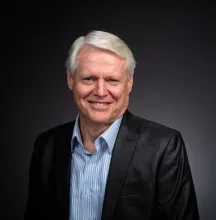
John Elliott serves in the role of President of the United Church of God, an International Association.
