

Tim Pebworth
This transcript was generated by AI and may contain errors. It is provided to assist those who may not be able to listen to the message.
How many of you were in the Field House on August 24, 1991, for Sabbath services? I would imagine that all the faculty members that taught there were there. Mr. Crane was there. I see Mrs. Elliott was there. Quite a number of you were there. You know who gave the sermon that day?
I did.
I want to read the first part of that sermon that day. I'm not going to go to all the scriptures. Today is August 24, 1991. In eight short years, it will be the year 2000. The greatest years of Ambassador College are ahead of us all. So what happened in those next four years? We became a candidate for accreditation in 1992. We were fully accredited in 1994 in the summer. We were listed in the U.S. News and War Report among the top 25 percent of small liberal arts colleges west of Mississippi. As the year 2000 and the end of this age approaches, what do you think we will be facing? As we face this new school year, what are the most significant truths? The most important truth to consider is the purpose of human existence, or what I call the big picture. The big picture is a product of faith and hope. Abraham saw it, as in Hebrews, and there are several other factors to consider. One, Satan is going to increase his activity. Of course, I have a scripture for all of these. Two, we'll be called on for a testimony. You know, it says in Luke, they'll bring you before governors and kings, and it shall turn into you for a testimony. Don't think what you shall say, because the Spirit will move you as to what to say. Three, wickedness will abound. Four, give heed to seducing spirits, many will. Five, won't love the truth. Six, God is going to separate tares from wheat and wheat from chaff. Seven, Laodiceans are going to be revealed. Eight, deception of peace, peace, peace, when there is no peace, very deceptive times.
Nine, we're going to be severely tested in trials, and the trials have already begun. And ten, much tribulation. God says that through faith we can overcome. This is a victory that shall overcome the world, even your faith. It's what it says in 1 John 5.4. Now, how false and how true were some of these words?
Well, the words that the greatest days for ambassador lies ahead lasted four years, and then it was all over, basically speaking, because the devil had different ideas, and he influenced people. And so one of the greatest tools for the training of youth and our ministry and holding the church together went away, disappeared.
It's even difficult to even understand the motive.
I guess one of the motives was they were going to bring liberty. They were going to bring freedom, so-called. It doesn't make sense, and so many things don't make sense.
So there was great progress for the next four years, and then destruction by the hands of men who were given the responsibility of preserving it. Just as Adam and Eve were given the responsibility of preserving the Garden of Eden, they were told to dress it and to keep it. And of all the trees in the garden you may freely eat, except that tree out there that's called the knowledge of good and evil. And the day that you eat thereof, you're going to begin to die. So, brethren, we are in the crucible of life. Now, what is a crucible? A crucible is a container that can withstand very high temperatures and is used for metal, glass, and pigment production, as well as a number of other laboratory processes. Let's note 1 Peter chapter 1, verse 6. Wherein you greatly rejoice, though now for a season, if need be, you are in heaviness through manifold trials. Manifolds means several, many. They're coming from all different directions, and we'll mention some of those, of course, today.
That the trying of your faith, being much more precious than of gold, that perishes, though it be tried with fire, might be found unto praise and honor and glory at the appearing of Jesus Christ. See, we cannot be satisfied with anything less than eternal life in the kingdom of God. And if we don't attain to eternal life in the kingdom of God, of course, it's eternal death, and the member of us, or whomever, shall be forgotten. The motto of the United States of America, and we find it on our coinage and also on our currency, is states and God we trust. But that is such a paradox and such a contradiction with regard to the way the nation is going. So we could ask today, who can you trust? Who can you trust in today's world? Politicians talk about trust, but those, those politicians who can be trusted, are few and far between. At times I think about whom I could would trust when it really comes down to where the rubber meets the road, as they say. Who would it be? Who would you trust with your life? If you were hiding from your enemies, who would hide you and be willing to die before he or she would reveal your whereabouts? Who would you go to? Where would you go? Who would you trust? Who do you trust with eternal life? Let's go to Matthew 10, and here we'll see the one who has the ultimate control, the ultimate authority over life and death. There is one being, in conjunction with another being, those two beings are God the Father and Jesus Christ the Son. In Matthew 10, 28, fear not them which kill the body. That can take your physical life from you, but are not able to kill the soul. Now, soul, suke, what it literally means is your life essence, your life potential. But rather fear him which is able to destroy both soul and body in Gyanofire. Notice it is destroy life potential and body in Gyanofire. And you can read in Revelation 20 that those whose names were not found in the Lamb's Book of Life cast in the lake of fire, which is the second death, and there is no resurrection from the second death. Only one being, when all is said and done, has the power of life and death. It was God the Father who resurrected Jesus Christ from the dead. We go now to 2 Corinthians 1 and verse 9. 2 Corinthians 1 is indeed a place to read when you are in trials, temptations. 2 Corinthians 1 and verse 9. But we had the sentence of death in ourselves that we should not trust ourselves, but in God who raises the dead. In several places in Paul's writings, and you also find it in the book of Acts, that God the Father raised Jesus Christ from the dead. I wonder how many people have allegedly, they've said this was the reason that's what I'm saying allegedly here, left the church over the actions of men. Well, I know some very close to me that say they're not there because of Mr. X, Y, or Z.
You could fill in the blank. The actions of men is usually an excuse, but the real reason usually lies in the fact that he or she wants to plunge back into the world or they want some other new kind of experience. And what I am asking our Sabbath school teachers, and for all of us to be aware of, is developing our relationship with God, from cradle to the grave. That our commitment, we enter into a covenant with God in Christ, baptism, that we are buried with Christ and we're raised in newness of life to live that life, that Christ lives, that he lived here on the earth in the flesh, showing it was possible to live in the flesh and be perfect. Now he sits at the right hand of the Father making intercession for us. Let's turn now to Revelation 3, verse 11. Revelation 3, verse 11.
Hear the letter to the church at Philadelphia. The Apostle John receives these visions and the message and told to write. In Revelation 3, 11. Behold, I come quickly. Hold that fast which you have, that no man take your crown. No man take your crown. Now there are many different ways whereby you can allow man to take your crown. A lot of people say, well, if that's the way the Church of God is, I'm out of here. This can't be the Church of God because of the action of a man or man. The actions of a man or man does not change one jot or tittle in the Word of God. It doesn't change a thing. The Word of God and God Himself is the same yesterday, today, and forever. God, with Him, there is no variableness, neither shadow of changing. Every good and perfect gift comes down from a Father of lights with whom there is no variableness nor shadow of changing. Satan's chief goal is to take your crown, and he uses men to do it. In such ways that a lot of people probably don't even recognize. So what about you? What about me? Would we let a man take our crown? If we were living in ancient Israel during the reign of King David, when he committed adultery with Bathsheba, and then plotted the murder of Uriah the Hittite, would you have left Israel? Well, back then there was hardly any place to go, because you would have gone into hostile lands, probably. Really not much of a place to go. Let's note his second Samuel, chapter 12. It's amazing how Daniel, I mean David, just seemed to almost sweep this away like nothing ever happened and was getting on with his life, and God inspires the prophet Nathan to go and talk to David to confront him. In 2 Samuel, chapter 12, verse 1, And the Lord sent Nathan unto David, and he came unto him, and said unto him, There were two men in one city, that one rich and the other poor, the rich men had exceeding many flocks and herds. But the poor man had nothing, say, one little ewe lamb, which he had bought and nourished up. And it grew up together with him, and with his children. It did eat of his own meat, and drank of his own cup, and lay in his bosom, and was unto him as a daughter. And there came a traveler unto the rich man, and he spared to take of his own flock and of his own herd, to dress for the wayfaring man that was come unto him, but took the poor man's lamb and dressed it for the man that was come to him.
And David's anger was greatly kindled against the man, and said to Nathan, As the Eternal lives, a man that has done this thing, he shall die. I mean, boy, can you imagine? And he shall restore the lamb fourfold, because he did this thing, because he had no pity. I mean, this is David.
Now, to me, there's a lot of misconception about David and a lot of misquoting, and you may not share this, but share this, believe the same. David, all men, even Elijah, as it talks about in James 5, are subject to like passions as we are. All have sinned and come short of the glory of God. There's none righteous, no not one. All of man's righteousness is his filthy rags in the sight of God.
So David was no more or no less righteous, no more or no less carnal, perhaps a lot more carnal than a lot of people. And this verse where it says that David was a man after God's own heart basically has to do with the fact that when the elders came to Samuel, the elders of Israel came to Samuel and said, Your sons walk not in your ways, they are evil men, they do this, that, and the other, and they were corrupt. And they said, Now give us a king like the other nations. So Samuel went to God and he prayed, and God said, Well, we'll do what they've requested, Samuel, because they have not rejected you, but they have rejected me, that I should not reign over them. And when it came to choosing a king, they chose Saul. Saul was a handsome man, tall, big, strong, probably had a great personality and all of that.
And he was the people's choice. Then after Saul sinned, and he was disqualified and removed from being king, God instructed Samuel to go to Jesse's house and anoint one. And so Jesse had these sons, several sons, and one by one in the house of Jesse, Samuel approached. And God said, Not this one, not this one, not this one. And finally Samuel asked Jesse, Well, do you have any other sons? He said, Well, I've got one, and he's out keeping the sheep. He's a youngster. So bring him here. And that man was David. So God chose David to be king over Israel, and David was a type of Christ in many ways. And of course now, according to Acts 2, Jesus Christ sits on the throne of David. So we continue here in verse 7, I mean, no limit what I would give to you and what I committed into your hands, David.
You see, you can repent, and God accepts repentance. One of the great issues we dealt with continually at the college was students were brought before the dean of students, and sometimes he wound up in my office. And usually, God has forgiven me. Why can't you forgive me? And it's not my answer. Of course I've forgiven you. And God is the ultimate judge. He knows whether or not you have repented.
No man knows for sure what is the heart of another person. I became painfully aware of this in 94 and 95. You just don't know. And you can be fooled, but God is not fooled. And of course you can say, I've forgiven you, God has forgiven you, but there are still maybe consequences. God forgave David. But look at the consequences. Now therefore the sword shall never depart from your house.
So he had a son. He had a son who raped one of his, I guess it was a half-sister. He had a son that killed a son, and so on it goes. He had a son that he just really loved, Absalom, who led a rebellion against him. Because you have despised me and have taken the wife of Uriah the Hittite to be your wife. Thus says the eternal Behold, I will raise up evil against you out of your own house. And I will take your wives before your eyes and give them unto your neighbor, and he shall lie with your wives in the sight of this son. For you did it secretly, but I will do this thing before all Israel and before the son.
And David said unto Nathan, I have sinned against the eternal. And Nathan said unto David, the eternal also has put away your sin. You shall not die. Howbeit because by this deed you have given great occasion to the enemies of the eternal to blaspheme, the child also that is born unto you shall surely die. But see, David wasn't through there with regard to some of his disobedience. But yet we know that David is going to live again, and he's mentioned, of course, as living again in the kingdom of God.
So now we look a little more at David in 2 Samuel 24, verse 1. And I don't think anybody really has any kind of adequate explanation as to why David did this. God had told him not to number Israel, and even Joab, who was a man of blood, David on his deathbed told them that they would have to kill Joab because he was a man of blood. And even Joab urged David not to number Israel, but he did. 2 Samuel 24, verse 1. And again the anger of the eternal was kindled against Israel, and he moved David against them to say, Go number Israel and Judah.
For the king said to Joab, the captain of the host, which was with him, Go now through all the tribes of Israel, from Danah to Beersheba, from north to south, and number you the people, that I may know the number of the people. And Joab said unto the king, Now the Lord your God, add unto people, How many soever they be an hundredfold, and that the eyes of my Lord the king may see it.
But why does my Lord the king delight in this thing? So Joab tried to talk him out of it. Notwithstanding the king's word prevailed against Joab and against the captains of the host. And Joab and the captains of the host went out from the presence of the king to number the people of Israel. And so they did. It took them nine months and twenty days, almost a year, to number them.
In verse 9, Joab gave up the sum of the number of the people unto the king, and there were in Israel eight hundred thousand valiant men that drew the sword, and the men of Judah were five hundred thousand men. And David's heart smote him after he had numbered the people, and David said unto the eternal, I have sinned, greatly in that I have done. And now I beseech you, O eternal, take away the iniquity of your servant, for I have done very foolishly. When David was up in the morning, the word of the eternal came unto the prophet Gad, David, saying, Go and say unto David, You said, The eternal I offer thus as the eternal.
Go to David and say, Thus as the eternal I offer you three things. Choose you one of them, that I may do it unto you. So Gad came to David, told him, and said unto him, Shall seven years of famine come up on you in the land? Or will you flee three months before your enemies? Or while they pursue you, or that there be three days pestilence in the land, Now advise and see what answer I shall return to him that sent me?
So you can imagine here what David's thinking was, Well, I'm going to choose to fall into the hands of the eternal. Of course, there's a scripture that says it's a fearful thing to fall into the hands of the living God.
And even though God is going to forgive him upon repentance, David has already said, I've sinned. And even though he admitted it and said, I've sinned, this is what happened. Verse 14, David said, And Gad, I am in the great street. Let us fall now into the hands of the eternal, for his mercies are great. And let me not fall in the hands of man. So the eternal sent a pestilence upon Israel from the morning, even to the time appointed, And there died to the people from Dan, even to Beersheba, seventy thousand men. That disobedience cost the lives of seventy thousand people. Can you imagine the death of seventy thousand people in a nation that small? That was pretty difficult.
So what would you have done when David numbered Israel and thousands died as a result? Really, there was no place for them to go. But the choice ever is, are you going to trust man, or are you going to trust God? Let's look now at Psalm 143, verse 3. Psalm 143, verse 3. Psalm 143, verse 3. For the enemy has persecuted my soul, he has spent my life down to the ground. He has made me to dwell in darkness as those that have been dead.
Therefore, as my spirit overwhelmed within me, my heart within me is desolate. We come to the point that there is no place to trust but in God. Verse 5. I remember the days of old, I meditate on all your works, I muse on the work of your hands.
I stretch forth my hands unto you, that's the position of prayer on their knees, my soul thirst after you as a thirsty land. Verse 9. Deliver me, O eternal for mine enemies, I flee unto you to hide me. Teach me to do your will, for you art my God.
So God expects us to flee to him because he will hold our hand. A little girl and her father were crossing a bridge. The father was kind of scared, afraid his daughter would fall off the bridge into the river below. So he asked his little daughter, Sweetheart, please hold my hand so that you won't fall into the river. The little girl said, No, Daddy, you hold my hand. The daddy said, Well, what's the difference? He asked. There's a big difference, replied the little girl. If I hold your hand and something happens to me, chances are that I may let your hand go. But if you hold my hand, I know for sure that no matter what happens, you will never let my hand go.
In any relationship, the essence of trust is not in its bind. Now, Ty, you can squeeze the hand per se, but in its bond, so hold the hand of the person whom you love rather than expecting them to hold yours. In the bond of trust, you don't have to be literally holding a person's hand. The bond of trust is there, and you believe this person will never let you down. So we'd go back to those first questions. If you were facing a life-and-death situation, how many people could you name that you could really trust in such a situation?
But, see, there's more to it. God says, don't place your trust in the sons of men in whom there is no help. But even the most righteous humans will at times let you down. None of us are perfect. I will let you down at times. You will let me down at times. You will let down whomever you want to name that is in your circle of relationships.
There are no perfect human beings. However, when it comes to spiritual trust, God is the one who is holding our hands, and He will never let go, just like the little girl said. Daddy, I know that if you're holding my hand, no matter what happens, you'll never let it go. And so it is with God. Let's look at Titus 1. Titus 1 and verse 1. In Titus 1 and verse 1, Paul is a servant of God and an apostle of Jesus Christ according to the faith of God's elect and the acknowledging of the truth, which is after godliness, in hope of eternal life, which God that cannot lie promised before the world began.
God, who cannot lie, God will always hold your hand, and you won't fall in the river and drown unless you reject Him, unless you let some man take your crown. You know, the apostle Paul, before he was converted, was out killing Christians. I mean, you can kill someone without, in the spiritual sense, because it says in 1 John 3 that if you have hate in your heart, that's murder. I'm paraphrasing, but that's the intent of it.
To hate someone is equated with murder in the spiritual sense. Verse 3, which is committed unto us, which means placed in sacred trust, according to the commandment of our God and Savior. We used to sing an old hymn titled, Jesus, Hold My Hand. First, stanza went like this, As I travel through this pilgrim land, There is a friend who walks with me, leads me safely through the sinking sand.
It is the Christ of Calvary. This would be my prayer, dear Lord, each day, to help me do the best I can, for I need your light to guide me day and night. Blessed Jesus, hold my hand. God the Father and Jesus Christ will hold our hands, and we can lean on the everlasting arms. Look at Deuteronomy 33. Yes, that's in the Bible. In Deuteronomy 33, verse 27, I think I told you the other day, a Sabbath in recent times, to read the last several chapters of Deuteronomy, because they are highly instructive and prophetic.
In Deuteronomy 33, verse 27, The eternal God is your refuge, and underneath are the everlasting arms. So the old song used to go, Leaning on the Everlasting Arms, Safe and secure from all alarm and or harm. The eternal God is your refuge, and underneath are the everlasting arms. And he shall thrust out the enemy from before you, and shall say, Destroy them. Israel shall dwell in safety alone, the fountain of Jacob shall be upon a land of corn and wine, and the heaven shall drop down due.
It goes to a millennial kind of setting. So as we sit here this afternoon, and we reflect on the events of recent times in the world, in the church, in our own lives, it would be foolish for us to deny that we're living in a world of uncertainty and not knowing where the next trial will come from. So who can I trust and where do I put my trust?
I think we've made that clear, but let's see if we can make it clearer. These are the times that try men's innermost being, yet in days to come, we will reflect back on say that these were the good old days in comparison to what lies ahead. You know, as I was at Ambassador College, the greatest thing in my life in the physical sense, in a way, because of the joy of interacting with students and teaching them and everything that goes with it.
But yet there were many, many hard times and trials, and it's like he was always a battle there to fight. Someone wanted your job, or someone wanted this, or someone wanted that. And this was too strict, and that was too easy, and this was too hard, and it's too cold, and it's too hot, and it goes just on and on and on.
But if you look back, you say, well, boy, that was really fun back then. And now look, this is really hard. So as we look at the world today, we see a world in which the peoples of the world are torn apart by politics, economics, social strannas, religion, various isms and ideologies, people who are ready to kill, willing to kill for motives that range from the thrill and excitement of killing to those that believe that they are dying for a just cause on the battlefields, oftentimes wearing the uniform of the U.S.
of A. There are more people being gunned down on the streets in the U.S. than soldiers dying on the battlefields. In a recent sermon, I showed that Satan is the archdeceiver and the root cause of the world's problems centered on greed, jealousy, and the lust for power. In recent days, scores of people have been killed by storms, flooding, mass murderers, terrorists, and a host of other ways. How would you like to be one of the homeless people up in the Northeast right now?
Last night, it was below freezing. There's no power. There's no heat. There's no gasoline. They're out of food. They're out of water. And here they sit. People in the good old U.S.A. Now you can say, well, they didn't prepare for the storm. They didn't leave, as they should or so on.
They were interviewing a man that he had lost his home and his business, and he said there was no way I could prepare for this because we had a tsunami, as it were, to hit the Jersey Shore, and nothing you could do except make sure you weren't out there when it happened, because the force of that is so great. The nations are raging and spewing out volatile threats and accusations. We hear war, rumors of war, on every front. So-called natural disasters.
They may not be so natural. There may be a supernatural power behind it. Because you can read in the Bible it says that God is going to plead with all flesh in various ways. Earthquakes, hurricanes, tornadoes, drought on the one hand, flooding on the other hand. But now is not the time to bury our head in the sand. In our lives we are being tried and tested in many different ways.
And at times we don't even realize that we are being tested by what we've just said or what we've just done. In a sense, we're on trial all the time. We're indeed in the crucible of life. Will we be able to take the heat as that little crucible? Sometimes little crucibles or just little glass tubes that can withstand tremendous heat. The old saying is, if you can't stand the heat, get out of the kitchen. But we cannot withdraw. We can't get out of the kitchen. We cannot withdraw from the crucible of life. We have to stay in the arena and fight the good fight of faith.
The Apostle Paul writes, if any man draw back, my soul shall have no pleasure in him. God allows trials and tribulations so we can be refined, so he can create within us holy, righteous character. Character cannot be taken away or destroyed by anyone but ourselves. When all is said and done, let's notice now Romans chapter 5. Romans chapter 5, a bit of a recipe that Paul goes here with regard to, you know, people talk about developing character. Human will can do almost anything.
Some of the Greeks, Greek philosophers who were of the Stoic school and ascetics, denying the flesh to purify the spirit, so-called, were able to go without food. One guy lived in a barrel. He did it all in a barrel for a long time. Human will can do almost anything. There are people who fast themselves to death. And Paul says, well, that's a show of will worship, but that's not really godly character. See, godly character is created within us as we respond to God.
Godly character is a spiritual kind of creation. I don't think we have ever grasped that. People sit down at the table and somebody says, you want this piece of chocolate cake? No, I don't want the cake. I'm developing character. Well, self-discipline is necessary in life, and if you want to amount anything in life, you have to have self-discipline. But it's not necessarily godly character. You can be a rank sinner and never eat chocolate cake. One day, my daddy, he smoked very little, but when I was a little boy, like up to about four or five years old, he smoked, and it was roll your own with good PA and take a puff or two. And one day he came home and he said, I'm not smoking anymore.
And he never touched another cigarette. Now, some people say, well, I need to be baptized so I can stop smoking. God will give me his spirit, and through his spirit I'll stop smoking. See, what the Spirit of God does is sort of often a tangent now, but anyhow, what God does is through his spirit, his word, he can fix you of truth. But he doesn't make you do it. He could lay such a weight on your mind and whatever else he might do.
He doesn't literally make you do it. In Romans 5, verse 3, And not only so, but we glory in tribulations and trials. Of course, James writes, my brethren, count it all joy when you fall into different trials. I'm having a hard time arriving there. Knowing that tribulation works, patience. Now, James writes, this is James 1.4, I'm going to quote here, But let patience have its perfect work, that you may be whole and entire, and wanting nothing.
See, what this is saying, that even though you're going through the trial, that if you have faith in God and know that you know that he will deliver you, then you can let patience have its perfect work. You're not, I fill with all anxious care and upset and all of that. And Paul writes, knowing that tribulation works, patience, and patience experience. Now, this word experience, the Greek word is dokime, and why the King James translators translated it.
Experience, I don't know, but the meaning of that word, dokime, is proof-testing. See, during this period of time, you are being tested. And experience, patience works, experience, and experience hope. The proof, the testing, as you go through that, you begin to hope. And you place your mind, your heart, the big picture on the kingdom of God, and you don't get your mind off of it. And hope makes us not ashamed because the love of God is shed abroad in our hearts by will-worship. Now, that's not what it says. The love of God is shed abroad in our hearts by the Holy Spirit, which is given unto us. So, if we respond as we should respond, then God creates within us His holy righteous character.
The physical things that we've built here on the earth in the past, they may come and go. People in the Northeast, they surely have seen that with this terrible storm, Sandy. I've seen nearly every program kind of thing that I started in the church. Destroyed or changed, so it is barely recognizable. But what remains in the new mind and heart that God gives us through His Spirit? Nobody can take away. The character that God has created within us cannot be taken away without our permission, our participation.
Such qualities as loyalty, honesty, responsibility, dedication, dependability, courage, sincerity, commitment, conviction, love, joy, long-suffering. All of those things and more and the fruits of the Spirit. No person can take that away from you unless you allow it. The influence that you and I have had on the lives of those we've worked with and taught over the years, that has not been destroyed unless a person lets it be destroyed.
After all, the Church of God professes to be a character-building institution. And that's the reason we signed on. We were told to count the cost. And see, as we've heard so many times, God does not create holy righteous character in us through fiat. It is a creation of God that we go through. Trauma, sickness, accidents, loss of loved ones, job loss, betrayal are just a few of the trials that we are experiencing. Virtually all of these somebody in here has experienced within the last few months. The opportunity for being refined into a being that is more precious than goal, that's what it's all about. As we read from 1 Peter chapter 1 verses 6 and 7 up front, that the trying of your faith is more precious than goal that perishes.
Because that character that God creates within us will never be destroyed. You've heard the old saying, you can't take it with you. Job says the Lord gives and the Lord takes away. Of course, he was talking mainly in the physical sense. But that does not apply to salvation. God gives, but only you can take it away. God creates within us holy righteous character.
Not even Satan has the power to take it away. When you die, you will not take material things with you. And the material things we now have will not be needed in the kingdom of God. You may be the widow with the two mites, as you heard in the sermon at, and have nothing.
When you die, the character that has been created with you and within you by God's Holy Spirit. See, the love of God is shed abroad in our hearts by the Holy Spirit. Upon being resurrected, you will become a glorious radiant spirit being in the kingdom of God, and you will dwell in the house of the Lord forever, as it says in the 23rd Psalm. There are three things—immaterial qualities—a being that shall abide forever—faith, hope, and charity.
These three abide. They remain. So the trials we are currently undergoing are minor compared to what lies ahead. And we must successfully handle this if we hope to grow. Character is a sequential process, one step after the other sequential, much like a child developing basic skills—creeping, crawling, walking. If a sequence is missing, there are generally problems with neurological organization. Brain-damaged children—one of the ways that you can rewire and reconnect the neurological connections is going through those basic skills of creeping, crawling, and walking, and bilateral exercise.
One side of the body in opposition to the other to rewire the midbrain. So I hope and pray that whatever trials that are now upon us, we'll be able to pass the test. We will if we trust and have faith in God. God is a winner. God is a builder.
And I trust that we will follow His example. I believe this poem, written by Horace Greeley, in 1848. Horace Greeley is known for his statement, Go West, young man. But he wrote this poem in 1848, and it summarizes and illustrates why trials and uprootings and what we should be building.
He writes, Fame is a myth. Popularity is an accident. Those who cheer you today will curse you tomorrow. Only one thing endures character. So who are you going to trust with your eternal life? The answer is, will we trust God? I believe we will trust God who cannot lie, who is promised and who cannot lie. We will trust God who will never leave us nor forsake us. And we're going to close with Psalm 91.
If you haven't read Psalm 91, and possibly you have read it, but maybe it did not fully sink into the depths of what it's saying, we'll read it now. Psalm 91.
He shall cover you with his feathers, and under his wings shall you trust. His truth shall be your shield and buckler. You shall not be afraid for the terror by night, nor the arrow that flies by day, nor for the pestilent that walks in darkness, nor for the destruction that wastes at noonday. A thousand shall fall at your side and ten thousand at your right hand, but it shall not come nigh you. Only with your eyes shall you behold and see the reward of the wicked, because you have made the eternal, which is my refuge, even the most high, your habitation. There shall no evil befall you, neither shall any plague come nigh your dwelling, or he shall give his angel charge over you to keep you in all your ways. They shall bear you up in their hands, lest you dash your foot against the stone. You shall tread upon the lion and the adder. The young lion and the dragon shall you trample under feet. Because he has set his love upon me, therefore will I deliver him. I will set him on high, because he has known my name. He shall call upon me, and I will answer him. I will be with him in trouble. I will deliver him and honor him. With long life will I satisfy him and show him my salvation.
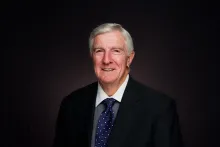
Before his retirement in 2021, Dr. Donald Ward pastored churches in Texas and Louisiana, and taught at Ambassador Bible College in Cincinnati, Ohio. He has also served as chairman of the Council of Elders of the United Church of God. He holds a BS degree; a BA in theology; a MS degree; a doctor’s degree in education from East Texas State University; and has completed 18 hours of graduate theology from SMU.
